Concept Sketches · 9 scenes
Farmhouse chair cushions with ties, from ladder-backs to golden oak
A farmhouse table collects chairs the way a mudroom collects boots, and every seat needs its own tape measure. Nine real sets, one checklist, and the add-on everybody forgets.

 Save
The quick answer
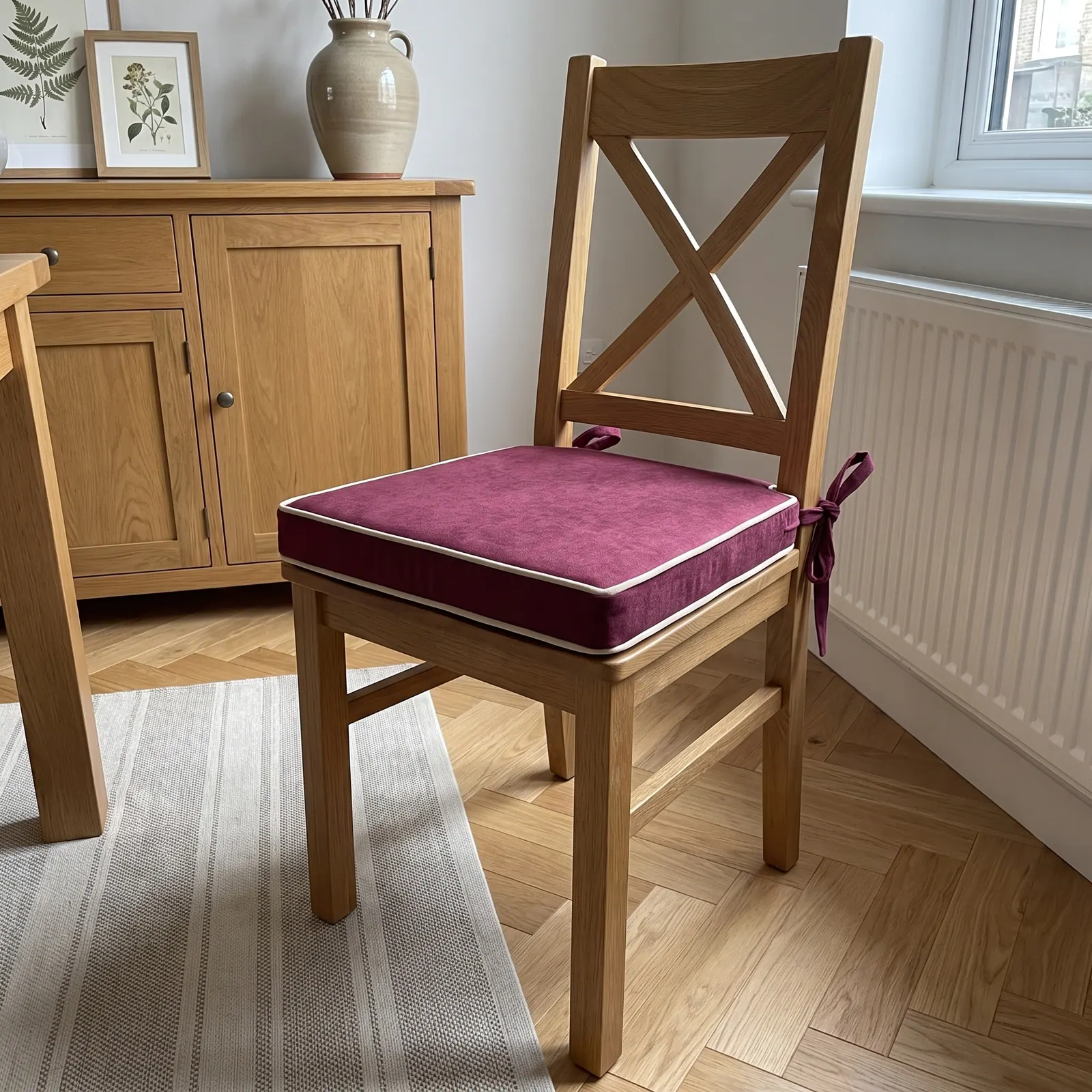
Farmhouse chair cushions with ties are made to each seat's own measurements, and the ties are an add-on you must request in writing. For ladder-backs and spindle chairs, ask for two ties at the back corners. Measure the front, back and both sides of every seat, choose 2 in or 4 in thick, and ask for zip-off covers that wash at 86°F (30°C).
The ties nobody wrote down
The part most often missing from a new set of chair pads isn't a seam or a zipper. It's the ties, because nobody asked for them.
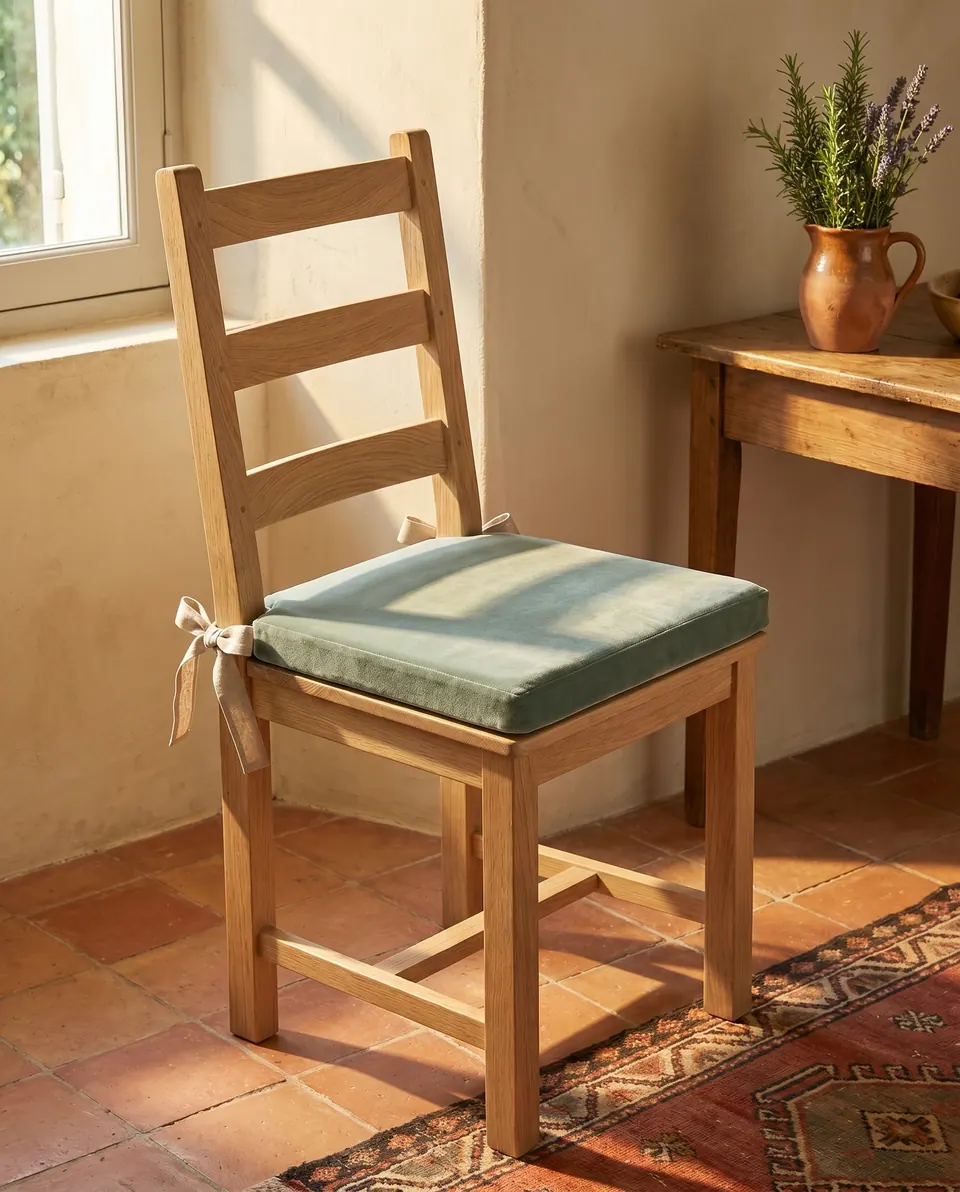
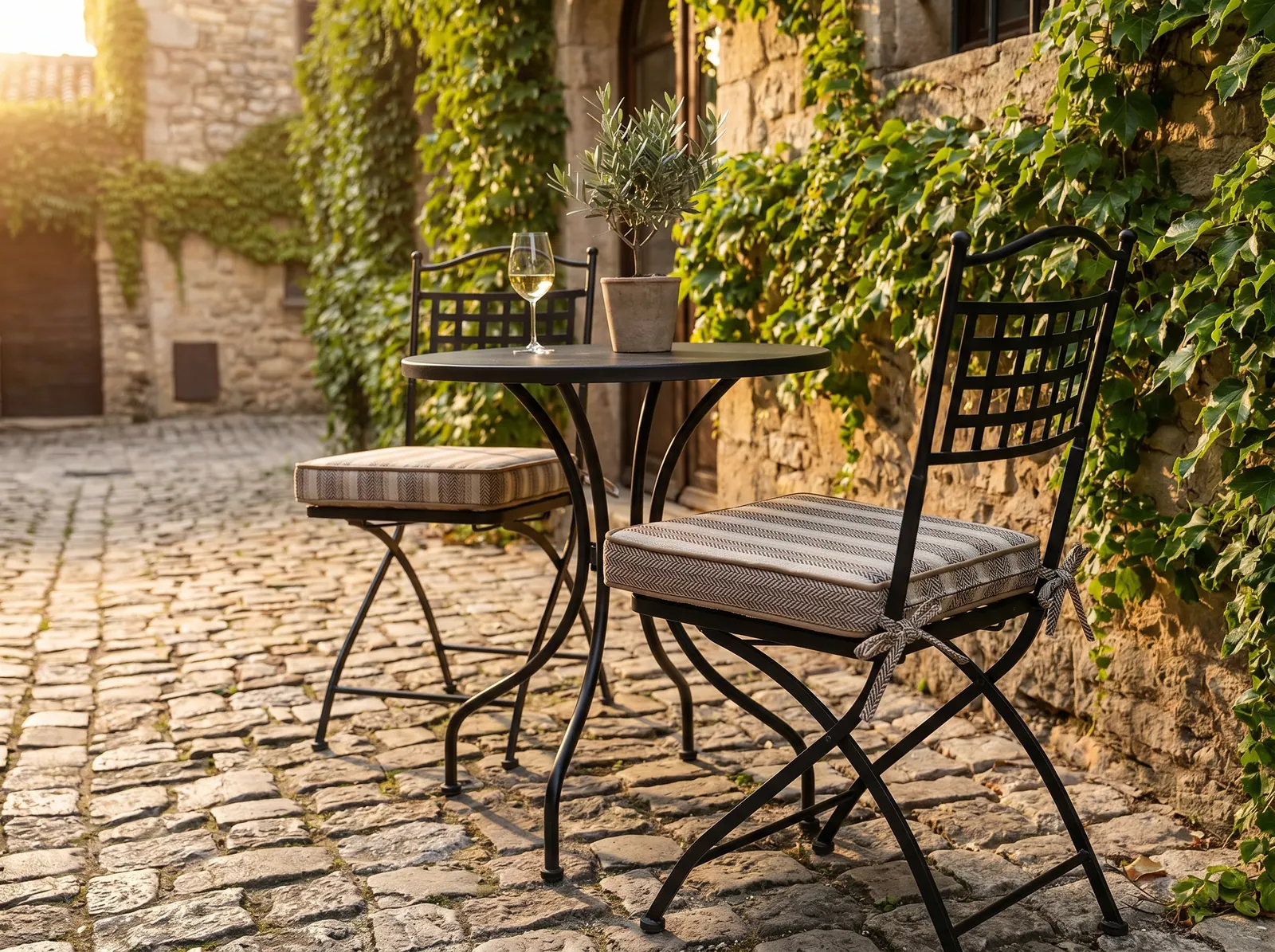
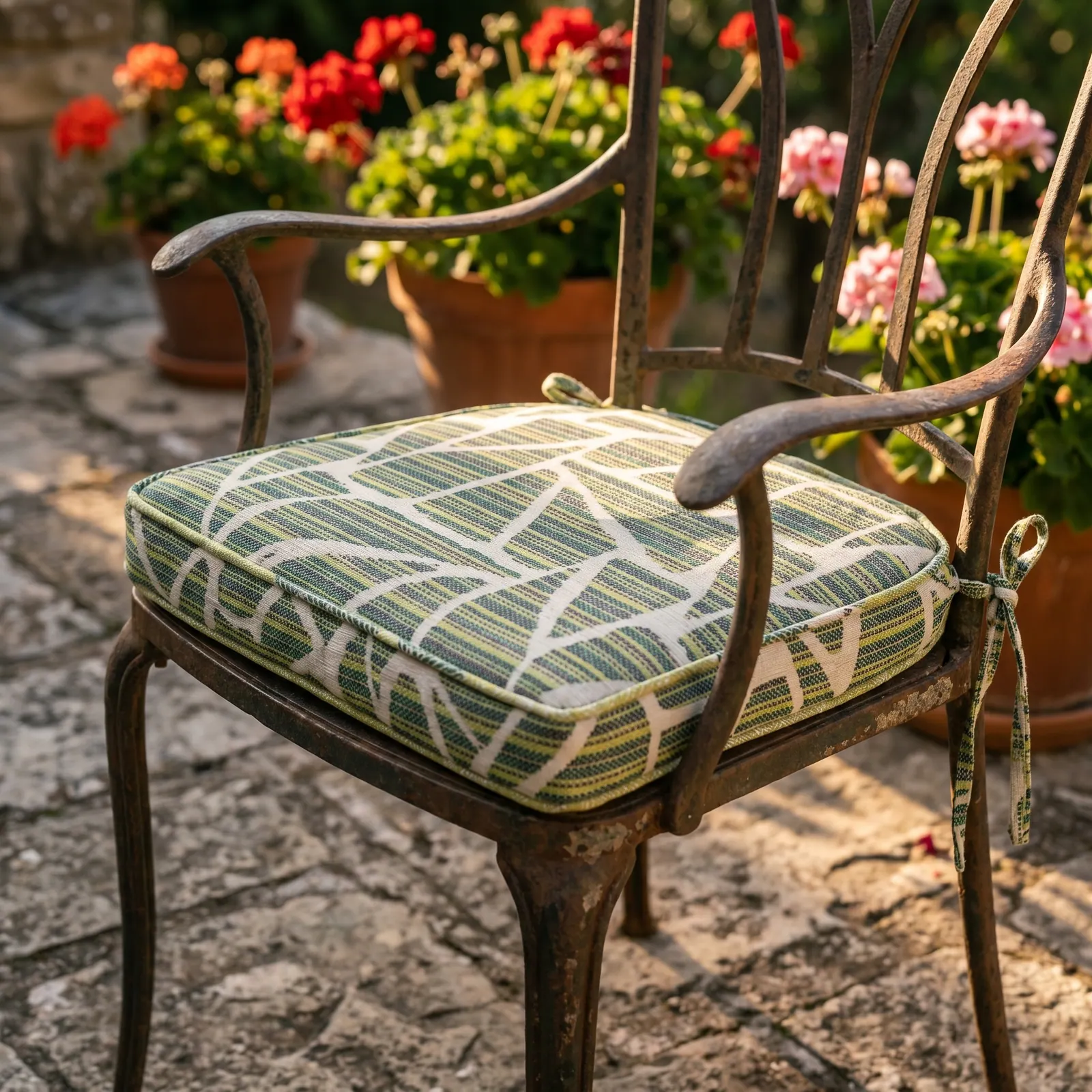
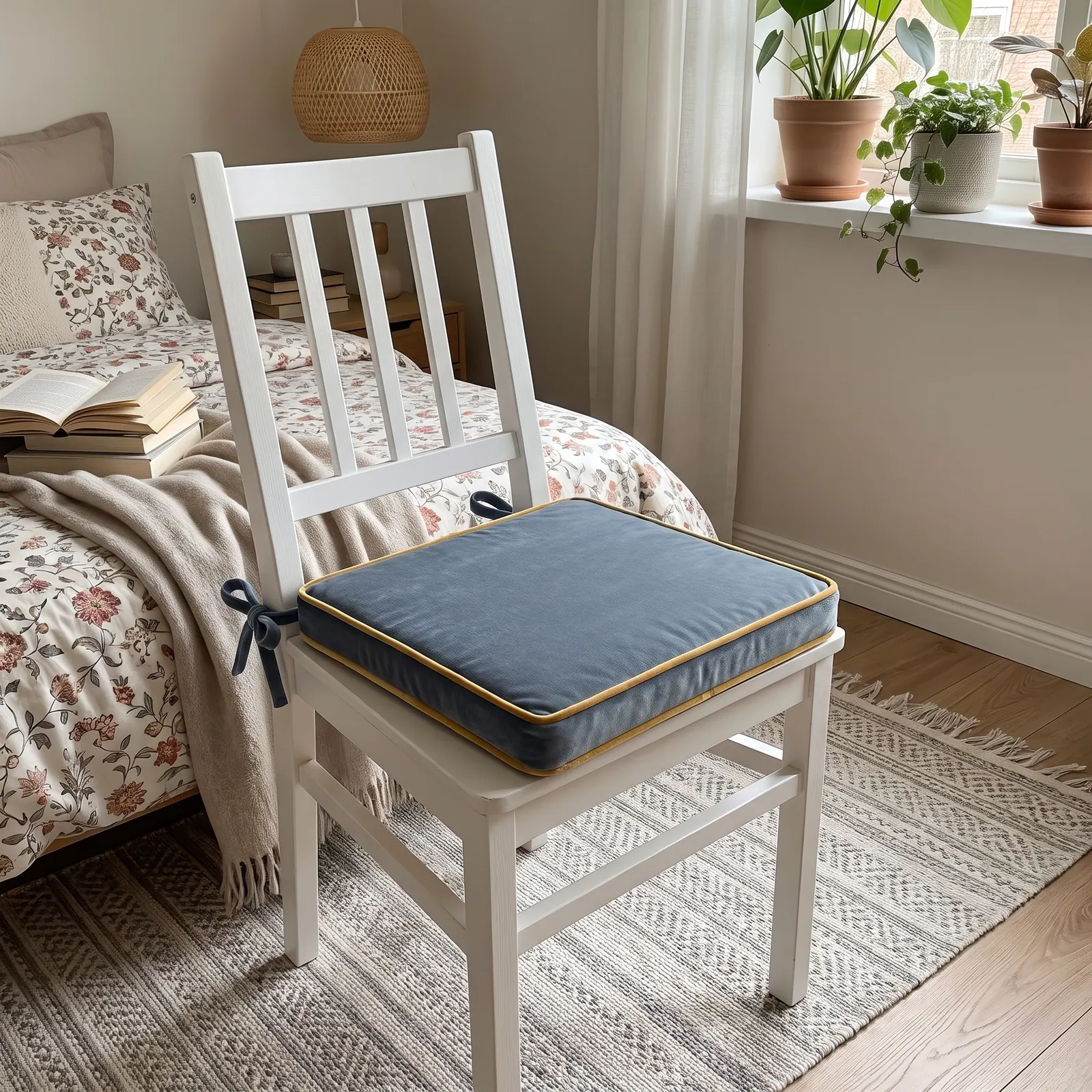
Farmhouse chair cushions with ties look simple: a flat pad, a piping line, two strings knotted around a spindle. But a farmhouse kitchen rarely has matching chairs. There are ladder-backs from an auction, golden oak from somebody's parents, a bench along the wall, and a dog who considers all of it his. Each seat gets measured on its own, because old chairs are rarely square.
Right, then. Ties are an add-on here, and they go on only when you ask in writing. I assumed otherwise once, years ago, and spent an evening hand-stitching strings onto six pads by lamplight. Learn from me, dear.
Start with the dining chair cushions hub and the measuring pattern for chair pads, and try sizes in the chair cushion builder. For the farmhouse look, checked linen and gingham and ticking stripes earn their place. How many chairs sit around your table, and do any two actually match?
Nine farmhouse chair sets and what each one taught
01A past project
Four vintage ladder-backs, re-measured to 11 in sides
A buyer in the US wanted 4 in (10 cm) pads for four vintage ladder-back chairs and sent a diagram whose numbers didn't close. Asked for both side edges, the buyer re-measured: about 11 in (28 cm) sides, 13 in (33 cm) and 14 in (36 cm) front and back. The pads got ties at the back and zip-off washable covers, in a linen with contrast piping chosen from close-ups.
The takeaway: Measure the left and right sides separately. An old chair seat is almost never a true square.
02A past project
Golden oak chairs, and pads that arrived without ties
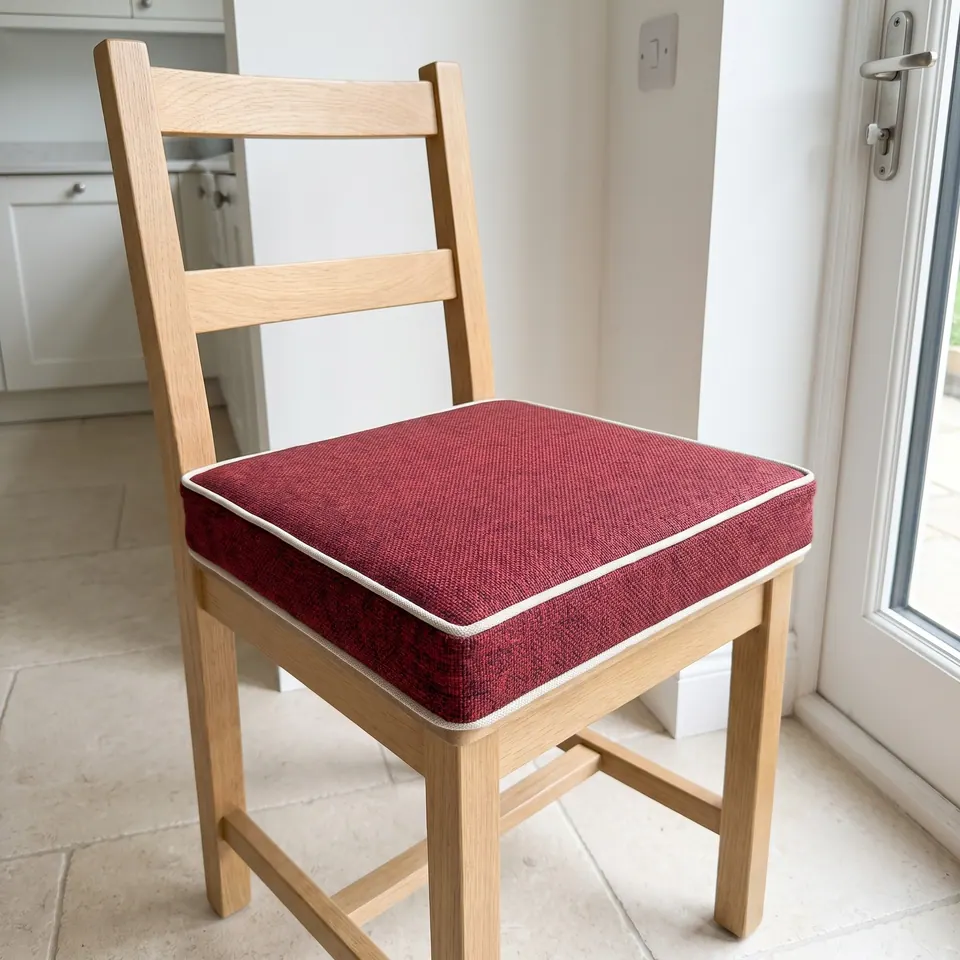
A buyer in the US updated their parents' golden oak dining chairs to sit with a new gray terrazzo floor: four 2 in (5 cm) piped pads in a printed chenille, the pattern checked by the craftsmen first. Ties had never been requested, so the pads arrived without them, and the workshop offered to pay half of a local tailor's fee to add them.
The takeaway: Put ties in the order note, with the number and position, before production starts.
03A past project
Two boxers, an entry bench and a change of cloth
The same household planned an entry bench of about 38 x 14.5 in (97 x 37 cm) to go with the chairs, then switched it to a rugged outdoor fabric because of their two boxer dogs. The chairs kept the chenille.
The takeaway: A set doesn't have to be one cloth. The chairs can keep the pretty fabric while the bench by the door takes the hard-wearing one.
04A past project
New covers for a 67 in bench and six striped chair pads
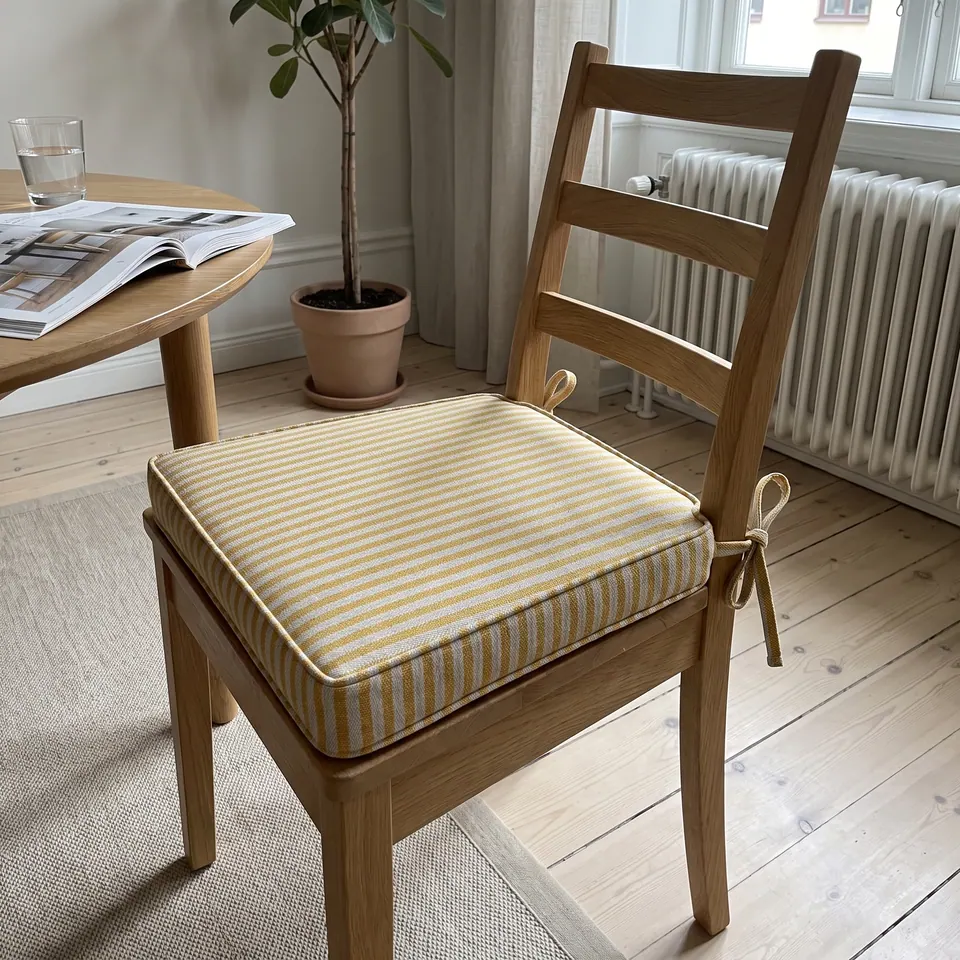
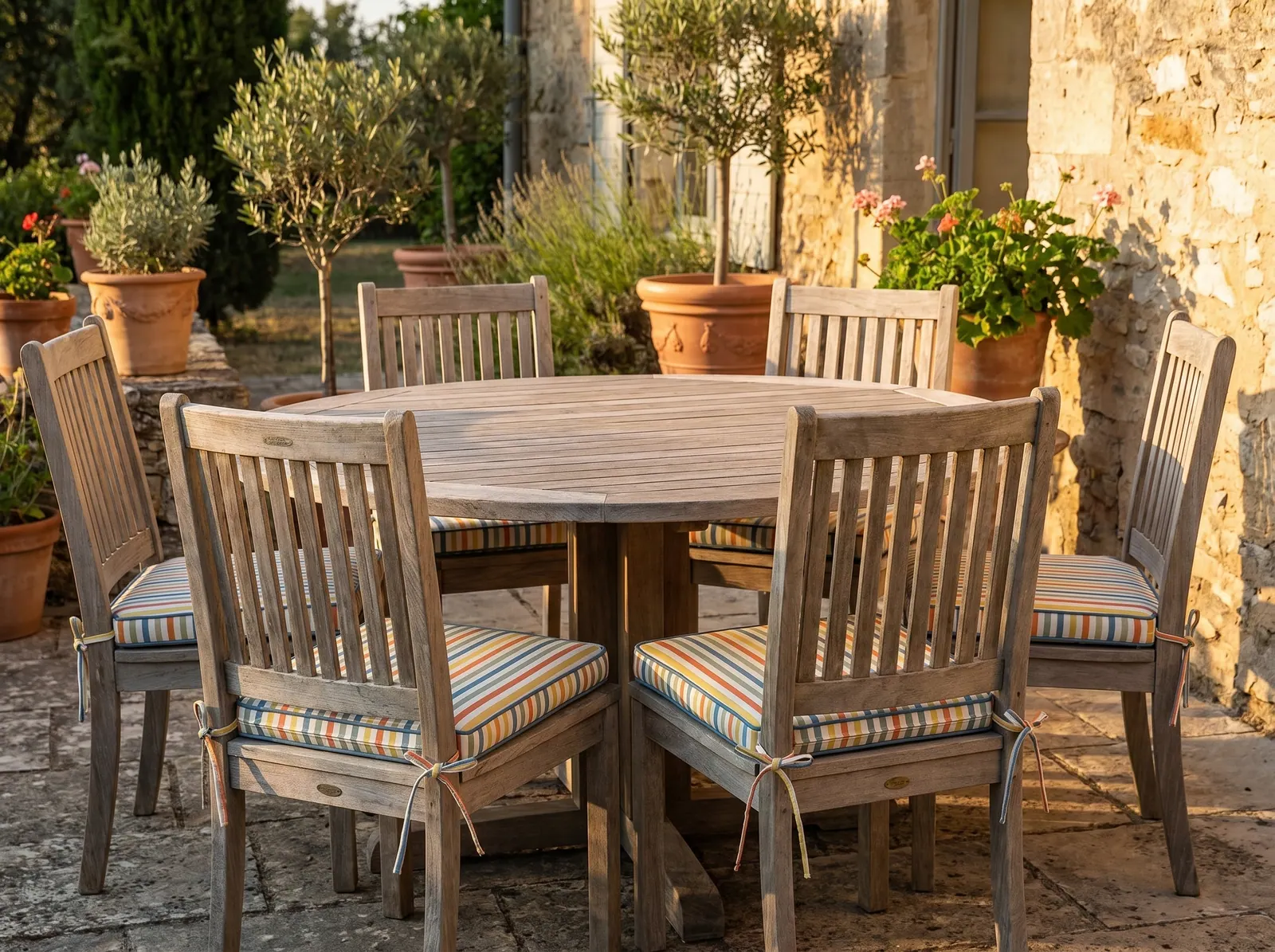
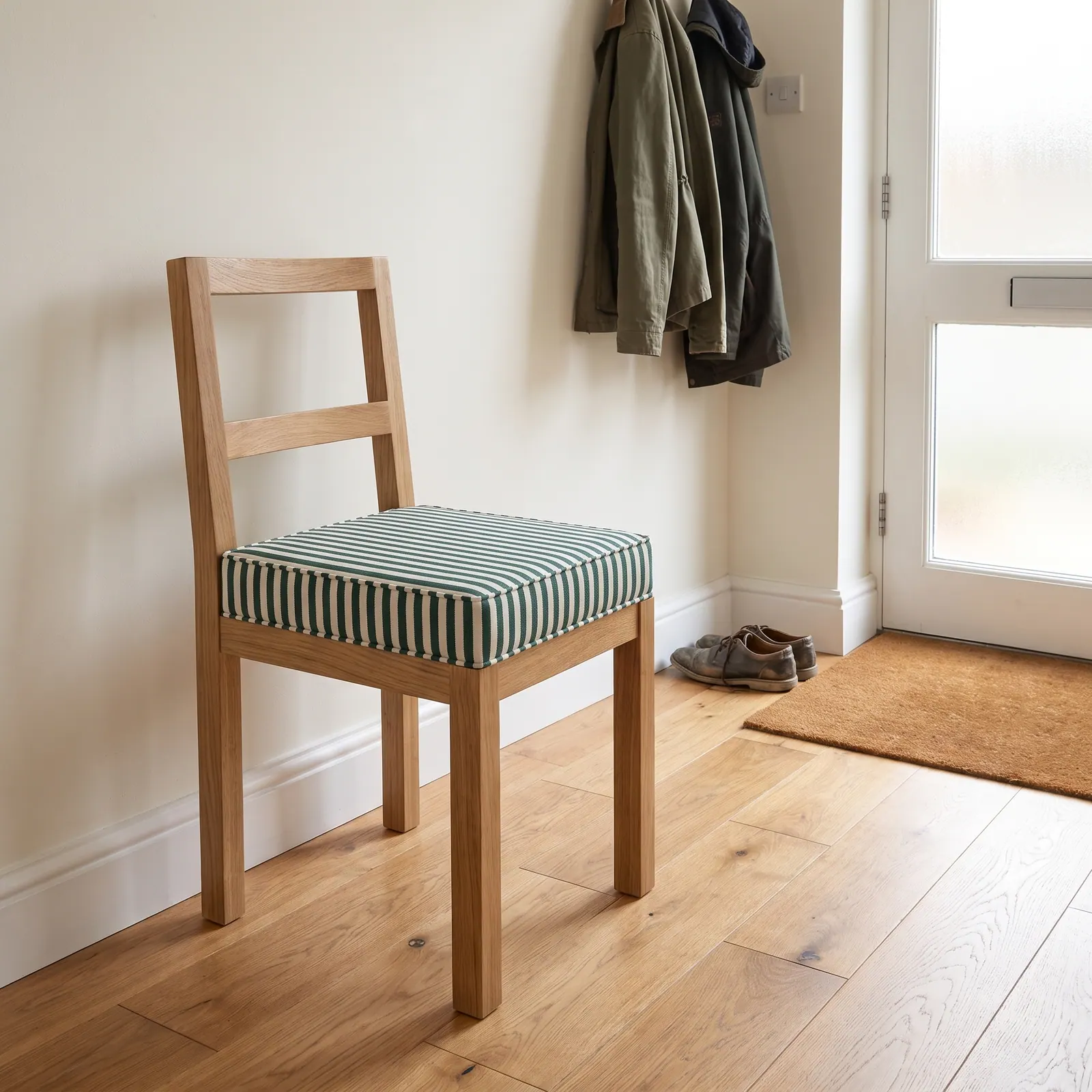
One buyer kept their foam and ordered covers only: one for a 67 x 15 x 2 in (170 x 38 x 5 cm) bench cushion and six for 18.5 x 16 x 2 in (47 x 41 x 5 cm) chair cushions, all in a stripe with piping and ties. A quick sketch showed which side of each pad the ties belonged on.
The takeaway: When the foam is still good, covers for existing foam refresh a bench and its chairs together.
05A past project
Four worn seat-and-back sets, copied from photos
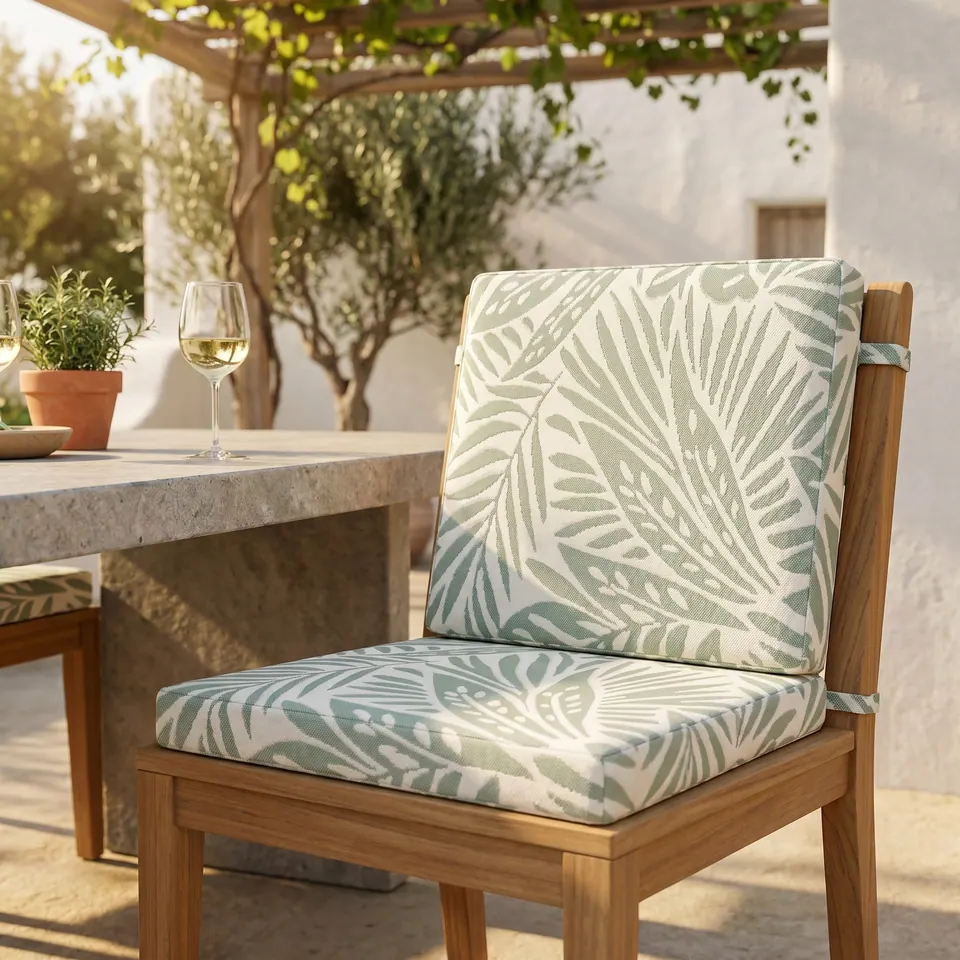
A buyer wanted exact copies of four worn seat-and-back sets in cream and ordered them from photos alone, each with a tape measure laid along every side of the old pad. The photos did the work a drawing usually does.
The takeaway: Photograph each old pad flat with the tape visible, then measure the chair seat too, all the way to the front edge, in case the old pad stopped short.
06A past project
Eight velvet pads, wanted in a week
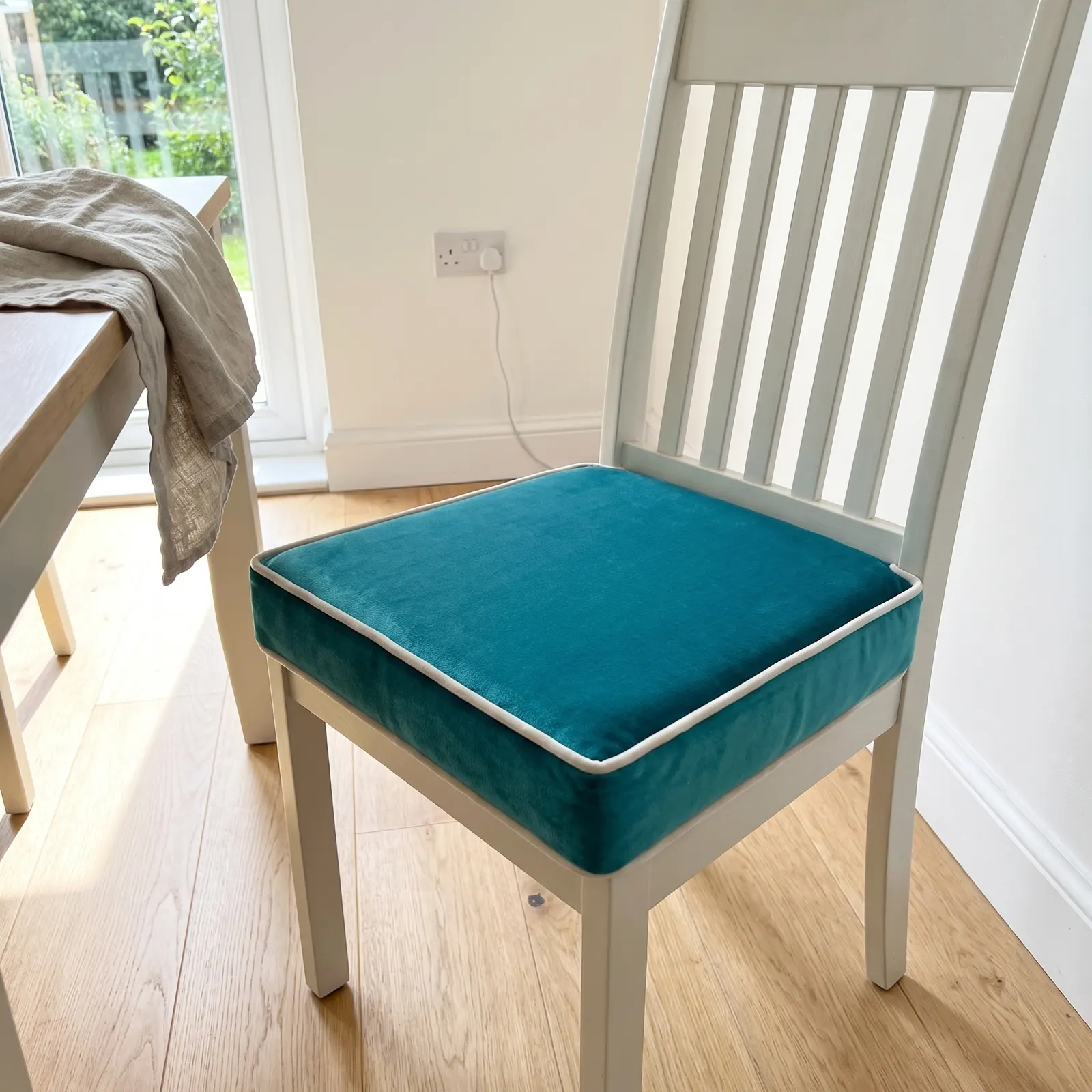
A buyer in the US needed eight 17 x 18 in (43 x 46 cm) velvet seat pads with piping and ties in about a week. The workshop had them order the 18 x 18 in option with a note for 17 x 18 and offered a batch discount, but the earliest delivery was about two weeks out.
The takeaway: For a holiday table of six or eight, order well ahead and put the event date in the note.
07A past project
A shiplap dinette and kids aged 9 to 14
A buyer wrote in about a farmhouse dinette with white shiplap and dark beams, used every day by kids aged 9 to 14. Velvet was considered; an easy-clean beige-gray won, at 4 in (10 cm) thick.
The takeaway: For a table the kids use daily, choose the kid-friendly fabric first and the color second.
08A past project
A tie-on pad for an armchair with a 21.5 in seat
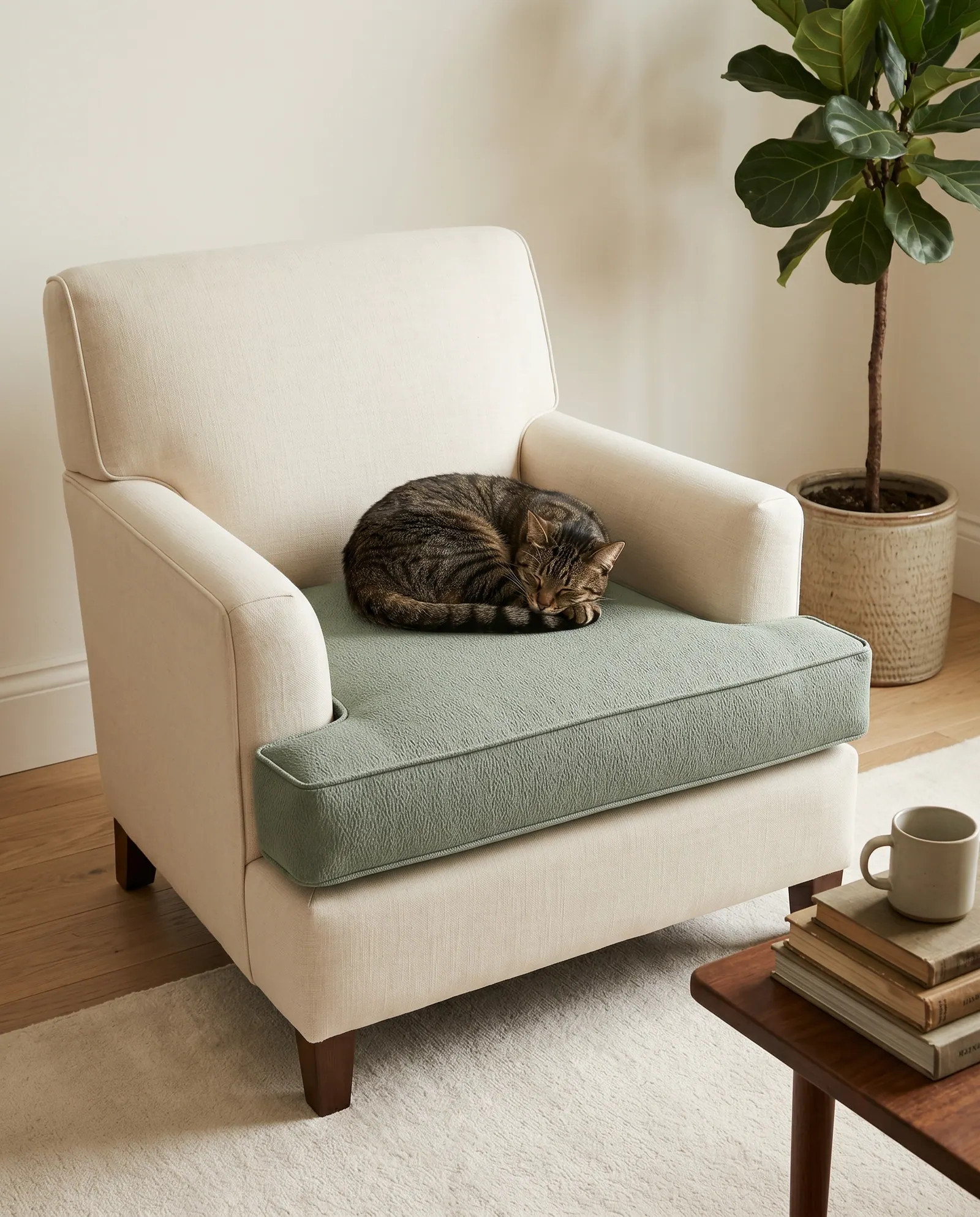
One buyer needed a tie-on seat pad for an armchair with a 21.5 in (55 cm) seat base, 5 in (13 cm) thick. The linen shortlist ran smoke, beige, brown and mint.
The takeaway: A thick pad wants ties as much as a thin one; ask for them at the back corners.
09A past project
Cane chairs where the wood trim stays on show
For a set of cane chairs with wood-trimmed seats, the pads were made slightly smaller than the seat so the wood trim stays visible. The buyer measured each seat by hand, edge to edge.
The takeaway: If the frame is the point of the chair, order the pad a touch smaller than the seat and say so in the note.
Ordering four to eight chair pads: the checklist
- Measure each chair on its own: front edge, back edge, left side, right side, and depth all the way to the front of the seat.
- Photograph every seat with the tape visible. If the form takes one photo, merge them into one image and send the rest by message.
- Write the ties in the personalization note: how many, where, how long and what color. Two at the back corners suits ladder-backs and spindles; see tie placement for chairs.
- Choose thickness against the table: 2 in keeps an old chair near its own height, 4 in makes a fuller seat. Try the seat height calculator.
- Give the fabric code and the piping code separately; neighboring chart numbers can differ only in tone.
- Ask for zip-off covers. All fabrics, velvet and linen included, wash at 86°F (30°C) on a gentle cycle; air dry them. More in washing cushion covers.
- Ask about a non-slip base if a chair has nothing to tie to; it is on request and costs extra.
- Allow roughly two weeks for a batch of eight, and put the event date in the note.
- Check the pre-shipment photo for the ties before you approve it.
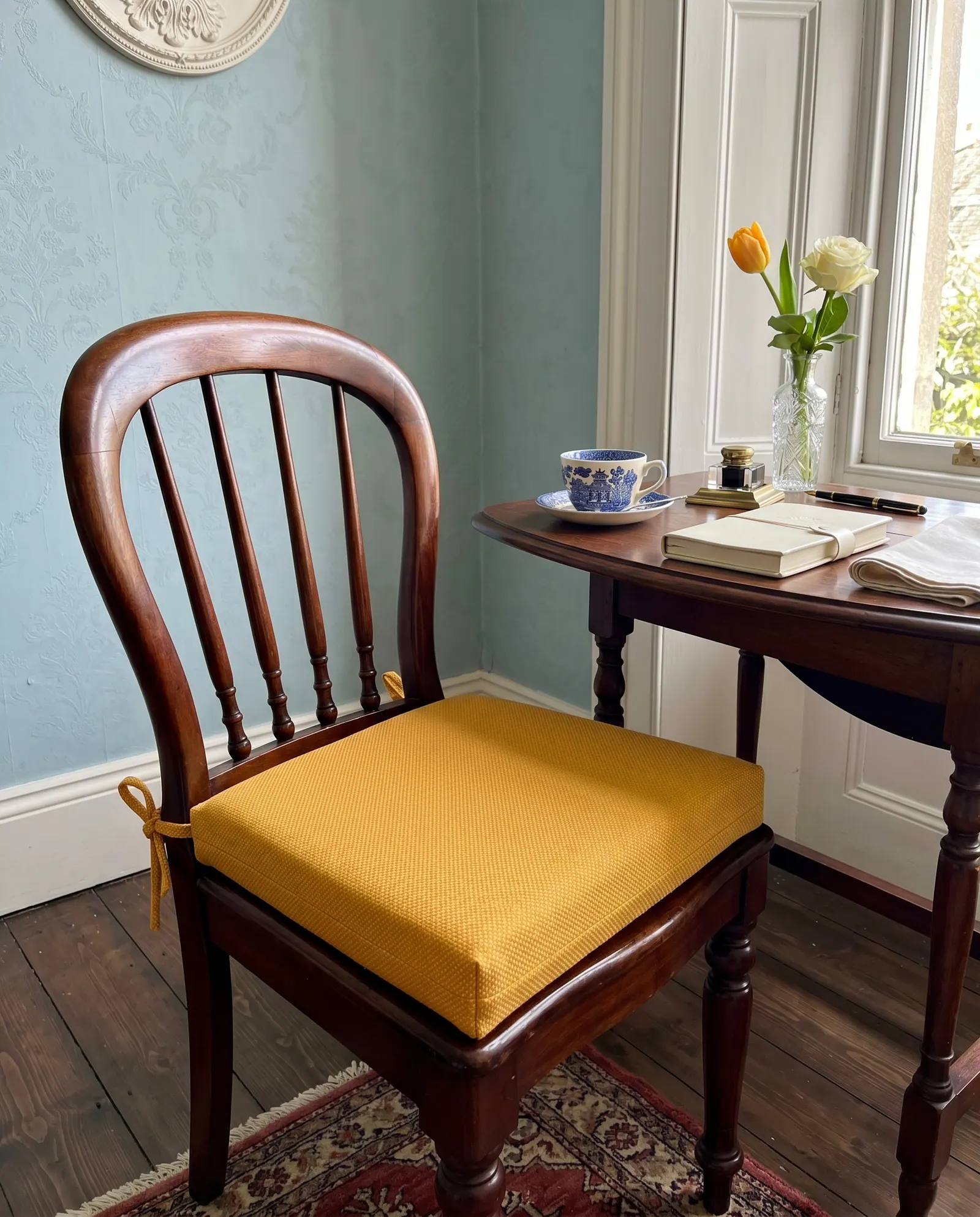
If a chair has spindles or a ladder back, ask for two ties at the back corners. On a bench, four corner ties knot together underneath.
Maggie
Buyer questions: ties, washing and everyday cloth
- A common question
Will my chair cushions come with ties, or do I have to ask for them?
The workshop's answerYou have to ask. Ties aren't included by default, and neither is a non-slip bottom; both go on only when requested at order time. Write it in the personalization note, for example 'two corner ties', before production starts. One buyer assumed ties were standard, and the workshop offered to cover half of a local tailor's cost to add them afterward.
- A common question
Where should the ties sit on a bench cushion compared with a chair pad?
The workshop's answerFor a bench you'll tie underneath, put a tie at each corner, four in all, so opposite ties knot together under the seat; for a back rail or spindles, two on the back edge. Chair pads usually have ties on two corners. Mark the positions on a sketch or photo, and check the pre-shipment photo, since ties were missed on one order.
- A common question
Can the covers go through the washing machine after a messy dinner?
The workshop's answerYes. Every cover has a zipper on the underside and comes off the foam completely. All the fabrics, velvet and linen included, machine wash at 86°F (30°C) on a gentle cycle. Air dry them rather than tumble drying, and iron on low if needed. Button-tufted covers are the exception: they're sewn through and don't come off.
- A common question
What is your everyday easy-clean upholstery fabric actually made of?
The workshop's answerIt's the workshop's best-selling upholstery weave: thick, durable and soft to the hand, described as a polyester-cotton blend (earlier replies said 100% polyester). It isn't chenille and isn't 100% cotton. It wipes clean, machine washes at 86°F (30°C) and lasts for years. For a natural fiber, choose cotton-linen instead.

Have it made
Have an idea like this made — ask Maggie’s workshop
Numbers first, fabric second, piping last. Jot down what you have, and the workshop will go down the list with you, item by item. — Maggie
Leave your details and the workshop will call you to confirm measurements, fabric, foam and piping. No prices, dates or payment on this page: it is a request, not an order.
Farmhouse chair pads, briefly
Is a 2 in or a 4 in pad better on an old farmhouse chair?
Both turn up in real farmhouse sets: golden oak chairs took 2 in (5 cm) piped pads, while vintage ladder-backs and a family dinette took 4 in (10 cm). A thicker pad lifts you closer to the tabletop, so check the clearance first with the thickness and seat height pattern.
Can you copy the worn pads that came with my chairs?
Yes. Buyers have ordered exact copies of worn seat-and-back sets from photos alone. Photograph each old pad flat with a tape measure along every side, then measure the chair seat too, all the way to the front edge, because the old pad may have stopped short of it.
Can chair pads match the fabric on my dining bench?
Yes. Chair pads can be made in exactly the same fabric as a bench cushion, and if the bench foam is still good you can order covers only, as one buyer did for a 67 x 15 x 2 in (170 x 38 x 5 cm) bench and six chair pads. See the matching bench and chair sketches.
What fabric holds up to big dogs on a farmhouse bench?
One household with two boxers kept printed chenille on the dining chairs but switched the entry bench to a rugged outdoor fabric. For everyday indoor wear, the best-selling easy-clean weave wipes clean and washes at 86°F (30°C). Compare options in pet-friendly cushion fabric.