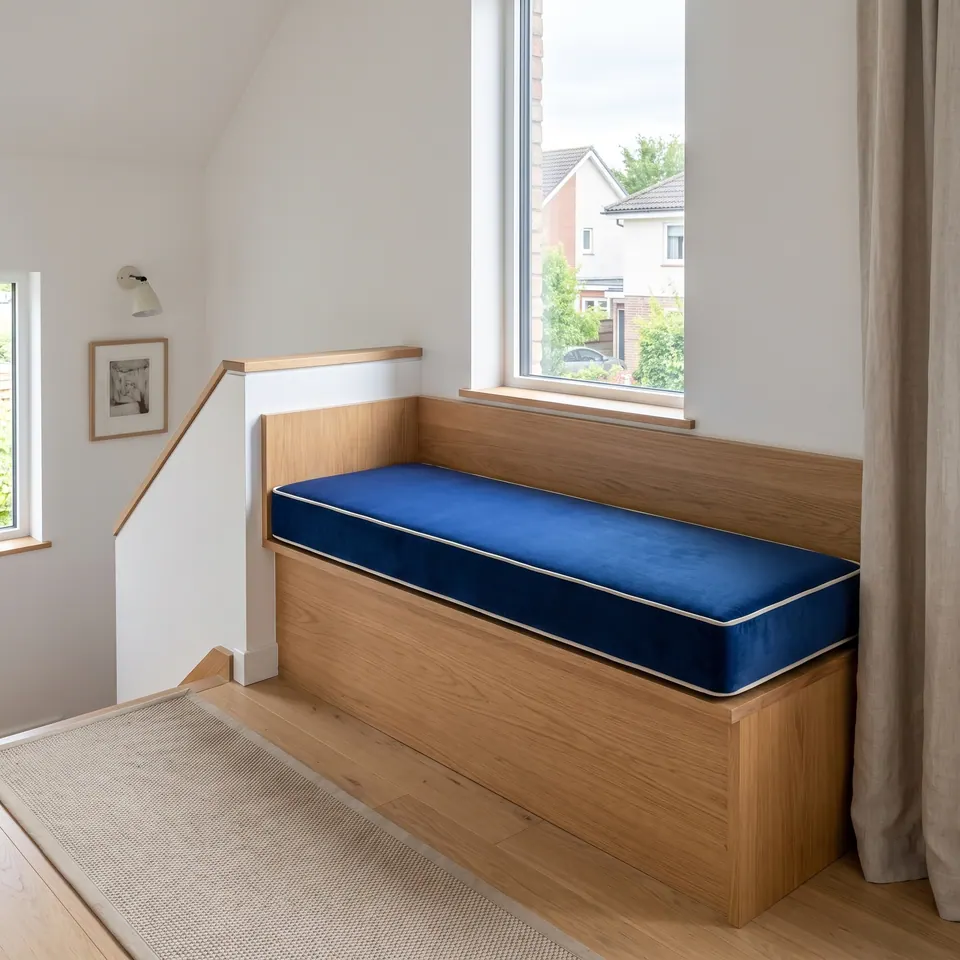
The Pattern Room · a side-by-side pattern
Made to measure or off the shelf? A fair test for your seat
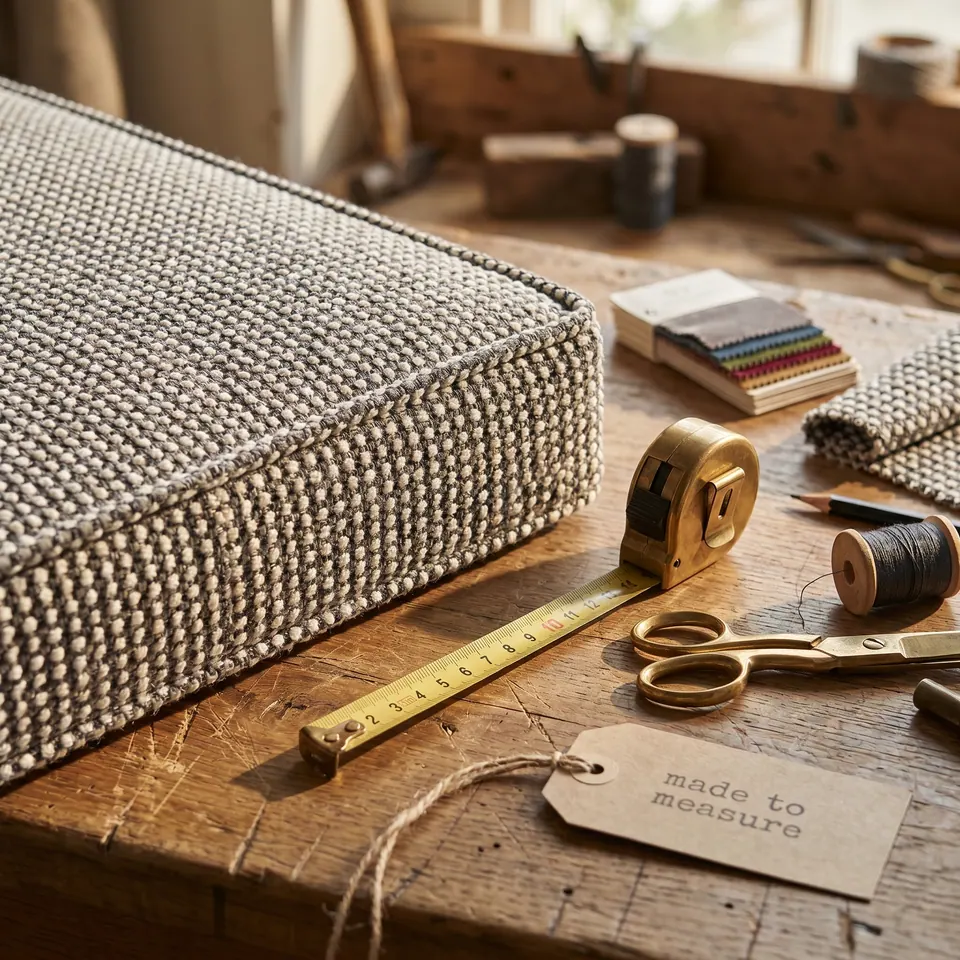
A good ready-made cushion is the sensible choice on the right seat. This is the test I use to tell which seat is which.

- Ready-made
- Made to measure
 Save
The quick answer
Ready-made cushions win when the seat is a standard size, the use is light and you need it this week. Made to measure wins when the seat is built in, more than about 1/2 in (1.3 cm) off a stock size, angled or notched, very long or sat on daily, or when you need a set thickness, fabric or matching set.
A fair test, not a sales pitch
A ready-made cushion is a good cushion on a seat that matches it.
Stores make a few sizes well: banquette runs of 30, 48 and 60 in (76, 122 and 152 cm) with a corner piece, or a breakfast-nook set sold with a stated tolerance of 2 in (5 cm). If your seat is one of those sizes, the store has done the measuring for you.
Most built-in seats are not. They were built to a wall.
So the test is short. Measure first, then decide. The standard cushion sizes chart lists what US stores commonly sell. If your tape lands within about 1/2 in of a row, and the thickness and fabric suit you, buy it and sit down.
Ready-made and made to measure, side by side
| Ready-made (common in US stores) | Made to measure (how this workshop works) | |
|---|---|---|
| Fit | A few fixed sizes per product, sometimes one; some sets state a tolerance of up to 2 in (5 cm) | Cut to the exact size in your order note, fractions accepted; finished within about 1/2 to 1 in (1.3 to 2.5 cm) |
| Shape | Rectangles, sometimes a corner piece | Trapezoids, notches, curves and L runs, from a drawing you approve before cutting |
| Thickness | Usually one, sometimes two | 2, 3, 4 or 5 in (5 to 12.5 cm) as standard, in-between sizes written in, thicker on request |
| Foam, stated in numbers | Often described, not specified | High-density seat foam of about 2.0 lb/ft³ (32 kg/m³) |
| Fabric | The store's own range for that product | Numbered color charts, any color on any cushion, swatches before you order |
| Matching set | Whatever the range includes | Seat, back and bolster in one fabric, sized to each other |
| Returns | A window of about 30 days is common, but customized and made-to-order items are usually excluded | Workshop errors have been remade; measuring slips and a change of mind are not covered, so sizes are checked before cutting |
| Lead time | In stock, ships in days | Making first, then delivery; leave a margin before a fixed date |
| Cost over the years | Lower up front; replaced when it stops fitting or flattens | Higher up front, priced mostly by length x width; spread it over the years you sit on it |
The ready-made column describes common US store practice, not any one retailer.
Six signs a seat needs made to measure
- It is built in: a window seat, a banquette, a bench made for one wall.
- Your size is more than about 1/2 in off the nearest stock size. You would see the gap, or the overhang, every day.
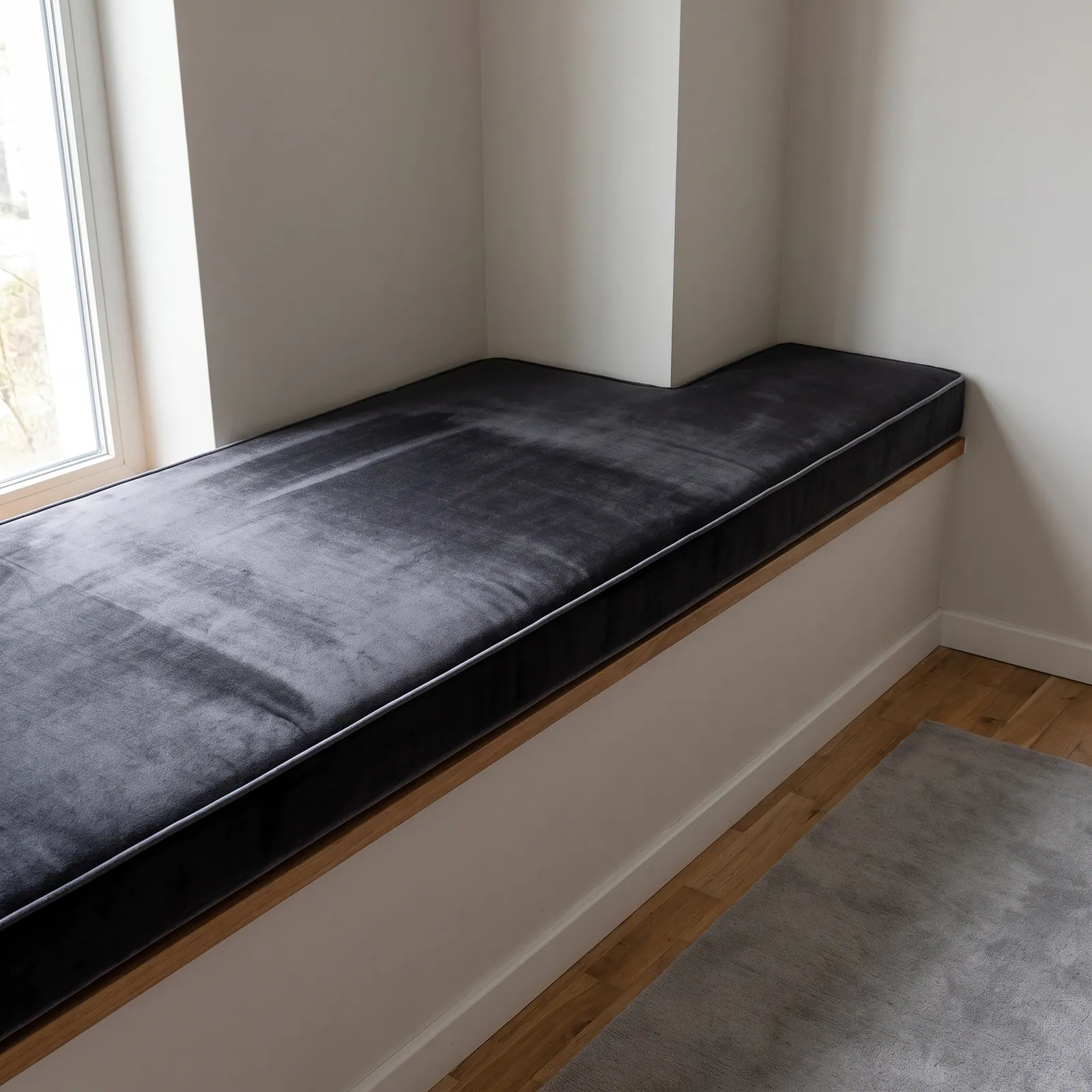
- It is angled, notched, curved or stepped around a post.
- The run is very long. Past about 79 to 90 in (200 to 230 cm) it is usually split into equal pieces, and you choose where.
- You need a set thickness for a set seat height, or a fabric that matches a sofa, a curtain or an earlier order.
- Someone sits there every day.
154.5 inches of window
A buyer in the US had a built-in window seat 154.5 in long and 22 in deep.
The workshop asked for each piece's size. The seat became two identical corduroy cushions, 77.25 x 22 in. Each went through the closest size on the menu, with the exact dimensions written in the personalization box.
They fit.
One lesson came in the box. The cushions arrived tightly vacuum-packed, and the knife used to open them cut into the covers. The workshop offered new covers at cost. The buyer kept the cushions and came back to order for other benches.
Cut only the outer plastic, then give the foam time. The first 72 hours are covered separately.
The cushion that came up 8 in short
A buyer in the US ordered two bench cushions. One arrived at 36 in when 44 in had been ordered.
The workshop admitted the error and remade it at 15 x 44 in, in the same fabric and thickness.
The same buyer felt the striped fabric looked more yellow than in the listing photos. The fabric was unchanged; listing and review photos are taken in different light. The size was a workshop fault. The color was the light.
A ready-made cushion that arrives wrong goes back in its box. A made-to-measure one is made again. Before you ask, measure after 3 to 4 days out of the packing, across the flat middle, and photograph the tape. The size tolerance guide says what counts as wrong.
Run the test on your own seat
Measure the seat, wood to wood
Length at the front and the back, depth at both ends. Measure the seat, not the old cushion.
 Save
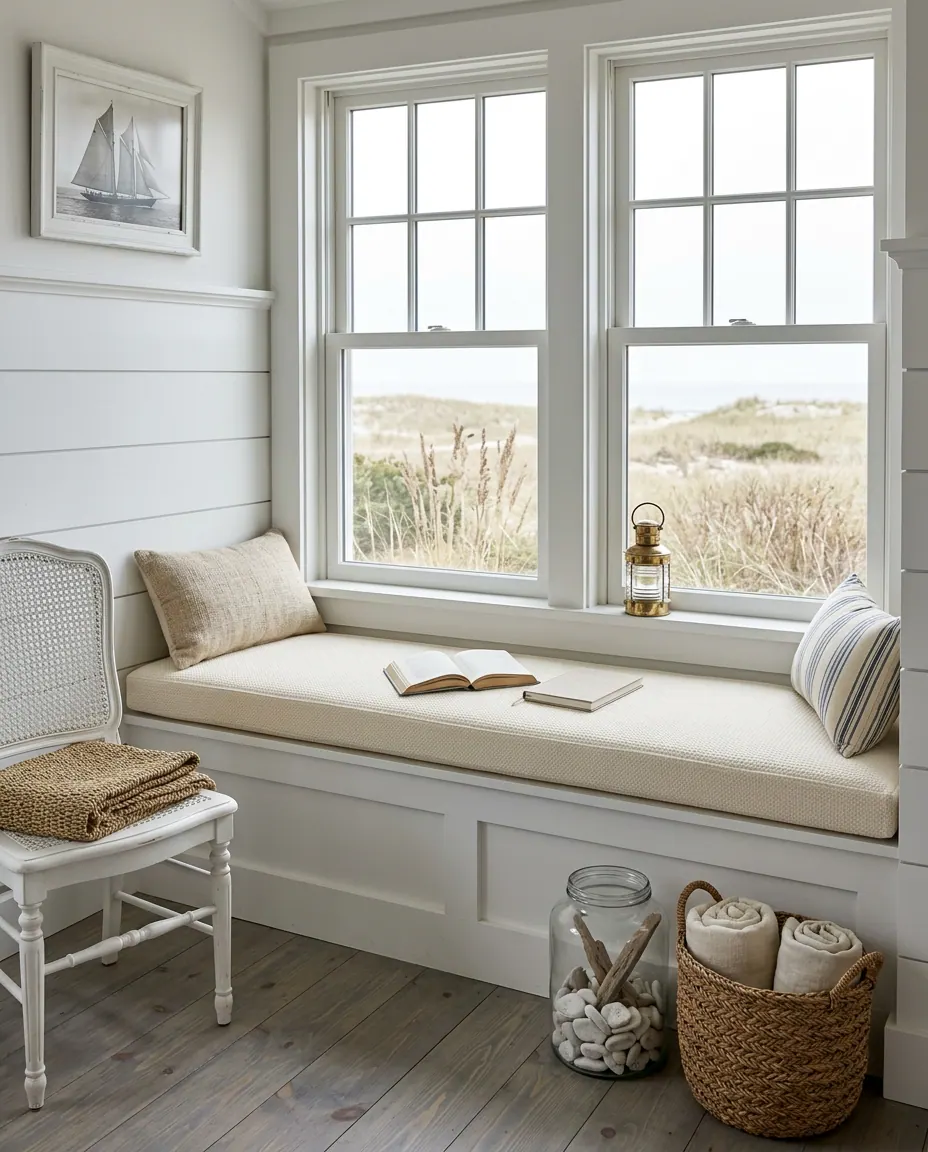
An ivory outdoor-grade cushion on a shiplap window seat facing the dunes: soft enough for reading, tough enough for sandy feet. Hold it against the nearest stock size
If every number is within about 1/2 in (1.3 cm), a ready-made cushion will look right. If not, you will see the difference from the doorway.
Look at the outline
Angles, notches, curves, a post, a lid that lifts. Any one of them moves the seat to made to measure.
 Save
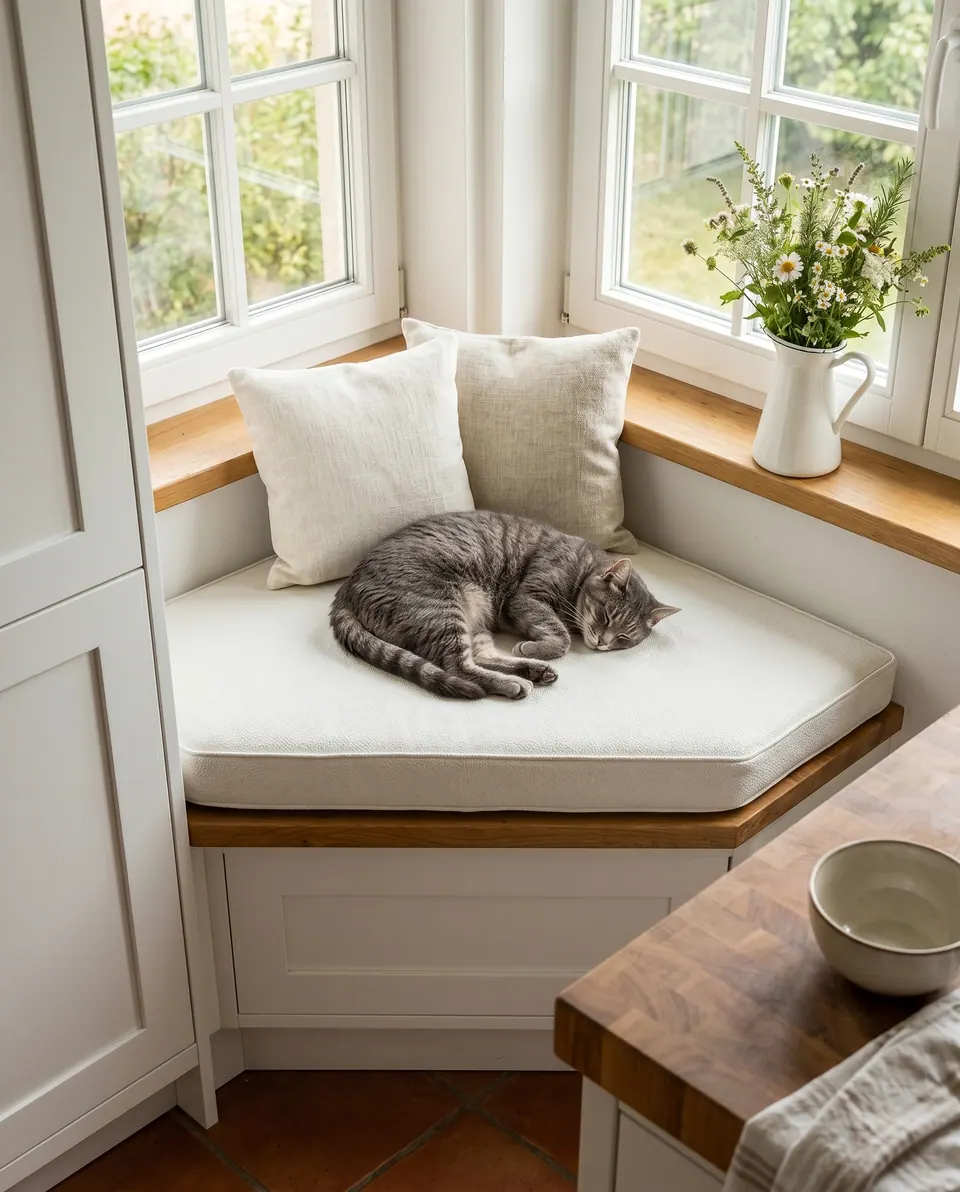
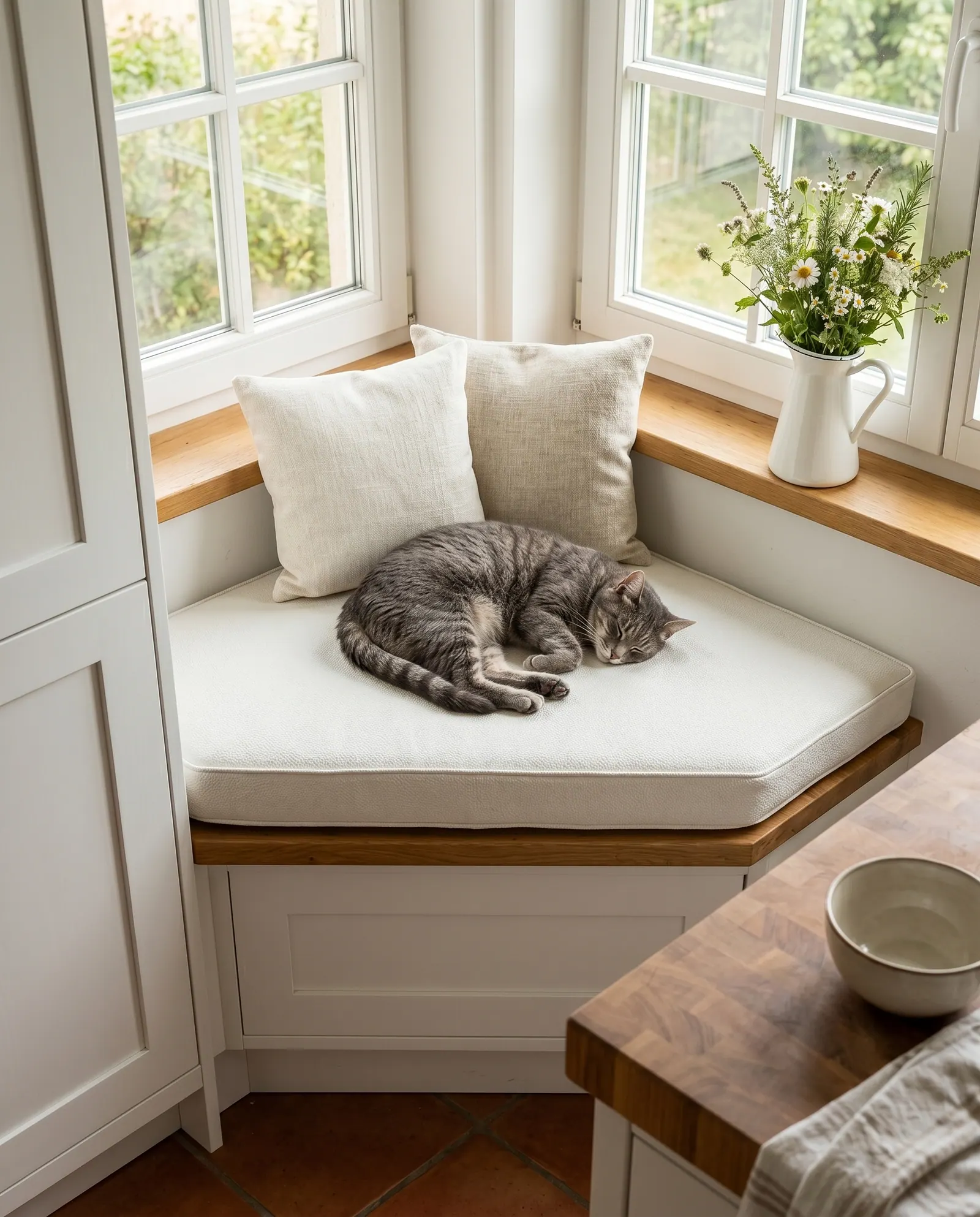
An ivory cushion shaped to a kitchen corner makes a sunny perch between cabinets. The angled front keeps the walkway open. Decide the height you want to sit at
Seat height is the platform plus the cushion. If a stock thickness puts you too high or too low, you need a custom thickness. The seat height calculator does the sum.
 Save
A cream box cushion turns a plain oak bench into a sunlit perch. The sage lumbar and linen throw add color without breaking the calm. Check the calendar
A custom cushion is made to order, then delivered. If the date is fixed, tell the maker before ordering, ask for the dates in writing and leave a margin. In-stock pieces can ship far sooner, as the stock vs custom timing answer explains.


Have it made
Measured it? Have Hana’s workshop make it
Leave your numbers and the height you like to sit at. The rest is a short conversation. — Hana
Leave your details and the workshop will call you to confirm measurements, fabric, foam and piping. No prices, dates or payment on this page: it is a request, not an order.
Ready-made fits the seats it was made for. Made to measure fits the one you have.
Hana
If the test says made to measure
The quote checklist lists the numbers to send. Window seat cushions and bench cushions show finished shapes, from simple rectangles to seats stepped around a column.
A stock cushion asks the seat to agree. A made one agrees with the seat. Measure first, and you will know which you need.
Buyer questions: custom or stock
- A common question
Can you make a cushion to my exact measurements?
The workshop's answerYes. Every cushion is made to order, so any length, width and thickness can be made, in inches, centimeters or millimeters, including lengths over 79 in (200 cm). Send the length, depth and thickness, plus a drawing for anything that isn't a rectangle, and the workshop checks the details and replies with a quote. You then order the nearest size with your exact size in the note, or the workshop adds your size to the listing.
- A common question
Should I order the cushion a little smaller than my bench so it fits?
The workshop's answerNo. Give the exact size of the space. The workshop allows for sewing itself and makes cushions to the full dimensions you give, with no deduction. A snug fit looks clean. Write smaller sizes only if you want a gap between neighboring cushions, or ask for a round-down where a hinged lid must still open. Measure the bench once it is installed.
- A common question
What decides the price of a custom bench cushion?
The workshop's answerMostly size. You choose the size range that covers your length and width, plus your thickness, and the listing shows the price, with any shipping line shown at checkout. Price climbs with surface area but not one for one, because cutting, sewing and the zipper are a fixed part of the work, so twice the area usually costs well under twice as much. Several cushions or odd shapes get one custom quote.
- A common question
Does a thicker cushion cost more?
The workshop's answerA little, within the usual 2 to 5 in. Length and width move the price far more, and a thin cushion isn't much cheaper because it uses the same fabric and labor. Very tall pieces are different: a 24 x 24 in velvet cushion lists at twice the price at 12 in as at 6 in, and covers over about 6 in (15 cm) high are quoted as custom.
- A common question
What if my exact size is bigger than the size option I paid for?
The workshop's answerOrders are checked, and production pauses until the size is confirmed. A small gap of about 3 to 5 in is absorbed. A bigger one needs more fabric and labor, so the workshop sends a top-up link for the difference, often rounded down in your favor, and starts once it is paid. You can also reorder in the right range. If it was a typo, send the correct size and production continues.
Custom or ready-made, briefly
Is a custom cushion worth it for a standard-size bench?
Often not. If a stock cushion is within about 1/2 in (1.3 cm) of your bench, its thickness suits your seat height and you like the fabric, ready-made is the sensible buy. Made to measure earns its price on built-in, odd-shaped or daily-use seats.
Can a made-to-order cushion be returned like a store cushion?
Not on the same terms. Many stores exclude made-to-order items from their usual return window. Here, measuring slips and a change of mind are not covered, which is why sizes and drawings are checked before cutting; for a workshop error, photos of the tape on the cushion start the fix, and one wrong-length cushion was remade in the same fabric.
How much longer does a made-to-measure cushion take than a stock one?
In-stock pieces can ship sooner. A custom cushion is made to order before delivery, and curved or complex shapes take longer. With a fixed date, tell the workshop before you order and leave a margin.
What makes one custom cushion cost more than another?
Mostly length times width. Thickness within 2 to 5 in moves the price far less, and doubling the area costs well under double. Angles and curves add labor, and extra-thick pieces add fabric and foam. The workshop quotes from your sizes, never a stock price.