The Pattern Room · a measuring pattern
How exact is a made-to-measure cushion? Handmade tolerance explained
A 94-inch cushion came out of its vacuum bag at 91. It wasn't finished moving. Here's what a handmade number really means, and how to check one without fooling yourself.

 Save
The quick answer
A made-to-measure cushion is cut to the exact size you write, but the finished piece can land within about 1/2 to 1 in (1.3 to 2.5 cm) of it. Very long one-piece and hand-tufted cushions vary most, by 1 to 2 in. Measure after 3 to 4 days out of the vacuum pack, across the flat middle, and photograph the tape.
Why 94 inches can arrive as 91
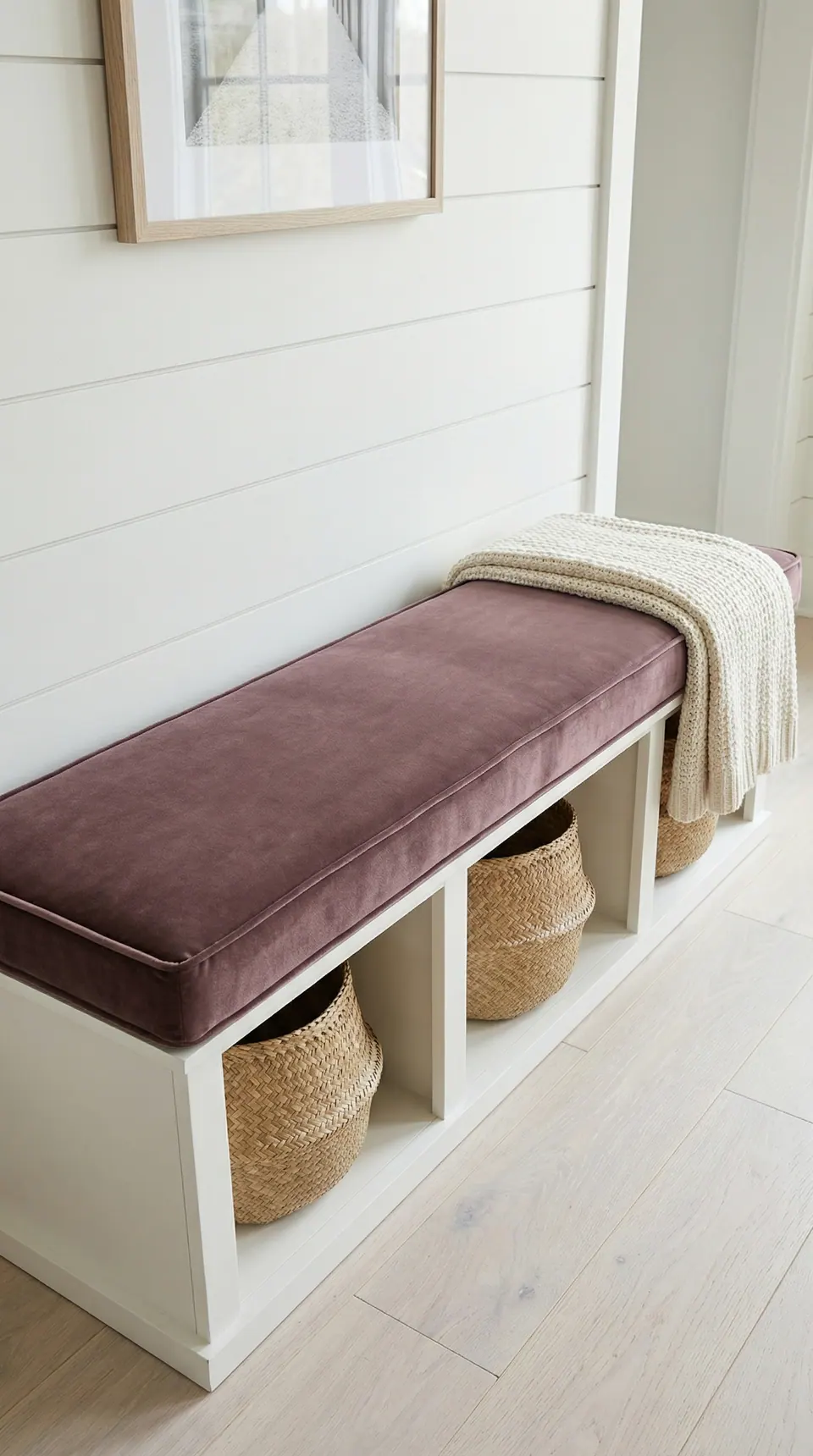
Out of the vacuum pack, a 16 x 94 in cushion measured 15.5 x 91 in. Five days later it measured 91.75. That's the whole subject of custom cushion size tolerance, in one window bench.
Every cushion is cut to the numbers in your order note, and they aren't rounded: 22 x 99.5 in gets made as 22 x 99.5 in. Every cushion is measured again after sewing. What nobody can sell you is zero variation, because foam flexes and covers are sewn by hand.
The stated tolerance is about ±1 in (±2.5 cm). The typical case is smaller, 3/8 to 3/4 in (1 to 2 cm). Tolerance is kindness to your future self, partner, so let's put it where it helps you.
Where the variation lands, by cushion type
| Cushion type | Typical difference | Main reason |
|---|---|---|
| Foam seat, bench or window-seat cushion | 3/8 to 3/4 in (1 to 2 cm) | Foam cut slightly oversize for a full cover; hand-sewn seams |
| Very long one-piece cushion | up to 1 to 2 in (2.5 to 5 cm) | Small differences add up over the length; long foam recovers slowly |
| Fully hand-tufted cushion | 1 to 2 in (2.5 to 5 cm) | Buttons draw the top in; the edge spreads as it settles |
| Soft stuffed cushion or pillow | can measure larger than ordered | Fiber fill swells past the nominal size |
| Thickness of a 5 in cushion | 4 to 6 in at the outer edge of tolerance | The stated ±1 in applies to height too; measure only after full expansion |
| Inch order produced in centimeters | under 1/4 in (0.5 cm) per dimension | Each dimension is rounded to the nearest whole centimeter |
Four reasons a handmade number moves
- Foam is cut oversize. Firm foam goes in slightly larger than its cover so the cover looks full. Trade drafting guides put it at about 1/4 in (6 mm) per side. The top crowns a little, and a crowned cushion reads wider across the top.
- Piping and rounded edges. A cover loses about 1/4 in to edge rounding, and piping sits on the seam, so a tape laid across the piping reads a touch wider than the cushion body.
- Unit conversion. Inch orders are produced in whole centimeters. A 29.5 x 111.25 in order became 29½ x 111½ in (75 x 283 cm).
- Vacuum packing. Compressed foam needs 48 to 72 hours to recover and 3 to 4 days to reach full size. Long pieces take longest; the first 72 hours are covered in their own Pattern.
None of this is sloppiness. It's what flexible material does when people sew it by hand.
How to measure a finished cushion, in eight steps
Open the pack gently, then wait 3 to 4 days
Unpack straight away, cutting only the outer plastic; a knife pushed too deep has cut straight through a cover. Lay the cushion flat and leave it for 3 to 4 days before you measure anything.
Use a flat, hard surface
A floor or a table, not the bench it's meant for. A cushion draped over a lip or a gap reads short.
Measure across the flat middle, not at the piping
Lay the tape across the top, halfway between the edges, where the top panel is flat. A tape laid over the piping adds the cord to your number.
Take three readings per dimension
Length at the front, middle and back; depth near each end and at the center. Read to the nearest 1/8 in and write all three down.
Settle soft and tufted pieces first
Shake and pat a tufted cushion before you measure it. One settled from 27 to 26 in that way. Edges also relax slightly with use.
Read thickness with a straightedge
Lay a ruler across the top and measure down to the table at the center. Measure thickness only after full expansion.
Photograph the tape and type the numbers
One photo per dimension, with the tape's numbers readable. Type the readings in your message as well; photos get misread, typed numbers don't.
Compare with your order note, then decide
The size menu only sets the price; your written size is the spec. A difference past about 1 in, or a cushion that no longer fits a fixed space, is worth reporting with those photos.

Have it made
Measured it? Have Nate’s workshop make it
Every edge and both diagonals, to the nearest 1/4 in. If the numbers do not close, the workshop will say so on the call. — Nate
Leave your details and the workshop will call you to confirm measurements, fabric, foam and piping. No prices, dates or payment on this page: it is a request, not an order.
Key facts
- Cushions are cut to the written size, not rounded; the stated handmade tolerance is about ±1 in (±2.5 cm).
- A difference of 3/8 to 3/4 in (1 to 2 cm) is the typical case.
- Very long one-piece and fully tufted cushions can vary by 1 to 2 in.
- Vacuum-packed foam takes 3 to 4 days to reach full size.
- Size claims need tape-measure photos of length, width and thickness.
The 94-inch window bench that grew three quarters of an inch
A buyer in the US ordered a cushion for a long window bench, 16 x 94 in (41 x 239 cm). Straight out of the vacuum packing it measured 15.5 x 91 in.
The workshop explained that compressed foam takes 3 to 4 days to expand fully. The buyer waited five days and measured again. The length had come up to 91.75 in, still more than 2 in short.
That's outside tolerance. The buyer sent a photo with the tape along the cushion, and the workshop remade it at 16 x 94 in and let them keep the first one.
Two things made that fix quick: the waiting and the photo. Without both, it's one person's tape against another's.
Ordering so the tolerance falls on your side
You can't order zero variation. You can decide which way it falls.
- Send the exact size of the space. Don't knock off half an inch. The workshop won't shorten your numbers, and production handles the fitting allowance.
- Name a hard maximum, once. If a cushion must sit inside a frame or ledge, either say the number is a limit and let the workshop size under, or order the depth about 1 in under the frame yourself. One or the other; do both and you've subtracted twice. A buyer who called 24 in the absolute limit got a 23 in cushion.
- Say whether piping is included. If the finished size must include the piping, write that.
- Stay in one unit. A 29.5 x 111.25 in order produced as 29½ x 111½ in (75 x 283 cm) came out 30 in wide and crept over its ledge.
- Split very long runs. Long one-piece cushions vary most. A 154.5 in window seat went in as two 77.25 x 22 in cushions; see one piece or two.
Rooms aren't square either. A widely cited US residential builders' guideline lets a wall run 1/2 in out of line over 32 in, so measure a window seat or bench at the front and at the back. Which of your walls would pass that test?
Common mistakes that make a good cushion look wrong
- Measuring on delivery day, while the foam is still recovering from the vacuum pack.
- Measuring over the piping and calling the cushion too wide.
- Writing the full ledge width with no note that the number is a hard maximum.
- Subtracting a fit allowance yourself and asking the workshop to size under as well.
- Giving inches for some sides and centimeters for others, so every number gets converted and rounded.
- Matching a new piece to the first cushion's original spec instead of its measured finished size.
- Reporting a size problem without tape photos of length, width and thickness.
A handmade cushion is cut to your exact numbers and lands within about 1/2 to 1 in (1.3 to 2.5 cm); long and tufted pieces move the most.
Nate Kowalski
Buyer questions: is my cushion the right size?
- A common question
How close to my ordered size will a handmade cushion actually be?
The workshop's answerCushions are cut to the exact figures you give and aren't rounded; 22 x 99.5 in and 22 x 98.5 in were made as written. Handmade foam cushions can still vary by about 3/8 to 3/4 in (1 to 2 cm), and fully tufted ones by 1 to 2 in. Measure the cushion itself rather than the outer edge of the piping, and say so in the order if your size must include the piping.
- A common question
Should I knock half an inch off my measurements so the cushion fits?
The workshop's answerNo. Send the true end-to-end size of the space and don't deduct anything, not half an inch and not a centimeter. The workshop makes the cushion to your numbers, doesn't shorten them itself, and its production team handles any fitting allowance. Piping sits on the seams, so it doesn't change the cut size of a 48 x 21 in bench cushion.
- A common question
Will the cushion still fit with handmade variation? My space is a hard limit.
The workshop's answerHandmade cushions can vary by about 1 in either way, as stated on the order page, and long cushions vary most. If a size is a hard maximum, say so: when a buyer said 24 in was the absolute limit, the cushion was made at 23 in. Measure height only after the cushion has fully expanded, and expect the edges to relax slightly with use.
- A common question
My exact size isn't in the size menu. What do I choose?
The workshop's answerChoose the range your size falls into, or the next size up; the menu only sets the price. Then write your exact dimensions, thickness, fabric code and piping code in the personalization box, for example 36 x 11.5 x 2 in. The workshop cuts to what you write, and fractions such as 57 5/8 x 15 3/8 in are fine.
- A common question
Could I get a new cover instead of sending the whole cushion back?
The workshop's answerYes, and it's usually the cheapest fix. The workshop makes a new zippered cover to the same measurements in the fabric you choose, charged at cost, and you keep the foam and swap covers. Daylight photos of candidate fabrics come first. The new cover follows the same handmade tolerance, so a difference of about 1/4 in can recur.
Tolerance questions, answered with a tape
Is a quarter-inch difference worth reporting?
Usually not. A difference of 1/4 in sits well inside handmade tolerance, and a remade cushion is held to the same tolerance, so the difference can recur. Report differences past about 1 in, or any cushion that no longer fits a fixed frame, with tape-measure photos.
Why does my new cushion measure bigger than I ordered?
Firm foam is cut slightly larger than its cover so the cover looks full, and soft stuffed cushions can swell past their nominal size. A tape laid over the piping adds a little too. Measure across the flat middle of the top panel before you decide it's oversize.
How many days after delivery should I measure a cushion?
Three to four. Compressed foam needs 48 to 72 hours to recover and 3 to 4 days to reach full size, and long cushions take longest. Unpack it straight away, lay it flat and keep off it; a cushion left sealed in its bag for weeks can be damaged by the long compression.
What photos does the workshop need for a size problem?
Photos with a tape measure showing length, width and thickness, one per dimension, with the numbers readable, and the readings typed in your message. Every order is also photographed before shipping, and you can ask for those photos, including measurement shots of custom shapes.
Can a second cushion match one I bought before?
Yes. Send the first cushion's measured finished size, not its original order size, and the new piece can be matched to it so the two line up. Give the numbers in the unit you measured in to avoid rounding.
What size tolerance do other custom makers allow?
More than you might think. One cover configurator states a finished size of 0 to 1 in under what you order, and a popular ready-made nook set allows about 2 in either way. The workshop's handmade cushions usually land within about 1/2 to 1 in of the ordered size, while very long or hand-tufted pieces can vary by 1 to 2 in.