A Reading by NateBench Cushions
A mauve velvet entryway bench cushion, re-engineered for long sitting
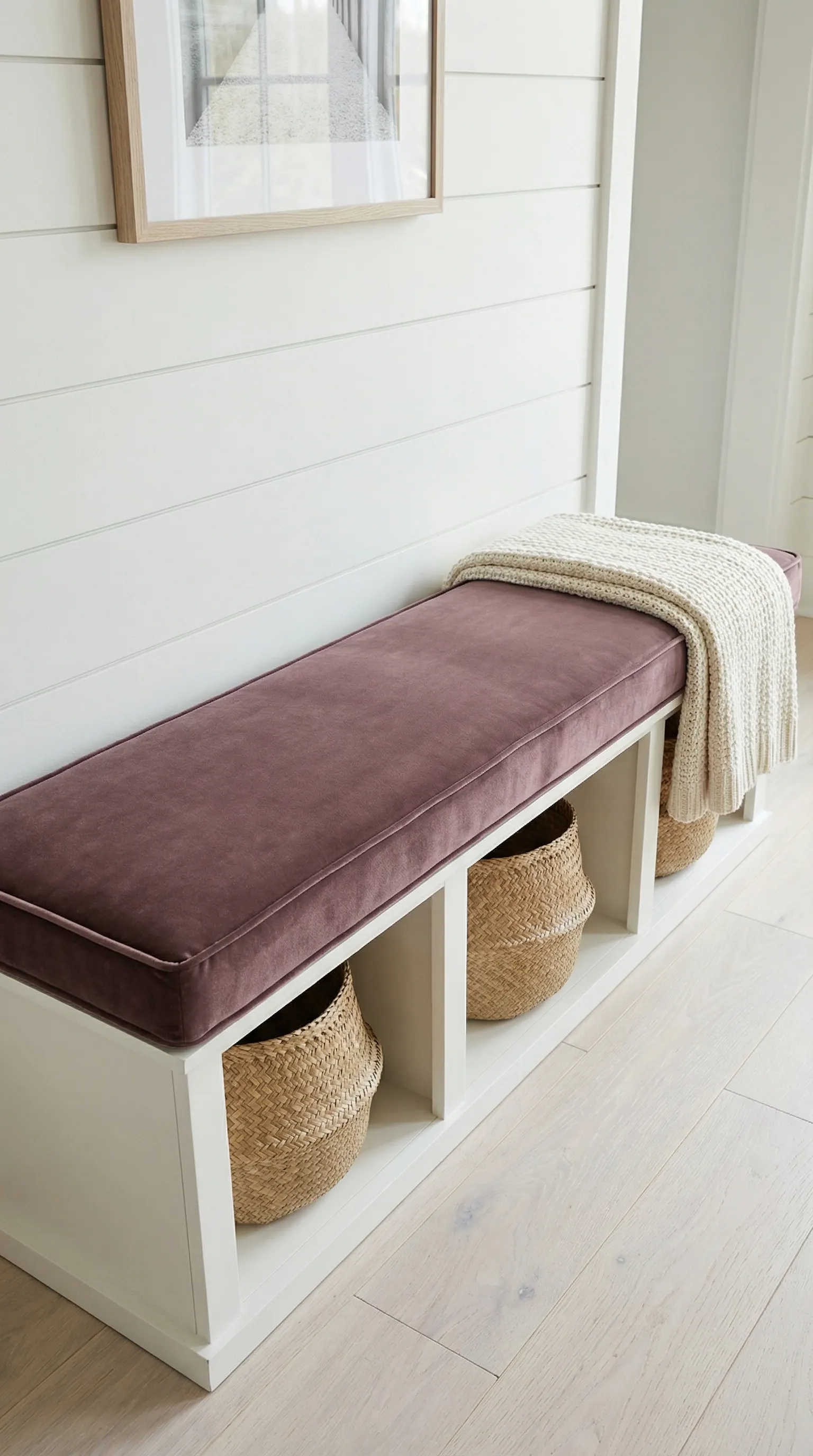
About 2 in of dusty mauve velvet on a white cubby bench. Right for pulling on boots. Short for an hour with the mail. The notebook follows.

 Save
The quick answer
For long sitting on a custom bench cushion, choose 4 in (10 cm) of foam, the everyday-seating standard; 2 in suits a quick sit to pull on boots. Against a wall, add a back cushion about 16 in (40 cm) tall. Softer foam can be requested, and every inch of foam raises the seat an inch.
What the entryway bench is built for
The bench is a white three-cubby unit against shiplap, seagrass baskets in two cubbies, an oak-framed photo above. On top: a dusty mauve velvet box cushion, about 2 in deep, with self piping. A cream cable-knit throw is folded over one end.
At 2 in, the pad softens the seat and keeps the bench's clean white lines in view. Self piping keeps the edge crisp without adding a second color.
The matte textures are there for the velvet. Chunky knit and woven seagrass make the pile's sheen look richer.
One muted velvet, everything else natural or white. It is a good entryway bench cushion for a minute at a time. The question is what happens at minute sixty.
Thickness, measured against use
The four standard thicknesses, what each one sits like, and what it does to seat height.
| Thickness | Sits like | Seat rises by |
|---|---|---|
| 2 in (5 cm) | A pad for pulling on boots | 2 in |
| 3 in (7.5 cm) | A neat, low bench seat; common on velvet | 3 in |
| 4 in (10 cm) | Everyday seating; the standard | 4 in |
| 5 in (12.5 cm) | A deeper sit for lingering | 5 in |
Standard options. Thicker builds are made on request and cost more.
Five callouts on the entryway
Five marks, from the seat top to the frame on the wall.
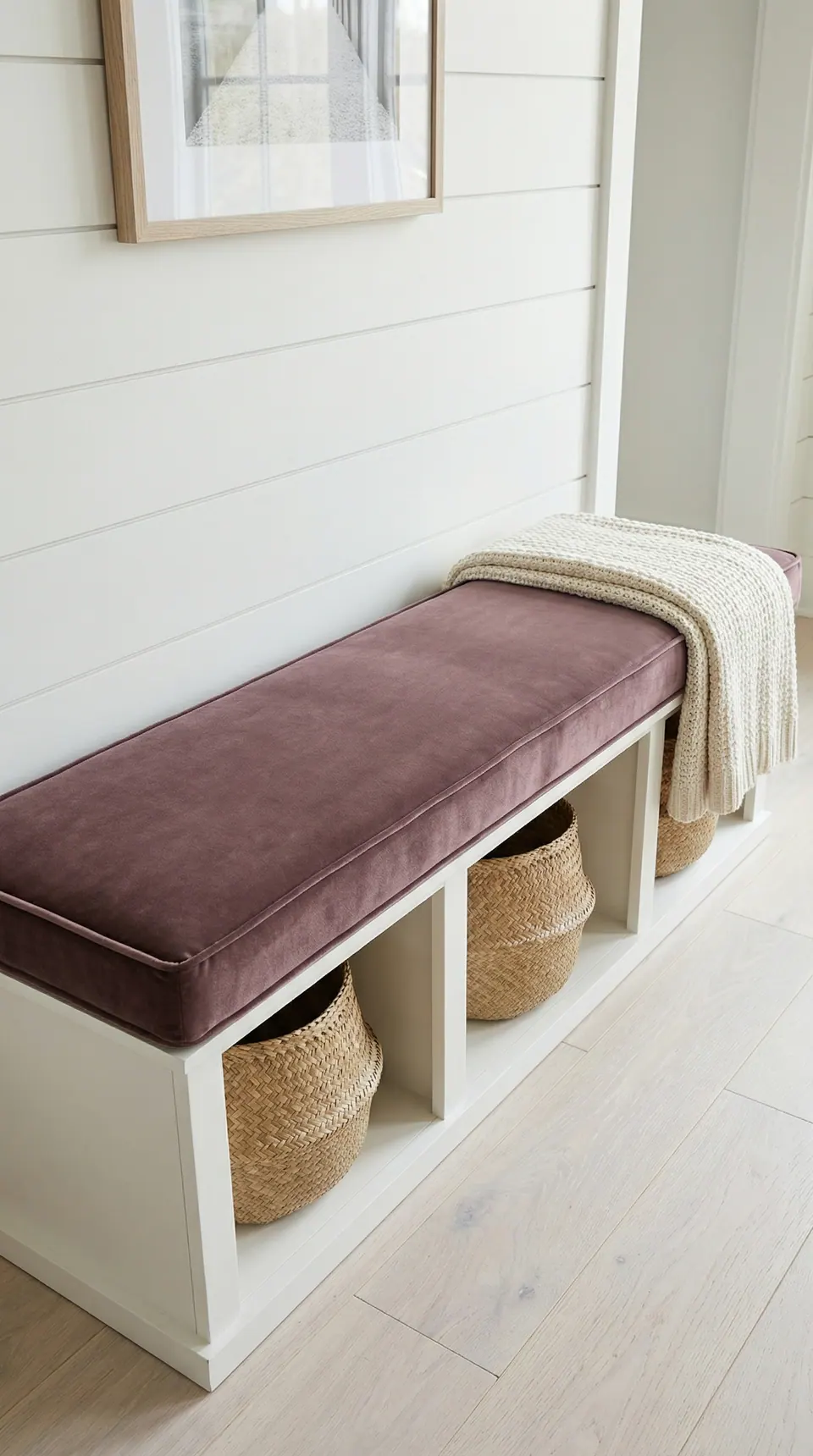
- Mauve velvet seat top
Velvet pile has a direction, so the top panel is cut with the nap brushing toward the front edge to keep the color even after people sit.
- Self-piped front edge
Piping in the same mauve defines the box edge without bringing a second color against the white frame.
- Cream cable-knit throw
A matte, chunky knit on one end makes the velvet's soft sheen look richer by contrast.
- Woven seagrass baskets
Natural baskets warm up the white cubbies and echo the brown undertone in the mauve.
- Oak-framed photo print
The thin oak frame links the wall to the pale floor, so the cushion stays the only saturated color.
- Mauve velvet seat topVelvet pile has a direction, so the top panel is cut with the nap brushing toward the front edge to keep the color even after people sit.
- Self-piped front edgePiping in the same mauve defines the box edge without bringing a second color against the white frame.
- Cream cable-knit throwA matte, chunky knit on one end makes the velvet's soft sheen look richer by contrast.
- Woven seagrass basketsNatural baskets warm up the white cubbies and echo the brown undertone in the mauve.
- Oak-framed photo printThe thin oak frame links the wall to the pale floor, so the cushion stays the only saturated color.
From boot bench to reading seat: four adjustments
Someone starts reading the mail on the bench, or taking calls there, and the 2 in pad runs out of answers. Here are the levers, in the order I'd pull them, partner.
- Thickness. Standard options for a custom bench cushion are 2, 3, 4 and 5 in. 4 in is the everyday-seating number; 3 in keeps a neater line and is a common choice on velvet benches.
- Seat height. Every inch of foam raises the seat an inch. Check it with the seat height calculator.
- Softness. The standard foam is 32-density, about 2.0 lb/ft³, medium-firm to firm. A softer foam, or an extra ¾ in (2 cm) layer of fiber wrap, can be written into the order.
- A back. Against a wall, a back cushion about 16 in (40 cm) tall turns a perch into a seat. It can be ordered on its own.
Two cushions, 94½ in of bench, priced as a pair
A buyer building a wooden bench needed two 2 in cushions to sit flush: 63 x 15.7 in and 31.5 x 15.7 in. Neither size was on the menu. The workshop had them select two 16 x 47 in options, since the combined length is the same, and write the real sizes in the note.
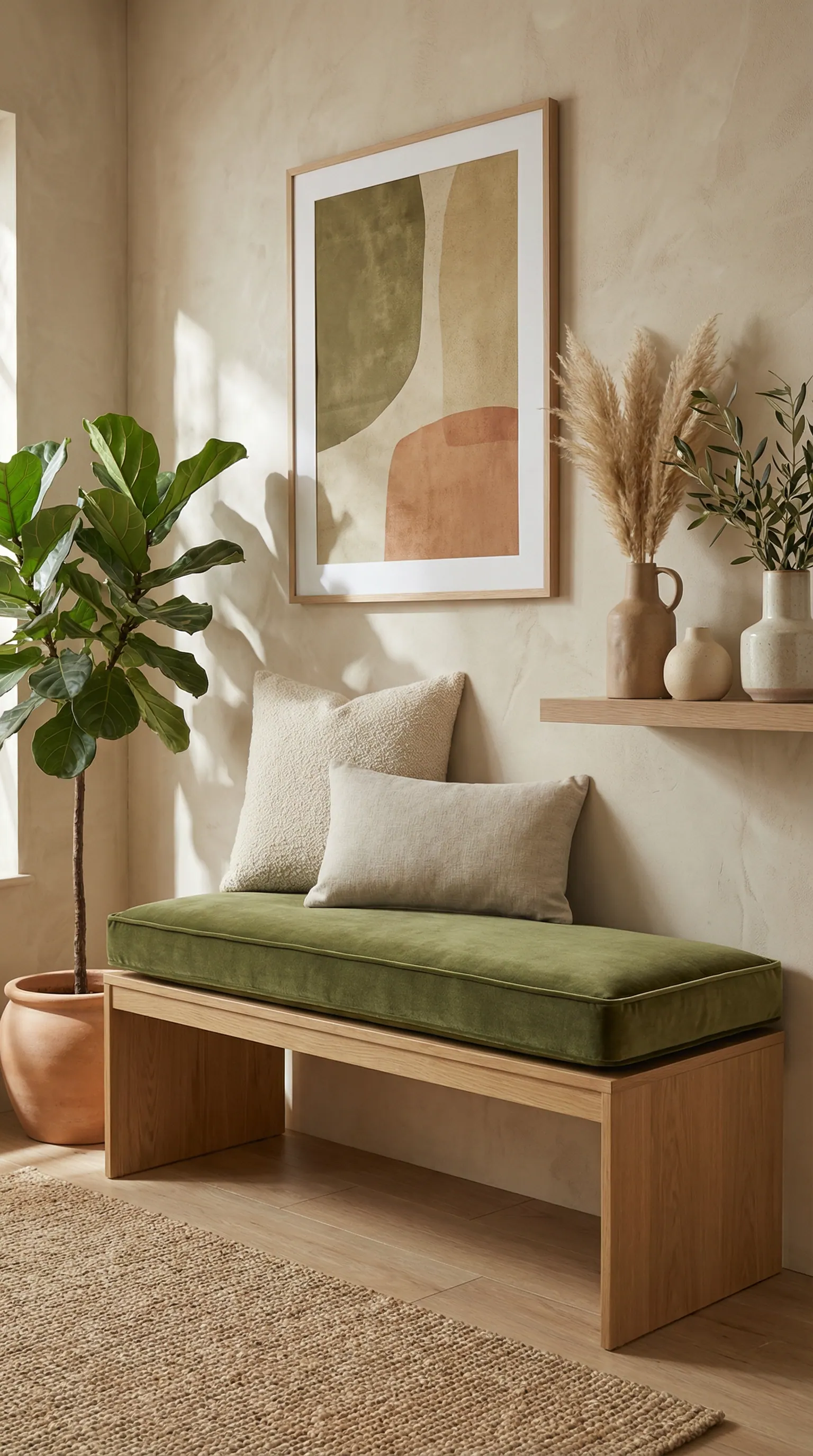
The green-with-yellow-piping look they wanted came from an early photo under old codes, so the workshop matched it by eye: a durable performance fabric. The buyer built the bench first and ordered after. Measure the finished frame, not the plan.
- Sizes
- 63 x 15.7 x 2 in and 31.5 x 15.7 x 2 in
- Fabric
- Green performance fabric, yellow piping
The lesson: Two cushions of different lengths can be priced as two equal sizes with the same total length.
Buyer questions, with the numbers checked
- A common question
Can I order just a backrest, or a backrest with arms, and no seat cushion?
The workshop's answerYes. One buyer ordered a backrest alone, 13 in high by 50 in wide; another a 63 in (160 cm) backrest with two armrests and no base.
- A common question
Can several cushions sit flush against each other on one bench?
The workshop's answerYes. Measure each section and send the exact width, depth and thickness of every cushion. For two equal backrests on one bench, divide the total length by two. For a small gap between pieces, write the sizes slightly smaller.
- A common question
My cushion came out a little off the size I ordered. What tolerance is normal?
The workshop's answerBecause cushions are handmade, ½ to ¾ in (1 to 2 cm) is normal. The workshop checks the production size, say 23½ x 53½ x 4 in (60 x 136 x 10 cm), against your numbers and asks whether the alcove is truly square.
An entryway bench cushion at 2 in thick is right for pulling on boots. For reading or working on the same bench, 4 in of foam is the everyday standard.
Nate
Bench cushion, by the numbers
| Cushion | Entryway bench cushion, box edge |
|---|---|
| Fabric | Dusty mauve velvet, short tight pile |
| Piping | Self piping, same mauve |
| Thickness | About 2 in (5 cm) shown; 4 in (10 cm) for long sitting |
| Foam | 32-density; softer foam on request |
| Back cushion | About 16 in (40 cm) tall, ordered separately |
| Care | 86°F (30°C) gentle wash, air dry |
| Tolerance | ½ to ¾ in (1 to 2 cm) |
| Best for | Entryway benches that double as reading spots |

Have it made
Have this made — ask Nate’s workshop
Precision starts on the phone. Give the workshop your measurements and they will read them back to you, edge by edge. — Nate
Leave your details and the workshop will call you to confirm measurements, fabric, foam and piping. No prices, dates or payment on this page: it is a request, not an order.
Questions buyers ask next
Is velvet comfortable for long sitting on a bench?
Velvet has a short, tight, non-shiny pile that feels soft and spot-cleans easily, indoors only. For long sitting the foam matters more than the cloth: 4 in (10 cm) is the everyday standard.
Can a bench cushion be made softer?
Yes. Standard foam is 32-density, medium-firm to firm. A softer foam can be written into the order, and an extra ¾ in (2 cm) layer of fiber wrap can go over the foam.
Why does my velvet cushion look like two colors?
Velvet pile has a direction. From one side it reads lighter, from the other darker, and brushing it shifts the shade. That is how velvet behaves, not a dye fault.
± 1/4 in — Nate
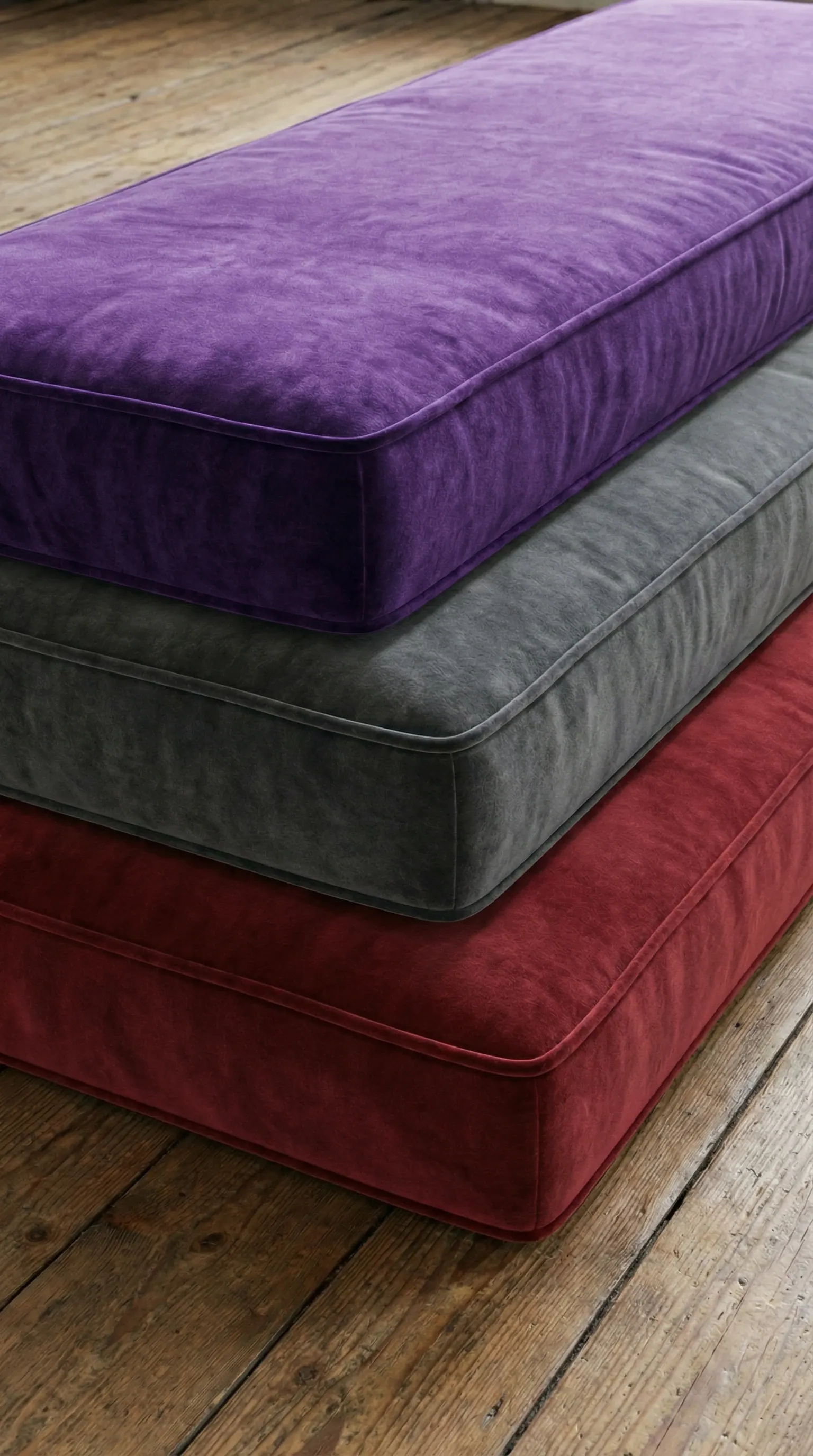
Velvet benches and chair pads, measured
 Save
 Save
 Save
 Save
 Save
 Save