A Reading by ÉlodieBench Cushions
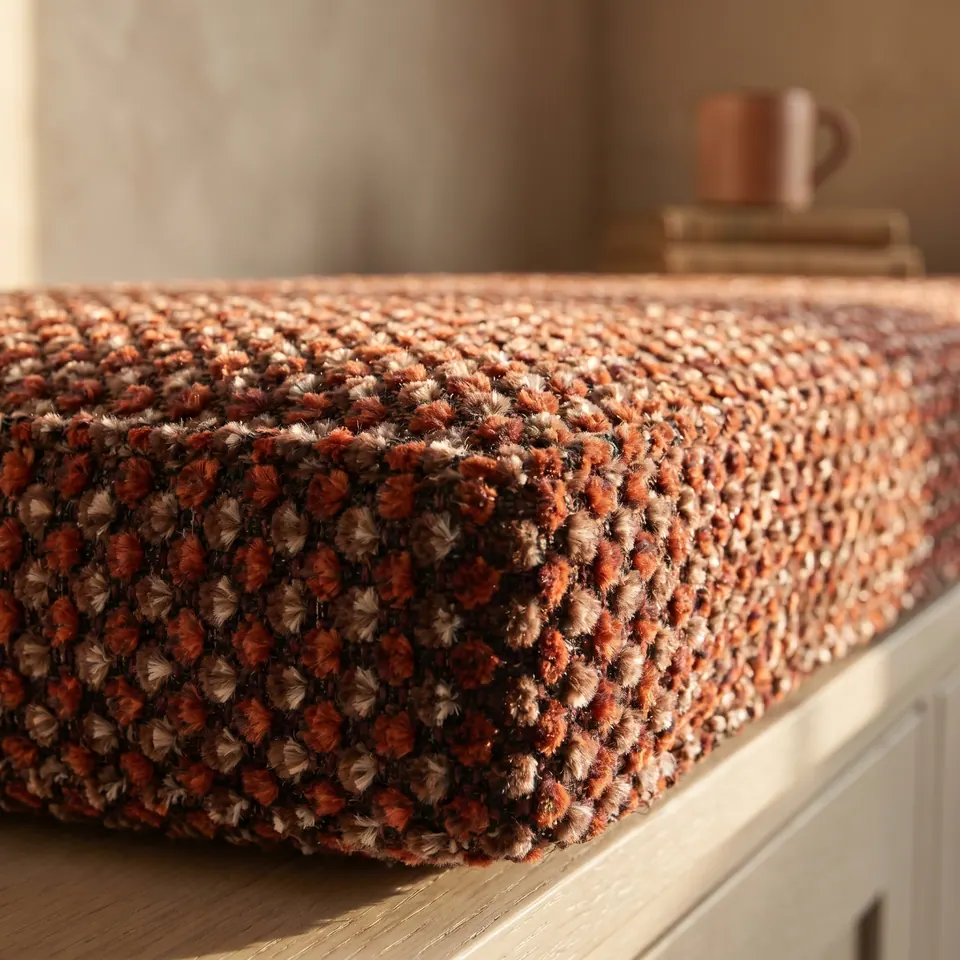
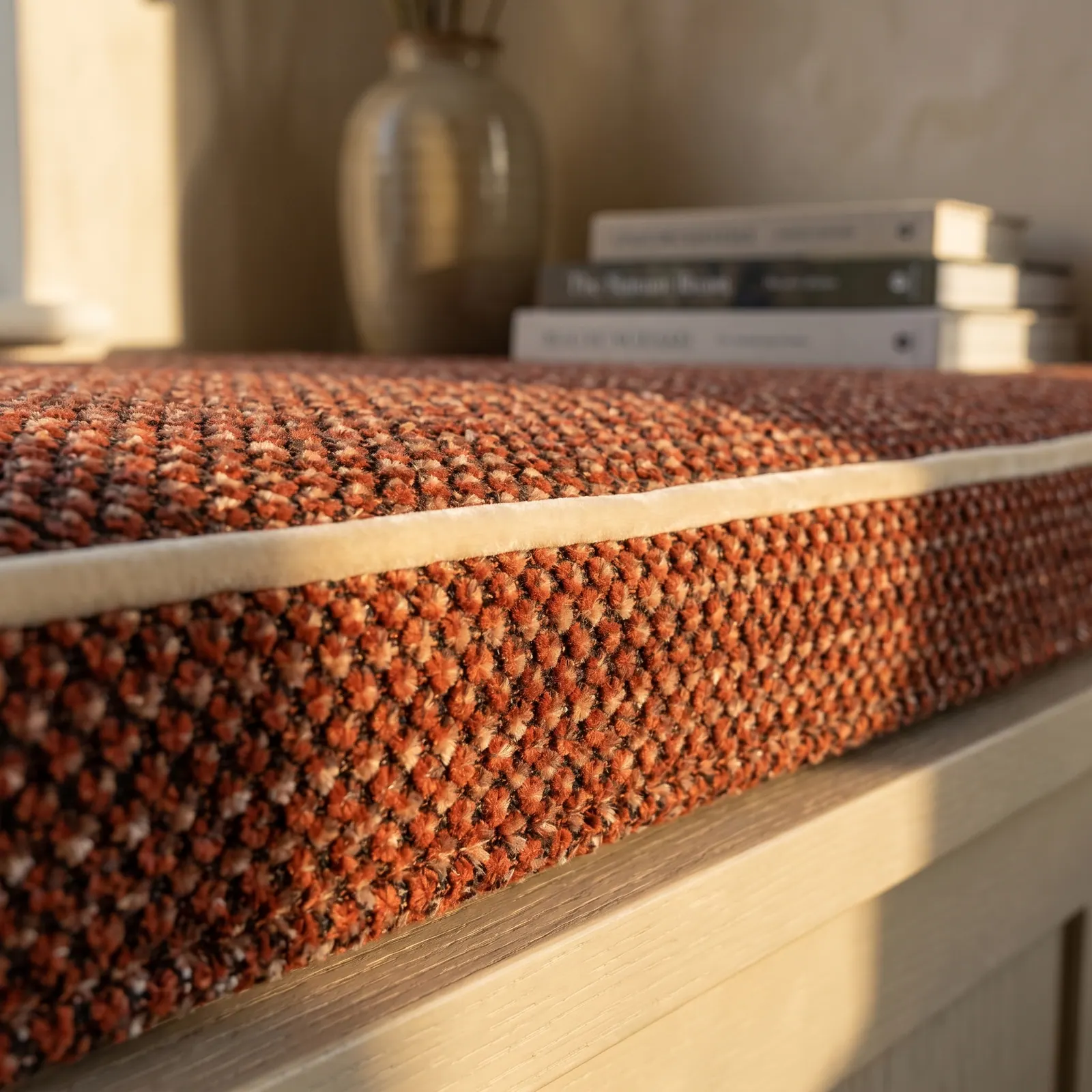
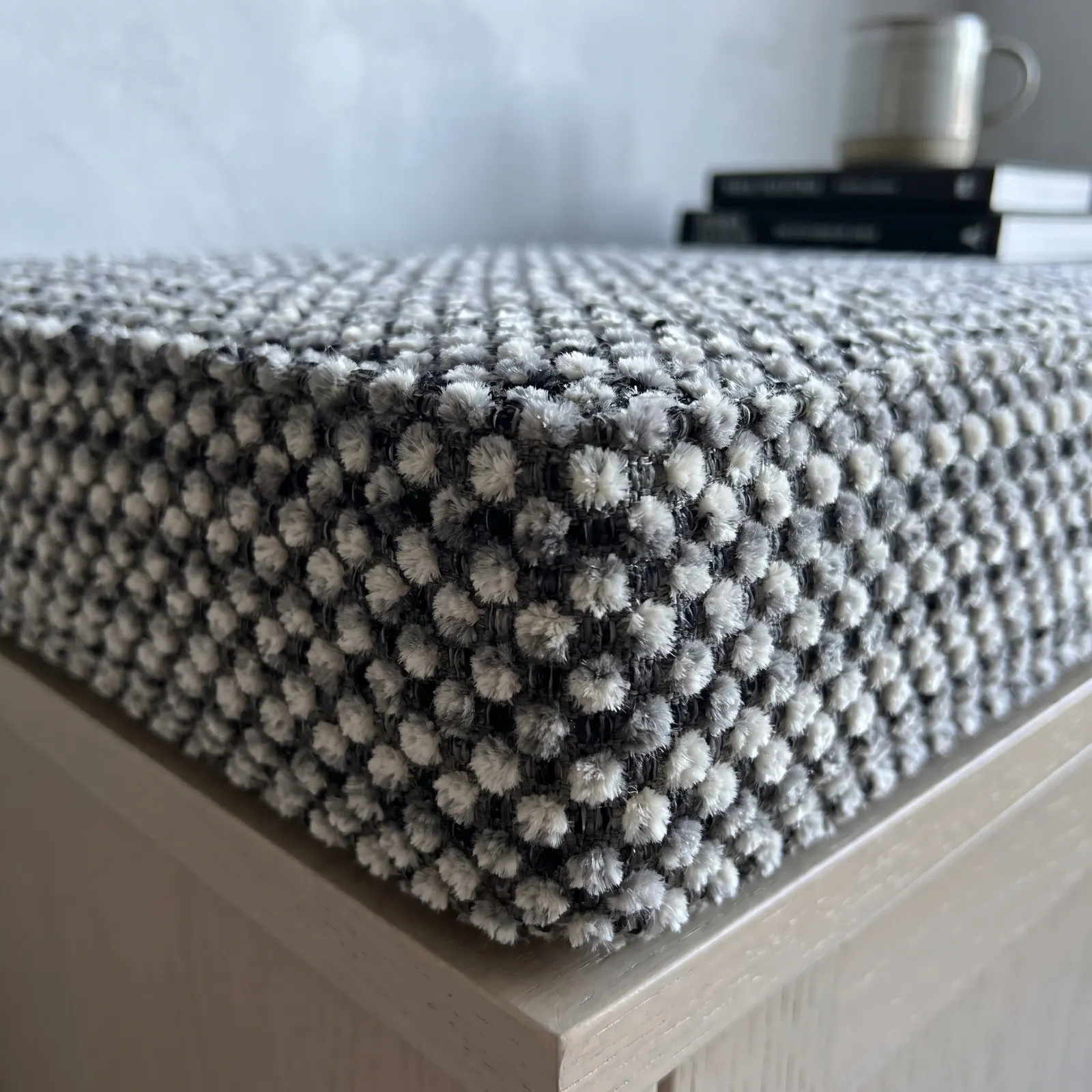
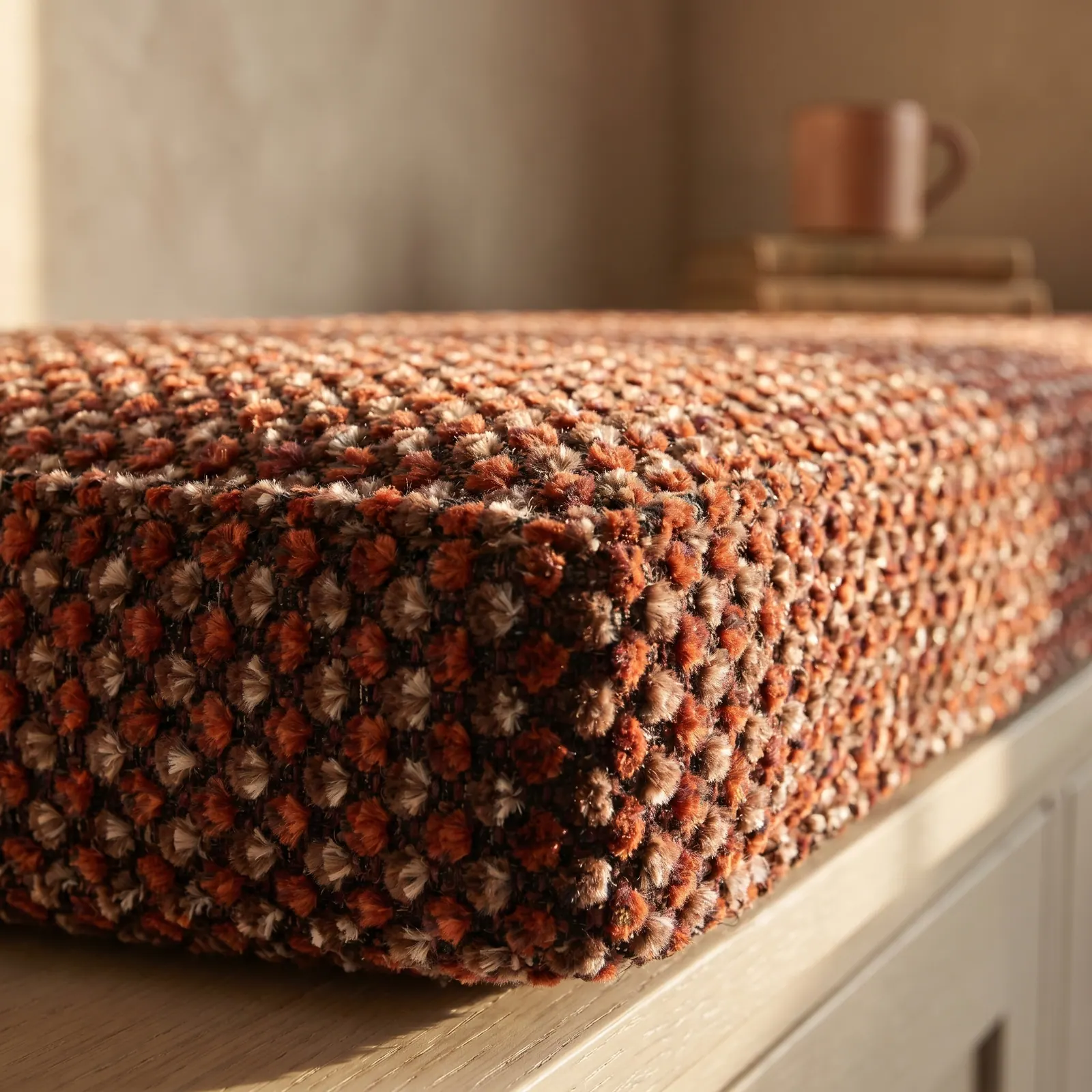
A rust chenille bench cushion in profile: a cream velvet cord, a deep box wall and room for one more guest
Guests meet a bench from the side, at knee height, as they pull up to the table. So I read this rust cushion the way they will, from the cord down.

 Save
The quick answer
For a custom bench cushion that seats guests well, get the length right in the exact-size field, because the typed size is the one that gets cut. On a strong rust weave, cream velvet piping on the top seam makes the box edge look tailored. Over a radiator, or when one piece comes out short, two cushions side by side often work better than one.
The cushion, cut open
Cover fabric. A removable, zippered cover. Machine wash at 86°F (30°C) on a gentle cycle and air dry.
Piping. A fabric-covered cord sewn into the seams. It sits on the seam line, so it does not change the size.
Fiber wrap. Polyester fiber (Dacron) batting around the foam: it fills the cover out and softens the edges.
Foam core. About 2.0 lb/ft³ (32 kg/m³) high-resilience foam, firm to medium-firm, cut to the ordered size.
Zipper. Along the back band, as hidden as possible. The zipper side faces down or toward the wall.
Base panel. The underside of the cover. A non-slip fabric backing can cover the whole of it instead.
Pinned by Élodie: the profile from cord to wall
Read the pins from the top seam down, the way the golden light falls across the cushion.
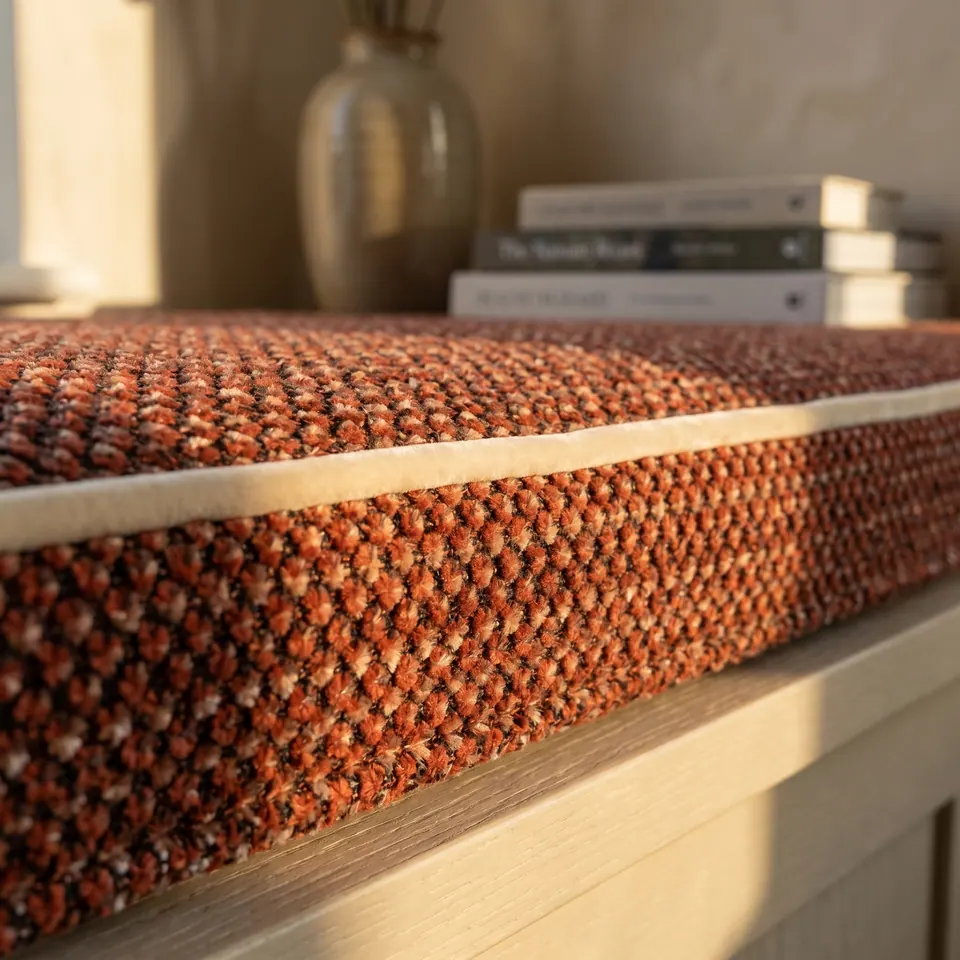
- Cream velvet piping
The cord sits exactly on the top seam and echoes the paler dots in the weave.
- Rust box wall
Seat-height framing shows the full depth of the box profile.
- Rust top surface
Golden-hour light brings out orange, cream and brown flecks together.
- Glazed vase
A glazed vase in soft focus adds warm reflections.
- Stacked books
White book spines give scale and a pale foil to rust.
- Cream velvet pipingThe cord sits exactly on the top seam and echoes the paler dots in the weave.
- Rust box wallSeat-height framing shows the full depth of the box profile.
- Rust top surfaceGolden-hour light brings out orange, cream and brown flecks together.
- Glazed vaseA glazed vase in soft focus adds warm reflections.
- Stacked booksWhite book spines give scale and a pale foil to rust.
Anatomy of a rust profile at seat height
Most people see a bench cushion from above. Guests see it from the side, at the height of their knees, as they pull up to your table.
That is why this photograph is taken at seat height. It shows a custom bench cushion in rust dotted chenille in pure profile, and the profile tells you everything. The top surface catches the golden hour, and the low sun pulls three colors out of one weave: rust, burnt orange, and small cream and chocolate flecks that make the cloth look alive.
Then the line. A cream velvet cord sits exactly on the top seam, not a hair above or below. Cream, not white, because it answers the paler dots already in the weave. Pure white would draw a hard outline; cream frames the seat and lets it stay warm. On a strong color, a light piping edge is the quickest way to look tailored rather than heavy. The eye sits down first.
Below the cord runs the box wall, its full depth on show. A deep, straight wall reads generous, and generous matters when a bench must seat one more guest than you planned.
Behind, a tall glazed vase in soft focus throws small warm reflections, and a stack of white hardback books gives scale and a pale foil to all that rust. The pale oak ledge underneath keeps the palette honey-light. Nothing in the frame is cool, and nothing needs to be.
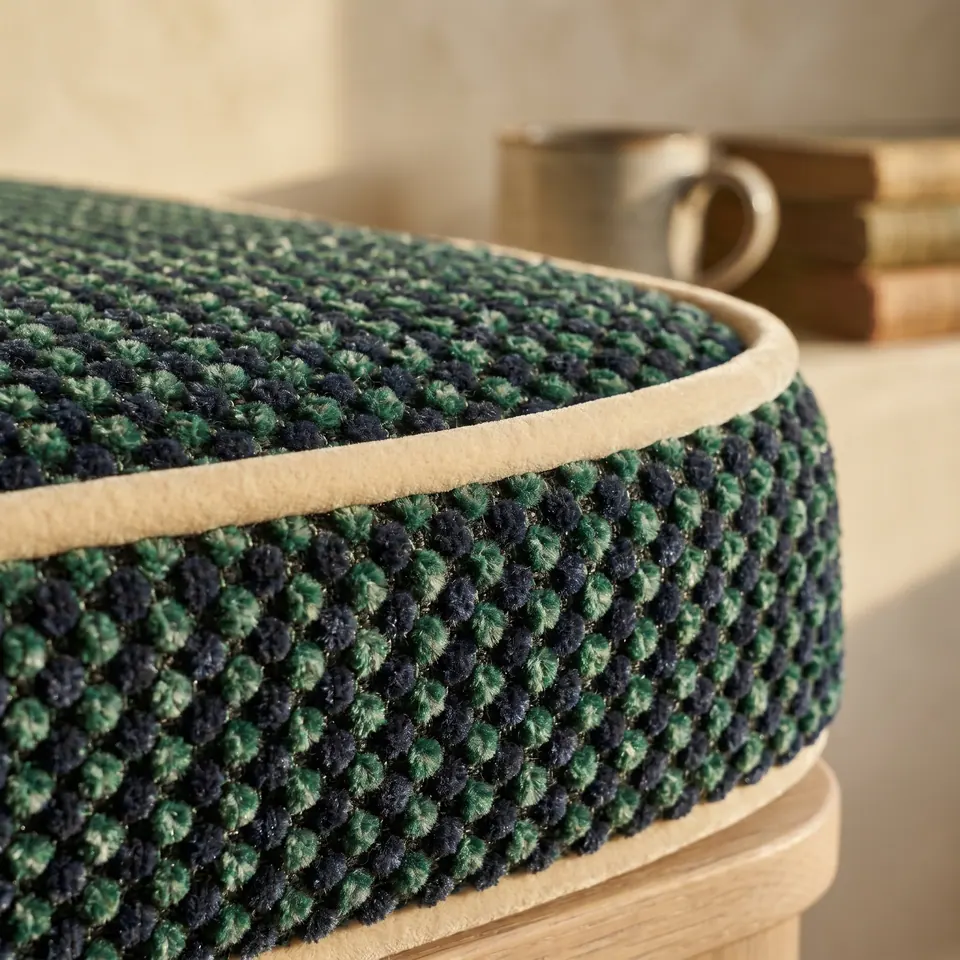
The gallery holds the same rust weave without piping, and the difference is instant: the edge softens and the depth is harder to read. Weigh that choice in piping: matching, contrast or none, then browse bench cushions, the living room cushions and the woven jacquard and damask family. Who sits on your bench when the house is full?
Cross-section, from the top panel down
- Top panel: rust dotted chenille, the face that catches both the light and the eye.
- Top seam and cord: cream velvet piping, set exactly on the seam so the line reads straight from across the room.
- Box wall: the side band guests see at knee height; its depth is the cushion's thickness.
- Core: foam cut to the size typed in the exact-size field, not the dropdown range.
An 18-inch pad for a 40-inch bench
A buyer in the US ordering a bench pad picked the 38–40 in (97–102 cm) length range in the dropdown, then typed 18 x 20 in the exact-size field. The workshop cut what was typed: an 18 x 20 in (46 x 51 cm) pad, 3 in (7.5 cm) thick, in fabric HM-08. The bench wanted about 20 x 40 in (51 x 102 cm).
The workshop explained that production follows the typed exact size, and offered three ways forward: a refund of the price difference, a second pad with that credit applied, or a free second pad. The buyer took the free identical pad, and two pads side by side made up the length.
For hosting, my friends, that ending has a quiet charm: two pads are easy to lift, shake out and share between rooms. Still, read your exact size twice before you pay, and settle the thickness first with the seat height calculator.
Buyer questions: seat height, radiators and a tiny tracking label
- A common question
I need the seat on my bench to be 26 inches high. Is that possible?
The workshop's answerAny size can be made. The shop first checked whether 26 in (66 cm) meant the total height from the floor to the top of the seat, and asked for all three dimensions: width, length and height.
- A common question
There's a radiator under my window seat. Should the cushion be one piece or two?
The workshop's answerTwo. For a window seat of 106 x 15 in (269 x 38 cm) with a radiator below, the shop recommended two cushions of 53 x 15 in (135 x 38 cm) each, so the radiator area isn't sealed off.
- A common question
Tracking says my package weighs 2 lb and measures about 4 x 4 in (10 x 10 cm). Can that really be my order?
The workshop's answerThe size and weight in the label data can be placeholder values. Ignore them and follow the tracking status instead.
On the cutting table: the rust profile
| Cushion | Box bench cushion, shown in side profile |
|---|---|
| Fabric | Rust dotted chenille (P62) with cream and chocolate flecks |
| Piping | Cream velvet contrast cord on the top seam |
| Edge | Box wall, full depth visible at seat height |
| Two fabrics | Chenille body, velvet cord |
| Setting | Pale oak ledge, white hardbacks, glazed ceramic vase |
| Light | Golden hour, low and warm |
| Ordering | The typed exact size is the size that gets cut |
| Best for | Living room and dining benches that seat guests |

Have it made
Have this made — ask Élodie’s workshop
Describe the room at four in the afternoon: the floor, the wall, the one color you love. That is where a good fabric choice begins. — Élodie
Leave your details and the workshop will call you to confirm measurements, fabric, foam and piping. No prices, dates or payment on this page: it is a request, not an order.
On a rust chenille bench cushion, cream velvet piping echoes the pale dots in the weave. Pure white would outline the seat; cream frames it.
Élodie
Questions buyers ask next
Why pick cream piping instead of white on a rust cushion?
Cream repeats the paler dots already in the rust weave, so the edge looks like part of the fabric. Pure white sets up a harsh contrast and outlines the cushion instead of framing it.
How do I work out the finished seat height of a cushioned bench?
Add the cushion thickness to the height of the bench frame, measured from the floor. When you ask for a target seat height, say whether you mean the total from the floor to the top of the cushion.
Is one long bench cushion better than two shorter ones for hosting?
One cushion gives an unbroken line along a table. Two are easier to lift, wash and move, and they suit seats with something underneath that needs air, such as a radiator.
Does a chenille bench cushion look different without piping?
Yes. The same rust chenille without piping has a softer edge, and its depth is harder to read from the side. Piping draws the seam line, which makes the box profile look sharper and more tailored.
With color and care — Élodie
More photographs to read
 Save
 Save
 Save
 Save
 Save
 Save