A Reading by MaggieBench Cushions
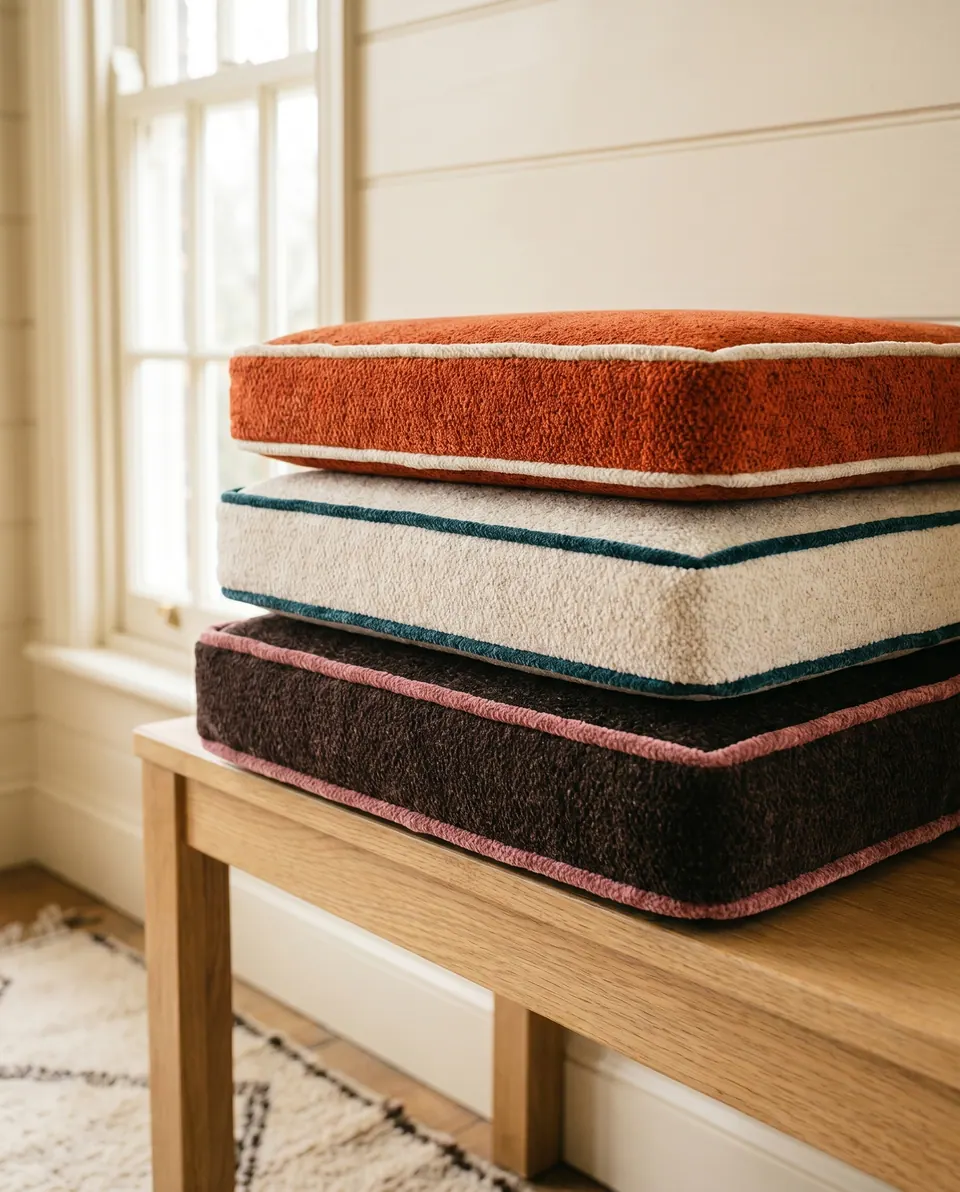
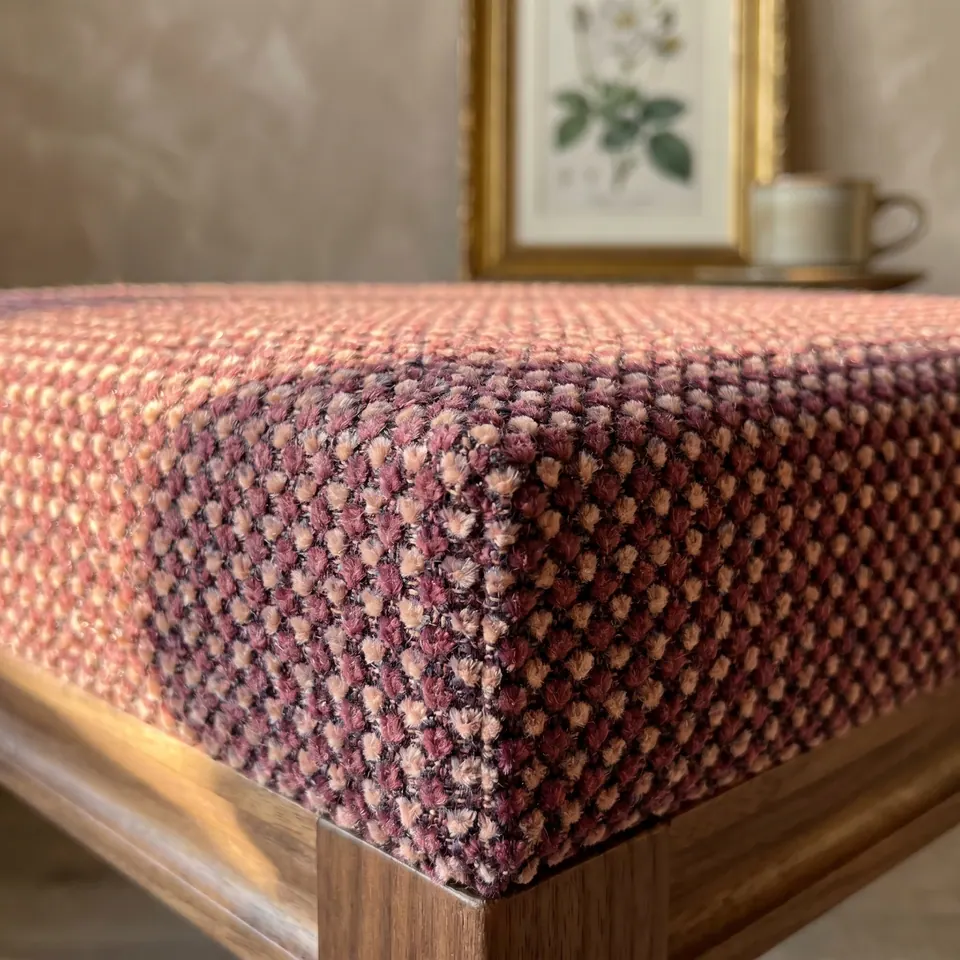
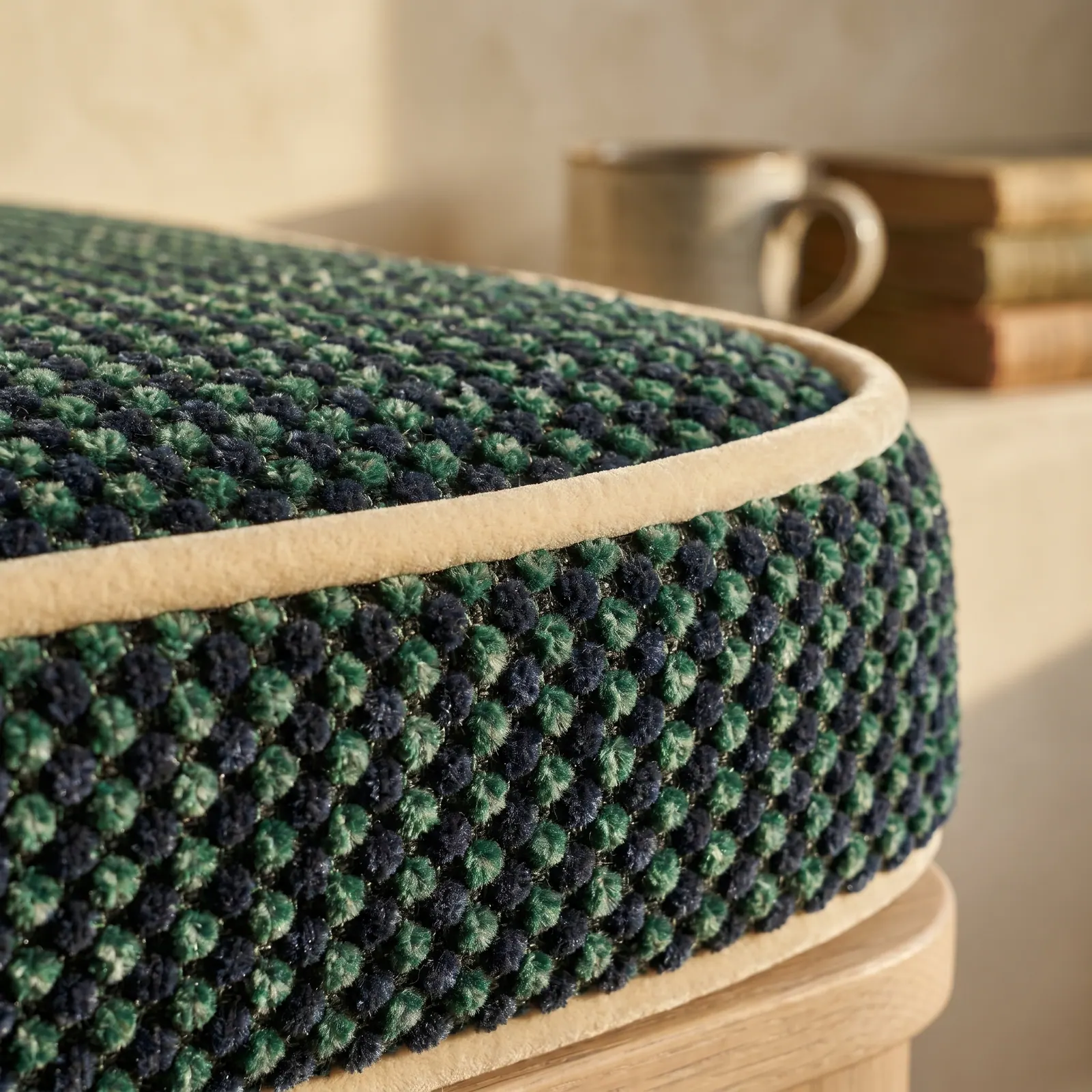
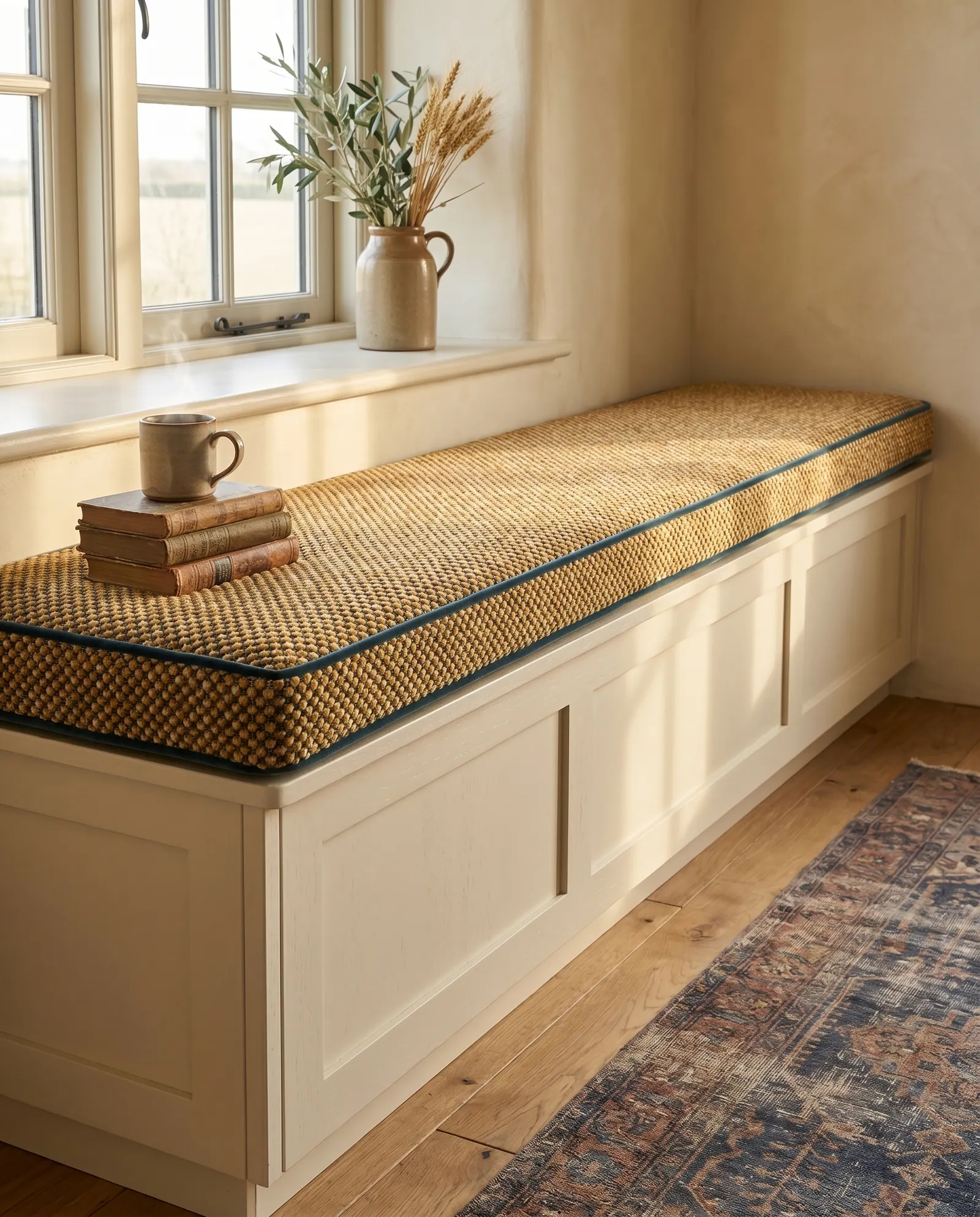
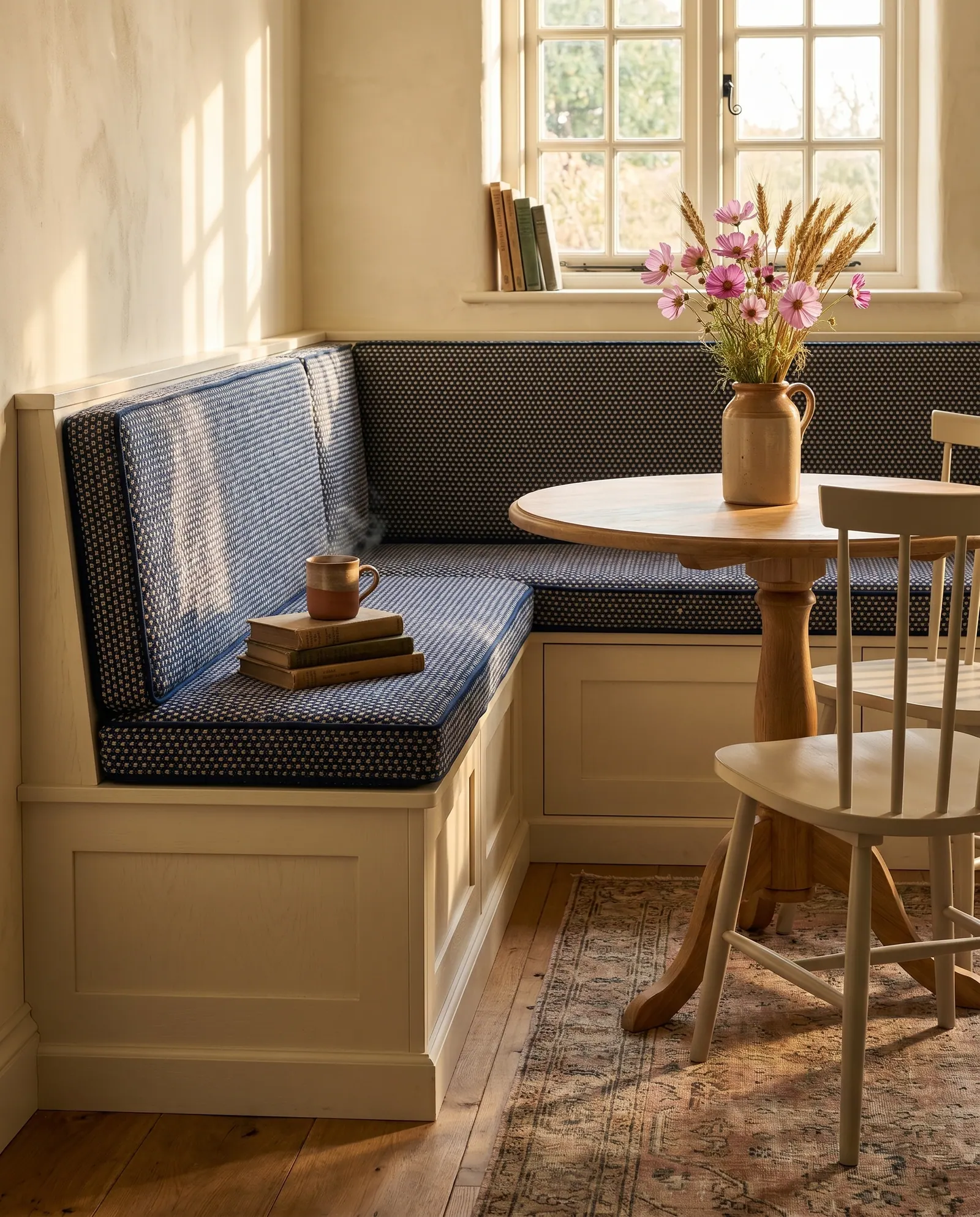
A rounded bench cushion corner in green and navy chenille, piped in cream velvet
Three buyer questions first. Then one corner, one mug, a stack of old books, and the reason each one earned its place on the bench.

 Save
The quick answer
Ask for rounded corners on a bench cushion when the bench end sits beside a walkway, because there is no sharp tip to catch a knee. On a dark two-color chenille, a pale contrast piping such as cream velvet outlines the curve and shows whether it was sewn cleanly. Trace the radius straight from the wooden bench top.
Three buyer questions before we look
- A common question
My cover came back with the piping fabric on the main body and the body fabric on the piping. Can that be fixed?
The workshop's answerSend the workshop a photo that shows both fabrics. When the workshop swapped the body and piping fabrics on one order, it remade the cover in the right ones straight away, cut to fit over the foam the buyer already had.
- A common question
Could you make long round bolster backrests to go with my dining bench seat cushions?
The workshop's answerYes. The shop makes cylindrical bolster backrests with rounded ends in the same fabric, for example about 50 in (128 cm) and 41 in (105 cm) long to match seats of 18 x 50 in (46 x 128 cm) and 18 x 41 in (46 x 105 cm). Send reference images or a sketch so the quote is accurate.
- A common question
My trapezoid window seat is about 79 in (200 cm) long. Should I get one big cushion or two smaller ones?
The workshop's answerTwo is the shop's recommendation. With angled sides, one long piece can bend or shift, while two look neater, fit more snugly and come off more easily for cleaning. One piece is still possible, measured as sides A to E, for example 24, 24, 81, 58 and 21 3/4 in (61, 61, 206, 147 and 55 cm) with self piping.
Now, the reading
Reading the corner, then the props
Start with the corner, because that is where a cushion confesses. A radiused corner is harder to pipe than a square one. The cord has to bend around the curve without pleating, kinking or flattening. This one bends clean, and the seam beneath it doesn't wander. A straight welt is a kind of honesty; a smooth curved one is honesty with good manners.
Why rounded at all? This bench end sits beside a walkway, and square corners on a walked-past seat are shin-finders. I once made a square-cornered cushion for my own hallway bench and met it every morning for a year. Learn from me, dear.
Why cream? The ground is forest green and navy dots woven together, deep enough to read almost like tweed from a step back. Navy or green piping would vanish into it, and the cushion would lose its outline in low light. A pale velvet cord draws the shape once, softly, and its sheen catches the late sun a little differently from the matte chenille.
Now the props, because nothing on this bench is an accident.
- The speckled stoneware mug. The one warm note in a cool palette. Its flecks repeat the dotted chenille at a different scale, so it belongs.
- The stack of old hardbacks. Height, a little history, and faded spines that sit easily beside navy and green. They also tell you what the seat is for.
- The oak base. Warm wood below keeps a dark cushion from feeling heavy. Honey oak and deep green are an old, reliable pair.
Notice what isn't there: no throw, no second pillow, no plant. On a close-up, three props are plenty. What is the one warm object you'd set beside a cool cushion?
More benches like this live in the bench cushion atlas and among living room cushions. The chenille belongs to the jacquard and damask family, and the curve itself is covered in measuring rounded corners.
Pinned by Maggie
Five pins, from the cream cord to the oak underneath, and a reason for each.
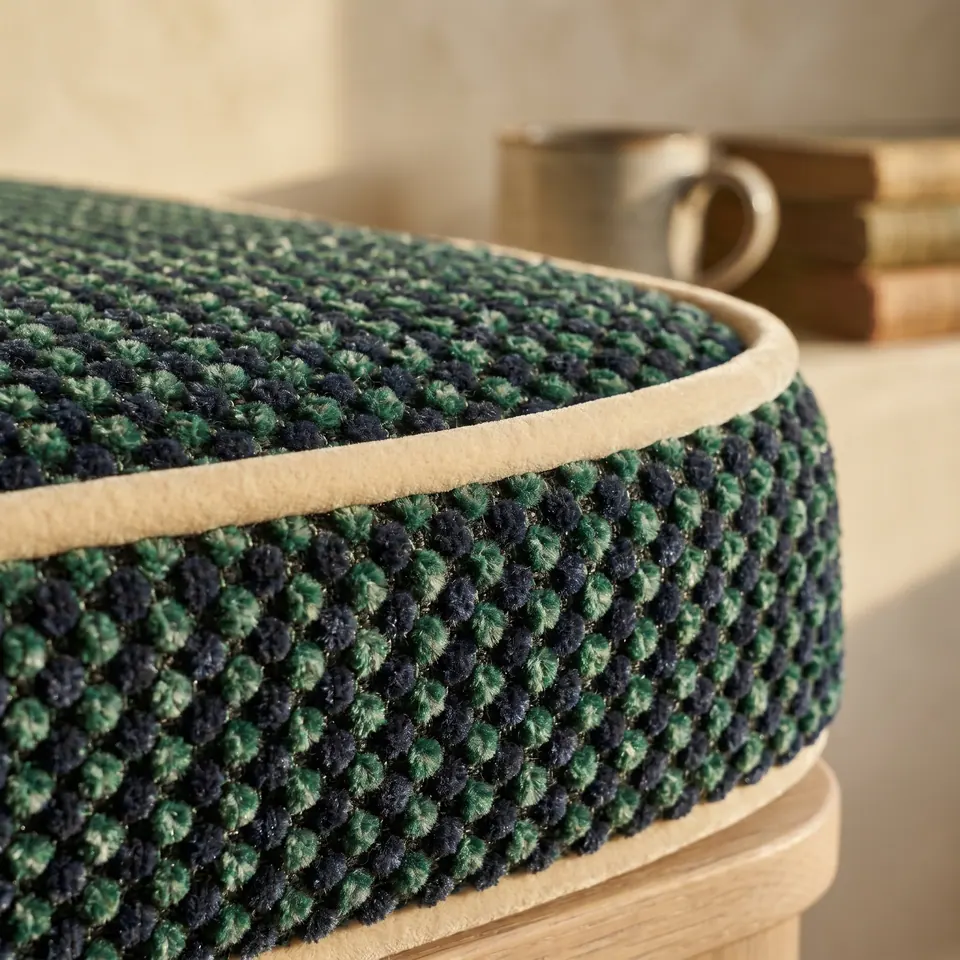
- Cream velvet cord
A pale cord outlines the deep green-and-navy ground.
- Radiused corner
The piping bends smoothly with no kinks, a good test of sewing on a curve.
- Green and navy dots
Two dark colors woven together read almost like tweed.
- Stoneware mug
A speckled mug adds warm contrast to a cool palette.
- Oak base
Warm oak below keeps the dark cushion from feeling heavy.
- Cream velvet cordA pale cord outlines the deep green-and-navy ground.
- Radiused cornerThe piping bends smoothly with no kinks, a good test of sewing on a curve.
- Green and navy dotsTwo dark colors woven together read almost like tweed.
- Stoneware mugA speckled mug adds warm contrast to a cool palette.
- Oak baseWarm oak below keeps the dark cushion from feeling heavy.
How to copy this corner at home
- Trace the corner radius from the wooden bench top onto paper; never guess a curve.
- On a deep two-color ground, choose a pale piping so the outline survives low light.
- Add one warm object, such as stoneware, terracotta or brass, to a cool palette.
- Stack a few books whose spines repeat the cushion colors, and keep the stack low.
- Let the wood show beneath a dark cushion instead of hiding the base.
- Before ordering, ask the maker for a close-up of a piped curve.
The backrest that didn't make the cut
A buyer messaged the workshop about a small bench with a shallow seat. The first request was a pair in lavender: a seat cushion 45 1/4 x 15 3/4 in (115 x 40 cm) and a back cushion 45 1/4 x 11 3/4 in (115 x 30 cm).
Then came second thoughts, the good kind. On a seat that shallow, a backrest would take up too much of the sitting room. The back cushion was dropped, and the seat cushion went ahead alone.
There was a small muddle on the workshop's side, and I'll own it: the quote first mixed up inches and centimeters. It was caught, and the units were confirmed before anything was cut. Write the unit next to every number you send. Every one.
The lesson: a backrest eats into seat depth. On a shallow bench, consider the seat cushion alone. Our notes on back cushion height and sizing go further.
On the cutting table: the rounded bench cushion
| Piece | Bench cushion with a rounded front corner, box edge |
|---|---|
| Fabric | Forest green and navy dotted chenille, two-color weave |
| Piping | Contrast cream velvet cord |
| Corner | Radiused, traced from the wooden bench top |
| Base | Warm oak |
| Props | Speckled stoneware mug, stack of old hardbacks |
| Order note | Write in or cm beside every measurement |
| Best for | Living room benches beside a walkway |

Have it made
Have this made — ask Maggie’s workshop
I once cut a lovely cushion two inches short, and I have not forgotten it. That is why the workshop goes over your measurements with you on the phone. — Maggie
Leave your details and the workshop will call you to confirm measurements, fabric, foam and piping. No prices, dates or payment on this page: it is a request, not an order.
A rounded corner is the hardest place to pipe on a bench cushion. If the cord bends around the curve with no kinks, the straight seams were likely sewn with the same care.
Maggie
Questions buyers ask next
When is a rounded corner better than a square one on a bench cushion?
When the bench end is exposed to foot traffic, beside a walkway or a doorway. A radius removes the sharp tip that catches knees and shins. Trace the curve from the wooden bench top so the cushion follows the wood exactly.
What piping color works on a green and navy cushion?
A pale one. Cream or ivory draws a clean outline around a deep two-color ground, while navy or green piping disappears into it. Velvet piping adds a slight sheen that separates it from matte chenille.
Can I leave off the back cushion on a narrow bench?
Yes, and on a shallow seat it is often the better choice, because a backrest takes depth away from the seat. One buyer with a 15 3/4 in (40 cm) deep bench dropped the back cushion and ordered the seat cushion alone.
How do I make a cool-toned cushion feel warmer?
Add warmth around it rather than in it. Here a speckled stoneware mug and an oak base bring the warm notes, and old hardbacks with faded spines bridge the green and navy to the wood.
Stitch straight — Maggie
More photographs to read
 Save
 Save
 Save
 Save
 Save
 Save