CushionGuide

A Reading by ÉlodieBench Cushions

A rust chenille bench cushion corner, and the measurements behind it

A plain seam, a pale oak ledge and a clay mug in low sun. This corner only looks this calm because the numbers were right before the chenille was cut.

The quick answer

To measure for a custom bench cushion, measure the seat itself, not the old cushion: length wood to wood along the back, depth front to back at both ends, and any corner that is not square. A 45-degree corner makes the cushion a trapezoid, ordered with a drawing of every edge. Then choose thickness and a plain or piped seam.

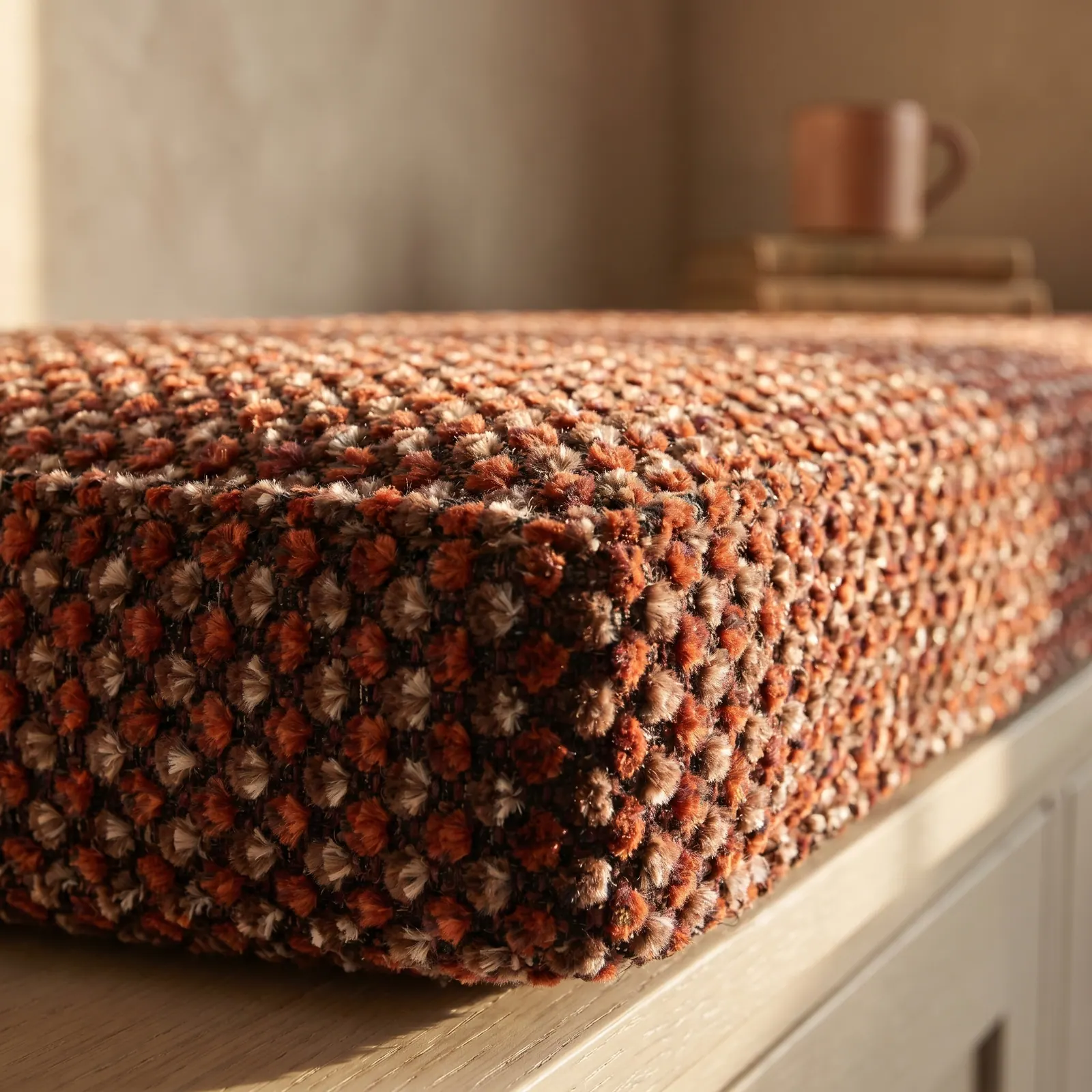
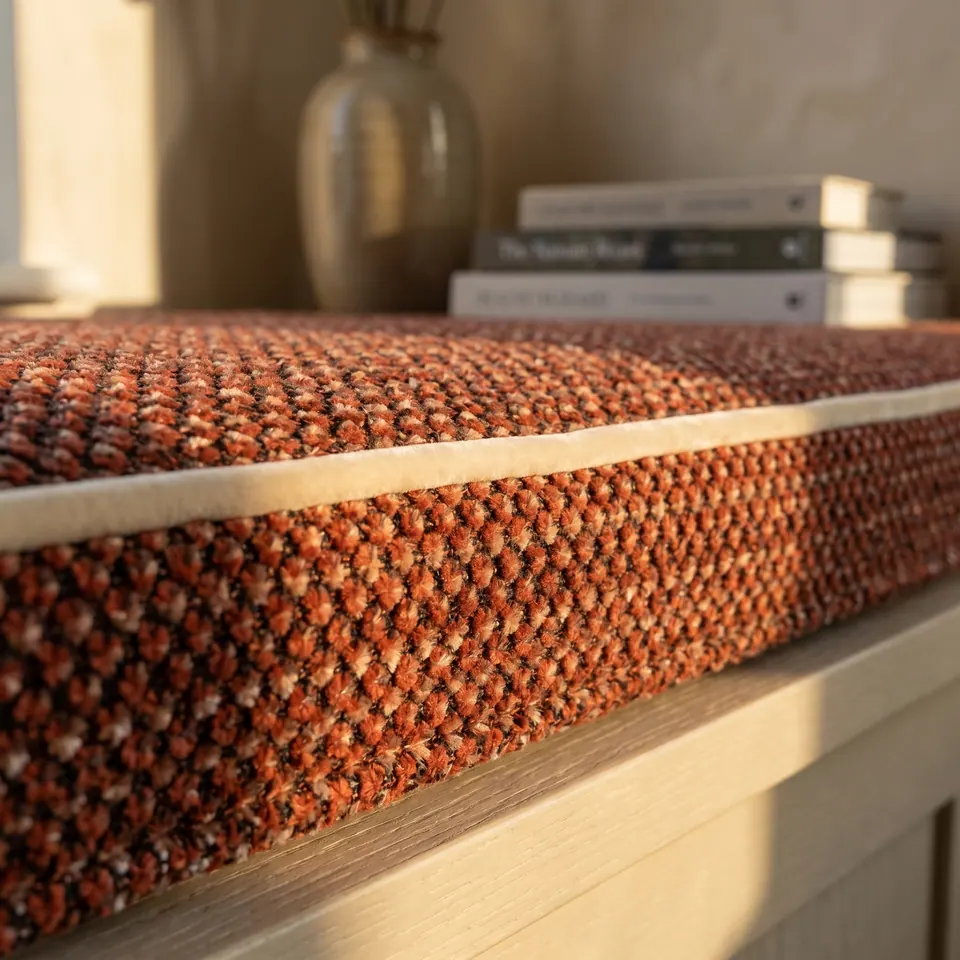
Close-up of a rust, orange and chocolate dotted chenille cushion corner with a plain seam, clay mug on books behindSave
Without piping, the rust weave wraps the corner in one unbroken texture of orange and chocolate dots.
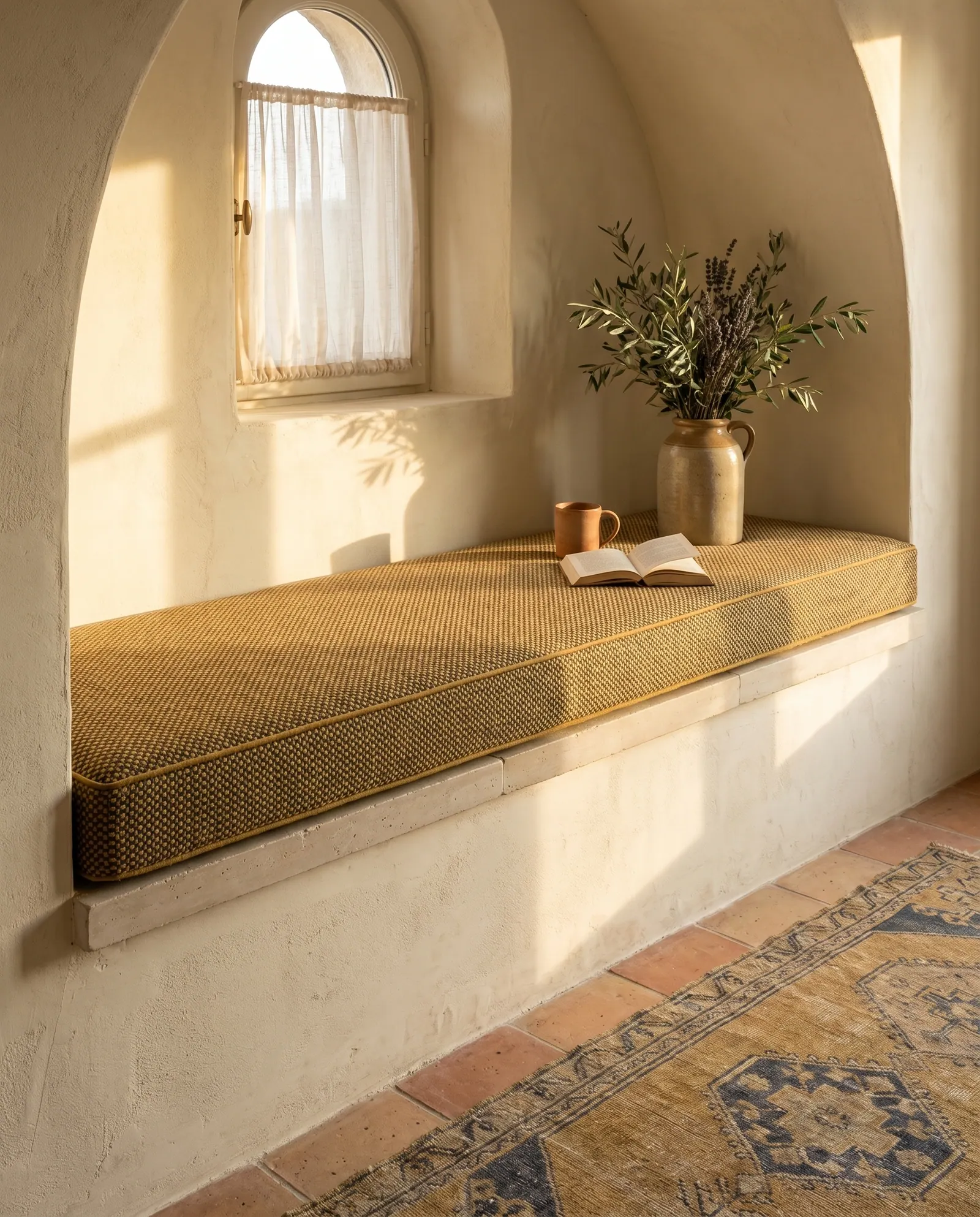
Ochre dotted chenille cushion with piping on a stone ledge in an arched plaster alcove, olive branches in a stoneware jugSave
The ochre seat picks up the tiles and the sunlight, turning a bare stone ledge into a place to sit.
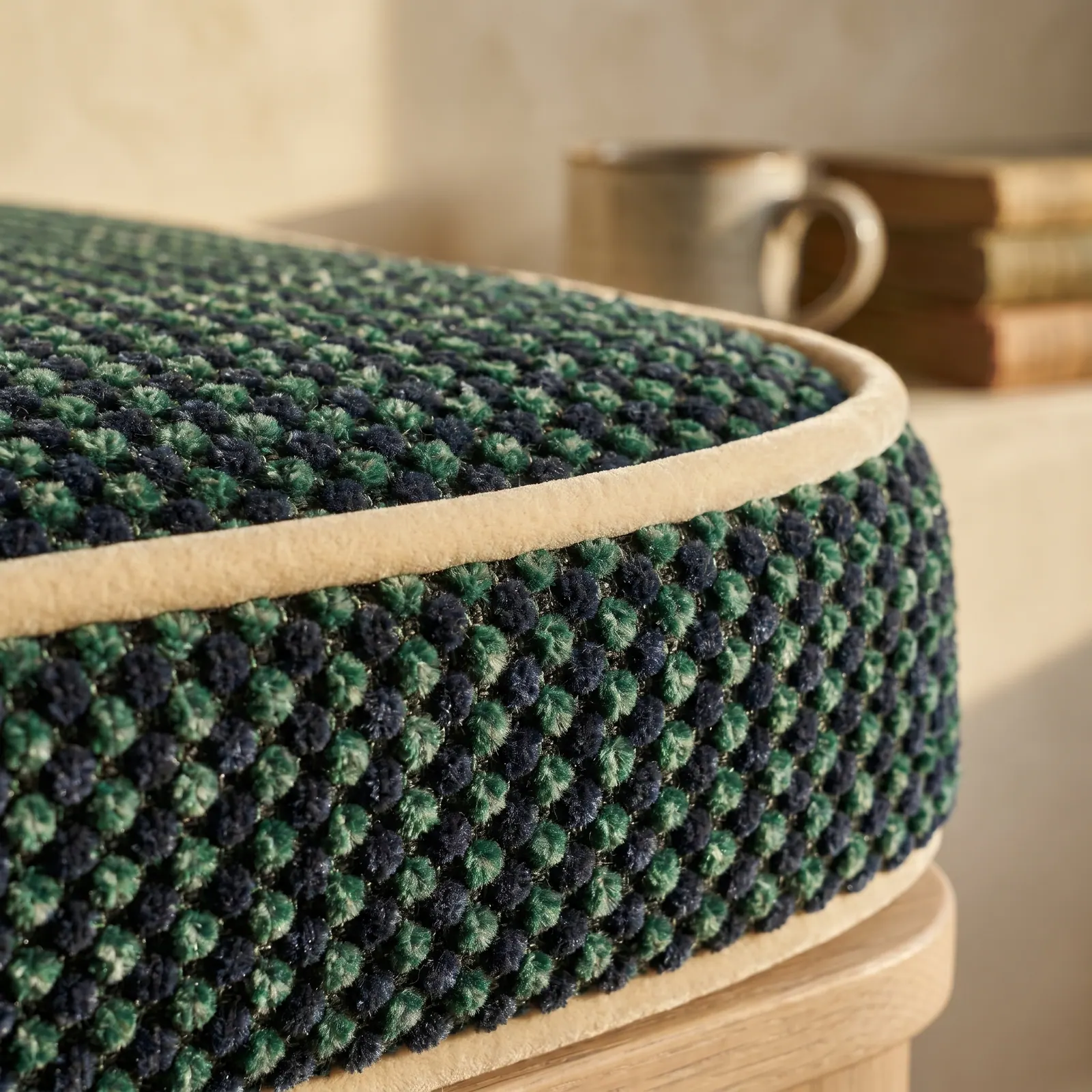
Rounded corner of a forest green and navy dotted chenille cushion edged in cream velvet piping on an oak baseSave
A radiused corner lets the cream piping bend smoothly, softening a seat that sits beside a walkway.
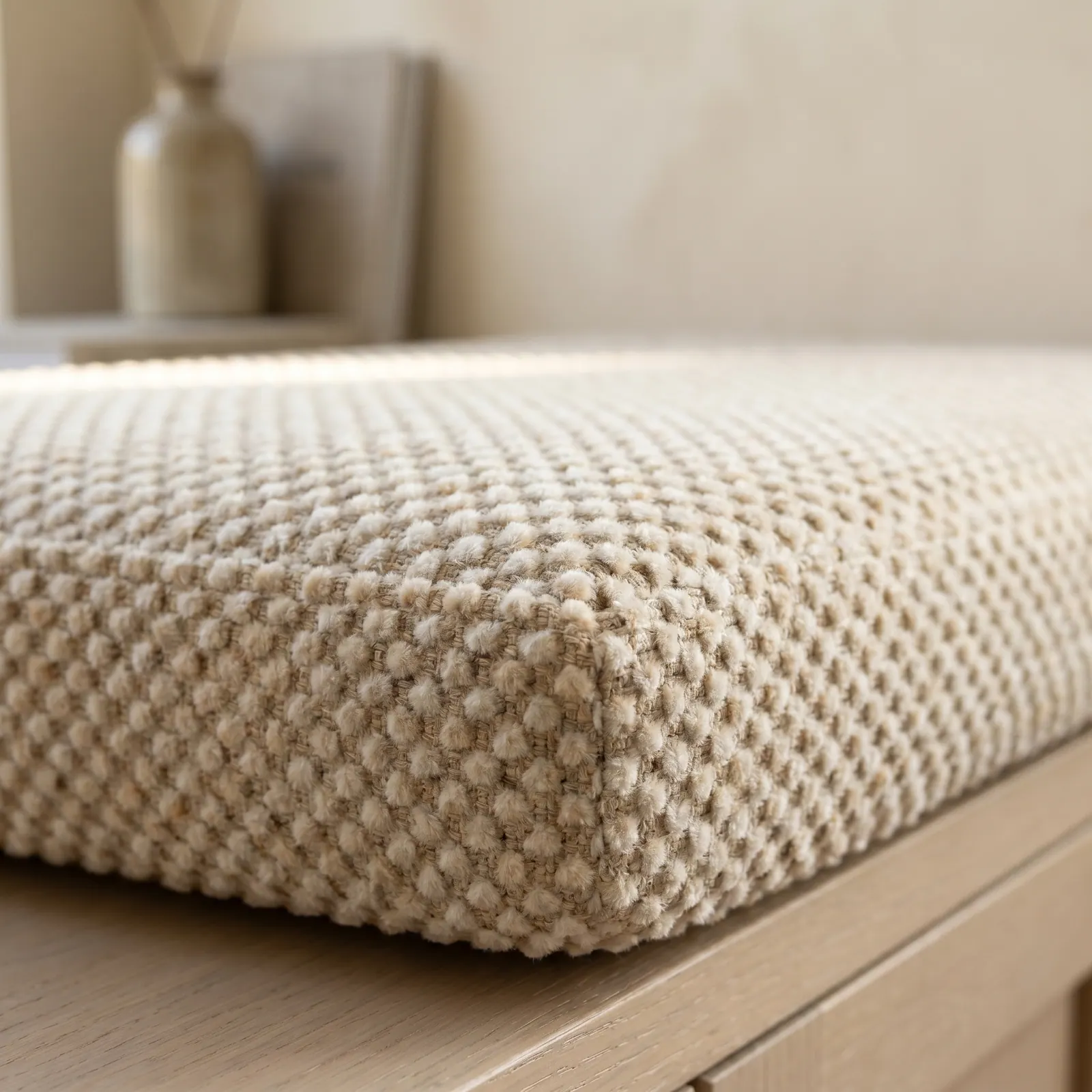
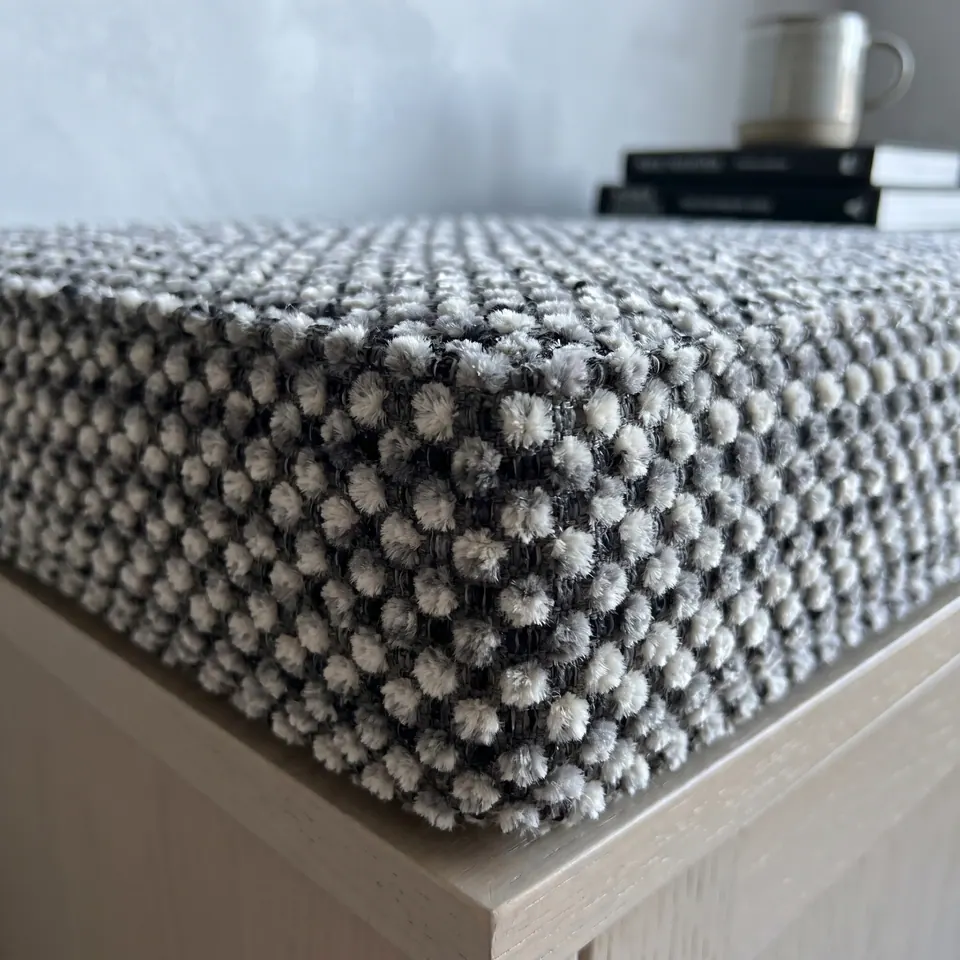
Cream tone-on-tone dotted chenille bench cushion with a soft unpiped edge on a pale oak bench, stoneware vase behindSave
Tone-on-tone dots give the cream cushion depth without adding any color to a pale room.
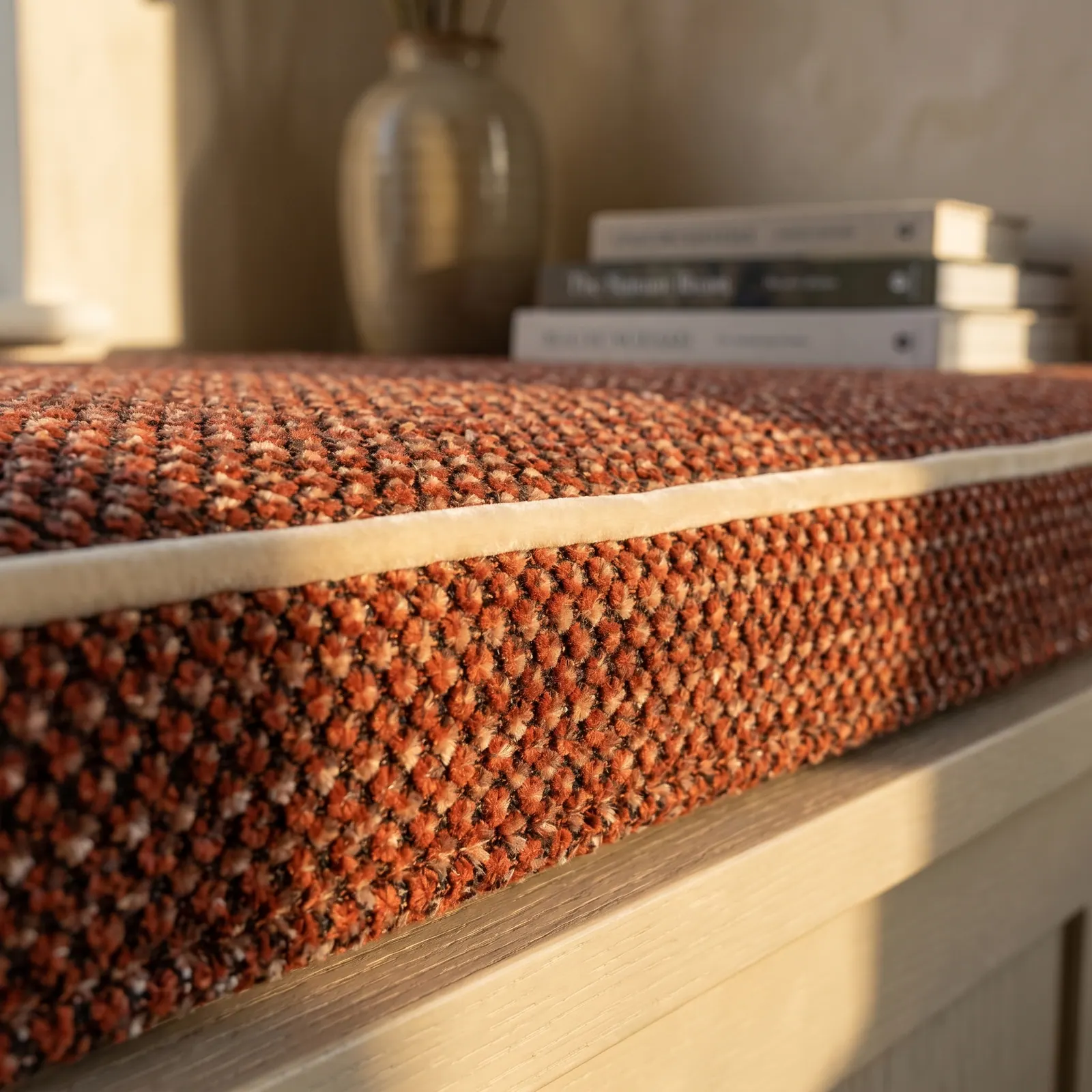
Side profile of a rust dotted chenille cushion finished with cream velvet contrast piping, glowing in golden-hour lightSave
Cream velvet piping draws a clean line along the rust weave and makes the cushion's depth easy to read.
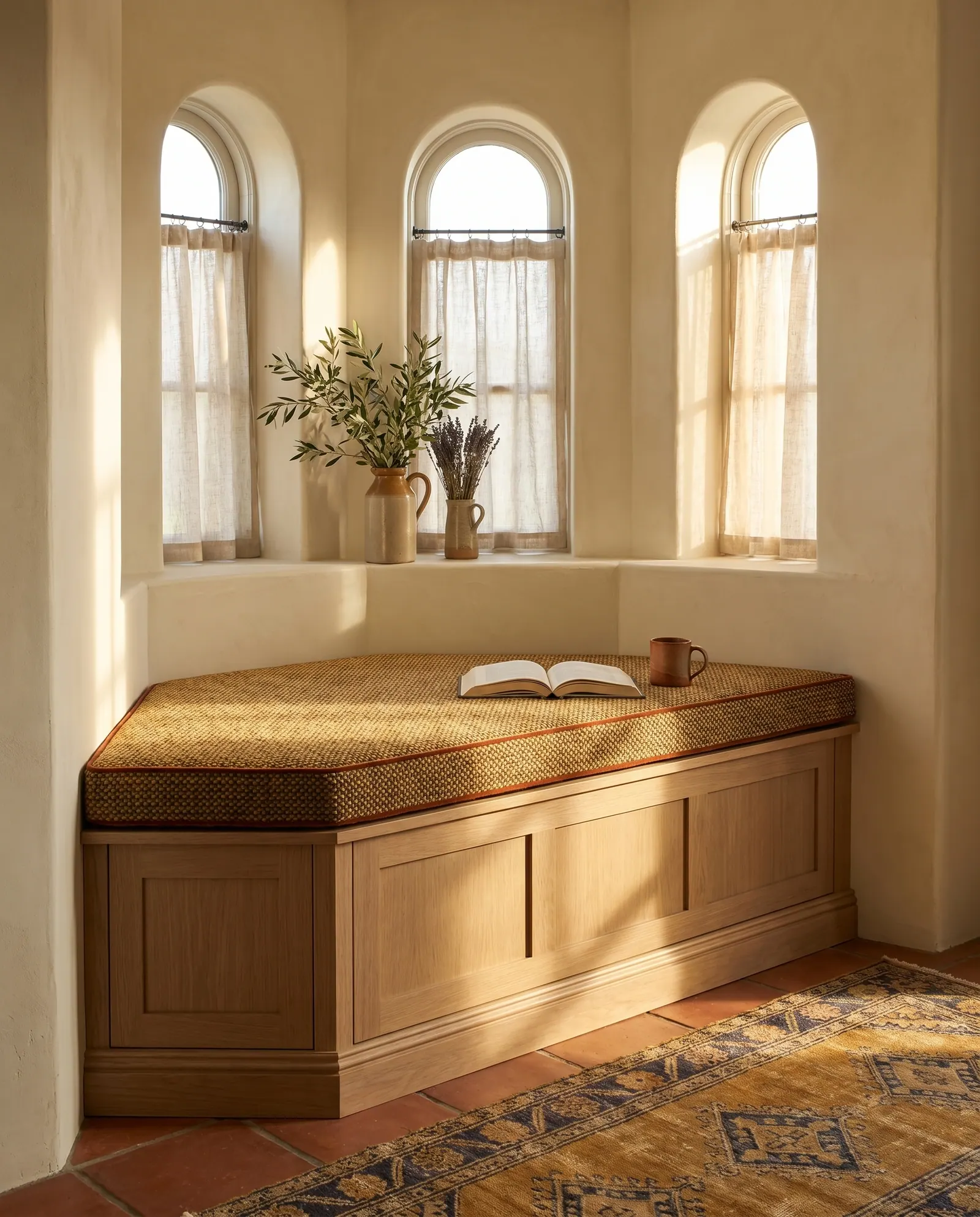
Mustard dotted chenille trapezoid cushion with terracotta velvet piping on an oak bay seat under three arched windowsSave
Terracotta velvet piping traces the angled ends of the mustard seat and ties it to the tiled floor.
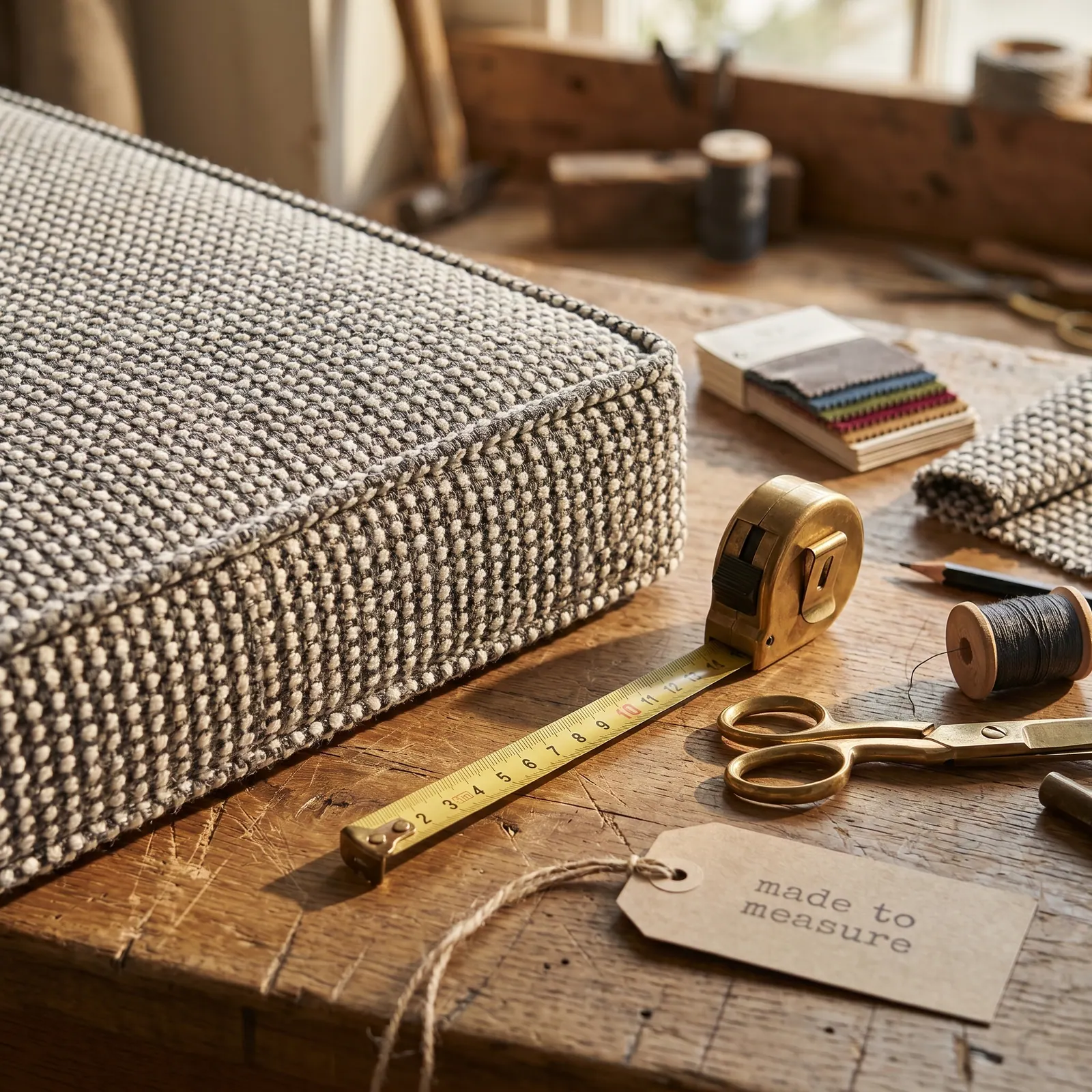
Charcoal and ivory dotted weave box cushion with self piping on a worn workbench beside a brass tape measure and scissorsSave
Every cushion is cut to the customer's measurements; the tape, shears and swatch book tell that story at a glance.

What the corner says about the seat under it

Look at the corner first, my friends. It is a box edge with a plain seam, no piping, so the dotted chenille runs over the top and down the side as one piece of texture. From across the room the dots of burnt orange, chocolate and cream melt into a single warm rust; up close they separate again, which is exactly what a good jacquard should do.

The proportion is the quiet part. The cushion sits square on the pale oak ledge, its side band upright, with no bulge past the wood and no gap at the back. That fit was settled with a tape measure long before anyone talked about color. A plain seam forgives nothing: without a piped line to lead the eye, a cushion that stops short of the wall shows as a dark sliver of shadow.

Now the props. A terracotta mug on a stack of worn books repeats the rust one step deeper, and the old bindings pick up the chocolate dots. The pale oak keeps all that warmth from turning heavy. Rust is richest in low evening light, when a raking sun finds every dot; at noon it flattens toward brick. Daylight never lies; your screen sometimes does.

Choose the plain seam for a relaxed, lived-in corner and piping if you want it tailored. Either way the seat sets the size. Seat shapes are sorted in bench cushions, the woven family lives in jacquard and damask, and the full method is in how to measure a bench for a cushion.

Pinned by Élodie: five points on the oak ledge

Five pins: the plain seam, the rust top, the clay mug, the old books and the pale oak that holds them all.
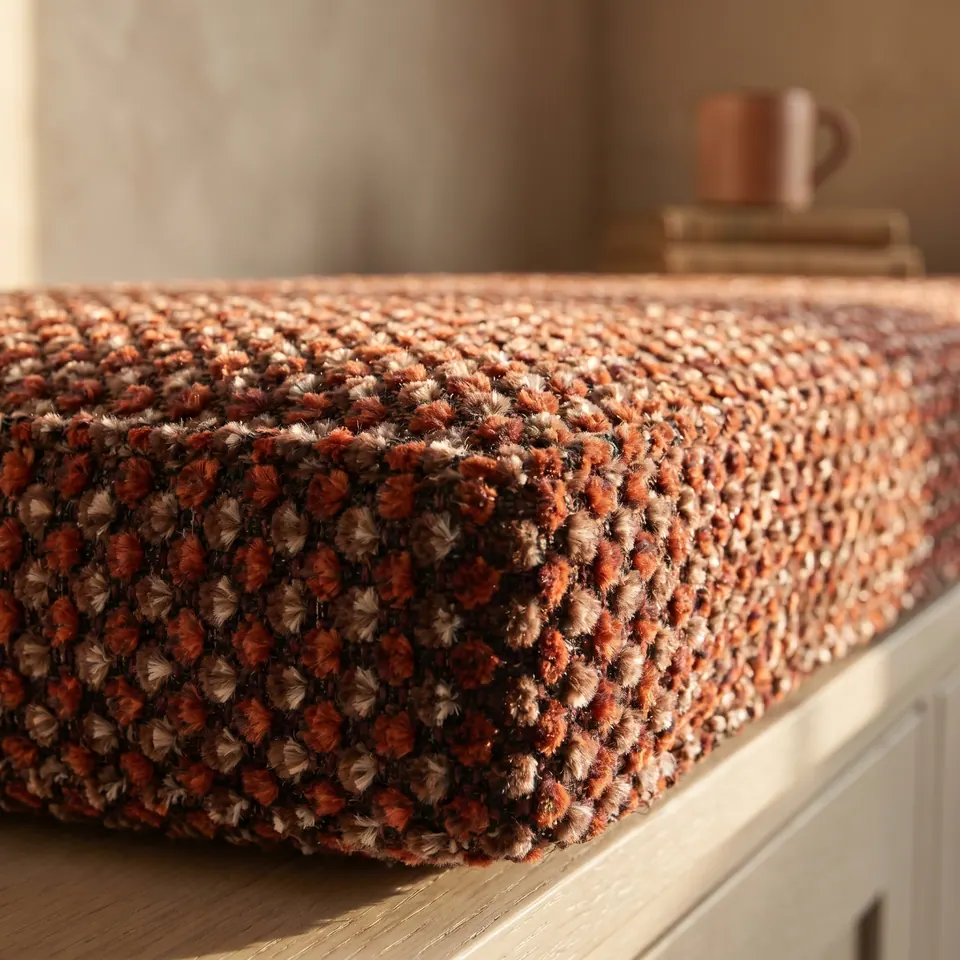
Pinned: Close-up of a rust, orange and chocolate dotted chenille cushion corner with a plain seam, clay mug on books behind
  1. Plain seam corner

    Without piping, the multi-colored dots wrap the corner in one texture.

  2. Rust top surface

    Orange, chocolate and cream dots mix into a warm rust from a distance.

  3. Terracotta mug

    The mug repeats the rust palette in the background.

  4. Old books

    Worn books add brown tones that match the darker dots.

  5. Pale oak ledge

    Pale wood keeps the rust from looking heavy.

  1. Plain seam cornerWithout piping, the multi-colored dots wrap the corner in one texture.
  2. Rust top surfaceOrange, chocolate and cream dots mix into a warm rust from a distance.
  3. Terracotta mugThe mug repeats the rust palette in the background.
  4. Old booksWorn books add brown tones that match the darker dots.
  5. Pale oak ledgePale wood keeps the rust from looking heavy.

Measuring this ledge, in the order I would do it

  1. Length along the back edge, wood to wood or wall to wall, in inches. That is the line the cushion has to fill.
  2. Depth from the wall to the front of the ledge, taken at both ends. If the two numbers differ, the seat is not a rectangle, so sketch it.
  3. Any corner that is not square. A 45-degree cut is a trapezoid, and it needs a drawing with every edge measured.
  4. Thickness, once you know how the seat sits beside a table or a sill. On a box edge like this one, the side band is that thickness.
  5. Seam finish: plain like this corner, or piped. Piping sits on the seam and never changes the size you order.

A real project

The cream linen that had to sit beside striped chairs

A buyer in the US wrote to the workshop about a newly built breakfast nook bench. The striped dining chairs had not even arrived; there was only a product link. The workshop suggested L-02, a forgiving cream, and said plainly that an exact match from a link is close to impossible.

When the chairs came, the talk turned to piping, and to the two dark cords that fool everyone. L-37 reads as black in a photo and turns out to be a very deep gray; L-38 is black itself. After weighing both, the buyer chose self piping in L-02, cream on cream, and the workshop called it the safest choice.

I agree with them. When in doubt, a self-piped forgiving cream always looks clean, and it follows the same logic as the plain seam on this rust corner: one fabric, one continuous line.

Buyer questions: greige matches, 45-degree corners and zippers

  1. A common question

    The upholstery I already own is a light warm greige, close to khaki. Which of your fabrics sits nearest to it?

    The workshop's answer

    Three linens come closest. L-03 is a light warm greige, L-02 a cream leaning to light beige, and L-11 a shade cooler if your fabric has a gray cast. Against a khaki chenille the workshop pointed to L-02 and L-03 as well. A screen shifts tones this subtle, so order physical samples first; one sample order can hold up to 5 codes.

  2. A common question

    My banquette cushions meet on a 45-degree diagonal in the corner. Can I just mention that in the order notes?

    The workshop's answer

    No. Once a cushion is cut on the diagonal it is a trapezoid, which is a different listing and costs slightly more. Order through the trapezoid listing, pick the size range by each cushion's longest and deepest measurements, and upload a drawing with every edge measured, the 45-degree cut included.

  3. A common question

    I'd love tufted bench cushions, but with zippers so the covers can go in the wash. Can I have both?

    The workshop's answer

    Not on the same cushion. Tufted, French-style cushions are made without zippers, so the choice is tufted with no zipper, or a plain boxed cushion with a zipper and a removable cover. Linen and linen-cotton are both on the color chart for either style.

On the cutting table: the rust ledge seat

CushionRectangular box-edge bench cushion on a pale oak ledge
FabricDotted chenille jacquard in rust, burnt orange, chocolate and cream
SeamPlain seam, no piping
EdgeBox edge with an upright side band
MeasureSeat length wood to wood, depth at both ends, any angled corner
Angled cornersOrdered as a trapezoid with a drawing of every edge
Removable coversZippers on plain boxed styles; tufted styles have none
Best lightLow evening light, where rust reads richest
Best forLiving room ledges and benches with oak, cream walls and brass

Order this cushion

Have it made

Have this made — ask Élodie’s workshop

Color is easier to settle in a conversation than on a screen. Tell the workshop about the room and the light it gets, and the fabric choice follows. — Élodie

Leave your details and the workshop will call you to confirm measurements, fabric, foam and piping. No prices, dates or payment on this page: it is a request, not an order.

Fabric · Foam · Pipingwhat the workshop will confirm with you

Fabric
Dotted chenille jacquard in rust, burnt orange, chocolate and cream
Foam
The core: its density and thickness set the feel.
Piping
No piping
Only for this request: no marketing calls or texts. Outside the US, add the country code.
In inches: length × depth × thickness, plus any angles or cut corners.

* Required. A member of the workshop team will call you to talk it through; nothing is charged and nothing is made until you have agreed on every detail with them.

We use these details only to answer this request and make your cushion: your name and contact details, the cushion details and photos you send, the page you came from and the ad or link that brought you, if any. The workshop that makes the cushions receives them. We don't sell them or share them for advertising, and we delete requests after 24 months. Privacy notice for requests.

Nothing is made or charged until you approve the details.

Want to pick the shape and add photos? Use the full quote form

A bench cushion with a 45-degree corner is a trapezoid, not a rectangle with a note: order it with a drawing that measures every edge.

Élodie

Questions buyers ask next

Should I copy the size of my old bench cushion or measure the bench?

Measure the bench. An old cushion has usually compressed or shifted, so copying it copies its faults. Take the seat length wood to wood and the depth at both ends, and mark any angled corner or notch on a quick sketch.

Does chenille look different with a plain seam than with piping?

Yes. A plain seam lets a dotted chenille wrap the corner as one texture, which reads relaxed and lived-in. Piping draws a firm line along the edge and reads tailored. Neither one changes the size you order.

Why does a rust cushion look brighter in the evening than at noon?

Rust mixes orange, brown and red, and low warm light brings out the orange and the depth of the weave. Flat midday light pushes it toward brick. Check samples by a window in the evening as well as at midday before you decide.

With color and care — Élodie