A Reading by ÉlodieBench Cushions
Rose dots on a plum ground: how the light changes a custom bench cushion
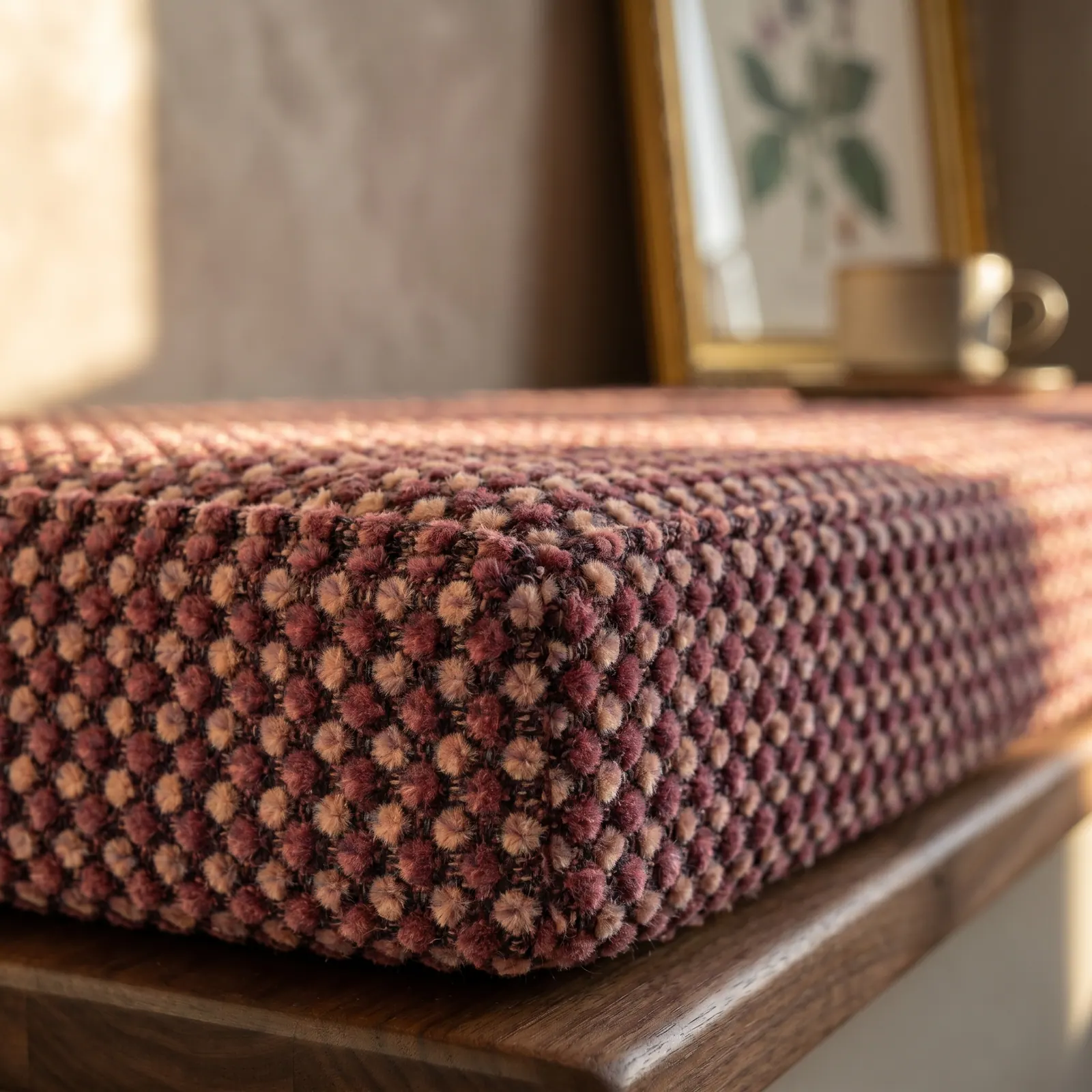
Élodie reads a close-up of an unpiped chenille edge in raking evening sun, and explains why the same fabric looks sugary at noon, rich at dusk and wrong on a phone.
The quick answer
A two-tone chenille bench cushion like this rose-on-plum weave changes with the light: low side light lifts the raised rose dots and deepens the plum, flat noon light makes it paler and pinker, and a phone screen often exaggerates both. Judge the swatch in daylight near a window, then again under your evening lamps, before you order.

 Save
Pinned by Élodie: rose dots on a walnut bench
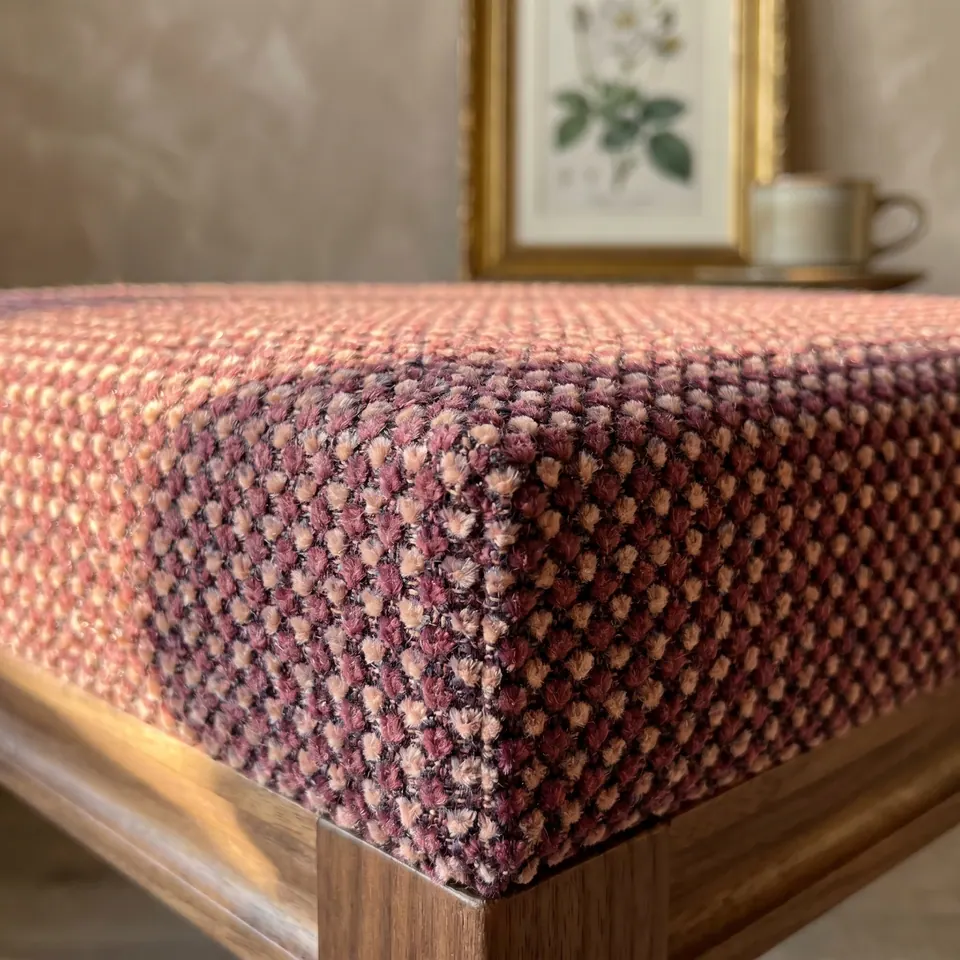
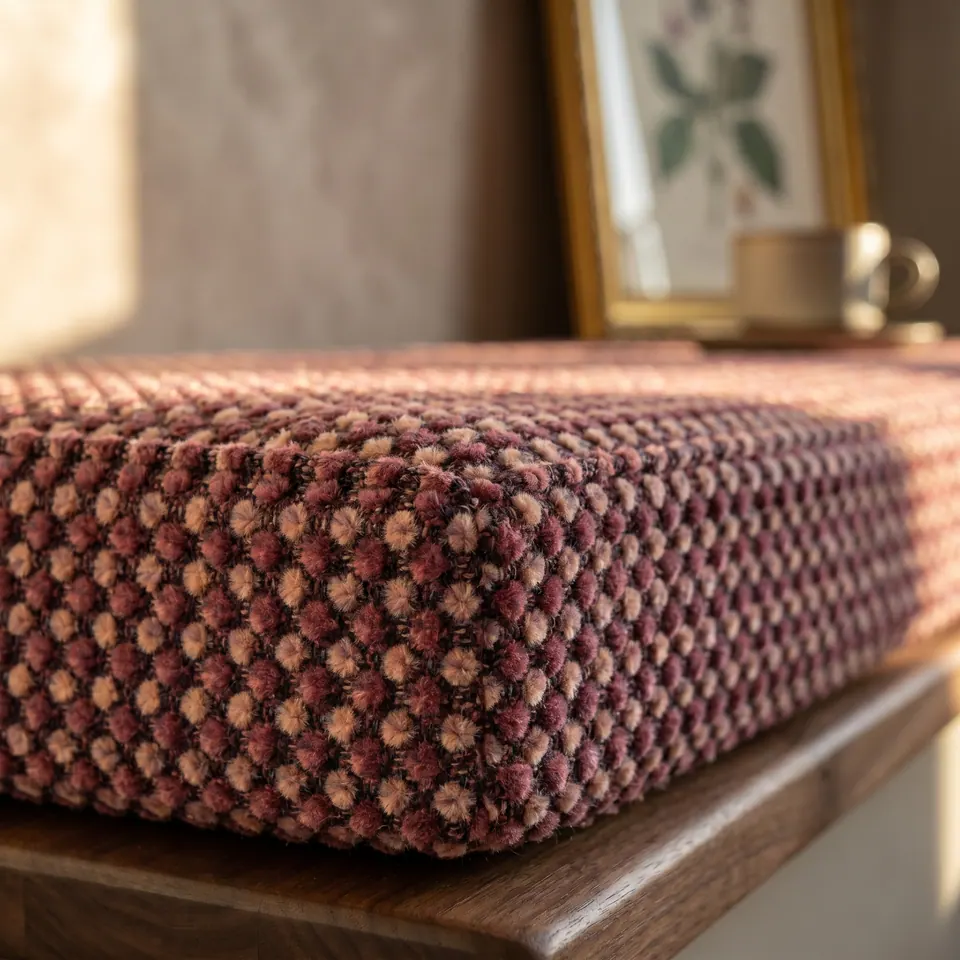
Élodie's pins pick out the rose dots, the plain top seam, the walnut edge, the gilt frame and the quiet cream cup.
- Rose dots on plum
Side light lifts the rose dots off the plum ground, showing the weave depth.
- Plain top seam
Unpiped, the pattern runs over the edge without interruption.
- Walnut bench edge
Dark walnut makes dusty rose look rich instead of sugary.
- Gilt botanical print
A gilt frame repeats the warm highlights in the fabric.
- Cream cup
A quiet cup gives scale to the chunky texture.
- Rose dots on plumSide light lifts the rose dots off the plum ground, showing the weave depth.
- Plain top seamUnpiped, the pattern runs over the edge without interruption.
- Walnut bench edgeDark walnut makes dusty rose look rich instead of sugary.
- Gilt botanical printA gilt frame repeats the warm highlights in the fabric.
- Cream cupA quiet cup gives scale to the chunky texture.
Swatch strip: five colors from one close-up
- Dusty rose#C4848FThe raised dots; they rise in side light and flatten at noon.
- Plum#5B2A45The ground; wine-dark under lamps, nearer aubergine at dawn.
- Blush#E6C3C3The highlight on each loop where the sun catches it.
- Walnut#5A3A28The bench top that keeps the rose from turning sweet.
- Gilt#B8914CThe frame that repeats the warm highlights.
Morning, evening and the screen in your hand
The same cloth can be three different colors before supper. This close-up was taken in raking evening light from the left, and look what it does: the two-tone chenille becomes a relief map, raised rose dots lifted off a plum ground, every loop holding its own small shadow. That is how the fabric looks at eye level in a real room at dusk.
At noon the same custom bench cushion would look flatter and pinker, dots and ground closer together, because overhead light fills the shadows. In cool morning light from a north window the plum leans toward aubergine and the rose toward blush. Under warm evening lamps it goes the other way: the plum turns wine-dark and the rose deepens toward old brick. None of these is wrong. They are all the fabric.
Your phone is the unreliable witness. Daylight never lies; your screen sometimes does. Cameras flatten the loops and nudge the color toward whatever they think neutral is, so the plum can come out brown and the rose candy pink.
Now the setting. The cushion edge is plain-seamed, no piping, so the pattern runs over the top and down the side without a break. It rests on a walnut bench top, and that dark wood is why the dusty rose reads rich instead of sugary. Above, a gilt-framed botanical print repeats the warm highlights, and a cream cup and saucer give the chunky texture a sense of scale. Pair a seat like this with dark wood and brass, my friends, not white furniture.
The weave belongs to the jacquard and damask family, and the full method for judging color is in screen versus daylight. More seats are gathered under bench cushions. Which light does your bench live in most?

Have it made
Have this made — ask Élodie’s workshop
Describe the room at four in the afternoon: the floor, the wall, the one color you love. That is where a good fabric choice begins. — Élodie
Leave your details and the workshop will call you to confirm measurements, fabric, foam and piping. No prices, dates or payment on this page: it is a request, not an order.
With color and care — Élodie