 Save
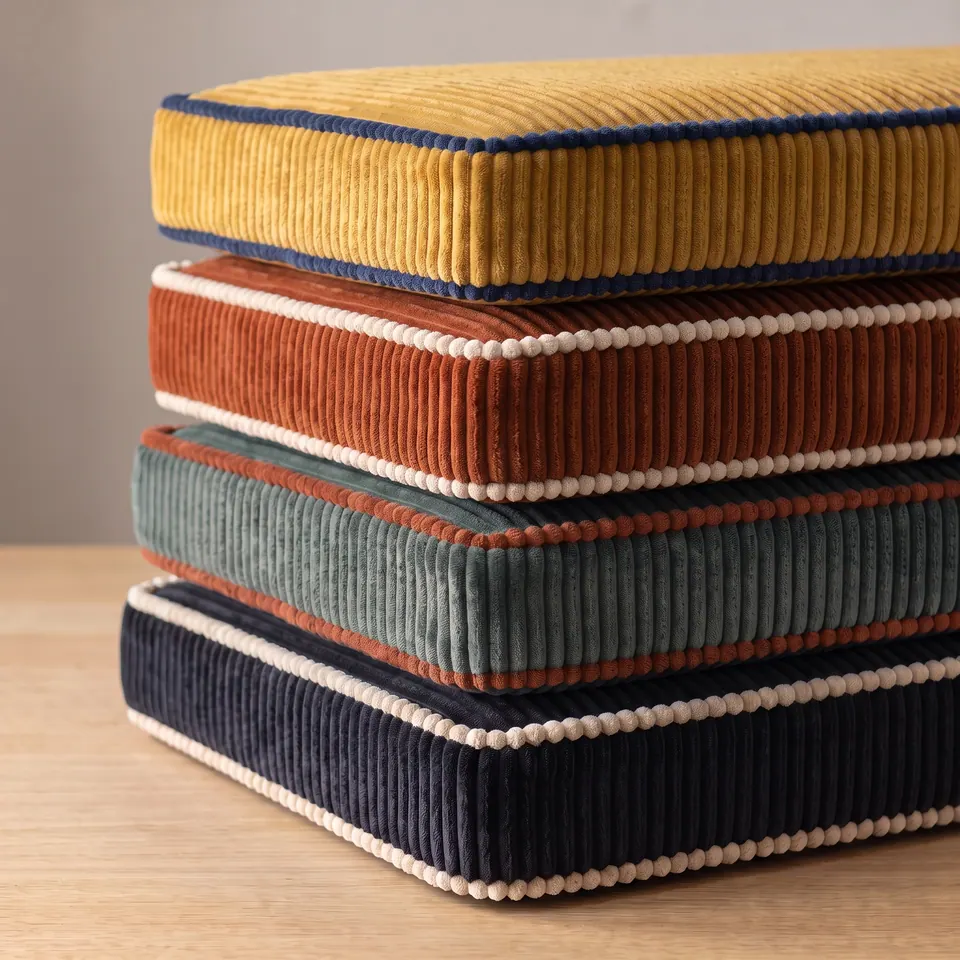
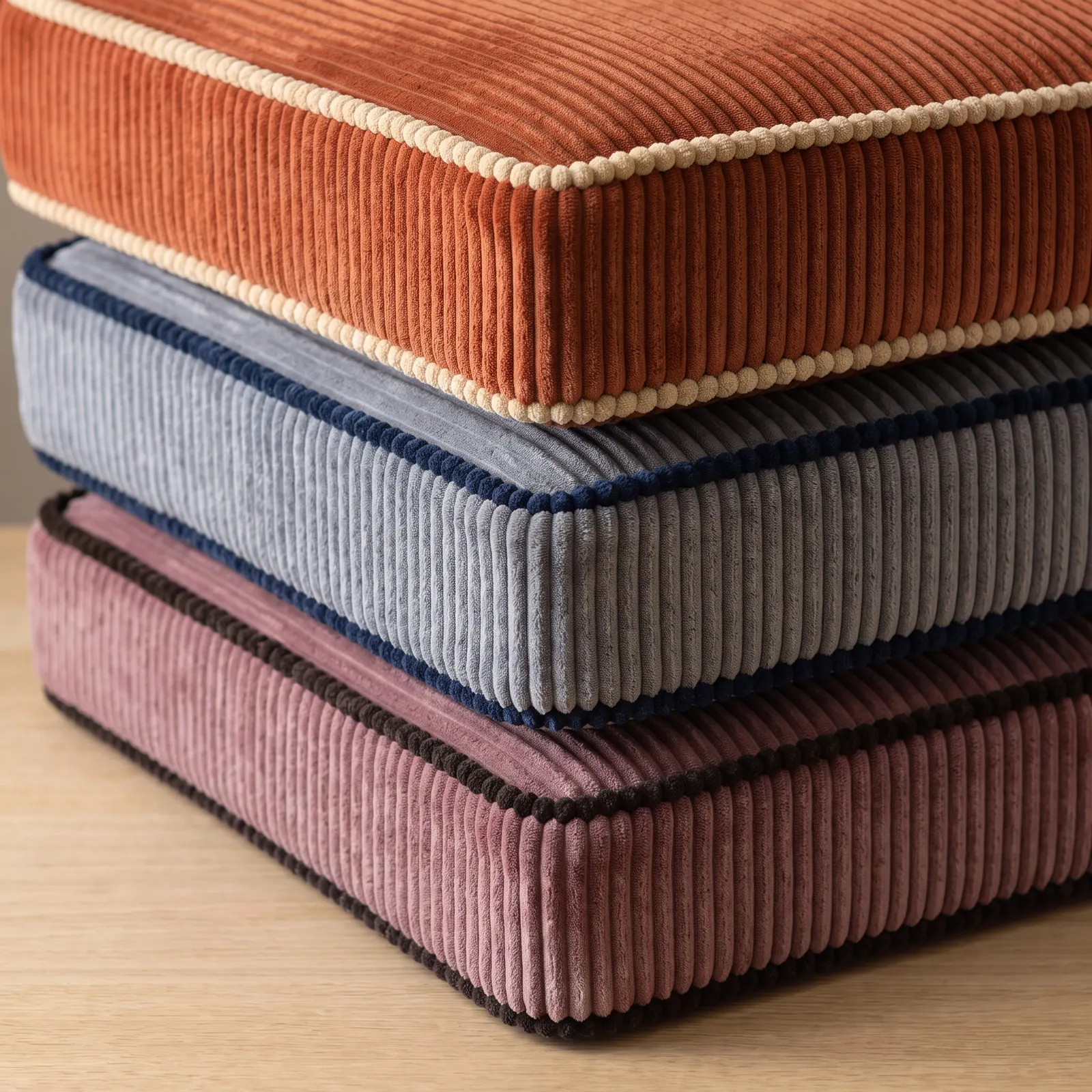
- Cream cord on rust
Off-white piping lifts the rust and makes the rounded corner easy to read.
- Navy welt on gray
A deep navy edge gives a pale gray cushion definition without adding a new color family.
- Chocolate piping on pink
A dark brown cord gives dusty pink a grown-up outline instead of a sugary one.
- Ribs on the top panel
The wale on the seat runs in one direction only, so the pile catches light evenly when you sit.
Plate Corduroy box cushions · rounded corners · contrast piping
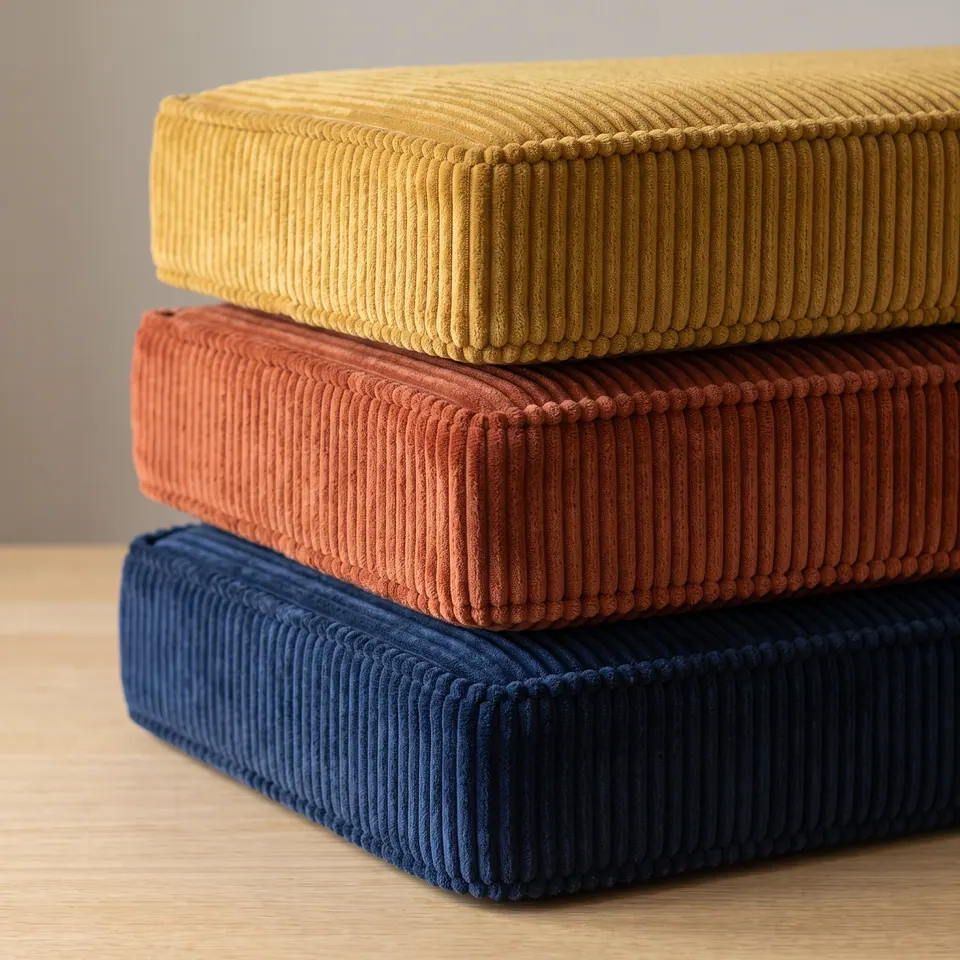
Cropped tight, the stack shows how a dark welt sharpens pale gray and how a cream cord lifts rust.
A Reading by MaggieBench Cushions
Three corduroy bench cushions up close: box edges, rounded corners and contrast piping
No room, no props, nowhere to hide. Just three corners of corduroy and the seams that hold them, read the way I read a cushion on the cutting table.

The quick answer
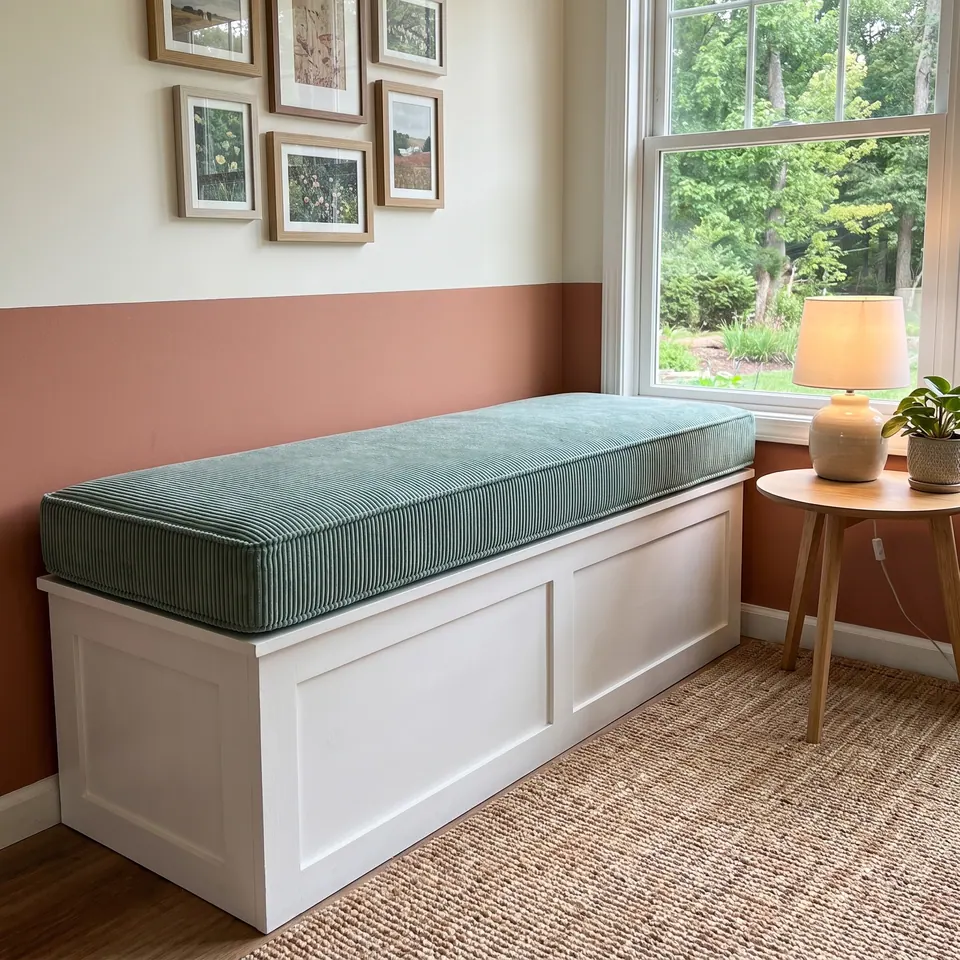
A custom bench cushion's edge decides how it sits: a box edge gives upright sides that square up to walls, a knife edge tapers like a throw pillow, and rounded or angled corners follow the bench. For rounded corners, measure where each curve starts; for angled ends, give the bottom, top, depth and any straight ends.
What the corners are saying
Cropped this tight, a cushion has nowhere to hide. No window, no rug, no pretty lamp. Just three corners and their seams, which is exactly how I like to judge one.
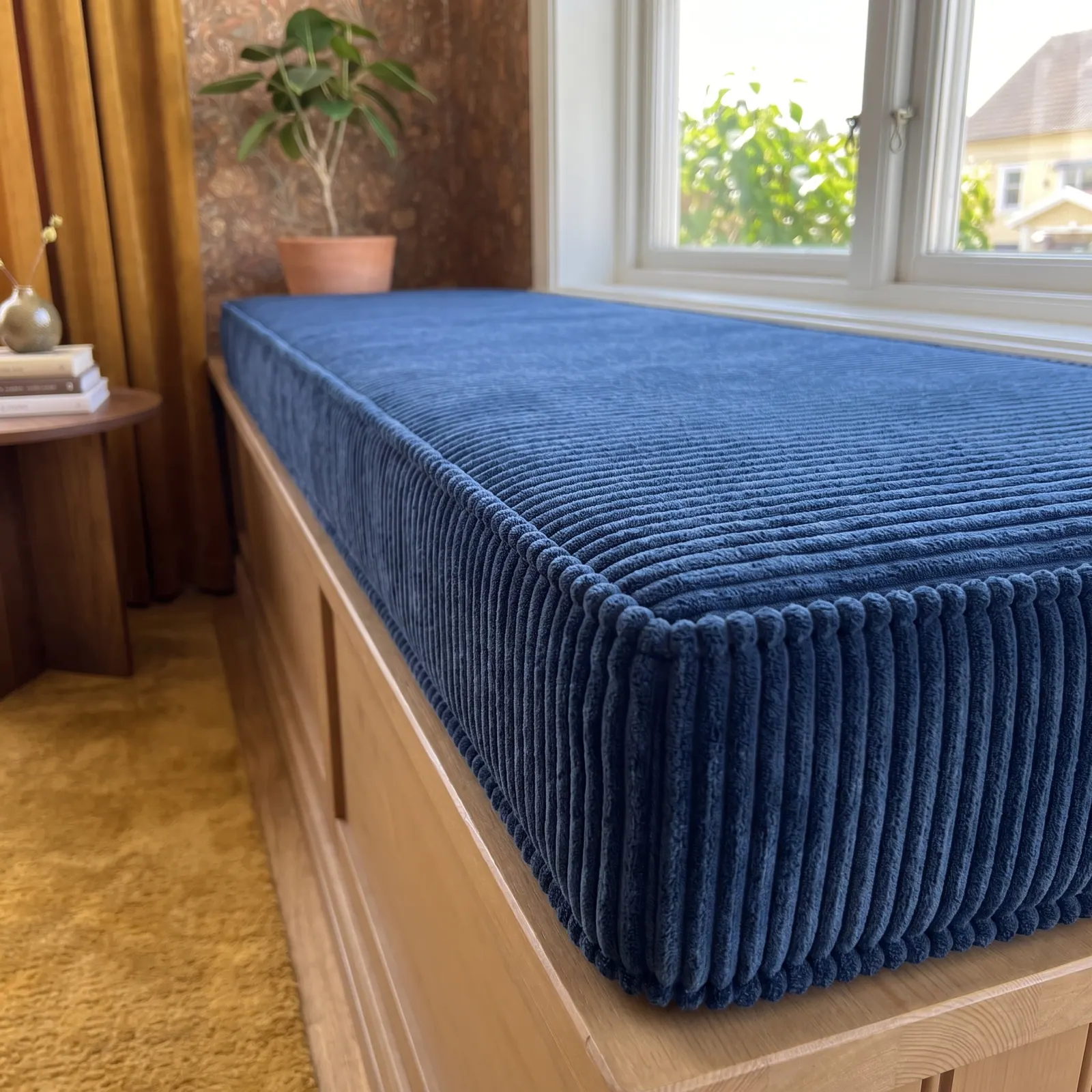
All three are box cushions with rounded corners: a top, a bottom and a side band between them, piped at both seams. Each piping is a contrast, and each has a job. Cream on rust lifts a dark, warm color and makes the curve easy to read. Navy on dove gray gives a pale cushion an outline without bringing in a new color family. Chocolate on dusty pink turns a sugary shade grown-up.
Now the ribs. On the top panel the wale runs one way only, so the pile catches light evenly when you sit. On the side bands the ribs stand upright and meet the welt without a break. A straight welt is a kind of honesty, dear, and on corduroy it's a very visible one.
The stack runs warm, cool, warm, so no two neighbors blur. Borrow that for bench cushions and matching chair pads. Which corner does your bench have?
Pinned by Maggie: four seams worth a close look
Four spots on the stack, each one a decision somebody made on purpose.
The numbers match the pins on the plate.
- Cream cord on rustOff-white piping lifts the rust and makes the rounded corner easy to read.
- Navy welt on grayA deep navy edge gives a pale gray cushion definition without adding a new color family.
- Chocolate piping on pinkA dark brown cord gives dusty pink a grown-up outline instead of a sugary one.
- Ribs on the top panelThe wale on the seat runs in one direction only, so the pile catches light evenly when you sit.
Box, knife, rounded, angled: the edge decides the sit
| Edge or corner | How it's built | Choose it when |
|---|---|---|
| Box edge | Top, bottom and a side band (the gusset); two seams | You want upright sides that square up to walls |
| Knife edge | Top and bottom sewn together; one seam at the middle | You want a relaxed, pillow-like look |
| Rounded corner | Corner cut on a curve, measured from where it starts | The bench has rounded ends |
| Angled end | A trapezoid: bottom, top, depth and straight ends | Your seat sits in a bay or has a slanted side |
Still deciding? Put box and knife edges side by side, or check a slant in the trapezoid calculator.
The 11-foot bench that went down the street
A buyer in the US wanted one cushion for a long built-in run: 141 in long, 38.5 in deep and 5 in tall. They pictured tufted velvet in a soft cream that wouldn't scratch, and also weighed wide-wale corduroy, no tufting, with thick piping.
The workshop recommended two cushions of 70.5 × 38.5 × 5 in, and offered the same in cream linen. The buyer needed one seamless piece, so they went to a local upholsterer who could make it. Honest advice sometimes sends a customer down the street, and it's still good advice.
- Sizes
- 141 × 38.5 × 5 in (358 × 98 × 12.5 cm), proposed as two pieces of 70.5 × 38.5 × 5 in
The lesson: Beyond about 79 in (2 m), a mail-order cushion comes in sections; for one seamless piece, a local workshop may suit you better.
Three questions about size, thickness and slant
- A common question
How much would a custom bench cushion cost me?
The workshop's answerIt depends on size and shape. Choose the size range that covers your measurements and the current price appears, already discounted; check the shipping line at checkout. Trapezoids and multi-piece sets are quoted from their exact measurements.
- A common question
Which thickness should I choose, and does it change the price?
The workshop's answer2, 3, 4 and 5 in all cost the same. Most buyers pick 3 or 4 in: 3 in gives a neater, lower profile on a window seat, 4 in more cushioning. The standard seat is about 4 in (10 cm).
- A common question
Do I need to measure the slanted sides of my bay window seat?
The workshop's answerNot really. Bottom length, top length, depth and any straight ends fix the slant, and the workshop calculates it to check you. A 90 in bottom, 52 in top, 27 in depth and 6 in straight ends give a slant of about 28 in, so a measured 24 in means another number is off.
Contrast piping should be clearly darker or lighter than the cushion. Cream on rust, navy on gray, chocolate on pink: every outline stays readable.
Maggie
The corduroy stack, itemized
| Cushions | Three corduroy box cushions, stacked |
|---|---|
| Colors | Rust, dove gray, dusty pink |
| Piping | Contrast: cream on rust, navy on gray, chocolate on pink |
| Corners | Rounded; measure where each curve starts on both edges |
| Ribs | One direction on top; upright on the side bands |
| Thickness | 2, 3, 4 or 5 in (5 to 12.5 cm), same price |
| Care | Removable cover, 86°F (30°C) gentle wash, air dry; indoor only |
| Best for | Benches, window seats, matching chair pads |

Have it made
Have this made — ask Maggie’s workshop
I once cut a lovely cushion two inches short, and I have not forgotten it. That is why the workshop goes over your measurements with you on the phone. — Maggie
Leave your details and the workshop will call you to confirm measurements, fabric, foam and piping. No prices, dates or payment on this page: it is a request, not an order.
Questions buyers ask next
Is a box edge or a knife edge better on a bench?
Usually a box edge. The side band gives upright sides that sit square against walls and frames and hold their shape longest. A knife edge tapers like a throw pillow and uses less fabric.
How do I measure a rounded corner for a cushion?
Measure how far from the corner the curve starts, along both edges, and trace the curve on paper. One buyer's curve began 2.5 in from the corner on each side, and that number set the pattern.
Which way should corduroy ribs run on a bench cushion?
On the top, one direction only, so the pile catches light evenly. Side bands are usually cut with ribs running sideways so a long strip needs no joins; upright ribs can be requested, but the band may need joins.
Stitch straight — Maggie
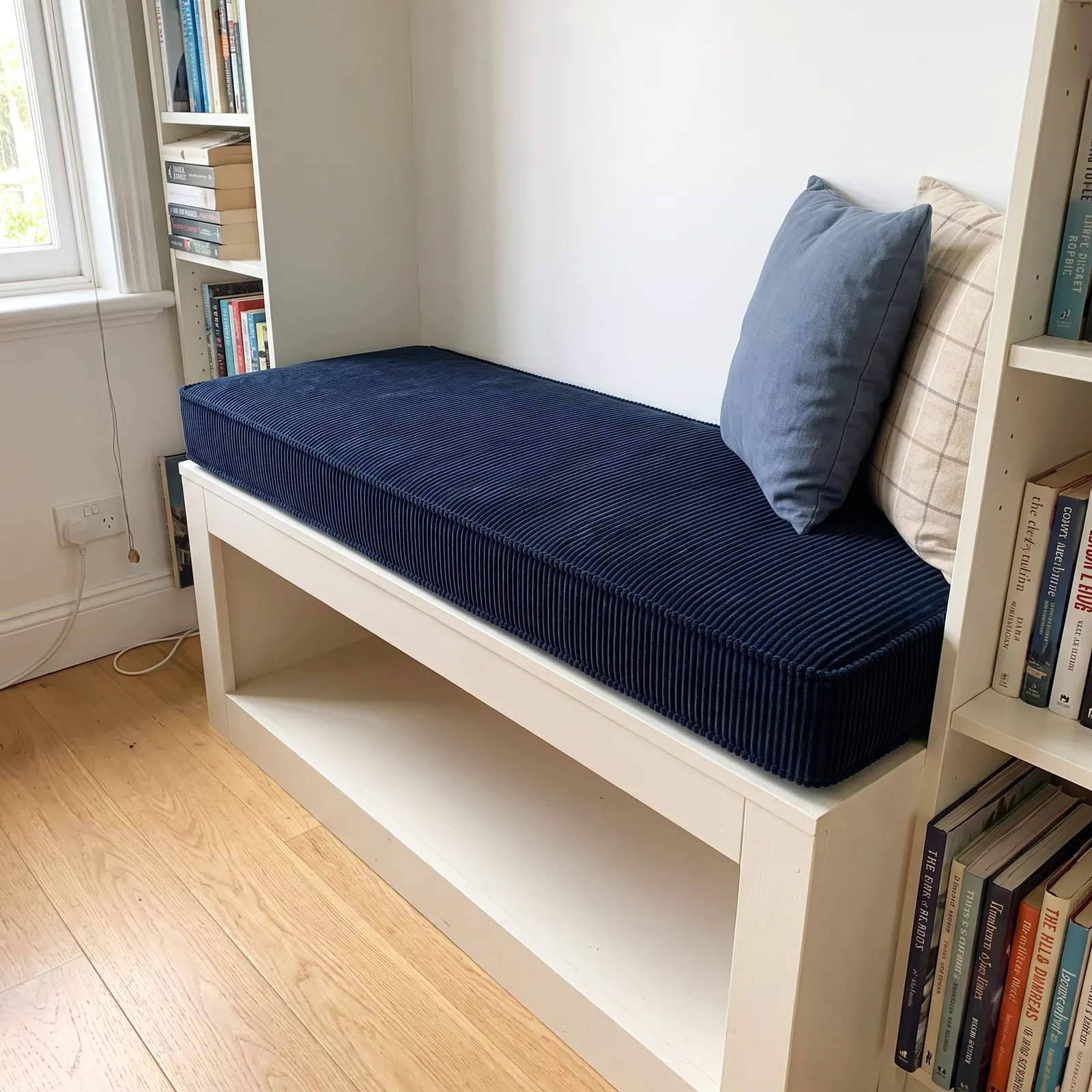
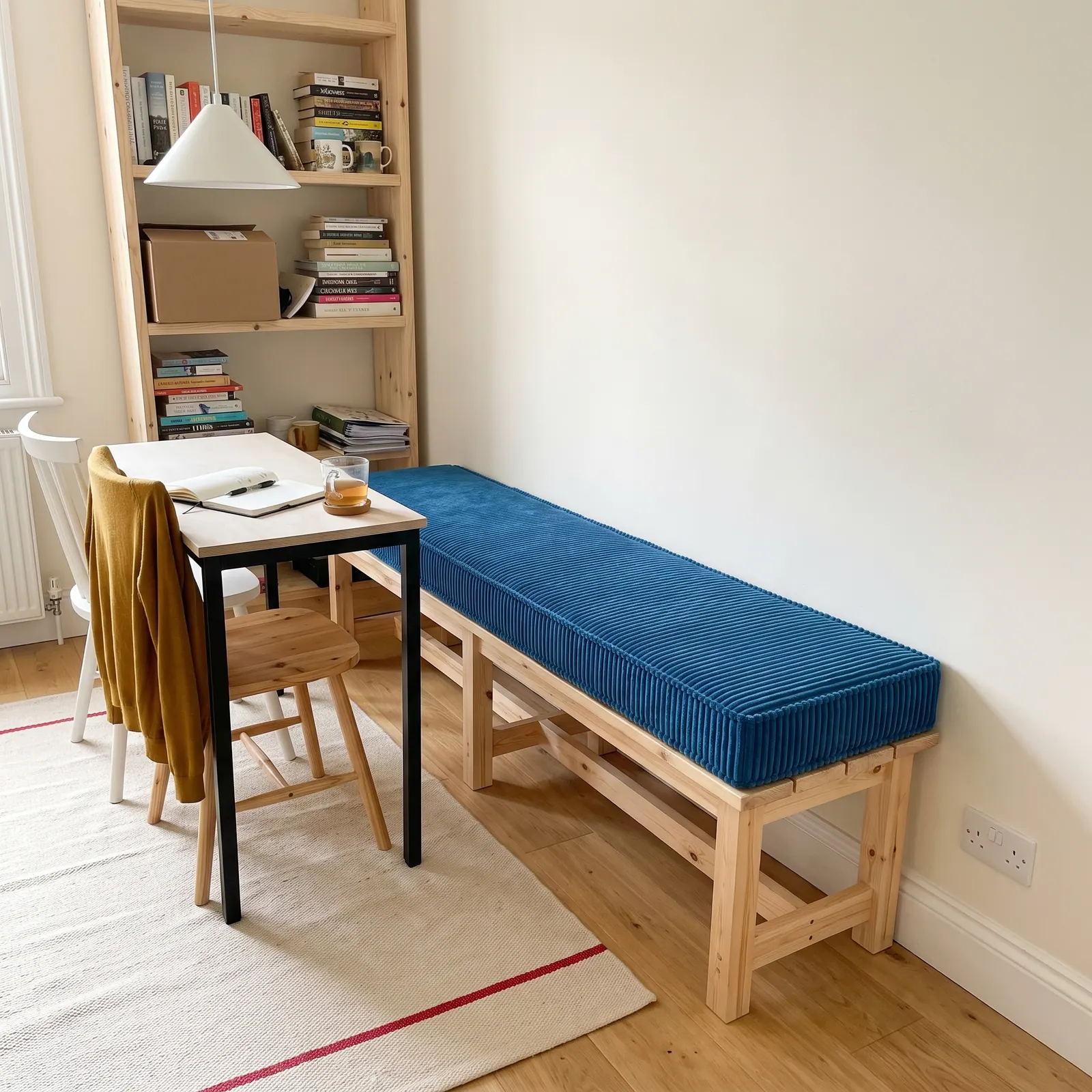
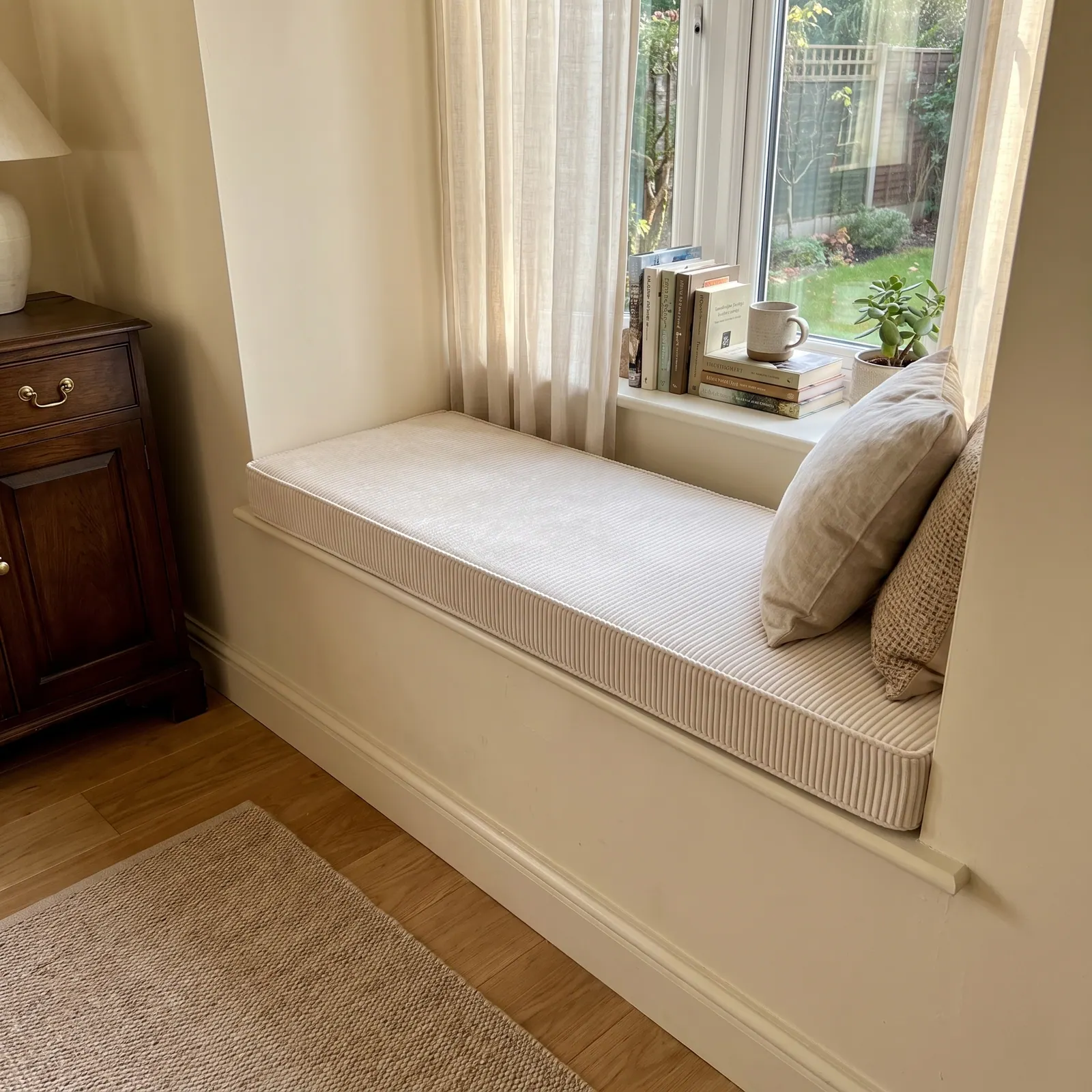
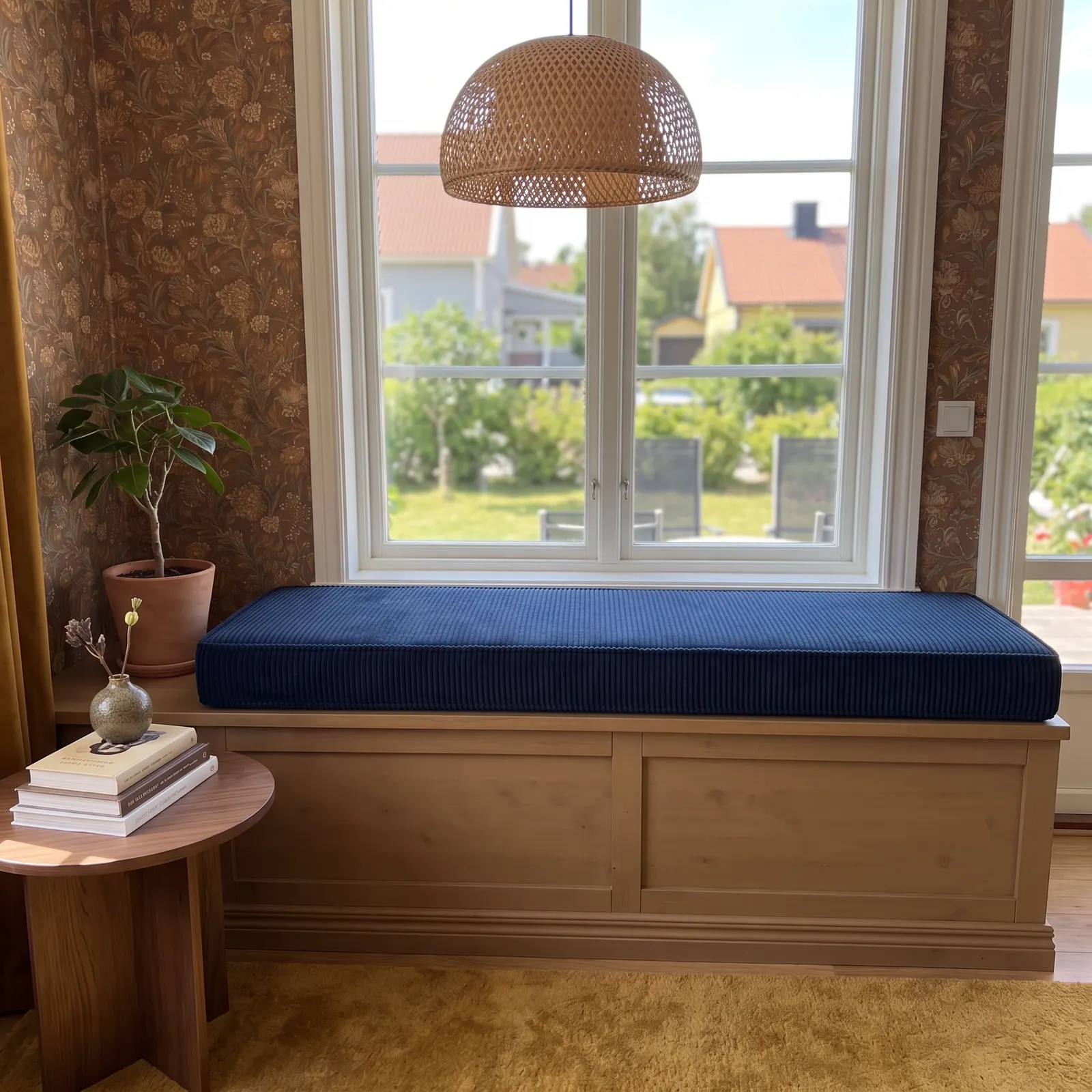
Corduroy benches, edge on
 Save
 Save
 Save
 Save
 Save
 Save