The Cutting Table · a question, worked through
Can you make a stripe in my own colors, or put a plain color into a stripe?
Ivory and camel, thin as pencil lines. Forest green against mustard. I understand the wish completely, my friends, because I have carried the same picture in my head. Here is where the loom decides.
Pinned by Élodie
The quick answer
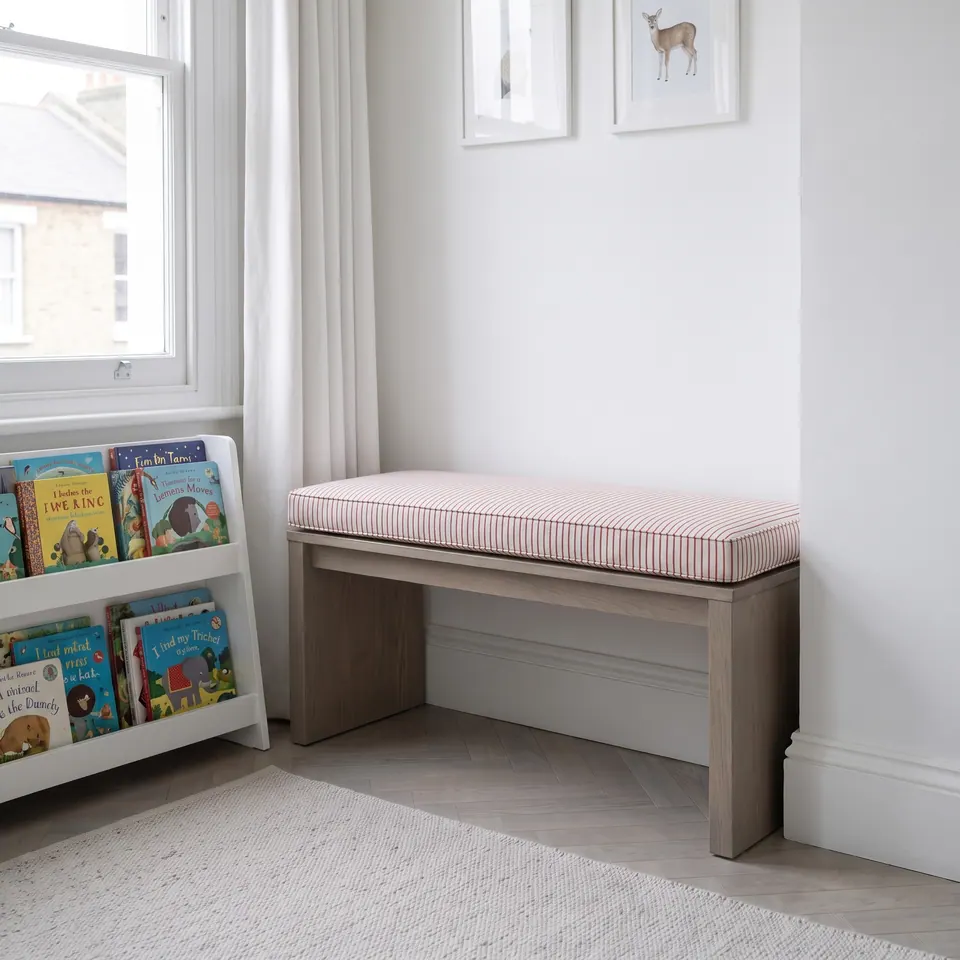
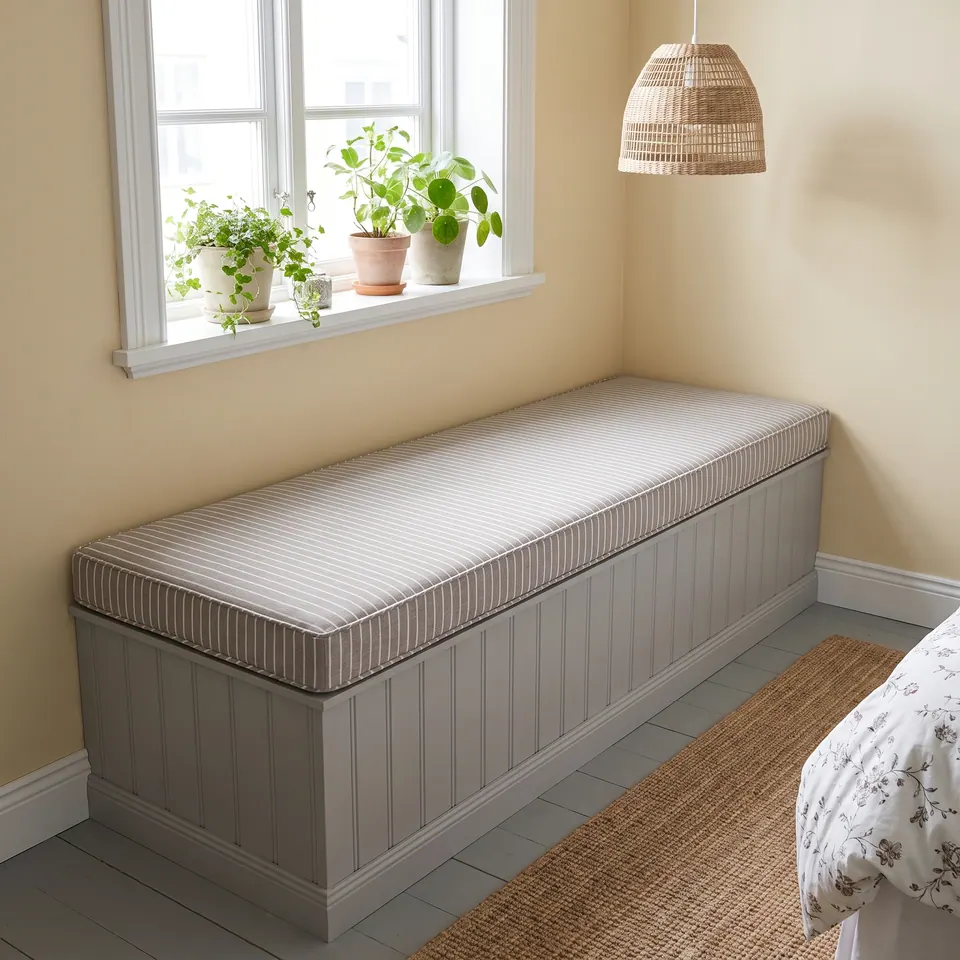
No: stripes are woven into the fabric by the manufacturer, so their colors are fixed, and a plain color can't be turned into a stripe. What you can choose is the cushion's size, thickness and piping, including a piping color that differs from the stripe. The workshop will point you to the closest existing stripe or try to source a similar print from your reference.
Get a quote for a bench cushion
Key facts
- Stripes are woven into the fabric by the manufacturer; their colors are fixed.
- The workshop is not a fabric producer and cannot create new patterns or colorways.
- Plain colors and stripes sit on different fabric charts; a plain can't be made striped.
- Size, thickness and piping are customizable.
- A piping color different from the stripe is no problem.
- With a reference, the workshop can try to source a matching printed fabric.
- The striped fabrics are 100% cotton, one of them 98% cotton and 2% polyester.
Have it made
Have Élodie’s workshop cut this for you
Describe the room at four in the afternoon: the floor, the wall, the one color you love. That is where a good fabric choice begins. — Élodie
Leave your details and the workshop will call you to confirm measurements, fabric, foam and piping. No prices, dates or payment on this page: it is a request, not an order.
A stripe is born on the loom
A woven stripe is not painted on or sewn on. The colored threads run through the cloth as it is made at the mill, long before it reaches a cutting table. That is why a stripe's colors arrive fixed: the workshop cuts and sews cloth, it does not weave it.
It is also why a plain color can't become a stripe; plains and stripes sit on different fabric charts. The striped cotton and ticking library shows the stripes that exist.
Follow-up: “Then what can I change?”
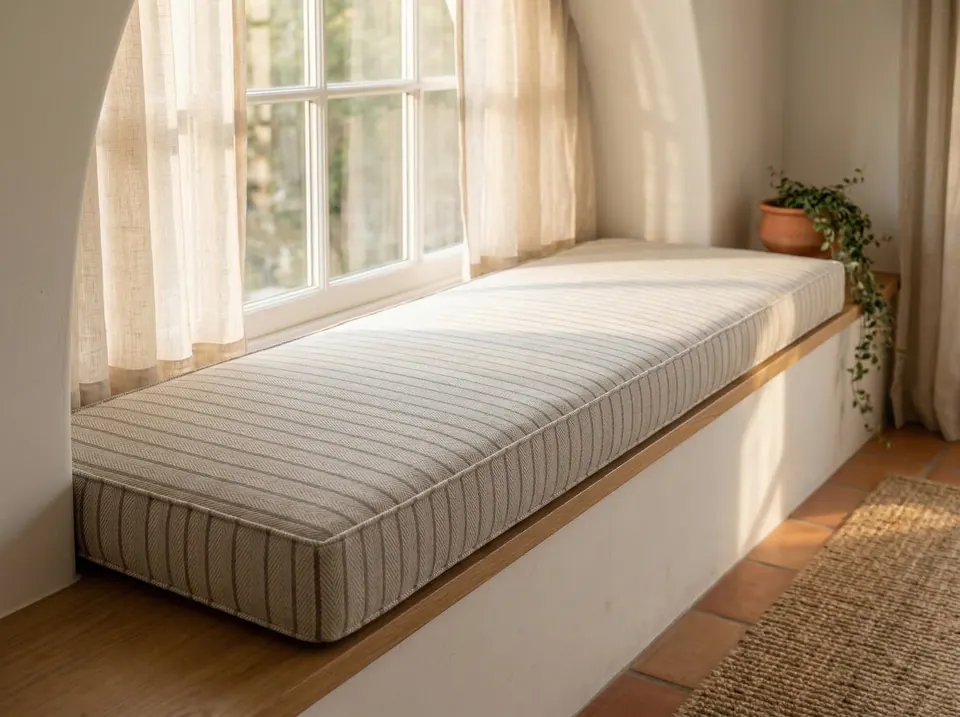
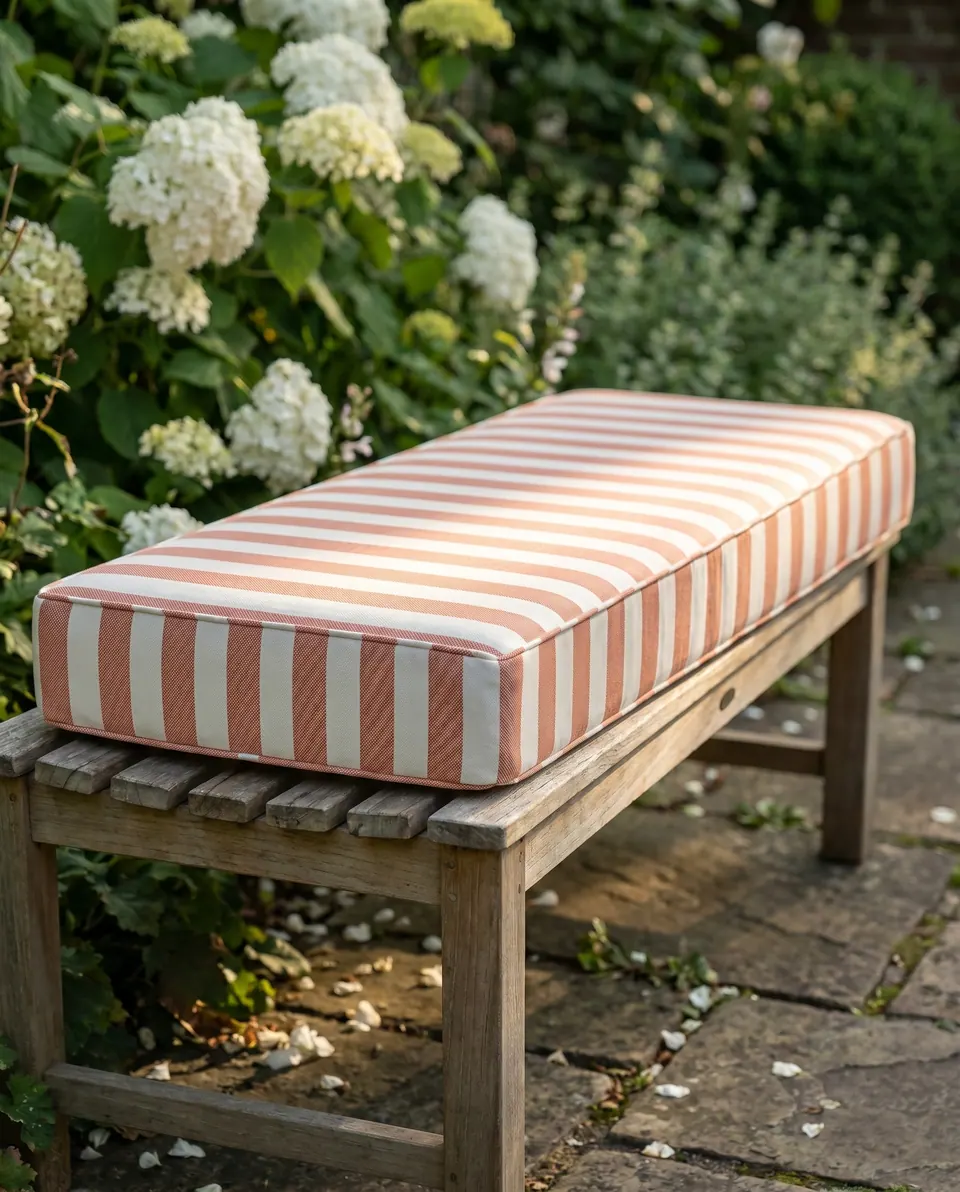
More than you might think. The size, the thickness and the piping are yours, on a bench cushion or a window seat alike. A contrast piping in a third color is no trouble, and it is often where the wish for a custom stripe finds its home: one thin line of saffron or ink navy at the edge says much of what a new stripe would. The piping Pattern shows matching, contrast and none.
Follow-up: “There's no brown stripe”
Then we look for the nearest cousin. One buyer wanted brown; the closest on the chart was a beige stripe, and piping in the chosen third color was no problem. Another, set on a custom stripe over forest green, chose two solid catalog colors instead, forest green and mustard.
If you have a reference fabric, send it, and the workshop can try to source a similar print. Daylight never lies; your screen sometimes does, so compare swatches by a window.
When the exact stripe doesn't exist, choose the nearest woven stripe and carry the missing color in a contrast piping at the edge.
Élodie
Buyer questions
- A common question
Can you make stripes in two colors I choose, with a third color for the piping?
The workshop's answerNo, the stripes are woven into the fabric, so their colors are fixed. A different piping color is no problem, and the workshop points you to the closest existing stripe, such as beige when there's no brown.
- A common question
Could my cushion be made in a custom striped pattern on your forest green?
The workshop's answerNo. The workshop isn't a fabric producer; it customizes size and thickness, not patterns. It offered to source a matching print from a reference, and the buyer chose two catalog colors, forest green and mustard.
- A common question
Can one of your plain colors be made in the broad-stripe pattern?
The workshop's answerNo. The two are on different fabric charts, and because fabrics come straight from the manufacturers, a new pattern or colorway can't be created. Choose from the existing stripes.
- A common question
What are the striped fabrics made of? Is there a linen stripe?
The workshop's answerThe stripes are 100% cotton, one of them 98% cotton and 2% polyester: natural and washable, but slightly less hard-wearing than linen or velvet. There's no linen version.
Questions buyers ask next
Can the piping be a different color from the stripe?
Yes. Piping color is chosen separately, so a contrast piping, whether it echoes one color in the stripe or brings in a third, is no problem.
Can you print my own stripe design onto cushion fabric?
No. The workshop sews cushions from fabrics the mills make; it is not a fabric producer. With a reference in hand, it can try to source a similar printed fabric.
Where do the cushion fabrics come from?
From fabric manufacturers directly, and from a mill certified to OEKO-TEX Standard 100 (03.T.3239). No organic certification is claimed.