The Cutting Table · a checklist answer
What is 'soft fabric' made of? Is it natural or synthetic?
Also asked as:What is soft fabric made of?Is the soft fabric polyester?
A name like 'soft fabric' tells you how it feels, my friends, not what it is. Here is what sits behind the 901 to 946 codes, told plainly.

 Save
The quick answer
Soft fabric is a poly-cotton blend: the workshop's name for its best-selling upholstery weave, codes 901 to 946, thick and durable with a soft hand. Earlier replies called it 100% polyester; either way it is not chenille and not pure cotton. It wipes clean and machine-washes at 86°F (30°C). For natural fiber, choose cotton-linen.
Get a quote for a bench cushion
Key facts
- 'Soft fabric' is a range name covering color codes 901 to 946.
- Most later replies describe it as a polyester-cotton blend; earlier ones said 100% polyester.
- It is not chenille and not 100% cotton.
- It is wipeable and easy to clean.
- Covers are machine washable at 86°F (30°C).
- It is the best-selling, most-preferred everyday fabric, used on the tufted floor cushions among others.
- Cotton-linen is the natural-fiber alternative.

Have it made
Have Élodie’s workshop cut this for you
Color is easier to settle in a conversation than on a screen. Tell the workshop about the room and the light it gets, and the fabric choice follows. — Élodie
Leave your details and the workshop will call you to confirm measurements, fabric, foam and piping. No prices, dates or payment on this page: it is a request, not an order.
What soft fabric is
- A range name, not a fiber: color codes 901 to 946 on their own chart.
- A poly-cotton blend in most later replies; earlier replies said 100% polyester.
- A thick, durable performance weave with a soft hand.
- Wipeable, and machine washable at 86°F (30°C).
- The workshop's best-selling everyday fabric, used on the tufted floor cushions among others.
What soft fabric is not
- Not chenille, whatever the gentle name suggests.
- Not 100% cotton, and not a natural fiber.
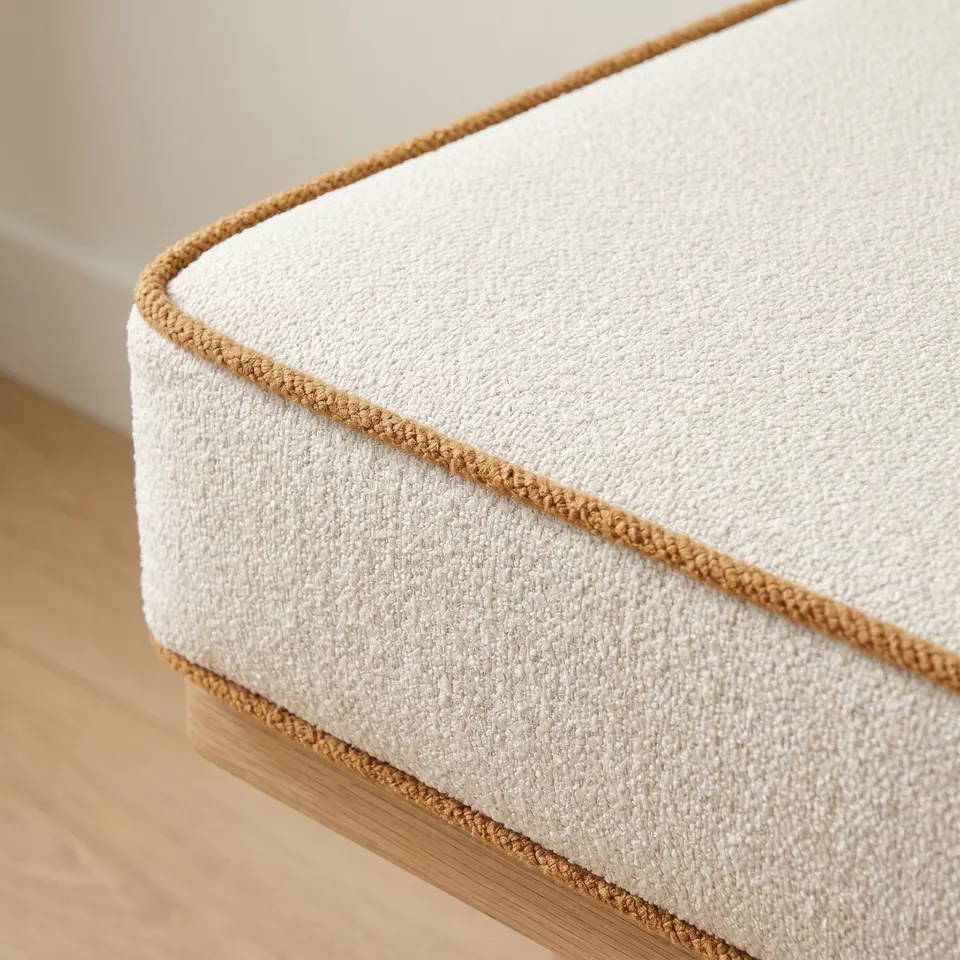
- Not linen: it looks close, but smoother and more uniform, without slubs.
- Not velvet: there is no pile, and velvet keeps its own chart.
Where the weave earns its place
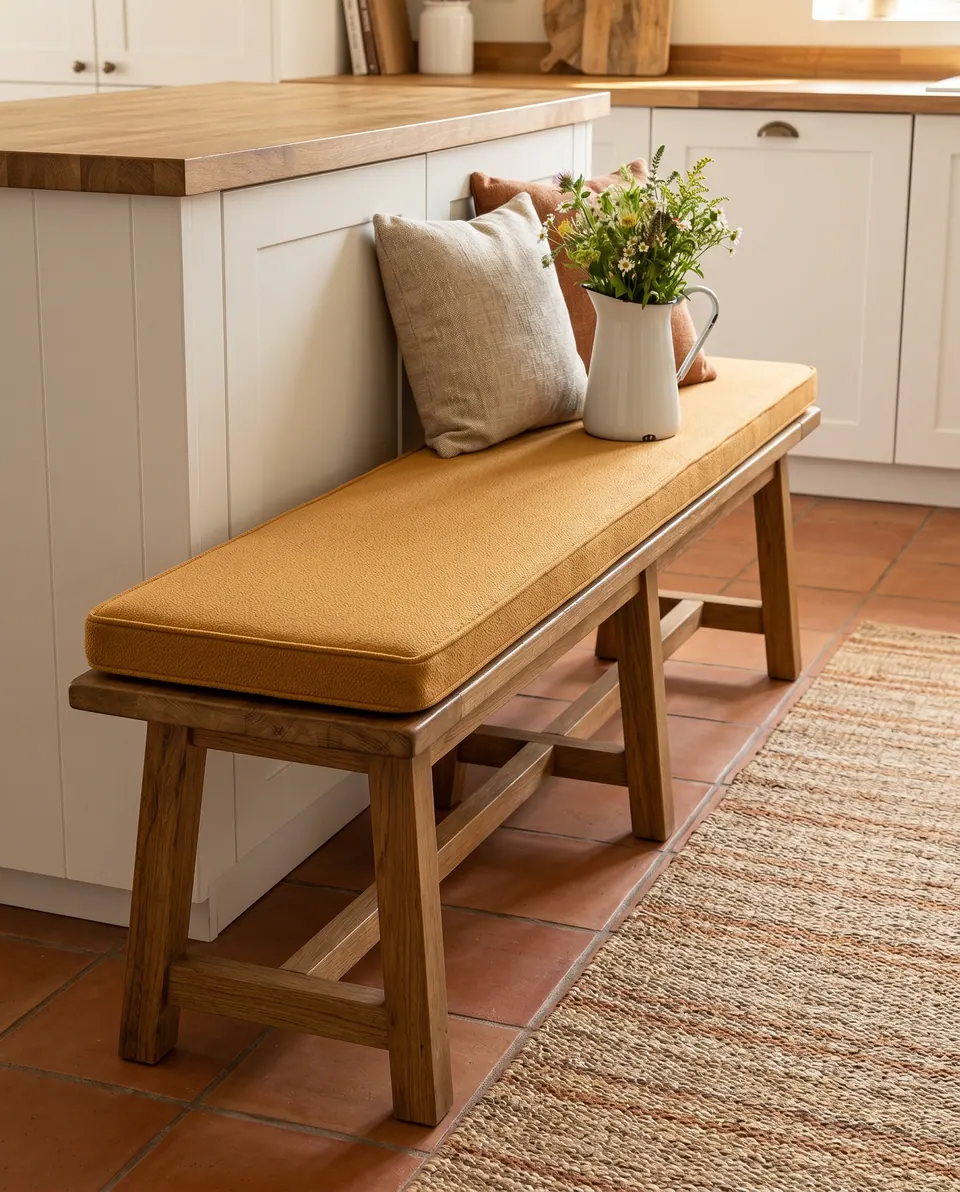
Soft fabric belongs where life is busy: a bench cushion by the back door, a family room, a floor cushion that gets dragged around. It is smooth, doesn't collect dust and wipes clean, which is why it reads as a performance fabric more than a luxury one.
If the brief is natural fiber, turn to cotton-linen. If you want plush pile, velvet. Daylight never lies; your screen sometimes does, so hold a swatch by the window before you choose a shade.
If a cushion must be natural fiber, the soft fabric chart is the wrong one: it is a poly-cotton blend, and cotton-linen is the natural choice.
Élodie Marchand
Buyer questions
- A common question
What is your 'soft fabric', and does it clean easily?
The workshop's answerSoft fabric, codes 901 to 946, is a thick poly-cotton performance blend, not chenille. It cleans easily, machine-washes, lasts for years and is the workshop's most-preferred everyday fabric; velvet is the alternative.
- A common question
Is the soft fabric a natural material?
The workshop's answerNo. It is a poly-cotton blend: very durable and easy to clean, but not 100% cotton. Cushions come in velvet, linen or soft fabric, each with its own color chart.
- A common question
What are the soft fabric and the corduroy made of?
The workshop's answerThe soft fabric is a polyester-cotton blend and one of the best sellers. The corduroy covers are polyester.
- A common question
Which fabric cleans up best with kids and pets in the house?
The workshop's answerIndoors, soft fabric: durable, smooth, doesn't collect dust and wipes clean. Velvet is also easy to clean. Covers wash at 86°F (30°C).
Questions buyers ask next
Why do some replies say polyester and others poly-cotton?
Earlier replies described the range as 100% polyester; later, more frequent replies say poly-cotton blend. Either way it is a durable upholstery weave, not chenille and not pure cotton. Ask for the current label if fiber content matters to you.
Can soft fabric covers go in the washing machine?
Yes. Covers are machine washable at 86°F (30°C), a cool cycle, and the fabric is wipeable, so small spills can be wiped first.
Is purple available in soft fabric?
No. Purple is offered in velvet but not on the soft fabric chart. Each family has its own color chart, so check which one a code comes from.