The Cutting Table · a common question
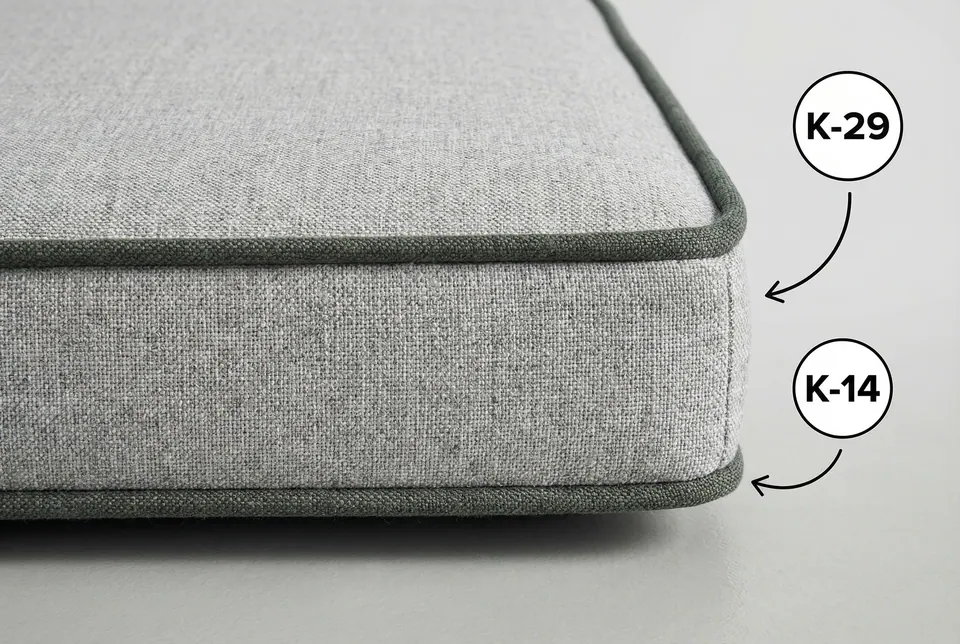
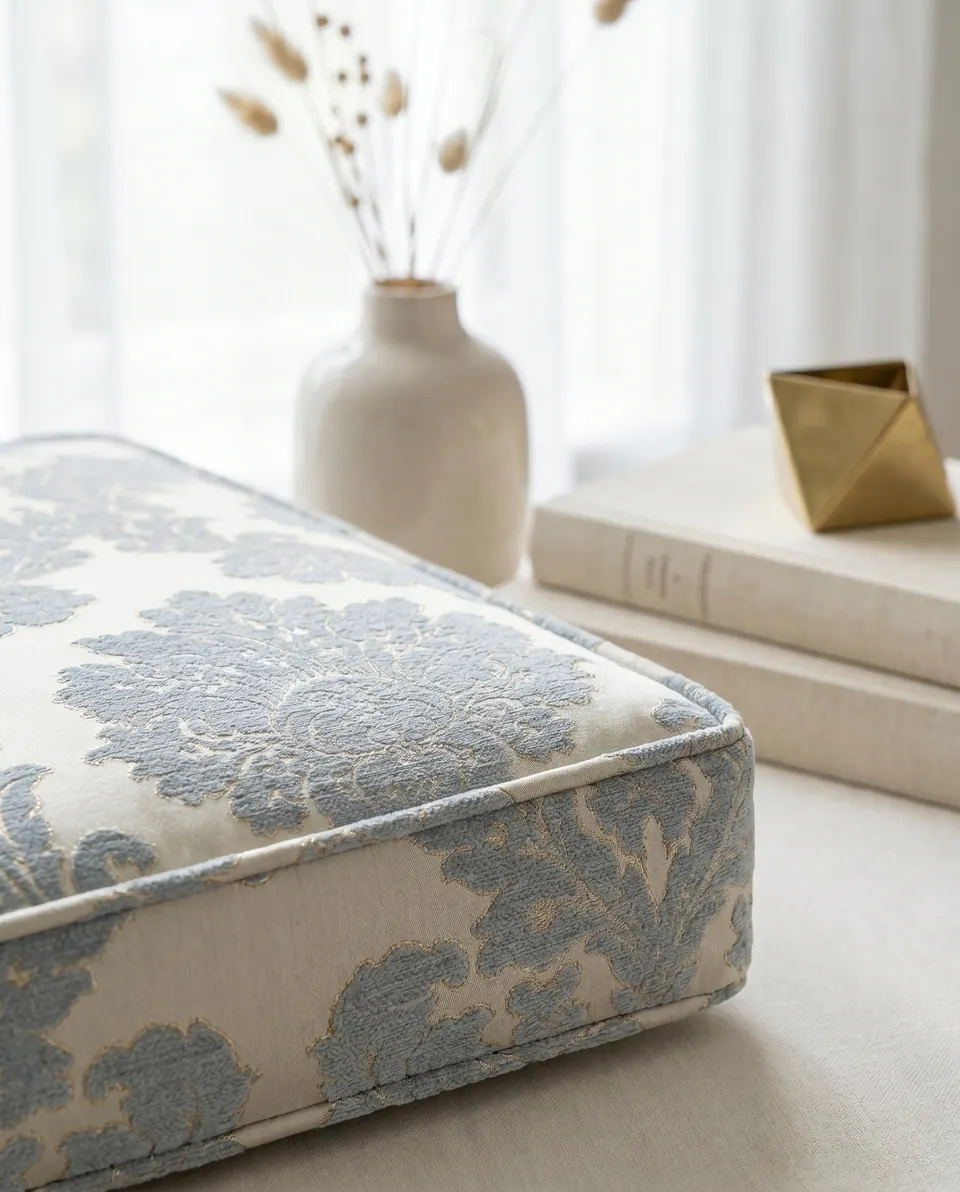
Can you show me my fabric and piping combination together before I order?
Also asked as:Send a picture of these 2 combinationsSend me L-41 and 105 next to each other
Two swatches laid edge to edge tell you more than any render. Ask, and the workshop photographs your pair together, as many times as the decision needs.
The quick answer
The workshop will photograph your chosen body fabric and piping swatches side by side before you order, in as many combinations as you need, with extra shots in different lighting on request. It doesn't make AI mockups, because they misstate real tones. With hundreds of colors, a finished cushion in your exact pairing rarely exists, so physical samples remain the surest test.
 Save
Key facts
- Side-by-side photos of body fabric and piping swatches are sent on request.
- Several combinations can be photographed for one buyer.
- Extra photos in different lighting are available on request.
- AI mockups aren't made, because they misrepresent real tones.
- Finished photos don't exist for every pairing; there are hundreds of colors.
- Close-ups look a little darker and the weave coarser than in daylight.
- The studio is closed on weekends; weekend requests are photographed when the team is back.
- Roughly 50% of orders choose matching piping and 50% choose contrast piping.
- A physical swatch is roughly palm-sized, about 4 x 4 to 6 x 6 in (10 x 10 to 15 x 15 cm), big enough to hold beside a piping code.
Have it made
Have Élodie’s workshop cut this for you
Color is easier to settle in a conversation than on a screen. Tell the workshop about the room and the light it gets, and the fabric choice follows. — Élodie
Leave your details and the workshop will call you to confirm measurements, fabric, foam and piping. No prices, dates or payment on this page: it is a request, not an order.
Pairs already laid side by side on the table
- Linen L41 against velvets 101, 103, 104 and 105
- Velvet 113 with 123 piping
- 928 green with 914 or 913 piping
- Emerald velvet 03 with 22, 29 or 64 piping
- L20 with L53 piping, and the reverse
- A print beside a trim color
- Two pink-flecked fabrics, P-57 on a warm taupe base and P-63 on a deeper wine base, against a buyer's paint colors
Why two real swatches beat a mockup
The eye sits down first, my friends, and it sits on tone. A generated mockup guesses at tone; two real swatches under one light don't have to. That is why the workshop won't make AI renders of your cushion.
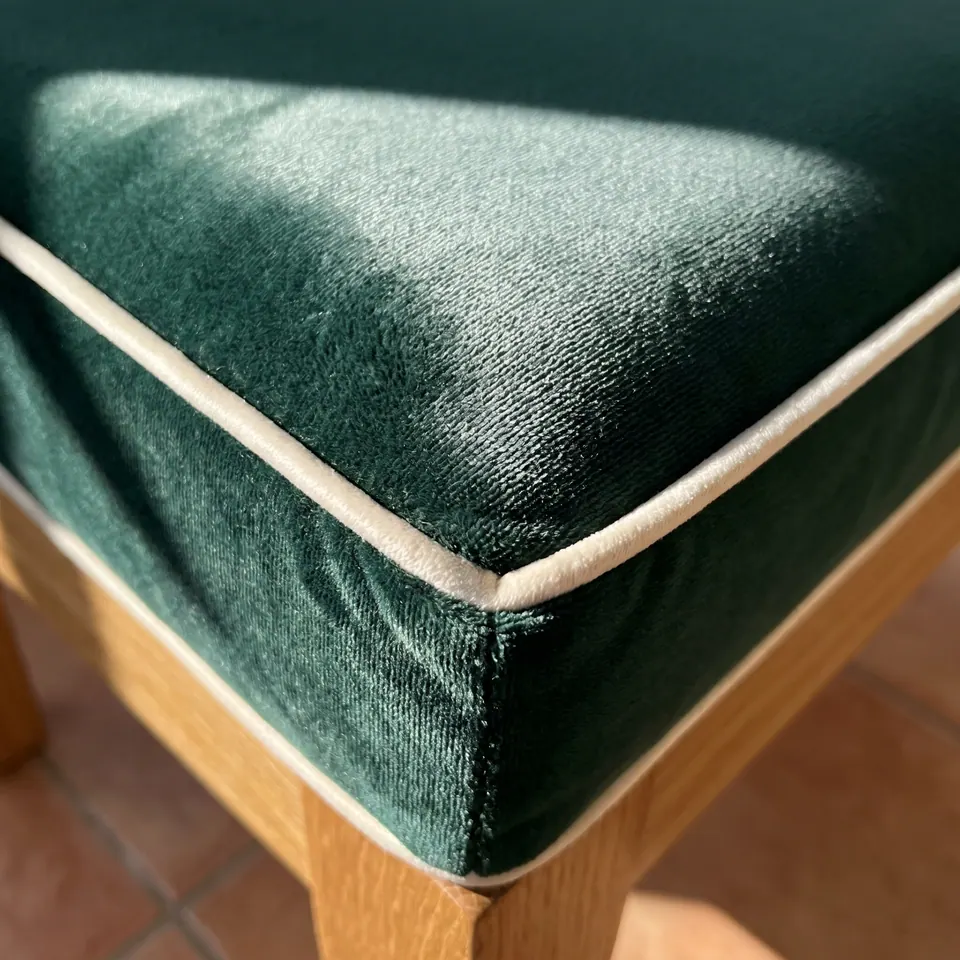
Know the camera's small lies. A close-up comes out a little darker than the cloth, and the weave reads coarser than it will in daylight. If a sage looks too gray or an emerald too deep, ask for a second shot in another light.
The screen versus daylight Pattern explains why phones shift color, and matching, contrast or no piping helps you decide what the welt should do. The glossary's contrast piping entry names the look.
Two paint colors and a misread swatch
A buyer wrote in with two paint colors and a wish for pink flecks. The workshop laid the two closest fabrics against them: P-57, pink flecks on a warm taupe base, and P-63, the same flecks on a deeper wine base.
One paint color was misread on the first pass, so the visuals were done again. They were guides, not promises, since color shifts a little on screen. Still, they turned a guess into a choice.
How to ask for your pairing
Name both codes
Body fabric and piping, written as codes, for example L41 with 105. Add a second or third pairing if you're torn.
Ask for another light
Request extra shots in different lighting, and a finished-cushion or review photo in that fabric if one exists.
Mind the calendar
The studio is closed on weekends. A Saturday request is photographed when the team is back.
Settle tone with samples
For a room with strong color, order physical fabric swatches and hold them against the wall in morning and evening light.
Two real swatches side by side under one light tell you more about a fabric and piping pair than any AI mockup can.
Élodie
Buyer questions
- A common question
Could you photograph the cushion fabric and the piping fabric next to each other?
The workshop's answerYes. The shop photographs fabric pairs side by side so you can judge them together, such as linen L41 beside velvets 101, 103, 104 and 105, or a print next to a trim color. Ask for as many combinations as you need before ordering.
- A common question
Is there a photo of a finished cushion in my exact fabric and piping?
The workshop's answerOften not, so the shop photographs the fabrics side by side instead, for example 928 green with 914 or 913 piping, and sends extra shots in different lighting. Whole-cushion photos aren't always available, so samples are the safest way to judge color for a specific room.
- A common question
Can you make a mockup of my combination before I buy?
The workshop's answerThe shop sends real close-up photos, plus finished cushions in the same or a similar combination when it has them, but doesn't make AI mockups because they wouldn't show the true tones. Decide from the fabric photos rather than the listing images.
- A common question
I'm torn between a few fabrics. Can I see them side by side?
The workshop's answerYes: close-ups of any code, side-by-side shots, finished or review photos in that fabric, and filled-state photos. The studio is closed on weekends, so those shots are taken when the team is back.
- A common question
Will the color look the same in person as it does on my screen?
The workshop's answerSmall differences are normal, because screens and daylight change how color reads. Ask for real-life photos, confirm from a photo of the actual fabric before production, or order a swatch to check it in your own room.
Questions buyers ask next
How many fabric and piping pairs can I ask to see?
As many as you need. The workshop has photographed one linen against four velvets for a single buyer, and it adds shots in different lighting if the first set leaves you unsure.
Why won't the workshop send an AI render of my cushion?
Because renders invent tone. A generated image can't show how a real velvet or linen reads, so the workshop sticks to photographs of the actual swatches, which stay closer to the truth even with a camera's small shifts.
Are swatch photos enough to choose a color for my room?
Often they are, for a pairing decision. For exact tone against paint, wood or a sofa, physical samples are the safest check, because close-ups come out slightly darker and every screen shows color a little differently.