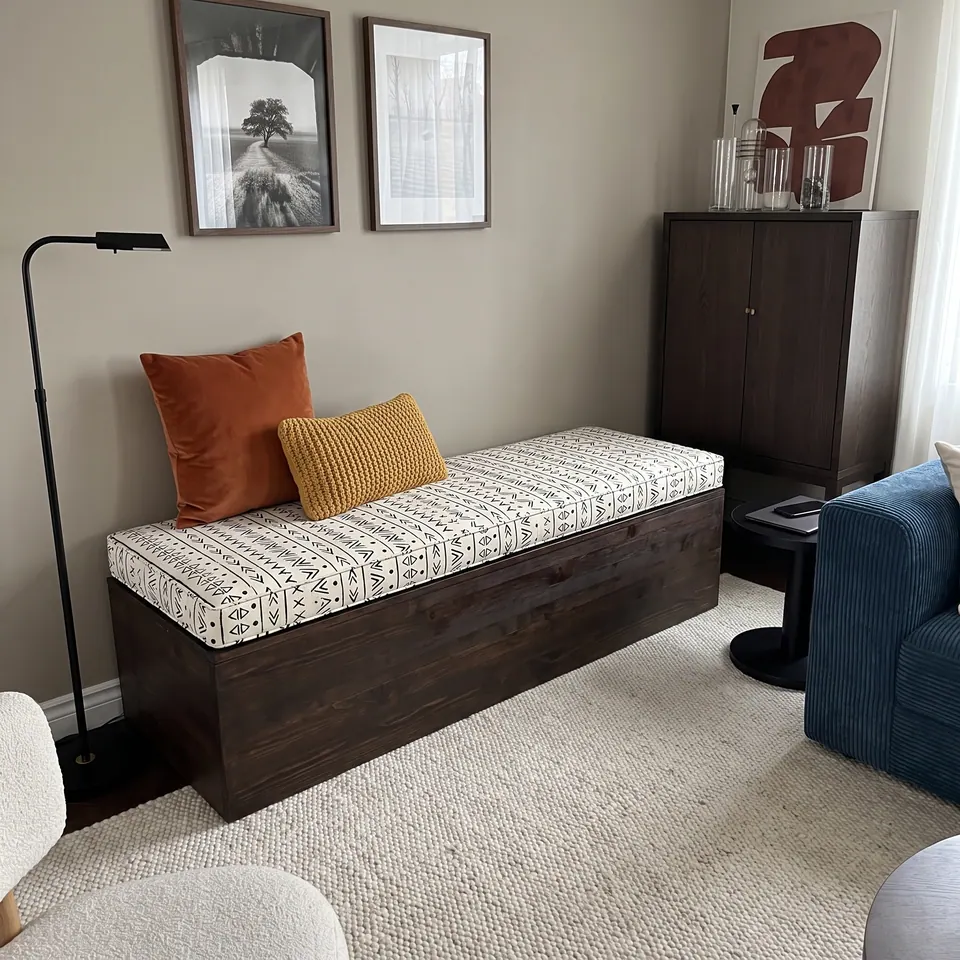
The Pattern Room · a measuring pattern
Cushion covers for allergies: natural fibers, known fills and covers that wash
Most upholstery fabric is polyester, even when the label says linen. If synthetics or dust bother you, the questions change before the order does.
 Save
The quick answer
For an allergy-prone home, choose a zippered cushion cover in 100% cotton, pure linen or a cotton-linen blend, ask what the fill is made of, and wash the cover at 86°F (30°C). Standard velvet, corduroy, soft upholstery weaves and most linen-look fabrics contain polyester, so get the fiber content of your exact fabric code in writing and order a swatch first.
Read the fiber, not the name
Most cushion fabric is polyester. That includes a good deal of what is sold as linen.
At the workshop, the standard velvet is polyester or a poly-cotton blend. The everyday soft upholstery weave is a poly-cotton blend. Corduroy is a polyester blend. The linen-look codes are 100% polyester, and even the chart called natural linen has been described as half linen, half polyester.
None of that is a flaw. Polyester wears well on a seat, cleans easily and barely wrinkles. But if synthetics bother your skin, or you want fewer microplastics in a small bedroom, the name on the swatch tells you very little. The fiber content of the exact code tells you nearly everything.
Élodie untangles the look-alikes in real linen vs linen-look fabric. This Pattern asks a narrower question: what to order when you need cushion covers for allergies, and what to ask before you pay.
Which fabric families are natural, and which are not
| Fabric family | Fiber, as the workshop describes it | What it means for an allergy-prone home |
|---|---|---|
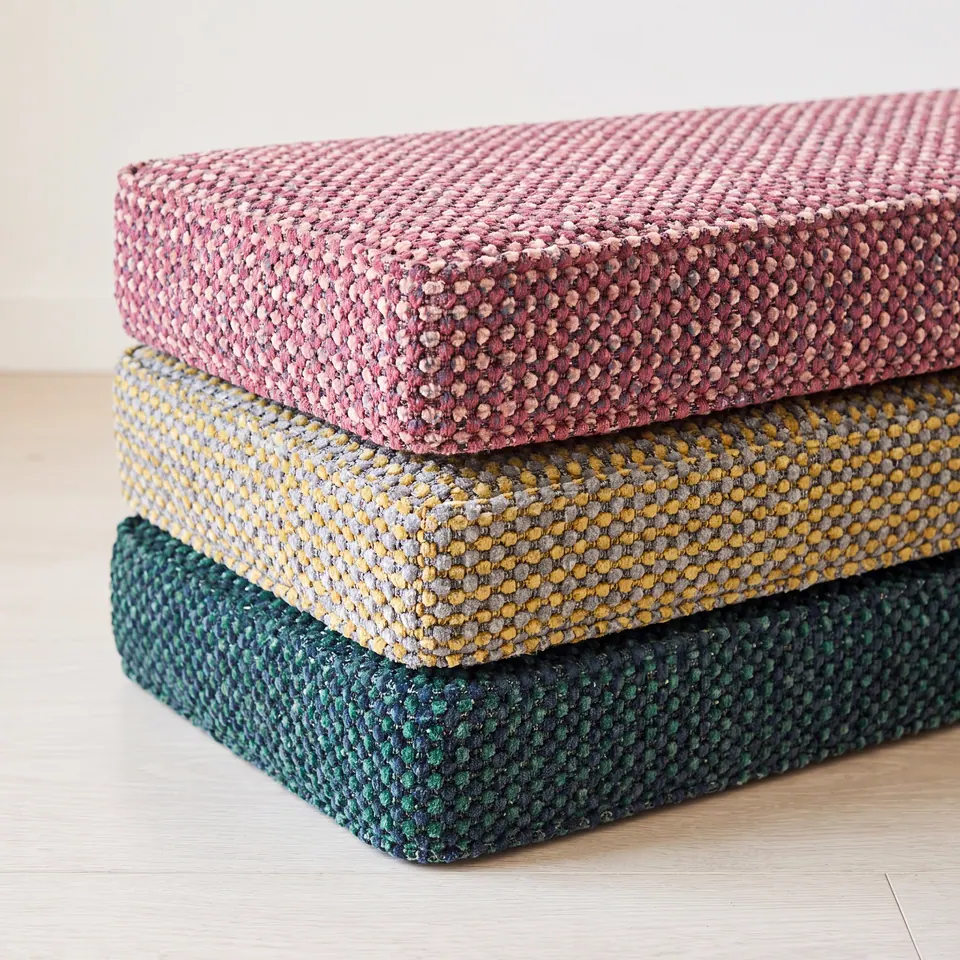
| Velvet | Polyester or a poly-cotton blend | Durable and barely wrinkles, but not natural. Cotton velvet crushes and wears faster on a seat. |
| Soft upholstery weave | Poly-cotton blend (earlier described as 100% polyester) | The easiest to live with day to day. Not the answer to a synthetics problem. |
| Corduroy | Polyester blend | Warm and hard-wearing, with polyester in it. |
| Linen-look | 100% polyester | Looks like linen, behaves like polyester, and melts under a hot iron. |
| Natural linen chart | Described as 50% linen, 50% polyester | Ask for the exact code's content before you count it as natural. |
| Cotton-linen blend | Cotton and linen, no synthetics | A natural option with its own color range. |
| 100% cotton | Cotton, including the striped cottons | Natural and washable. Stains more easily than the polyester weaves. |
| 100% linen | Pure linen, on a separate chart | Natural. Wrinkles, can shrink in the wash and costs more. |
Fiber content can vary by code within one family. Ask about the code you are ordering.
The inside matters as much as the cover
A natural cover over a polyester fill solves half the problem. Ask about the inside too.
- Fiber-filled cushions and pillows. The standard fill is often called silicone ball fiber. It is not beads. It is polyester hollow fiber rolled into small clusters, soft like cotton, sometimes mixed with some cotton. The workshop can send a photo of it.
- Back pillows and soft backrests. These take shredded foam, cut on the workshop's own machine and held in a separate inner cover.
- Seat cushions. The core is polyurethane foam. It holds the shape of a bench or a floor sofa in a way loose fiber cannot.
If you want the fill natural as well, there are real options. Seat cushions, backrests and pillows can be filled with cotton or organic cotton instead of polyester fiber at extra cost. From the outside, a cotton-filled cushion looks the same. On the floor sofa, natural latex can replace the high-density foam for an extra charge.
Some requests have no answer. Flax or linen-fiber stuffing is not offered. Raw cotton and wool are not used in foam-built floor sofas, and foam-free wool-cotton futons are not made. A very large cotton-filled piece can also seal poorly in its vacuum pack. Better to know that now than on delivery day.
Ordering a low-synthetic cushion in seven steps
Say why in the order note
One line is enough: synthetics irritate your skin, someone at home has allergies, or you want to avoid microplastics. The workshop then points you to the 100% cotton chart, pure linen or a cotton-linen blend instead of the standard ranges. Covers-only orders without filling are fine if you already own an insert you trust.
Get the fiber content of your exact code
Not the family. The code. Charts that share a name can differ in content, and some listings default to a different fabric than the title suggests. Check the fabric type in the listing and on the chart, not only the color thumbnail.
Hold a swatch before the cushion
Swatches come through the fabric-sample option or listing. Ask when they will ship. Keep the swatch near you for a few days. Your skin will answer a question no label can. More on sampling in fabric swatches before ordering.
Name the fill
Ask what the fill is made of, and ask for a photo. Standard fiber fill is polyester. Cotton or organic cotton is the natural alternative for seats, backrests and pillows. Write it into the order, because it does not change how the cushion looks.
Choose a cover that comes off
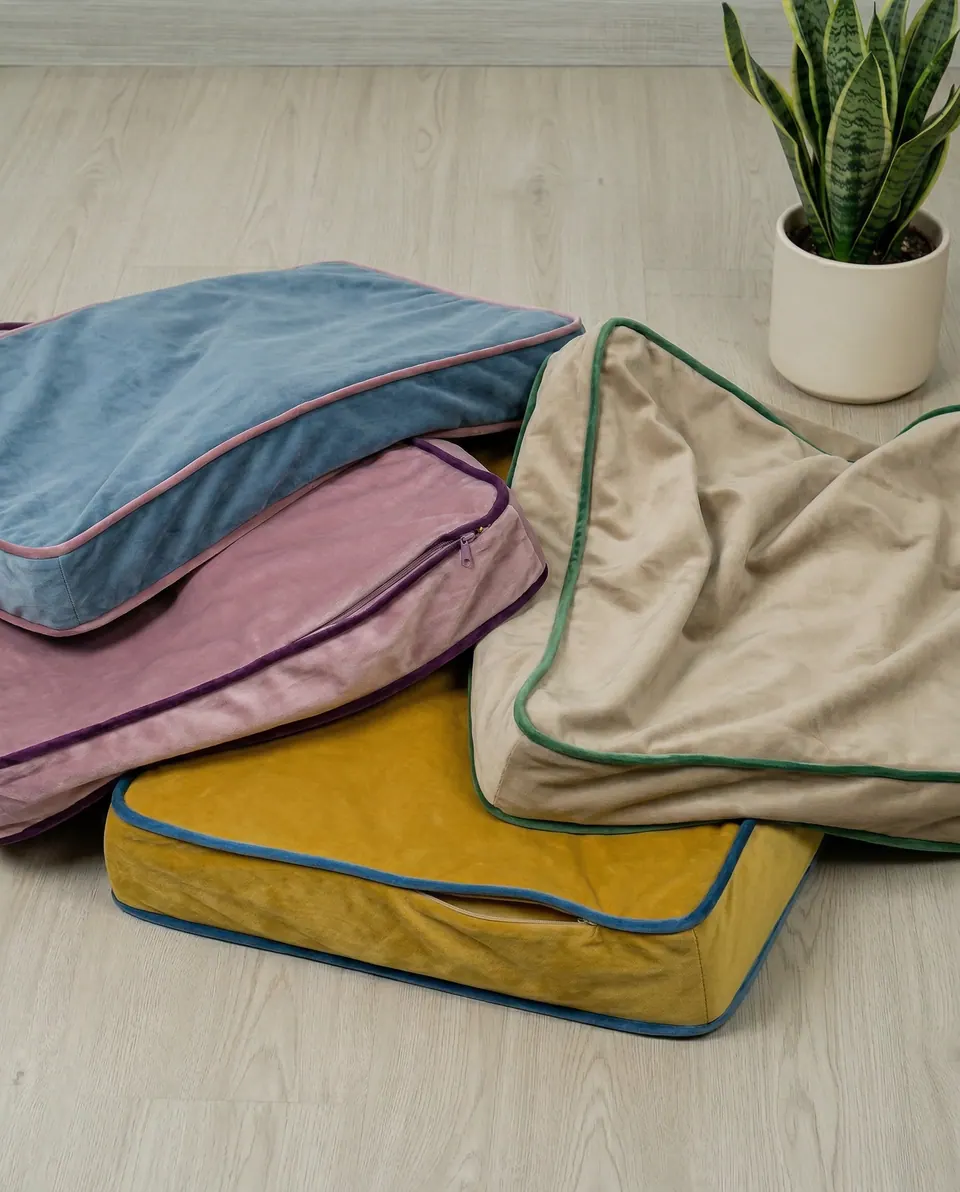
In a dusty home, the cover you can wash is the one that helps. Pick a zippered, removable cover, with the fill kept in its own inner cover so the outer one can go to the wash alone. Loose bits of shredded foam, if any escape, vacuum up.
Wash cool, dry flat
Wash covers inside out at 86°F (30°C) or below on a gentle cycle with mild soap, then air dry. Never tumble dry. Refit the cover while it is slightly damp. Iron or steam only on low heat through a cloth, and test a hidden seam allowance first.
Keep a spare set
A family in the US with a son who has allergies asked for spare covers in the same pink as their floor sofa. The covers are removable and machine washable, and a second set means one is always clean. Children measure comfort with their whole body. Order both sets together to avoid a dye-lot mismatch later.

Have it made
Measured it? Have Hana’s workshop make it
Leave your numbers and the height you like to sit at. The rest is a short conversation. — Hana
Leave your details and the workshop will call you to confirm measurements, fabric, foam and piping. No prices, dates or payment on this page: it is a request, not an order.
Key facts
- Standard velvet, corduroy and the soft upholstery weave contain polyester; the linen-look codes are 100% polyester.
- The natural options are a 100% cotton chart, a separate 100% linen chart and cotton-linen blends.
- Cotton or organic-cotton fill can replace the standard polyester fiber in seats, backrests and pillows at extra cost.
- Natural fabrics cost more than the standard charts and can take longer to source.
- Covers are removable and machine washable at 86°F (30°C) on a gentle cycle, then air dried.
What a certificate can and cannot tell you
Buyers often ask for a certificate. It is a fair request. It answers a different question than the one an allergy asks.
OEKO-TEX Standard 100 tests textiles against a list of more than 1,000 harmful substances and sets limits for them. The workshop uses fabrics from a mill certified to OEKO-TEX Standard 100 (03.T.3239). A certificate belongs to the mill that holds it and covers the fabrics inside its scope, and any number you are given can be checked on OEKO-TEX's own Label Check.
What it does not tell you: whether a fabric is natural, how it wears, or how your body will respond. OEKO-TEX itself says the label is not a quality label. A polyester velvet can carry it. So can a cotton stripe.
That is why you will not see us call a cushion hypoallergenic. No fabric or fill can promise how one particular person will react, and at least one foam certification program bans the word outright. We would rather tell you what the fiber is and let you decide. The longer version is in OEKO-TEX Standard 100 for cushions.
A label describes a fabric. Your skin describes you. Listen to both.
Common mistakes when you are avoiding synthetics
- Trusting the word linen. Assume linen-look upholstery is synthetic until the code says otherwise.
- Choosing by color thumbnail. On a phone, the fabric type in the listing title can hide behind the image.
- Asking about the cover and forgetting the fill. Standard fiber fill is polyester.
- Choosing cotton velvet for a seat. It crushes and wears faster; a cotton-linen weave is the natural alternative the workshop suggests.
- Tumble drying a cotton or linen cover. Heat is what shrinks it.
The floor cushion remade in a natural light blue
A buyer in the US wrote to the workshop asking for a floor cushion in linen or a natural linen-cotton blend. Nothing synthetic. It was the first thing they said.
The cushion arrived on time and well made. The fabric was synthetic. The workshop checked and found the production team had used a linen blend, not the natural fabric that was asked for.
The workshop apologized and offered a remake in a natural light-blue fabric from its chart, and the buyer and the workshop agreed how to share the cost of the new cushion. It ended well. It should not have needed to.
The lesson is plain. When fiber content matters, get the exact composition of the exact code confirmed, and hold a swatch before anything is cut.
A cushion cover in 100% cotton or pure linen wrinkles, can shrink in the wash and costs more; that is the honest trade for keeping polyester off the skin.
Hana Lindqvist
Buyer questions: natural fibers, asked plainly
- A common question
Synthetic fabrics make my skin flare up. Can my cushion be made in something natural?
The workshop's answerYes. The standard corduroy, velvet and soft upholstery weave all contain polyester, so for eczema, allergies or anyone avoiding microplastics the workshop switches to its natural options: a 100% cotton chart, pure linen, or a cotton-linen fabric with its own color range. Natural fibers cost a little more; the quote shows the difference. Covers can be ordered without filling, and swatches come through the fabric-samples listing.
- A common question
When a cushion is listed in linen, is that pure linen?
The workshop's answerUsually not. The standard linen charts are blends or linen-look fabrics: the linen-look codes are polyester, the natural linen chart has been described as half linen and half polyester, and another range is half cotton, half linen. They are used because they wear well and clean easily. For pure fiber, ask for the separate 100% linen chart or the 100% cotton fabrics.
- A common question
What exactly is inside the tufted floor cushions?
The workshop's answerA dense fill often called silicone ball fiber: polyester hollow fiber rolled into small clusters that feel closer to cotton than to foam. The standard mix often includes some cotton, there is no foam core, and the cushions are sewn by hand. The workshop can send a photo of the fill before you order, and foam is available instead on some orders.
- A common question
Could the stuffing be cotton rather than polyester?
The workshop's answerYes. Seat cushions, backrests and pillows can be filled with cotton or organic cotton instead of the standard fiber, through a custom order at extra cost. A cotton-filled cushion looks the same from outside, and the cover can be a cotton-linen fabric. Flax or linen-fiber stuffing isn't offered, and very large cotton-filled pieces can seal poorly when vacuum-packed.
- A common question
For the floor sofa, is there anything more natural than foam inside?
The workshop's answerNatural latex can replace the high-density foam for an extra charge, quoted as the difference for your size. Raw cotton or wool isn't used, because the core needs high-density foam to hold its shape, but the cover can be cotton-linen so your skin only touches natural fibers. Foam-free wool-cotton futons aren't made.
Allergy questions, answered at the table
Is pure linen practical on a cushion that gets sat on every day?
It can be, if you accept its habits. Pure linen wrinkles, can shrink when washed warm and costs more than the standard charts. Wash it at 86°F (30°C) or below, air dry, and refit while slightly damp. If creases would bother you, a cotton-linen blend shrinks less in published figures.
Does an OEKO-TEX label mean I won't react to the fabric?
No. OEKO-TEX Standard 100 sets limits for harmful substances in textiles. It says nothing about whether a fabric is natural or how one person's body responds, and OEKO-TEX itself says it is not a quality label. Polyester and cotton can both carry it. Choose the fiber first, then check the certificate.
Why won't you call a cushion hypoallergenic?
Because no fabric or fill can promise how a particular person will react, and at least one foam certification program forbids makers from using the word. We describe what the cover and the fill are made of instead, so you can match them to what you already know about your own allergy.
Will a cotton or linen cover shrink in the wash?
It can. Published figures put cotton at up to about 5%, cotton-linen blends at 2 to 5%, and untreated linen as high as about 10% on the first wash. Heat does most of the damage, so wash at 86°F (30°C), skip the dryer and refit the cover while it is still slightly damp.
Do natural fabrics take longer to arrive?
Often, yes. Natural cotton-linen and pure linen fabrics are sourced apart from the standard charts, which can add time before sewing starts. Ask about timing when you order, especially if the cushion is needed for a particular date, and order the swatch early.