Concept Sketches · 9 scenes
Bistro chairs, café stools and the small seats that carry a room's color
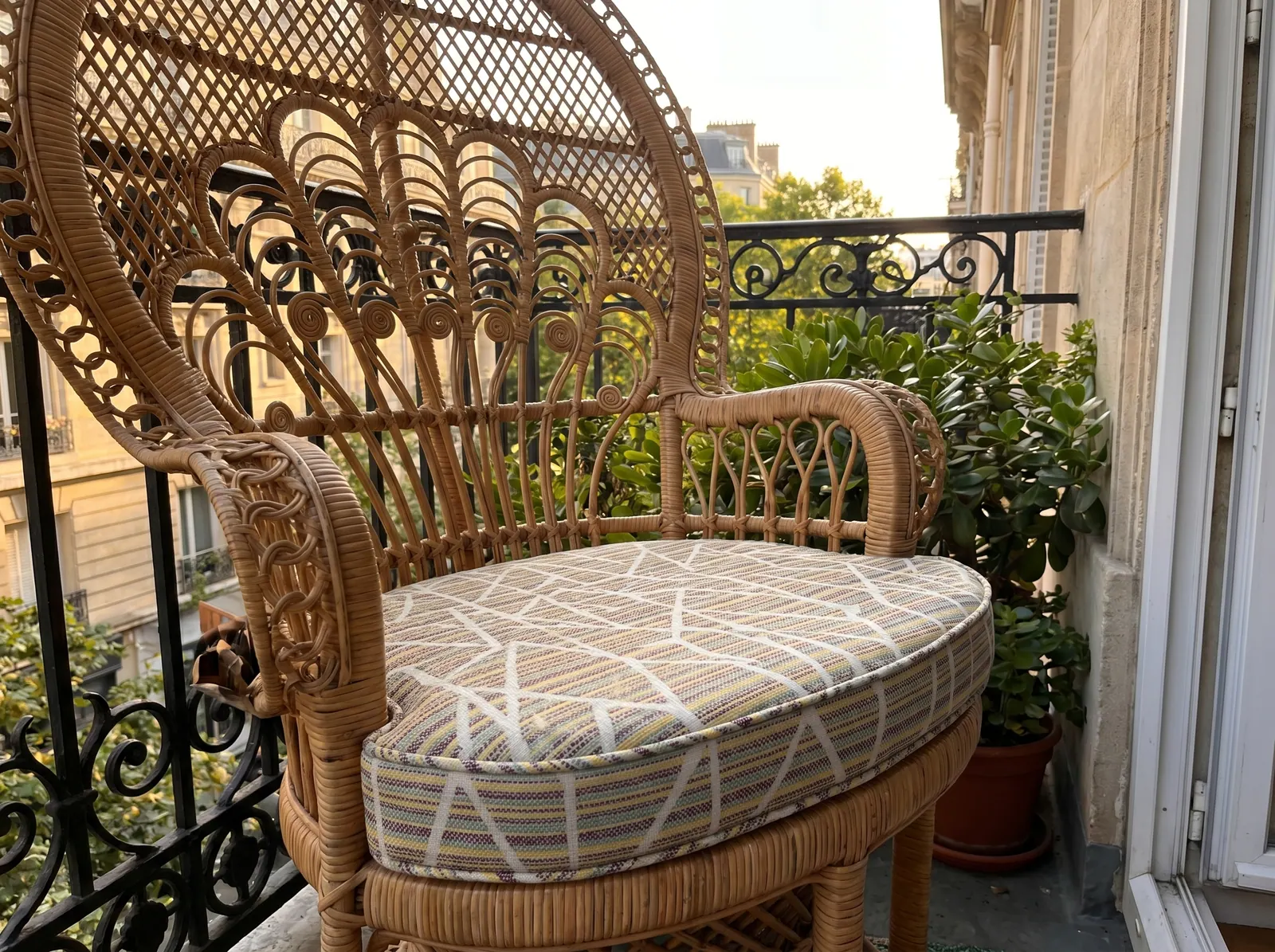
A pair of chairs on a terrace, five stools at a café counter, eleven white chairs edged in lavender. The smallest seats carry a color farther than any sofa, my friends, and they forgive the least.

 Save
The quick answer
Bistro chair cushions are sized from the seat itself, not the chair's overall dimensions: measure the front and back width, both side edges and the depth to the front edge, or the diameter for a round stool. Choose the color from swatches in daylight, and write the body, piping and tie codes separately on the order.
Why the smallest seat speaks the loudest color
Two small chairs by a door tell a guest the color of a house before the sofa does. The eye sits down first, and on a bistro chair it sits down on a square of fabric no bigger than a tea tray.
So these little orders deserve the care of a long banquette. A pair of bistro chair cushions in the wrong white reads as a mistake from across the patio; in the right one, the corner settles. Outside, begin with outdoor acrylic and the patio and porch cushions; indoors, linen-look fabrics and cotton ticking are the usual first swatches.
Two numbers matter most, and neither is the chair's overall height. What does your seat measure from the back rail to the front edge, and how wide is it at the front? The chair cushion builder will draw it to scale.
Nine small seats from the cutting table
01A past project
A bistro set in off-white, chosen in daylight
A buyer asked for a bistro set: two seats about 22.8 x 23.6 in (58 x 60 cm), 3.5 in (9 cm) thick, and two backs about 18.1 x 24 in (46 x 61 cm), 4 in (10 cm) thick. The off-white was decided from samples in daylight, never from the screen. Off-whites drift most: under a warm lamp they lean yellow.
The takeaway: Judge off-white from a physical swatch in daylight, then again under your own lamps.
02A past project
Five round pads for a café counter
Café owners wrote to the workshop for five round bar-stool pads, 16 in (41 cm) across and 3.5 to 4 in (9 to 10 cm) thick, built for heavy daily use. The workshop makes the cushion, not the stool; the metal frames stayed theirs.
The takeaway: For a round stool, give the diameter and thickness, and say how hard the seats will work.
03A past project
Eleven white chairs edged in lavender
Eleven chair pads about 15.7 x 18.1 in (40 x 46 cm), 2 in (5 cm) thick: plain white bodies, lavender piping on the top and bottom edges, lavender ties. Across a row of eleven chairs, the lavender is what a guest remembers, a thin violet line drawn twice on every seat.
The takeaway: Give body, piping and tie codes as three separate lines.
04A past project
Two metal patio armchairs and a number that wasn't enough
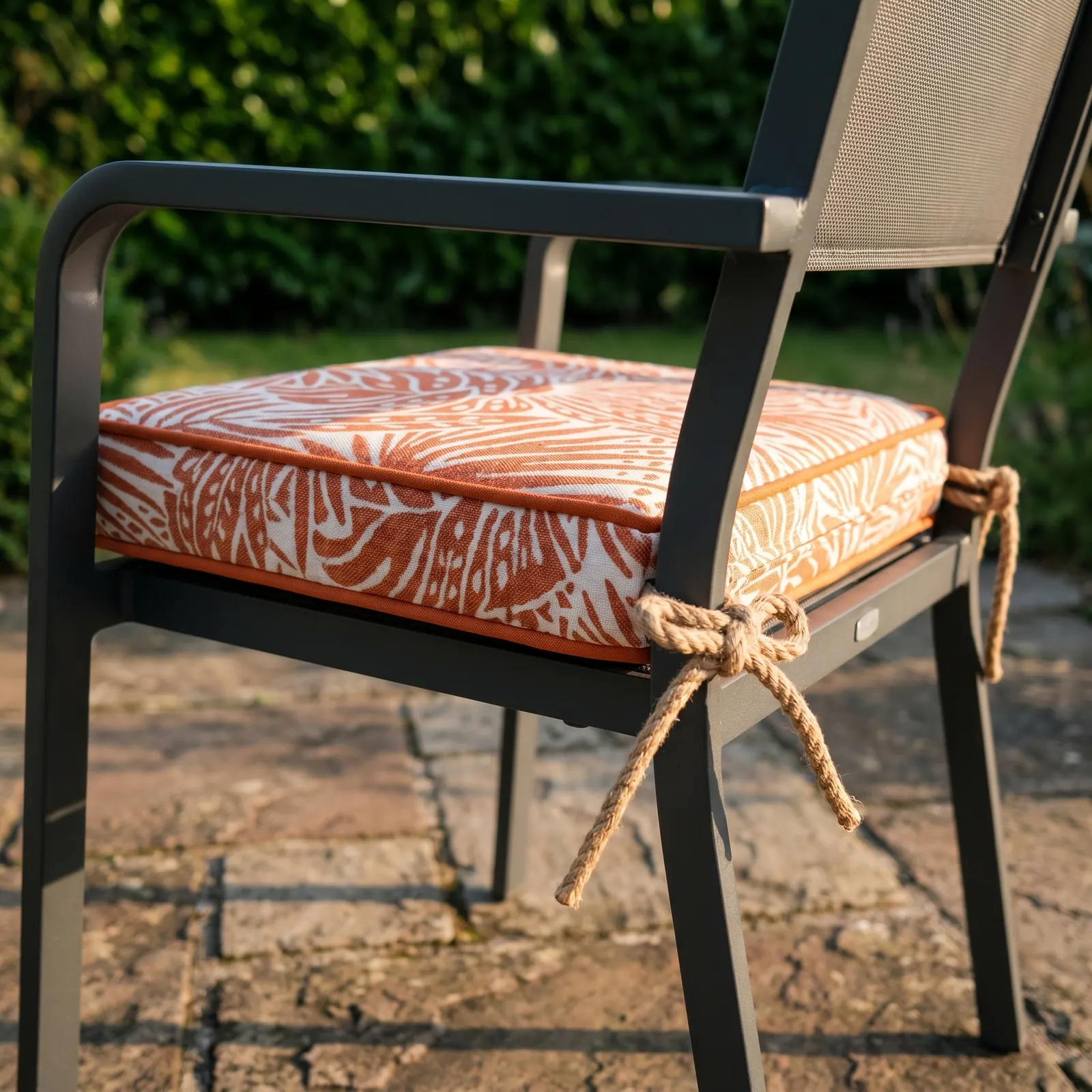
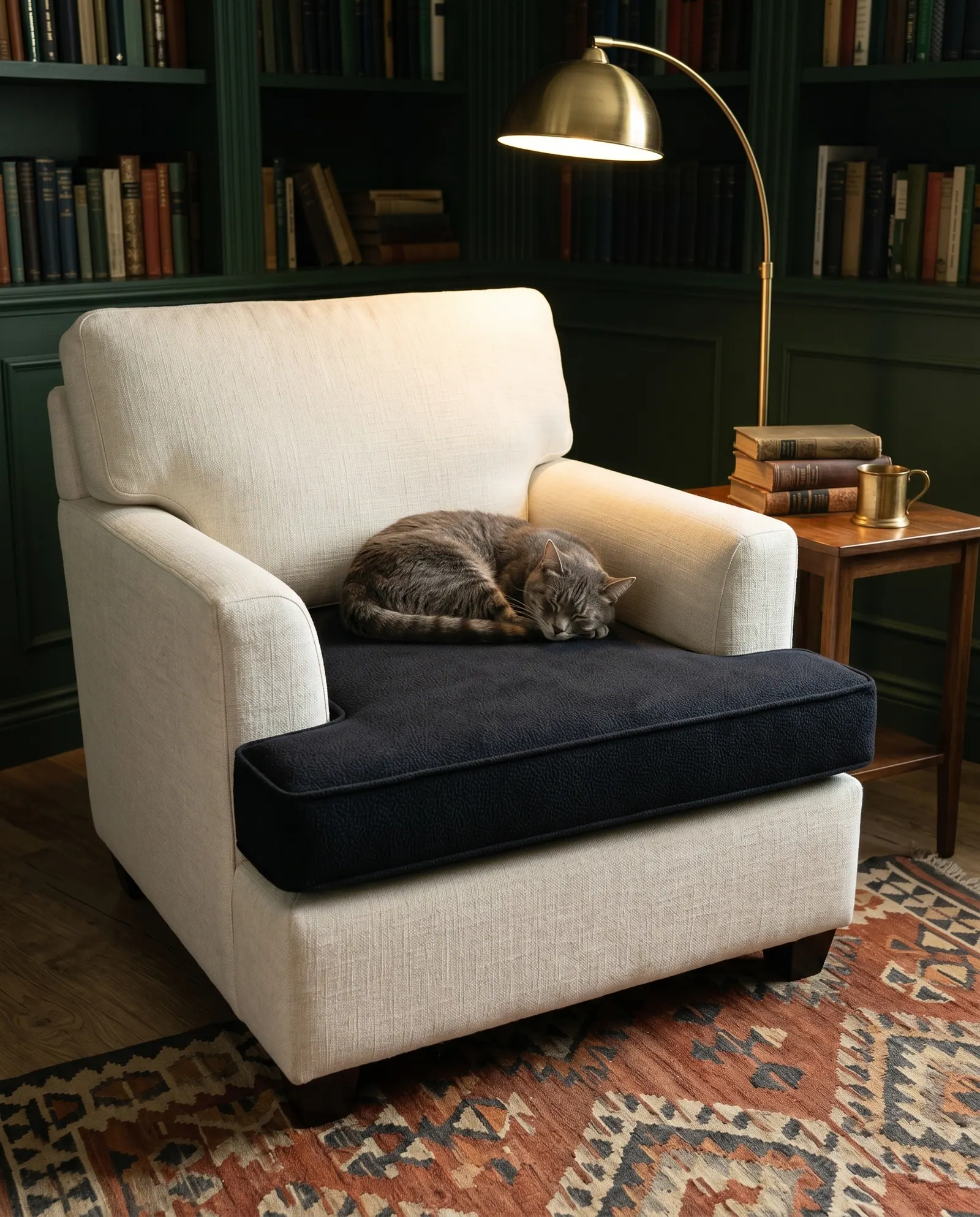
A buyer sent the overall size of two metal patio armchairs, 20.7 x 22.3 x 36 in (53 x 57 x 91 cm). That says little about a cushion. The workshop needed the width between the armrests, the seat depth and the back height. For fabric, the suggestion was a linen-look for the pair outside and cotton ticking for chairs that stay in.
The takeaway: Measure inside the chair: between the armrests, seat depth to the front edge, back height from the seat.
05A past project
One small square for a stone stool
Someone wanted a single 13.8 in (35 cm) square pad, 2 to 3 in (5 to 7.6 cm) thick, for a stone stool. One cushion, one color, and it surprises people on price: a single small cushion carries a minimum driven by shipping, not by the little fabric it takes.
The takeaway: Ask for a quote on a single small pad early, before you fall for the color.
06A past project
Two little seats for a city apartment
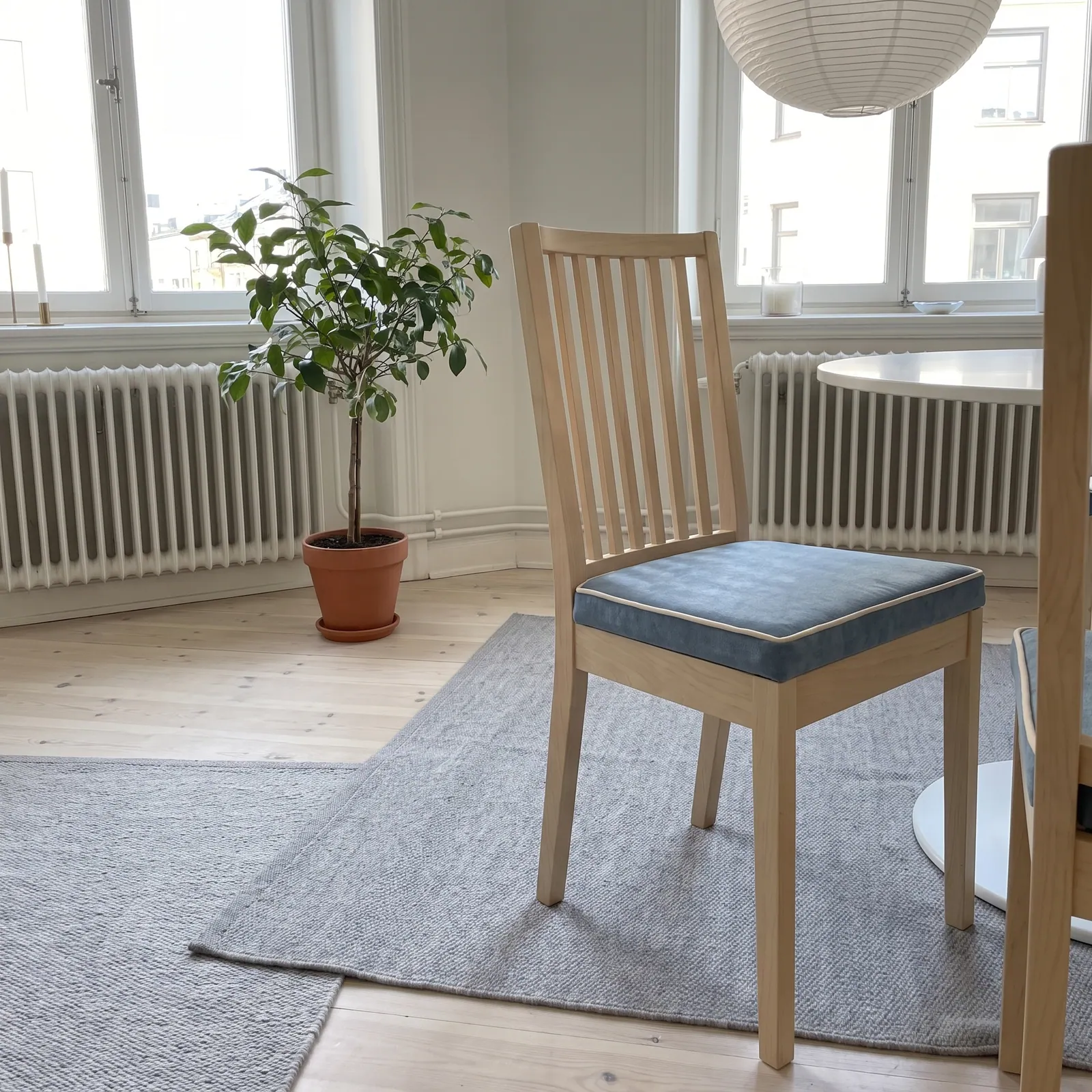
Two small chair seats about 9.8 x 13 in (25 x 33 cm), 2 in (5 cm) thick, in beige, for a city apartment. At 2 in they sit at the thinnest standard foam; about 1.2 in (3 cm) can still take piping, while 1 in (2 cm) pads come only without it.
The takeaway: On a tiny seat, beige lets the chair's wood speak; settle piping before going thinner than 2 in.
07A past project
Four seats in black or charcoal gray
A buyer needed four matching pads, three 26 x 30 in (66 x 76 cm) and one 30 x 30 in (76 x 76 cm), torn between black and charcoal gray. Dark neutrals shift more than most between screen and room; in another order, two neighboring linens turned out to be a very dark gray and a true black.
The takeaway: List each size with its own quantity, and settle black against charcoal with daylight close-ups of both codes.
08A past project
Four vintage ladder-backs that weren't quite square
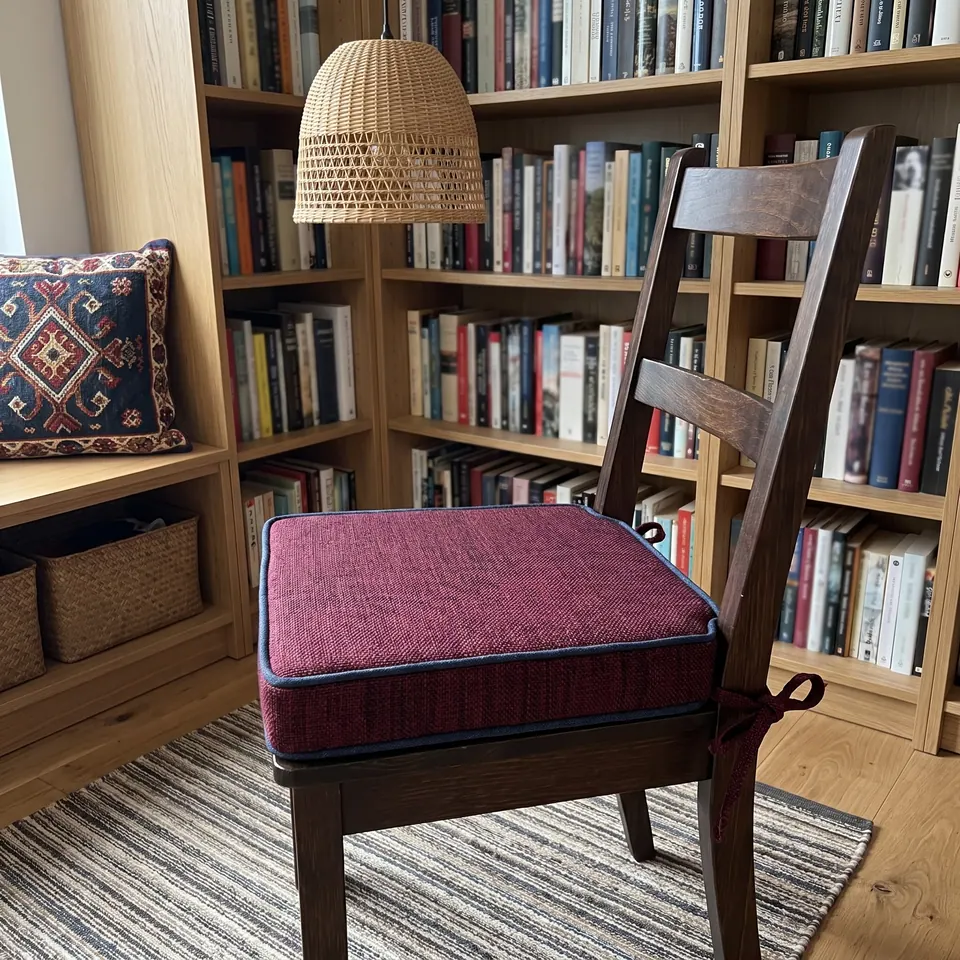
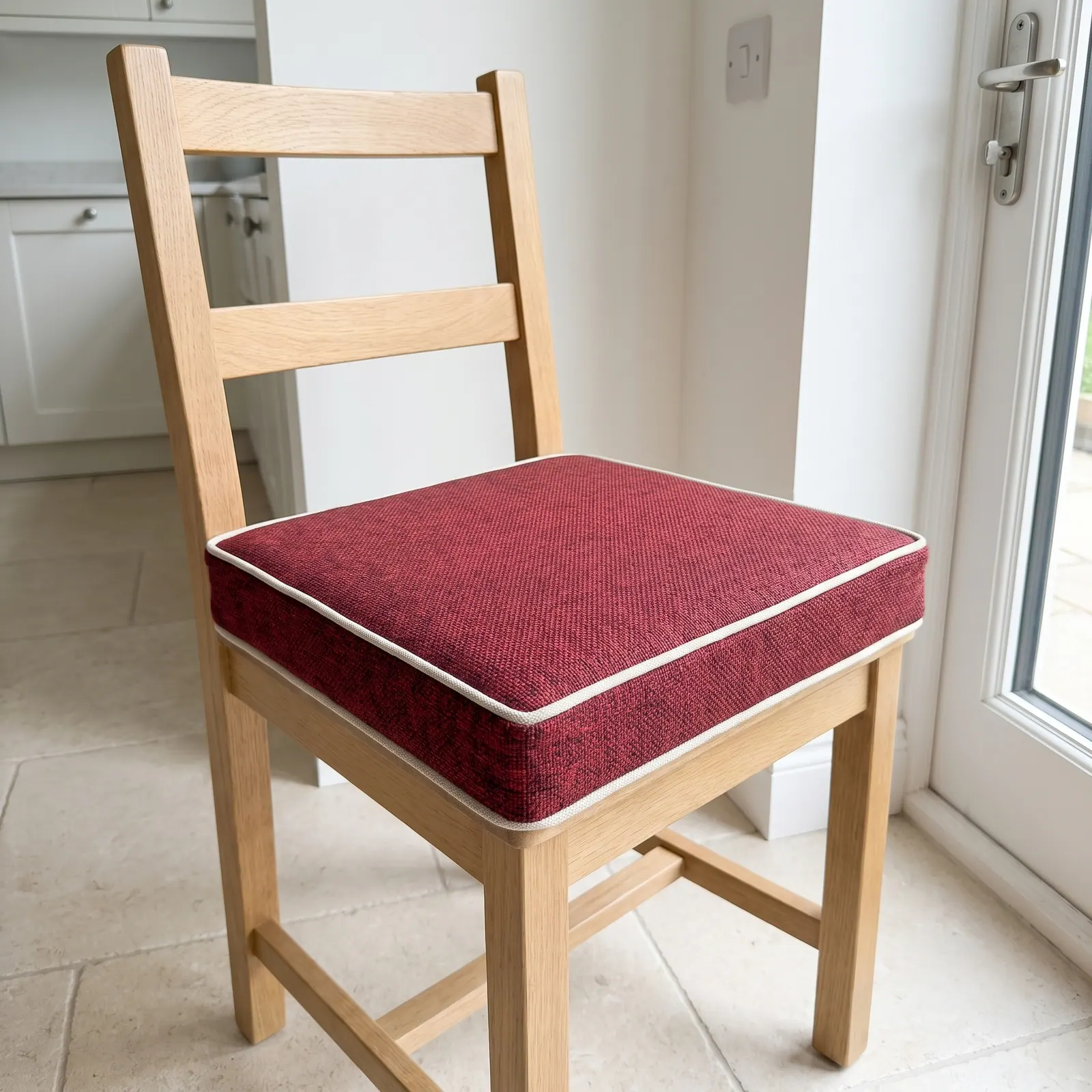
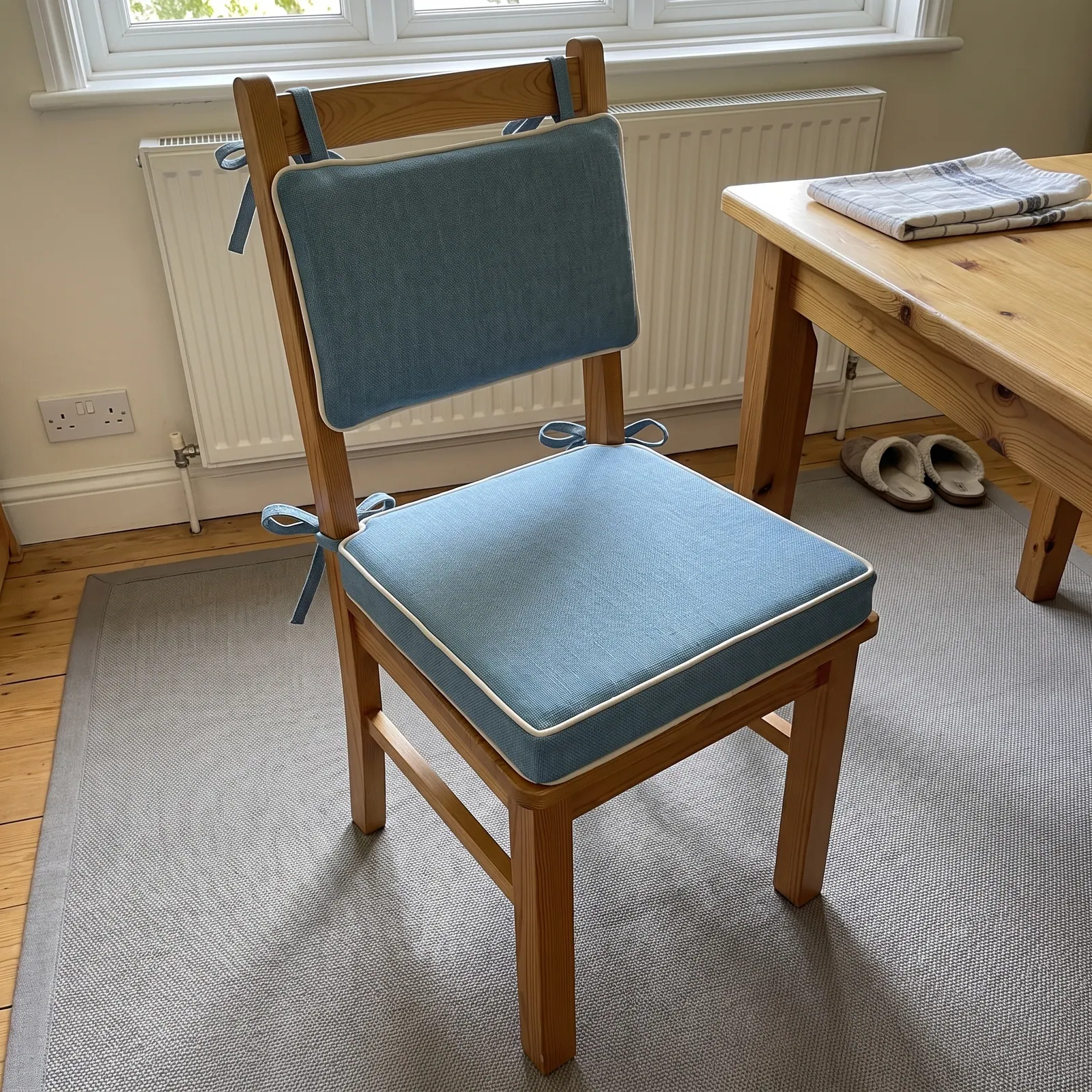
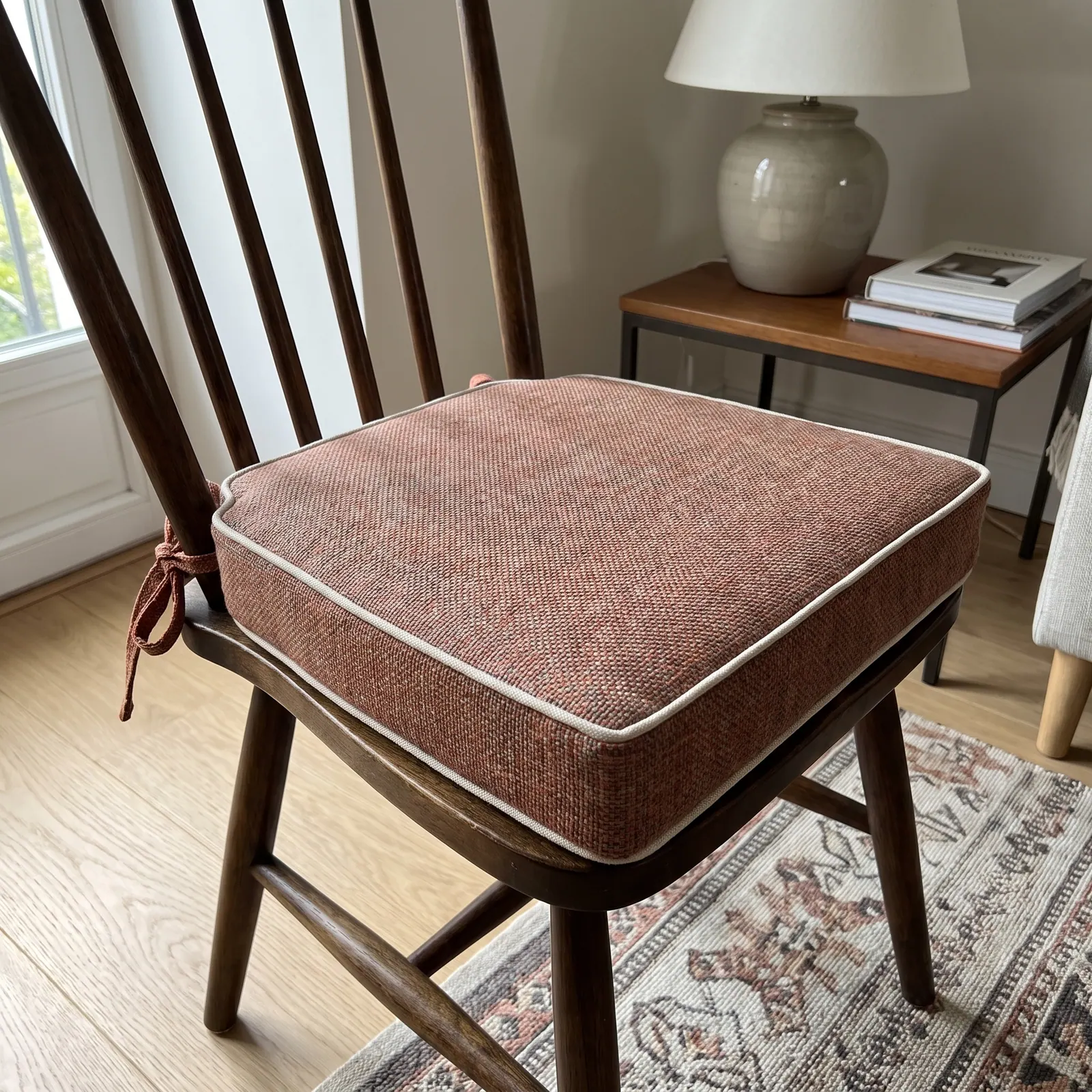
A buyer in the US wanted 4 in (10 cm) pads for four vintage ladder-back chairs. The numbers didn't close, so the workshop asked for both side edges; the re-measure came back at about 11 in (28 cm) sides, 13 in and 14 in (33 and 36 cm) front and back. Ties at the back, zip-off covers, and a linen with contrast piping chosen from close-ups.
The takeaway: Measure the left and right edges of an old chair seat separately.
09A past project
Six trapezoid seats in brown velvet and cream
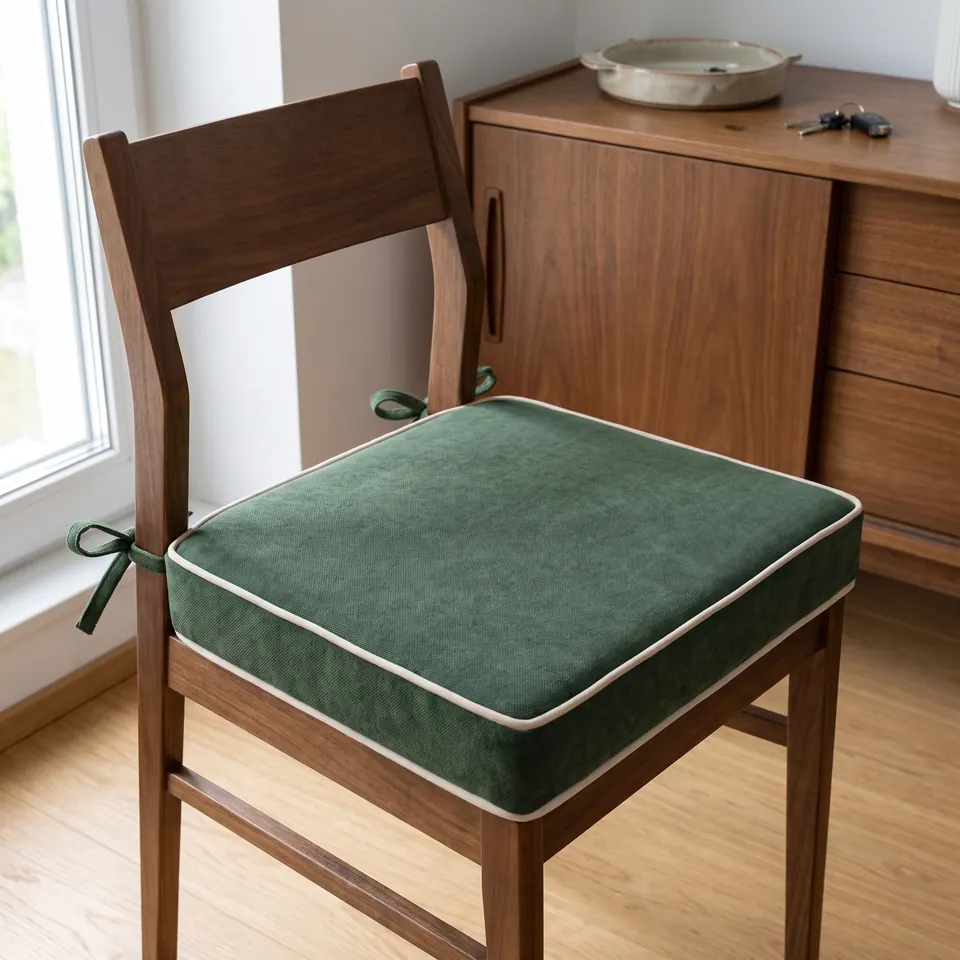
A buyer in the US had six trapezoid chair seats: 18 in (46 cm) at the front, 16 in (41 cm) at the back, 17 in (43 cm) deep. The form took one photo, so three measurement photos were merged into one image. The colors: brown velvet, cream piping, and ties in the same cream.
The takeaway: Match the ties to the piping, and the chair looks finished from behind as well.
What the order note for a small seat should hold
- Seat width at the front and at the back, not the chair's overall size
- Both side edges, measured separately, and depth to the front edge
- Diameter and thickness for a round stool
- Each seat size on its own line, with its quantity
- Body and piping codes, written separately; single or double piping
- Ties: how many, where, how long and in which color code
- A photo of the chair and a sketch with every edge labeled
Piping, ties and the color that travels
On a seat this small, piping is the drawing line. It costs nothing extra, matching or contrast, and buyers have split about half and half. Single piping on the top and bottom edges is standard; double piping can be requested. Body and piping can even be different fabrics, as long as an outdoor body doesn't get indoor piping.
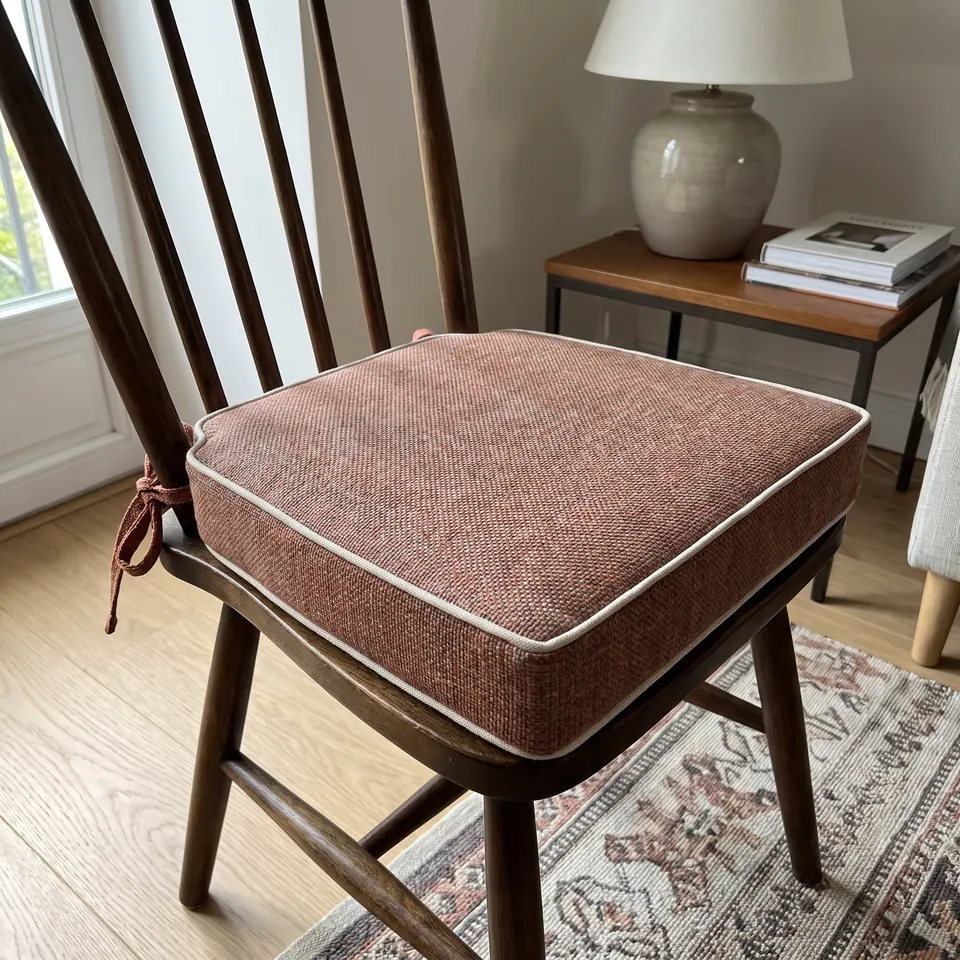
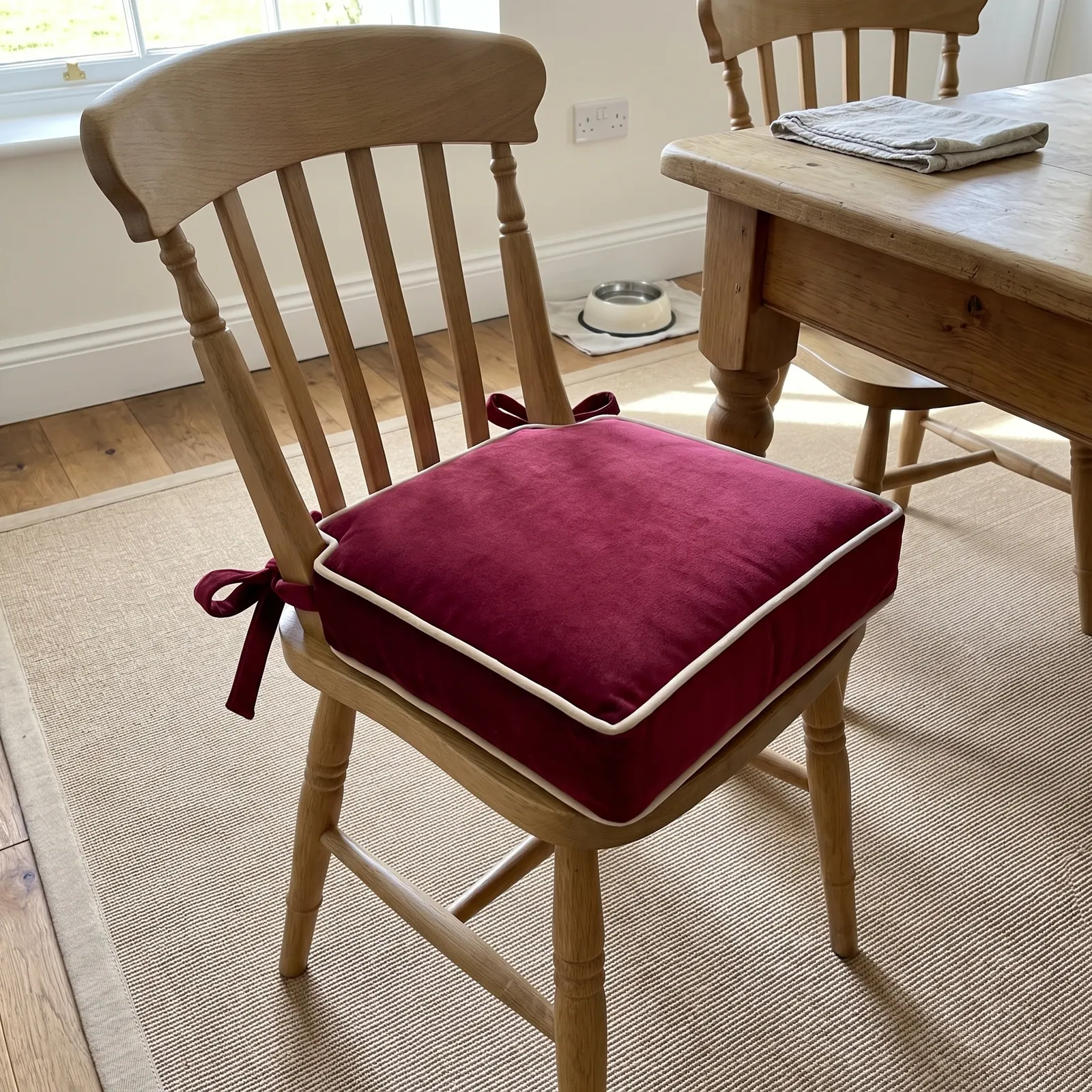
Ties are the other color, and the most forgotten. They are sewn in only on request, so write count, position, length and color in the order note, then look for them in the pre-shipment photo. A buyer in the US received four chenille chair cushions without ties because none had been asked for. The tie placement Pattern and measuring dining chair pads cover the rest; farmhouse chair cushions with ties carries the idea to a whole table.
Bistro chair cushions are measured on the seat, not the chair: front width, back width, both side edges and the depth to the front edge.
Élodie
Small-seat questions
- A common question
Can you make dining chair pads to fit my chairs, with ties?
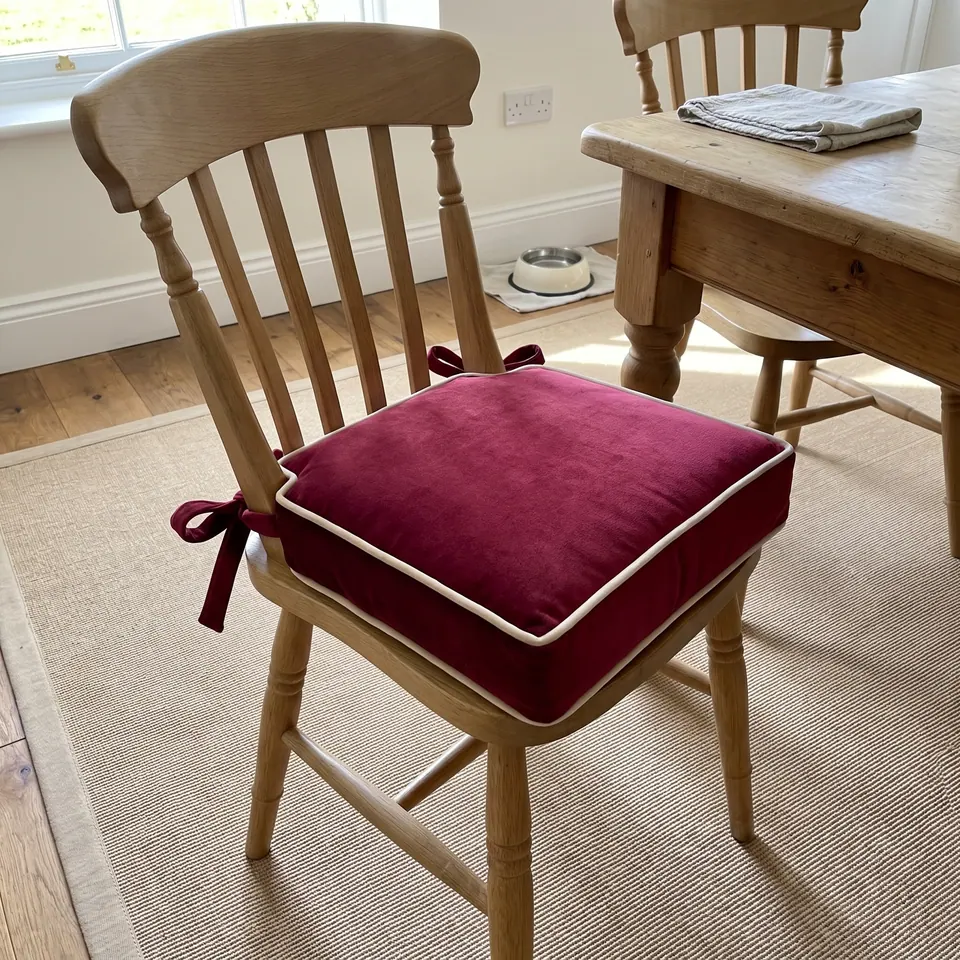
The workshop's answerYes. Chair pads are made to your seat's measurements, with ties at the back for spindles or a ladder-back, and on the dining chair cushion listing ties are a checkout option. For shaped seats, send a photo of the chair and a simple diagram with every edge measured, left and right sides as well as front and back, plus the quantity and thickness. Round seats work too, such as a 12 in (30 cm) diameter, 4 in (10 cm) thick pad with a zip cover and ties or a loop.
- A common question
Will piping, or a contrast piping color, add to the price?
The workshop's answerNo. Piping is included, and a contrast color from the fabric charts costs nothing extra; the price is the same with or without piping. Single piping is standard and double piping can be requested. Ties and a non-slip bottom are separate optional extras chosen on the listing, and the only piping surcharge is leather piping in a non-stock color. Write the piping code in the personalization; if it's blank, the workshop confirms before production, usually assuming matching piping.
- A common question
I want olive green chair pads. Which fabric is it, and will it look too bright?
The workshop's answerThe olive is in the velvet chart, a muted, earthy shade, and there is a linen alternative if you'd rather skip velvet. Under white light it reads yellow-lime; under warm light it looks much calmer. Greens are the hardest colors to judge on a screen, so look at close-ups under your own lighting or order samples first. For a harvest-gold piping, the workshop sends the mustard, yellow and orange options side by side.
- A common question
Could I have velvet piping on a linen chair pad?
The workshop's answerYes. Body and piping can be different fabric types, a linen body with velvet piping, or a soft fabric with linen piping. Write the two codes separately in the personalization, for example 'Cushion: code / Piping: code'. The one mix the workshop advises against is an outdoor fabric body with indoor piping such as velvet; for hard-working dining pads, durable indoor fabrics throughout are the better choice.

Have it made
Have an idea like this made — ask Élodie’s workshop
A fabric reads one way at noon and another at dusk. Mention your light, and the workshop will weigh it with you. — Élodie
Leave your details and the workshop will call you to confirm measurements, fabric, foam and piping. No prices, dates or payment on this page: it is a request, not an order.
Questions buyers ask next
How thick should a bistro chair cushion be?
The small seats in these sketches ran 2 to 4 in (5 to 10 cm): 2 in for compact chairs and long rows of dining pads, 3.5 in for bistro seats, 4 in for backs and vintage ladder-backs. 2 in is the thinnest standard foam; thinner pads come with limits on piping.
Do chair pad covers come off for washing?
Yes. Every foam cushion has a zippered, fully removable cover at no extra cost. The zipper hides on the back edge or on the underside, and you can choose which. Unzip, slide the foam out and wash the cover as its fabric allows.
How many ties does a chair pad need?
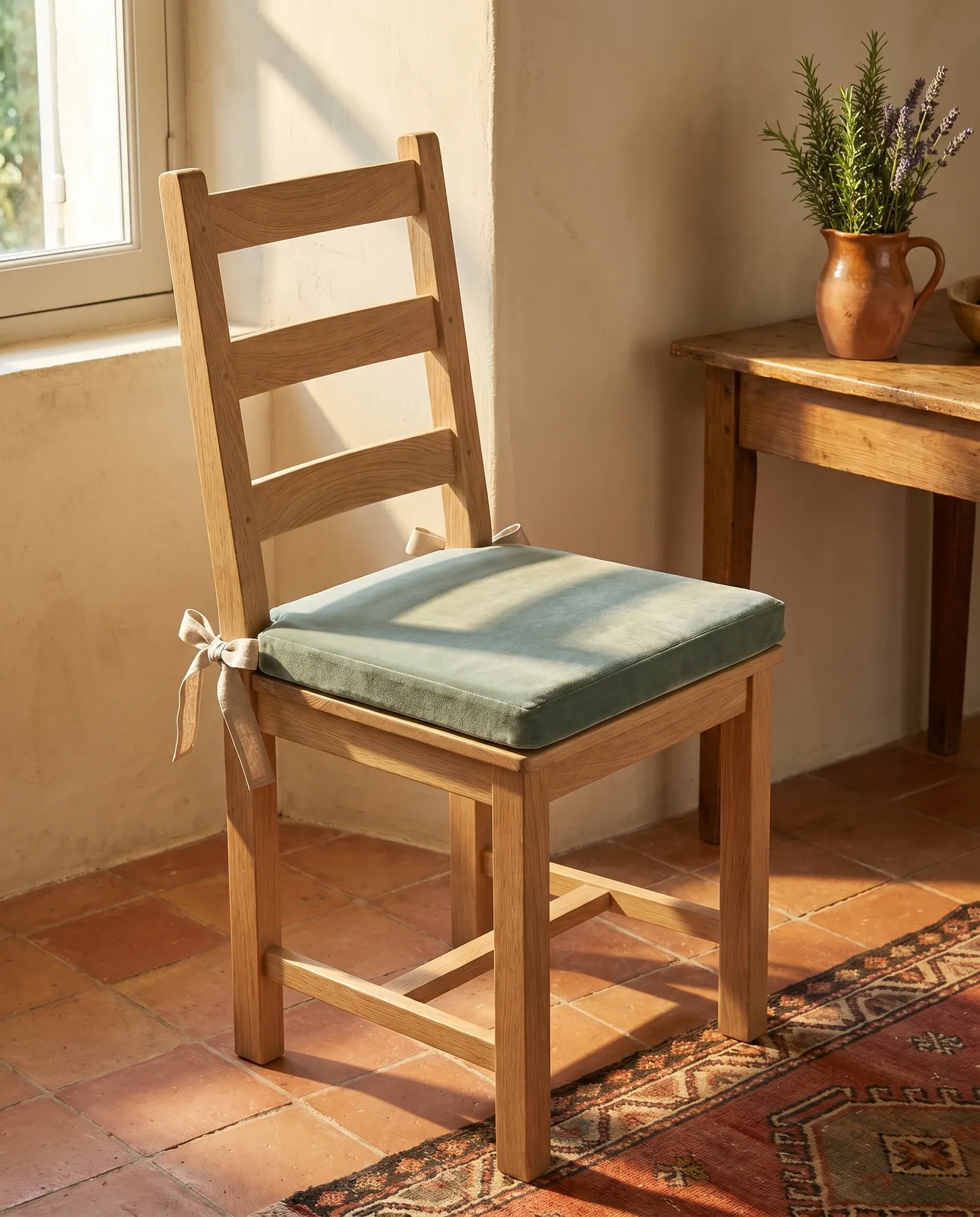
Chair pads usually have ties on two corners at the back, knotted around the spindles or ladder-back rails. Ties are added only on request, so write the number, position, length and color in the order note, and check the pre-shipment photo.
Can bar stool cushions be round?
Yes. Round pads are sized by diameter and thickness: café stools in one order took 16 in (41 cm) across at 3.5 to 4 in (9 to 10 cm), and a 12 in (30 cm) round pad 4 in thick was made with a zip cover and ties or a loop. The workshop makes the cushion, not the stool frame.