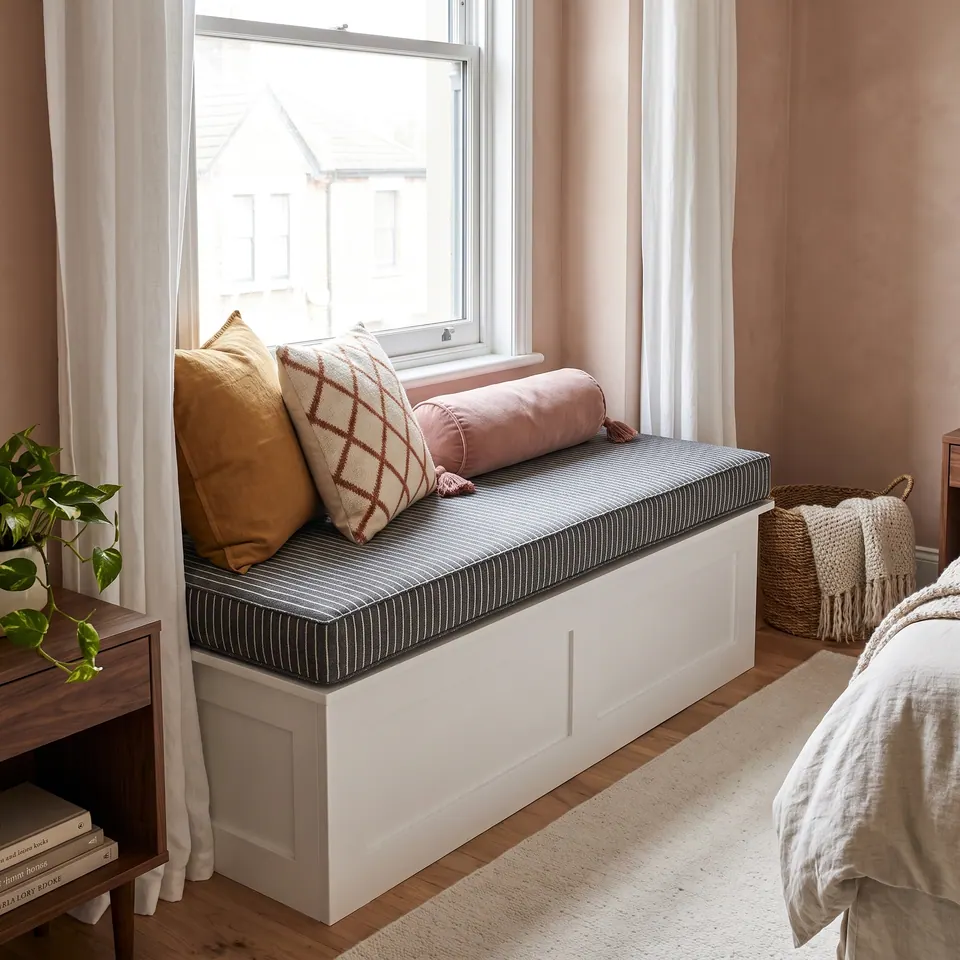
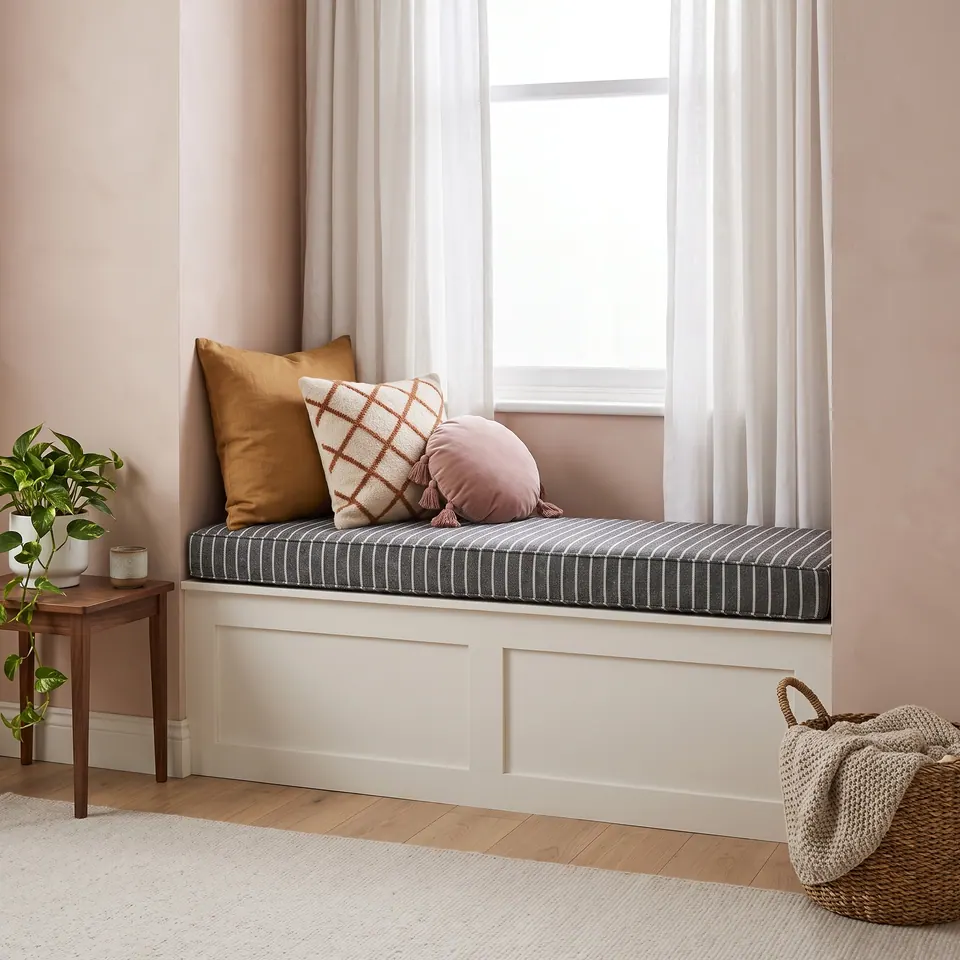
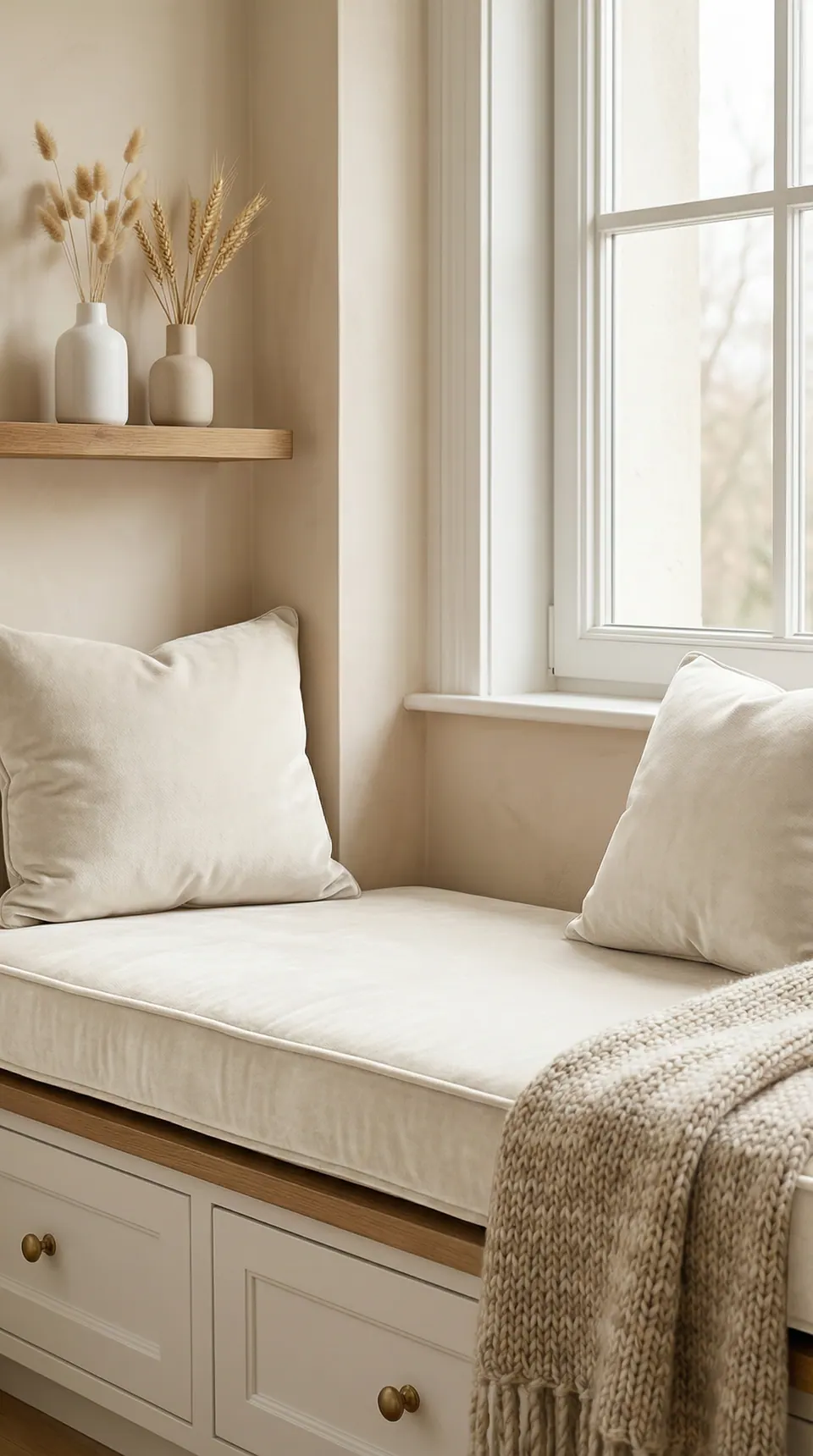
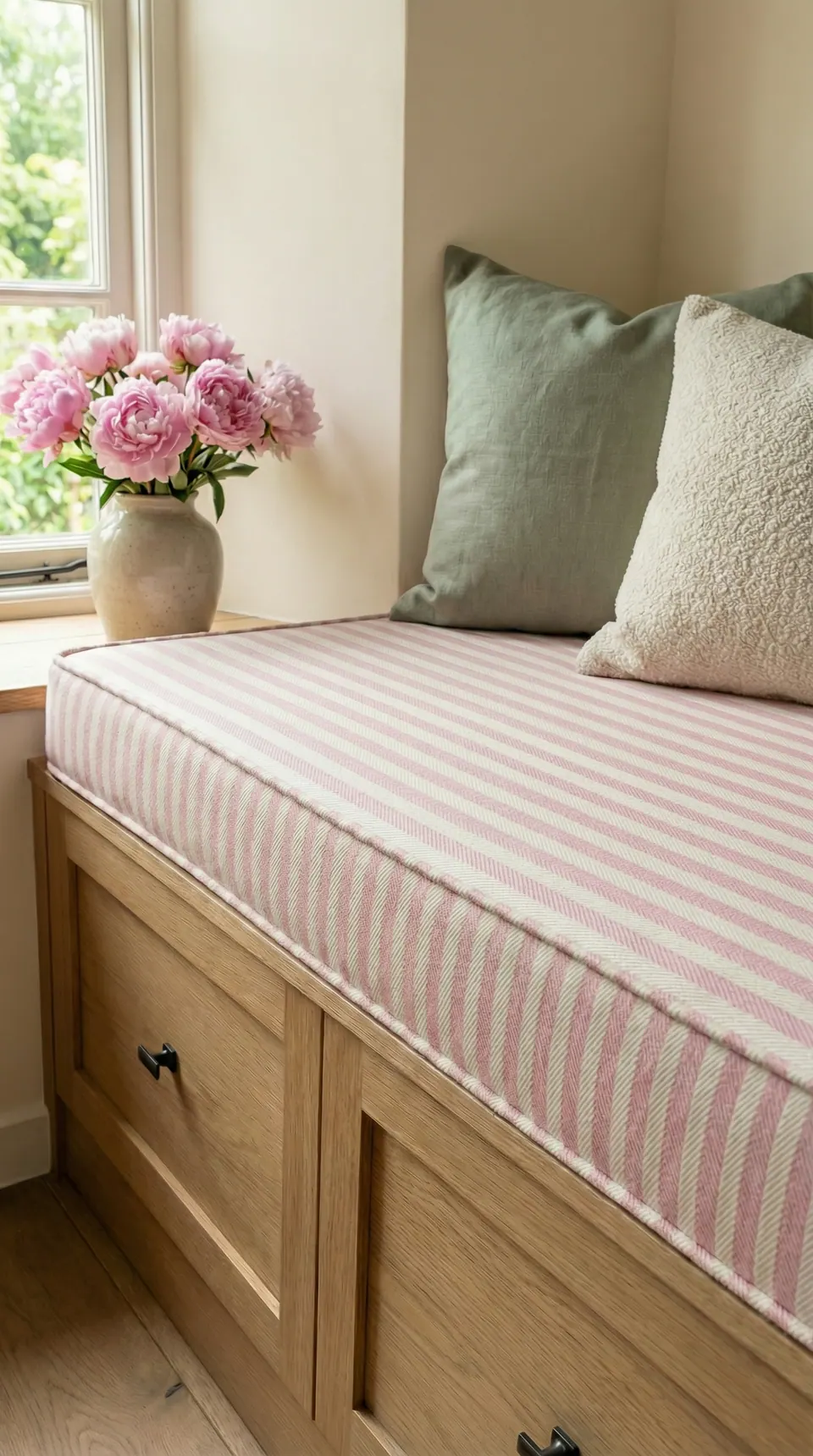
Concept Sketches · 9 scenes
Built-in reading nook cushions: the seat everybody fights over
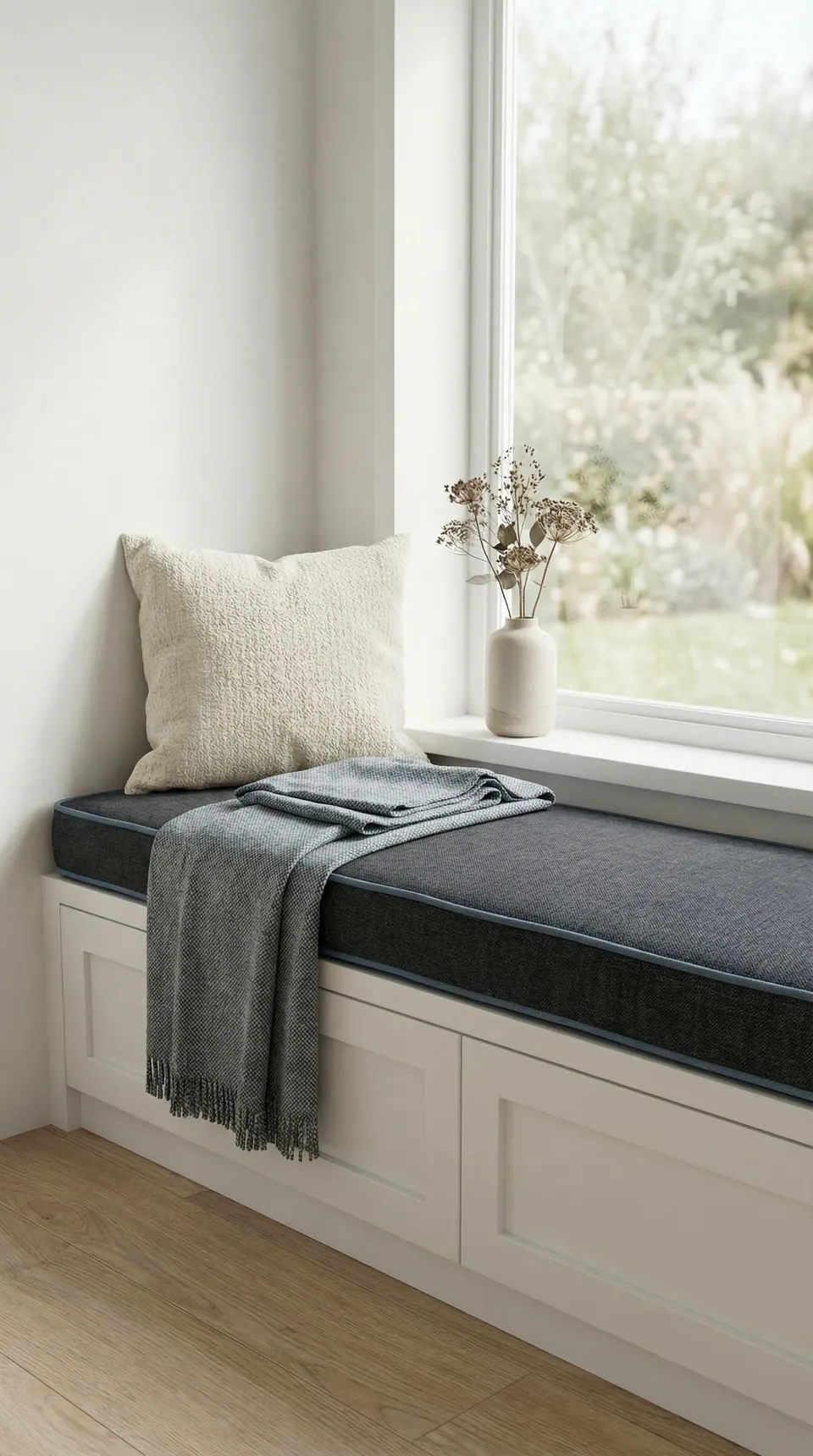
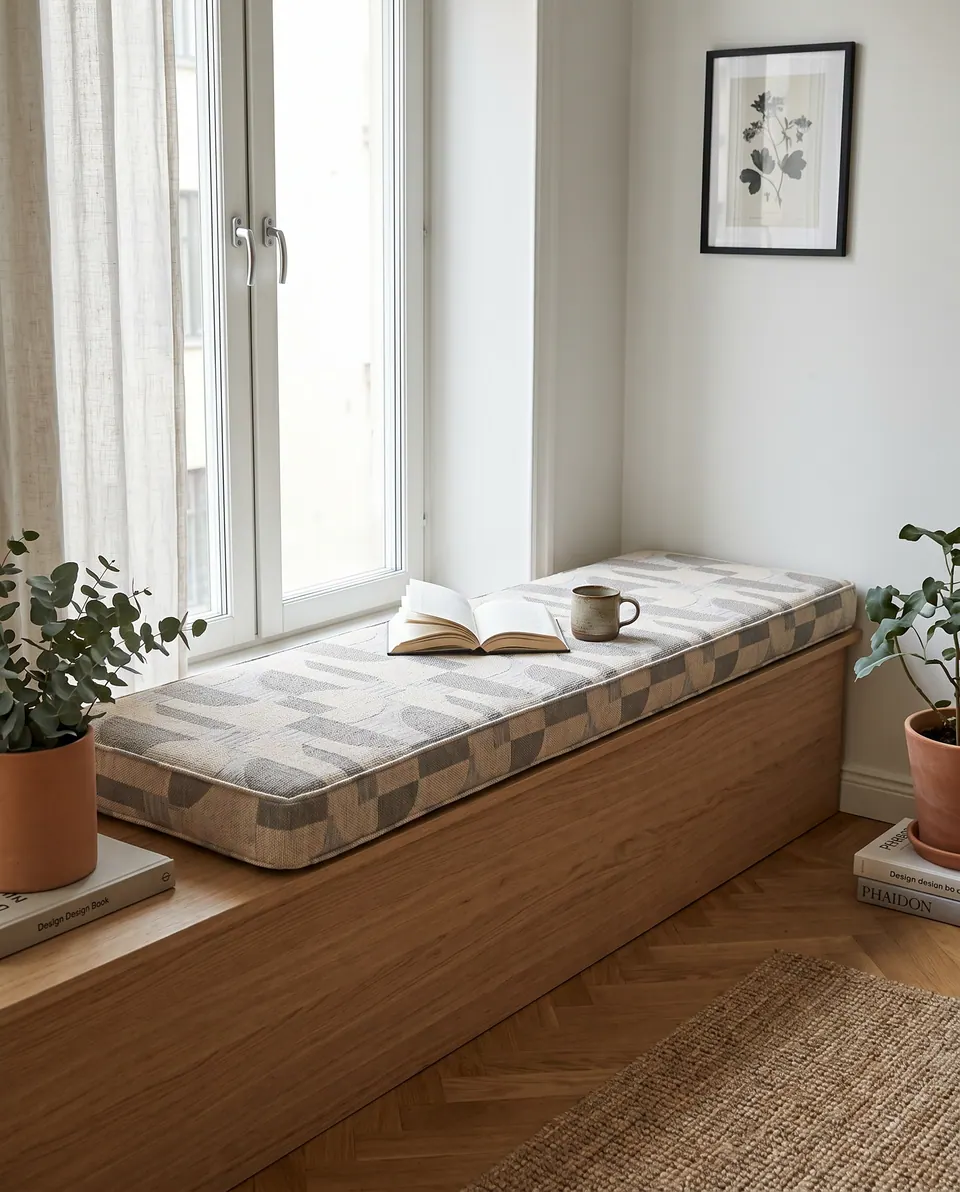
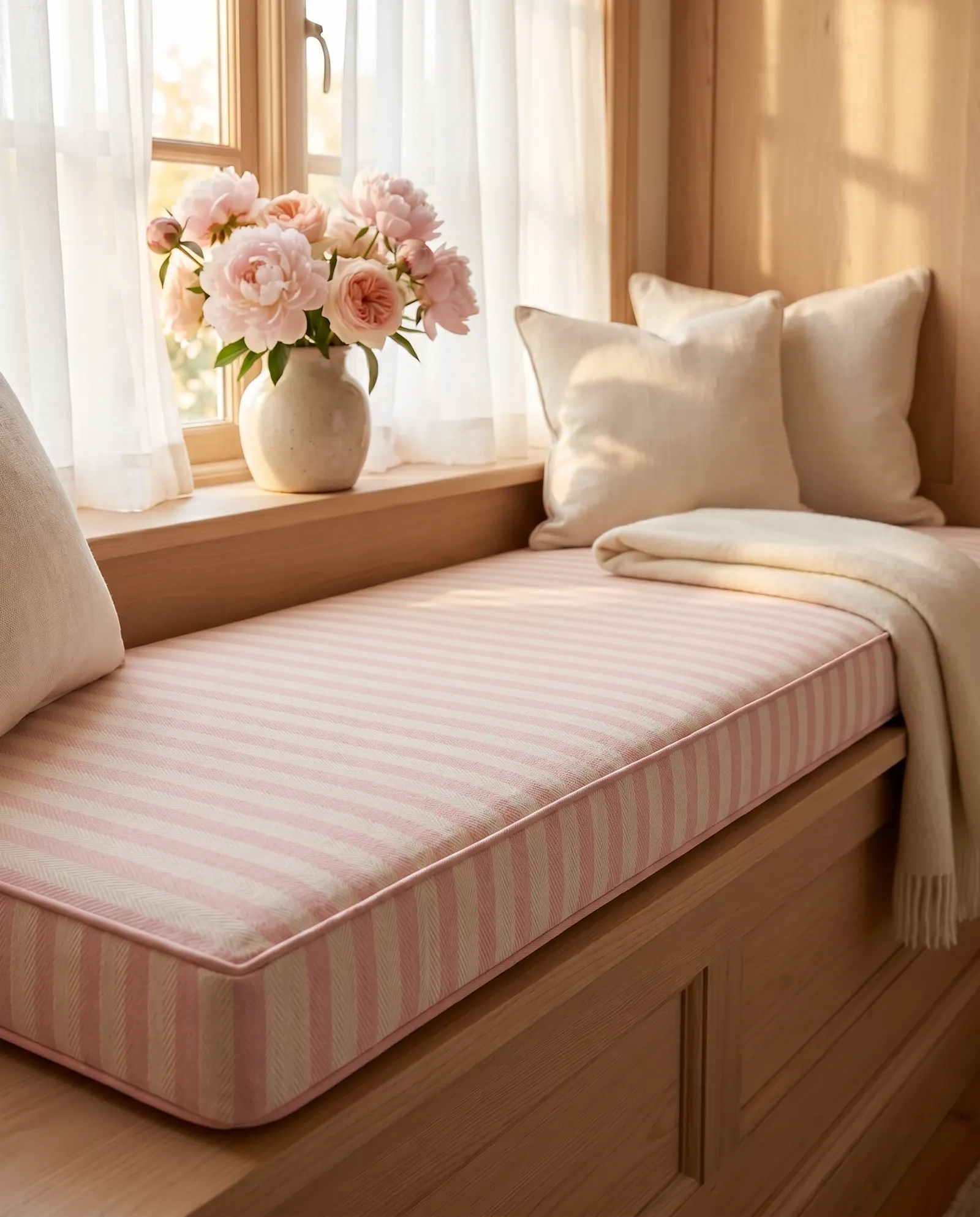
Every porch I grew up on had one chair the whole family squabbled over. These days it's the reading nook. Here are nine real built-ins from past orders, and what each taught us about measuring, thickness and the back.
 Save
The quick answer
A built-in reading nook cushion is made to the finished nook: measure width, depth and back-wall height after the shelves are built, then choose 4 in (10 cm) for sitting or 8 in (20 cm) for lounging. The back can be firm foam, a soft filled pillow or a wedge, in the seat fabric. Notched corners, angled ends and table gaps are routine with a drawing.
A reading nook is a bed you sit up in
A reading nook is a bed you sit up in, and nobody plans it that way. You build a seat, and by Sunday afternoon somebody is stretched out on it with their shoes off and the dog across their shins.
So a reading nook cushion has two jobs. It has to sit like a window seat and lounge like a daybed. The nook questions keep circling back to three things: when to measure, how thick to go, and what to lean on.
The nine nooks below are real, most from buyers in the US. The sizes are theirs, kept exactly. What does your nook measure, neighbor, wall to wall and floor to shelf?
Nine nooks, tape measure in hand
01A past project
The bookshelf wall that wasn't built yet
A buyer in the US wanted a seat, a back and two side pillows for a nook whose bookshelf wall was still on paper. The workshop asked for measurements first: 51 in wide, 37 in deep (130 x 94 cm), with a 21 in (53 cm) back wall. It quoted the set at 4 in and at 8 in thick.
The takeaway: Order after the last shelf upright is in, and measure the finished opening.
02A past project
A platform seat with a hard width limit
A buyer in the US wanted a velvet floor cushion about 48 x 42 in (122 x 107 cm) for a raised platform nook, a back the same length and two very firm bolsters to lean on. The seat could be no wider than 43 in (109 cm). We were slow to reply that week, and the buyer ordered elsewhere.
The takeaway: Write the limit as a limit, and check that the quote repeats it.
03A past project
A floor alcove 98 inches long
An interior designer in the US wanted one bottom cushion for a floor-level alcove, with bolsters around the sides: first 72 x 40 in, then 98 x 40 in (249 x 102 cm), 8 to 10 in (20 to 25 cm) thick. A cushion that long ships in two pieces, so the split had to be planned with the client.
The takeaway: Decide where the seam falls before ordering; a bolster laid over it hides it.
04A past project
An angled nook in six numbers
A buyer in the US sent an angled nook as six numbers: A 6, B 6, C 68, D 34, E 23 and F 23 in, 22 in (56 cm) deep in the middle. The 4 in (10 cm) linen cushion with matching piping got a pillow-filled backrest and four 18 in (46 cm) square pillows. It fit perfectly; the plump pillows measured just under 16 in (41 cm).
The takeaway: A pillow's size is the cut fabric, so ask about the stuffed size if it must fill a gap.
05A past project
A nook with a table built into the run
A family in the US measured their nook at 41.5 x 95 in (105 x 241 cm), but the 95 in included a wooden table section built into the bench. They wanted a 6 in (15 cm) seat in a gray linen-look and asked for the seat and backrest priced separately.
The takeaway: Measure each run up to the table, and get seat and back quoted as separate lines.
06A past project
Four notched corners on a DIY build
A couple in the US building their own nook needed an 82 x 36 in (208 x 91 cm) cushion with a 5 x 2 in (13 x 5 cm) notch at each corner, in mushroom taupe velvet. They sent a hand drawing; the workshop redrew it in centimeters for their approval and set the thickness at 5 in (12.7 cm).
The takeaway: Check the maker's redrawn version line by line before you approve it.
07A past project
The stripe we couldn't weave
A buyer in the US wanted a forest green window-seat cushion with thin cream and camel stripes woven in. The workshop sews cushions; it doesn't weave cloth. She chose catalog linens instead, forest green with mustard, at 78.75 x 15.5 x 3 in (200 x 39 x 7.5 cm), typing the exact size in the personalization note.
The takeaway: Fall in love inside the swatch chart; custom weaving is a mill's job.
08A past project
A wedge to lean on in a deep seat
A buyer wrote to the workshop with a marked-up photo: a seat about 36.6 x 25.6 x 2.75 in (93 x 65 x 7 cm) and a wedge backrest 25.6 in wide, 27.6 in (70 cm) tall and 7.9 in (20 cm) deep at the base, in linen with piping. The workshop quoted from that photo and confirmed 32-density foam wrapped in polyester fiber.
The takeaway: A marked-up photo is enough to quote from, as long as every number is on it.
09A past project
A nook for small readers
A parent in the US planning a nook for young children asked how to wash a tufted linen floor cushion. Tufted cushions can't go in the machine, only a gentle wipe, so the workshop offered an untufted version with removable, machine-washable covers.
The takeaway: In a children's nook, skip the buttons. Kids and dogs are the real quality control.
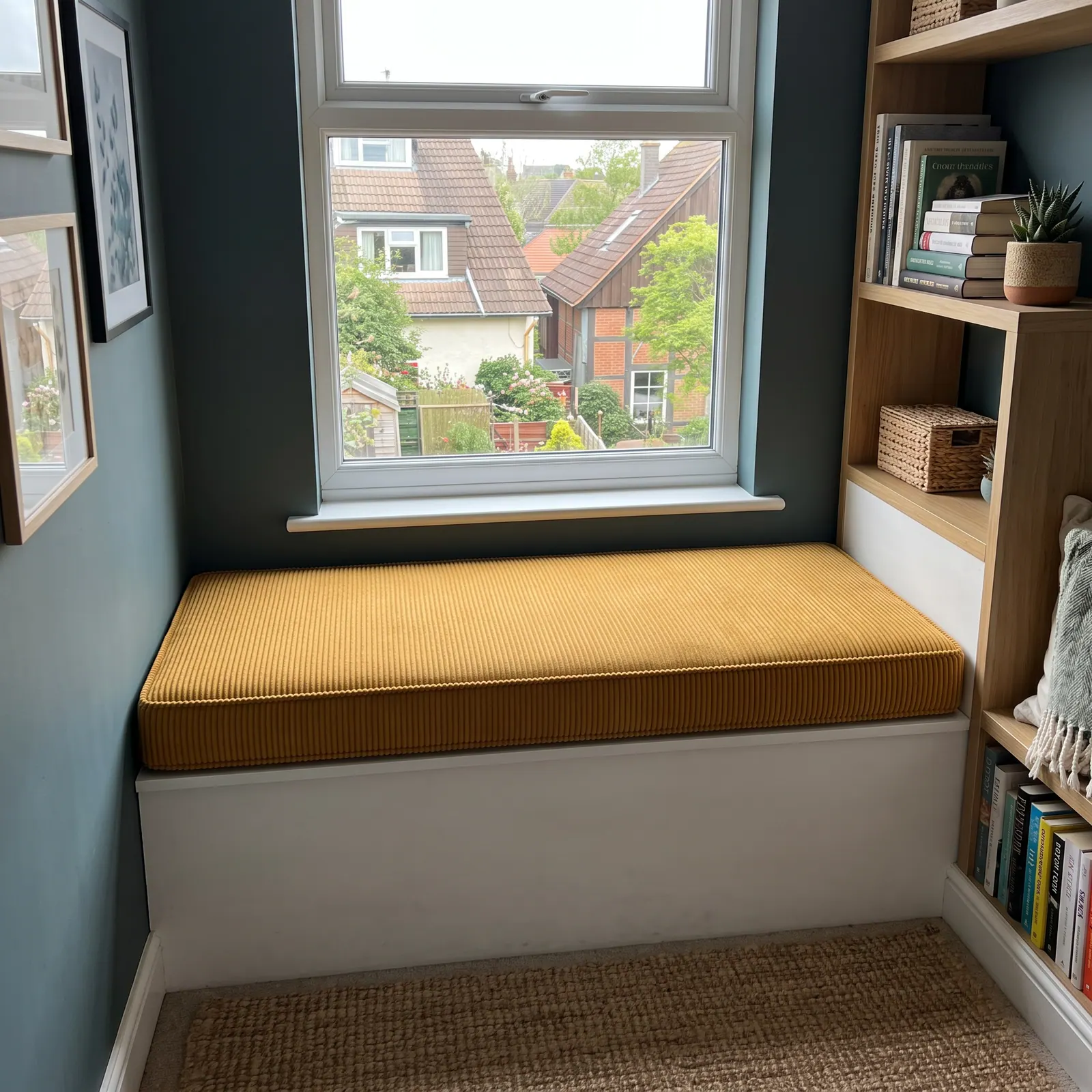
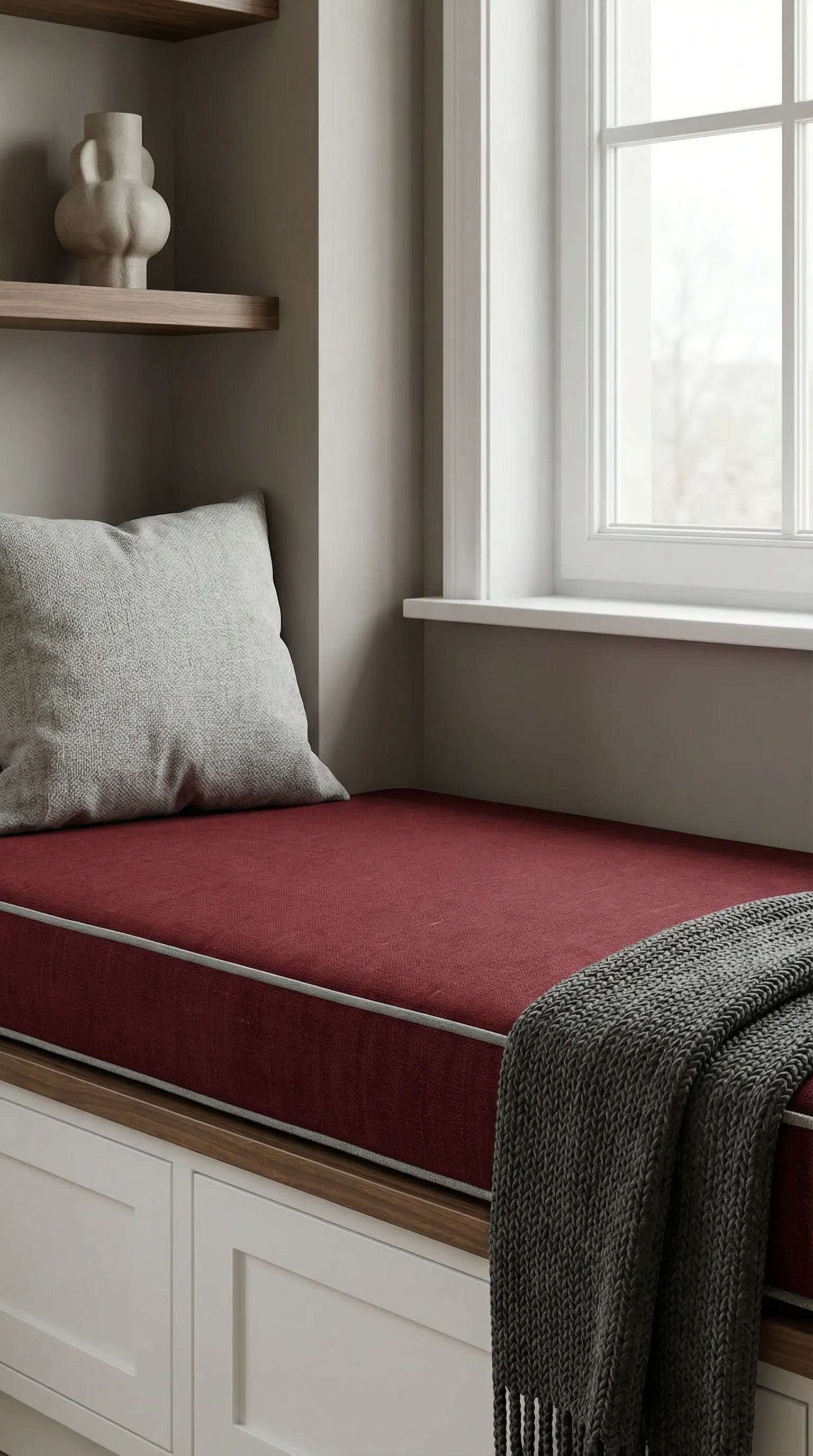
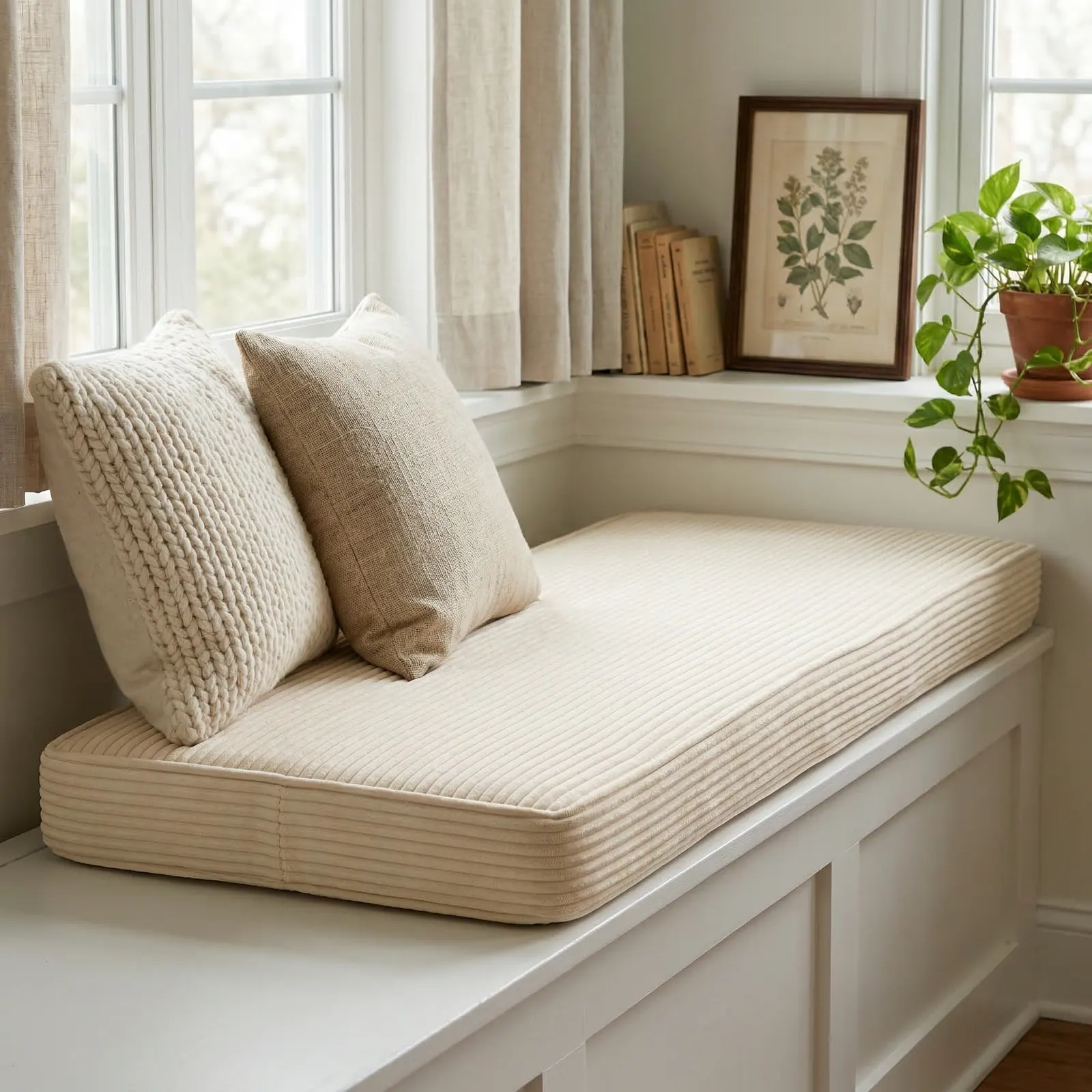
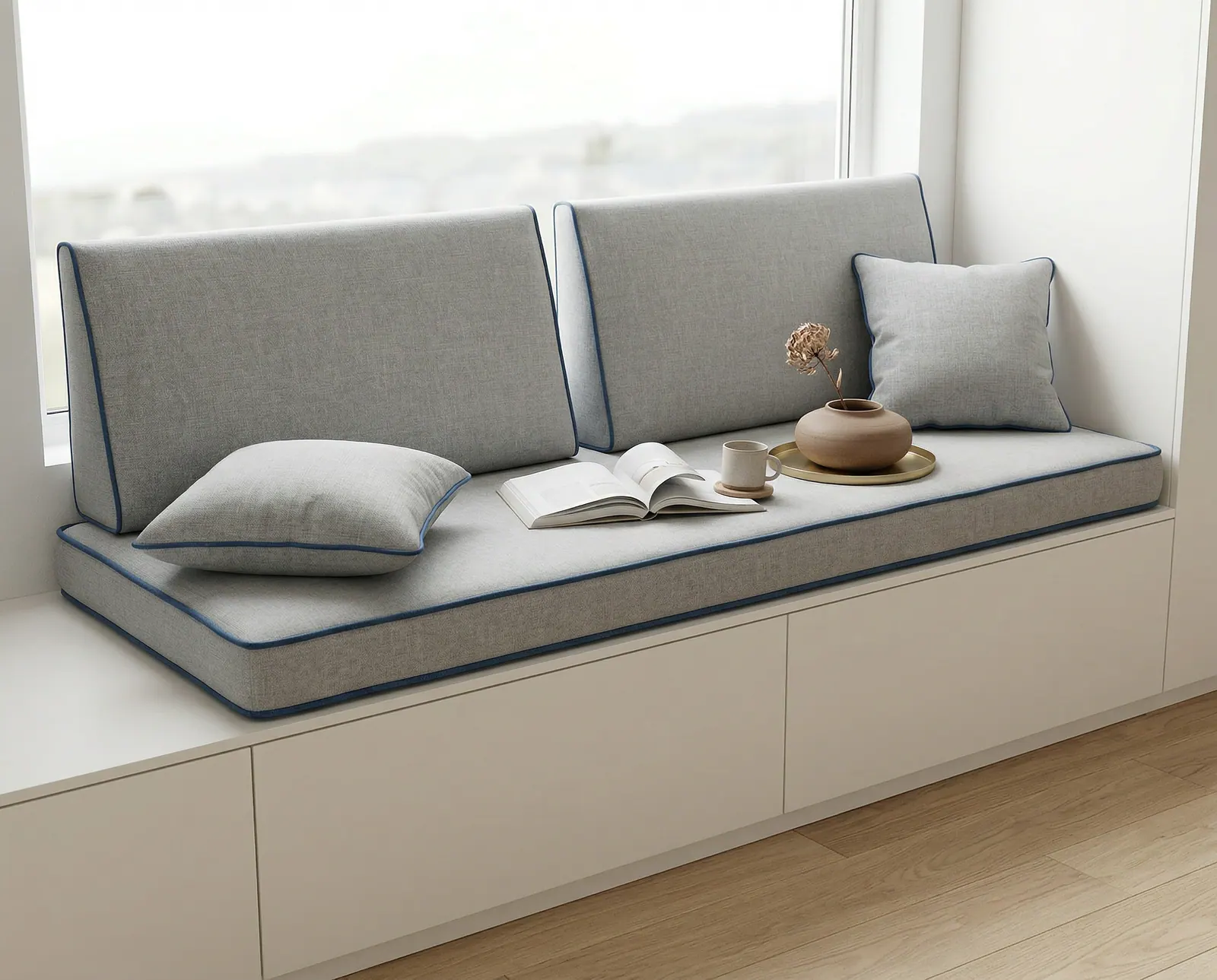
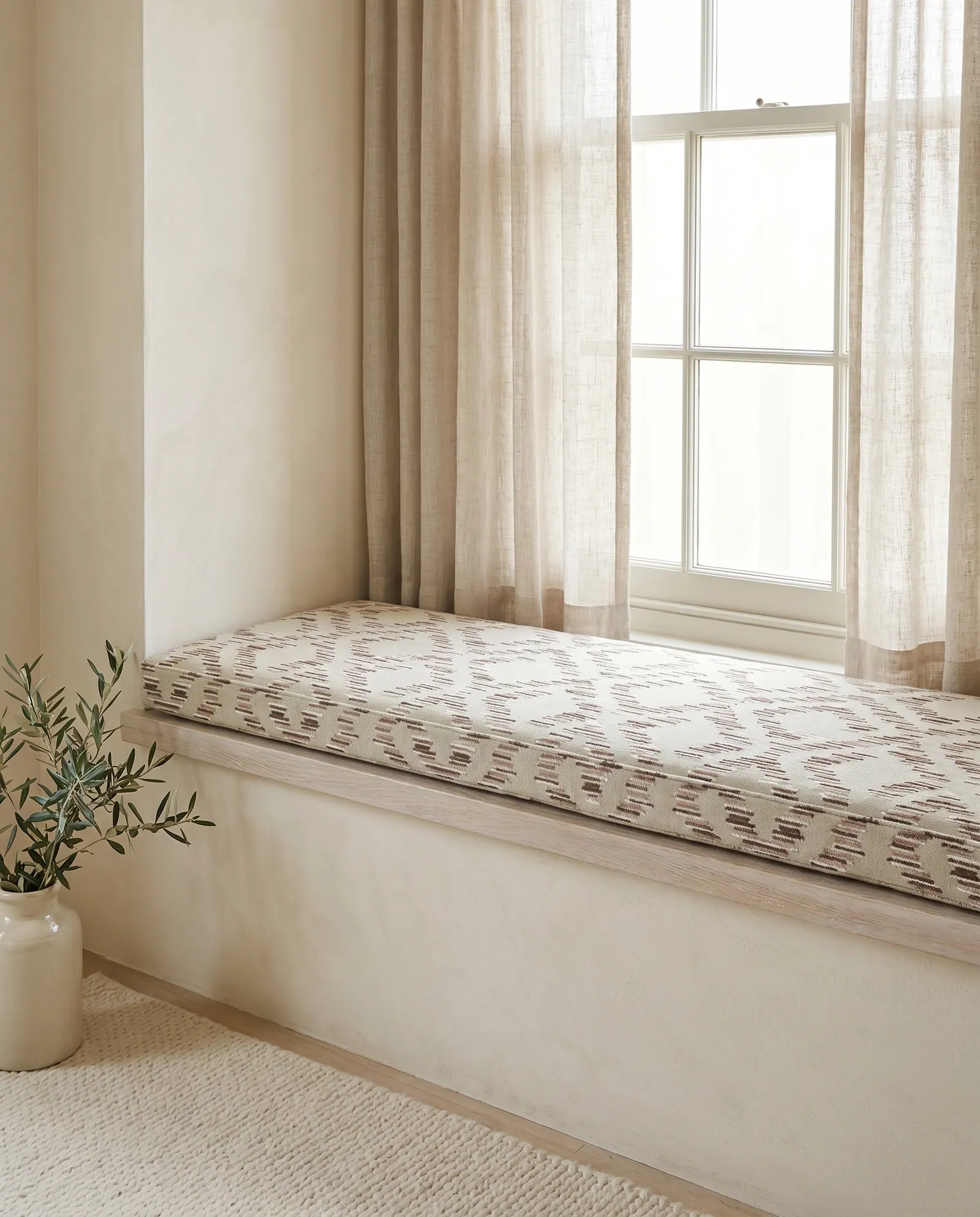
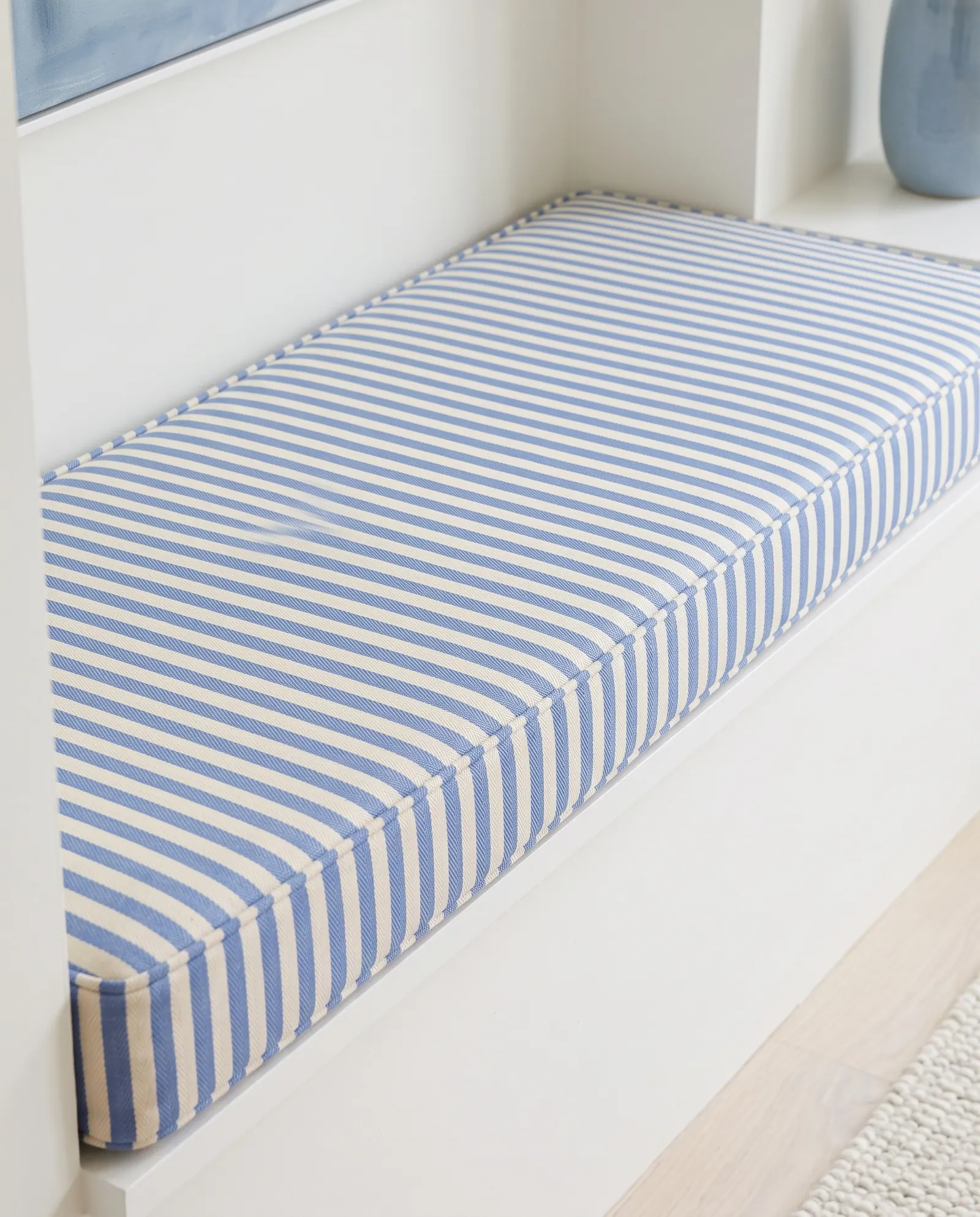
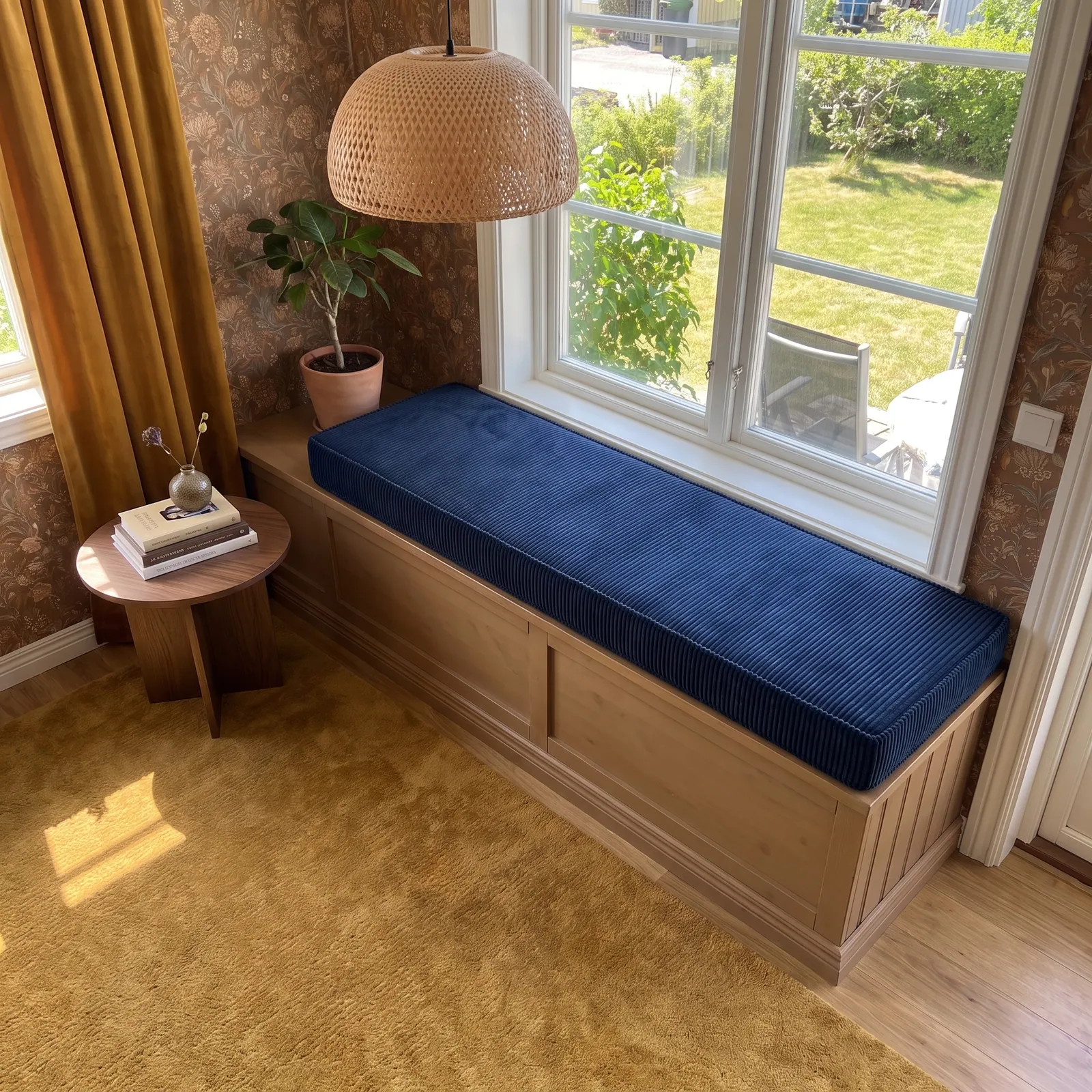
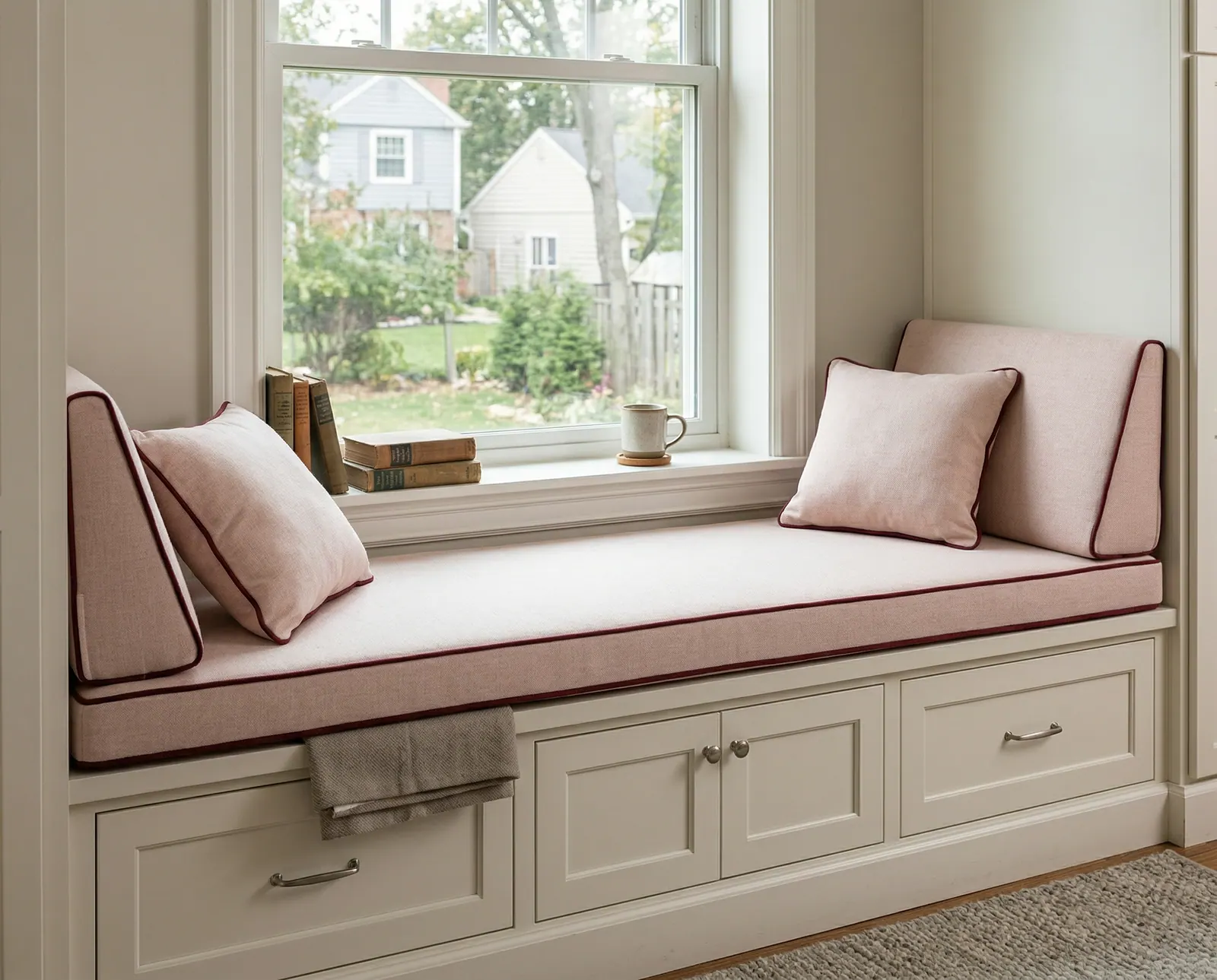
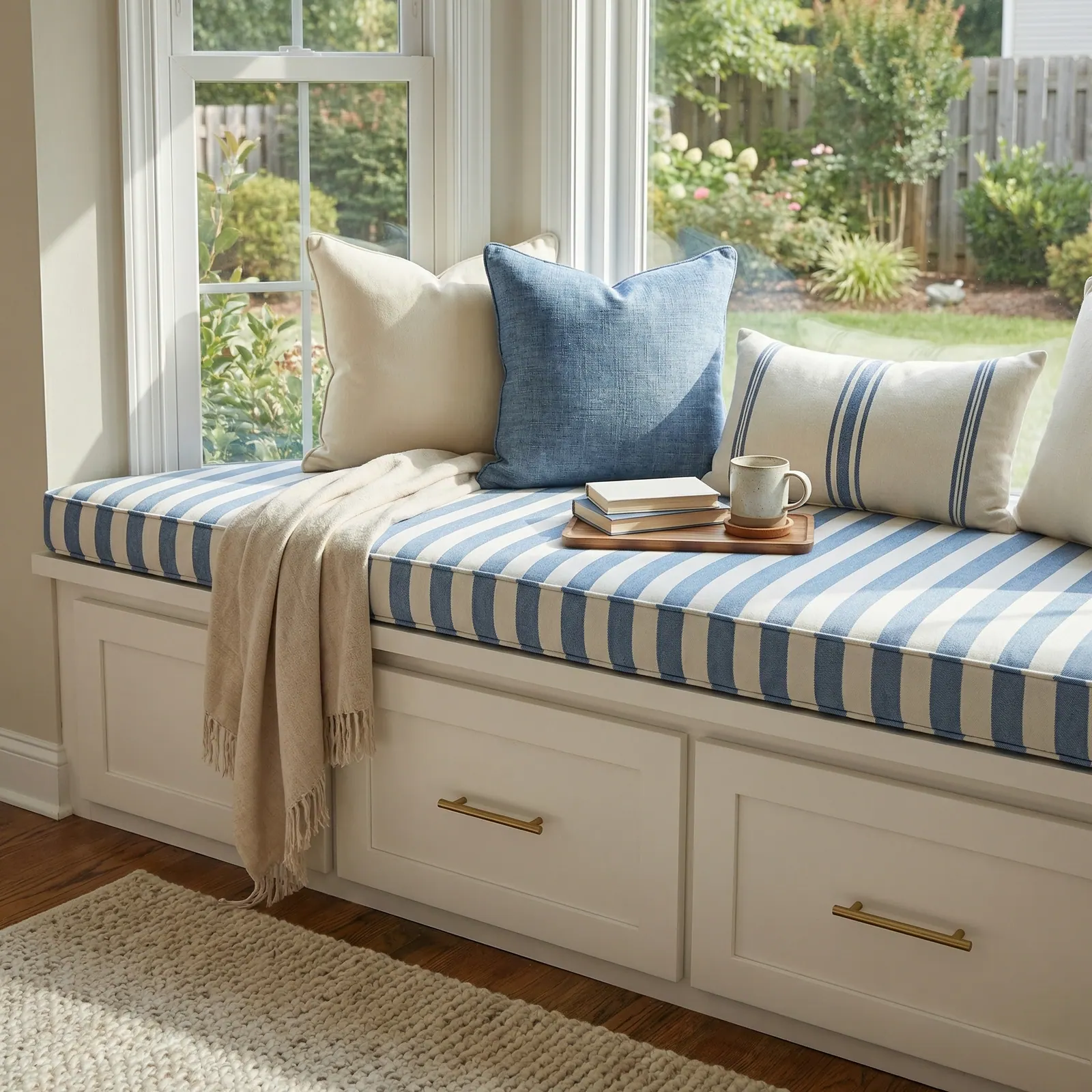
Four inches or eight: which nook wants which build
Sketch the seat in the bench cushion builder and try the foam firmness finder before you settle on a row.
| How the nook gets used | Seat thickness | The back | from past orders |
|---|---|---|---|
| Sitting up with a book | 4 in (10 cm), the workshop standard | Soft filled pillow back or loose pillows | Angled nook, 22 in (56 cm) deep, pillow backrest |
| Lounging, legs up, a nap now and then | 8 in (20 cm), quoted beside 4 in | Firm foam back in the seat fabric | 51 x 37 in (130 x 94 cm) nook, 21 in back wall |
| Floor-level alcove bed | 8 to 10 in (20 to 25 cm); ships in two pieces when long | Bolsters around the sides | 98 x 40 in (249 x 102 cm) alcove |
| Deep seat with nothing to lean on | About 2.75 in (7 cm) | Wedge, 27.6 in (70 cm) tall, 7.9 in (20 cm) base | 36.6 x 25.6 in (93 x 65 cm) seat |
Foam back, pillow back, or just the wall
Most nooks start with a wall and a heap of pillows, which works until somebody wants to sit up straight for a whole chapter. Then you want a proper backrest: firm foam that stands upright and looks tailored, or a soft filled pillow that is plumper and more forgiving. A wedge gives a deep seat something solid behind it, and the bolster notes go further.
One front-step truth: a cushion cut snug to a narrow window seat has nothing to grip. Ask for a non-slip base or corner ties, and put a rug under a floor cushion on hardwood. For cloth, velvet and linen both turn up in these nine nooks.
A reading nook cushion is measured from the finished built-in: if the bookshelf wall isn't up yet, the order waits.
Rosa
Nook questions
- A common question
Can you make a back cushion that matches my window-seat or bench cushion?
The workshop's answerYes. Backrests are made to any size in the same fabric as the seat, either firm foam that holds its shape upright or a softer filled pillow. One buyer added a matching back later, 90 in (229 cm) long, 11 in (28 cm) high and 3 in (7.5 cm) deep, by quoting the original fabric code.
- A common question
How thick is a standard floor cushion, and can mine be thicker?
The workshop's answerThe tufted linen floor cushion is about 4 in (10 cm), and the tufted reading-nook set has a 4 in seat with about a 4 in back. The velvet floor seat is about 6 in (15 cm). Any thickness can be made to order, thinner so legs fit under a low table, or thicker.
- A common question
My nook isn't a rectangle. Can you still make the cushion?
The workshop's answerYes, any size and shape. Measure every side, draw the shape on paper with all sizes written on it, including rounded corners and cut-outs, and send a photo of the drawing and the space. The workshop redraws it as a clean diagram for you to confirm before it quotes.
- A common question
I want a floor cushion with backs for a corner reading nook. What do you need from me?
The workshop's answerThe shape and measurements, a few photos of the room taken from a distance, and a sketch if you have one, all agreed before ordering. For a curve, give the two straight sides. For backrests, say whether your numbers are wall sizes and give the floor-to-top height. Any size-based customization fee is confirmed up front.

Have it made
Have an idea like this made — ask Rosa’s workshop
Tell the workshop who sits there: grandkids, the dog, a cup of coffee at six. The right fabric and foam follow from the people. — Rosa
Leave your details and the workshop will call you to confirm measurements, fabric, foam and piping. No prices, dates or payment on this page: it is a request, not an order.
Questions buyers ask next
What thickness works best for a reading nook cushion?
The workshop standard for seat and window-seat cushions is 4 in (10 cm), and most buyers keep it. For a nook where people stretch out, 8 in (20 cm) is the usual step up, and a deep floor-level alcove was specified at 8 to 10 in (20 to 25 cm).
Should I wait for the built-in to be finished before ordering the cushion?
Yes. Measure width, depth and back-wall height from the finished built-in, not the plans. Shelf uprights, trim and a table section can all change the real cushion run, and the cushion is cut to exactly the numbers you send.
How do I keep a nook cushion from sliding around?
A cushion cut exactly to a narrow seat has little to grip. Ask for a non-slip base, or fabric ties sewn into the seams at the corners or back. On hard floors, put a rug or grip mat under a floor cushion. The sliding fixes cover more.
Can a reading nook cushion have notched corners or an angled end?
Yes. Notches, angled ends and trapezoid shapes are routine when you send a drawing with every side measured. One DIY nook had a 5 x 2 in (13 x 5 cm) notch at all four corners of an 82 x 36 in (208 x 91 cm) cushion.