Reading nook cushions for window seats, alcoves and corners
Every house has one spot where somebody disappears with a book and doesn't come back until supper. Here's how to size the cushion for that spot, from a sash-window seat to an attic dormer, drawn from the letters buyers send the workshop.
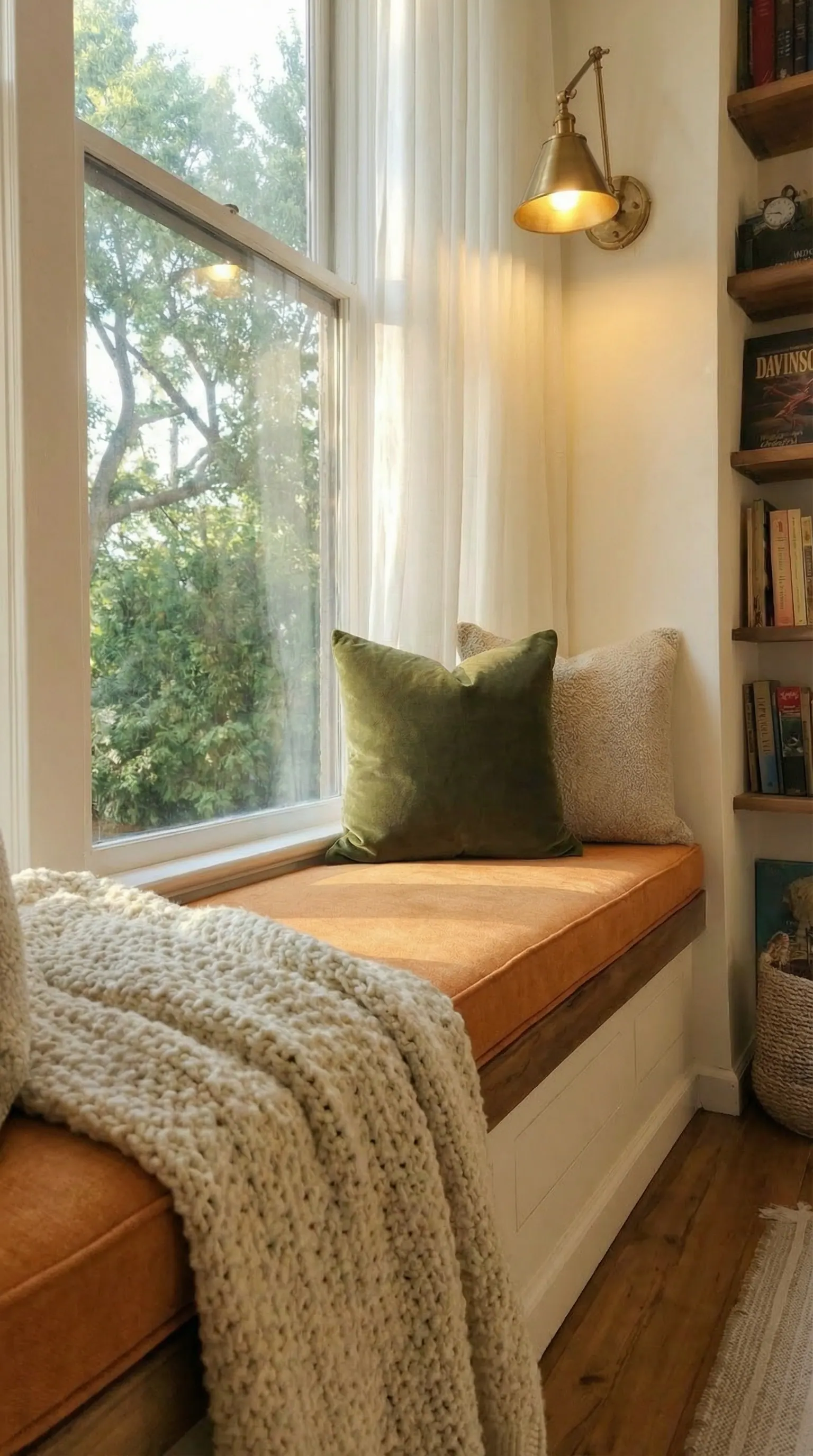
SaveCaramel, brass and oak make one warm family in this reading nook, with an olive velvet pillow as the single cool note.
The quick answer
A reading nook cushion is a made-to-measure seat cushion for a window seat, alcove, dormer or built-in bench where someone sits to read. Most are 4 in (10 cm) thick foam in a zippered cover, cut to the seat's exact width and depth. Measure after the built-in is finished, trace any curve on paper, and order back cushions as separate pieces.
Measure a reading nook cushion last, after the carpenter packs up. That one habit saves more remakes than any fabric choice ever will.
The nook can be a window seat, an alcove, an attic dormer, a built-in bench or a corner of the floor: anywhere one person tucks up their feet and loses an afternoon. My grandmother's was a porch glider with a faded cushion three generations fought over. A reading nook cushion has to sit flat on a wooden base without sliding, keep its shape under knees and elbows, and look right from across the room, because a nook is usually the prettiest corner in the house.
Arched alcoves, attic dormers and L-shaped benches
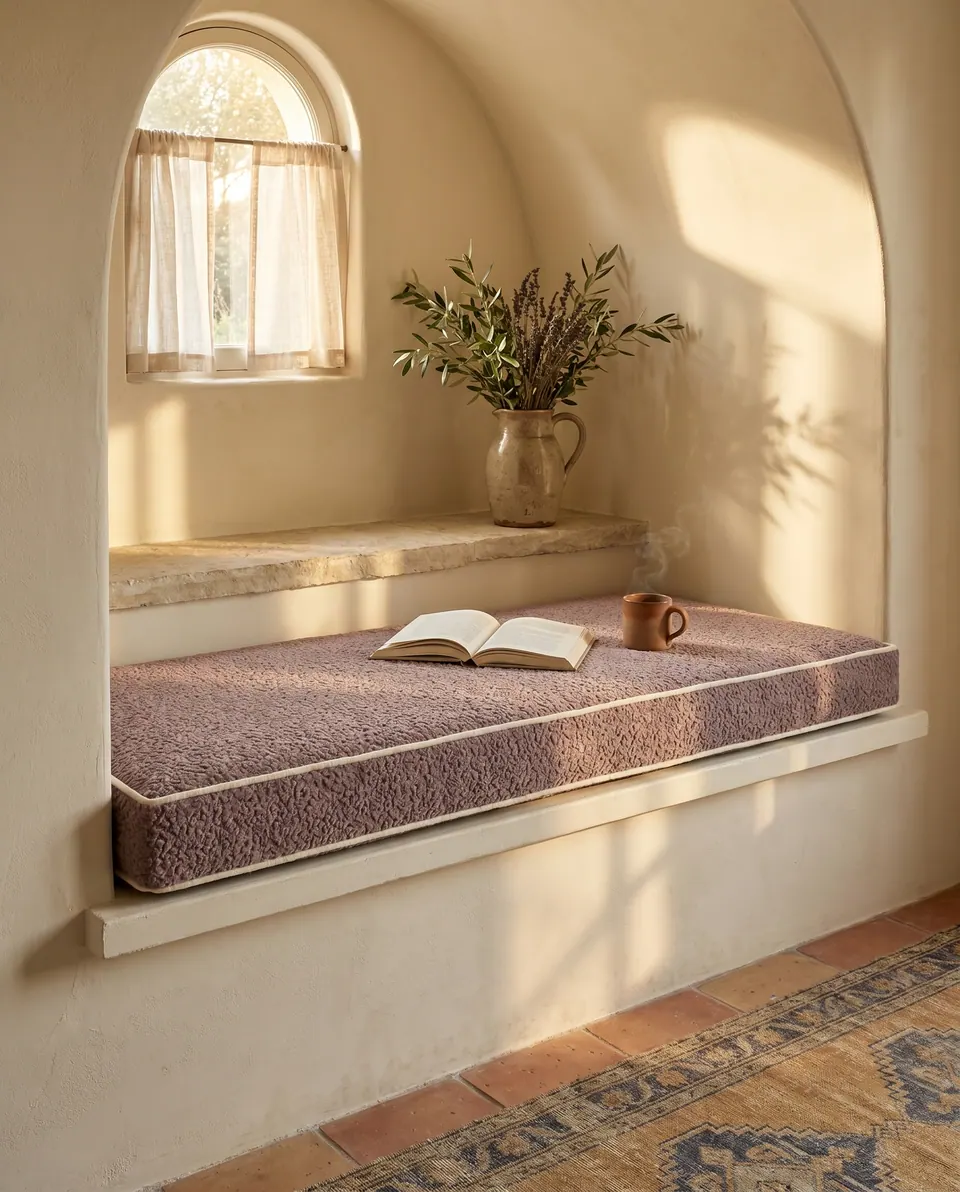
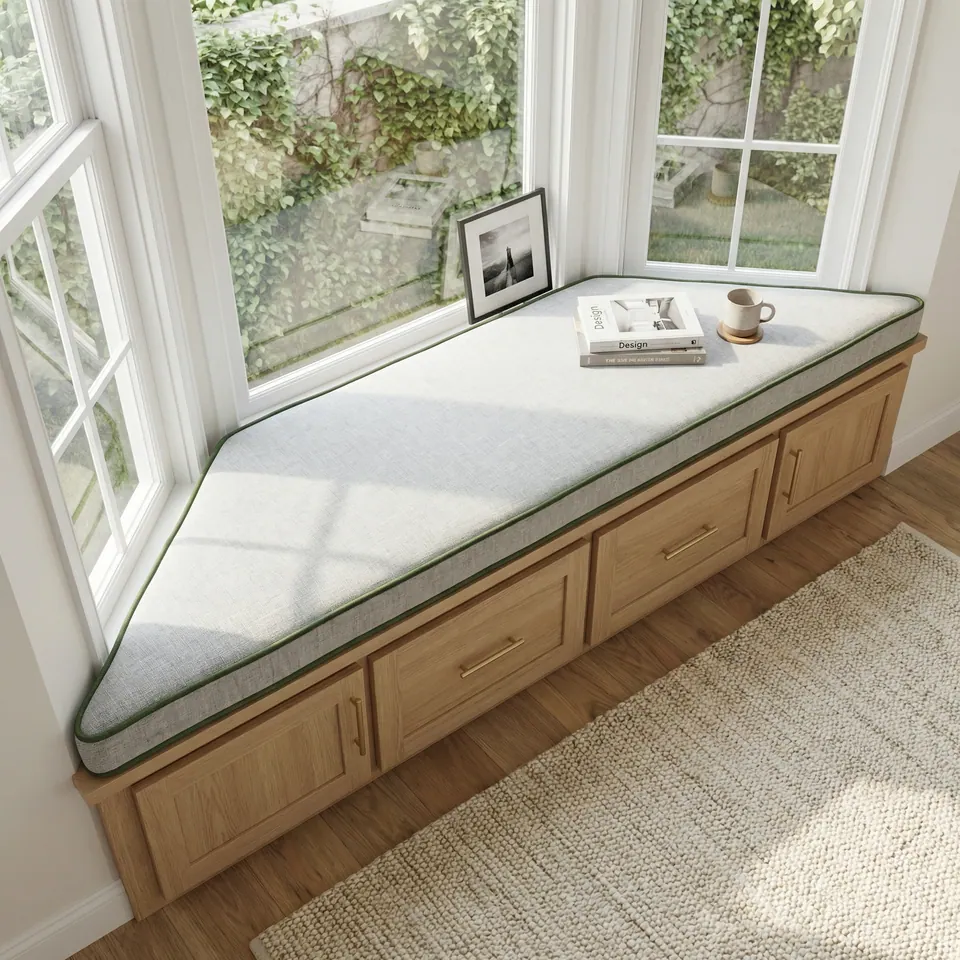
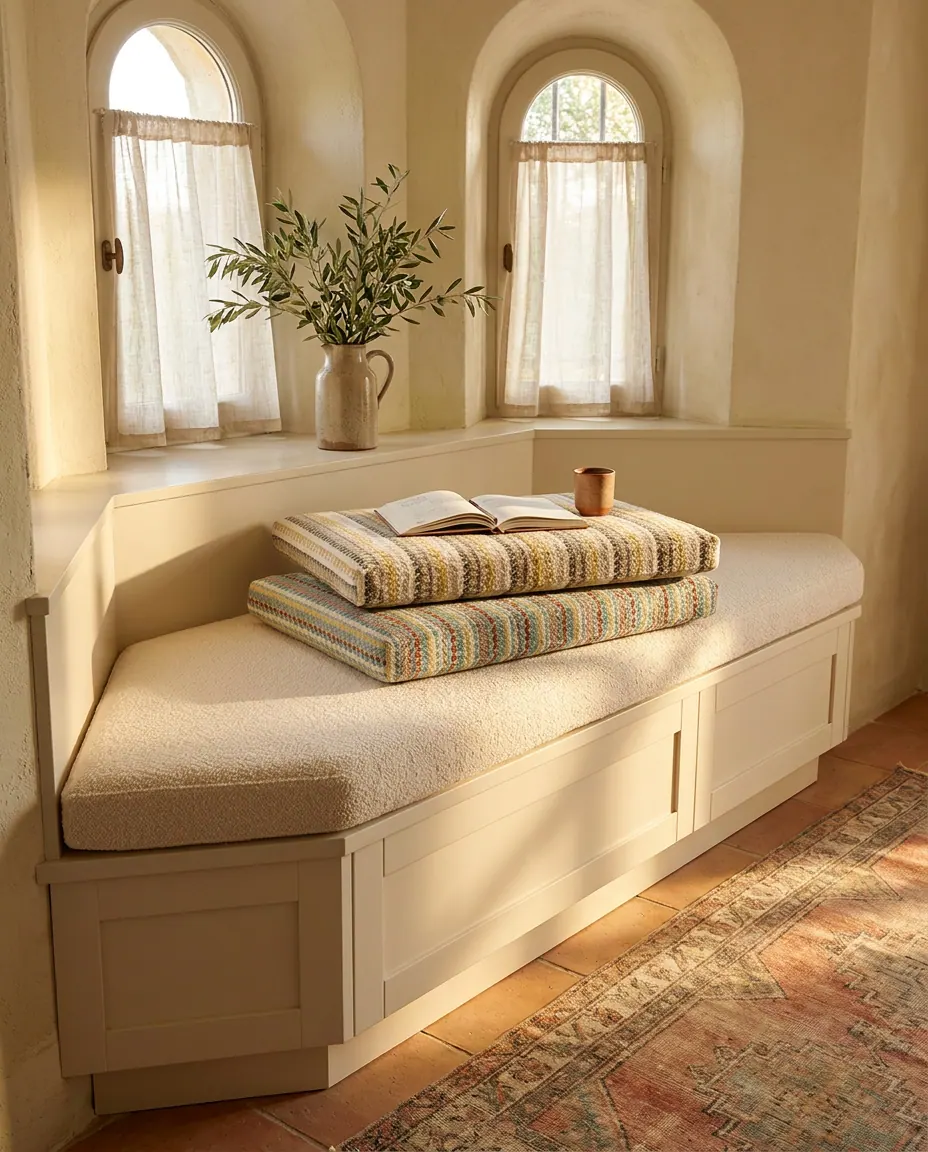
Not every nook is a rectangle. An arched window recess can be drawn as a rectangle plus an arc of a circle, and the workshop won't guess a curve from a width and a depth. Mark where each curve starts and ends and how deep it runs, or lay wrapping paper on the seat, trace it with a marker, cut it out and photograph it flat beside a tape measure. How to make a paper template shows the steps.
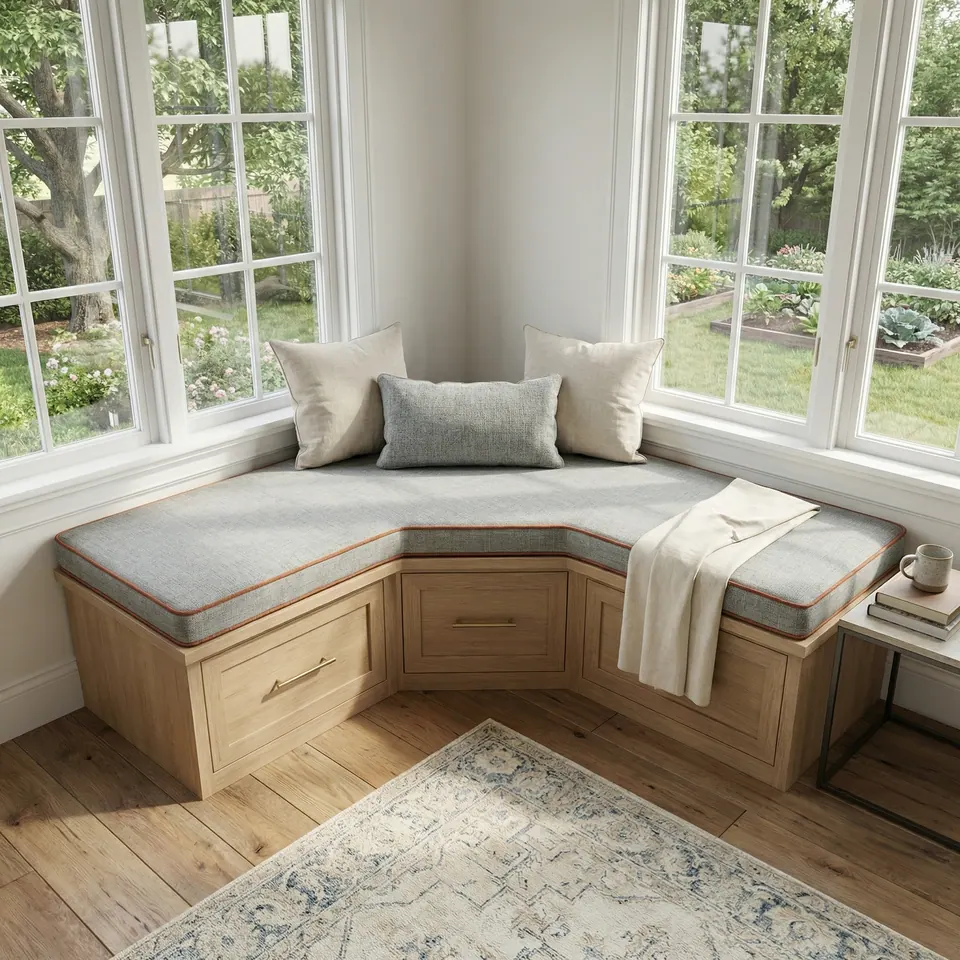
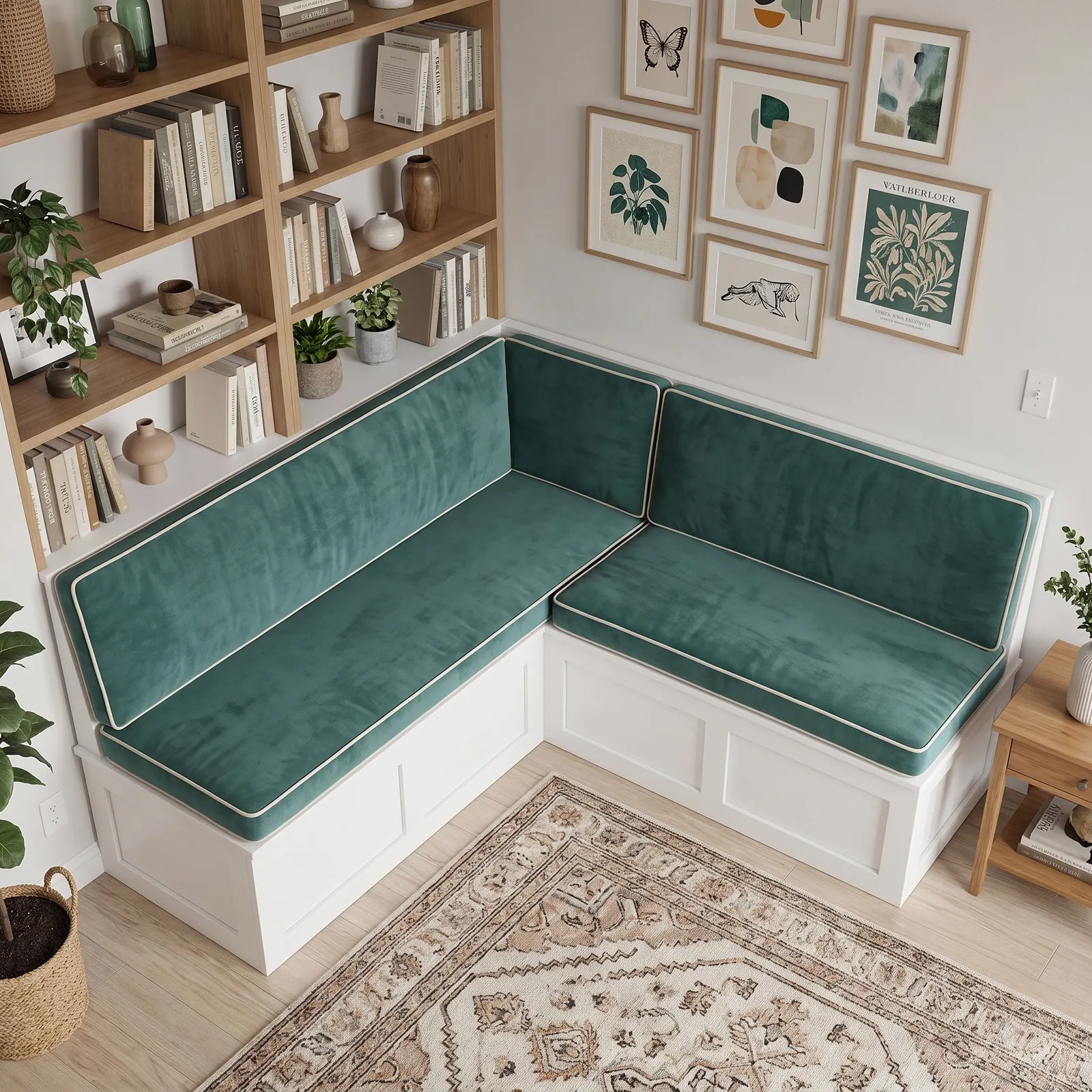
An L-shaped nook, like the teal velvet bench below a gallery wall in our photographs, is made in two pieces. Send the end-to-end length of each leg and say which runs need a back.
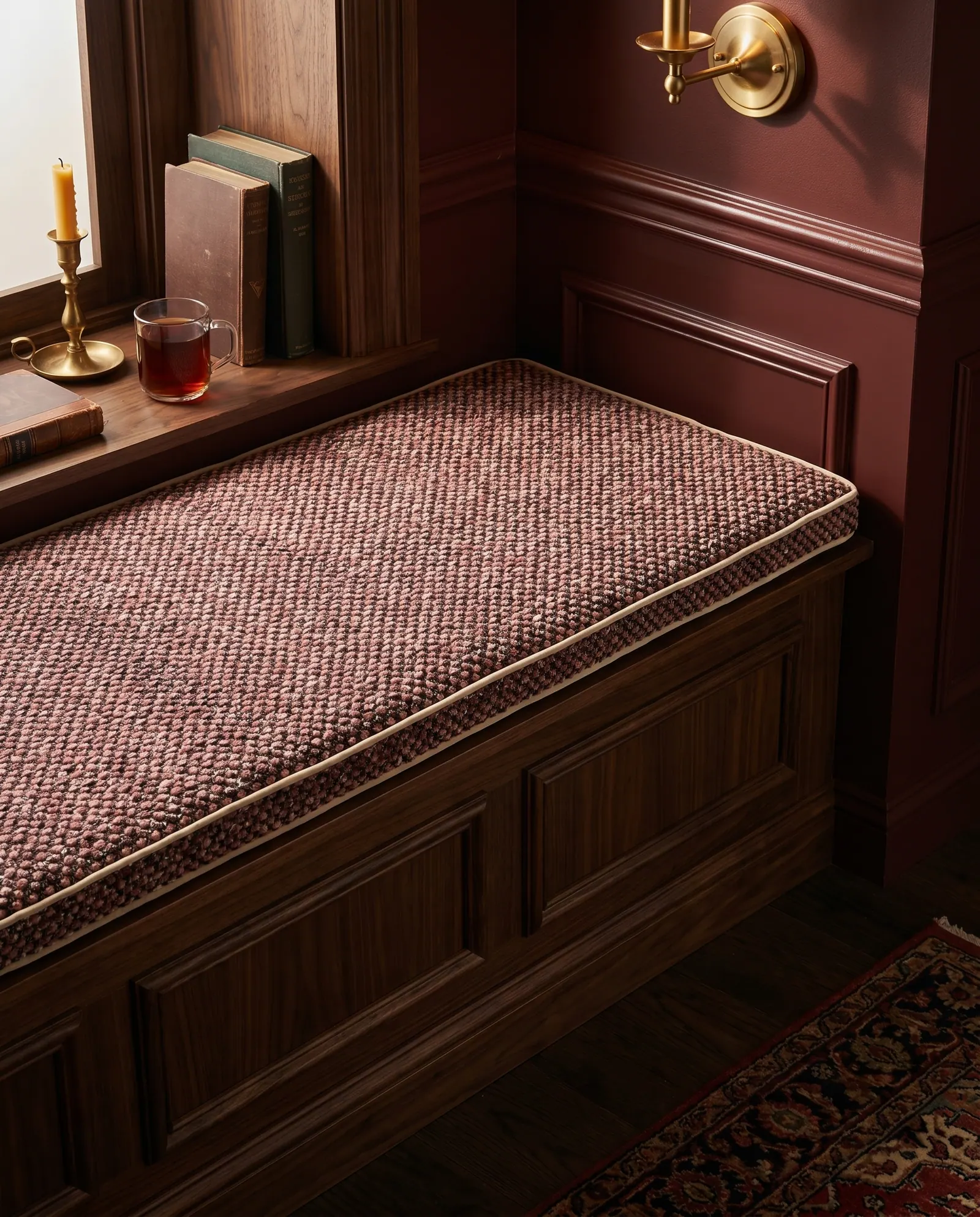
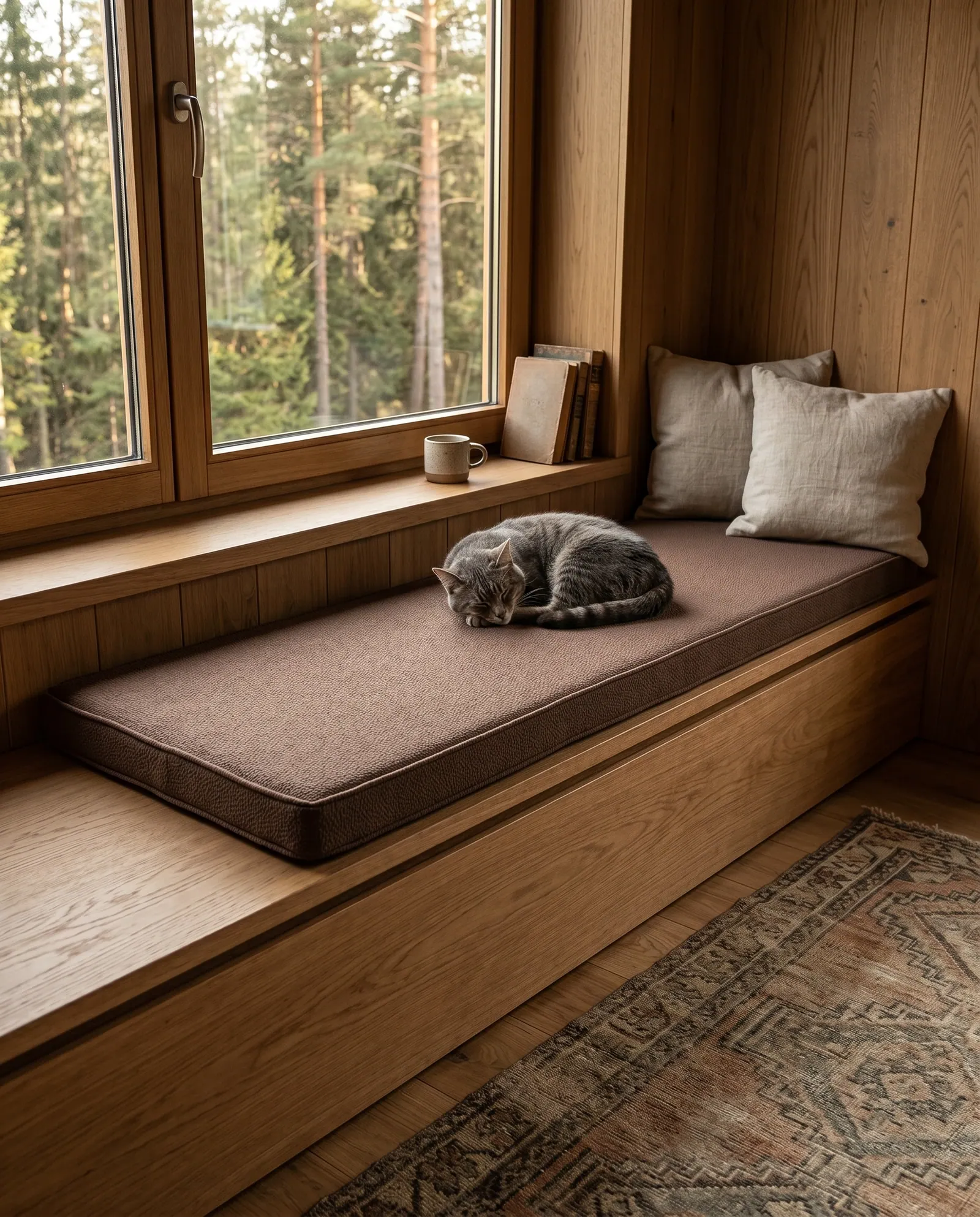
For the edge, a box cushion with piping is the classic nook look: rose-plum chenille with champagne piping on a walnut seat, mocha brown piped in its own color in a cabin facing the pines.
Fabric for socks, cats and a mug of cocoa
Kids and dogs are the real quality control, and a nook meets both before lunch. Choose for the light first and the traffic second.
Linen-look weaves: the caramel seat under a brass swing-arm sconce, calm and easy to live with.
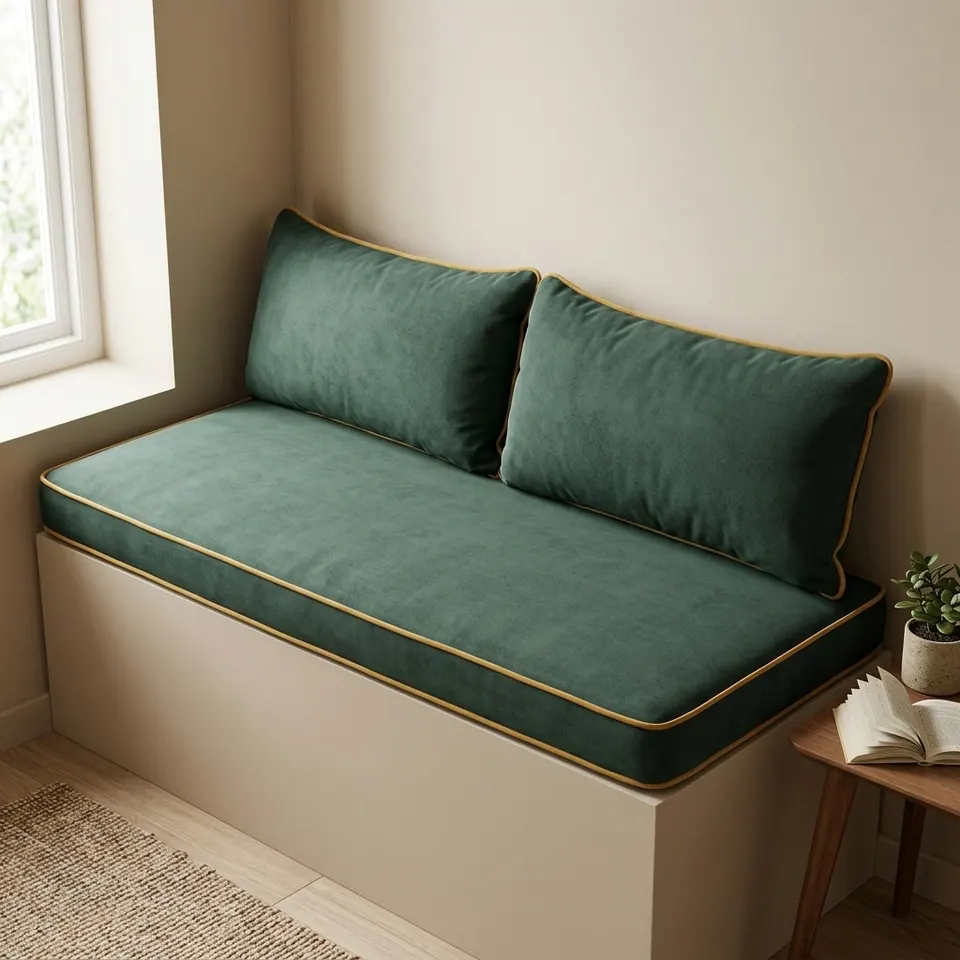
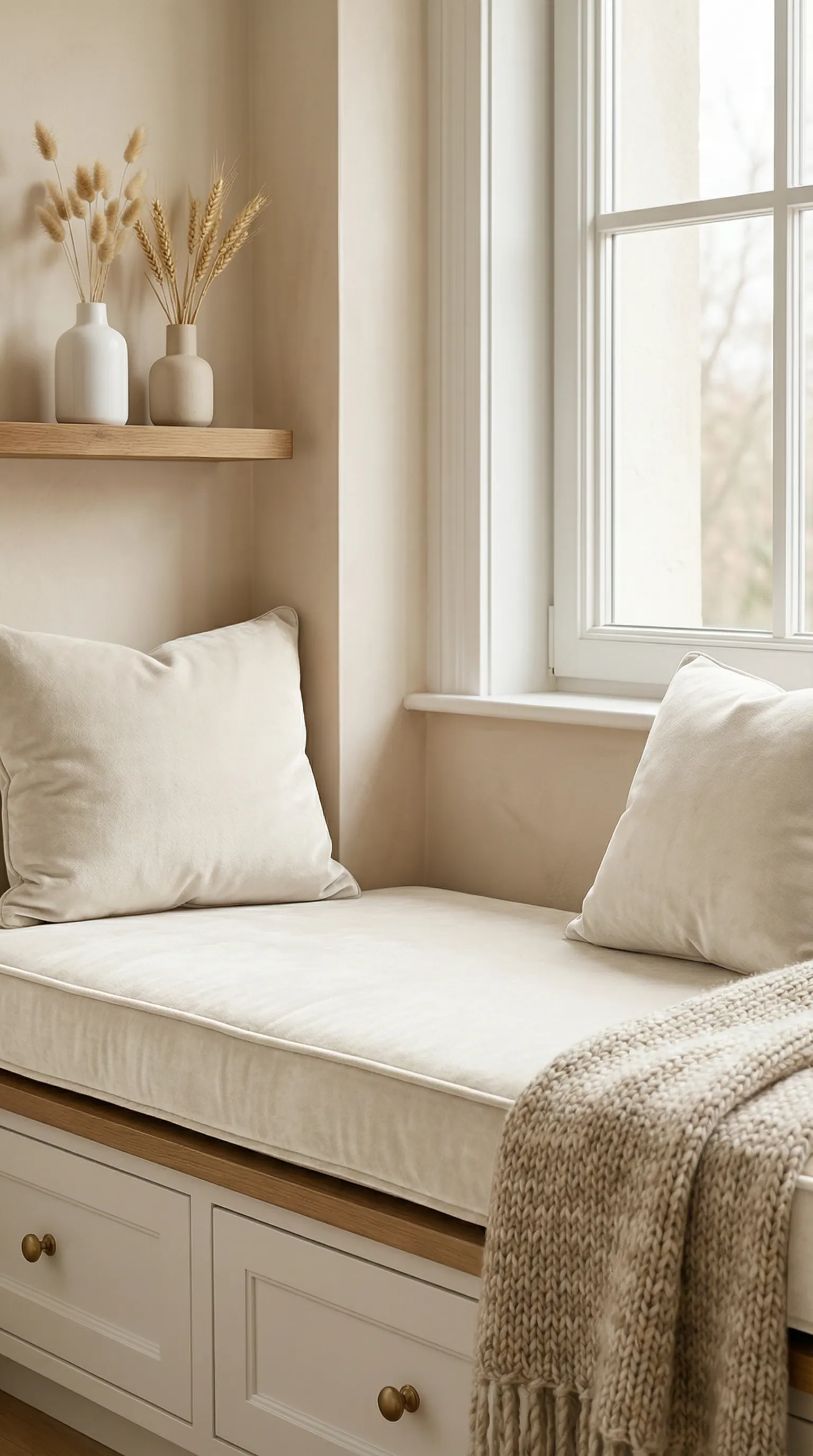
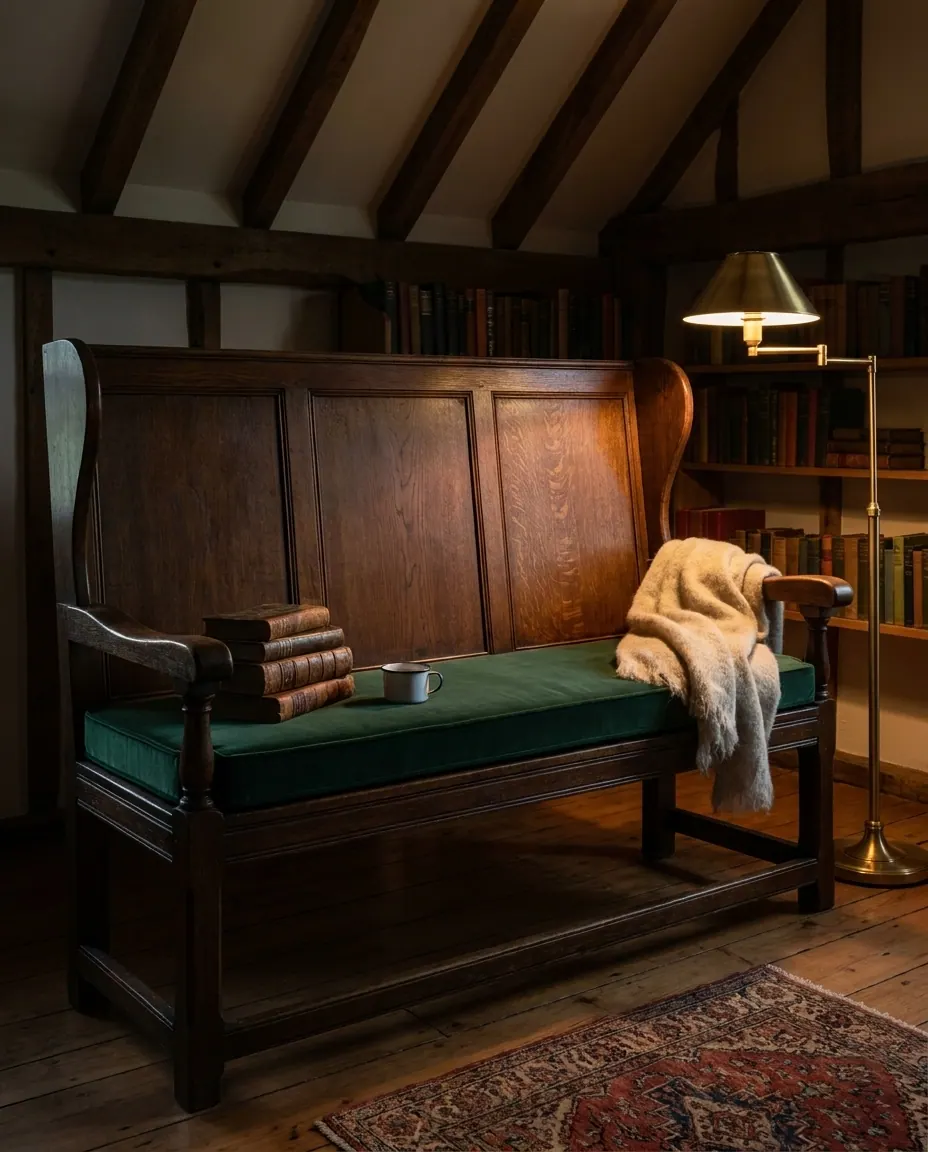
Velvet: forest green on an antique oak settle, ivory over built-in drawers. Rich, and it shows where you sat.
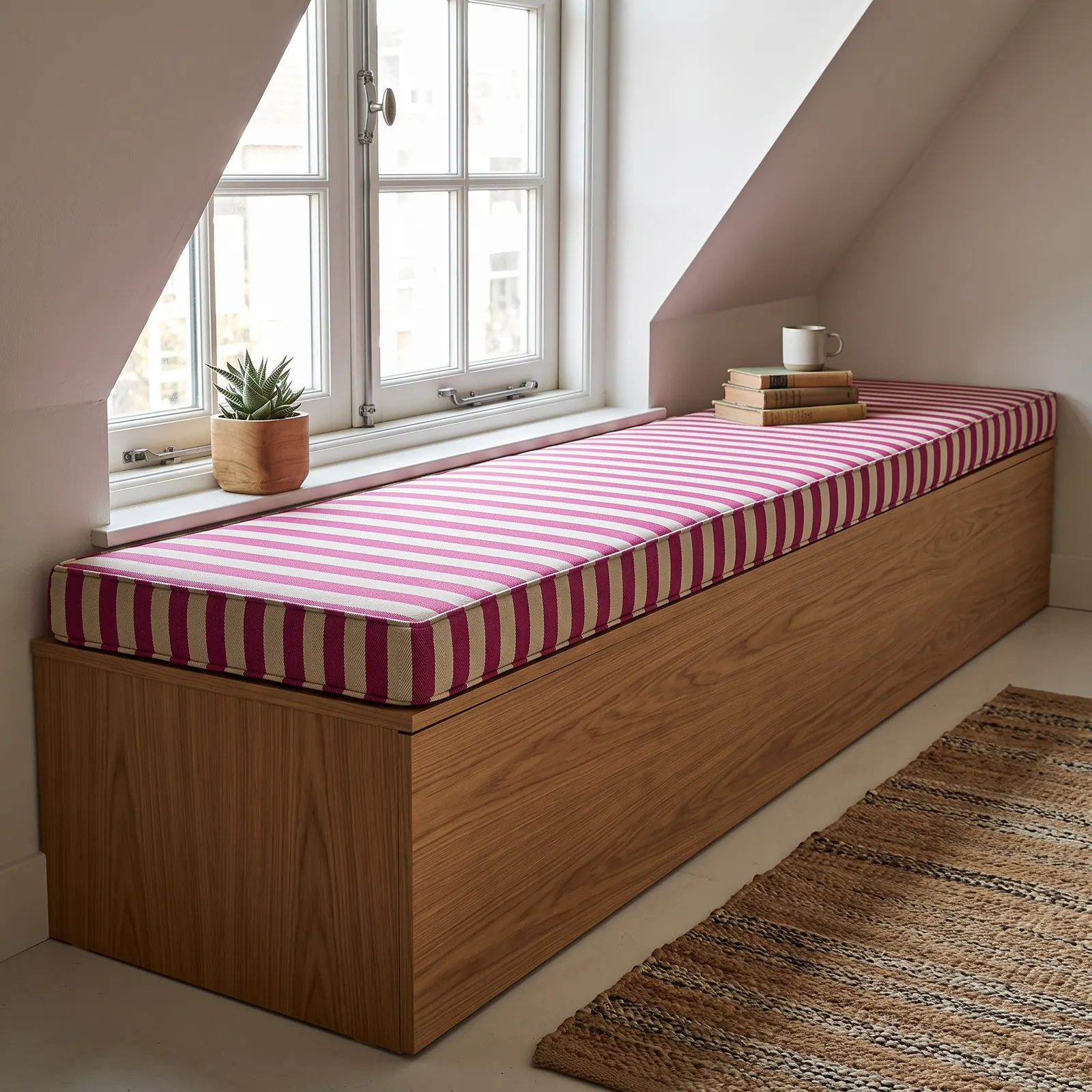
Striped cotton and ticking: the magenta stripe on an attic dormer seat. The roll is about 55 in (140 cm) wide, so on a long seat the stripes run front to back by default.
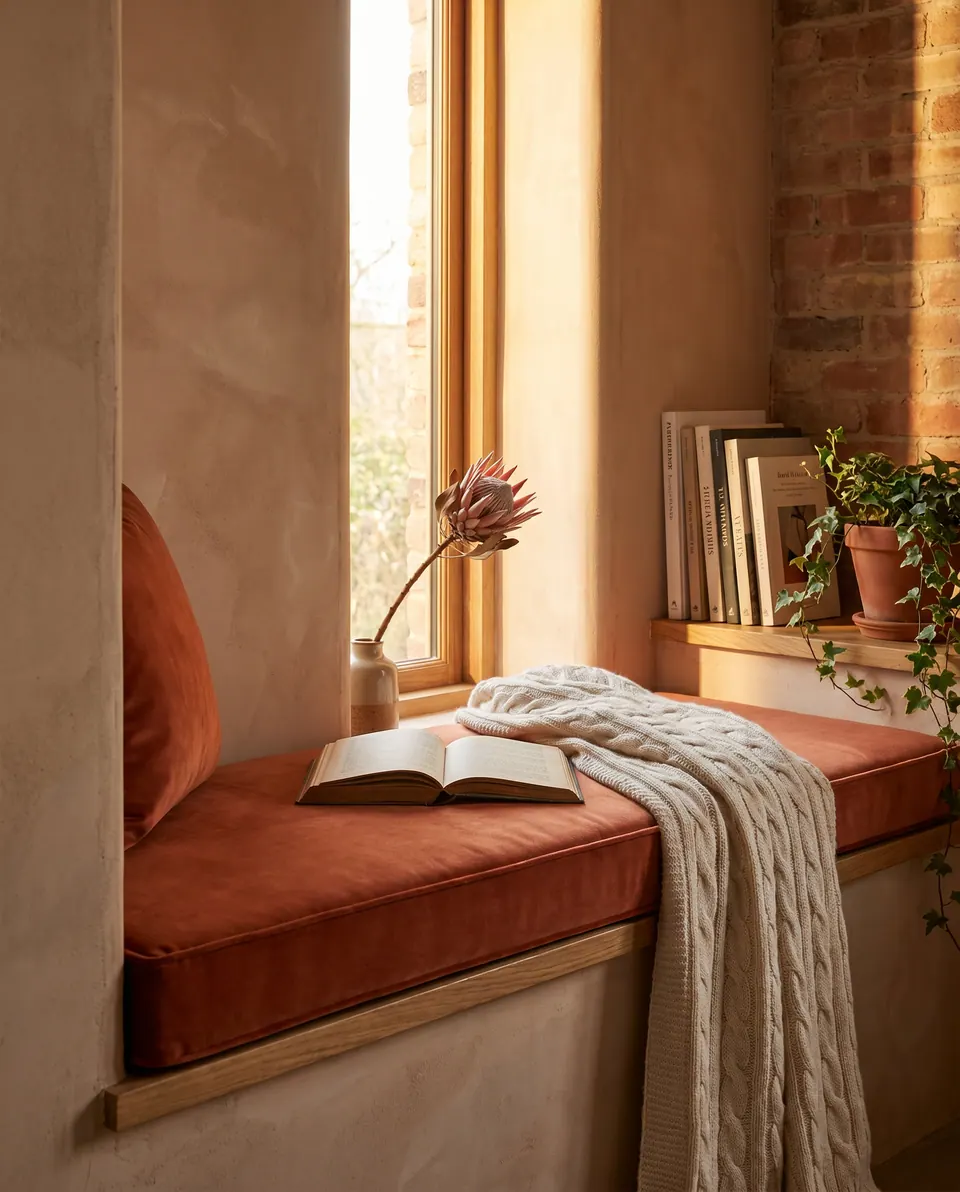
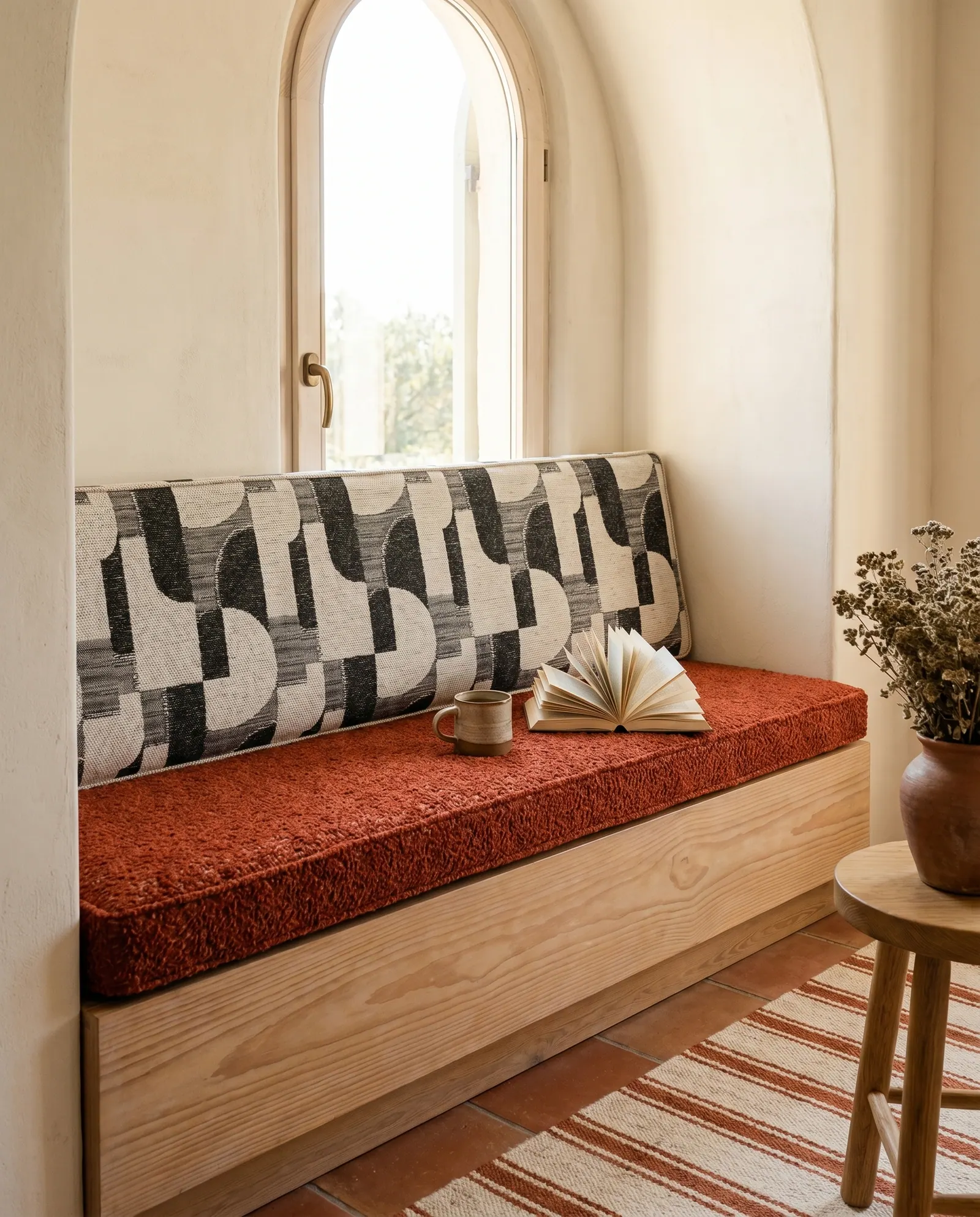
Bouclé and teddy: the terracotta alcove seat under an arched window.
The count is how many published readings use each family. Open a family for its swatch book, care notes and neighbors.
Four inches of foam, and what goes behind your back
The standard is 4 in (10 cm) of foam, and most buyers keep it; it's the thickness you see in most of our photographs. The thinnest standard cushion is 2 in (5 cm).
Firmness runs about 6 to 7 on a 1 to 10 scale. Back cushions are softer than seats by default, though a back can be made just as firm. High-density foam gives the flat, tailored look of the ivory velvet seat, and with an inner support wrap a cushion can overhang the front of a seat by up to about 2 in (5 cm).
A buyer wrote to the workshop about a child's reading nook going into a brand-new built-in. They picked a black-and-white-with-gray fabric and a mustard velvet, and planned the cushion at about 23 5/8 x 39 3/8 in (60 x 100 cm).
The carpentry was going in the very next day, so the workshop held the order and waited. Once the wood was in and measured, the seat came to about 25 1/4 x 39 3/8 in (64 x 100 cm), just over 1 1/2 in (4 cm) bigger on one side than the plan. Production picked up from there, and the cushion fit the seat that actually got built.
Measured
Planned about 23 5/8 x 39 3/8 in (60 x 100 cm), built about 25 1/4 x 39 3/8 in (64 x 100 cm)
What it taught
Measure after built-ins are installed; the workshop can hold an order for final sizes.
Where nook cushions go wrong
Measuring before the built-in is finished. Wait for the carpenter, or ask the workshop to hold the order until you send final sizes.
Cutting a cushion exactly to a narrow window seat and expecting it to stay put. A smooth sill gives it nothing to grip; ask for a non-slip base or ties.
Typing ties into the size box. Ties are added only on request, so write their position, length and color in the order note and confirm by message.
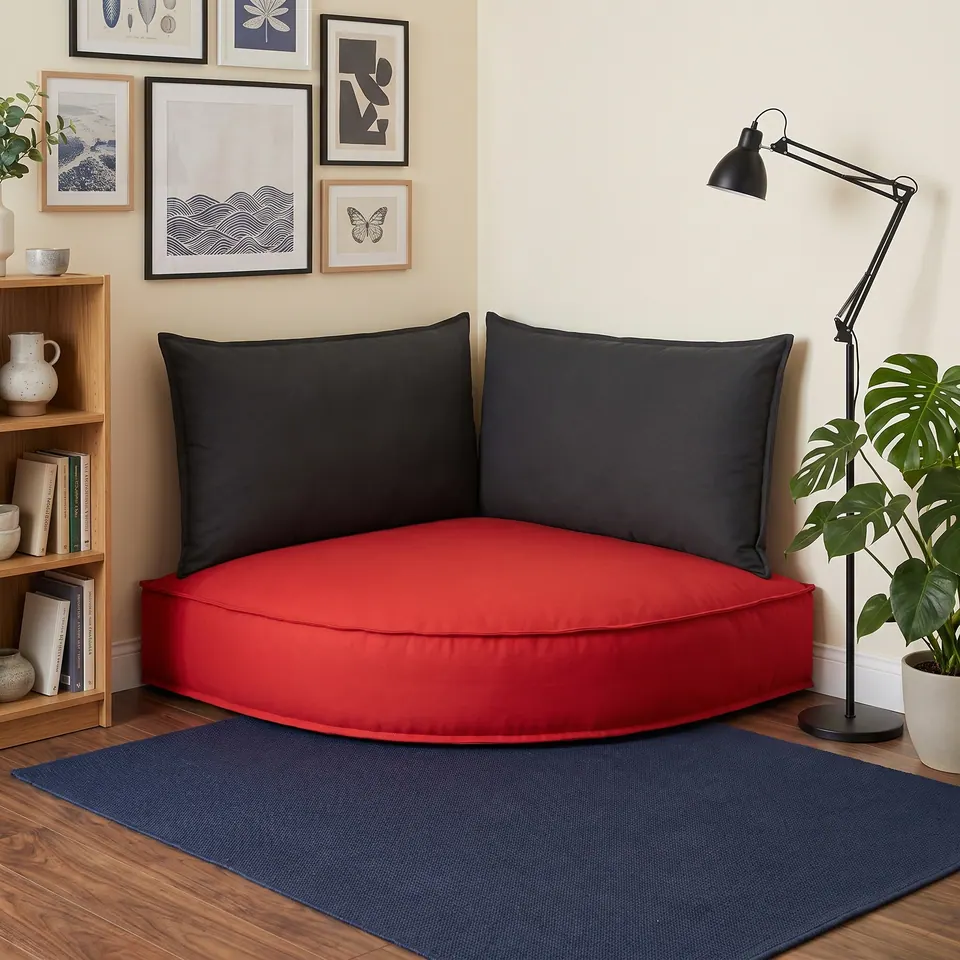
Leaving a floor corner cushion bare on hardwood. A rug or grip mat underneath stops the slide.
Assuming the pillows in the photo come with the seat. Styled pillows and backrests are separate pieces, each ordered at its own size.
Sending numbers for an arch without a drawing or a traced template.
Photographs from the workbench
Open any photograph large; each one has its own link and a Save button.
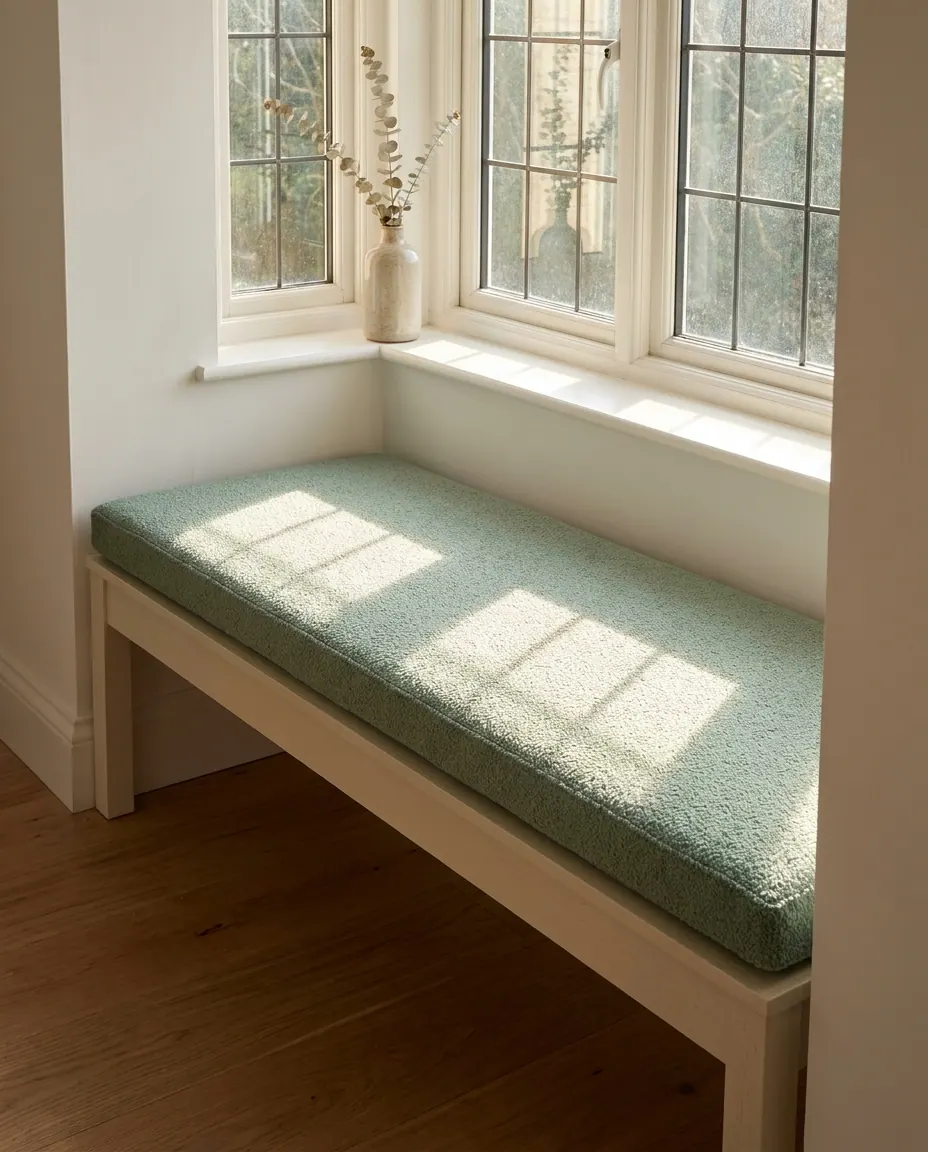
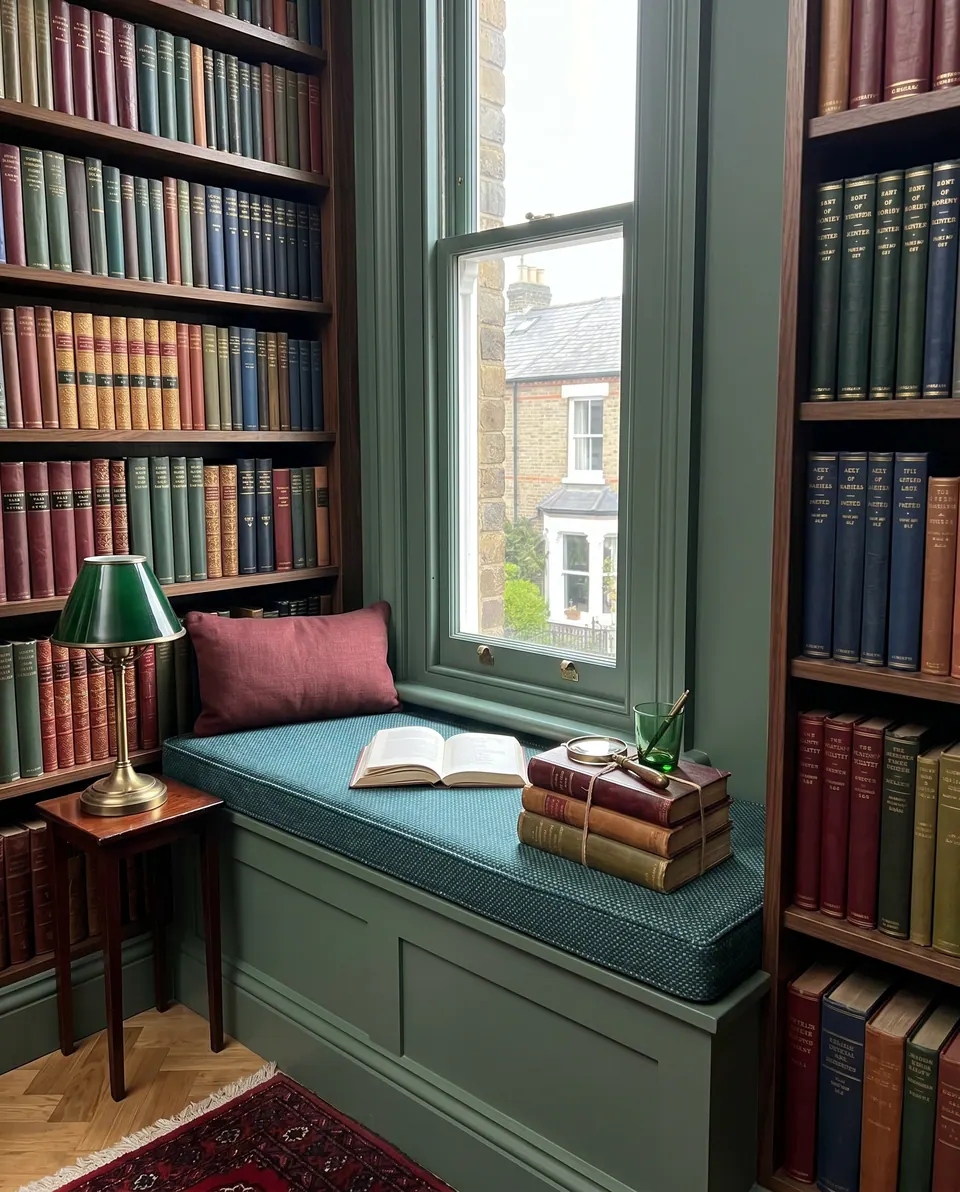
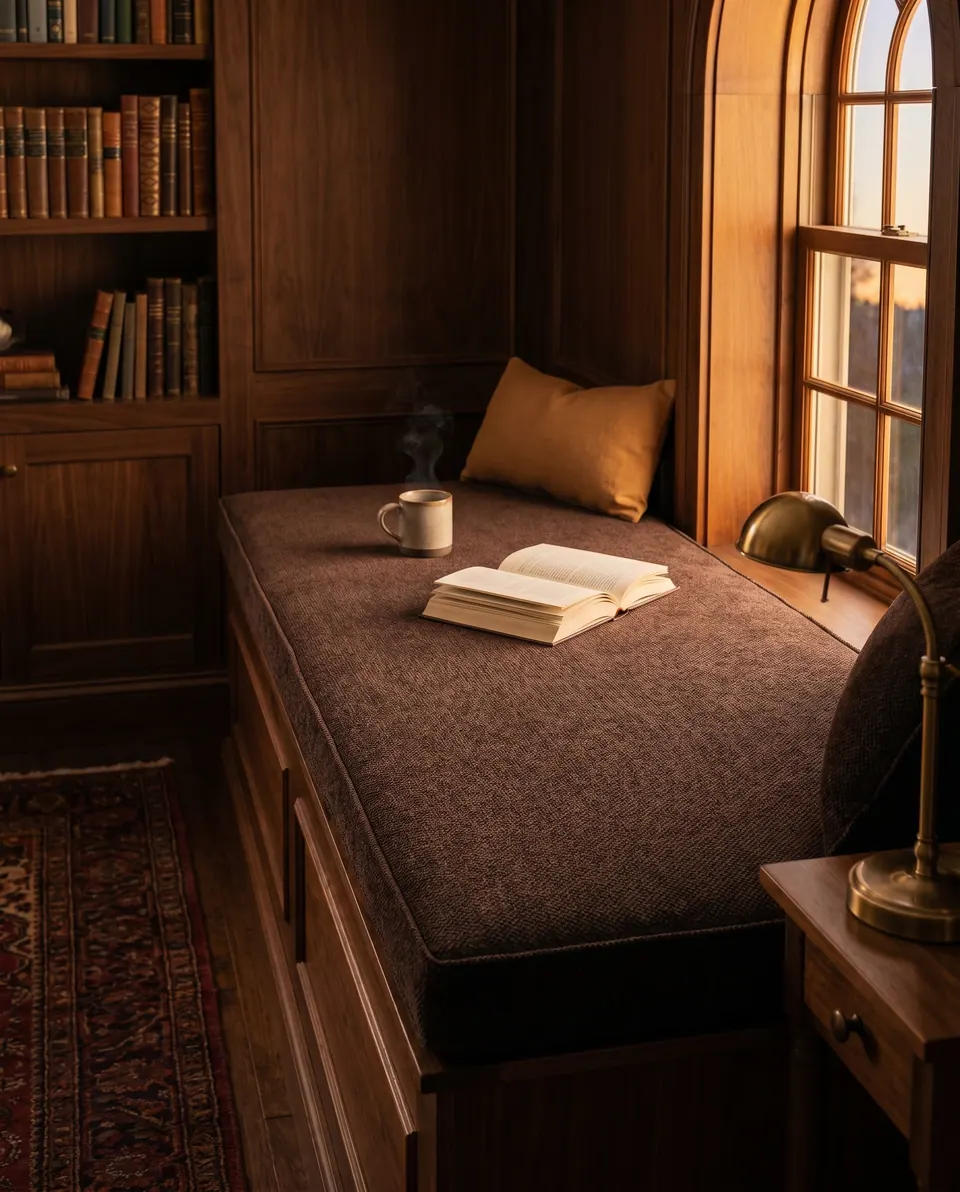
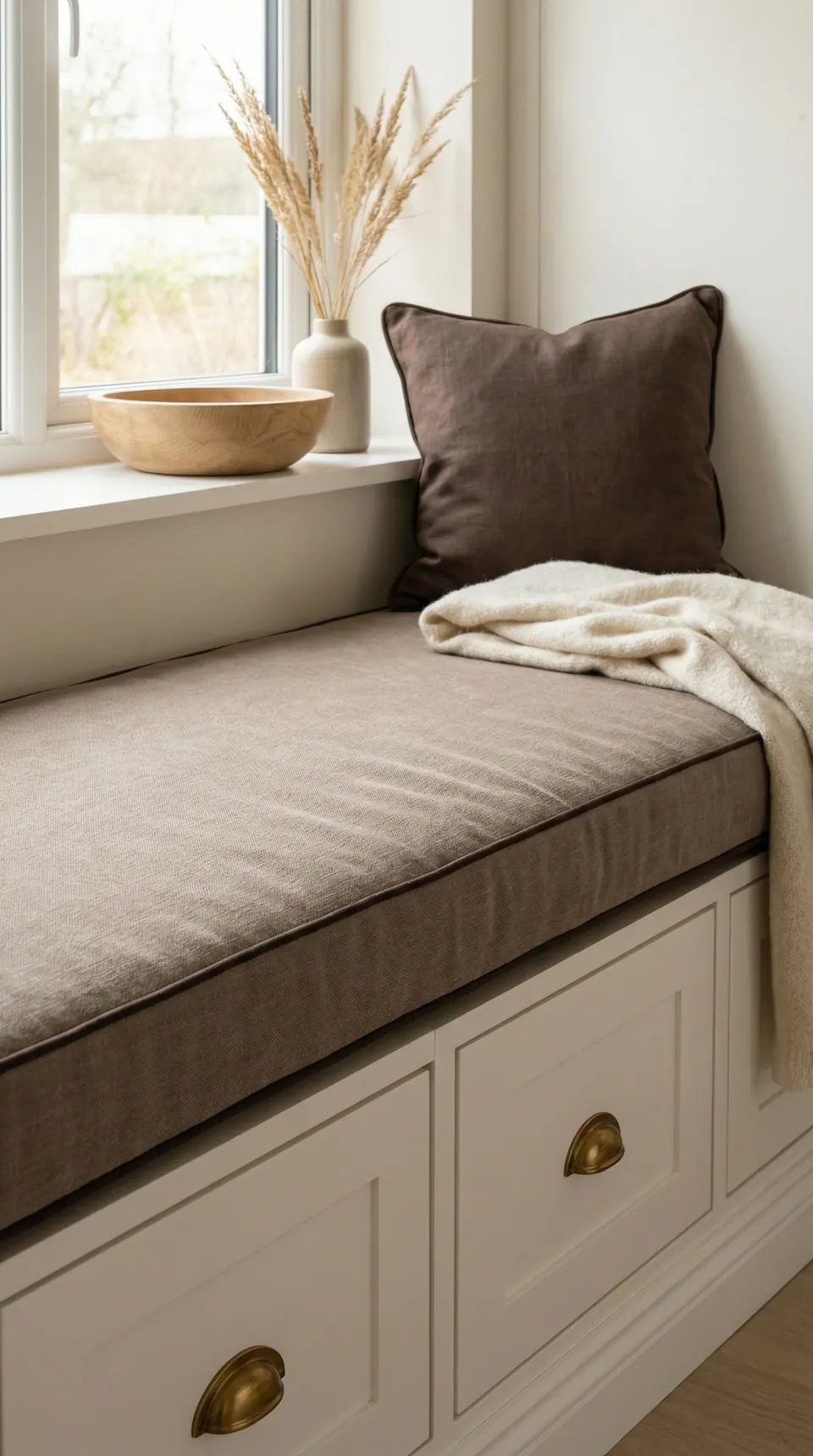
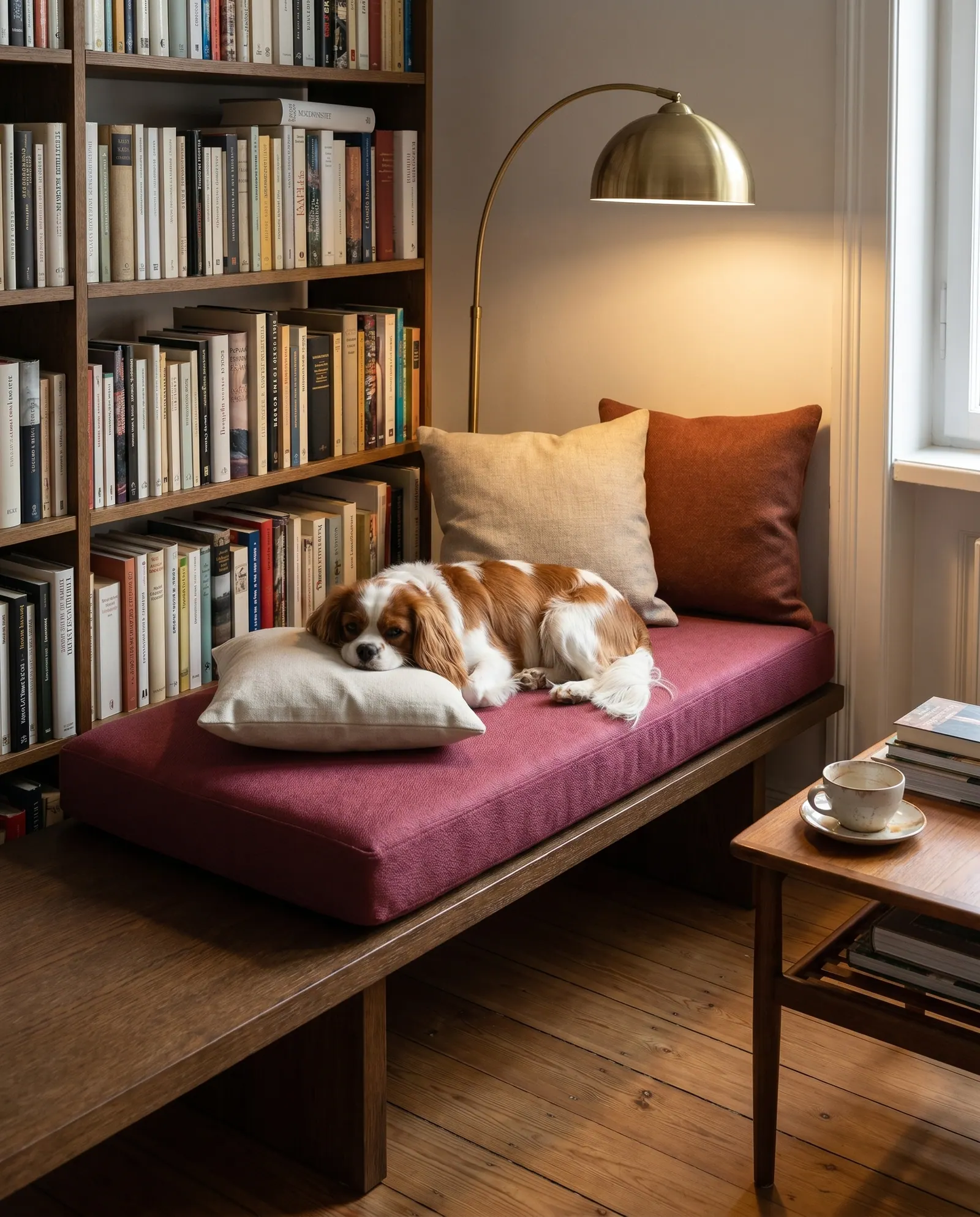
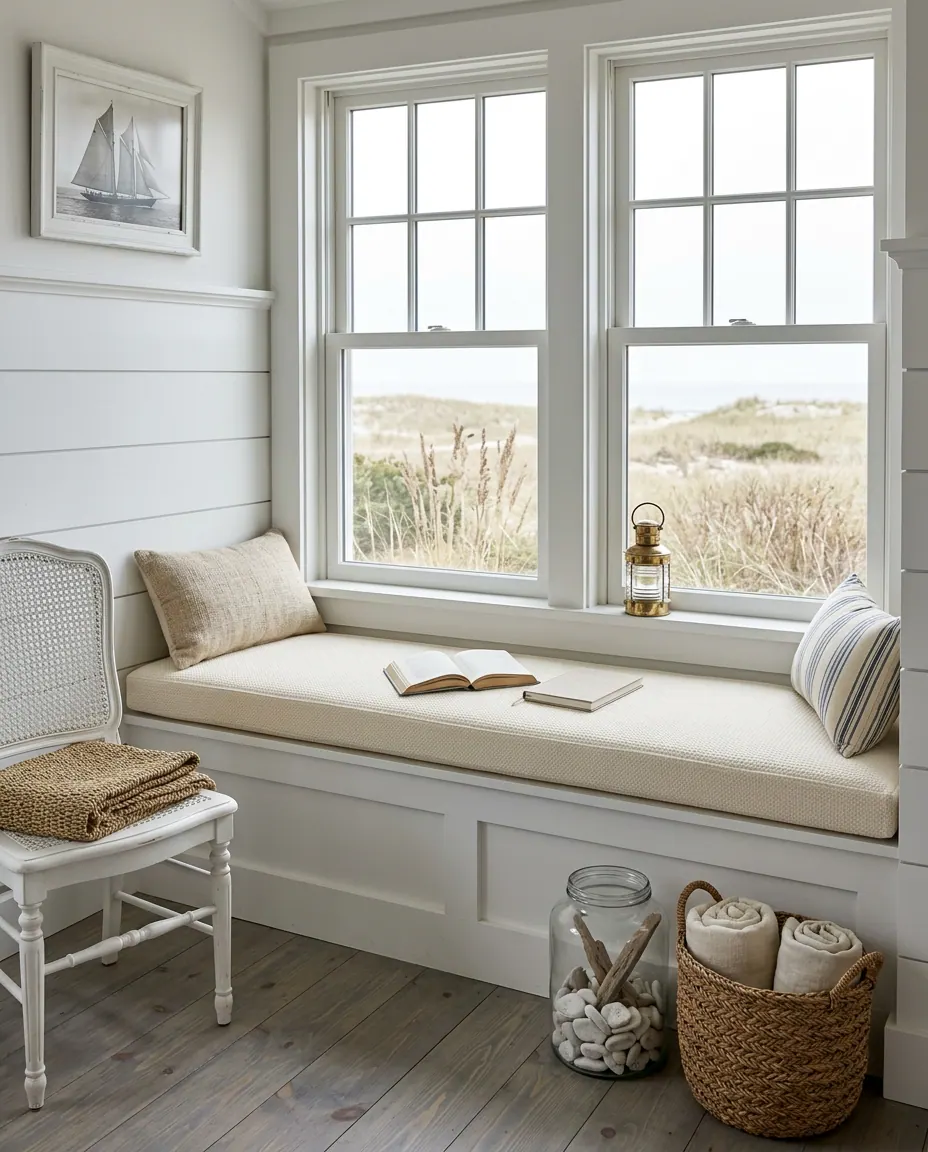
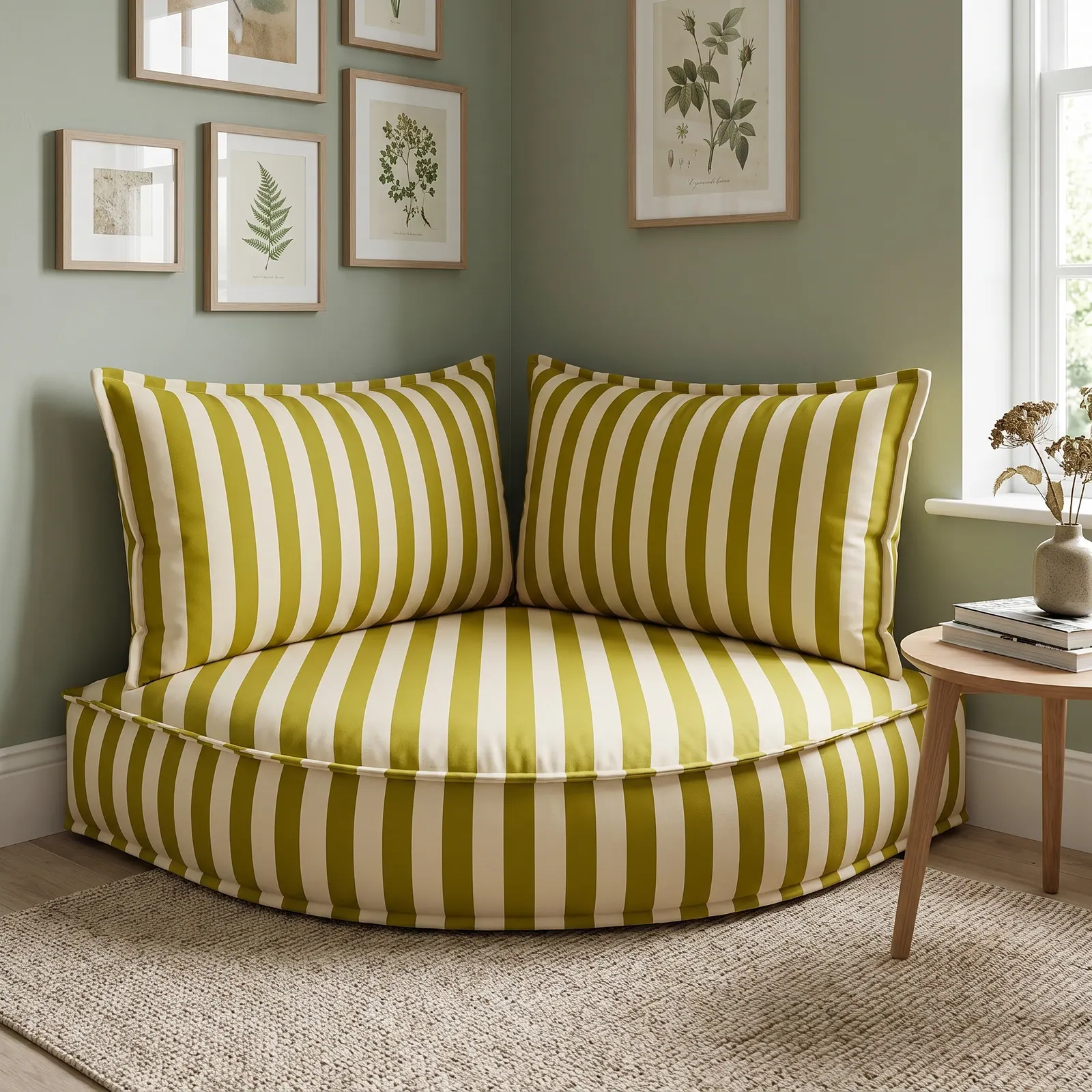
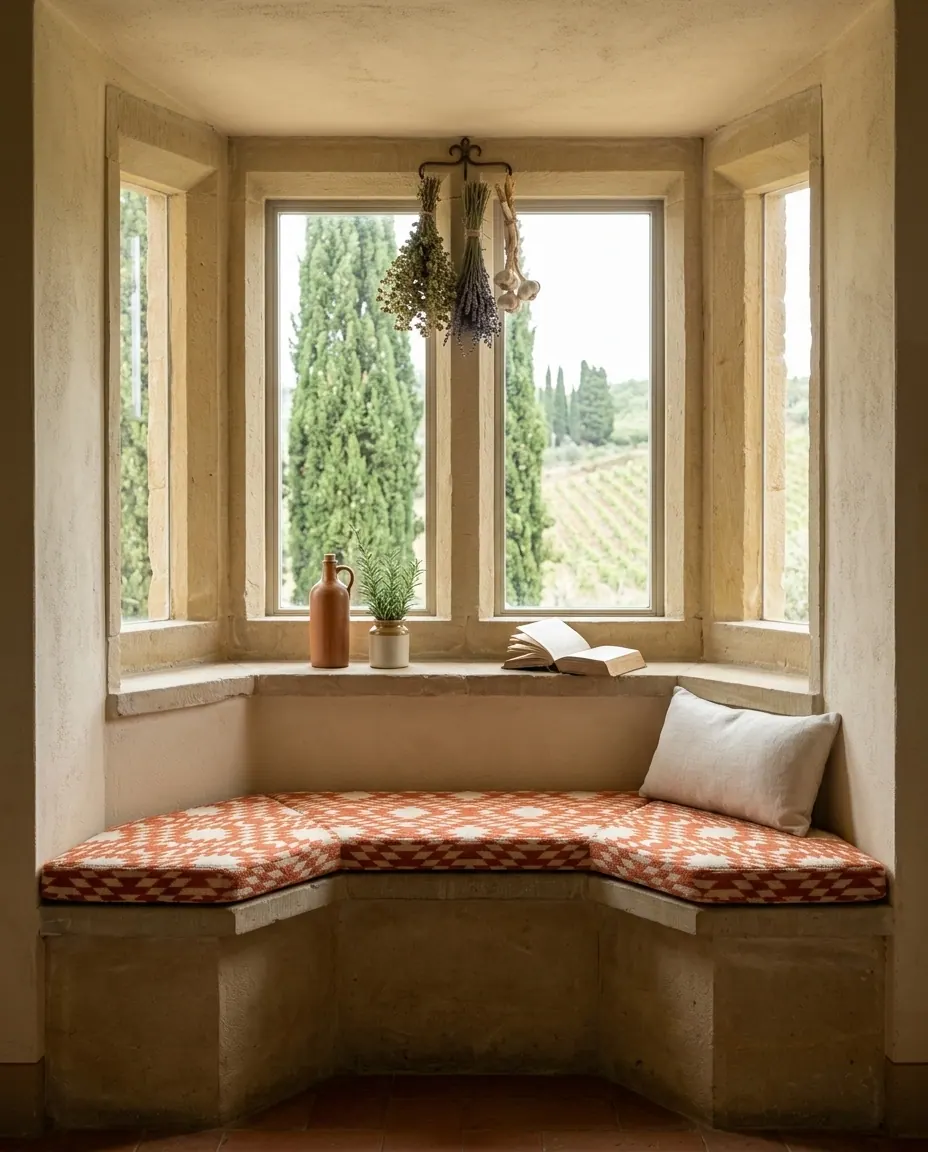
SaveThe berry seat sits between rows of book spines and a brass arc lamp, giving the library corner one bold anchor.SaveAn ivory outdoor-grade cushion on a shiplap window seat facing the dunes: soft enough for reading, tough enough for sandy feet.SaveA bold magenta stripe on a long oak box seat makes the most of a small attic dormer.SaveChampagne piping lifts the plum cushion out of the dark walnut, like gilt lettering on a book spine.SaveMocha pebble-weave on pale oak, looking out to pines: a cabin window seat made for long reads.SaveA chartreuse-olive stripe blends into sage walls and a gallery of fern prints, with a window-side table for books.SaveIn a plastered arch, a terracotta seat and a long geometric back turn a deep window recess into a proper banquette.SaveAn all-ivory velvet seat over shaker drawers, layered with matching pillows and an oatmeal knit: storage below, a soft perch above.SaveA three-sided cushion cut to follow a stone bay, in a sun-proof outdoor weave that suits a window taking full afternoon light.SaveForest green velvet softens the seat of an antique oak settle under the beams of a book-lined room.SaveSolid teal velvet anchors a reading corner surrounded by books, prints and plants.
One child's reading nook seat came out just over 1 1/2 in (4 cm) bigger than planned. Measure a nook cushion after the built-in is installed, never before.
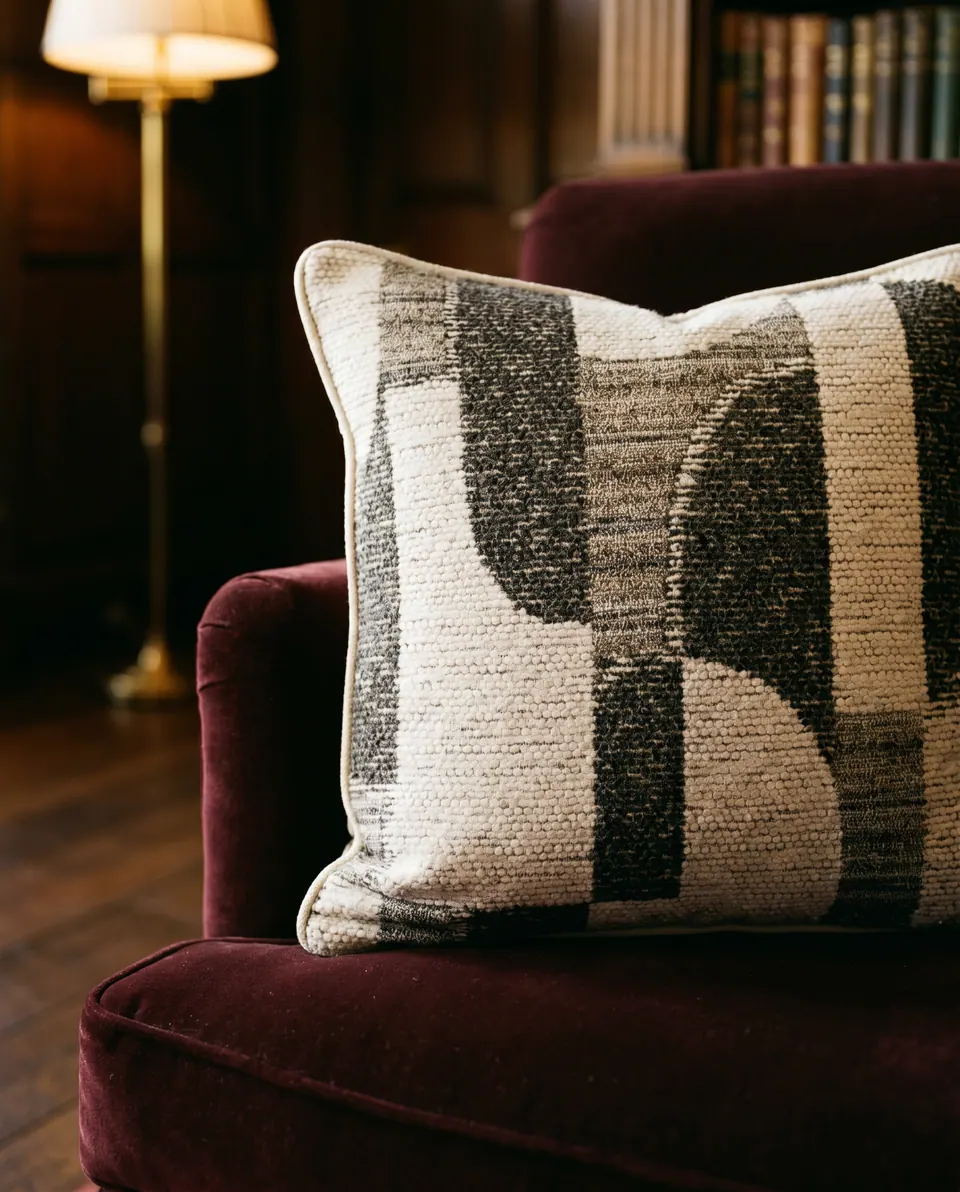
Give the seat one solid color and let the pillows carry the pattern: an olive velvet pillow and a chunky knit throw on the caramel seat, linen pillows beside a sleeping cat on the mocha one. Add a lamp you can reach without getting up, and that's the whole recipe, neighbor.
Where does the light fall in your nook at four in the afternoon? Pick the fabric in that light, not under the kitchen bulb.
Seat: a cushion cut wall to wall, 3 to 4 in thick for everyday reading
Width: about 48 in if you want to sit sideways with your back to the wall
Back support: one lumbar about 12 x 20 in, plus two or three pillows in different sizes
Ends: a bolster at each end turns the walls into armrests
Light: a wall sconce or clip lamp at shoulder height beside the reader
Shelf: an 8 to 10 in deep sill or ledge holds books and a mug
Warmth: a throw kept in a basket, not piled on the seat
Buyer questions
A common question
My window seat sits under an arch. How do I show you the curve?
The workshop's answer
Draw it or trace it. On a sketch, give the total width and depth, the straight length of each edge before the curve starts, where each curve starts and ends, and how deep it runs; an arched seat can be drawn as a rectangle plus an arc of a circle. For a tricky curve, lay wrapping paper on the seat, trace it, cut it out and photograph it flat beside a tape measure. The shape is confirmed before production.
A common question
Our nook is an L-shaped bench and we'd like backs on it. What do you need from me?
The workshop's answer
The end-to-end length of each leg, the seat depth and thickness, and a sketch or photo. Say whether any part is angled and which runs need backrests; a back can run along one side only. Outside and inside measurements work too: one L measured 90 x 55 in outside and 72.75 x 39 in inside and was planned as 82 x 18 in and 29.25 x 18 in. Standard thickness is 4 in.
A common question
We move before the nook is ready. Can the cushion arrive after we're in?
The workshop's answer
Yes. Write 'please deliver on or after [date]' in the order note or send a message, and the finished order is held, or production timed, so it lands as close to that date as possible. Shipping straight to the new address is the surest plan, and a new-build address that isn't receiving deliveries yet can wait until you've moved in. Transit time varies, so one exact day can't be promised; leave a margin before any date that matters.
A common question
The nook cushion arrived too short. Will you make it again?
The workshop's answer
Send a photo with a tape measure along the full length and ask the workshop what it will do; past cases include 54 in delivered instead of 57 in and 36 in instead of 44 in. When the workshop made the error, only the parts that didn't fit were remade, the wrong one didn't need to come back, the piping color could change on the replacement, and a partial refund was offered to buyers who'd rather keep it.
A common question
Could a floor cushion in the kids' reading corner double as a sleepover bed?
The workshop's answer
Yes. The cushions are solid enough to lie on, and many buyers use them as children's sleepover beds. Under a loft bed, 24 x 70 in or 27 x 70 in is typical, and 70 to 75 in lengths are made routinely; a twin is about 38 x 75 in. A 6 or 8 in thickness sits higher off the floor. For a toddler, there's a separate kids' foam bed.
A common question
I sent the wrong nook size just after ordering. Is it too late to fix?
The workshop's answer
Message quickly. Dimensions can be corrected after ordering, as when one piece was updated to 75 x 38 x 8 in. A finished custom piece usually can't be altered, though, so send final sizes and a drawing as early as you can.
Have it made
Have your reading nook cushion made — ask Rosa’s workshop
Every good cushion I know started with a long porch chat. This is the short version: leave your number and the workshop will call. — Rosa
Leave your details and the workshop will call you to confirm measurements, fabric, foam and piping. No prices, dates or payment on this page: it is a request, not an order.
Fabric · Foam · Pipingwhat the workshop will confirm with you
Most are 4 in (10 cm), the standard for window seats and benches and the thickness most buyers keep. Go down to 2 in (5 cm) when the seat is already high; 1 in (2.5 cm) is possible only without piping, and tufted cushions can't be made that thin.
Do the pillows in nook photos come with the cushion?
No. Listing prices are per single cushion, and pillows styled in photos are decorative and sold separately. A back cushion is its own item too: add it at its own size and write 'backrest' in the note. Floor-cushion and French sets are the exception; their price includes the backrest and bolsters.
How big can a corner floor cushion for a reading corner be?
Quarter-round corner cushions are sized by their two straight sides, up to a standard maximum of 48 in (122 cm); a 48 in corner has a curved front of about 75.4 in (191.5 cm). Round French floor cushions go up to about 49 in (125 cm) across.
Which way do stripes run on a long window seat cushion?
Front to back, by default. The fabric roll is about 55 in (140 cm) wide, so a long striped seat is cut with the stripes running across its depth, and a very long striped piece needs a seam. Stripes are pattern-matched on one face only.
How do I stop a nook cushion sliding on a smooth wooden seat?
Ask for fabric ties sewn into the seams at the corners or back, in any position, or for a non-slip base. Neither is standard, so write the request in the order note and confirm it by message. On a floor corner, a rug or grip mat underneath stops the slide.
Will a back cushion stand against the wall without straps?
Often, yes. Double piping gives back cushions enough structure to stay in place without straps. Backs are softer than seats by default but can be made just as firm, and ties sewn into the seams can hold a backrest to its seat.
How many pillows does a reading nook need?
Fewer than you might think. Styling guides suggest two or three pillows in different sizes, and no more than three to five in all, plus one lumbar about 12 x 20 in for the small of the back. Too many identical squares steal seat depth and end up on the floor, so size them to the seat rather than the shop display.
How wide does a nook need to be to sit sideways with my back to the wall?
At least about 48 in, according to one widely read window seat guide; facing forward, 32 in is enough for one person, and 60 in or more fits company. To stretch out fully, measure your own height plus room for a bolster or pillow at each end, because the cushion runs wall to wall.
Porch light's on — Rosa
Share this atlas entry
Readings
Photographs read by the masters: reading nook cushions
Real cushions made for real rooms, each read for proportion, fabric and fit.
 Save
 Save
 Save
 Save
 Save
 Save
 Save
 Save
 Save
 Save
 Save
 Save