The Pattern Room · a measuring pattern
Every cushion shape, drawn once, with the numbers it needs
Most seats are one of a handful of shapes. A few are something else. Here is each one, the numbers it asks for, and how the workshop takes the order.
 Save
The quick answer
Cushion shapes fall into a few families: rectangles and squares, angled shapes such as trapezoids and clipped corners, polygons, corner runs (L, U, T), notched seats, curves, and traced shapes. A rectangle needs length, depth and thickness. Every other shape is ordered with a drawing that has a measurement on every edge, and the workshop checks it before anything is cut.
20 shape icons, a few cushion families
Online foam configurators show twenty to thirty small shape icons. Rectangle, clipped corner, T, L, U, trapezoid, wedge, semicircle, polygons with five or six sides. It looks like a lot.
It isn't. Most of them are a rectangle that met a wall, a window or a post.
Every cushion shape is described by its edges. Letters name them. A number goes on each one. That is all a maker needs from you, and all you need to measure.
Which shape is under your window?
The shape index: 20 cushion shapes
| Shape | Numbers to send | How it's ordered | Read next |
|---|---|---|---|
| Rectangle | Length, depth, thickness | Rectangle listing, exact size in the note | Length, depth, thickness |
| Square | One side and thickness; say it is square | Rectangle listing | Dining chair cushions |
| Trapezoid | Front, back, straight depth, both slants as a check | Custom-shape listing with a drawing | Trapezoid cushions |
| Parallelogram | Both long edges, straight depth, how far one end shifts past the other | Custom-shape listing with a drawing | Custom shape drawing |
| Triangle | All three sides, and which one meets the wall | Custom-shape listing; standard custom work | Corner angles |
| Clipped corner | Full length and depth, plus how far each cut runs along both edges | Custom-shape listing with a drawing | Clipped corners |
| Rounded corners | Length and depth as if square, plus where each curve starts | Custom-shape listing; curves reviewed first | Rounded corners |
| Bullnose front | Ask the workshop before you measure | Ask the workshop | Box and knife edges |
| L-shape | Each leg end to end, depth of each leg, thickness | Usually two pieces meeting flush at the corner | L-shaped cushions |
| U-shape | Each of the three runs, one depth per piece | Three straight pieces | U-shaped cushions |
| T-shape | Every edge, and where the cut-outs sit | Small ones in one piece; large ones split into simpler pieces | Custom shape drawing |
| Notched | Per notch: offset from a named end, width along the edge, depth into the cushion | Custom-shape listing; a simple notch adds nothing by itself | Notches and cut-outs |
| Round | Diameter and thickness | Made to your diameter | Round and geometric cushions |
| Half-round | The straight edge, the depth out to the curve, thickness | Drawing or paper template; curves reviewed first | Curved cushions |
| Oval | Widest length and widest depth, on a paper tracing | Template photographed flat beside a tape | Rounded corners and ovals |
| Hexagon | Every side; for floor cushions, two key measurements marked on the workshop's reference drawing | Custom-shape order with a drawing | Round and geometric cushions |
| Octagon | Every side, plus the width across | Custom-shape order with a drawing | Custom shape drawing |
| Bolster | Diameter and length | Bolster order | Bolster size |
| Wedge | Width, height, thickness at the top and at the bottom | Quoted from those four numbers | Wedge back cushions |
| Custom template | A full-size paper tracing, photographed flat with a tape in the frame | Custom-shape listing; redrawn for your approval | Paper templates |
Bullnose and gathered fronts are not confirmed workshop work. Ask before you plan around one.
How to draw each of the 7 cushion shape families
Rectangles and squares
Three numbers: length along the front, depth front to back, thickness. Label them and add the unit: 60 in across x 20 in deep x 3 in thick. These go on the ordinary rectangle listing, with the exact size in the note.
Pattern sheet A rectangle: 60 in across, 20 in deep, 3 in thick. Angled shapes
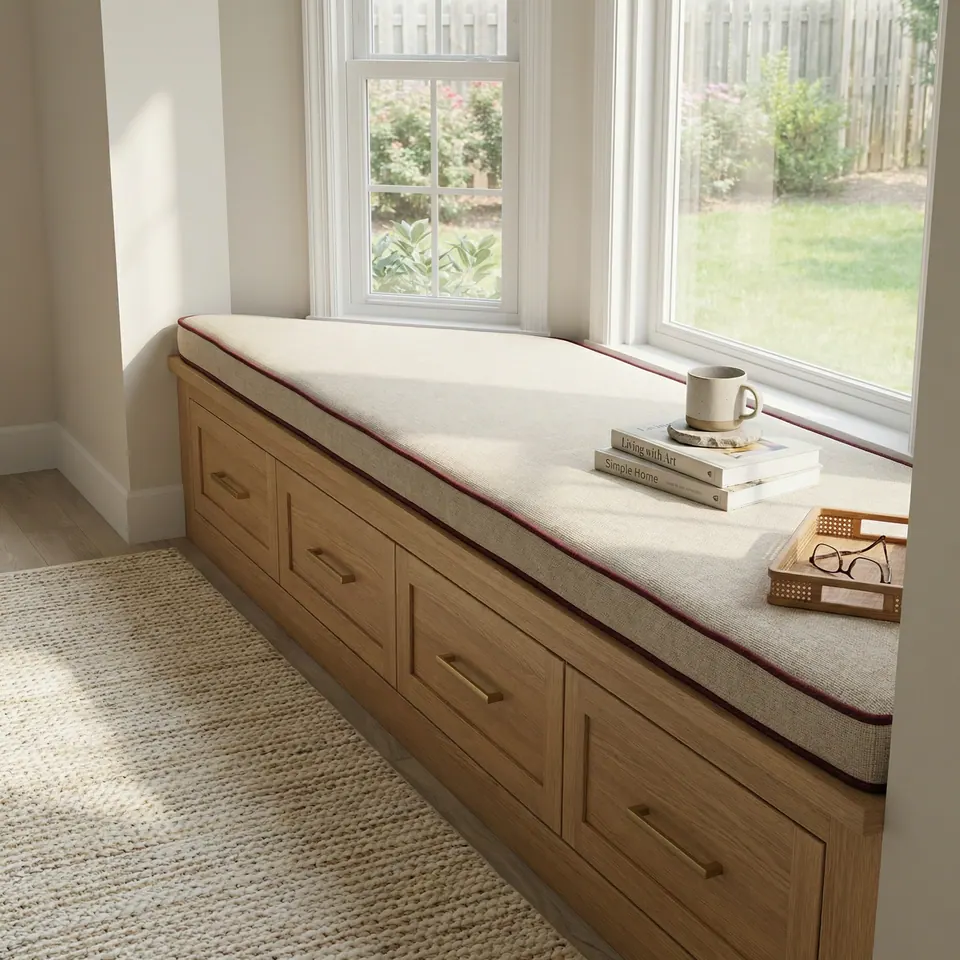
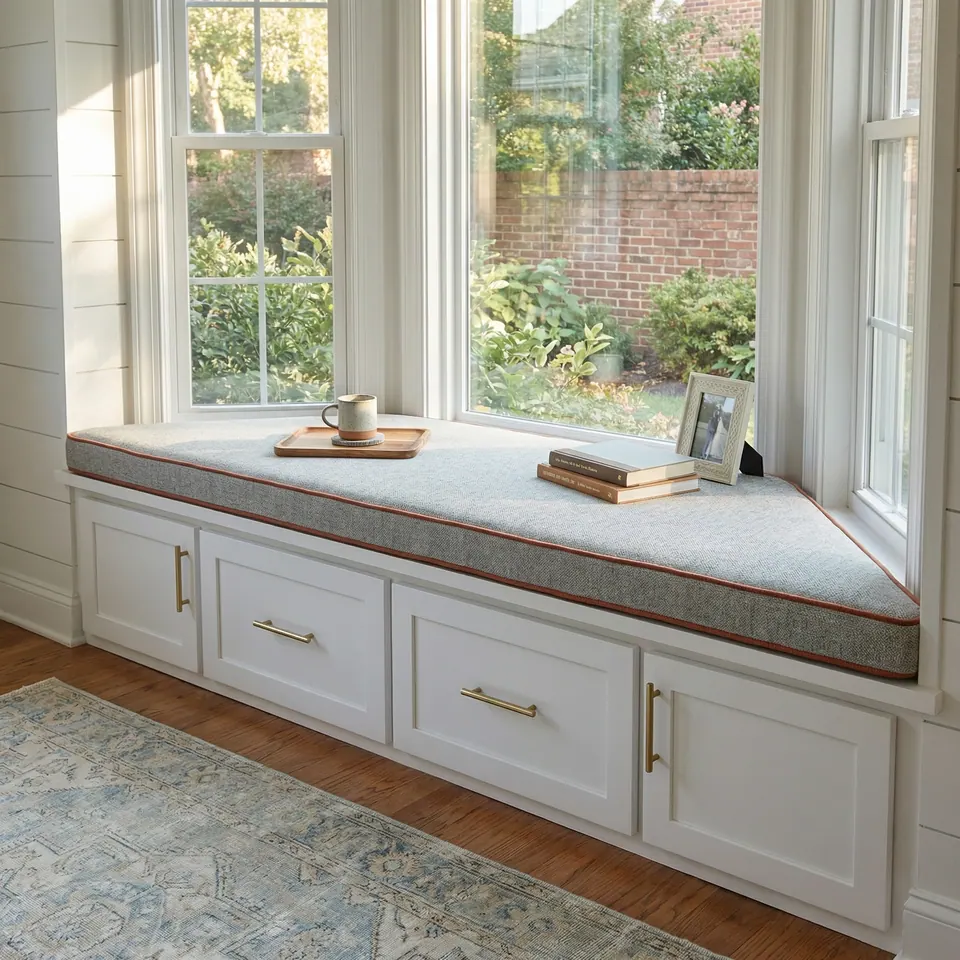
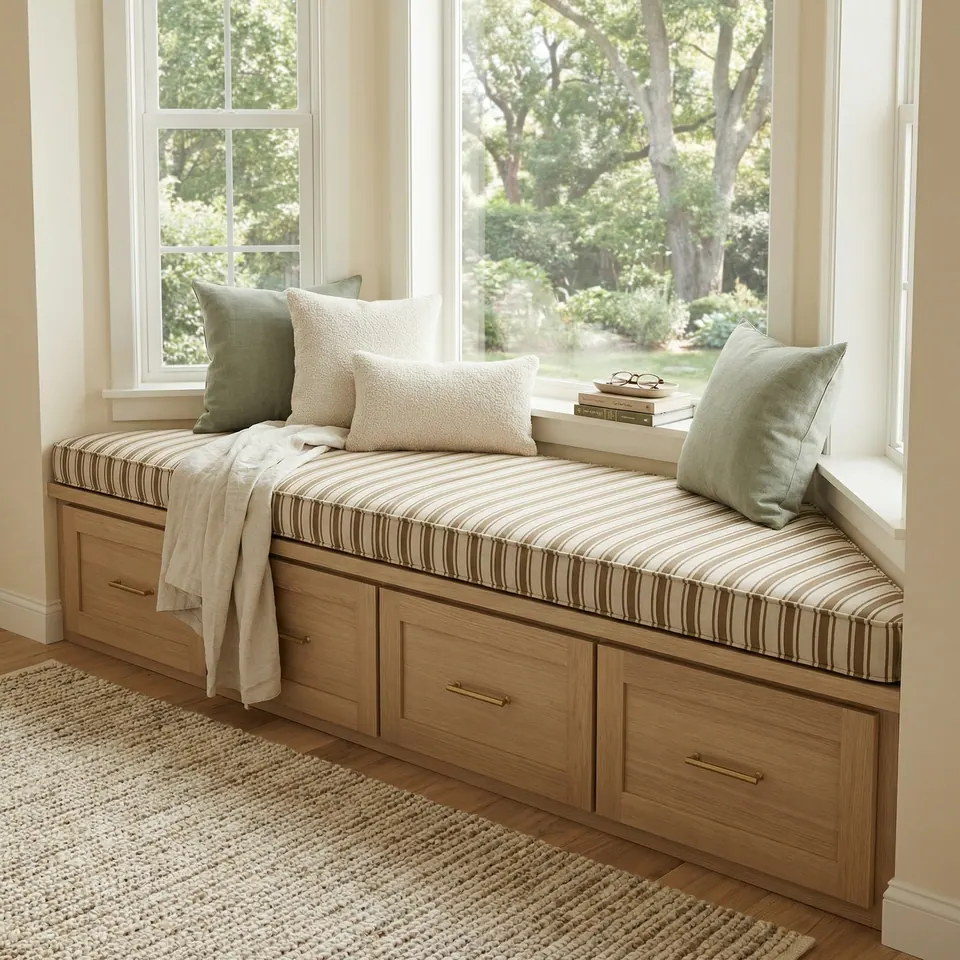
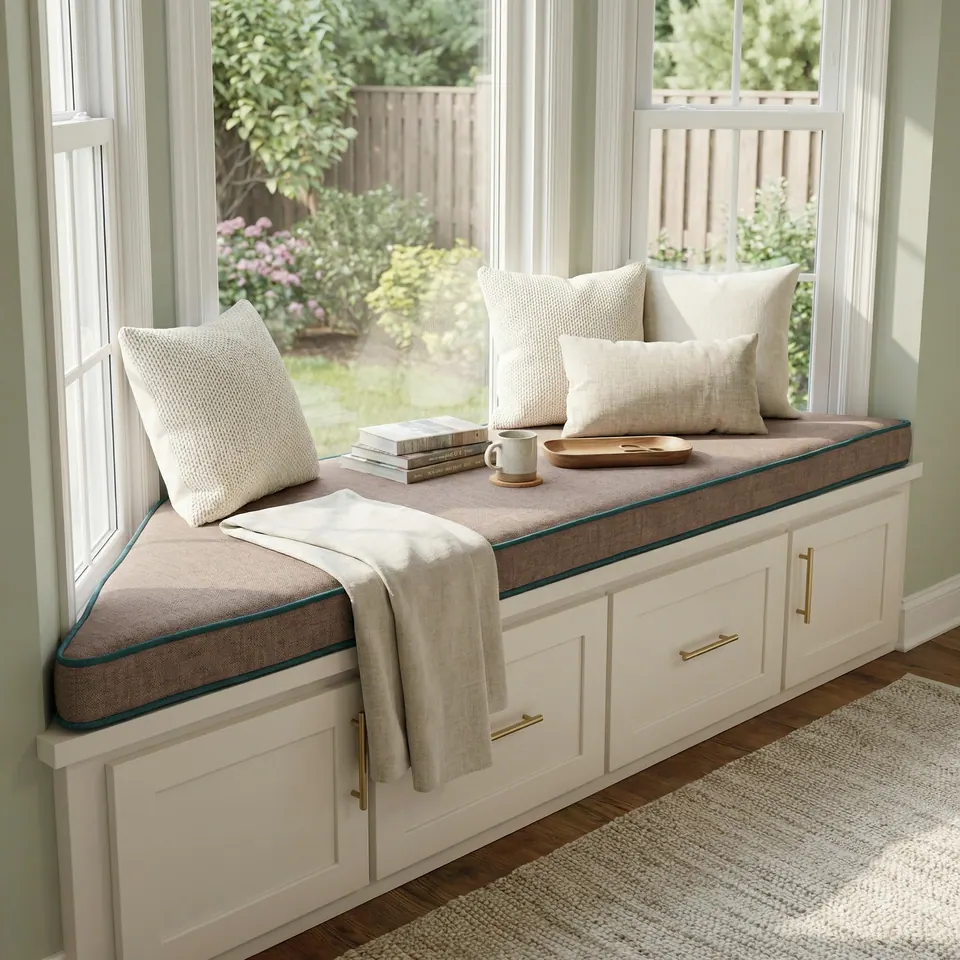
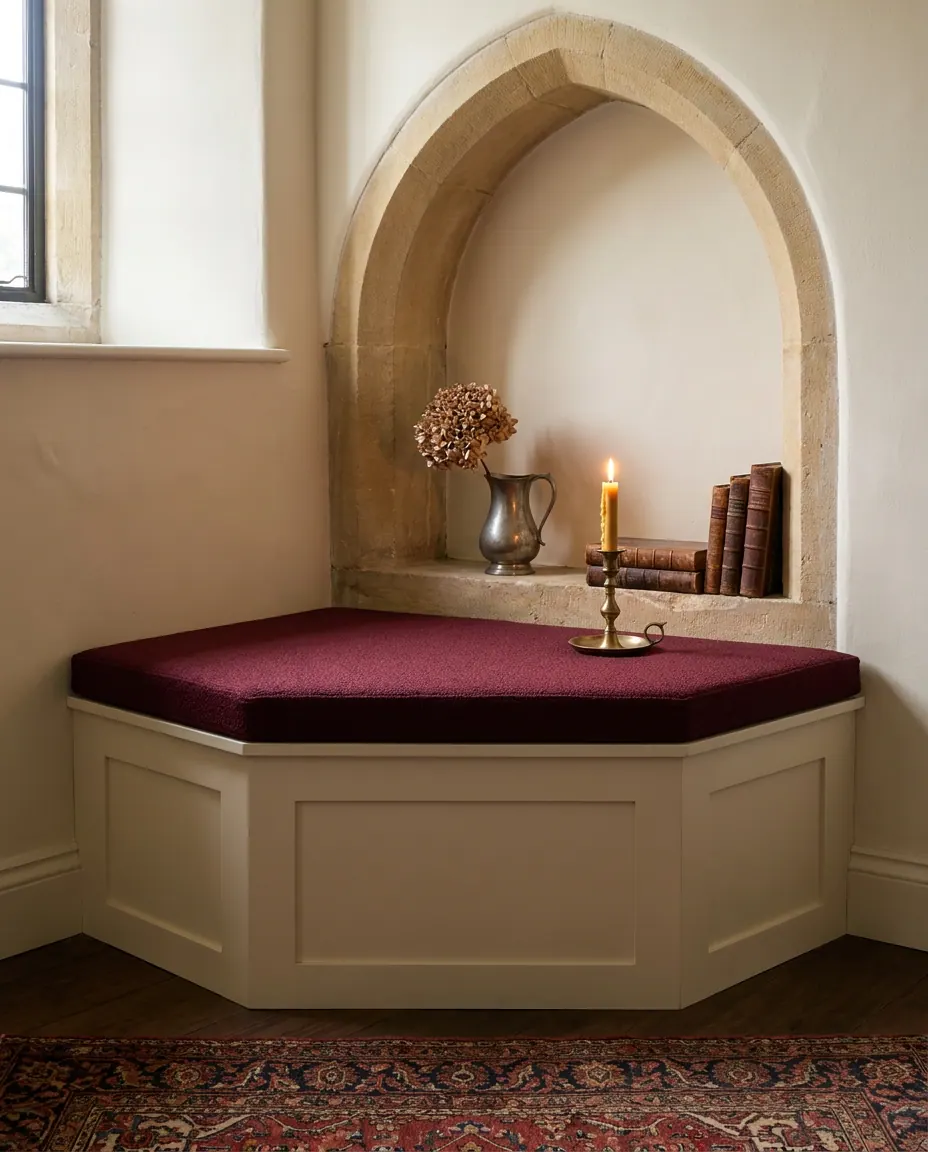
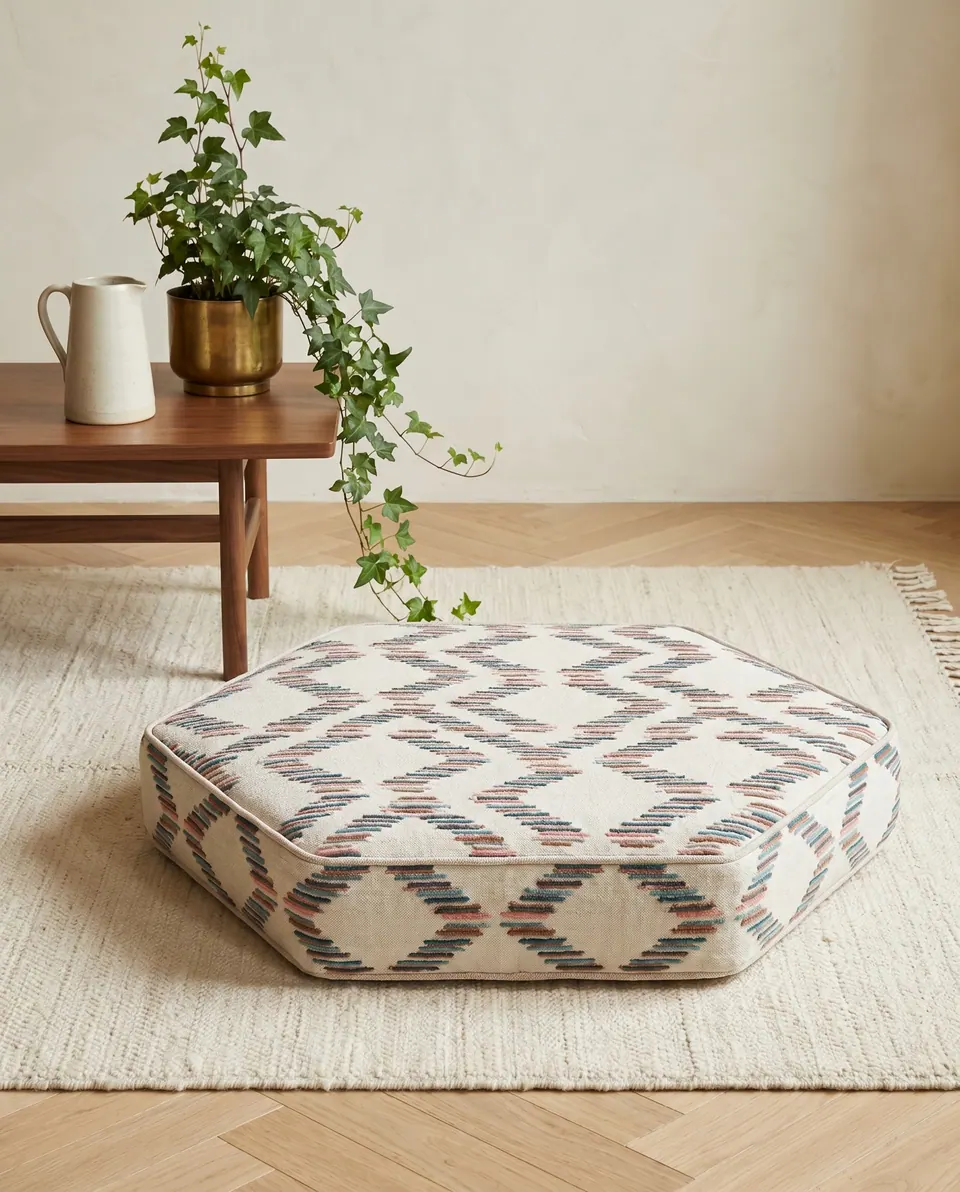
Trapezoids, parallelograms, triangles, clipped corners. Measure the front, the back and the depth straight out at 90 degrees, then each slanted side as a check. A slant is always longer than the depth. A half-hexagon seat like the one in the photo above, or a three-sided bay, is measured the same way. The trapezoid calculator tells you whether your numbers close.
Pattern sheet A trapezoid: 68 in front, 40 in back, 17 1/4 in deep, so each slant runs about 22 1/4 in. Polygons
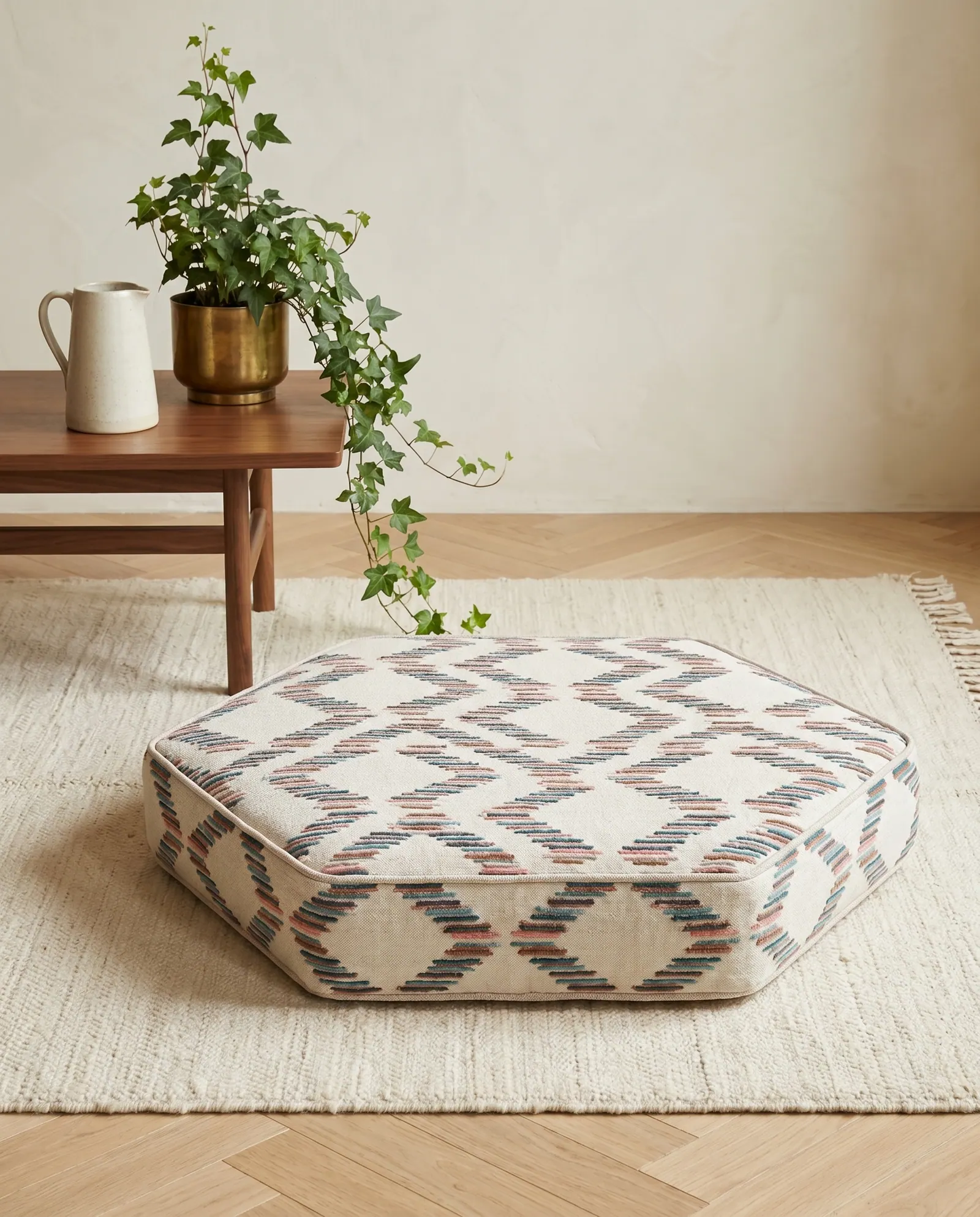
Hexagons and octagons. Measure every side and the width across. For a hexagon floor cushion, the workshop may send a reference drawing and ask you to mark two key measurements on it. On the floor, its wide corners are kind to shins.
 Save
A six-sided floor cushion in a cream zigzag jacquard gives a living room flexible extra seating. The pattern wraps the sides too. Corner runs
L, U and T. Measure each run along the wall from the back corner to its end, and the depth of each leg. The workshop recommends separate straight pieces that meet flush: they fit more cleanly, ship more safely and unzip for washing. Large T-shaped seats are split into simpler pieces.
Pattern sheet An L with runs of 90 and 68 in at 20 in deep, made as two rectangles. Notched seats
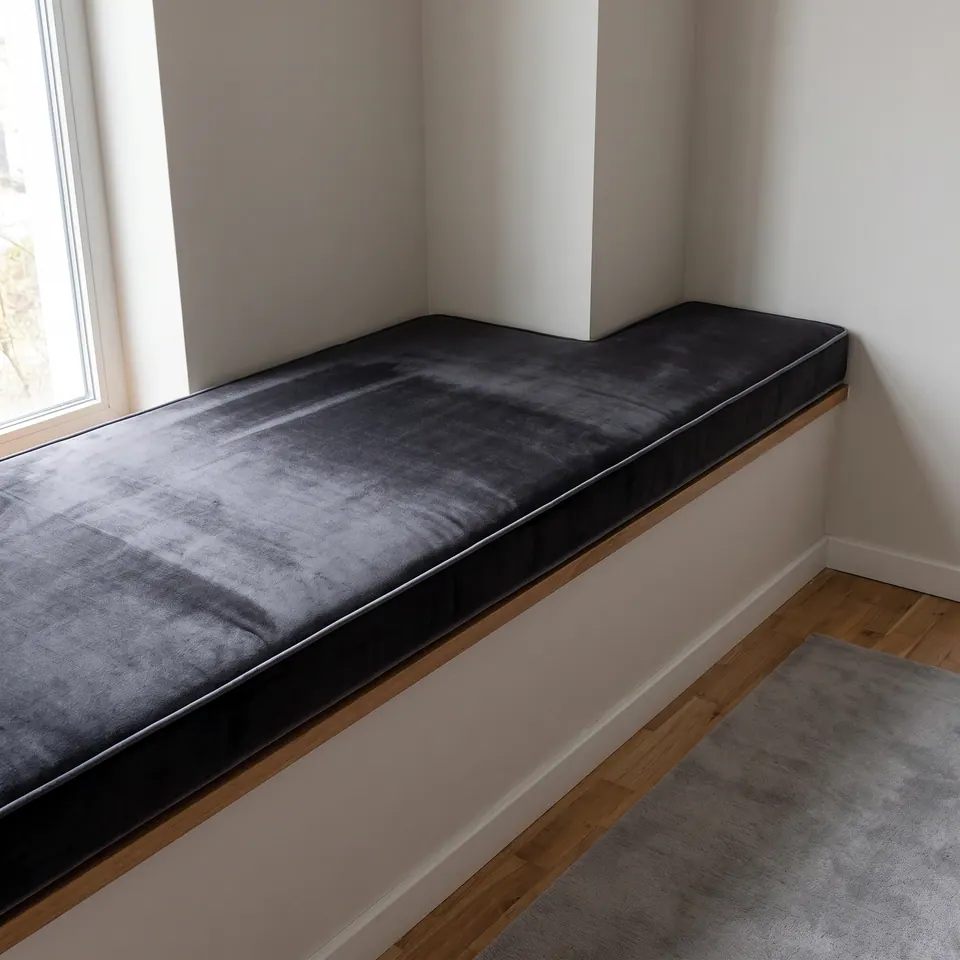
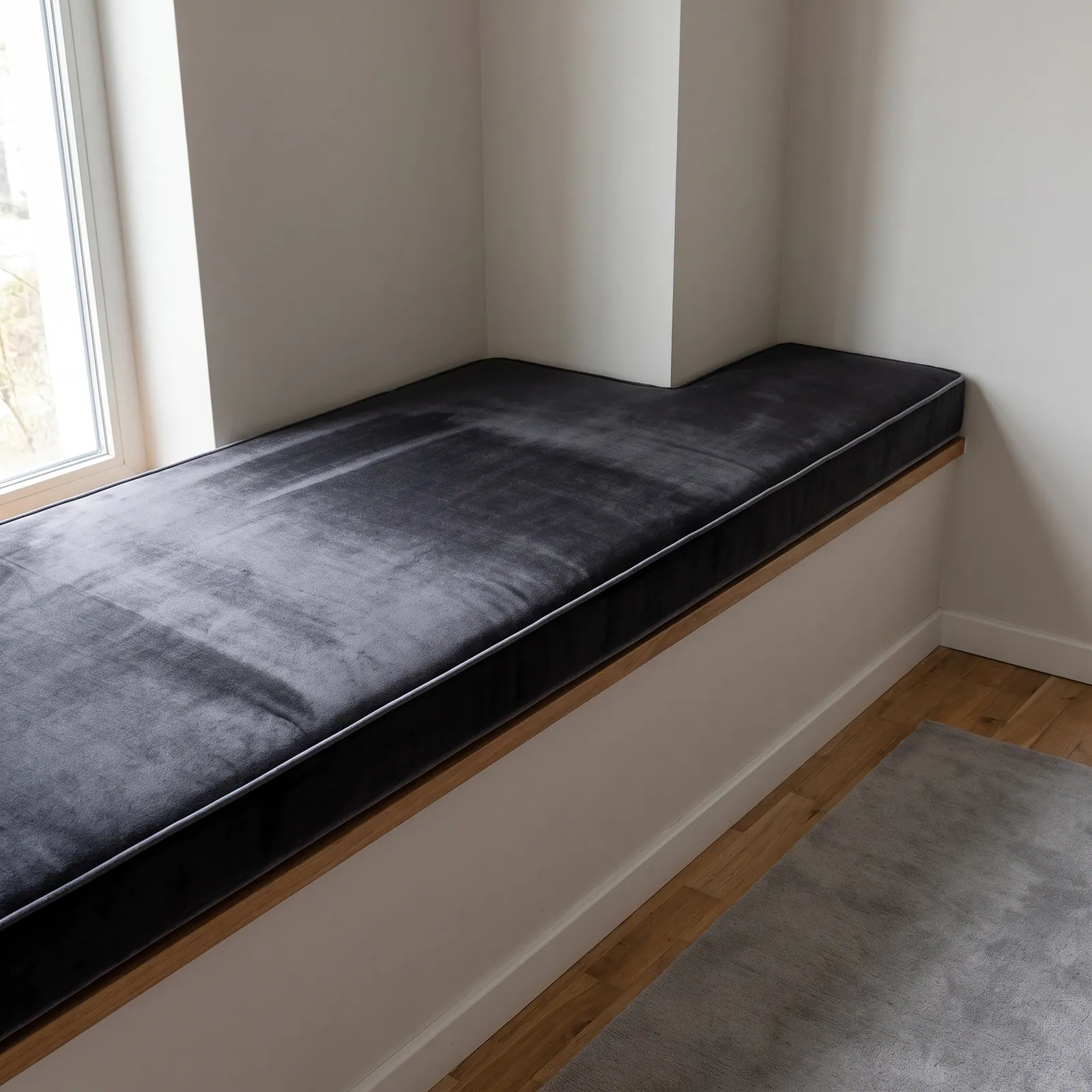
A post, a column, a window casing, a bench leg. Each notch gets three numbers: its offset from a named end, its width along the edge and its depth into the cushion. Say which edge the notches sit on, because the zipper runs along the back.
 Save
A single black velvet cushion wraps a wall column instead of stopping short of it, with gray piping tracing the step. Curves
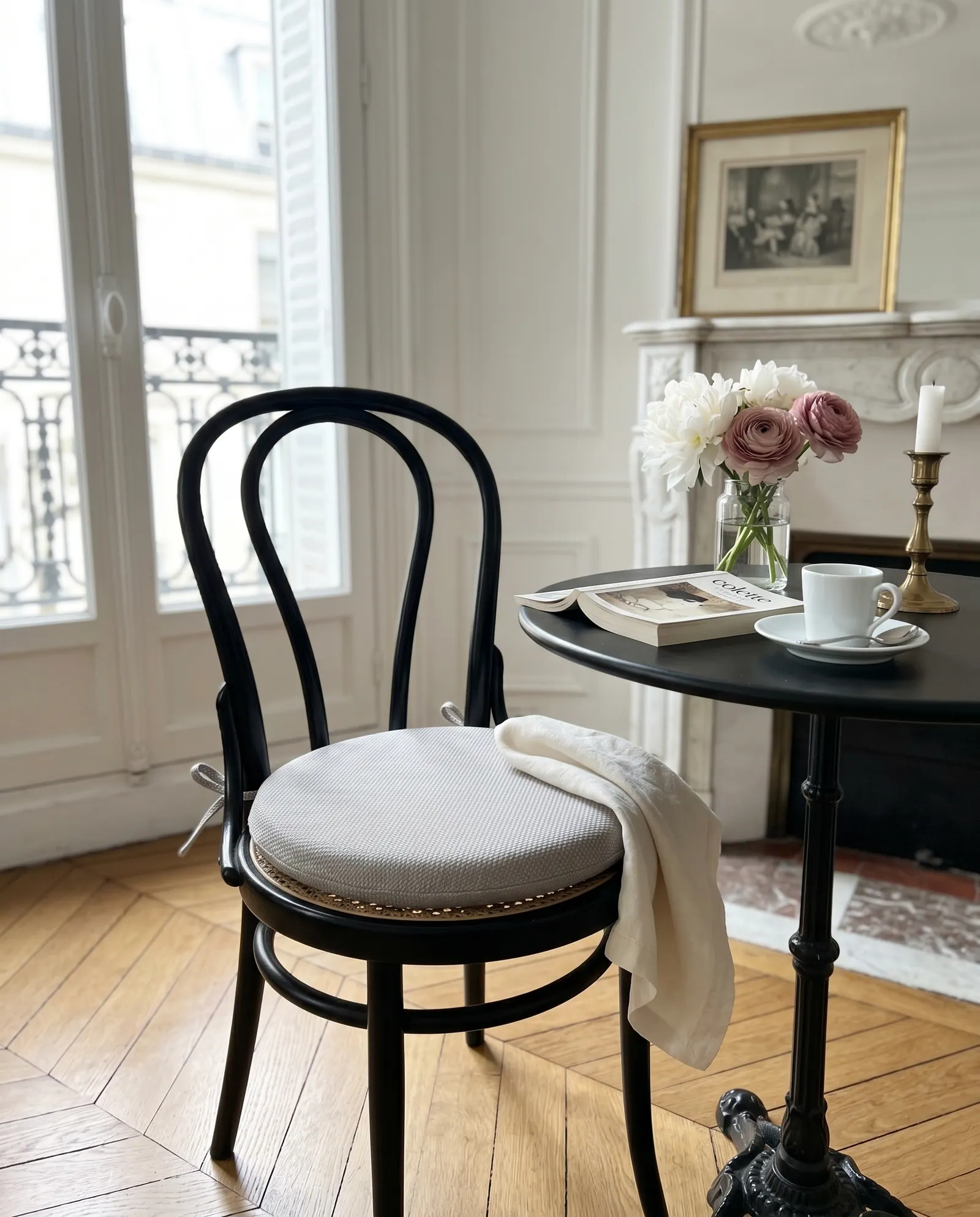
Round, half-round, oval, rounded corners. A curve is never read from numbers alone. Mark where each curve starts and ends and how deep it runs, or trace it. Strongly curved shapes are reviewed by the craftsmen before anyone says yes.
 Save
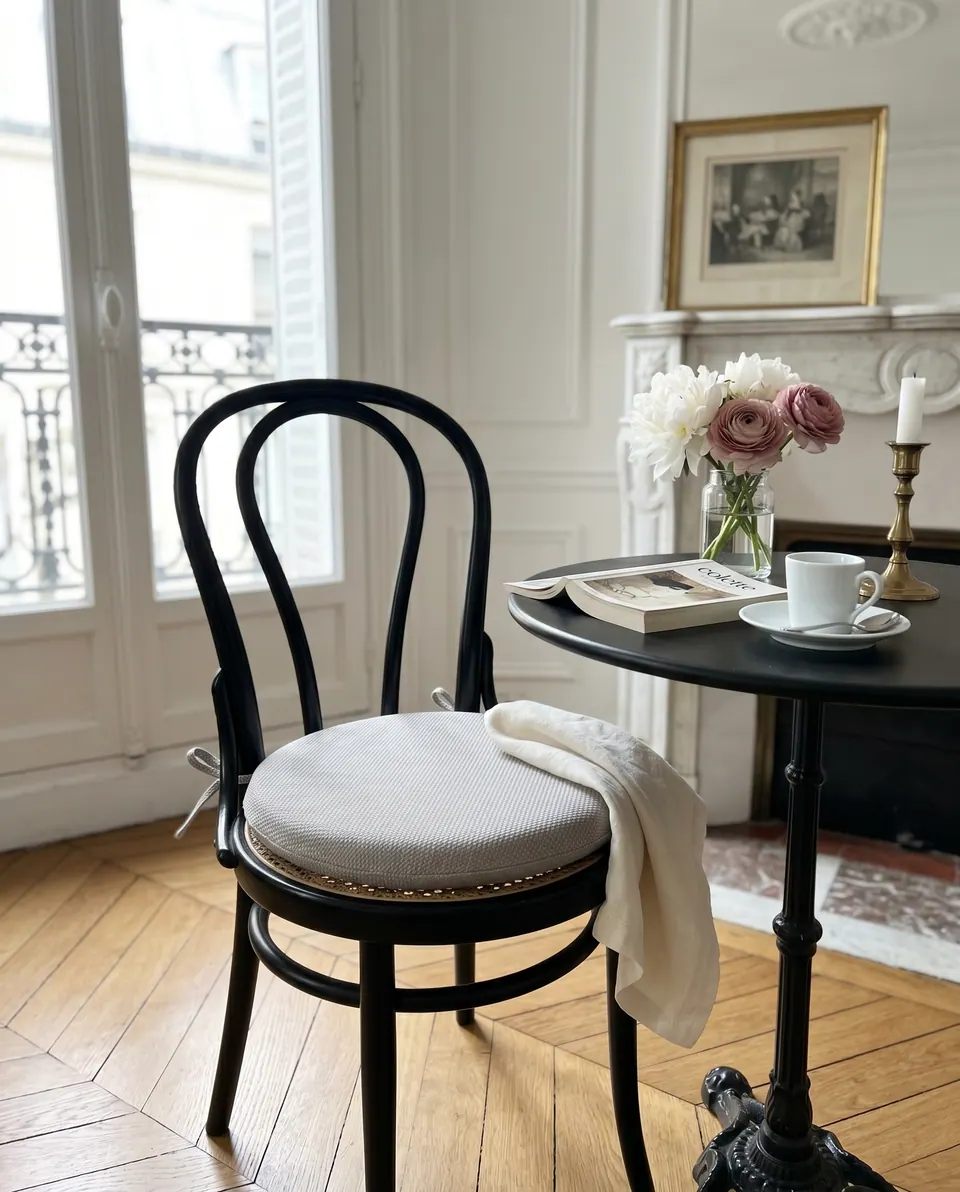
A round seat pad with ties softens a cane bentwood chair in a Parisian salon with herringbone parquet. Everything else, traced
Lay paper on the seat, trace the outline, and write the widest length and depth on it. Photograph it flat on the floor with a tape measure in the frame. The workshop redraws it as a clean diagram for you to confirm.
Pattern sheet Lay paper on the seat and trace the edge, write the widest width and the front-to-back depth on the template, then photograph it flat from directly above with a tape measure in the picture.

Have it made
Measured it? Have Hana’s workshop make it
A good size is a quiet thing. You notice it only when it is wrong. Let the workshop check yours first. — Hana
Leave your details and the workshop will call you to confirm measurements, fabric, foam and piping. No prices, dates or payment on this page: it is a request, not an order.
How a shaped order moves through the workshop
- Choose the size range by the longest length and the deepest depth. It sets the price bracket, nothing else.
- Upload a drawing with a measurement on every edge, plus a photo of the seat. A hand sketch on paper is fine.
- Write the thickness and fabric code in the personalization box.
- The workshop checks the geometry, works out missing sides and flags any edge that can't be right.
- You approve the redrawn diagram. Nothing is cut before that.
- Each distinct shape is its own order with its own drawing. Rectangles stay on the rectangle listing.
Four shapes
A buyer in the US wrote that the size options only asked for width and length. Their seat was a trapezoid. What do you pick? The longest length at the widest point and the deepest depth. Those two numbers set the price. The drawing sets the cut.
Another buyer in the US sent four numbers for a wide bay: 68.25 in at the back wall, 113.75 in along the front, 33.75 in on the left and 33 in on the right. The sides differed by 3/4 in. Real walls do that. The drawing kept both.
One buyer wanted a floor cushion to fit a hexagon inside a play structure. The workshop sent a reference drawing, and the buyer marked two measurements on it.
And one window seat ran 87 in along the window edge and 84.5 in along the opposite edge, with 1.25 x 2 in notches at both ends. The workshop redrew it as a template and waited for a yes before cutting.
Where shape orders go wrong
- A slanted side measured shorter than the straight depth. That is geometrically impossible.
- Short straight returns left off the sketch.
- Steps that don't add up. The steps plus the short edge must equal the long edge.
- No units on the drawing. One quote was first worked out in centimeters from inch measurements.
- Old walls assumed square. In older houses, add both diagonals as a check.
- An angled shape ordered on the rectangle listing. It is cancelled and refunded so you can reorder on the custom-shape listing.
Every cushion shape is a list of edges. Write a number on each one, and nothing is left to guess.
Hana
Before you draw a trapezoid, notched or L-shaped cushion
Start with the custom shape drawing guide: letters, orientation, the wall edge. For shapes with posts and casings, the notch guide shows the three numbers per notch. Finished examples live in the trapezoid and L-shaped hubs.
A rectangle forgives. A trapezoid remembers every edge. Draw it once, carefully, and it fits.
Buyer questions: shapes that aren't rectangles
- A common question
My cushion isn't a rectangle. How do I order it?
The workshop's answerUse the custom-shape listing, not the rectangle one. Pick the size range by the longest length and the deepest depth; that only sets the price bracket. At checkout, upload a drawing with a measurement on every edge and a photo of the seat, and put thickness and fabric code in the personalization box. The cushion is cut to the drawing. If you're unsure, message the drawing first and the makers will tell you which options to select.
- A common question
How do I measure a bench with one rounded end?
The workshop's answerThe workshop won't read a curve from numbers alone. Either sketch it with the total width and depth, the straight length before the curve starts, and where the curve starts and ends, or lay paper on the seat, trace the curve, cut it out and photograph it flat beside a tape measure. The template method is best for tricky curves. Each cushion needs its own drawing.
- A common question
Should my L-shaped bench cushion be one piece or two?
The workshop's answerTwo or more pieces meeting flush at the corner is recommended. They fit more cleanly, ship more safely and are easier to unzip and wash. A common layout is a square corner cushion with a long cushion on each arm. A small L can be one piece from a confirmed lettered template, but it costs more and leaves less room for error.
- A common question
My bay window seat has angled ends. Which listing do I use?
The workshop's answerThe trapezoid or custom-shape listing. Select the size by the depth and the overall length, then upload a drawing showing every edge, any cut-ins and the depth, plus a photo of the seat. A hand sketch on paper is enough, and asymmetric bays can be traced on paper instead. If an angled shape is ordered on the rectangle listing, it is cancelled and refunded so you can reorder.
- A common question
What do you need for an L-shaped bench with back cushions?
The workshop's answerThe end-to-end length of each leg, the seat depth and thickness, a sketch or photo, and whether you want backrests. Outside and inside L measurements also work; the workshop plans the split and confirms it. Backrests can run along one side only. Standard thickness is 4 in and can be changed.
Shapes, briefly
What is the difference between a trapezoid and a parallelogram cushion?
A trapezoid has one pair of parallel edges, front and back, with both ends angled, usually toward each other. A parallelogram has two pairs of parallel edges, so both ends slant the same way. Both are ordered with a drawing that has a measurement on every edge.
Is a shaped cushion more expensive than a rectangle?
Yes, because angles and curves take longer to cut and sew. On the custom-shape listing a simple notch adds nothing by itself, cut-outs around obstacles cost a little more, and there is no charge for the template or the drawing review.
Can I mail the workshop a paper template?
No. Physical templates aren't accepted by post. Photograph the paper template flat on the floor with a tape measure in the frame, or send a drawing with every edge measured. The workshop redraws either one and asks you to approve it before cutting.
Do curved cushion shapes take longer to make?
Yes. Curved and complex shapes go to the most experienced craftsman and take longer to make, before delivery. Ask for the time in writing. Shapes with strong or many curves may be declined after the drawing and photos are reviewed.