The Pattern Room · a pattern with a calculator
Measuring a hexagon cushion, or an octagon, without a protractor
A regular hexagon needs one number. Everything else follows from it, quietly. The real work is checking that your space is regular before you trust that number.
The sumhexagon: flats = side × 1.732 · corners = side × 2
 Save
The quick answer
A regular hexagon cushion is set by one side length: across the flats is side × 1.732 and across the corners is side × 2. A regular octagon runs side × 2.414 across the flats and side × 2.613 across the corners. Measure every side and two flat-to-flat widths first; if they disagree, it is not regular, so letter and measure every edge.
One side decides the whole hexagon
A regular hexagon cushion needs one number. Six equal sides, six equal corners of 120 degrees, and every width follows from the side.
Two widths matter when a cushion has to fit something. Across the flats runs from one side to the opposite side: side × 1.732. Across the corners runs from one point to the opposite point: exactly side × 2. The corners width is always the longer one, by about 15 percent.
An octagon works the same way with other constants. Across the flats is side × 2.414. Across the corners is side × 2.613, only about 8 percent more, which is why an octagon reads almost round from across a room.
No protractor is needed. A tape, a pencil and some patience with the checking.
The constants in one table
| Shape | Across the flats | Across the corners | Corner angle | Side from the flats |
|---|---|---|---|---|
| Regular hexagon | side × 1.732 | side × 2 | 120° | flats × 0.577 |
| Regular octagon | side × 2.414 | side × 2.613 | 135° | flats × 0.414 |
| Square, for comparison | side × 1 | side × 1.414 | 90° | flats × 1 |
A hexagon has three flat-to-flat widths and three corner-to-corner widths. An octagon has four of each. On a regular shape, all widths of one kind are equal.
Worked on paper
Rounded to the nearest 1/8 in, centimeters in parentheses.
Hexagon floor cushion, 18 in sides
- Side18 in (45.7 cm)
- Across the flats: 18 × 1.73231 1/8 in (79.2 cm)
- Across the corners: 18 × 236 in (91.4 cm)
Floor space, point to point36 in (91.4 cm)
The play-frame hexagon, worked backward
- Across the flats48 in (121.9 cm)
- Side: 48 × 0.57727 3/4 in (70.4 cm)
- Across the corners: side × 255 3/8 in (140.8 cm)
In feetabout 4 × 4.6 ft
Octagon, 10 in sides
- Side10 in (25.4 cm)
- Across the flats: 10 × 2.41424 1/8 in (61.3 cm)
- Across the corners: 10 × 2.61326 1/8 in (66.4 cm)
A 60-degree bay seat, 40 in back, 20 in deep
- Sideways run per side: 20 × 0.57711 1/2 in (29.3 cm)
- Each slant: 20 × 1.15523 1/8 in (58.7 cm)
- Front: 40 + 2 × 11.5563 1/8 in (160.3 cm)
A 45-degree bay works the same way with other numbers: each slant is depth × 1.414, and each side runs sideways by the full depth.
Checking that your space is regular
Measure inside the frame
For a play structure, a platform with a lip or a niche, tape the inside faces. The cushion lives inside. The outside of the frame belongs to someone else's drawing.
Measure every side
Draw the shape from above and letter the sides A to F, clockwise. Tape each one corner to corner. If they agree within about 1/4 in (6 mm), treat them as equal. One side an inch off means the shape is not regular.
Measure two of the flat-to-flat widths
Side to opposite side, straight through the middle. On a regular hexagon all three are equal. Two are enough to catch a squashed one.
Measure one corner-to-corner width
Point to opposite point. It should be about 1.155 times the flats on a hexagon, 1.082 times on an octagon. With flats of 48 in, expect corners close to 55 3/8 in.
Decide: regular, or every edge
If the sides and widths agree, one side length and the word "regular" describe the whole cushion. If not, letter and measure every edge and add two diagonals. Either way, the workshop draws it to scale and sends it back before anything is cut.

Have it made
Measured it? Have Hana’s workshop make it
Leave your numbers and the height you like to sit at. The rest is a short conversation. — Hana
Leave your details and the workshop will call you to confirm measurements, fabric, foam and piping. No prices, dates or payment on this page: it is a request, not an order.
Four feet by four point six
A buyer in the US wanted a hexagon cushion to sit inside a play structure roughly 55 in (140 cm) across. The request arrived as two rough numbers: about 4 by 4.6 feet.
The workshop confirmed the shape and sent back a reference drawing with two measurements to mark on it. Nothing else.
Two were enough because they were the right two. A hexagon 4 ft (122 cm) across the flats is about 4.6 ft (141 cm) across the corners, with sides of about 27 3/4 in (70.4 cm). The buyer's rough sizes already described a regular hexagon.
The lesson the workshop kept: for a polygon, measure point to point and flat to flat, inside the frame.
Half a hexagon is a trapezoid
Cut a regular hexagon from one point to the opposite point and each half is a trapezoid. The long edge is twice the side. The short edge and both slants equal the side. The depth is side × 0.866, and the corners on the long edge are 60 degrees.
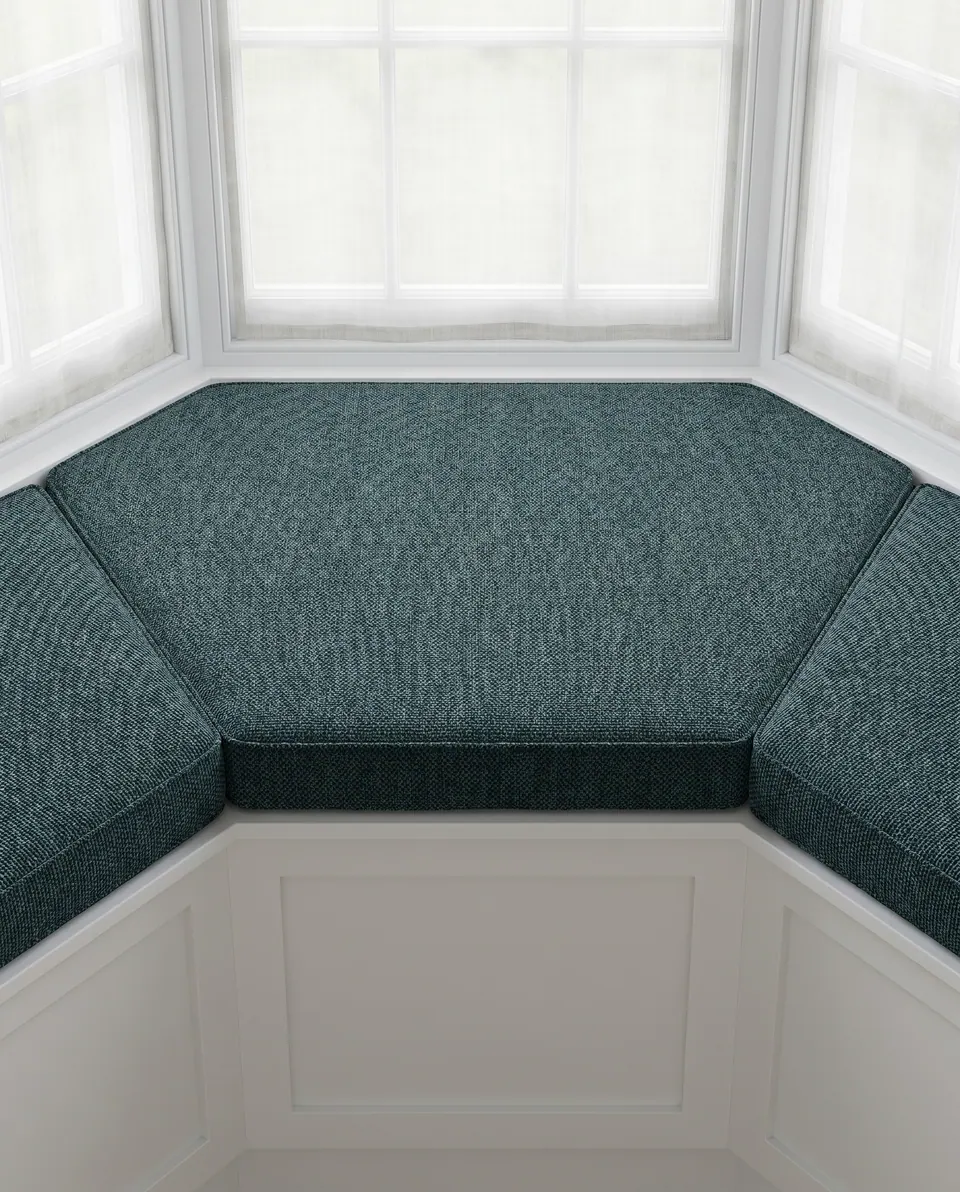
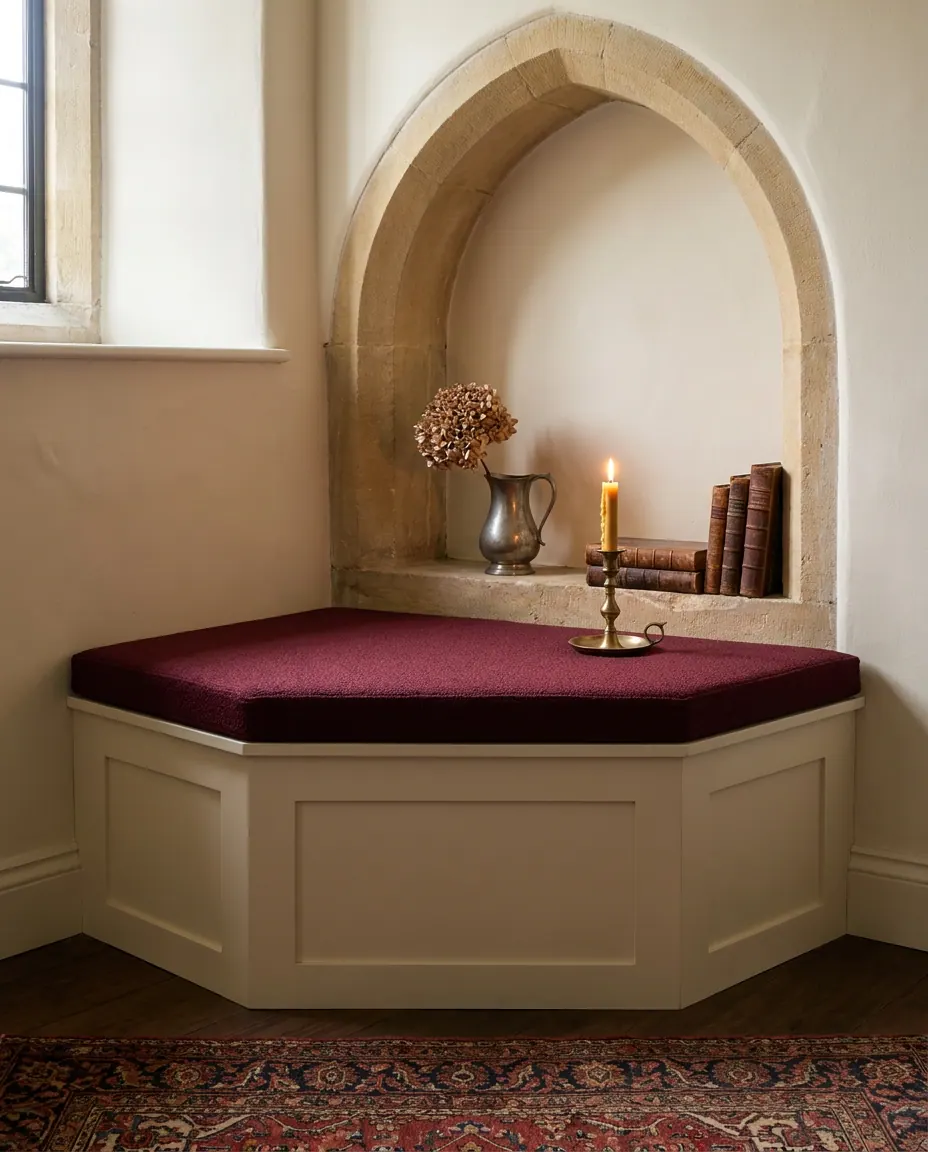
Many three-sided bays belong to this family, though few are exact halves. In a bay, the long edge faces the room. In a niche, like the stone arch below, the long edge can sit at the back. Mark which edge is the wall.
Half an octagon, cut across its flats, is different. Its slants run at 45 degrees, and each end has a short straight return half a side long. Six edges, not four.
Both are ordered as custom shapes, every edge measured and lettered. The bay window cushions page collects the variations. Five-panel bays have their own Pattern, and so do seven-sided rounded bays.
 Save
The trapezoid that had six edges
A buyer in the US asked whether corduroy would suit a trapezoid bay seat. Measuring again, they noticed two short extra edges at the ends. It was a hexagon, not a trapezoid.
The workshop turned the sketch into a template: front 78 in (198 cm), back 46 1/2 in (118 cm), angled sides 23 in (58.4 cm), straight ends 5 in (12.7 cm), depth about 22 in (56 cm). It asked them to choose the size ranges that fit 78 in and 22 in, and to write the full shape into the personalization box. Navy corduroy.
The numbers close. Take the 5 in ends off the depth and each slant rises 17 in while moving 15 3/4 in sideways, which gives about 23 1/8 in. The slants run near 47 degrees, close to the octagon's 45, though the proportions are not a regular half-octagon.
Short returns are easy to miss. They are also what makes the shape.
The Studio
Half-hexagon and half-octagon bays in the Studio
The Studio has no hexagon sizer; the table above does that job on paper. For bays, the calculators already do the work.
- Enter each wall section and its corner angle: 120 degrees for the half-hexagon family, 135 for the half-octagon
- Or give front, back and depth to the trapezoid cushion calculator and read both slants
- Every piece comes back in inches and centimeters
The tool runs in your browser. The worked examples below do the same sums on paper.
On the floor: one piece or sections
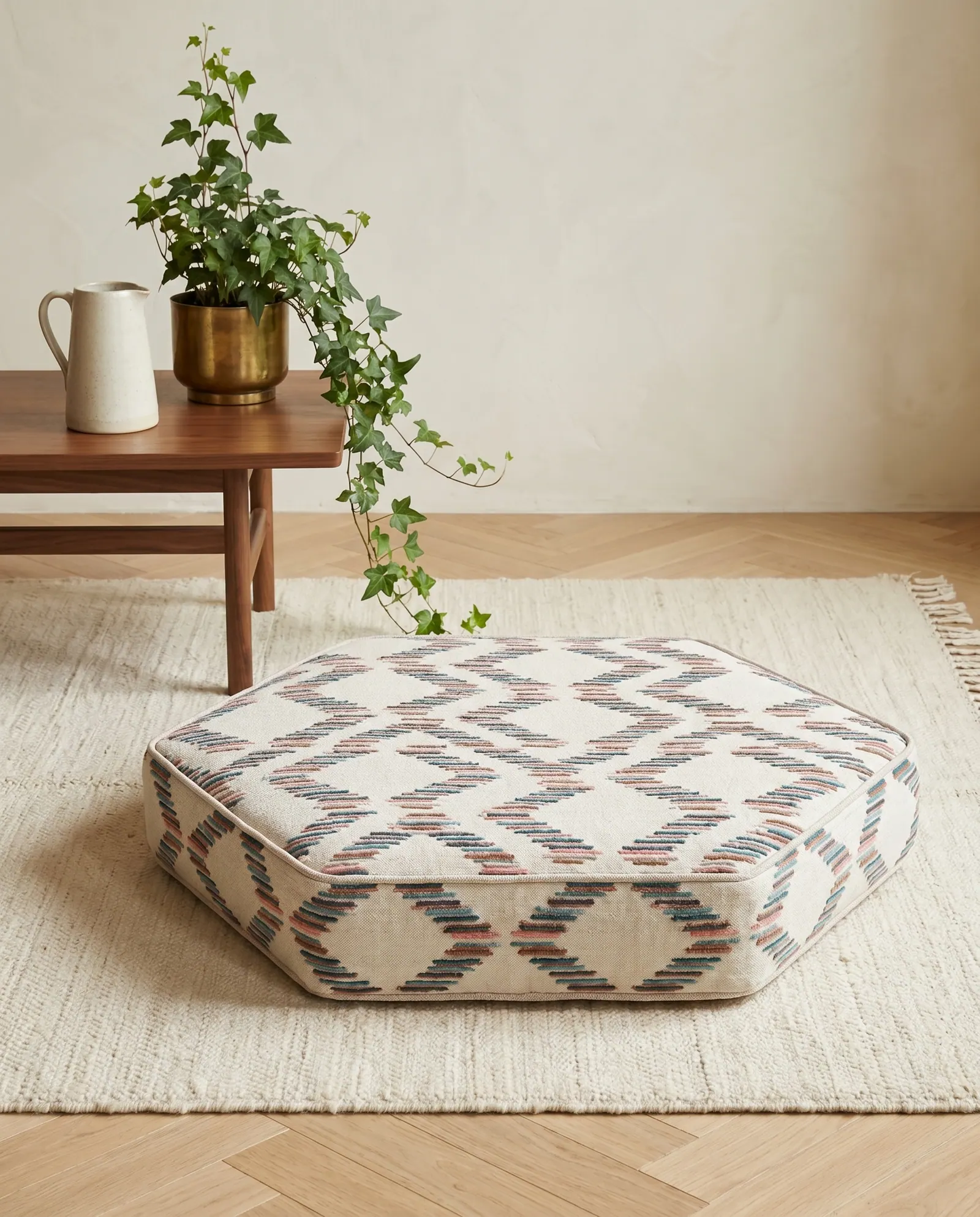
On the floor, a hexagon is friendly. No corner catches a shin, and it looks right from every side, which is why the cream jacquard cushion at the top of this page sits so easily in the middle of a room.
Size is where it gets harder. Most fabric comes on a roll about 55 in (140 cm) wide, which caps how large a top panel can be without a seam. A hexagon 48 in (122 cm) across the flats is near that limit. Ask the workshop where a seam would fall before you settle on one piece.
Sections are the other road. Two half-hexagons, or wedges meeting in the middle, lift, wash and pass through a doorway more easily. Whether your frame suits a split, and how the pieces would meet, is a question to ask the workshop with your drawing in hand.
Children measure comfort with their whole body. In a play frame, a cushion that reaches every inside wall leaves no gap for a foot to find. For thickness, the floor cushion thickness Pattern sets out the range, and the floor cushions and round and geometric cushions pages show the shapes around it.
A hexagon pattern is not a hexagon cushion
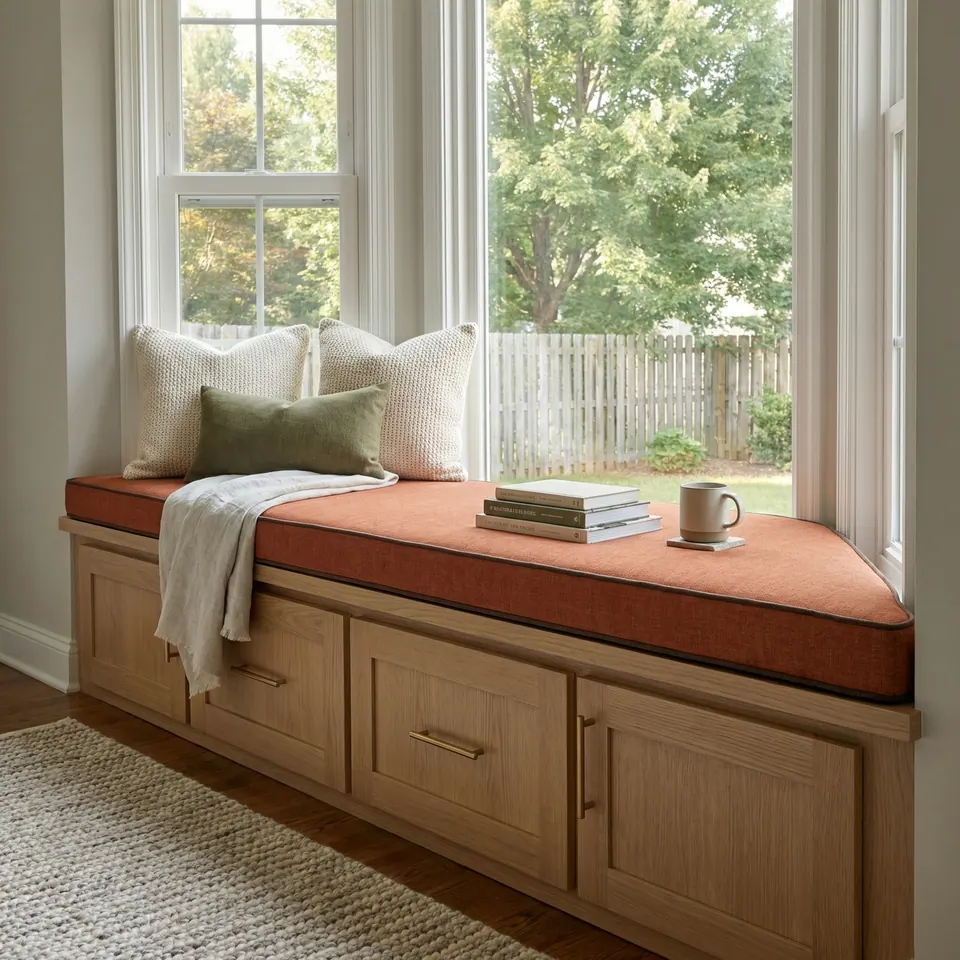
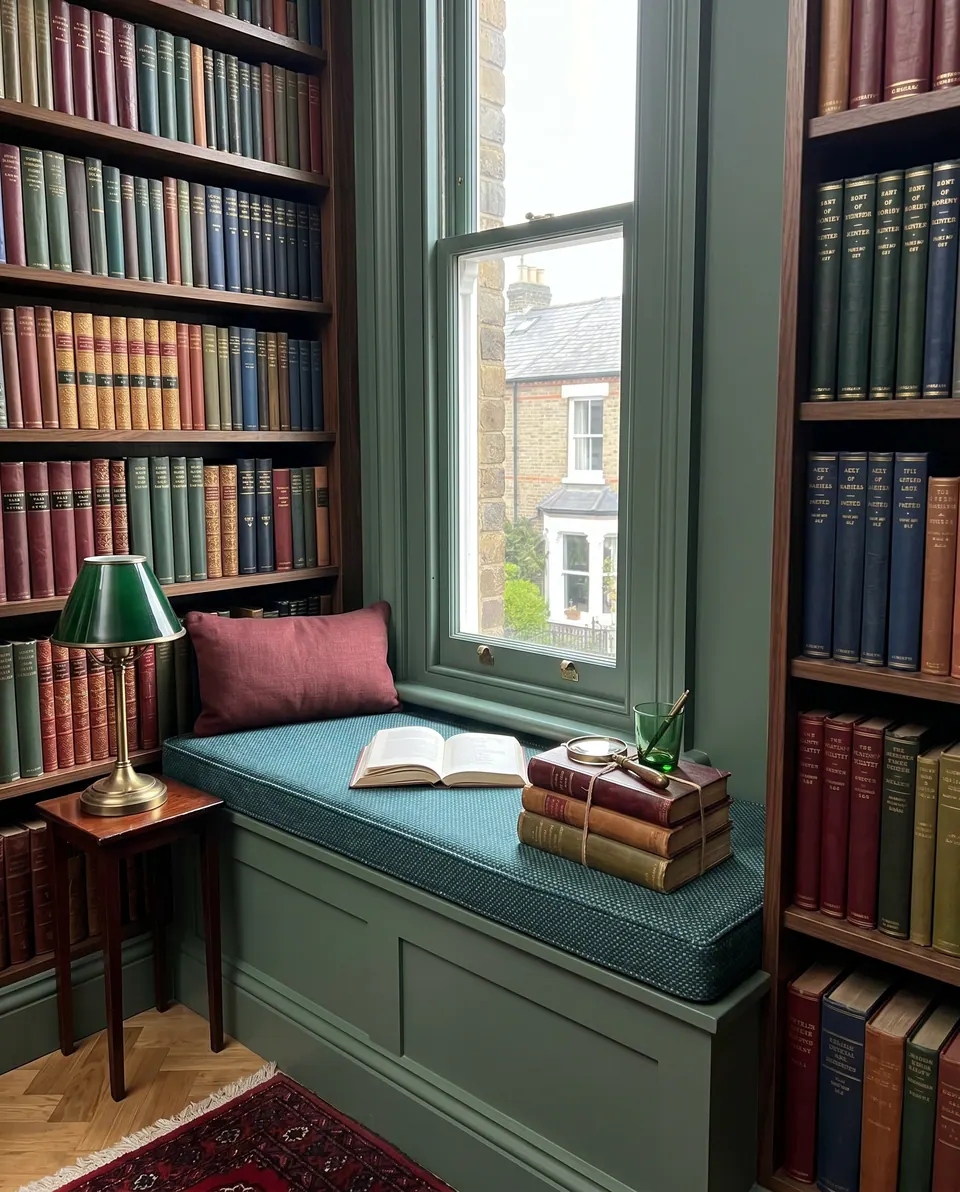
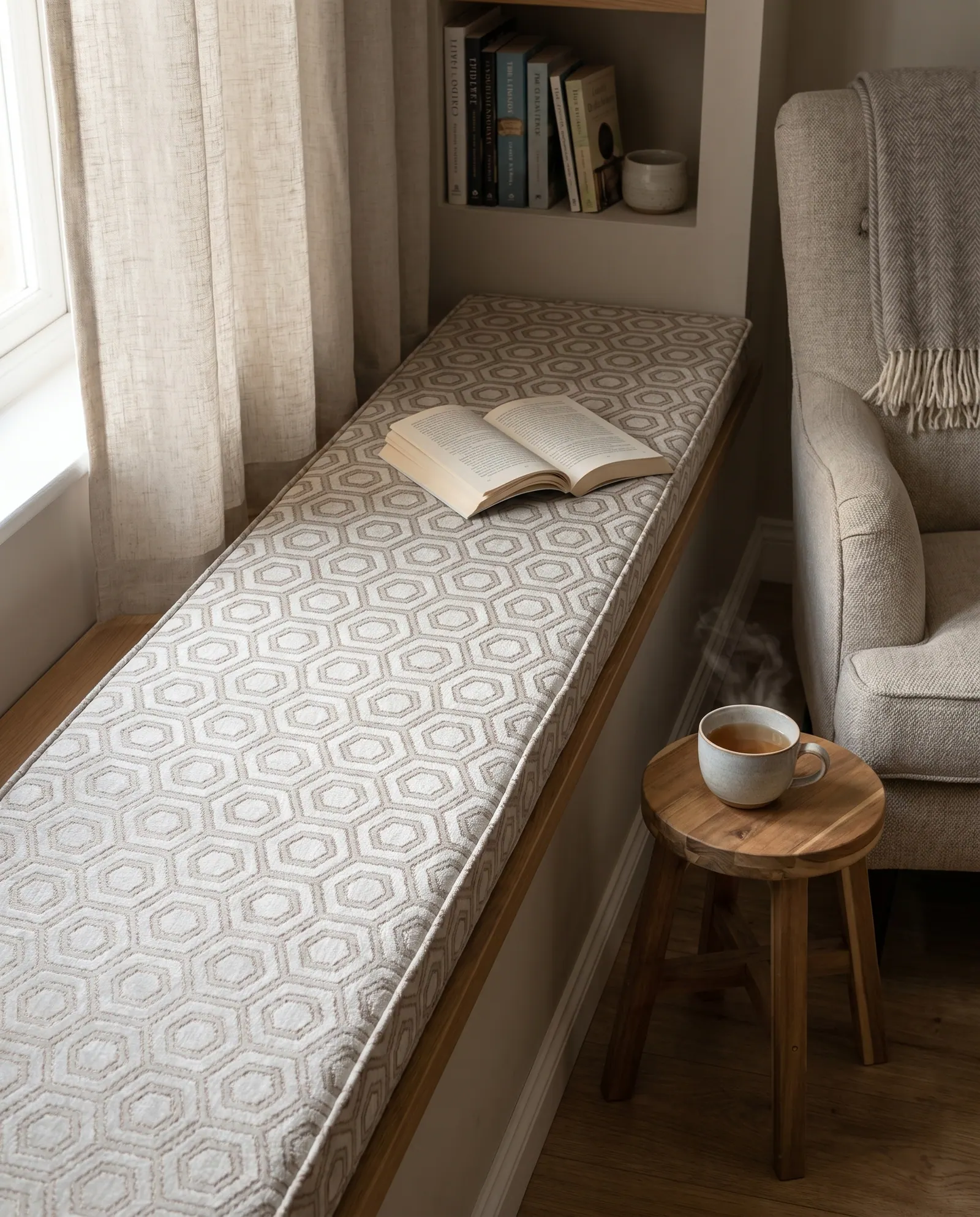
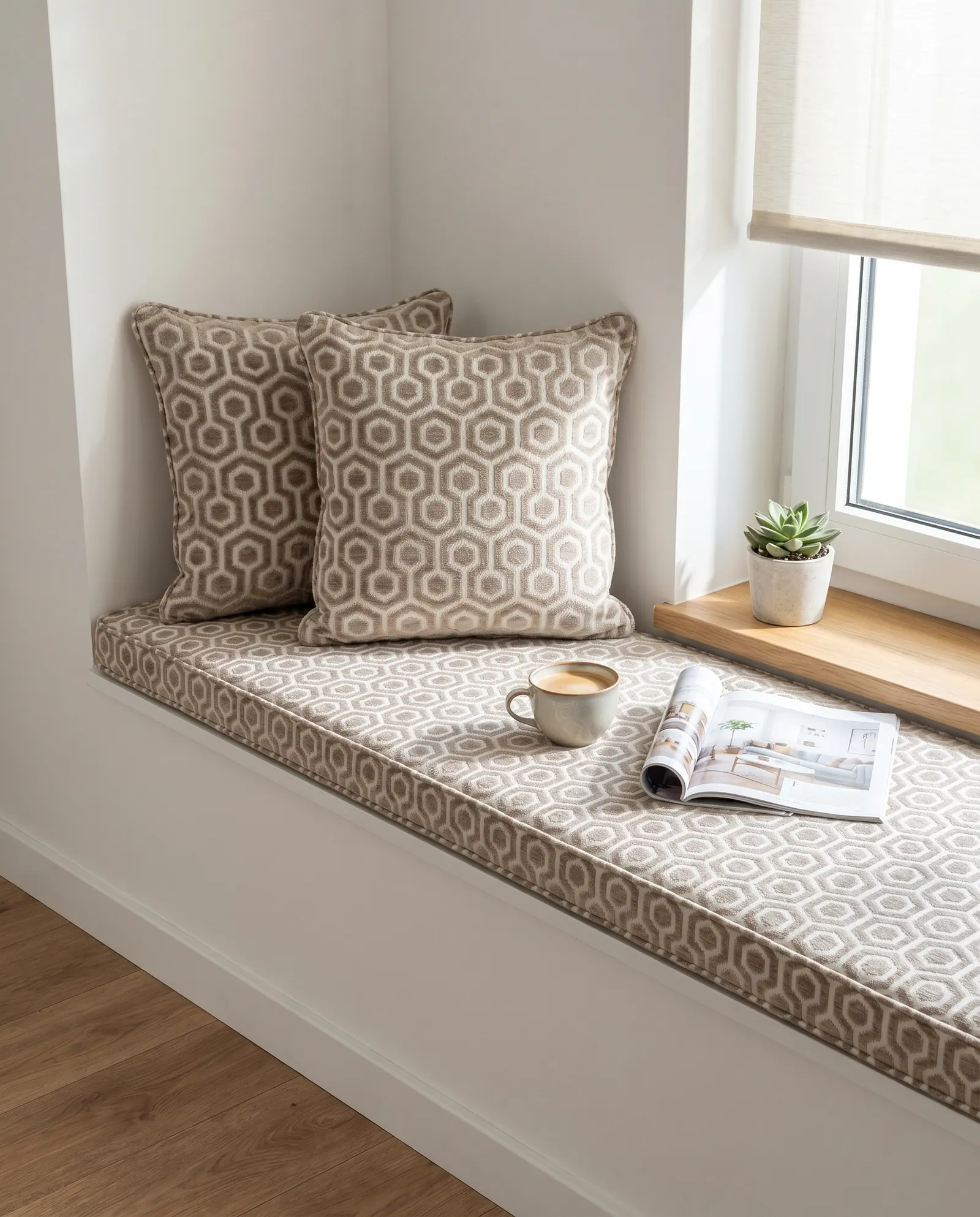
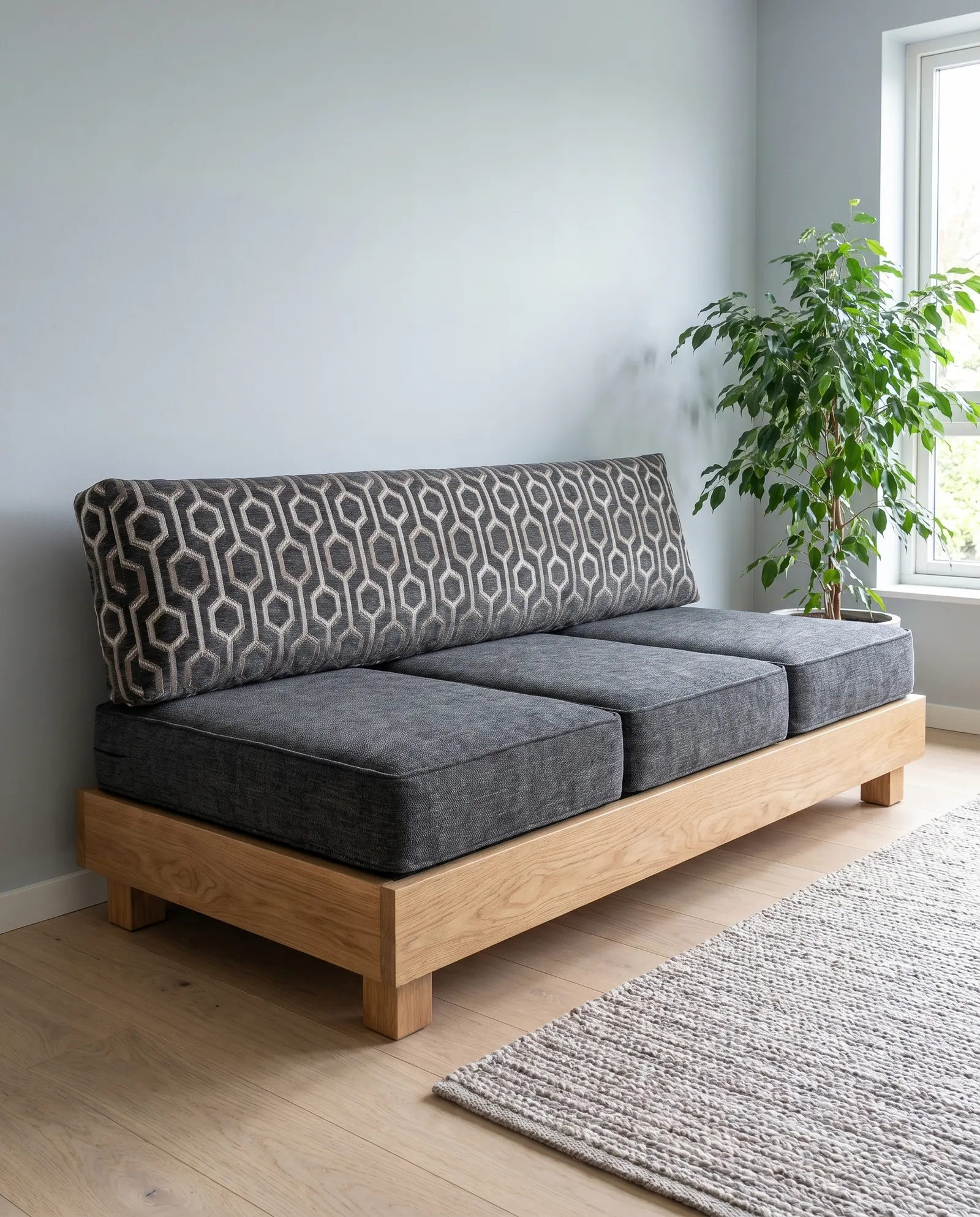
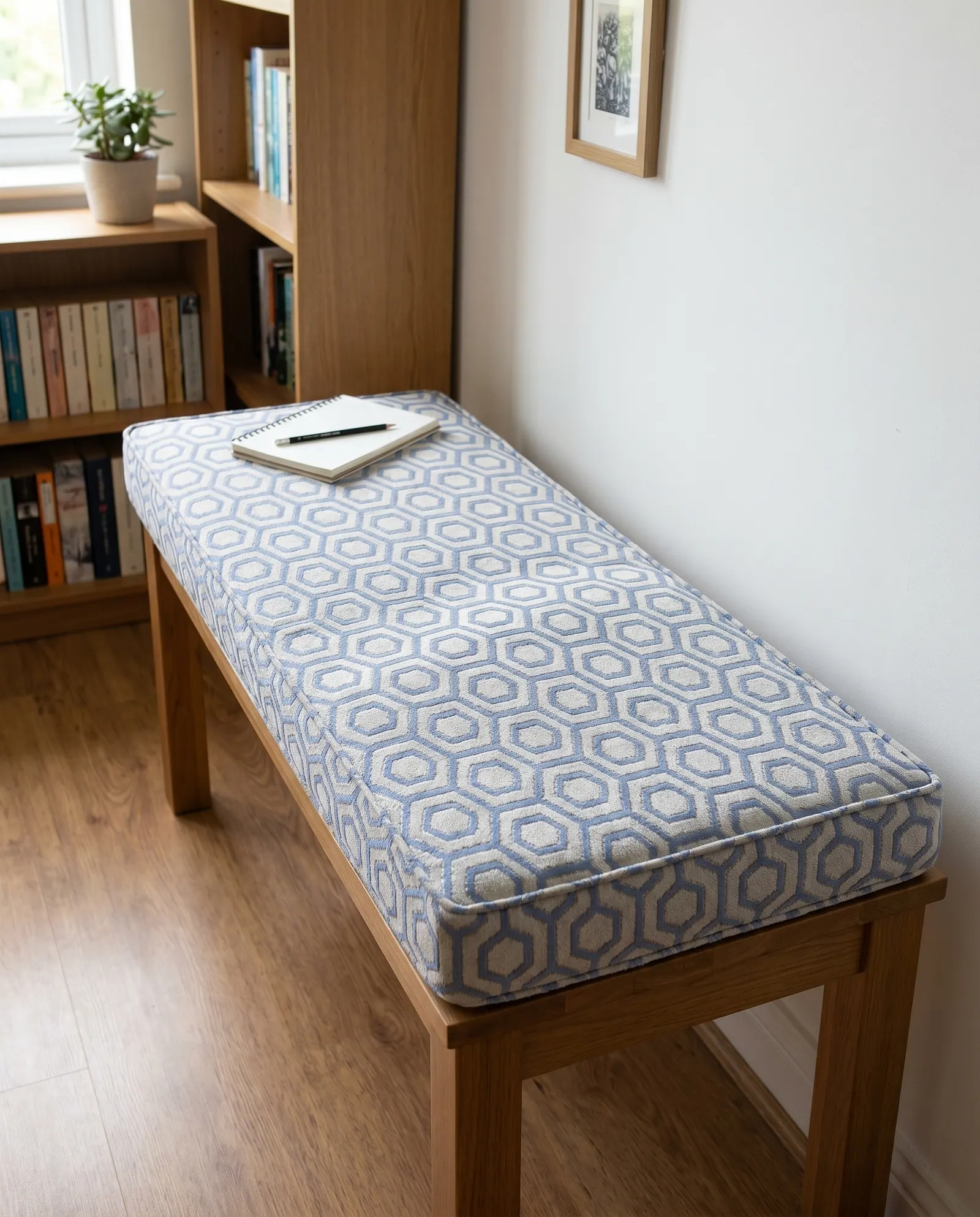
Search for a hexagon cushion and half of what comes back is a honeycomb pattern on an ordinary rectangle. Four of the photographs below are exactly that: a hexagon jacquard on a window ledge, in a window recess, on a platform backrest and on a study bench.
Those cushions are rectangles. Measure them as rectangles, length, depth and thickness, and choose the weave in the jacquard and damask Swatch Library. A small, tight repeat suits a narrow cushion. A large motif gets cut off at the edges.
Which one did you come here for, the shape or the pattern?
Honeycomb weaves on rectangular cushions
 Save
 Save
 Save
 Save
Where hexagon measurements go wrong
- The outside of a frame measured for a cushion that sits inside it.
- One side measured and the other five assumed.
- Flats and corners swapped. Corners are always the longer width.
- A six-edged bay called a trapezoid, with the short ends left off.
- An angled shape ordered on the rectangle listing, where no drawing is asked for.
- A honeycomb fabric mistaken for a hexagon shape.
Before you measure
Six sides, measured.
Two widths, checked.
One drawing, approved before anything is cut.
A regular hexagon cushion is one number: across the flats is the side times 1.732, across the corners the side times two.
Hana Lindqvist
Buyer questions: polygons, bays and two measurements
- A common question
Could you make a hexagon-shaped cushion to fit inside a play structure?
The workshop's answerYes. Send the shape and measurements before ordering, with a few photos of the room taken from a distance and a sketch if you have one, so everything is agreed first. For a hexagon inside a play structure, the workshop sends a reference drawing on which you mark two key measurements. It tells you up front whether an extra customization fee applies, which depends on size; large custom shapes are priced for their size and cut.
- A common question
Our bay has five windows, each at a slightly different angle. Can it still be one cushion?
The workshop's answerYes. Multi-angle bays, including pentagon- and hexagon-shaped seats, are made regularly. Send a rough sketch with the length of every side or segment, the angles if you know them, and the depth at each breaking point. The workshop turns it into a template for you to check. Then choose the length and width ranges that fit and write the full shape in the personalization box: front, back, angled sides, end sides and depth. One 5-window bay was 16 in deep and 115 7/8 in long, made at the standard 4 in (10 cm).
- A common question
On an angled window seat, which number is the depth?
The workshop's answerThe straight distance from the front edge to the back edge, measured at 90 degrees at the deepest point, never along the angle. It is the most important number on a trapezoid template. The workshop checks that the rest agrees: a 40 in front, 30 in back and 17 in depth give angled sides of about 17 1/2 in, not 22 in. Sketch the shape with each measurement on its edge, and upload the drawing and a photo with the order.
- A common question
Do I have to make a full-size paper template of the niche?
The workshop's answerNo. A hand drawing with every edge measured is enough, and photos plus measurements work for angled shapes. If you do make a full-size template, photograph it with the measurements marked rather than mailing it. The workshop checks that the numbers reconcile, for example a 106 in front, 56 in back and two 35 in slants give a depth of about 24 1/2 in, then redraws its own diagram for you to confirm.
- A common question
Can an angled bay seat go on the regular rectangle listing?
The workshop's answerNo. Angled, three-sided and multi-point bay seats go on the custom-shape listing. Select the size by the depth and the overall length, then upload a drawing with every edge, any cut-ins and the depth, plus a photo of the seat; a hand sketch on paper is fine. If an angled shape is ordered on the rectangle listing, the workshop cancels and refunds it so you can reorder on the right one.
Hexagon and octagon questions
Is an octagon cushion measured the same way as a hexagon?
Yes, with other constants: across the flats is side × 2.414 and across the corners is side × 2.613. Measure all eight sides and at least two flat-to-flat widths to confirm it is regular, then order it as a custom shape with the drawing.
My hexagon niche isn't regular. What do I send?
A drawing from above with every edge lettered A to F and measured, plus at least two diagonals. The workshop draws irregular shapes to scale, flags any edge that can't be right and sends a lettered diagram for your approval before cutting.
A frame is 55 in across its inside corners. What hexagon fits?
Divide by 1.155: a regular hexagon about 47 5/8 in (121 cm) across the flats, with sides of 27 1/2 in (69.9 cm). Check that the frame really is regular first, by measuring its sides and two flat-to-flat widths.
Can a custom floor shape come with back pillows?
Yes. Matching back pillows can be added to a custom-shaped floor cushion, and one end can be widened for an open-corner layout. Floor-cushion backrests aren't freestanding; they lean against a wall.