The Pattern Room · a measuring pattern
Floor cushion thickness: how thick before you stop feeling the floor
The folks who got it right tell me they can't feel the floor. The folks who didn't tell me they thought four inches meant more. Both are talking about the same number.
 Save
The quick answer
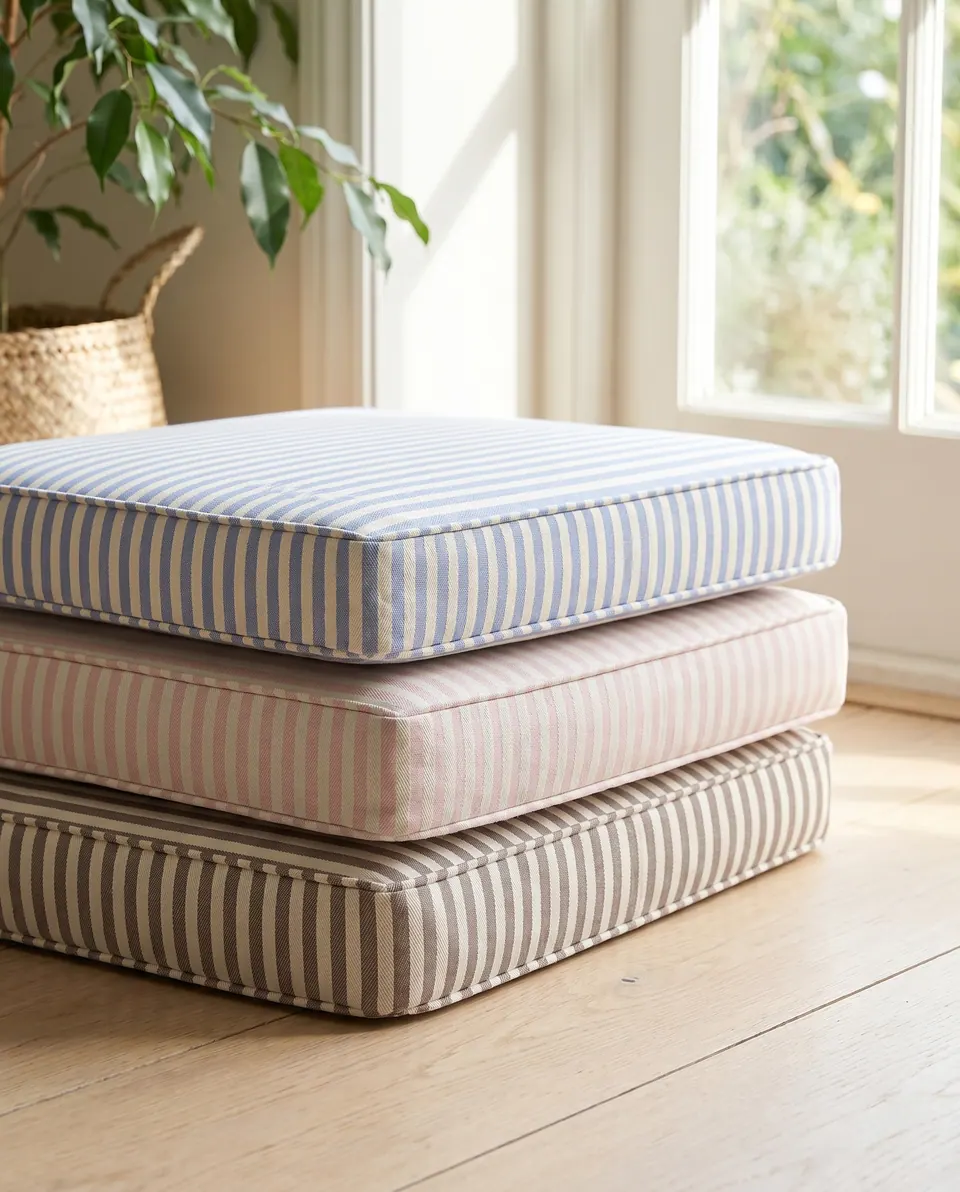
For most floor seating, choose 4 to 6 in: a tufted floor cushion is about 4 in (10 cm) as standard and a floor-seating seat about 6 in (15 cm). Go to 8 in (20 cm) or more to sit higher, lounge or sleep; 10 and 12 in are made to order and cost more. Two stacked layers often reach the same height for less.
Four inches is the standard, and it surprises people
Four inches. That is the standard floor cushion thickness for a tufted French-style seat, and it surprises more buyers than any other number the workshop sends.
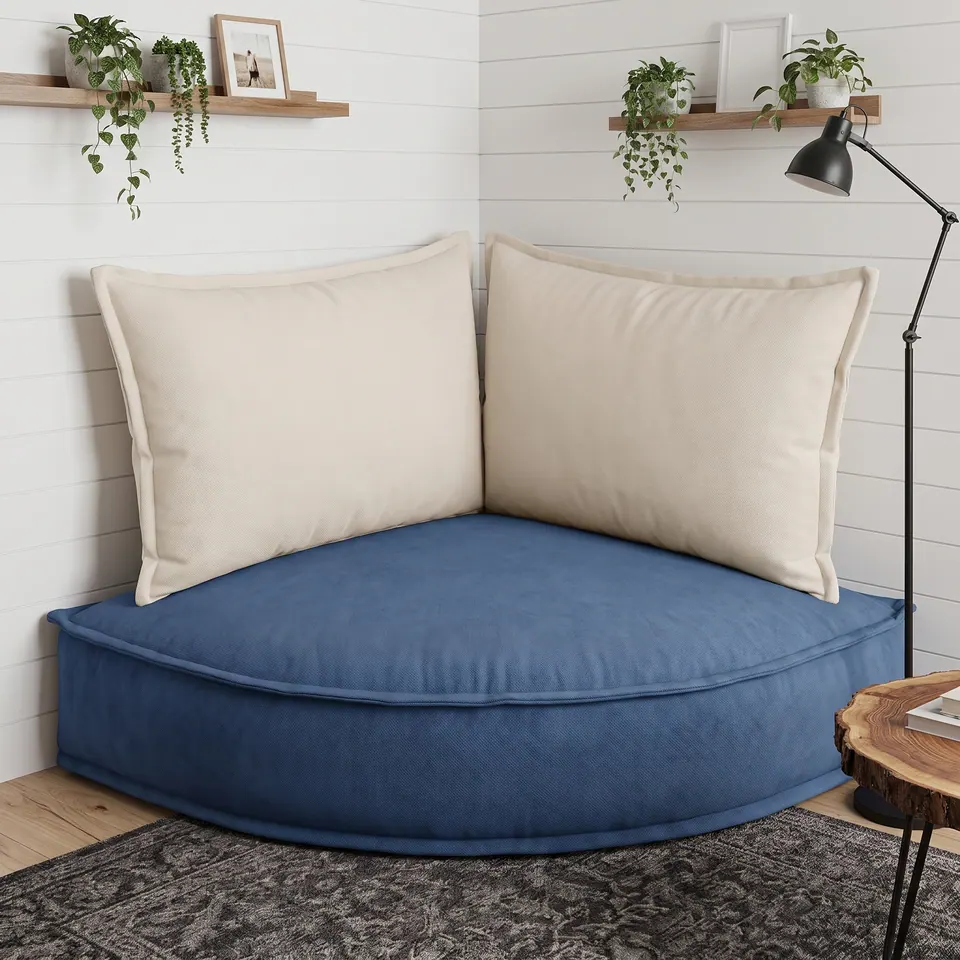
Some tufted sets run 4 to 5 in (10 to 12 cm). The velvet floor-seating seat runs about 6 in (15 cm). The plush corner floor cushion runs 8 in (20 cm), and the deep-base floor couch 12 in (30 cm).
The best thing a buyer ever says about a floor cushion is plain: thick enough that you don't feel the floor. That is the target. How many inches it takes depends on what lies under the cushion, who sits on it and for how long.
Old upholsterers had a saying for choices like this one. Buy the cushion once, cry once. Pick the thickness now, not after the first long movie night on a hard floor.
Thickness by use, from 3 in to 12 in
| Thickness | Where the workshop makes it | Good for |
|---|---|---|
| 3 in (7 to 8 cm) | Shown on one set; made on request | Legs under a low coffee table |
| 4 in (10 cm) | Standard tufted French-style seat and its backrest | Everyday sitting on a rug; a floor couch against a wall |
| 4 to 5 in (10 to 12 cm) | Some tufted sets by default | The same, with a little more under the hip |
| 6 in (15 cm) | Velvet floor-seating seat; a common buyer request | Longer sitting over hard floors; sleepovers |
| 8 in (20 cm) | Plush corner cushion; kids' corner cushion; any tufted cushion on request | Sitting higher, lounging, a guest bed |
| 10 in (25 cm) | Quoted for a 48 x 48 in corner cushion | A deep corner lounge |
| 12 in (30 cm) | The deep-base floor-couch model | A floor couch that sits like a low sofa |
From 2 to 5 in, thickness does not change the price. Past the standard range, thicker cushions are quoted by size.
Choosing floor cushion thickness in seven steps
Name the job
A cup of coffee, a long film, a sleepover or a toddler's play corner. Each wants a different depth of fill, so write the use in the order note. The workshop may ask what the extra inches are for, and that question is a good sign.
Look at what's underneath
A thick rug does part of the work; bare boards and tile do none. Over a hard floor, lean toward 6 in, and put a rug or grip mat under the cushion so it stays put.
Mind the table
If legs go under a low table, keep the seat at 3 to 4 in. A thinner cushion also costs less.
Match depth to thickness
Thickness lifts you; depth holds you. Standard floor cushions run 24 or 27 in deep, and adults who sit cross-legged want at least 28 in. A lounging cushion can be generous both ways, such as 4 ft x 27 in x 8 in.
Choose the fill for the height
Tight-packed fiber suits a tufted seat of 4 to 8 in. For tall stacks, square edges and seats that must not shift, choose foam.
Think about two layers
Two 6 in cushions stacked sit as high as one 12 in cushion and often cost less. Tufted cushions can also be ordered as a stacked double layer.
Write the numbers in the note
The size menu sets the price. For an 8 in (20 cm) tufted cushion, choose a larger size option to cover the extra thickness and write your exact size, such as 42.5 x 42.5 x 8 in (108 x 108 x 20 cm). Corners can't be cut off this standard shape.

Have it made
Measured it? Have Harlan’s workshop make it
Old upholsterers will tell you the real cutting happens in the conversation, long before the shears come out. Tell the workshop what you sit on, and they will talk it through with you. — Harlan
Leave your details and the workshop will call you to confirm measurements, fabric, foam and piping. No prices, dates or payment on this page: it is a request, not an order.
Fabric · Foam · Pipingwhat the workshop will confirm with you
Key facts
- The standard tufted French-style floor cushion is about 4 in (10 cm) thick; some sets are 4 to 5 in (10 to 12 cm).
- The velvet floor-seating seat is about 6 in, the plush corner cushion 8 in (20 cm) and the deep-base floor couch 12 in (30 cm).
- Floor cushions are made 5, 6, 8, 10 or 12 in thick on request; beyond the standard range, thicker costs more.
- Standard floor cushions are 24 or 27 in deep; adults who sit cross-legged want at least 28 in.
- Stacked seats need foam cores; fiber-filled cushions round off and slide on each other.
Fiber or foam: which one keeps its inches
Thickness is only worth paying for if it stays.
A tufted floor cushion has no foam core. It is packed with cluster fiber, polyester hollow fiber rolled into small balls, and overfilled on purpose so it doesn't press flat. The buttons pin that fill in place. A cushion filled this densely takes years to flatten, and the workshop rates the feel about 6 to 7 out of 10: firm to sit on, soft to the hand.
Foam is a different animal. It keeps a square edge and a flat top, and that is why it stacks. The floor-sofa mattresses use a medium-hard, high-density cold foam, most often quoted as T28, that softens slightly with use. The kids' play couch uses the same T28 and can be upgraded to 32 density. The foam density and firmness guide has the numbers behind those names.
A buyer in the US once wanted a low bench under a nursery window built from stacked cushions, and asked how tall each one was so she'd know how many to stack. The workshop offered foam, for a firmer shape that stacks. Fiber-filled cushions round off and slide on one another.
You can marry the two. One kids' seat about 18 in (45 cm) tall was built from a 12 in (30 cm) foam base with a 6 in (15 cm) tufted cushion on top. The base holds the height; the tufted top gives the soft first touch.
When the cushion doubles as a bed
A floor cushion this firm gets slept on, and plenty become sleepover beds for children.
For a child under a loft bed, 24 x 70 in or 27 x 70 in is typical, and 70 to 75 in lengths are made routinely. A twin runs about 38 x 75 in, and a 30 x 73 in French set has been suggested for someone about 5 ft 9 in. At 6 or 8 in thick, a sleeper lies higher off the floor. A floor mattress made to order can run 4 to 6 in thick in twin or full.
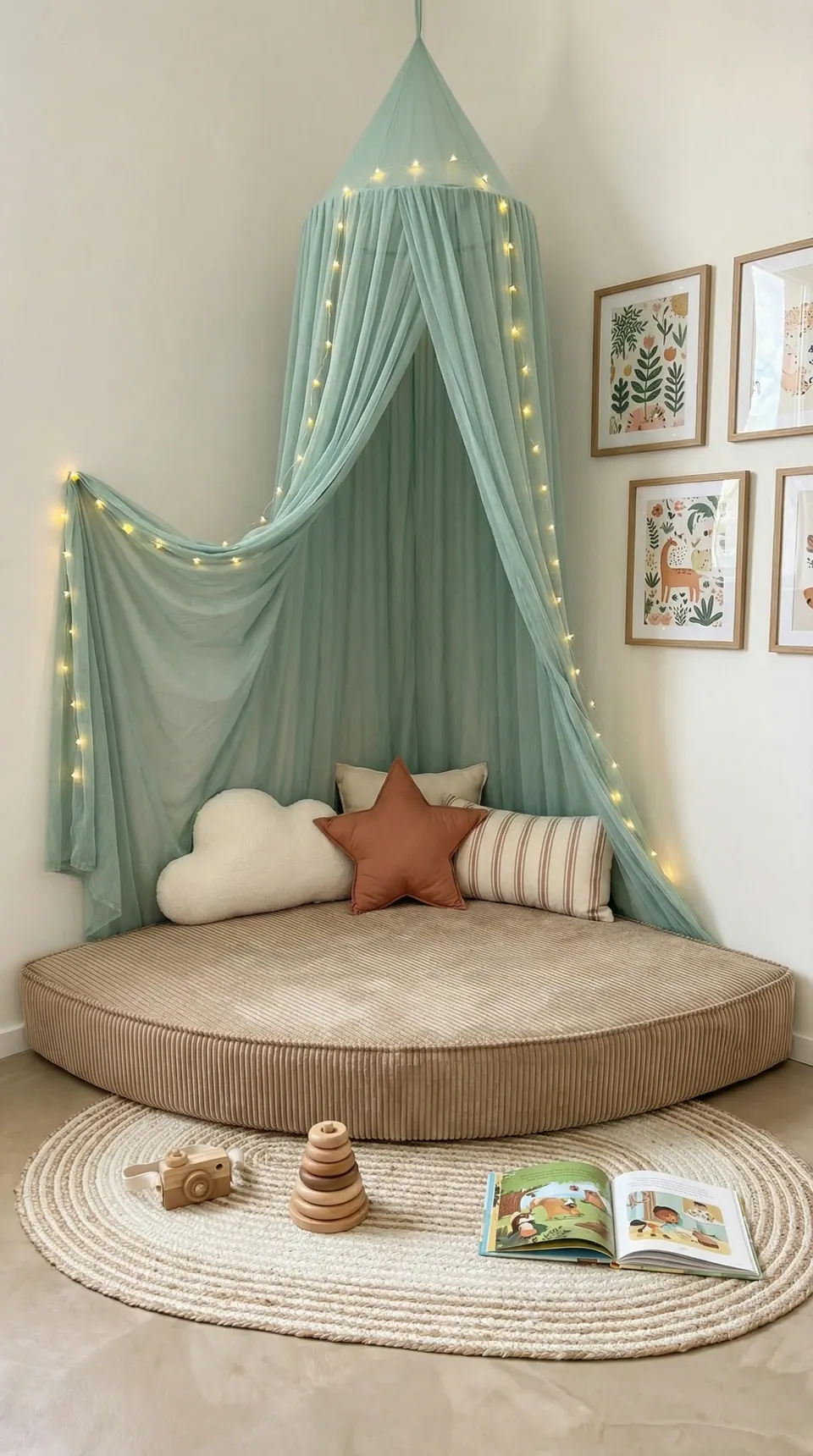
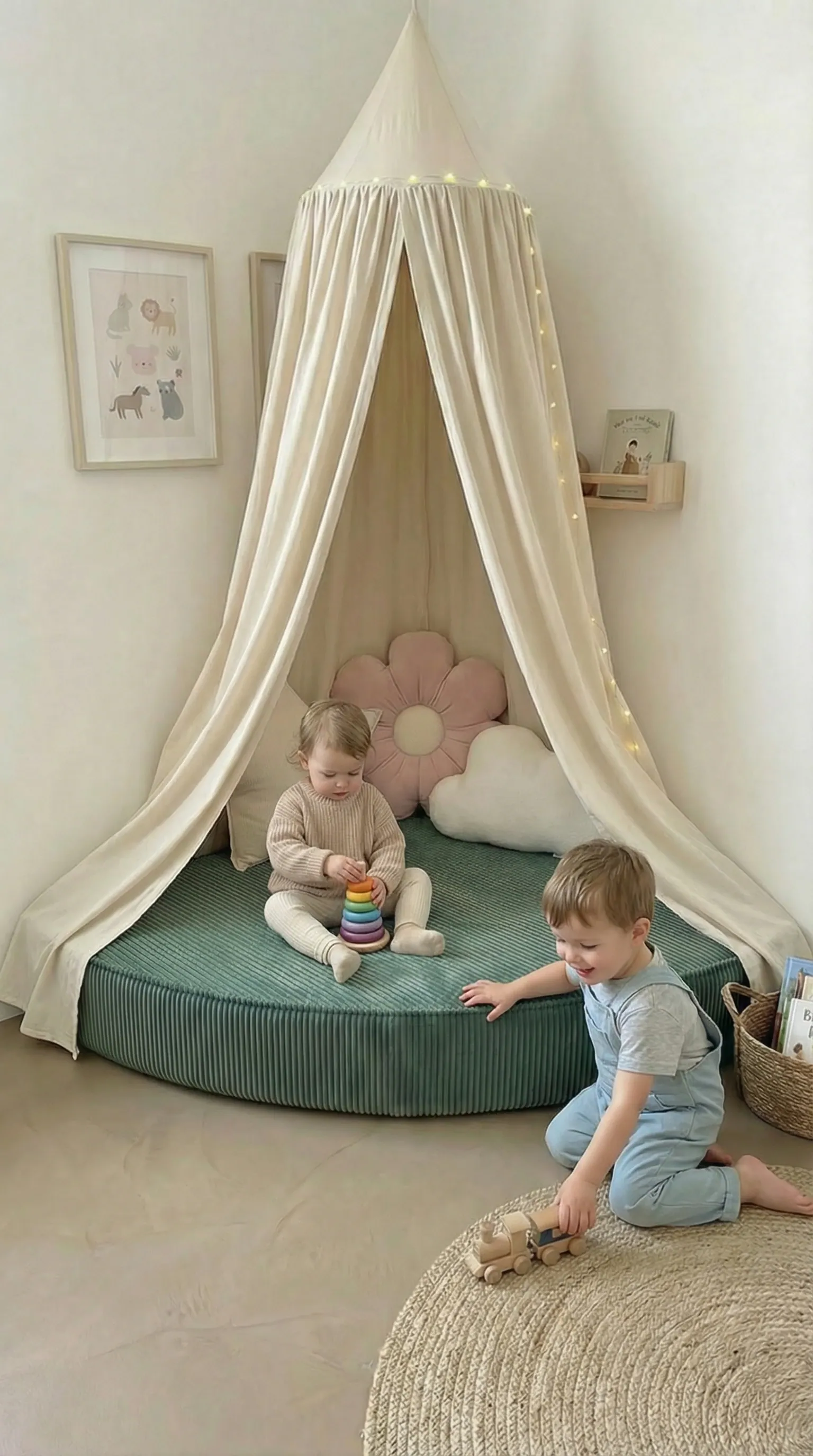
In a play corner the same thinking holds. The kids' corner floor cushion is foam, 8 in (20 cm) thick, with a removable cover, in squares of about 31, 39 and 47 in (80, 100 and 120 cm); the 39 in is the best seller. Sizing the quarter circle itself is covered in corner floor cushion sizes.
What will yours sit on: a rug, bare wood or tile?
Two linen cushions and a number said out loud
A buyer in the US needed two linen floor cushions, 48 x 36 in (122 x 91 cm) each, by a set date.
Before anything else, the workshop put the thickness in writing: 4 in. Many buyers picture a floor cushion much thicker than that, and a number said early saves a disappointment later.
It also sent a larger photograph of linen color 14 so the shade could be judged properly, and promised the date if the order went in right away.
That is the whole lesson, and it took one sentence. State the thickness at the start of the conversation, because it is the number people assume.
Common mistakes with floor cushion thickness
- Assuming 'floor cushion' means thick. The standard tufted seat is 4 in; write the number you want.
- Ordering one 12 in cushion where two 6 in layers would do the job for less.
- Stacking fiber-filled cushions. They round off and slide; stacked seats need foam cores.
- Choosing a thick seat beside a low table, then finding no room for legs.
- Picking a tufted cushion for a toddler's corner and expecting to wash the cover. Tufted covers don't come off; choose foam with a zippered cover.
- Choosing fabric for looks alone. For kids and pets, a tight, washable weave in a mid-tone hides the most.
- Taking 'linen' on trust. Ask for the fiber content of your color code in writing, and see a swatch first.
Floor cushion thickness is a number you choose, not one you assume: 4 in is the standard tufted seat, and 8 in is made on request.
Harlan Pruitt
Buyer questions: requests for 8, 10 and 12 in
- A common question
Can you make a floor cushion 8, 10 or even 12 in thick?
The workshop's answerYes. Tufted floor cushions and mattresses are made 5, 6, 8, 10 or 12 in thick, or 3¼, 5, 6, 7¾ and 11¾ in (8, 13, 15, 20 and 30 cm) in metric, to sit higher, sleep on or use as a floor couch; even the largest 48 x 48 in corner cushion has been quoted at 10 in. Thicker costs more, so ask for a quote with your size. The workshop may ask what the extra thickness is for.
- A common question
Would two stacked floor cushions work instead of one thick one?
The workshop's answerYes, and it is often cheaper. One buyer cut a large quote by about a third by ordering two 6 in seat cushions per seat to stack, with 4 in backrests. For a 20 in (50 cm) floor-sofa seat, the workshop proposed two cushions of about 71 x 27.5 x 10 in (180 x 70 x 25 cm) stacked. A foam base can also go under a tufted top.
- A common question
My tufted cushion needs to be 8 in thick. How do I order that?
The workshop's answerThe standard tufted floor cushion is 4 in (10 cm), and it can be made 8 in (20 cm). Order a larger size option to cover the extra thickness, for example the 48 x 48 in (122 x 122 cm) option, and write your exact dimensions, such as 42½ x 42½ x 7¾ in (108 x 108 x 20 cm). Tufting costs nothing extra, but the corners of this standard shape can't be cut off. A stacked double layer is also possible.
- A common question
How deep should I make a floor cushion?
The workshop's answerStandard floor cushions are usually 24 or 27 in deep. For adults who like to sit cross-legged, choose at least 28 in. Pick a size from the listing or give custom measurements, such as 4 ft x 27 in x 8 in.
- A common question
Can a floor mattress be made in my own size and thickness?
The workshop's answerYes. Floor cushions and floor mattresses are made to any length, width and thickness, firm fill included: for example about 75 x 31.5 x 8 in (190 x 80 x 20 cm), twin or full floor mattresses 4 to 6 in thick, or a 12 in floor couch lengthened to 50 x 35 x 12 in with the backrest along the long side. They come with or without backrest and armrests.
Thickness questions, answered at the bench
Is a 4 in floor cushion enough on a hardwood floor?
On a rug, 4 in of tightly packed fiber is the standard and holds up for years. On bare hardwood or tile, many buyers ask for 6 in, with a rug or grip mat underneath so the cushion doesn't slide. For long lounging or sleeping, look at 6 to 8 in.
Does a thicker floor cushion feel firmer?
Not by itself. Firmness comes from the fill, and tufted cushions are packed tight enough to rate about 6 to 7 out of 10 at the standard thickness. A thicker cushion lifts you higher. For more support at the same height, ask for extra filling instead.
Will a thick tufted floor cushion go flat over time?
Slowly. The fiber is packed densely and overfilled on purpose so it doesn't compress flat, and cushions filled this way take years to flatten. Foam floor-sofa layers soften slightly with use but keep their square edge.
What floor cushion thickness works beside a low coffee table?
Keep it at 3 to 4 in so legs fit under the table, and a thinner cushion lowers the price too. If you want more comfort there, add depth rather than height: 27 or 28 in deep gives room to shift and stretch.
Are children's corner floor cushions thicker than the adult tufted ones?
Yes. The kids' corner floor cushion is foam, 8 in (20 cm) thick, with a removable cover, in about 31, 39 and 47 in (80, 100 and 120 cm) sizes. The standard adult tufted floor cushion is 4 in (10 cm).