A Reading by NateL-Shaped Corner Bench Cushions
A cognac L-shaped bench cushion under macramé, and the corner people count twice
Nate answers three questions first, then reads a cognac corner and does the one subtraction most L-bench measurements skip.

 Save
The quick answer
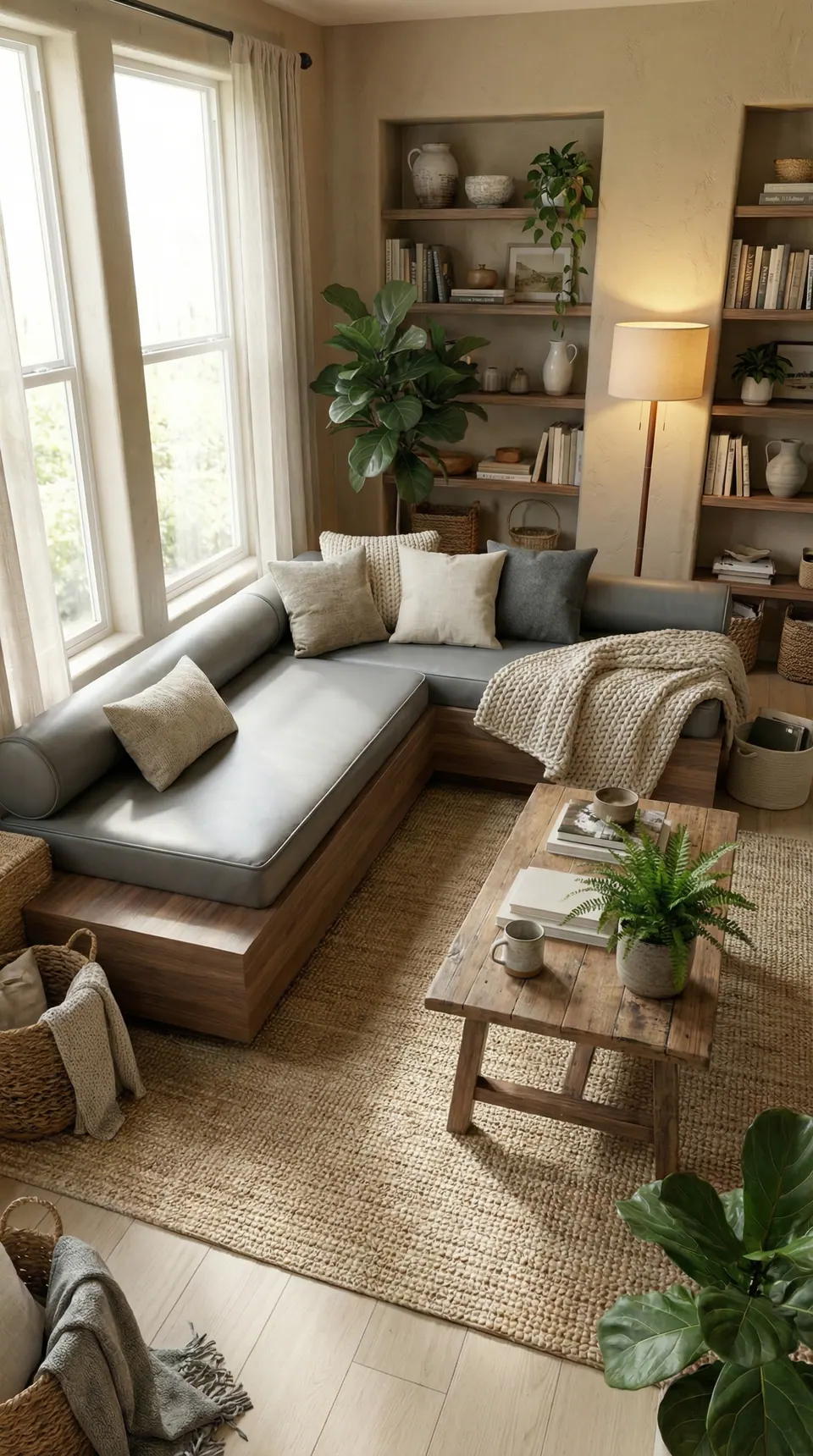
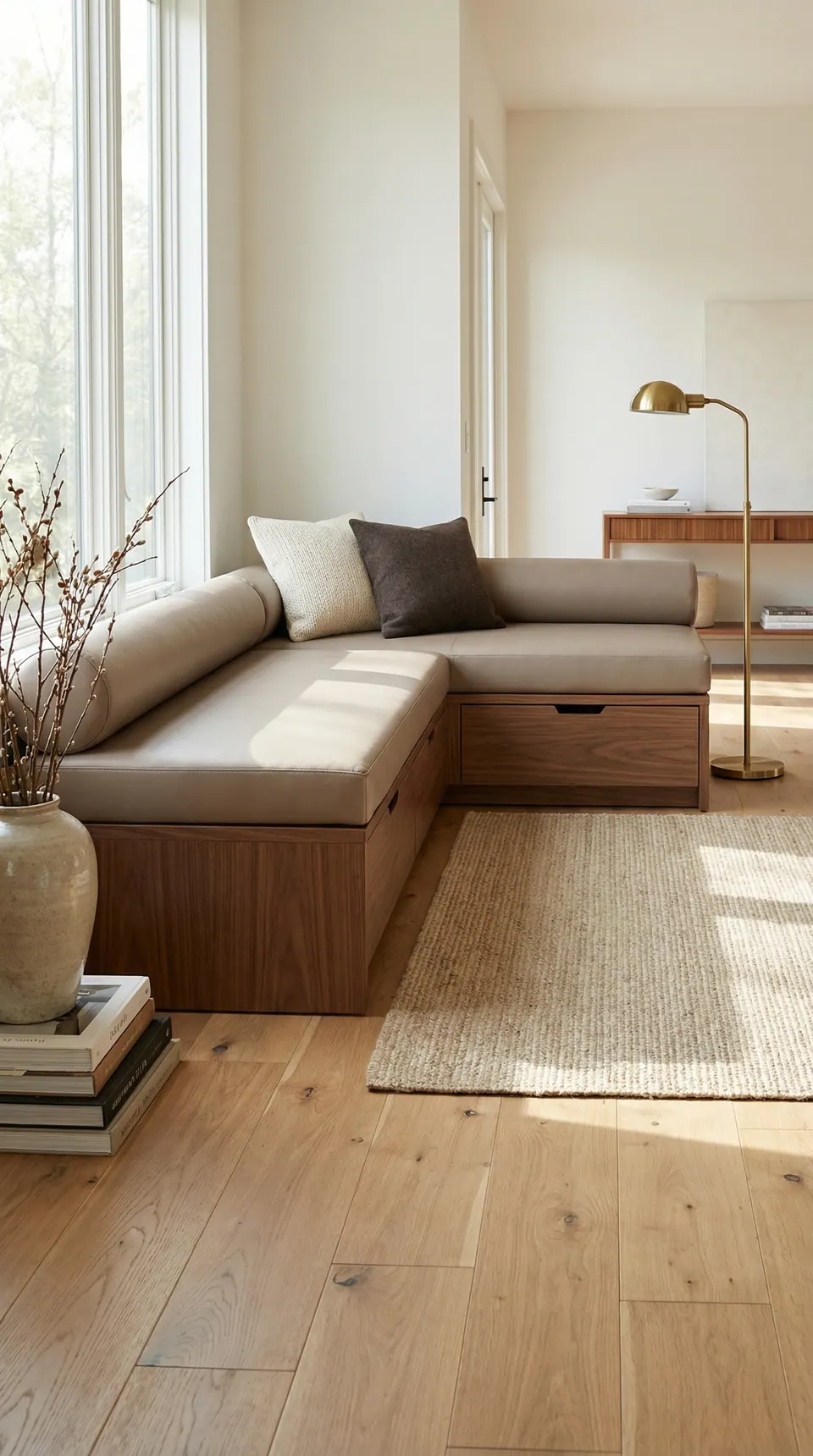
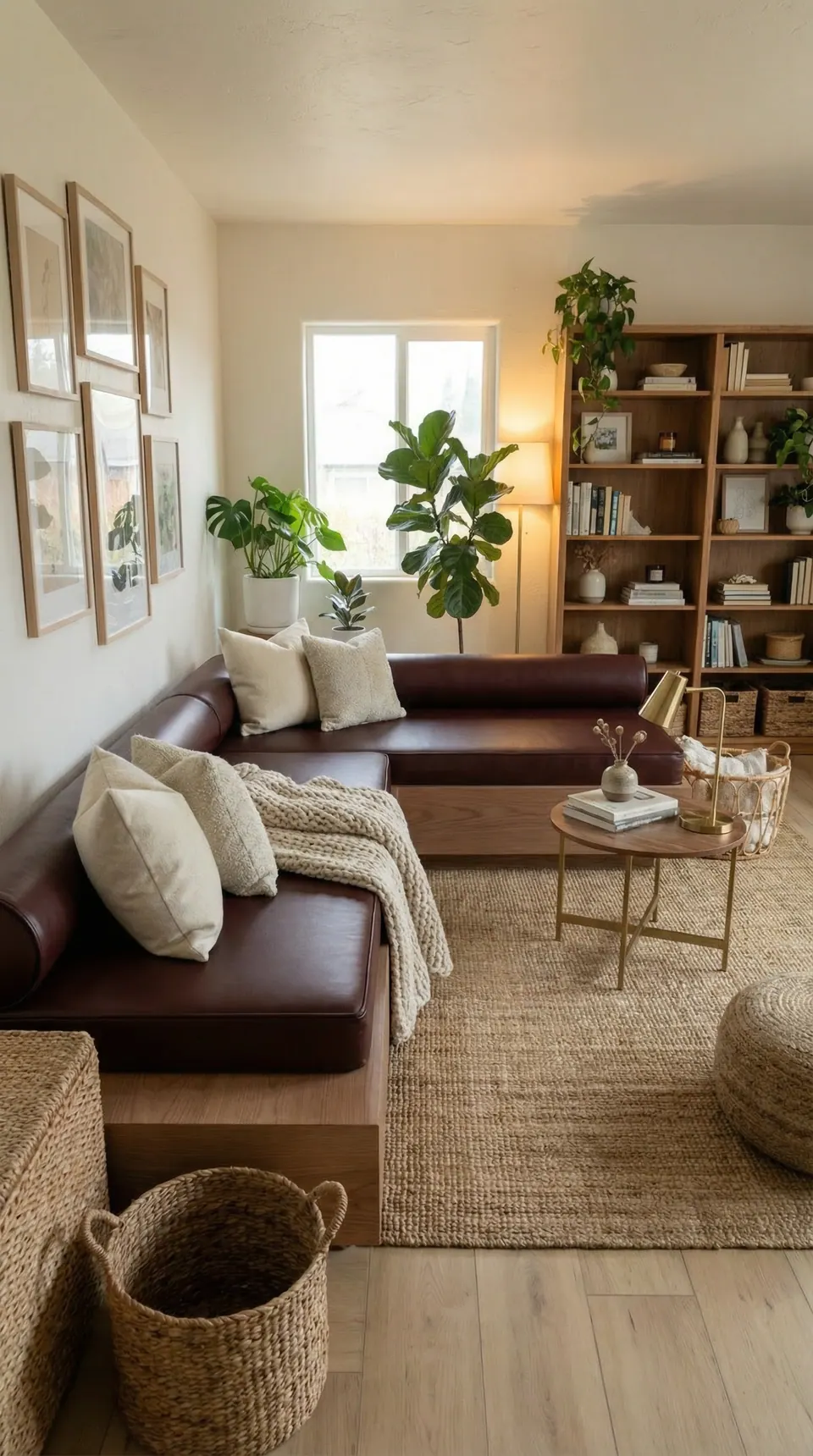
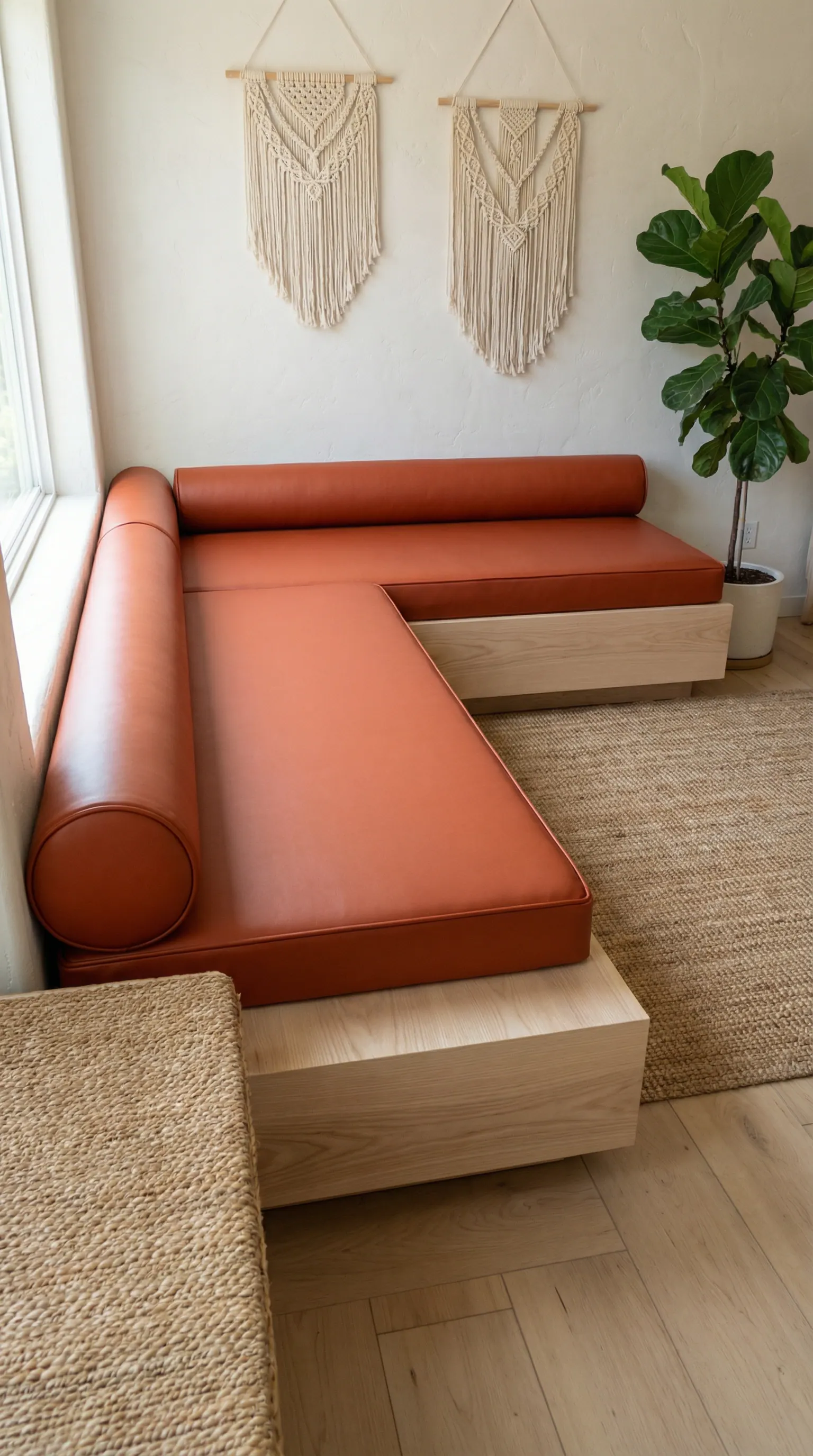
Measure an L-shaped bench cushion as two rectangles: the longer pad runs wall to wall into the corner, and the shorter pad equals its wall length minus the long pad's depth. Skip the subtraction and the corner square is counted twice. This cognac faux leather set does it on a pale ash plinth, with a round bolster on each leg.
Three questions before the tape comes out
- A common question
My bench size isn't in the drop-down. What do I pick?
The workshop's answerPick the closest option, usually the next size up, and write your exact measurements in the personalization box; the cushion is made to those. A 51 x 19 in bench went through the 20 x 52 in option, for example. Sometimes the workshop adds your exact size to the menu instead, as it did for 16 x 43 in.
- A common question
Is there a thickness most people go with, 3 or 4 inches?
The workshop's answerBoth are popular. 3 in gives a trimmer, neater profile; 4 in sits plusher and is the most common pick. The standard options of 2, 3, 4 and 5 in cost the same, the foam is a firm, durable 32-density that holds its shape, and 6 in can be made on request.
- A common question
How much would a custom bench cushion come to, shipping and all?
The workshop's answerPrice follows the size range you choose, and the listing shows it once you select one. For bigger or odd pieces, send measurements for a quote: past quotes have covered a 65 x 54 x 5 in seat with a matching 54 x 22 in back with ties, shipping included, and a 3 in trapezoid window seat.
Now, the reading
Pinned by Nate: the cognac corner
Five pins, from the bolster end cap to the macramé on the wall.
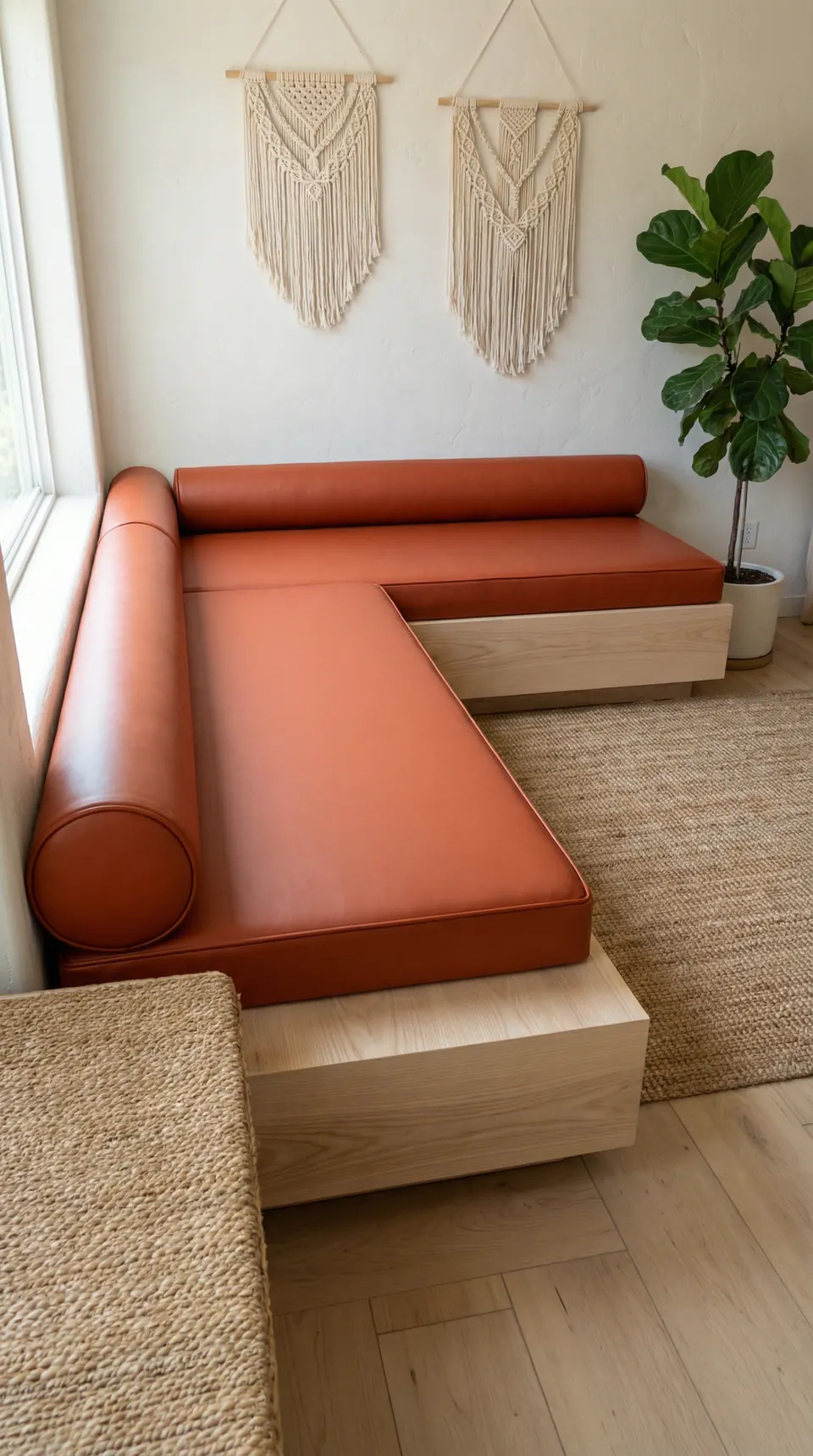
- Bolster end cap
The round end faces the room, so its piped seam has to sit perfectly centered.
- Inside corner
The two seat pads butt together here; a square, tight cut keeps the gap invisible.
- Back-wall bolster
A second bolster on the back wall mirrors the window one, so both runs have the same lean-back.
- Pale ash plinth
Light wood under a saturated cushion keeps the color from feeling heavy.
- Macramé hangings
Undyed cord art repeats the rug's natural tone and warms the bare wall.
- Bolster end capThe round end faces the room, so its piped seam has to sit perfectly centered.
- Inside cornerThe two seat pads butt together here; a square, tight cut keeps the gap invisible.
- Back-wall bolsterA second bolster on the back wall mirrors the window one, so both runs have the same lean-back.
- Pale ash plinthLight wood under a saturated cushion keeps the color from feeling heavy.
- Macramé hangingsUndyed cord art repeats the rug's natural tone and warms the bare wall.
One warm leather, three raw fibers
Two cognac faux leather seat pads sit on a pale ash plinth and butt together at the inside corner. That corner is the test. A square, tight cut keeps the gap invisible; a pad that comes up 1/4 in short opens a dark line you can see from the doorway.
Two round bolsters do the lean-back work, one along the window run and one along the back wall, so both legs of the L sit the same. The bolster end cap faces the room, and its piped seam has to sit dead center. On a round end, an off-center welt is the first thing an eye finds.
Cognac over pale ash is saturated color over light wood, which keeps it from feeling heavy. The seat carries no pillows at all. That's deliberate: the boxed edges and self piping read like upholstered furniture, not a pile of soft things.
Then the textures. Macramé hangings on wooden rods, a jute rug and a woven seagrass ottoman make three undyed fibers beside one smooth, warm leather tone. The fiddle leaf fig by the window adds height and the only green. That recipe travels: one leather tone, three raw fibers.
More corners live among our L-shaped cushions, and the smooth face here is one of the faux leather fabrics. Which leg of your L is longer, partner?
Measuring an L bench so the corner is counted once
Pick the runner
Decide which pad runs through the corner. Usually the longer leg. It takes its full wall length, into the corner.
Measure the runner
Along its wall, end to corner. Depth from the wall to the front edge of the base. Write both to the nearest 1/4 in.
Measure the second leg, then subtract
Measure its wall into the corner, then subtract the runner's depth. Skip this and the corner square is counted twice, and the second pad won't fit.
Check the corner is square
Mark 3 ft along one wall and 4 ft along the other. The diagonal between the marks should read 5 ft. If it doesn't, draw the real angle. Angles are just lengths in disguise.
Pick the thickness
3 in is trimmer, 4 in plusher and the most common choice. On that listing, 2, 3, 4 and 5 in cost the same.
Put it all in one note
Both pads, both sizes, thickness and fabric code, in the personalization box. One note, no loose ends.
Two L's, four rectangles
A buyer sent a photo with measurements and asked for L-shaped cushion sets. Then the follow-up: two sets, not one.
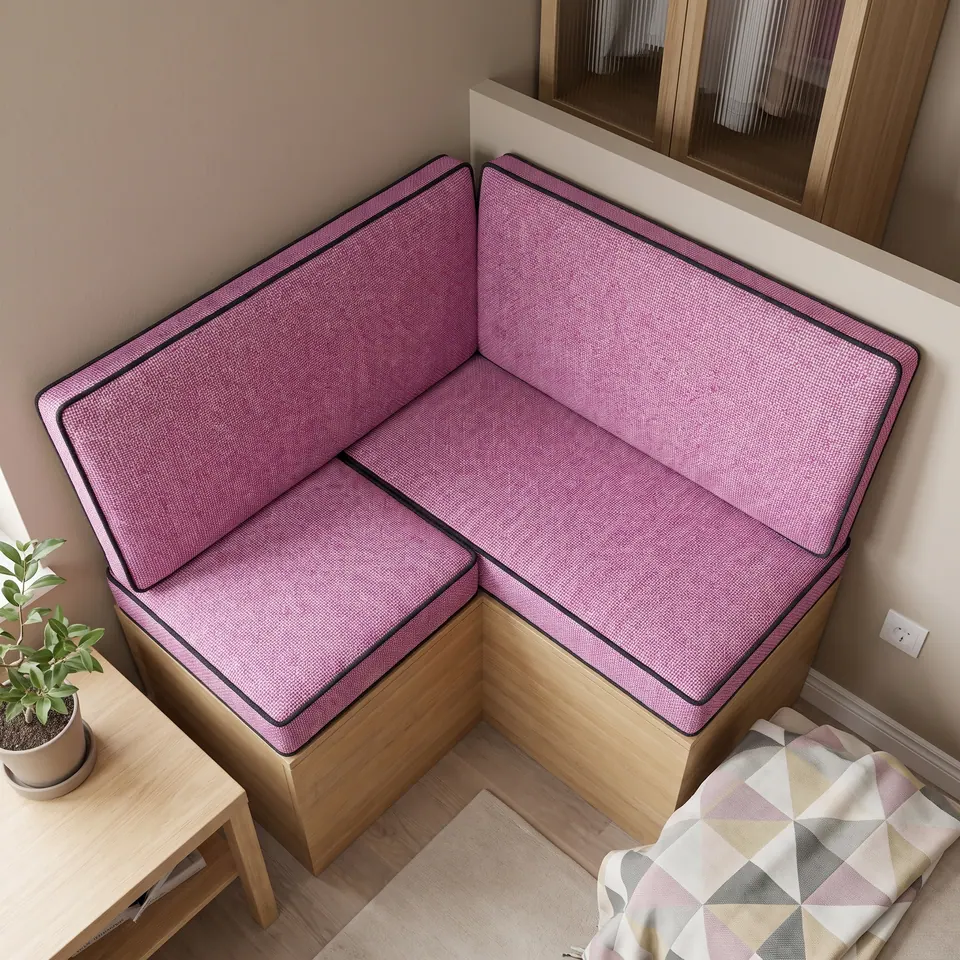
The workshop didn't make either L as a single piece. It split each into rectangles that butt together at the corner, written up as 47 x 47 x 26 and 86.5 x 86.5 x 26, four pieces in all, in linen, handmade and sent by UPS Express.
Why rectangles? They're easier to cut, easier to box and ship, and they flip to spread wear. Turn a one-piece L upside down and you get its mirror image, which fits the room across the hall, not yours. The job with rectangles is making them meet cleanly, and that's the subtraction above. The bench cushion builder and the L-shaped measuring Pattern check the sums.
On the cutting table: the cognac L
| Cushion | Two-piece L-shaped bench set, butted at the inside corner |
|---|---|
| Fabric | Cognac faux leather |
| Piping | Self piping |
| Edge | Box edge |
| Bolsters | Two round bolsters, one per leg, piped end caps centered |
| Base | Pale ash plinth |
| Thickness | 3 in for a trim line, 4 in for plush; 2 to 5 in standard |
| Corner rule | Second pad = its wall length minus the runner's depth |
| Best for | Living-room corners and reading nooks |

Have it made
Have this made — ask Nate’s workshop
Send the numbers in inches: length × depth × thickness, plus any angle. The workshop checks them with you, because foam has no undo button. — Nate
Leave your details and the workshop will call you to confirm measurements, fabric, foam and piping. No prices, dates or payment on this page: it is a request, not an order.
On an L-shaped bench cushion made in two pieces, the short pad equals its wall length minus the long pad's depth, or the corner gets counted twice.
Nate
Questions buyers ask next
Which pad should run through the corner of an L-shaped bench?
Usually the longer leg. It takes the full wall length into the corner, and the shorter pad stops at its front edge. Measure the short wall into the corner, then subtract the long pad's depth.
Why are L-shaped bench cushions made as two rectangles?
Two rectangles are easier to cut, ship and handle, and they can be flipped to spread wear. A one-piece L turned upside down becomes its own mirror image and no longer fits the bench.
How do I check that a corner bench is square?
Mark 3 ft along one wall and 4 ft along the other from the corner; the diagonal between the marks should be 5 ft. If it isn't, draw the real angle on your sketch before ordering.
Can round bolsters replace back cushions on an L bench?
They can. Here one round bolster sits on each leg, so both sides of the L get the same lean-back, and the seat itself stays clear of pillows.
± 1/4 in — Nate