A Reading by NateL-Shaped Corner Bench Cushions
A taupe faux leather L-shaped bench cushion on walnut, and the buyer's drawing behind an L like it
Two seat pads, two bolsters, drawers underneath and a lot of afternoon sun. The pattern is two rectangles. The trap is shade.

 Save
The quick answer
An L-shaped corner bench cushion is best made as two rectangles, one running the full length into the corner and one butting against it, cut to a paper drawing. One buyer's L became 59 x 17 3/4 in and 35 3/8 x 17 3/4 in (150 x 45 and 90 x 45 cm). Order every seat and bolster together so the fabric matches.
Page one: the corner, the bolsters, the drawers
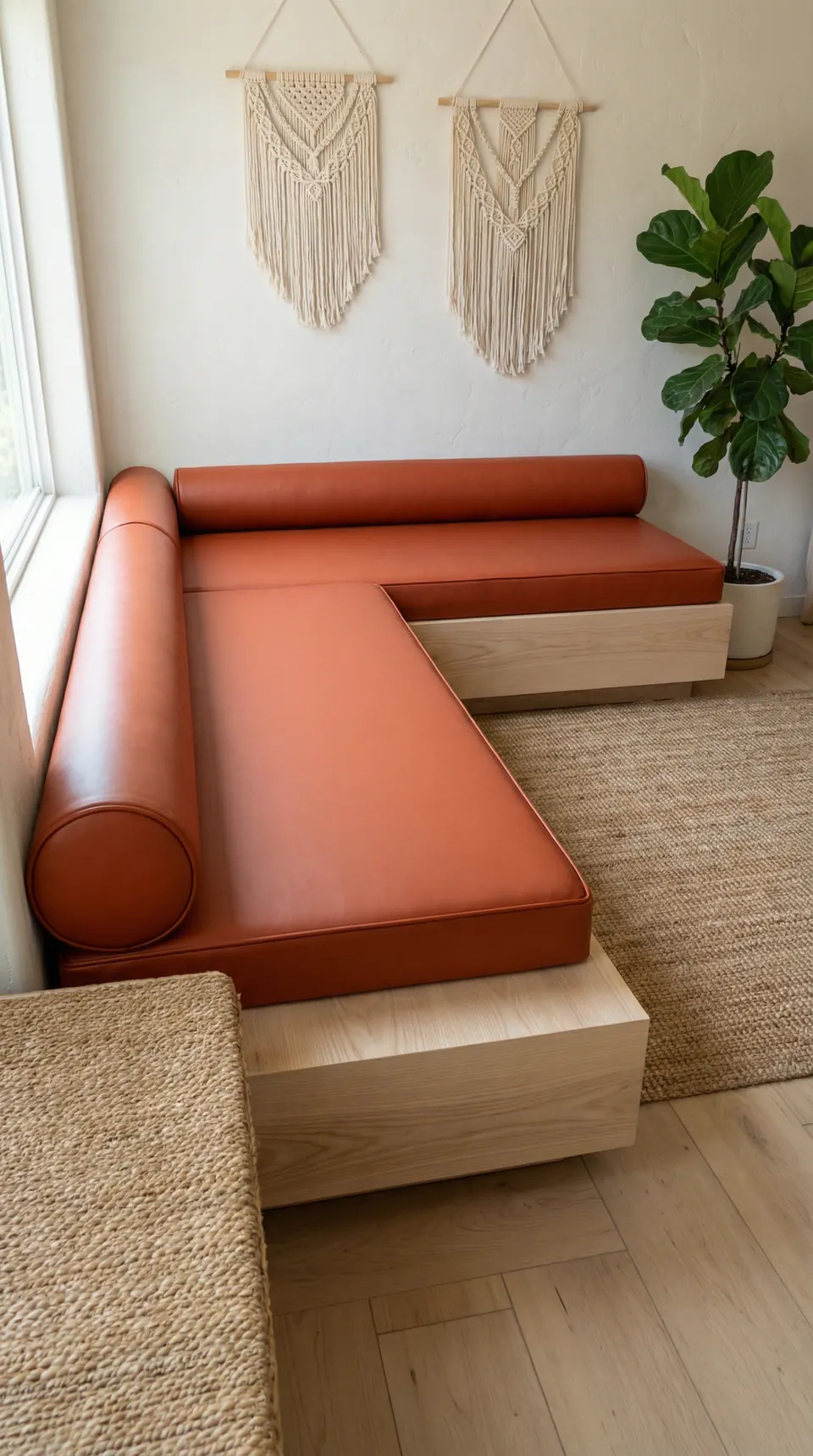
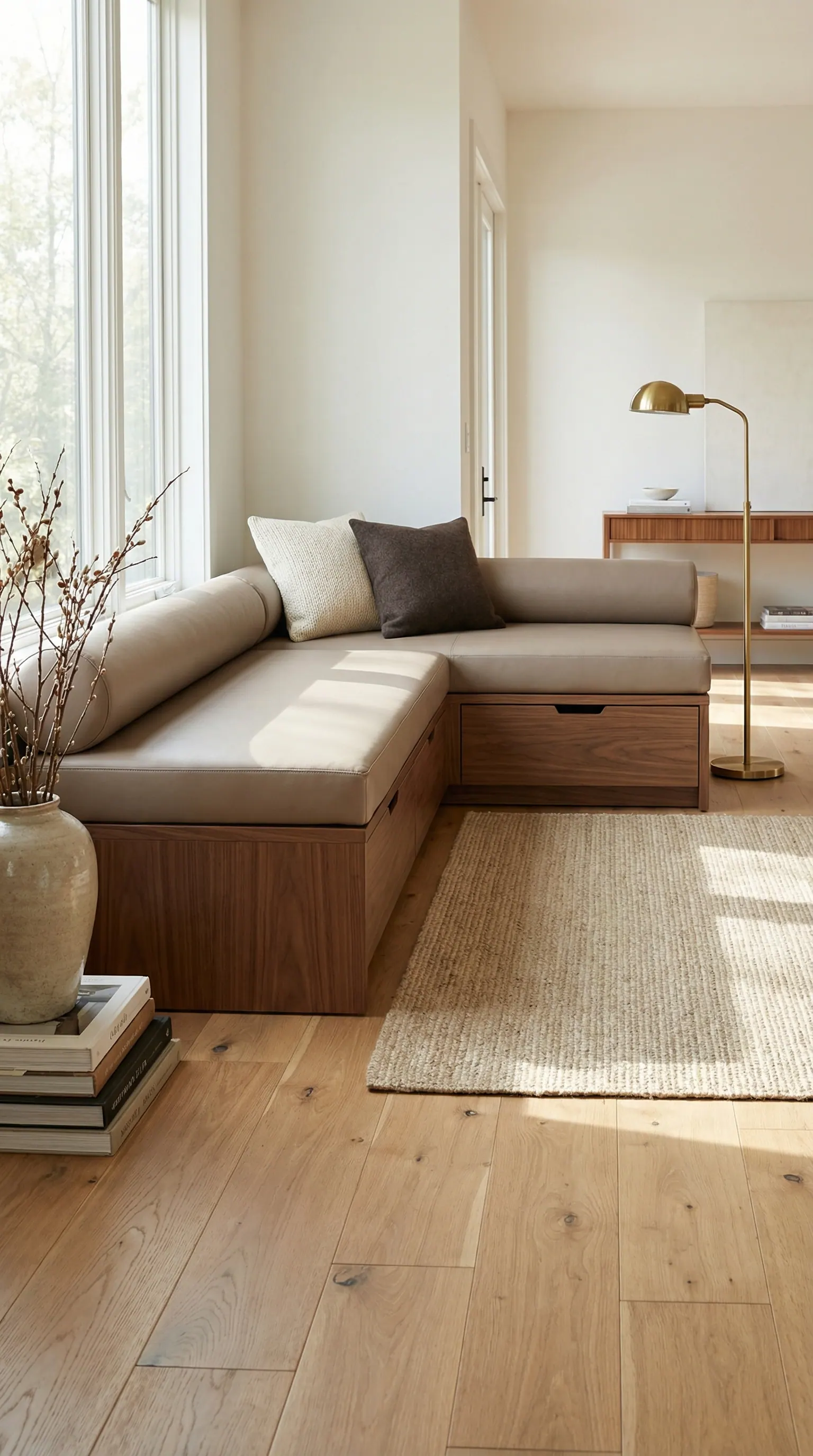
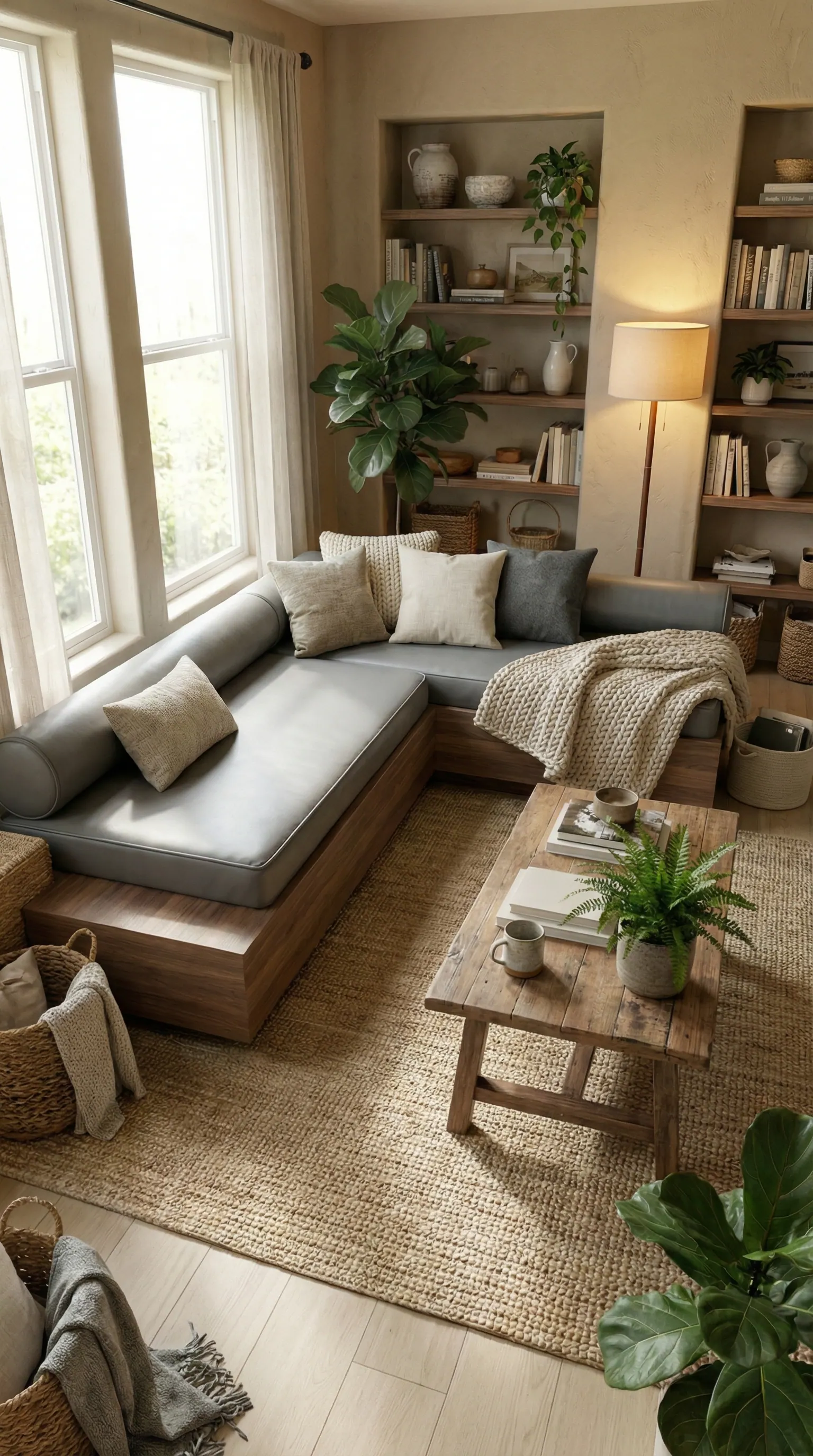
Read the photo like a drawing, partner. A walnut storage bench wraps a tall-windowed corner. On top: two taupe seat pads that meet at the corner, and two long taupe bolsters, one along the glass and one along the side wall. Box edges, self piping, nothing contrasting.
The bolsters are the smart call. A square back cushion stands about 16 in (40 cm) tall. A bolster gives the back something to lean on while keeping the sightline low under the windows. You keep the view.
The front edge matters too. There is a drawer in the base, so the seats stop flush with the bench front. Any overhang would catch the drawer every time it opened.
The props make the short run a reading seat: a brass swing-head lamp over it, a walnut console, a ceramic vase of dried branches standing on a stack of books at the front corner. A hand-woven jute rug and wide oak planks finish the floor. Taupe sits exactly between the dark walnut and the pale oak, and it hides dust better than cream would.
That is the finished corner. The L-shaped bench cushion underneath it is simpler than it looks.
The buyer's L, read back
| Piece | Inches | Centimeters |
|---|---|---|
| Long seat, into the corner | 59 x 17 3/4 | 150 x 45 |
| Short seat, butting against it | 35 3/8 x 17 3/4 | 90 x 45 |
| Short wall this implies (seat + depth) | 35 3/8 + 17 3/4 = 53 1/8 | 90 + 45 = 135 |
| Precision you can order | 1/4 in steps, e.g. 18.5 x 51.25 | Any, cm preferred |
| Standard backrest height, for comparison | 16 | 40 |
The sizes were made exactly as drawn. The dropdown only set the price.
Pinned by Nate: five points on the L
Five pins, from the corner joint to the vase of dried branches.
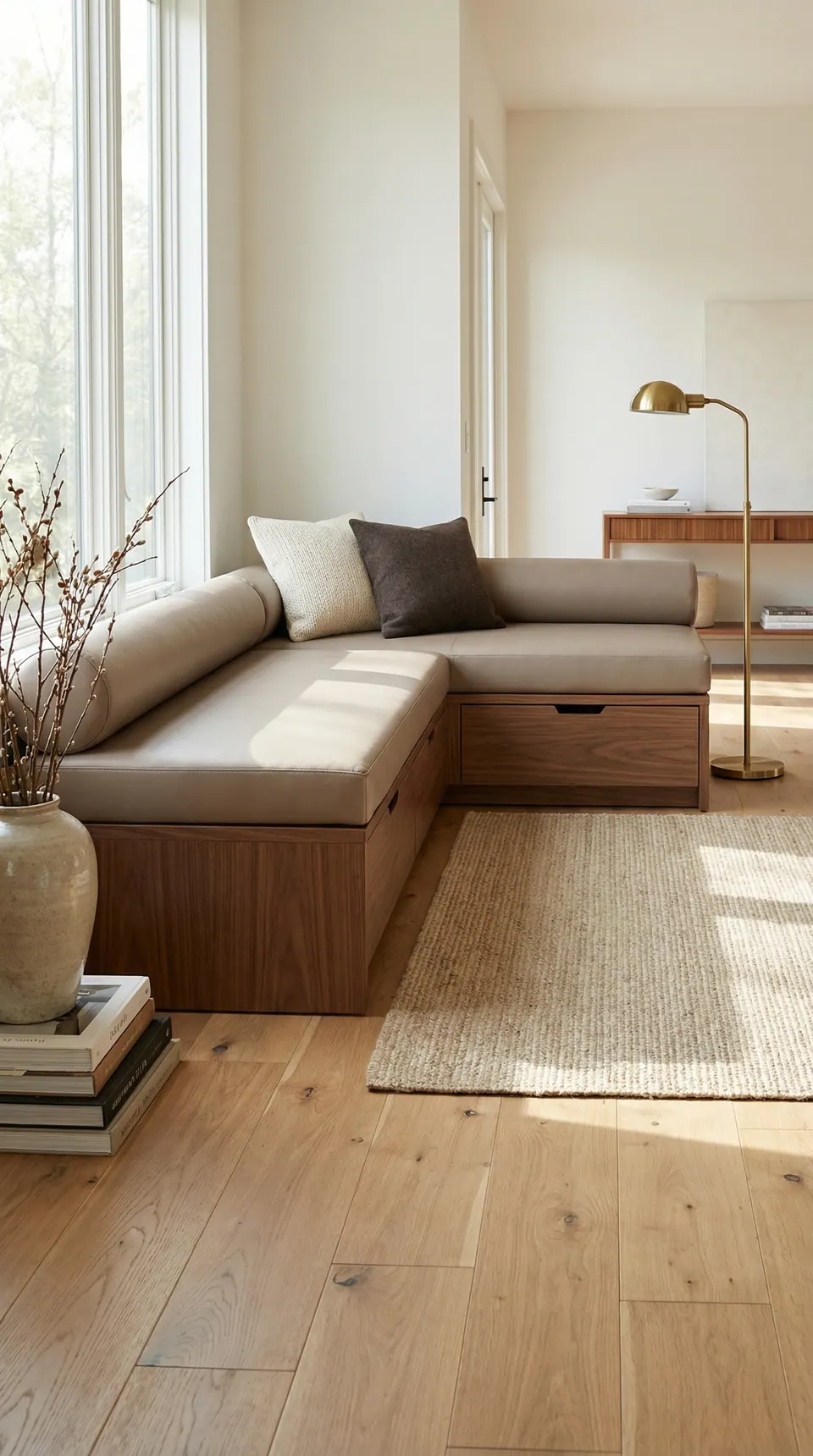
- Corner joint
Two seat pads meet here; cut them from the same roll so the runs can't differ in shade.
- Window-side bolster
A bolster along the glass gives back support without blocking the view.
- Drawer in the base
On a storage bench the cushion must stop flush with the front so the drawers open cleanly.
- Brass reading lamp
A swing-head lamp over the short run turns that end into a reading seat.
- Vase with branches
Dried stems at the front corner add height and repeat the cushion's muted tone.
- Corner jointTwo seat pads meet here; cut them from the same roll so the runs can't differ in shade.
- Window-side bolsterA bolster along the glass gives back support without blocking the view.
- Drawer in the baseOn a storage bench the cushion must stop flush with the front so the drawers open cleanly.
- Brass reading lampA swing-head lamp over the short run turns that end into a reading seat.
- Vase with branchesDried stems at the front corner add height and repeat the cushion's muted tone.
One question, one drawing, two rectangles
One buyer wrote in with an L-shaped bench and one question: one cushion or two?
The workshop asked for a paper drawing first. With the drawing in hand, the answer was two pieces, ordered as the 17 3/4 x 59 in (45 x 150 cm) option and the 17 3/4 x 35 3/8 in (45 x 90 cm) option, each made exactly to the sizes drawn. The buyer chose a fabric from the chart and the order went through.
The rule underneath is the whole method. One piece runs the full length into the corner. The other starts where the first one's depth ends. Draw it, then order it.
- Sizes
- 17 3/4 x 59 in and 17 3/4 x 35 3/8 in (45 x 150 and 45 x 90 cm)
- Fabric
- One code from the chart
The lesson: Split L-shaped seats into two rectangles, with one piece running the full corner length.
Same order, same shade: the step people skip
On an L, every piece sits next to another piece, so small shade differences show. We have heard from a buyer whose L-shaped backrest came out noticeably darker than the rest of her set. Dye batches can differ slightly, and an exact match across separate orders isn't guaranteed. So order every seat and bolster at once, and ask for them to be cut together. Tolerance is kindness to your future self. More in dye lots.
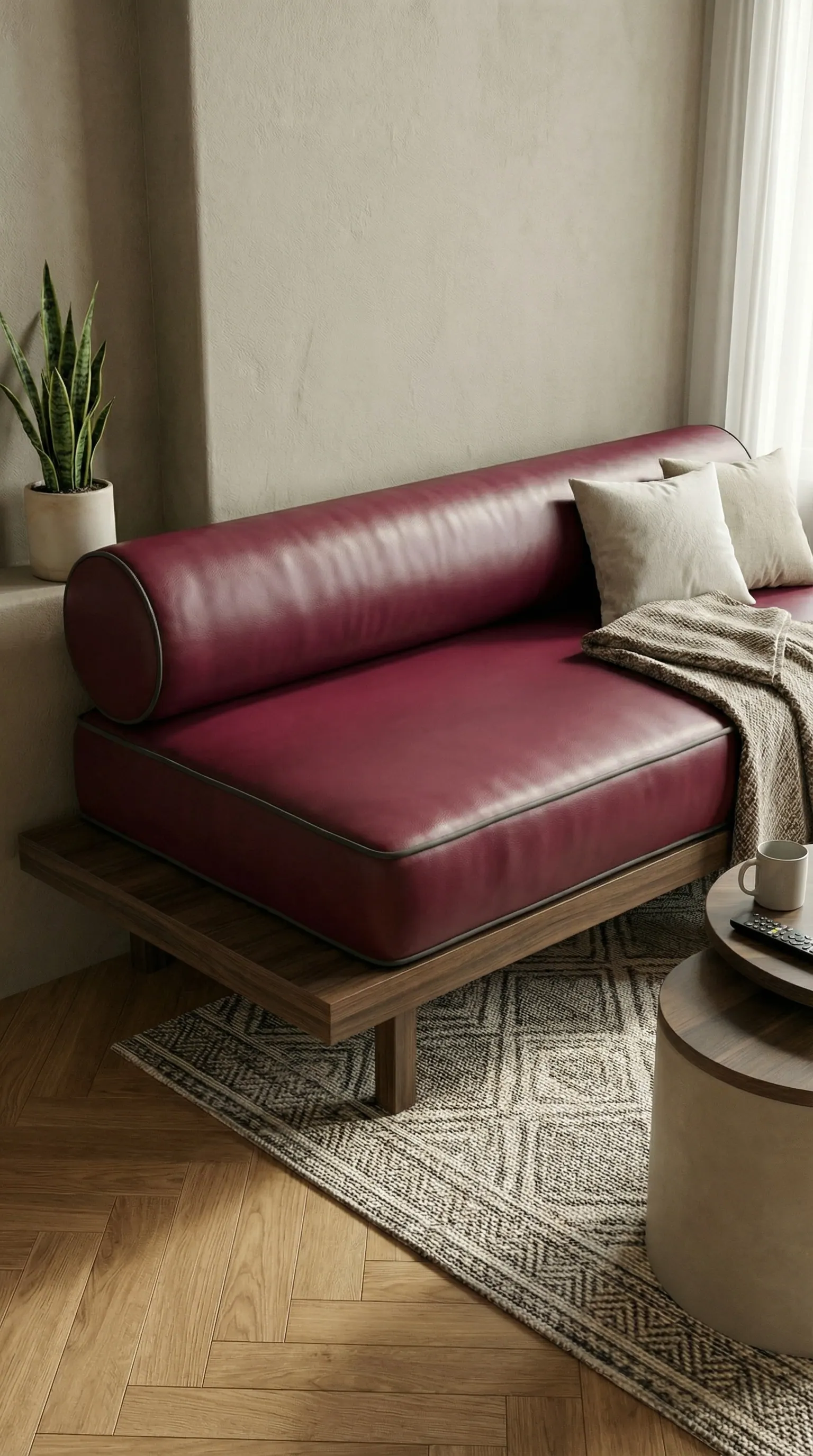
Faux leather adds a second variable. The leather-look cloth has a slight shine and a subtle wavy grain, so it reads lighter in strong light and deeper in soft light. In this corner, with sun across the window run and shade on the short run, one taupe can photograph as two. That is light, not a mismatch. Check it at noon and again at dusk before you decide it's wrong.
Buyer questions: sold out, off-chart colors, quarter inches
- A common question
The listing shows sold out. Can I still order?
The workshop's answerYes. Sold out only means the listing's stock count ran low after a run of orders. It is refreshed quickly, so you can still order.
- A common question
I see colors in your photos that aren't on the swatch chart. Is there a fuller range?
The workshop's answerYes. There are more colors than the standard chart shows, and extra charts are shared on request, including a link to all the fabric charts and a second linen chart. For an off-chart color, write its code in the personalization or order note.
- A common question
Do measurements need to be whole inches, or can you make 18.5 x 51.25?
The workshop's answerHalf and quarter inches are fine. Choose the closest size range in the dropdown for pricing, then type the exact measurements in the personalization box; that is what the cushion is made from. Centimeters are fine too, and the workshop actually prefers them.
On an L-shaped bench, order every seat pad and bolster together: dye batches can differ slightly, and a backrest ordered later can come out a shade darker.
Nate
The corner, specified
| Set | Two seat pads, two long bolsters |
|---|---|
| Layout | One seat runs into the corner; the other butts against it |
| Fabric | Taupe faux leather, slight shine, wipe-clean |
| Piping | Self |
| Edge | Box |
| Front edge | Flush with the bench front so the drawers open |
| Foam | 32-density, about 2.0 lb/ft³ |
| Order rule | All pieces on one order, cut together |
| Best for | Window corners with storage below |

Have it made
Have this made — ask Nate’s workshop
Send the numbers in inches: length × depth × thickness, plus any angle. The workshop checks them with you, because foam has no undo button. — Nate
Leave your details and the workshop will call you to confirm measurements, fabric, foam and piping. No prices, dates or payment on this page: it is a request, not an order.
Questions buyers ask next
Why use bolsters instead of square back cushions on a window bench?
A long bolster gives the back support while keeping the line low, so it doesn't block the window. Standard square backrests stand about 16 in (40 cm) tall and cover more of the glass.
Should a cushion on a storage bench stop at the front edge?
Yes, when the base has drawers or doors. Make the seat flush with the bench front so the drawers open cleanly; any overhang catches them. Take the depth from the bench top itself.
How do I draw an L-shaped bench for a quote?
Sketch the L from above on paper. Mark both wall runs from the back corner, the seat depth, and where drawers, posts or radiators sit. Photograph the drawing beside the bench and send both.
± 1/4 in — Nate
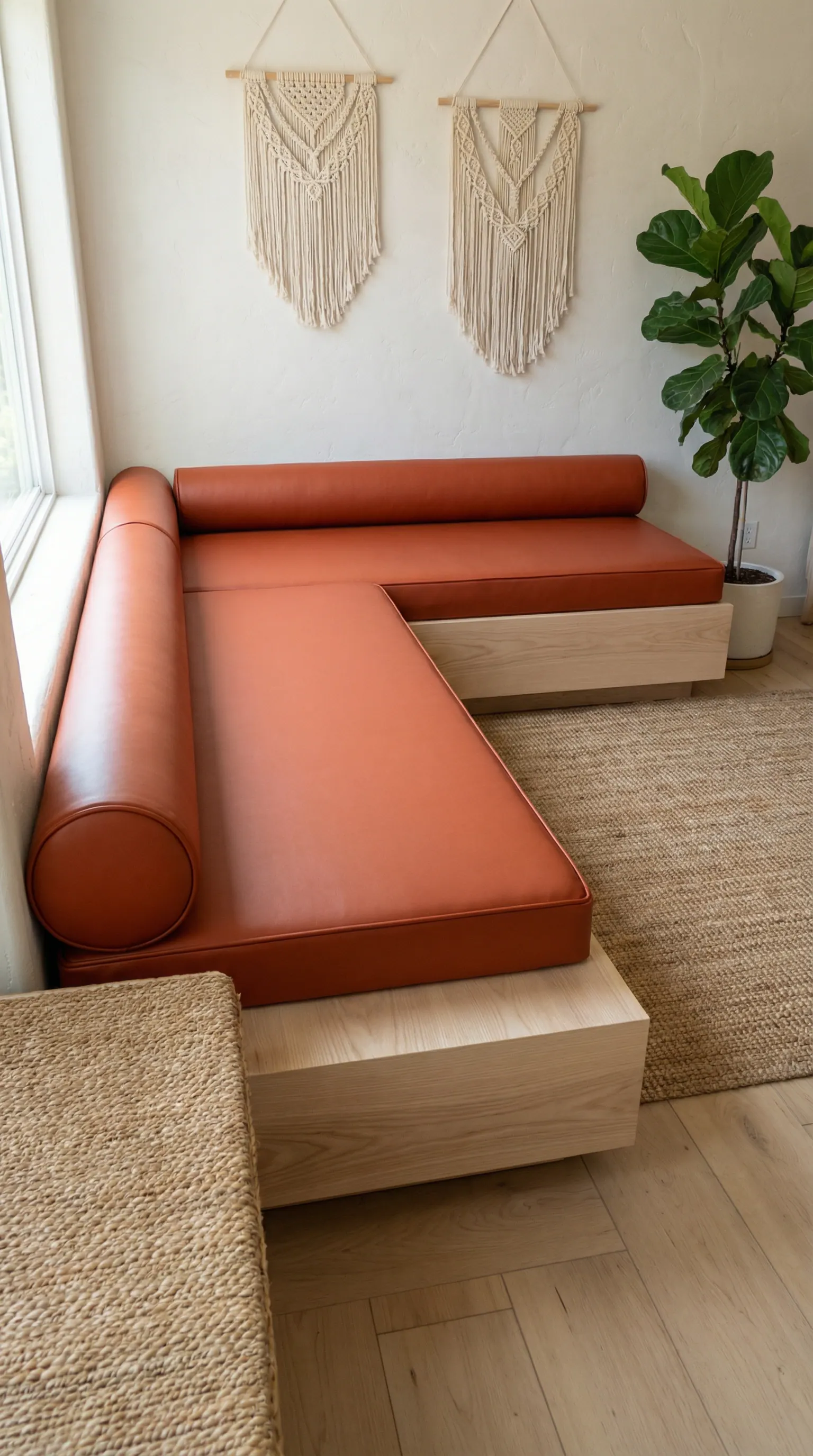
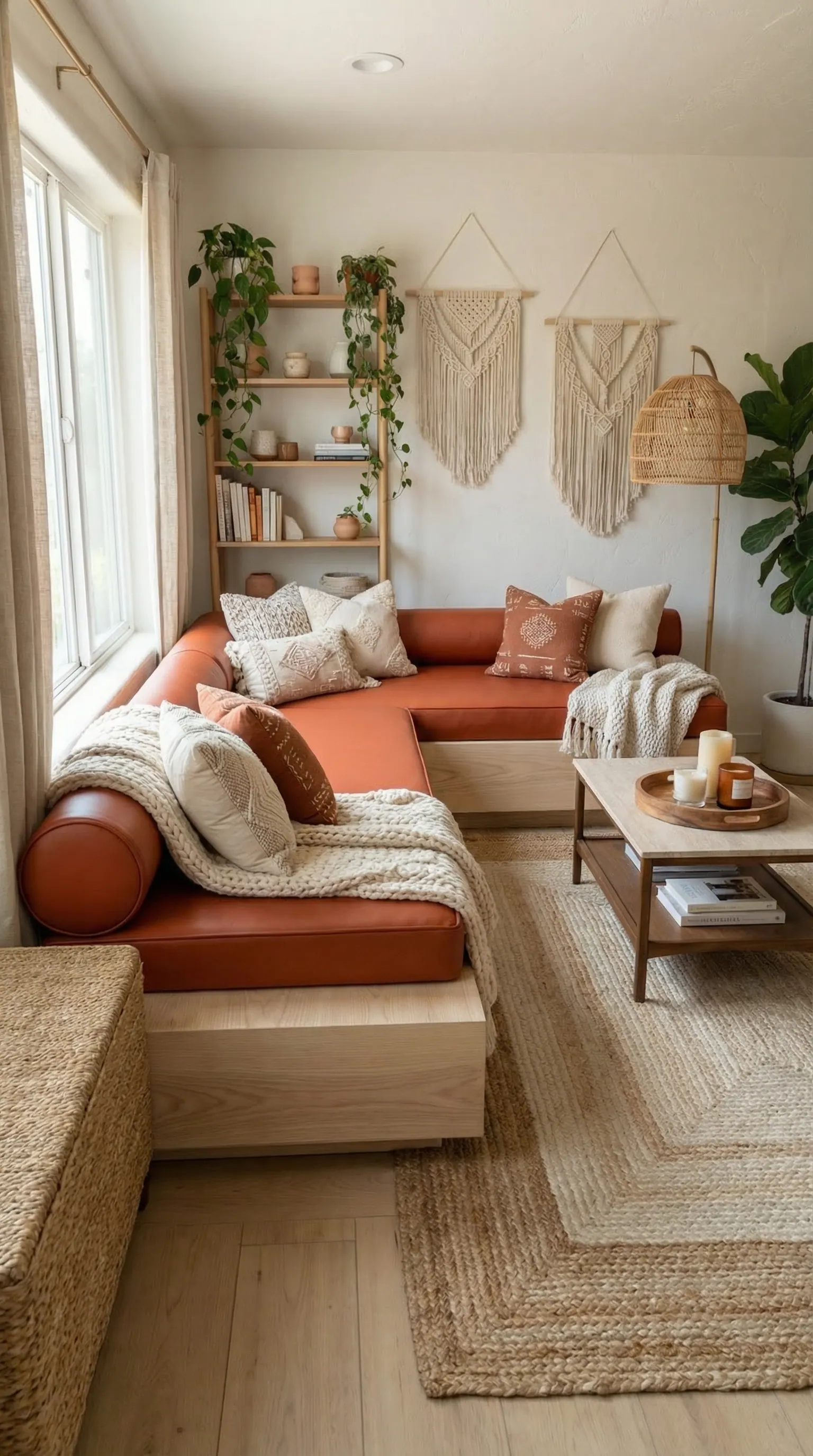
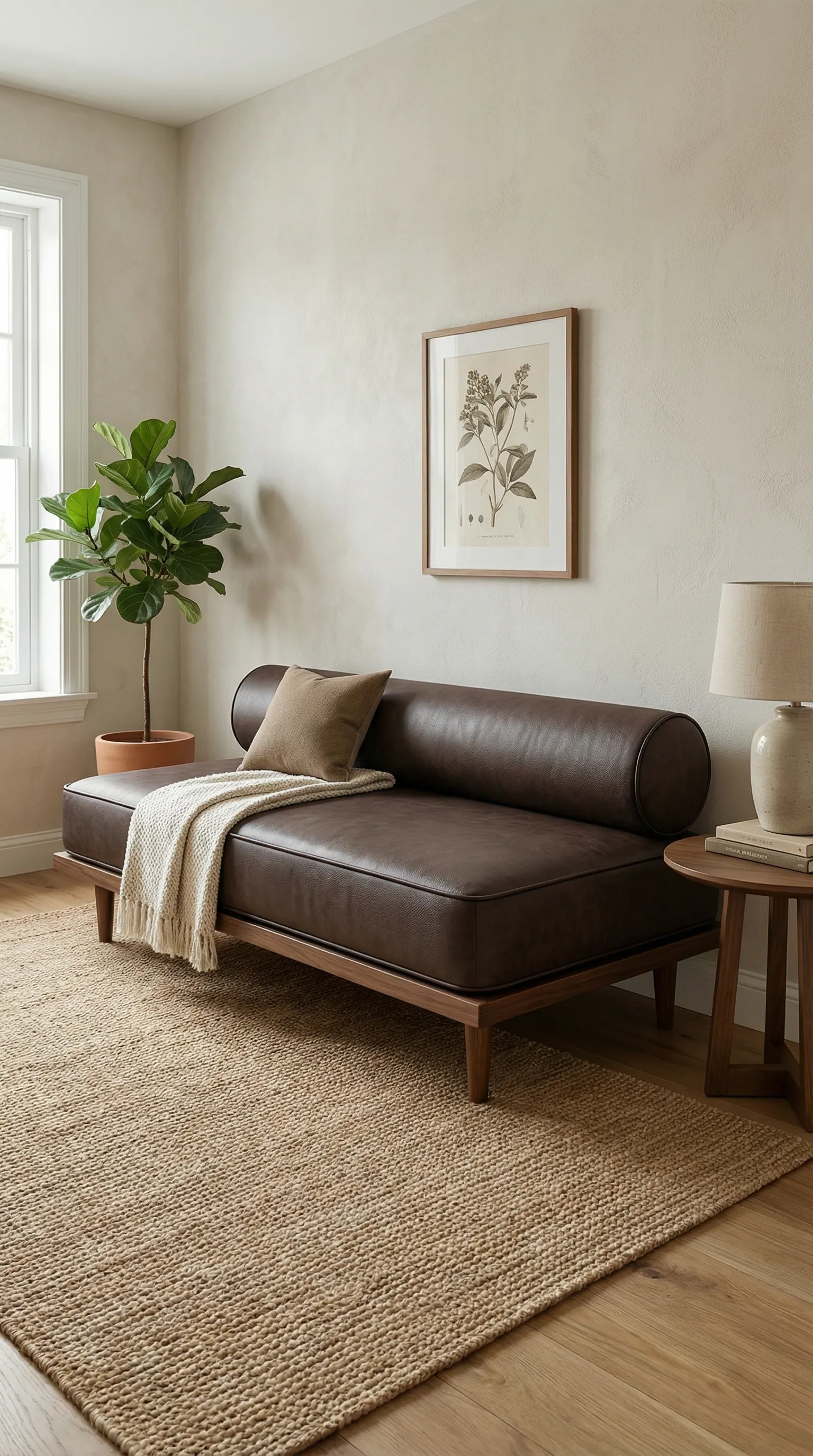
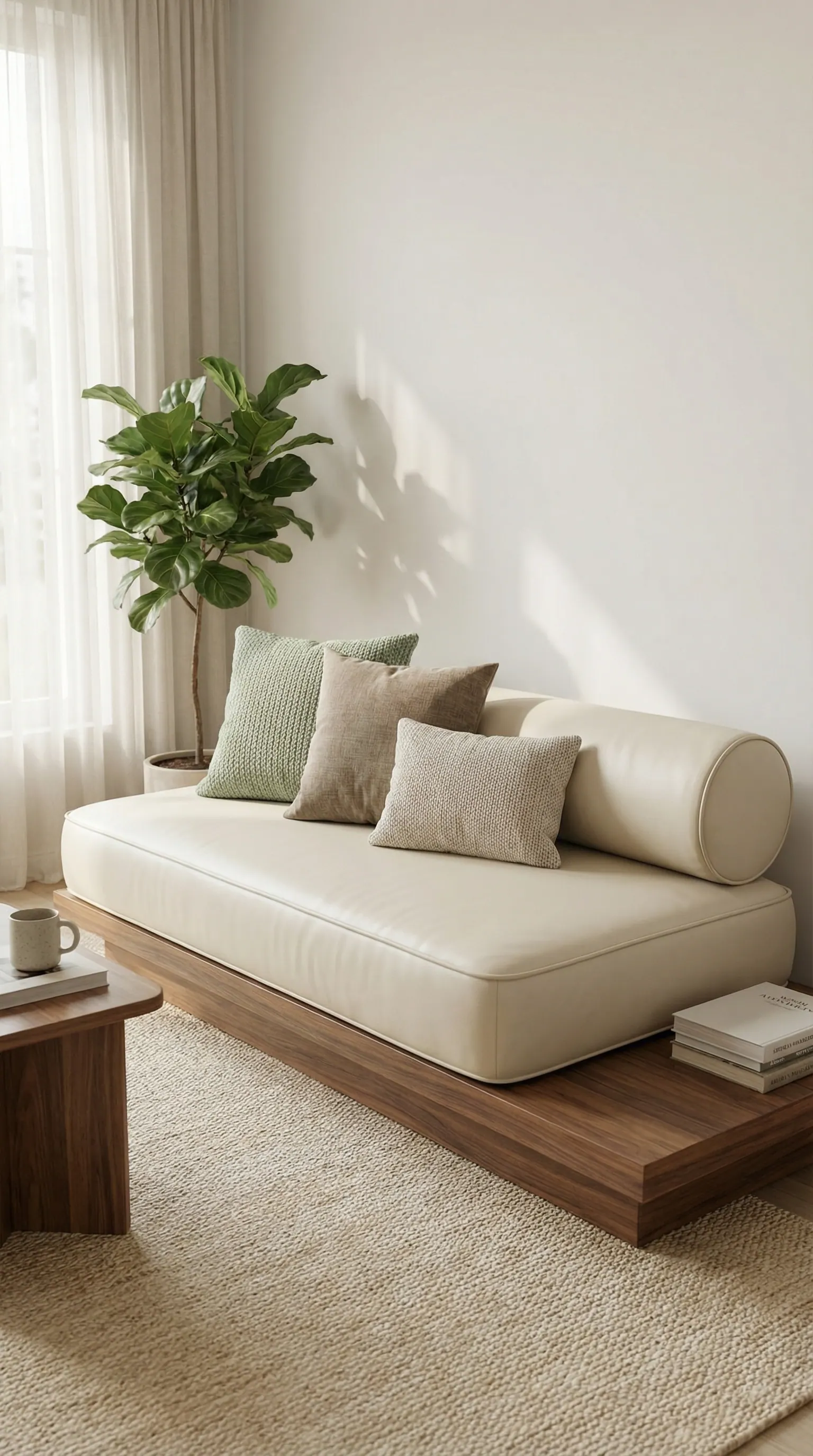
Leather-look corners and daybeds in six kinds of sun
 Save
 Save
 Save
 Save
 Save
 Save