A Reading by MaggieBanquette & Kitchen Nook Cushions
An aubergine velvet banquette cushion in a bistro corner, and the small-space tricks around it
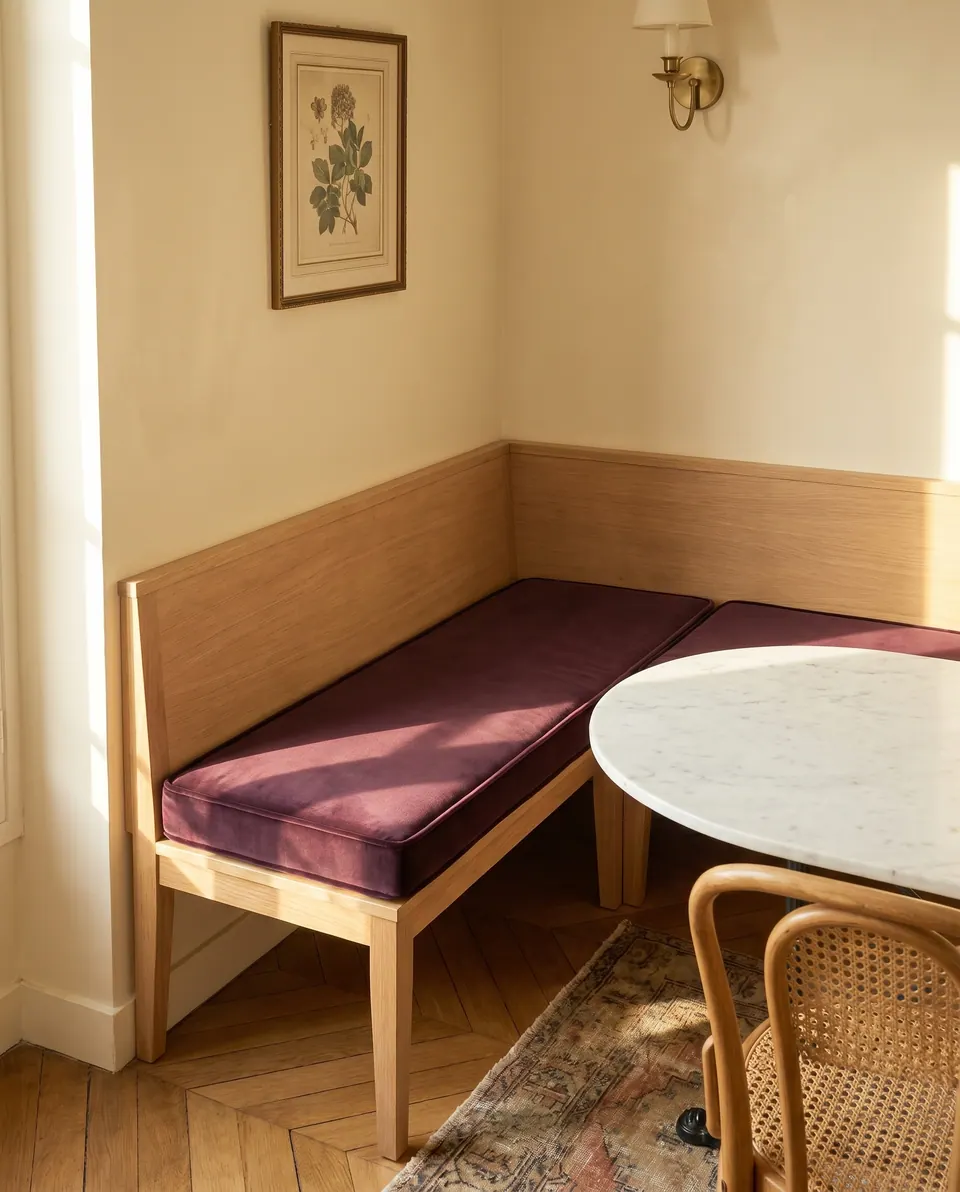
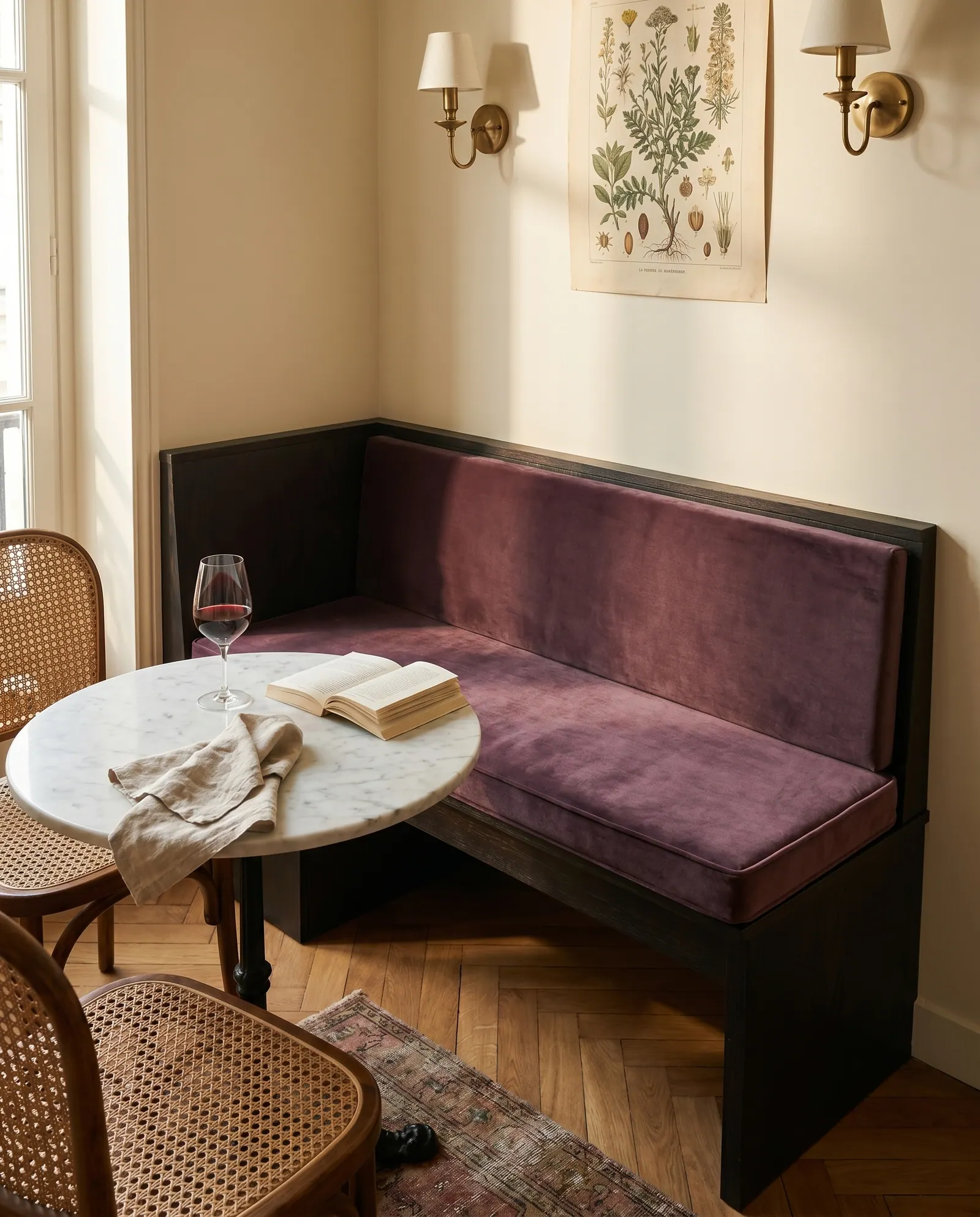
Maggie reads a dark corner banquette with a plum velvet seat and back, and makes a checklist of every inch-saving choice in the frame.
The quick answer
A banquette cushion in a small nook should give back depth wherever it can: a separate, slim back cushion resting on the seat, a seat thick enough to reach table height, and a round table with chairs only on the open side. On dark wood, choose velvet with a red or plum undertone so it holds its color in evening light.

 Save
Pinned by Maggie
The pins go from the separate back cushion and the thick seat front to the wine glass, the brass sconce and the cane chair.
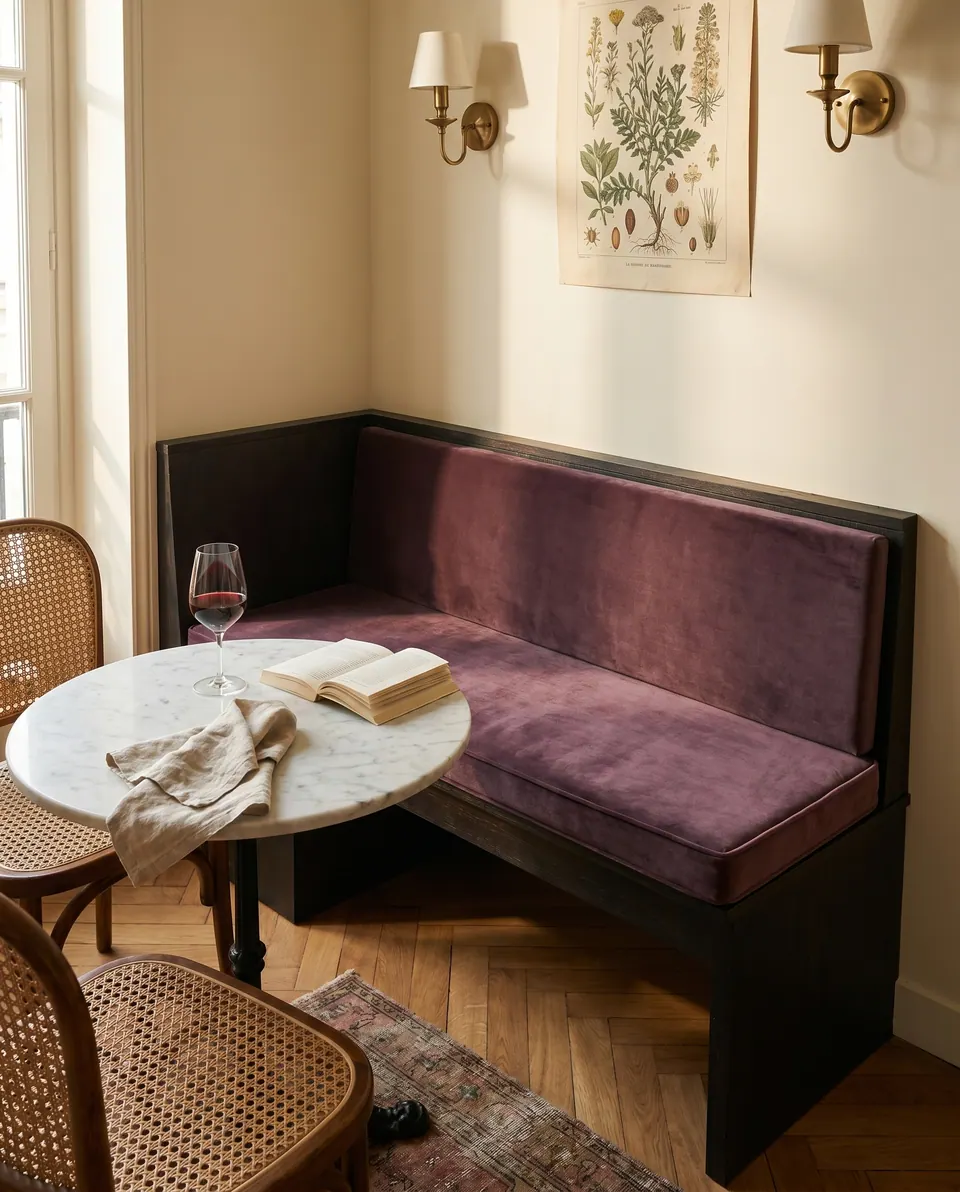
- Back cushion
A separate back cushion sits on top of the seat cushion, so the seat can be lifted out on its own.
- Seat front
The seat is thick enough to bring diners up to table height on a low banquette.
- Glass of red wine
The wine matches the aubergine almost exactly, a small styling trick worth copying.
- Brass sconce
Warm brass light brings out the red in the velvet in the evening.
- Cane bistro chair
Cane chairs on the open side keep the corner light.
- Back cushionA separate back cushion sits on top of the seat cushion, so the seat can be lifted out on its own.
- Seat frontThe seat is thick enough to bring diners up to table height on a low banquette.
- Glass of red wineThe wine matches the aubergine almost exactly, a small styling trick worth copying.
- Brass sconceWarm brass light brings out the red in the velvet in the evening.
- Cane bistro chairCane chairs on the open side keep the corner light.
Why a dark corner can feel generous
Small nooks fail in the same three places: backs that are too fat, tables with corners, and chairs you cannot see through. This bistro corner dodges all three, and it does it in aubergine velvet, which takes nerve.
The banquette cushion set is two pieces. The seat is a box cushion thick enough to bring diners up to table height on a low, dark-stained banquette. The back is a separate long panel that rests on the seat, so the seat lifts out on its own for cleaning, and it stops short of the frame top so the dark wood still draws a line around it. Self piping on both, running straight.
Aubergine against ebony stain is a rich, low-contrast pairing. Left alone it would sink into the evening. So the pair of brass sconces with white shades does the lifting, pulling the red out of the velvet after dark, and the round white marble table bounces light back up. A round top also has no corners at knee height, which in a tight nook is worth more than any cushion.
Then the café story, prop by prop. A glass of red wine that matches the aubergine almost exactly, a styling trick I have shamelessly borrowed. An open book and a linen napkin, so the table looks lived at. Bentwood cane chairs on the open side, which you can see straight through, so the corner stays light. A vintage botanical poster, herringbone parquet and a faded rug finish the scene.
If your banquette is dark, choose velvet with a red or plum undertone; a pure brown or navy disappears after sunset. Work the seat thickness out from the table height, and see more shapes in banquette cushions and kitchen nook cushions. How deep is your nook, dear, from the wall to the table edge?
Maggie's small-nook checklist
- A separate back cushion, so the seat lifts out on its own
- Slim backs where depth is tight; the thinnest in the story below were about 1¼ in (3 cm)
- A round table: no corners at knee height
- See-through chairs, cane or bentwood, on the open side only
- Wall sconces instead of a floor lamp, so the floor stays clear
- Velvet with a red or plum undertone on dark wood

Have it made
Have this made — ask Maggie’s workshop
I once cut a lovely cushion two inches short, and I have not forgotten it. That is why the workshop goes over your measurements with you on the phone. — Maggie
Leave your details and the workshop will call you to confirm measurements, fabric, foam and piping. No prices, dates or payment on this page: it is a request, not an order.
Stitch straight — Maggie