The Pattern Room · a measuring pattern
Why mildew grows under a window seat cushion in winter, and what helps
Right, then. The mildew is almost never on top, where you'd spot it. It's underneath, on the side that hasn't seen daylight since October, and the window is usually the one to blame.

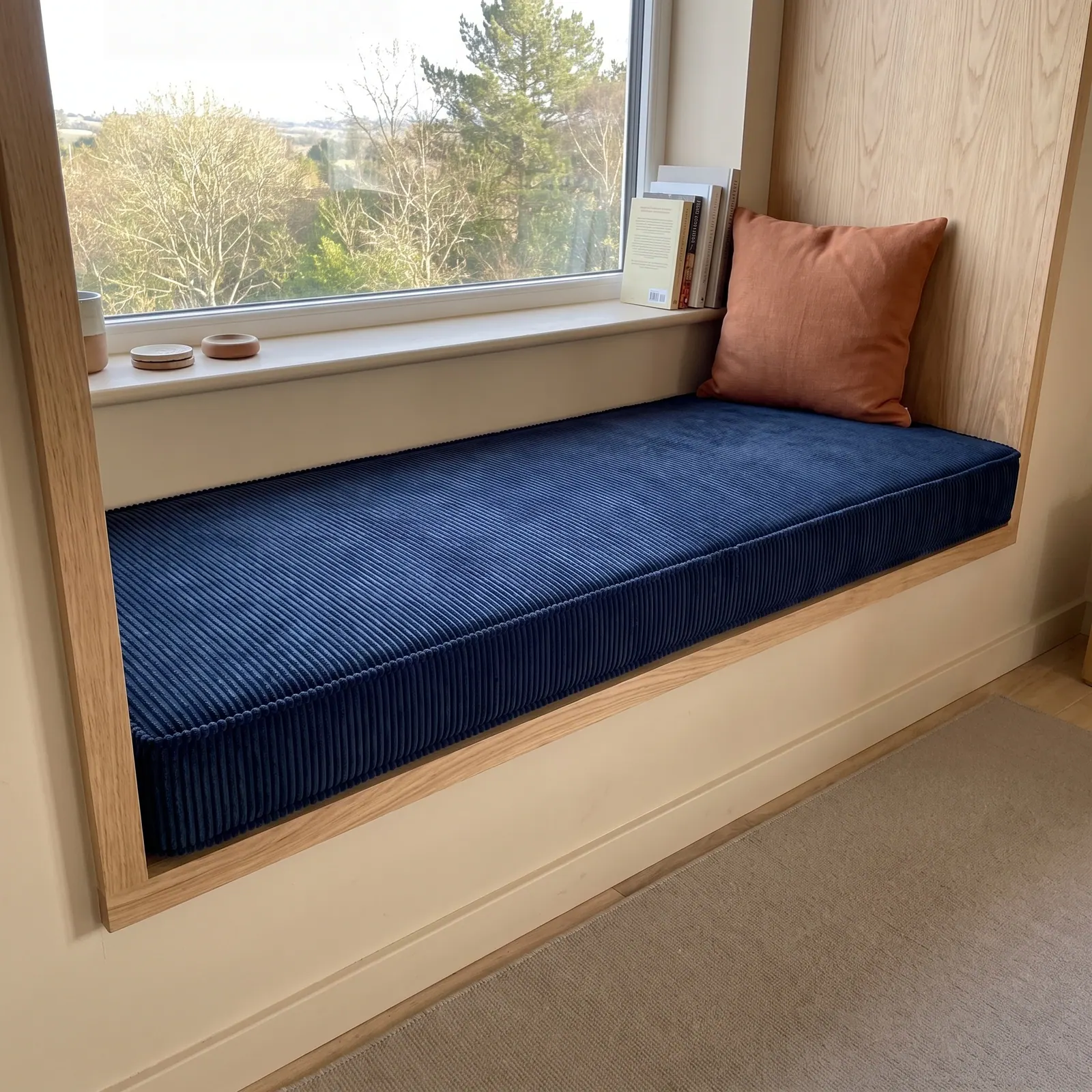 Save
The quick answer
Mildew under a window seat cushion comes from condensation: warm, moist room air meets a cold sill or glass, and the water sits under a cushion that never lifts. In cold months, lift and air it weekly, wipe the sill and glass, keep a small gap from the glass, never seal it in plastic, and choose velvet or a smooth, wipeable fabric with a washable cover.
The damp side is the side you never see
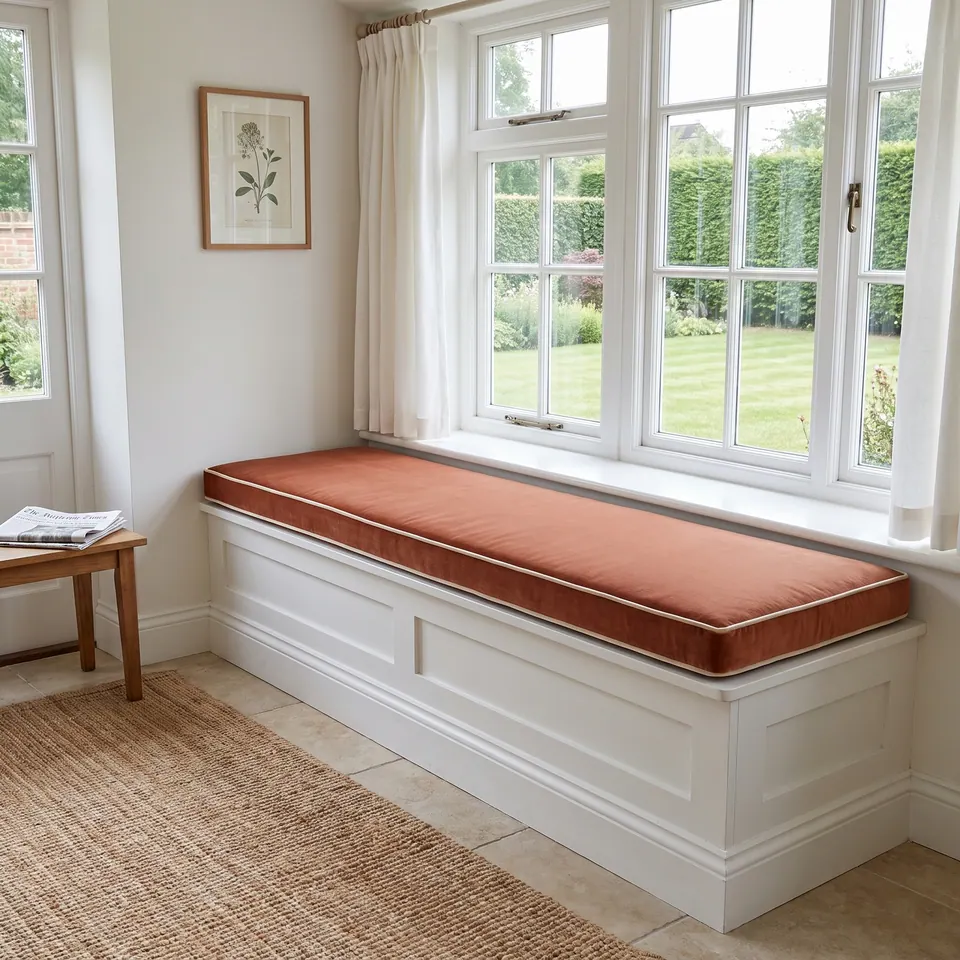
Mildew under a window seat cushion is a winter story, and it starts with the window, not the fabric. Warm room air carries moisture. When it meets glass or a sill chilled by the weather outside, that moisture turns to water. You've seen it beading on the panes on a cold morning.
The trouble is where the water goes next. It runs down to the sill or settles on the seat board, and a cushion that sits there all winter keeps it from drying. No sun reaches the underside. No air moves. A few weeks later, the spots arrive.
Old houses get it worst: single-pane glass, drafty frames, a radiator under the sill warming the room side while the glass chills the other. Damp regions add to it. Morning humidity averages about 82 percent in Seattle and 78 percent in Portland, Maine. If you live in a New England house with long winters or where the Pacific Northwest keeps everything damp, you know the look.
I learned this on my own window seat, years ago: one winter, one cushion, never lifted. I don't recommend the experiment.
A buyer who had already lost one cushion to the window
A buyer messaged the workshop about a window seat against a single-pane window that ran with condensation all winter. The previous cushion had grown mildew underneath. They wanted a new one, and they wanted it not to happen twice.
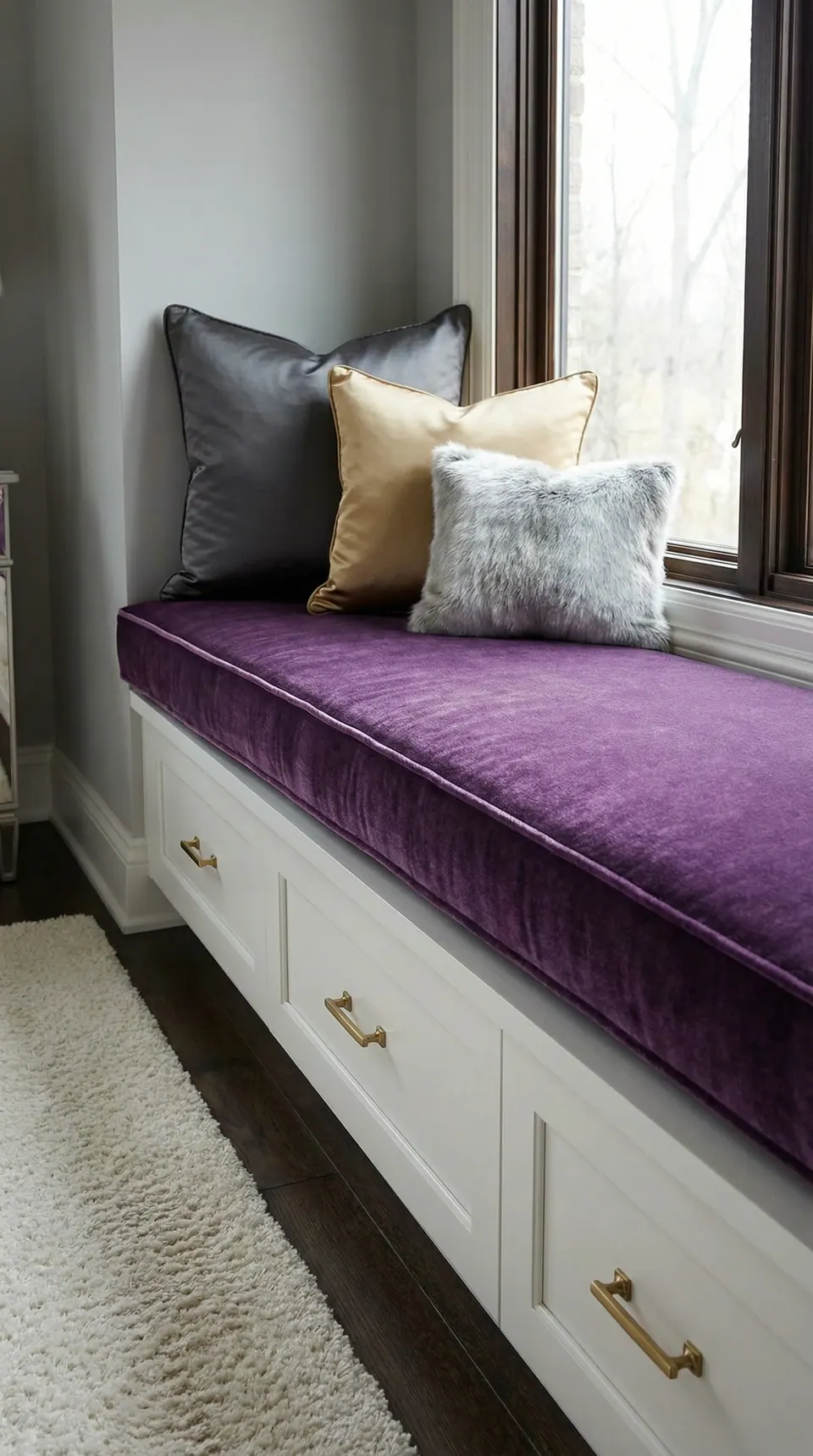
The workshop's answer was plain. Velvet, or better still the soft fabric range, because both wipe clean more easily than textured or absorbent weaves. But neither is waterproof, so moisture has to be wiped away regularly and the cushion kept out of long contact with a wet surface. Constant damp will mildew any fabric.
They ordered matching bolsters too, quoted from diameter, length and quantity. Sensible. A bolster leaning on cold glass needs the same winter routine as the seat.
A cold-month routine that takes two minutes a week
Lift the cushion and stand it on edge weekly
From the first frost to spring, take the cushion off the seat once a week and stand it on its side in the warm part of the room. Let the underside and the seat board breathe until the board feels dry to your hand. In a cold snap, do it more often.
Wipe the glass and the sill in the morning
Condensation is heaviest after a cold night. A dry cloth across the lower panes and the sill takes a minute. The EPA's advice is the same: when condensation collects on windows, dry the wet surface quickly.
Leave a small gap between cushion and glass
Don't jam the back edge against the window or a cold outside wall. A small gap lets air move and keeps the fabric out of the drips. On a cushion cut wall to wall, the back edge is the one to watch.
Let air reach the underside
If you're building or rebuilding the seat, a slatted base, or a solid board drilled with a grid of holes, lets the bottom of the cushion breathe. It's a job for a carpenter, and a good one to do once.
Keep plastic out of it
Never lay plastic sheeting under the cushion or wrap it to protect it. Plastic holds the condensation against the fabric and the wood, which is the very problem you're trying to solve.
Wash the cover, then dry the cushion off the sill
Covers unzip and machine wash at 86°F (30°C) on a gentle cycle, then air dry, never in the dryer. After refitting, let the cushion finish drying in a warm room before it goes back to the window. The cover washing Pattern has the details.
Watch the room's humidity
The EPA suggests keeping indoor humidity below 60 percent, ideally between 30 and 50, and drying wet materials within 24 to 48 hours. An inexpensive hygrometer on the sill tells you which side of that line your window lives on.

Have it made
Measured it? Have Maggie’s workshop make it
Numbers first, fabric second, piping last. Jot down what you have, and the workshop will go down the list with you, item by item. — Maggie
Leave your details and the workshop will call you to confirm measurements, fabric, foam and piping. No prices, dates or payment on this page: it is a request, not an order.
Which fabric copes best at a cold window
None of the indoor fabrics is waterproof; the short answer on that is no. What differs is how easily each one gets clean and dry again.
| Fabric | Cleaning at a wet window | Verdict |
|---|---|---|
| Soft fabric, a performance weave | Yes The easiest indoor fabric to wipe; machine washes at 86°F (30°C) | First choice when easy cleaning matters most |
| Velvet | Yes The short pile wipes clean easily; washes at 86°F (30°C) | A good choice; indoor only, not water resistant |
| Linen-look and cotton-linen | Partly Absorbs more, so the cover needs washing more often | Workable with a strict airing routine |
| Bouclé, chenille and other textured weaves | No Harder to wipe clean than a smooth face | Not the fabric for a sweating window |
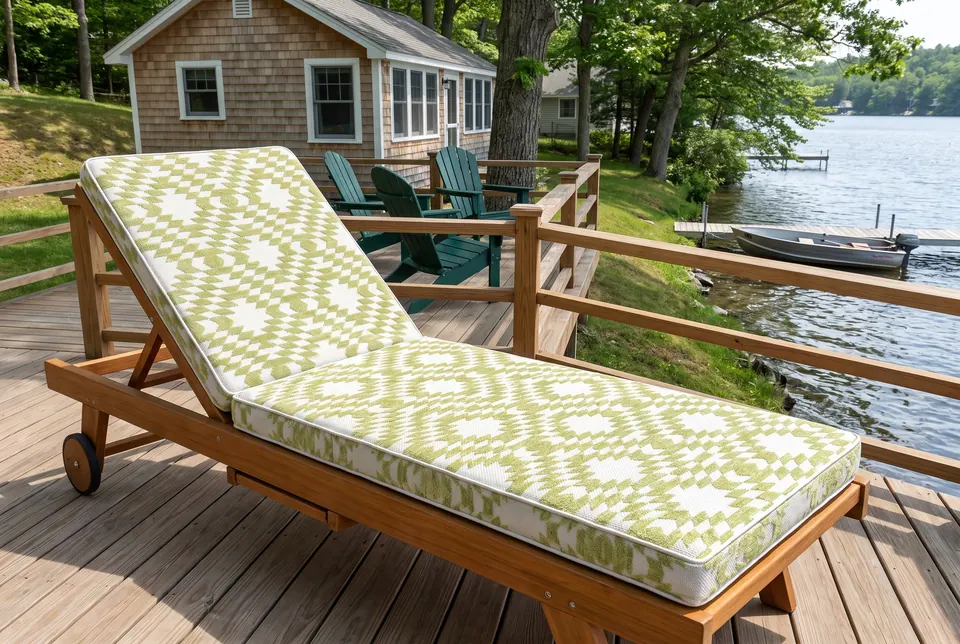
| Outdoor range | Yes Water-repellent; resists moisture, mildew and mold far better | Worth asking about if the seat is damp all winter; feels less soft than indoor fabric |
| Any fabric left wet for weeks | No Mildews regardless | No fabric beats constant damp |
Button-tufted cushions have no zipper, so their covers can't come off to be washed. At a damp window, choose the untufted, zippered version.
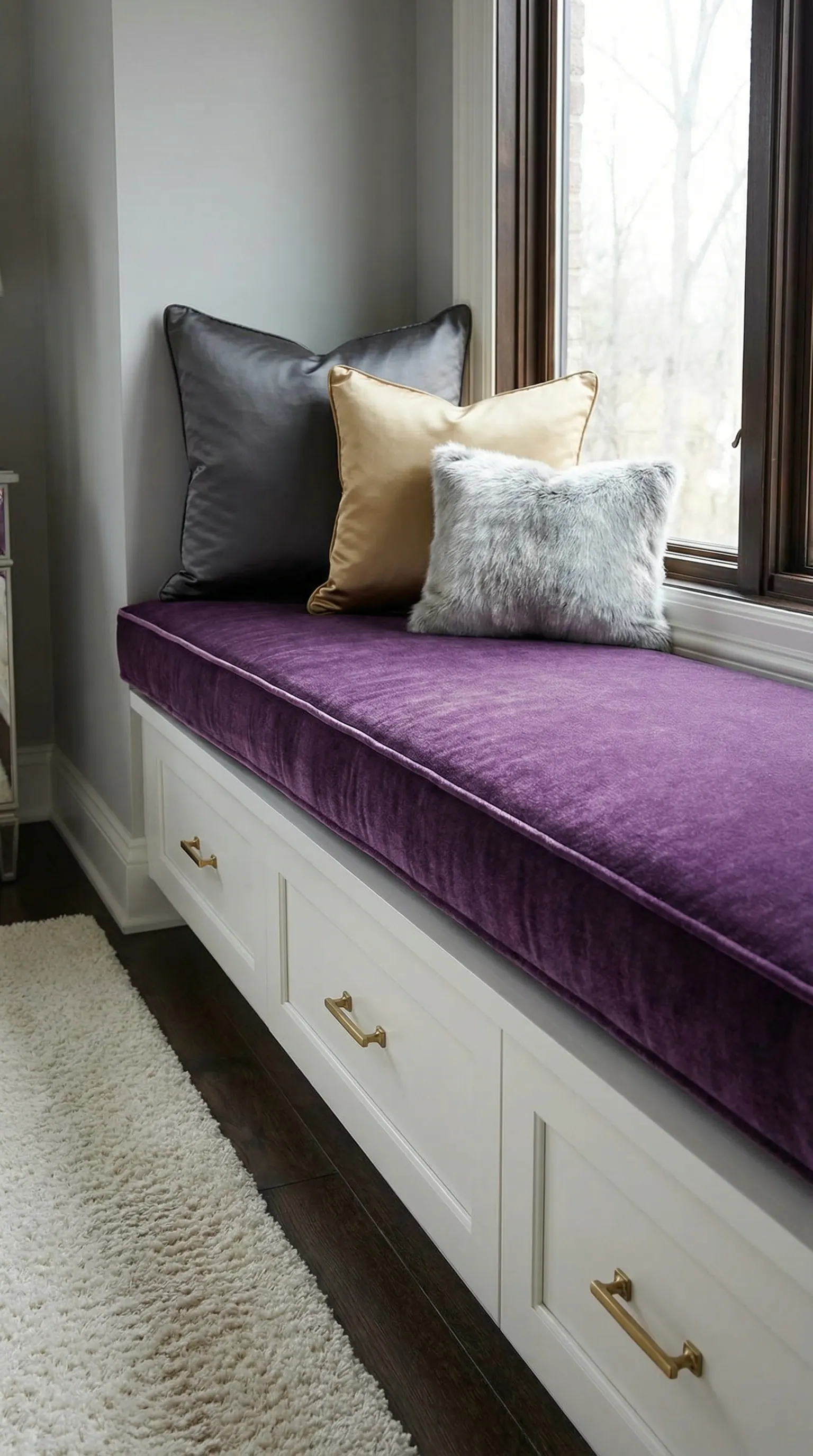 Save
A liner for the foam, not a raincoat for the cushion
One add-on is worth asking about. The workshop has made waterproof inner liners, an inner cover around the foam under the fabric, for cushions that live in damp spots. It keeps drips and spills out of the foam, which is the one part you can't put through the washer.
Be clear about what it doesn't do. A liner doesn't dry the sill, and it doesn't keep the outer cover dry. The cover still needs lifting, airing and washing. Think of it as insurance for the foam, not a reason to skip the routine.
And a liner is not plastic sheeting. The liner sits inside a washable cover. Plastic under the whole cushion holds the water against everything.
When it's the house, not the cushion
Sometimes the cushion is only the messenger. If water pools on the sill every morning, if paint is peeling, if the wood under the cushion has gone dark or soft, or if spots come back on the seat board after you've cleaned it, the problem is the window or the room.
Single-pane glass, failed seals on double glazing, a leak around the frame, or a room with too little ventilation will beat any fabric and any routine. That's work for a window contractor or a building pro, and it comes before a new cushion. There's no sense tailoring a good cushion for a wet board.
Go and look at seven on a January morning, dear. Is the sill damp, or is it wet?
Once the window is sorted, measure again. Old window seats are rarely square, and the new cushion should fit the seat you actually have; the window seat cushions page walks you through it. If the seat is in a glassed-in room, the sunroom fabric Pattern covers heat and damp together.
Habits that feed the mildew
- Plastic sheeting under the cushion, or a cushion wrapped to "protect" it.
- The same cushion left down from October to April without a single lift.
- The back edge pressed hard against the glass or a cold outside wall.
- Bouclé, chenille or another textured weave at a window that sweats.
- A just-washed cover refitted and sent straight back to a cold sill.
- A tufted cushion at a wet window, where the cover can't come off to wash.
- Blaming the fabric when the sill is wet every single morning.
Window seats that live beside the glass
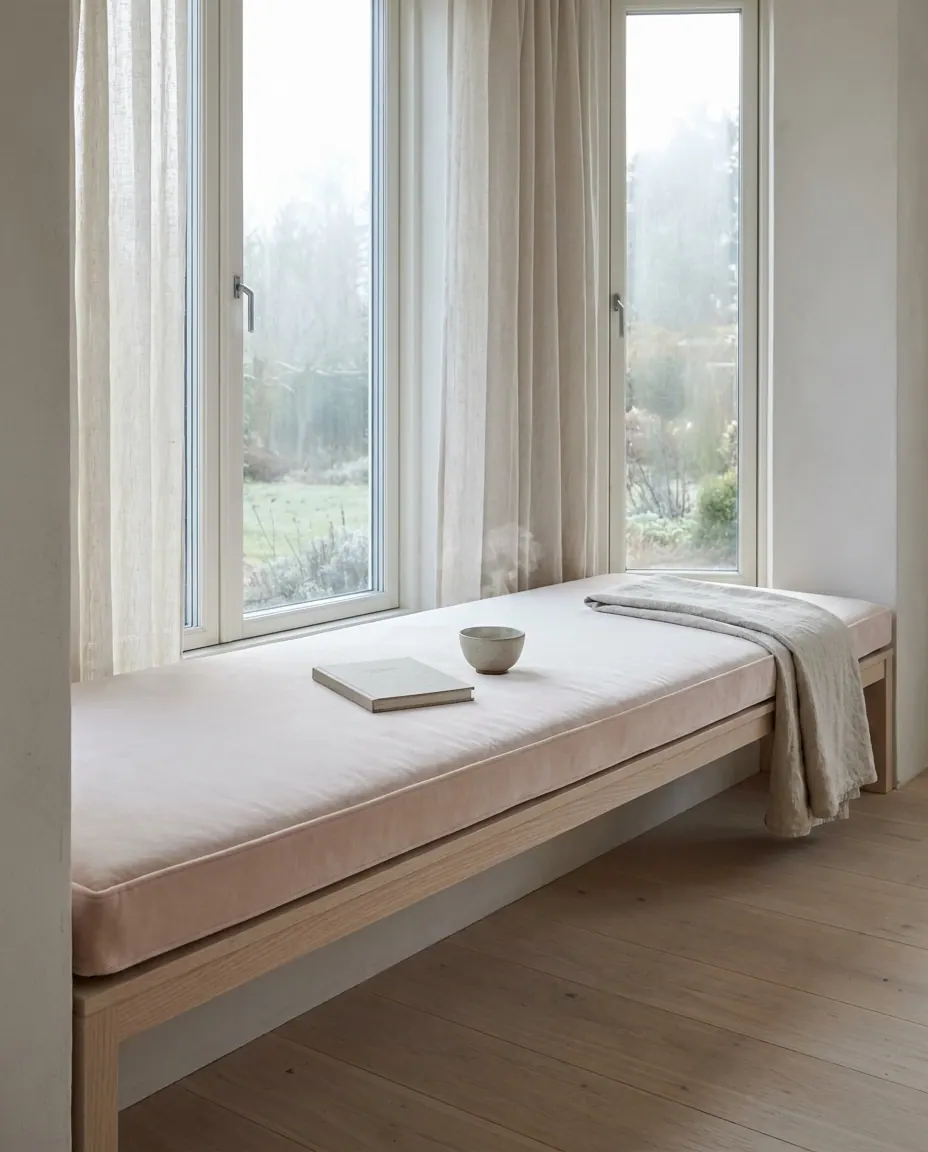
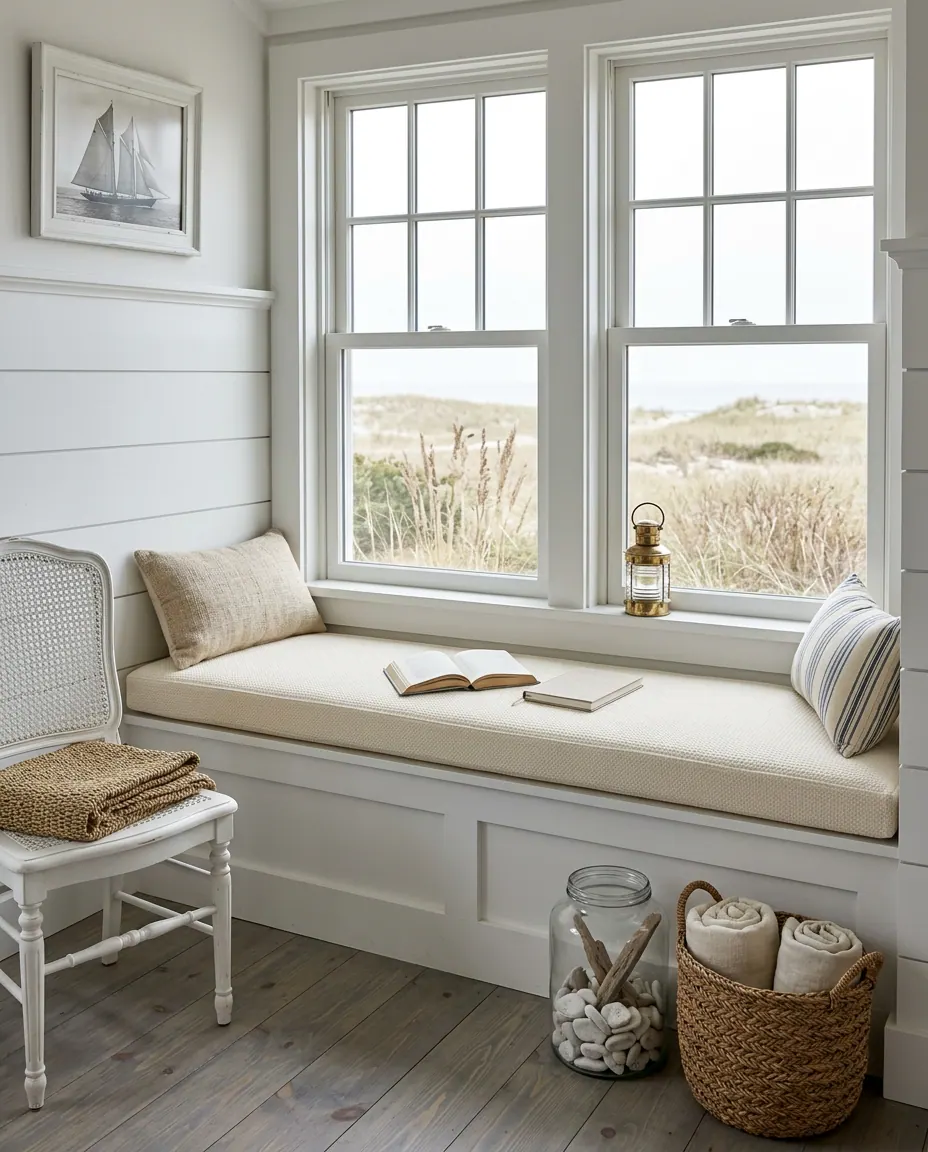
Upholstery fabric isn't waterproof, and constant damp will mildew any of it. The cure for a sweating window seat is a routine, not a miracle cloth.
Margaret Holloway
Buyer questions: damp windows, velvet and washable covers
- A common question
Which fabric is best for a window seat that gets condensation?
The workshop's answerVelvet or soft fabric, because both clean more easily than textured or absorbent fabrics; soft fabric is the most practical if easy cleaning is the priority. Both are upholstery fabrics, not waterproof, so wipe moisture away regularly and keep the cushion out of prolonged contact with a wet surface. Constant damp can cause mildew on any fabric.
- A common question
Do the covers come off, and can they go in the washing machine?
The workshop's answerYes. Every cover has a zipper and comes off the foam completely. All the fabrics, velvet and linen included, machine wash at 86°F (30°C) on a gentle or delicate cycle, whether you bought a full cushion or a cover only. Air dry rather than tumble dry, and iron on low only if needed. Button-tufted cushions are the exception: their covers are sewn through and don't come off.
- A common question
If I choose a tufted cushion, how do I keep it clean?
The workshop's answerIn place, by hand: wipe the surface gently with a damp cloth, using mild soap and water for marks. The fabrics are chosen to be easy to clean, and the soft fabric range wipes clean especially easily. If you want machine-washable covers, choose the untufted, foam-filled version, which has a zippered removable cover.
- A common question
Would an outdoor fabric handle damp better than velvet or chenille?
The workshop's answerFor damp, yes. Linen, velvet, chenille and the other indoor-listing fabrics aren't made for open-air use, and chenille isn't recommended for long exposure in humid climates. The outdoor-performance fabrics resist moisture, mildew and mold far better. They're ordered through the outdoor listing: 100+ colors, all outdoor-rated, water-repellent and UV-resistant, in any color and piping combination.
- A common question
What exactly is the soft fabric you keep recommending?
The workshop's answerIt's the workshop's name for its best-selling upholstery range, codes 901 to 946: a thick, durable performance weave with a soft hand. Most replies describe it as a polyester-cotton blend, earlier ones as 100% polyester; it isn't chenille and isn't 100% cotton. It's wipeable, very easy to clean and machine washable at 86°F (30°C). For a natural fiber, choose cotton-linen instead.
Winter window seat questions
Can foam that has mildewed be cleaned and reused?
Wash the cover; think hard about the foam. The EPA notes that porous materials may have to be thrown away if they become moldy, and foam is porous. A foam insert can be bought on its own in any size, so a cover you like can stay.
Should I put a towel or plastic under the cushion to catch the drips?
No plastic: it holds condensation against the fabric and the board. A towel only moves the damp around unless you change it daily. Lift the cushion, wipe the sill and let air reach the underside instead; a slatted or drilled seat base helps if you're rebuilding.
Will a dehumidifier stop the condensation?
It can help a great deal. The EPA's guidance is to keep indoor humidity below 60 percent, ideally 30 to 50. Drier room air means less water on cold glass to begin with. The weekly lift and the morning wipe still matter; drier air just gives them a head start.
Can I bleach a mildew spot on the cover?
Not these covers. Wash them at 86°F (30°C) on a gentle cycle with mild detergent, no bleach, and air dry. If a mark survives the wash, a zippered replacement cover can be made to your cushion's size in the same fabric code.