The Pattern Room · a measuring pattern
Sunroom and three-season room cushions: fabric for sun, heat and damp
A glass room makes its own weather: noon sun, an afternoon oven and a cold night that beads the panes by morning. Here's how I pick fabric for all three, and the routine that keeps mildew off the seat.

 Save
The quick answer
For sunroom cushions, choose fabric for the room's harshest exposure: outdoor fabric where hours of direct sun, screened walls or regular damp reach the seat, and indoor velvet or smooth microfiber only under a solid roof, away from wet glass. Either way, keep cushions off cold, sweating sills, air them on dry mornings and bring them in before a cold snap.
Three weathers in one glass room
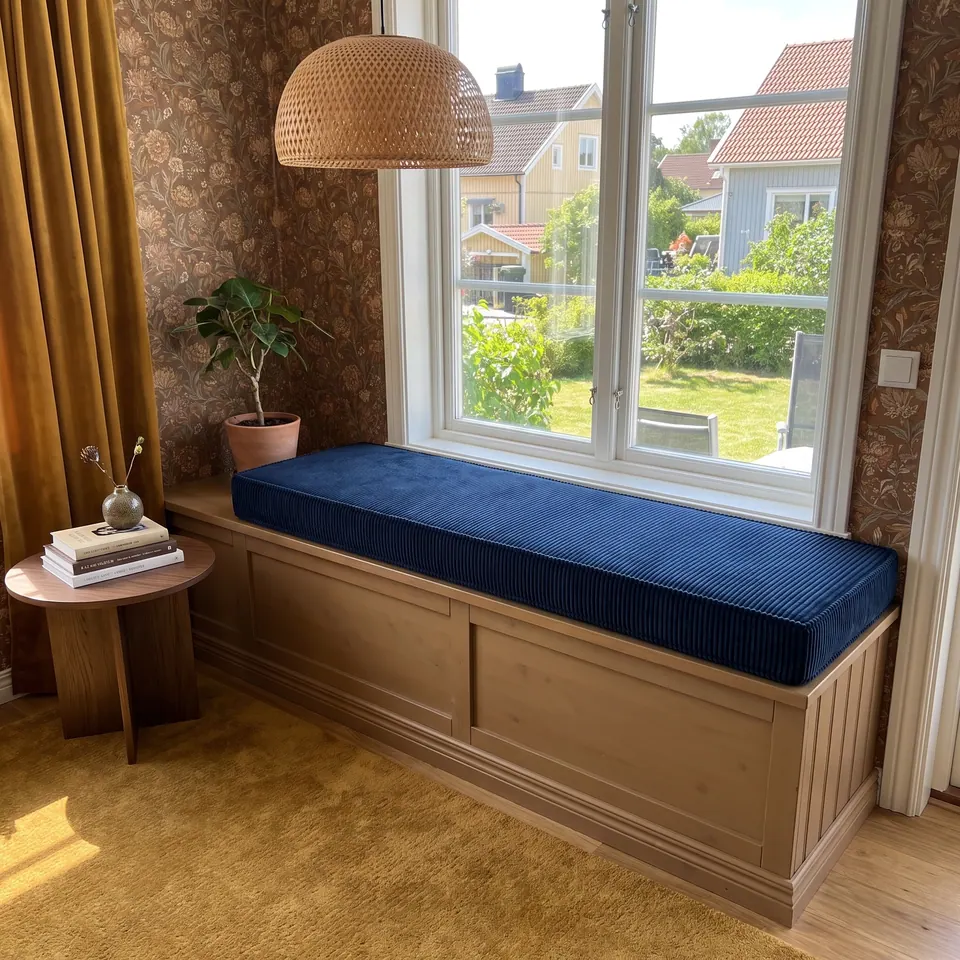
A sunroom can fade a cushion at noon and wet it by dawn. That's the problem with sunroom cushions in one line: the glass gathers strong sun, the room runs hot all afternoon, and on a cold night the panes sweat until the sill is damp by breakfast.
Three season room cushions live on that line all year, so choose the fabric for the worst hour of the day, not the prettiest. A sunroom is a wheelhouse with a rug.
Which way do your windows face, friend, and does the glass bead up on cold mornings? Start there. The sunroom cushions hub has the wider picture.
Indoor weave or outdoor fabric: match it to the room's worst hour
| What your sunroom does | Fabric that holds up | Why |
|---|---|---|
| Solid roof, windows shut, little direct sun on the seat | Indoor velvet, linen-look or smooth performance microfiber | Fine where rain and direct sun don't reach, and softer to sit on |
| Hours of direct sun through the glass | Outdoor fabric rated for UV and fading | Indoor fabrics can fade in strong, prolonged sun |
| Screened walls letting in pollen, dust and humid air | Outdoor fabric | The workshop's standing advice for screened spaces |
| Glass that sweats on cold mornings | Velvet or microfiber kept off the glass; outdoor fabric if the seat gets wet | Both wipe clean; constant damp mildews any fabric |
| Sticky, humid summers | Anything but chenille | Not recommended in humid climates or outdoors |
Solution-dyed, water-repellent and the other words on the swatch card
For sun, look for solution-dyed fabric: the pigment goes into the polymer before the fiber is spun, so color runs through the whole strand. Published comparisons rate solution-dyed acrylic around 7–8 on the 1–8 blue wool lightfastness scale, against 5–6 for most performance polyesters and olefins. Velvet wants to stay out of long hours of direct sun; see window seat cushion fading and the outdoor acrylic swatches.
For water, read the words slowly. Water-repellent is a promise; waterproof is a contract. The workshop's outdoor range runs to close to 200 woven fabrics, all water-, UV- and fade-resistant, none of them vinyl, and firmer than indoor upholstery, like a good sun-lounger cushion. That makes honest indoor outdoor fabric for a seat you use daily.
On mildew: makers of outdoor acrylic note that it grows on dirt left on the fabric, not on the fiber itself. Mildew resistant cushion fabric helps; a clean, dry cushion helps more.
The glass-room routine, season by season
Read the room before the swatch card
Count the hours of direct sun on the seat, check whether the glass sweats, and note any screened wall. Tell the maker indoor or outdoor first, and judge samples in your own light.
Keep the cushion off wet glass and cold sills
Window seat condensation pools on the sill, and that's where mildew starts. Wipe the sill each cold morning and keep the cushion's back edge off the glass.
Split long seats over heat
A radiator under the seat needs somewhere to send its heat. Two cushions let the warm zone breathe and lift out one at a time.
Air cushions on dry mornings
In humid weeks, stand cushions on edge where air moves. Where spills, pets or damp are likely, ask for a waterproof inner liner.
Dry wet foam all the way through
Standard foam takes 24 to 48 hours to dry; reticulated quick-dry foam takes 1 to 3 hours with airflow. The workshop's standard foam isn't quick-dry and has no mesh bottom as standard.
Rotate and flip against the sun
Turn and flip cushions every few weeks so fading, if it comes, comes evenly. A blind at midday buys time for any indoor fabric.
Wash covers cool and air dry
Covers zip off and wash at 86°F (30°C) on a gentle cycle. Air dry, and zip up only when cover and foam are both dry.
Bring them in before the cold snap
Bring cushions indoors before the first hard frost and store them loose with air around them, never shrink-wrapped.

Have it made
Measured it? Have Callum’s workshop make it
Tell them where it lives. Porch, deck or boat: the weather picks the fabric and the foam before anyone else does. — Callum
Leave your details and the workshop will call you to confirm measurements, fabric, foam and piping. No prices, dates or payment on this page: it is a request, not an order.
A 106-inch ledge over a radiator
A buyer in the US wrote in about a front bay window: a ledge 106 in long and 15 in deep (269 x 38 cm), with a radiator right below.
One long cushion would have blanketed the heat. The workshop suggested two cushions of 53 x 15 in (135 x 38 cm) each, so the radiator zone isn't fully covered and each piece lifts out on its own. The buyer took time with the color chart, the right pace for a seat in full window light.
In a glass room that split does double duty: the heat gets out, and on a damp morning one half comes off to air.
How sunroom cushions go wrong
- Choosing by looks alone: velvet in a sun trap, or indoor fabric where rain drifts through a screen.
- Chenille in a humid room. The workshop doesn't recommend it for humid climates or outdoor exposure.
- Leaving a cushion pressed to sweating glass all winter. Constant damp mildews any fabric, outdoor cloth included.
- Treating water-repellent as waterproof. Standard foam holds water, and a soaked seat needs 24 to 48 hours to dry.
- Shrink-wrapping foam for winter. Foam compressed for months can stay crumbly, with wrinkles set into the cover.
If direct sun hits a sunroom cushion for hours or the walls are screens, choose outdoor fabric; keep velvet under a solid roof and off wet glass.
Callum
Hot summers, snowy winters, and where to read next
A buyer in the US with outdoor storage benches, facing hot summers and snowy winters, got the plain answer I'd give for a cold three-season room: no quick-dry foam or mesh bottom in the range, so the water-repellent fabric belongs on a covered porch or in winter storage.
Next stops: indoor cushions on a covered porch, water-repellent vs waterproof cushions, winter care for outdoor cushions, screened porch cushions, and Élodie's sunroom colors that last. The seat itself lives under window seat cushions.
Buyer questions: glass, damp and screens
- A common question
My window seat gets heavy condensation on the glass, and my last cushion mildewed. Which fabric should I pick?
The workshop's answerVelvet or the smooth performance microfiber, which both wipe clean more easily than textured or absorbent weaves; the microfiber is the most practical. Neither is waterproof, so wipe moisture away regularly and keep the cushion off a wet surface. Constant damp can mildew any fabric.
- A common question
Our porch is covered and screened, but it's humid, dusty and full of pollen in spring. Indoor fabric or outdoor?
The workshop's answerOutdoor fabric. Regular indoor fabrics are fine under a closed roof where rain and direct sun don't reach, and the workshop checks that a space really is covered before suggesting them. For a screened space open to pollen, dust and humidity it recommends outdoor fabric, with samples sent first.
- A common question
Can chenille cushions go outside, or live in a sticky, humid room?
The workshop's answerNot outside, and not ideally in humidity. Chenille, linen, velvet and the other indoor fabrics aren't made for open-air use, and chenille isn't recommended for permanent exposure in humid climates. The outdoor-performance fabrics resist moisture, mildew and mold far better.
- A common question
Will outdoor fabric feel plasticky on a seat I use indoors every day?
The workshop's answerNo. It isn't a coated, tarp-like fabric; it feels like proper cloth. It is firmer and less velvety than indoor upholstery, closer to a good sun-lounger cushion, and comfort feedback from buyers has been consistently positive.
- A common question
Can outdoor cushions stay out through rain and snow all year?
The workshop's answerNot uncovered. The outdoor fabrics are water-repellent and UV-resistant, but the standard foam isn't quick-dry and there's no fast-drying mesh bottom as standard. They do best on a covered porch, or stored indoors over winter.
Sunroom fabric questions, answered short
Do sunroom cushions need outdoor fabric?
Only where the room behaves like outdoors. Under a solid roof with little direct sun, indoor velvet or microfiber is fine; hours of sun through the glass, screened walls or regular damp call for outdoor fabric.
How thick should a sunroom window seat cushion be?
The standard seat is 4 in (10 cm), and most buyers keep it. For a neater, lower profile on window seats and benches, 3 in (7.5 cm) works well; outdoor-style benches usually take 3 to 4 in.
How long does a wet foam cushion take to dry?
Standard polyurethane foam takes roughly 24 to 48 hours with air moving around it, while reticulated quick-dry foam can drain and dry in 1 to 3 hours. Stand a damp cushion on its edge in moving air, never flat on a cold sill.
How do I slow fading on an indoor fabric in a sunny room?
Indoor fabrics have limited UV resistance and can fade in strong, prolonged sun. Flip and rotate the cushions every few weeks and draw a blind at midday. Where the seat gets hours of direct sun, choose an outdoor fabric made to resist UV.