Sunroom cushions for the window seat, the bench and the three-season room
A sunroom is a porch that moved indoors and kept the weather. Glass on three sides, sun all afternoon, a chill after dark. Here is how buyers size, cover and fill the seats out there.
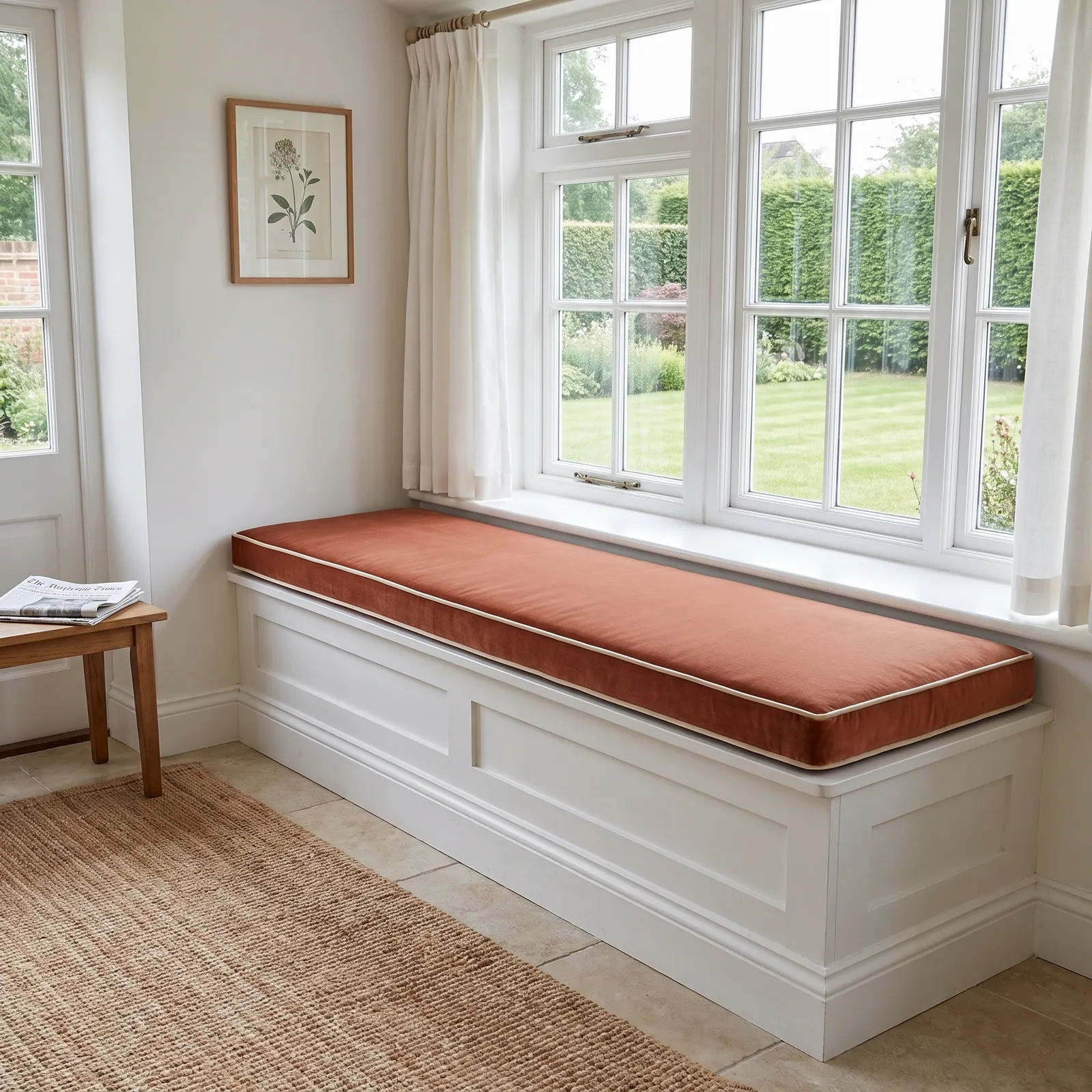
SaveBurnt orange velvet with off-white piping gives a white sunroom window seat a warm center against the green garden view.
The quick answer
Sunroom cushions are made-to-measure foam cushions for the window seats, benches and daybeds of a glassed-in room, 4 in (10 cm) thick as standard with a zippered, removable cover. Choose color in the room's own light, add ties or a non-slip base on narrow seats, and if the room goes unheated in winter, store the cushions indoors like porch cushions.
Glass on three sides: who the sunroom cushion is for
A sunroom gets two climates a day. Noon through glass is bright and warm; the hour after sunset can feel like the porch in October. A cushion out there lives with both.
This page covers sunroom cushions of every kind buyers ask us about: the window seat under tall multi-pane glass, the storage bench by the French doors, the rattan daybed between the ferns, the teak bench on a brick floor in a three-season room. Shape-by-shape help sits under window seat cushions, bench cushions and daybed cushions. If your room has screens instead of glass, it is a porch, and patio and porch cushions is your page; screened porch cushions covers the in-between.
The glass draws the shape
The windows decide the cushion. A long run of multi-pane glass gives a long rectangle. An arched window gives a seat with a curved front. A glazed corner gives an L, and an L is two pieces, split and confirmed before anyone cuts. The how-to lives in L-shaped bench cushions: how to measure both runs and measuring a curved cushion.
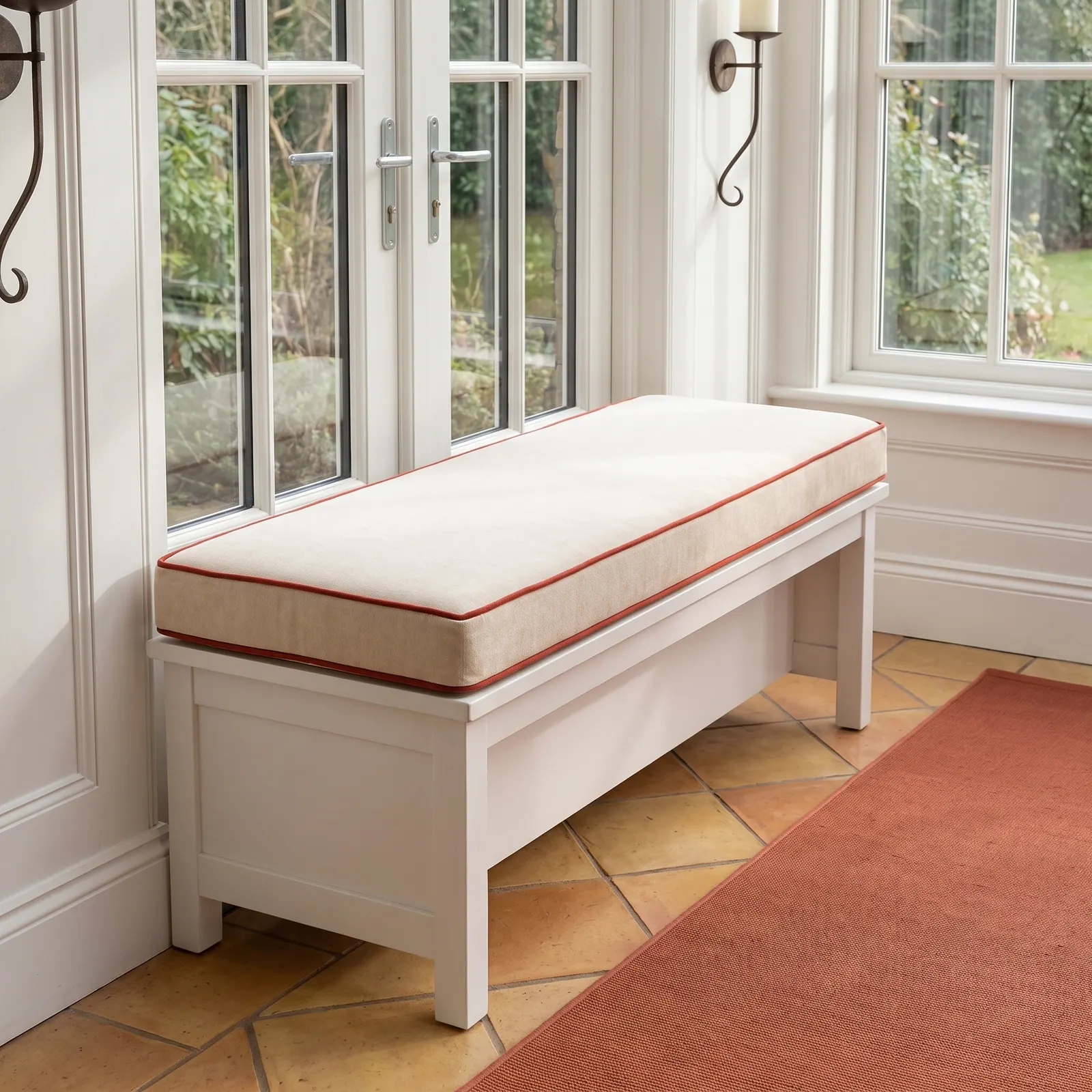
Edges are yours to choose: brick-red piping on an ivory bench beside terracotta tile draws the outline, and a plain edge keeps it soft. Just know that tufted French cushions are fiber-filled and stitched shut with no zipper. In a room people walk into straight from the yard, the zippered box cushion is the one you can take apart and wash.
Color is the other weather. It reads one way at noon in a glass room, another under a lamp, another on a screen, and chart swatches can look darker or coarser than the cloth. Photos of finished cushions are the most honest reference you'll get.
The count is how many published readings use each family. Open a family for its swatch book, care notes and neighbors.
Foam, thickness and the cold months
The standard is 4 in (10 cm) of foam. Firmness sits around 6 to 7 on a 10-point scale, with backrests softer unless you ask for a match. High-density foam keeps a long window seat flat and square, and a seat can overhang the front edge by up to about 2 in with an inner support wrap.
A three-season room earns its name. If yours goes unheated in winter, treat the cushions the way you'd treat porch cushions, which the workshop advises storing indoors in the off-season. Bring them in before the first frost and they'll forgive you everything. A fabric protectant spray on the covers helps in between.
Check the finished height in the seat height calculator before you go thicker. Window sills don't move.
A real project
An arched window seat, drawn as a box and a curve
A buyer got in touch about an arched window seat. The question was the one every curve brings: what numbers do you need?
Numbers alone won't do it, friend. We don't guess a curve. The seat was drawn as what it is, a rectangle plus an arc of a circle: total width and depth, the straight length of each side before the curve begins, where the curve starts and ends, and how deep it runs at its deepest point.
For a curve that won't sit still on paper, there's the template. Lay wrapping paper or newspaper on the seat, trace the edge with a marker, cut it out and photograph it flat beside a tape measure. Each cushion gets its own drawing, and the shape comes back to you for a yes before production.
Measured
Arched seat drawn as a rectangle plus an arc of a circle
What it taught
Curves are made from a measured sketch or a paper template, never from numbers alone.
Sunroom cushion mistakes, and the fix for each
Cutting a window seat cushion exactly to a shallow seat. With nothing to grip it slides; go slightly larger or add a non-slip base.
Leaving back cushions loose on a bench. Tie them to the seat, or ask for double piping to give them structure.
Writing 'add ties' in the dimension box. Ties come only on request; put their position, length and color in writing.
Approving the pre-dispatch photo without checking the small extras: ties, straps, the non-slip base.
One long cushion over a lift-up window seat lid. Split it at each lid break and add ties.
Choosing color from a phone in a dark room. Judge it in the sunroom's own light.
Photographs from the workbench
Open any photograph large; each one has its own link and a Save button.
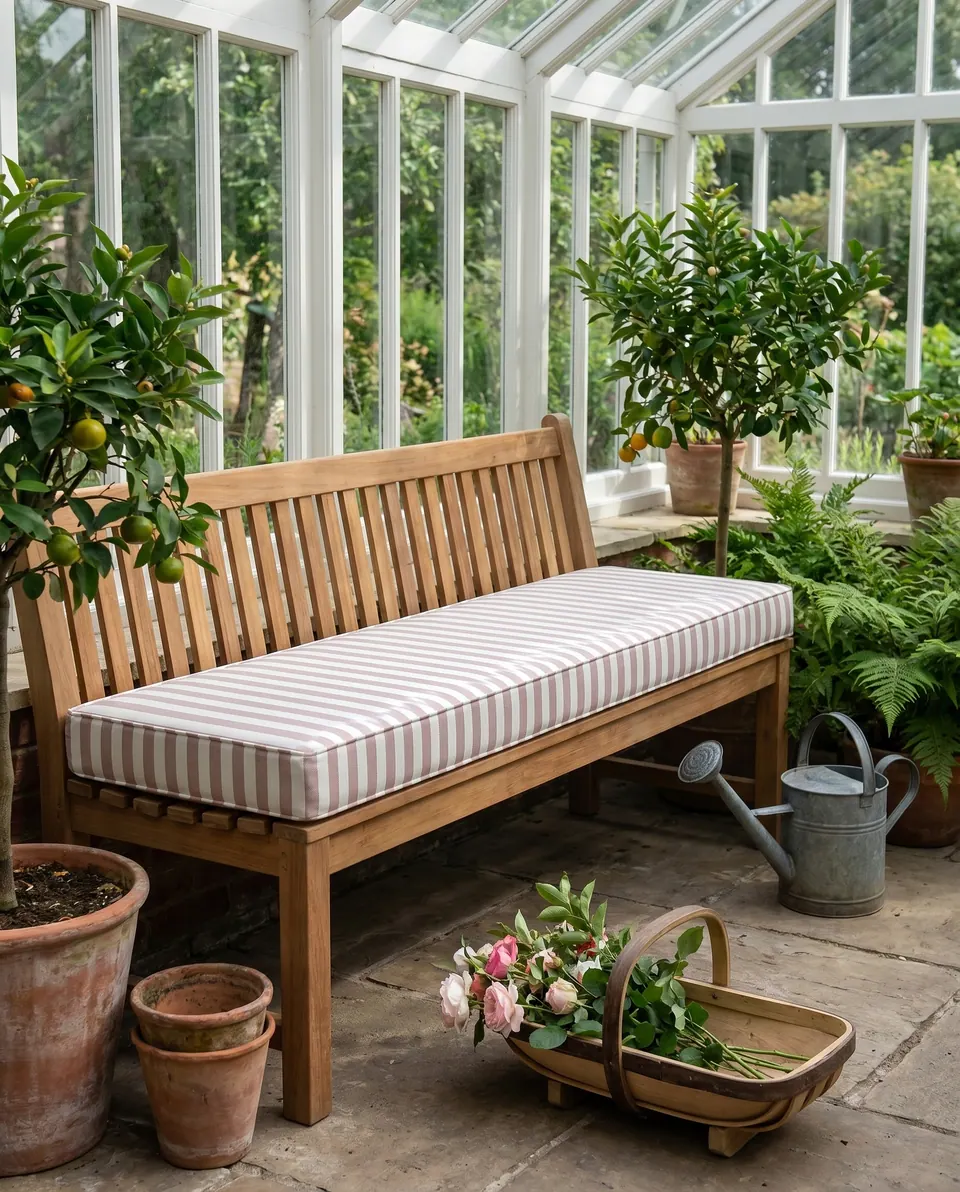
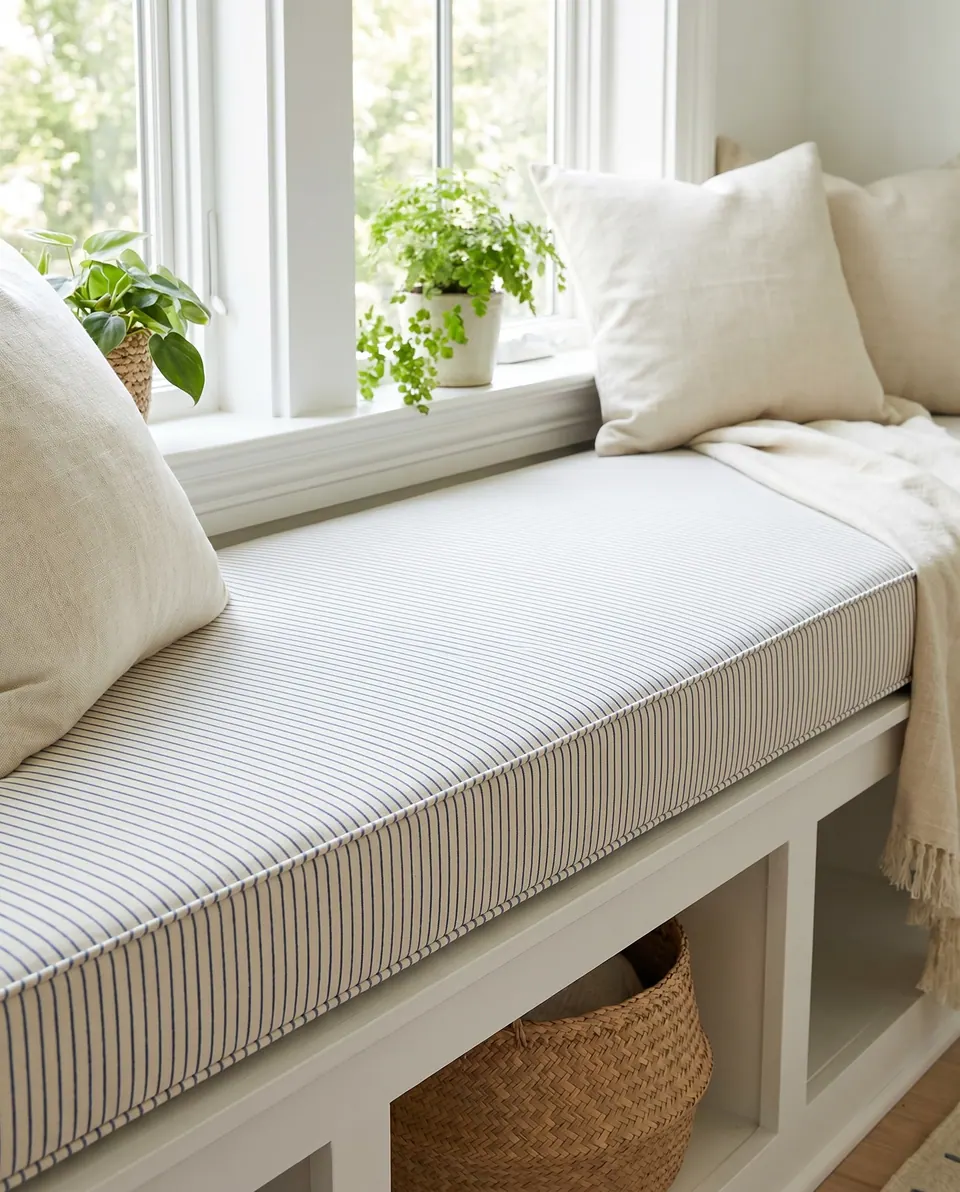
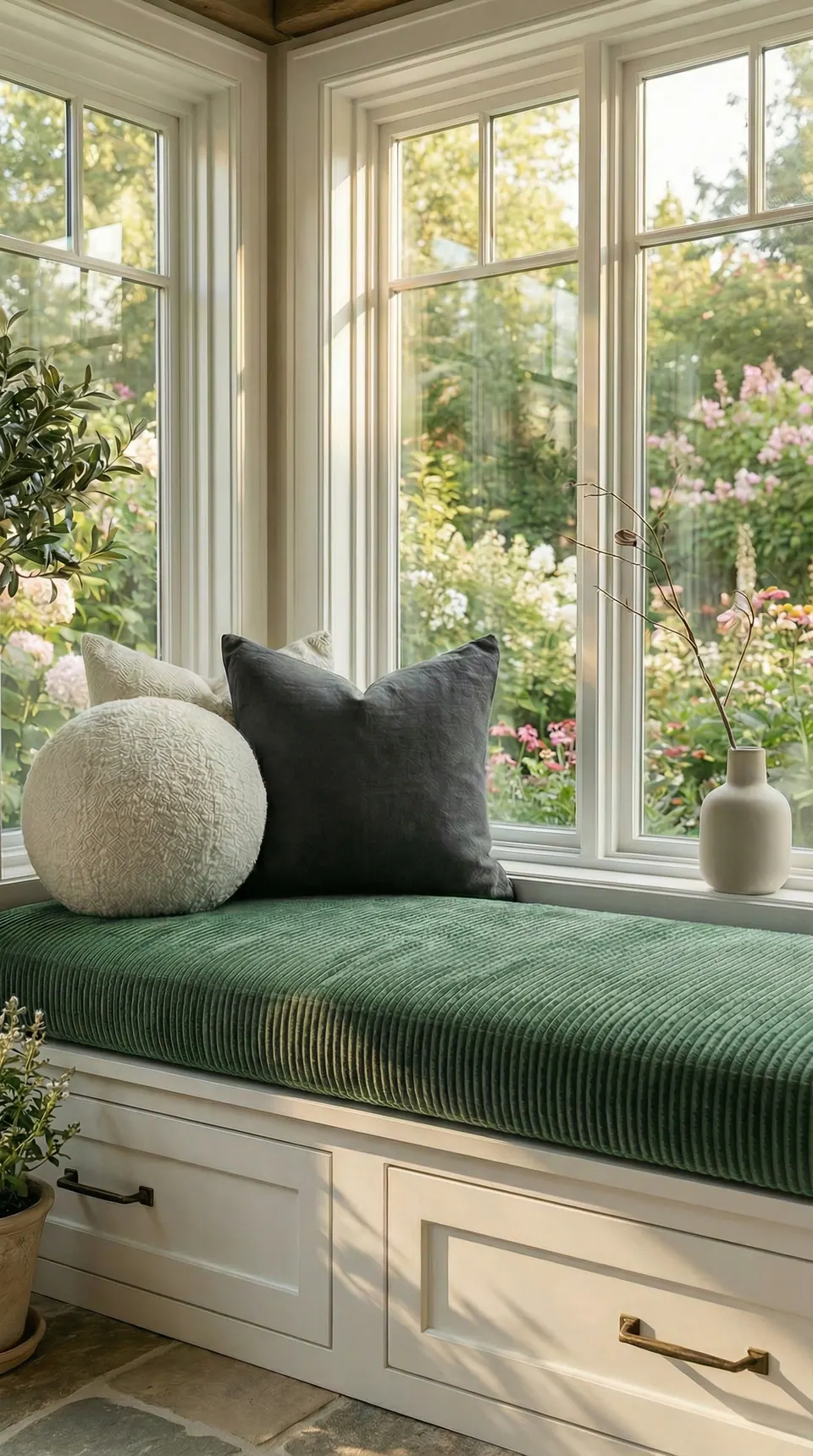
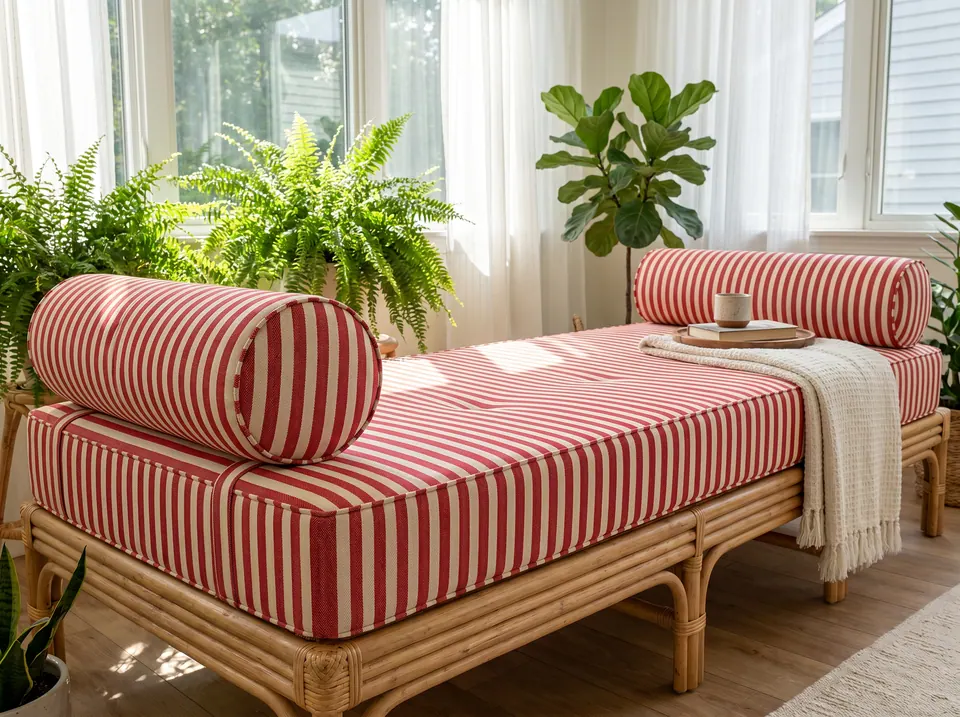
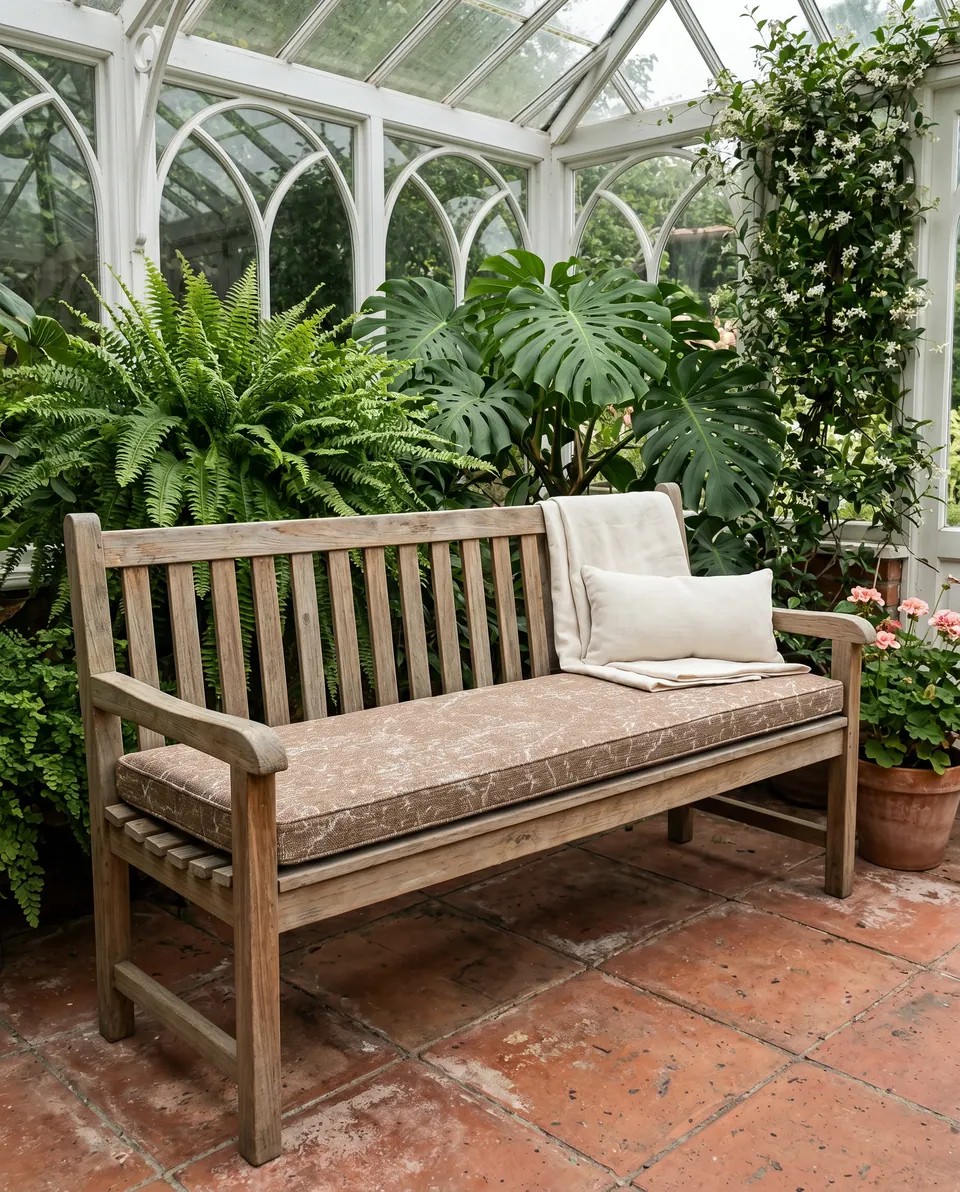
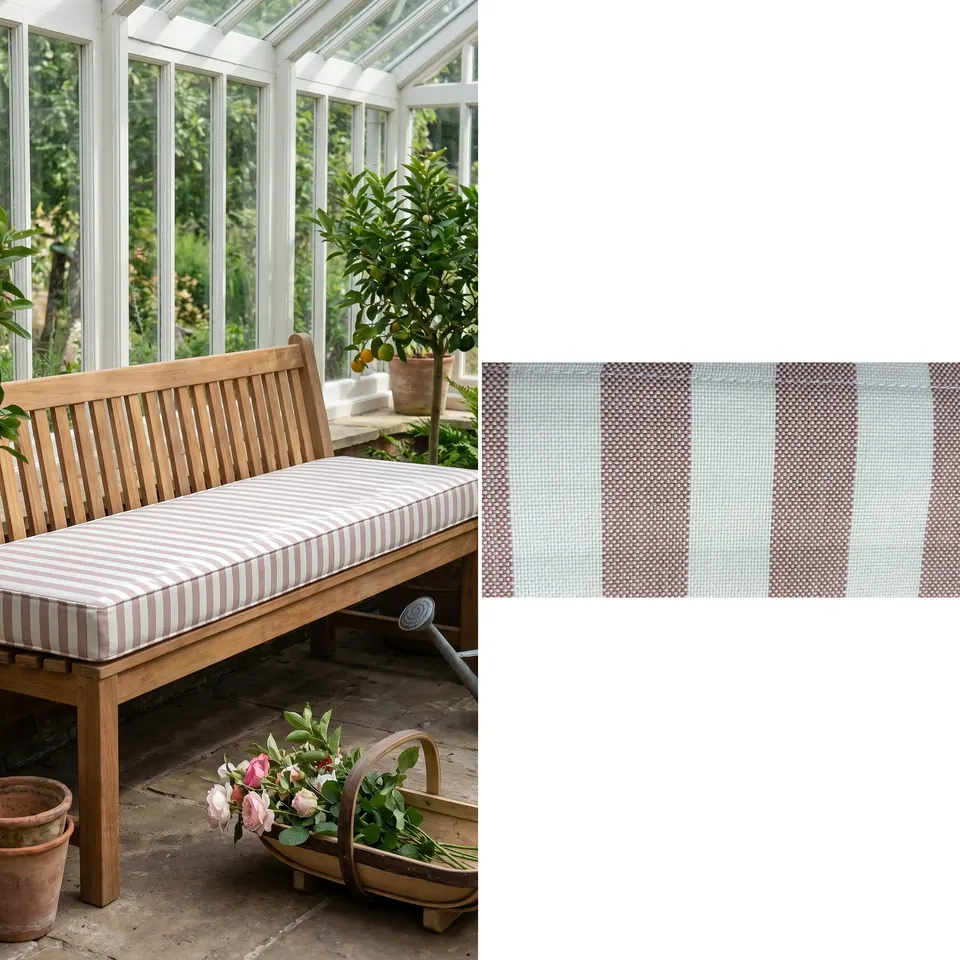
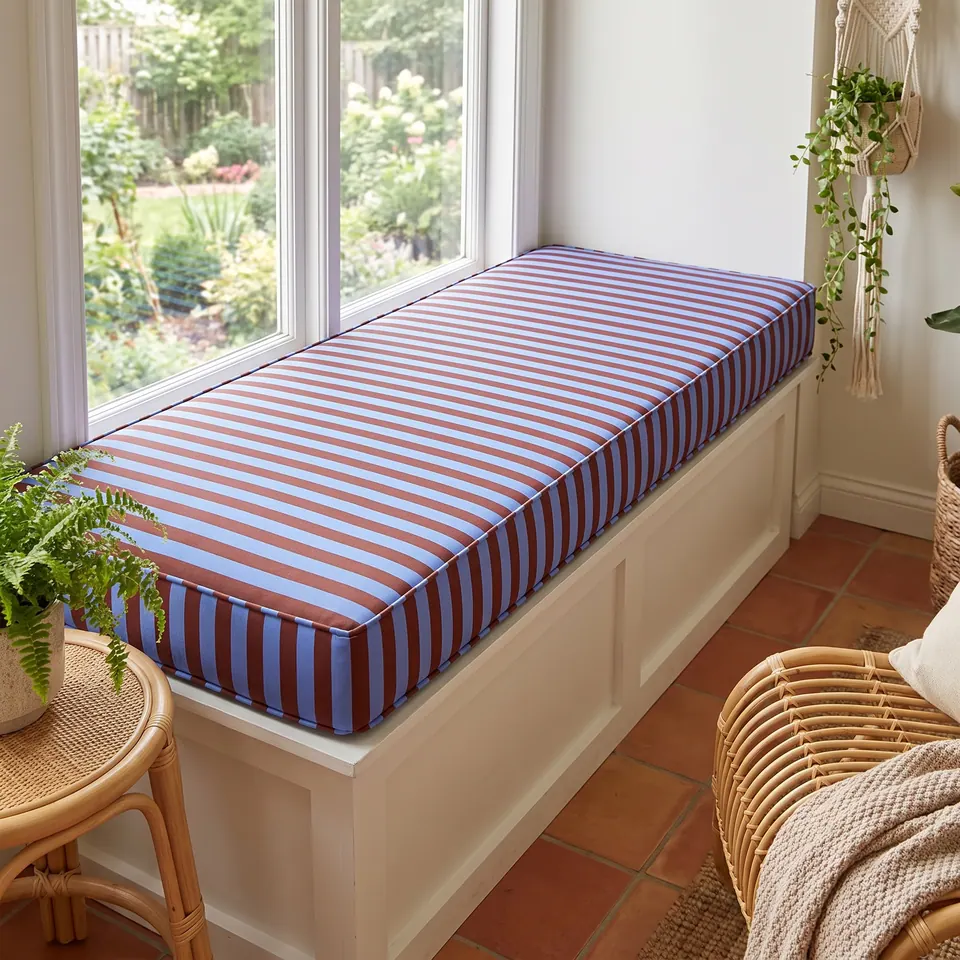
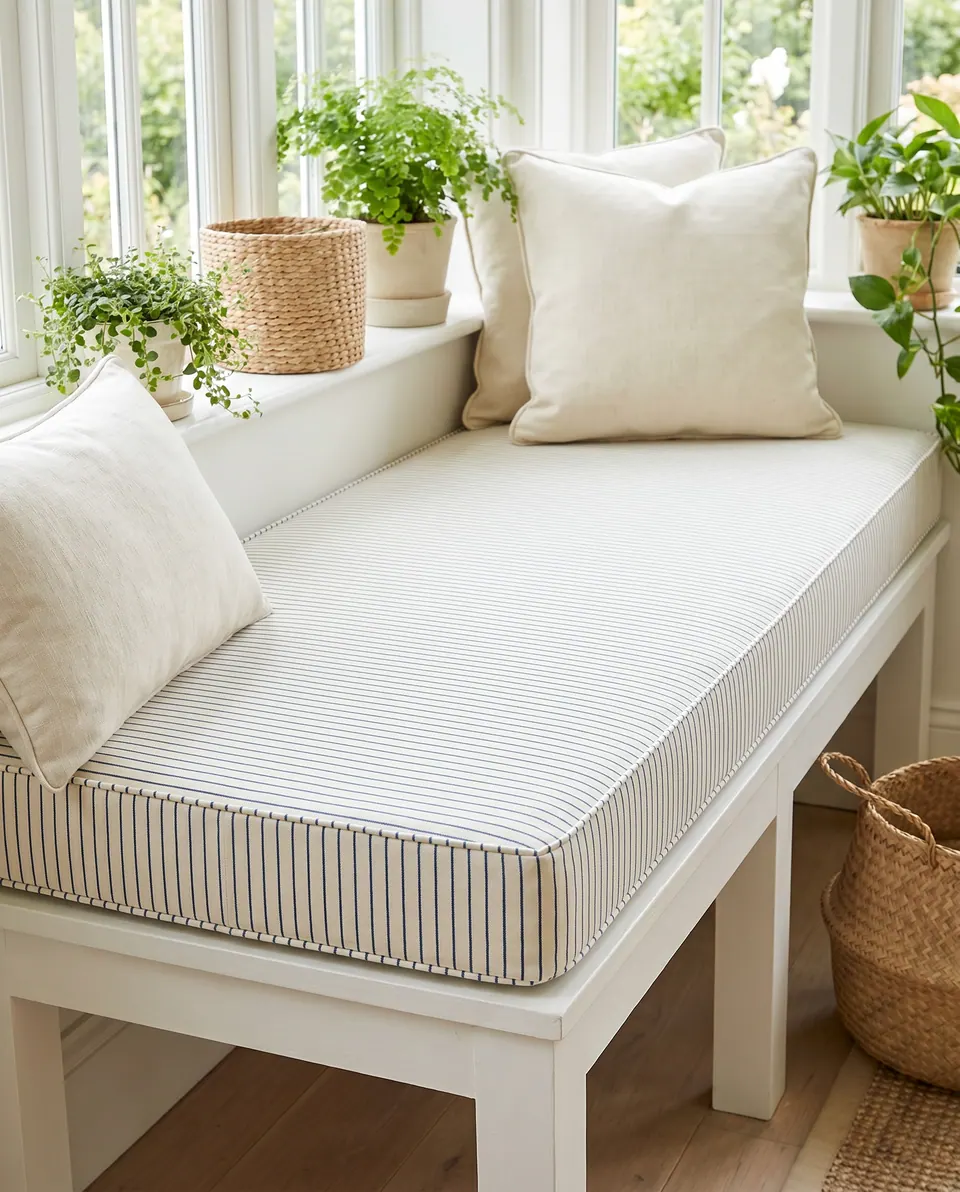
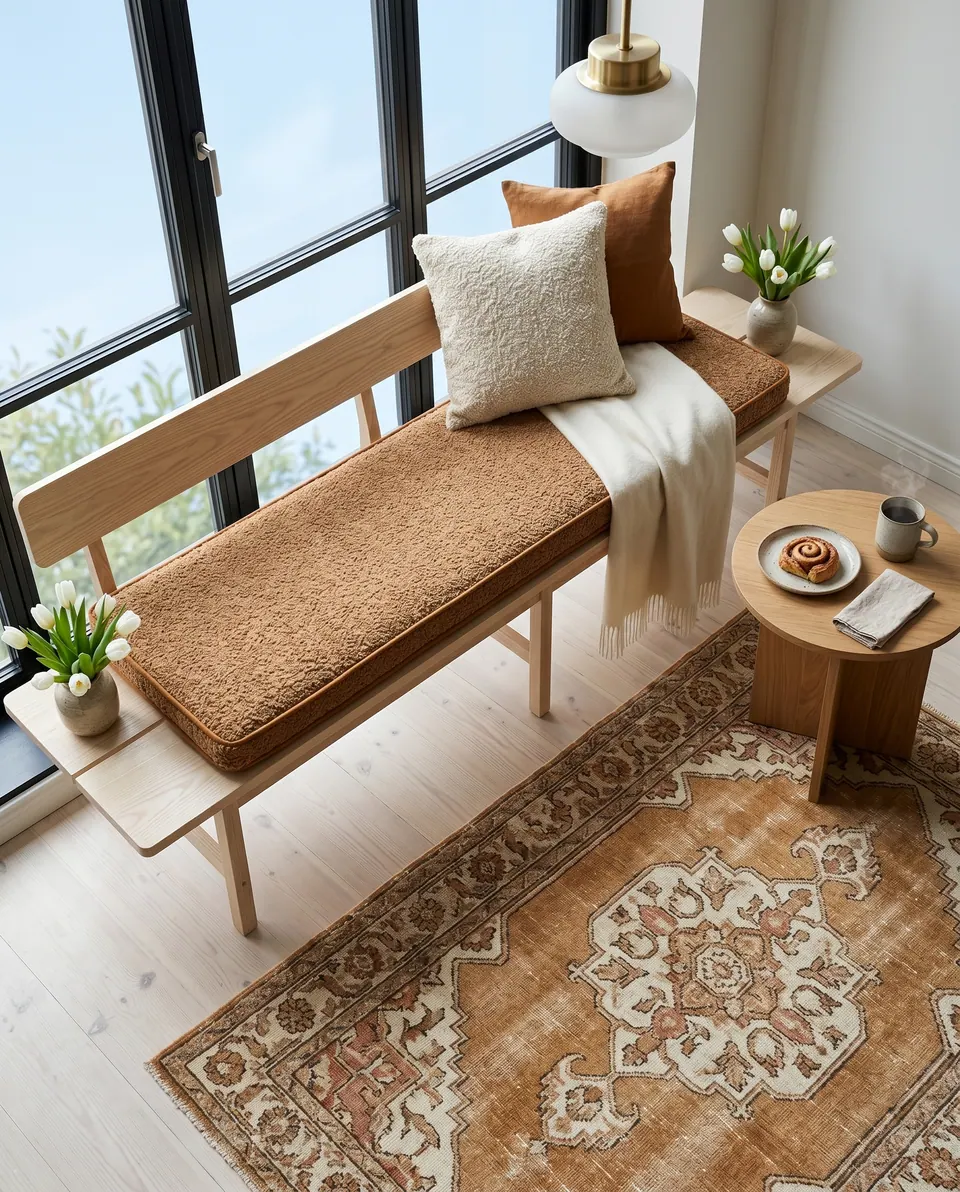
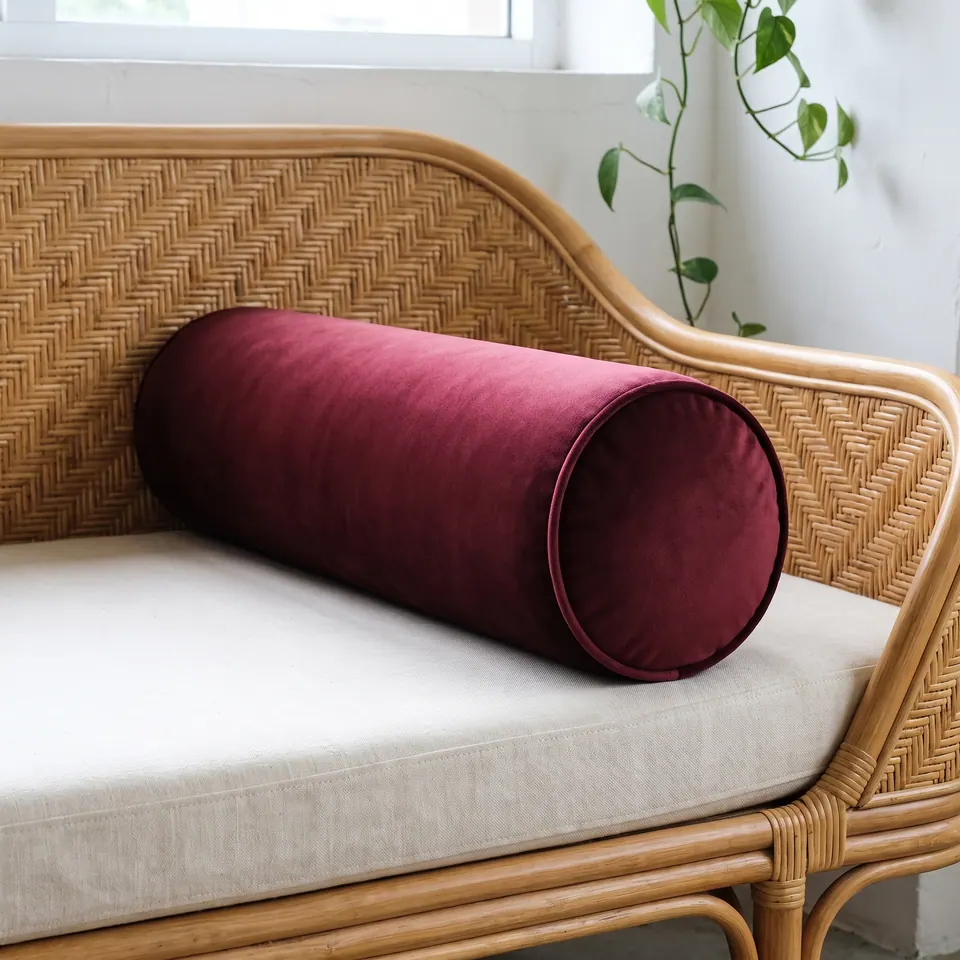
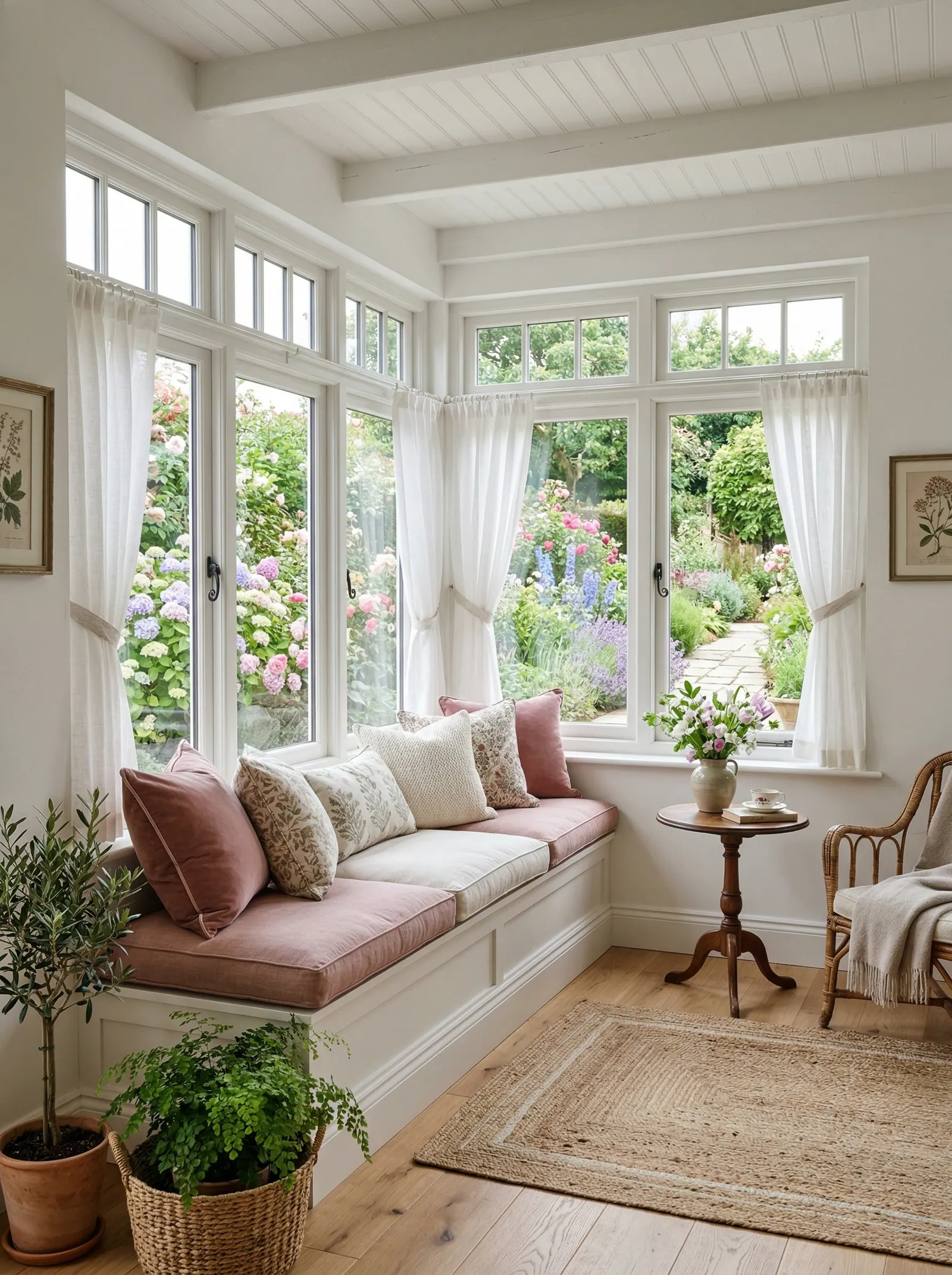
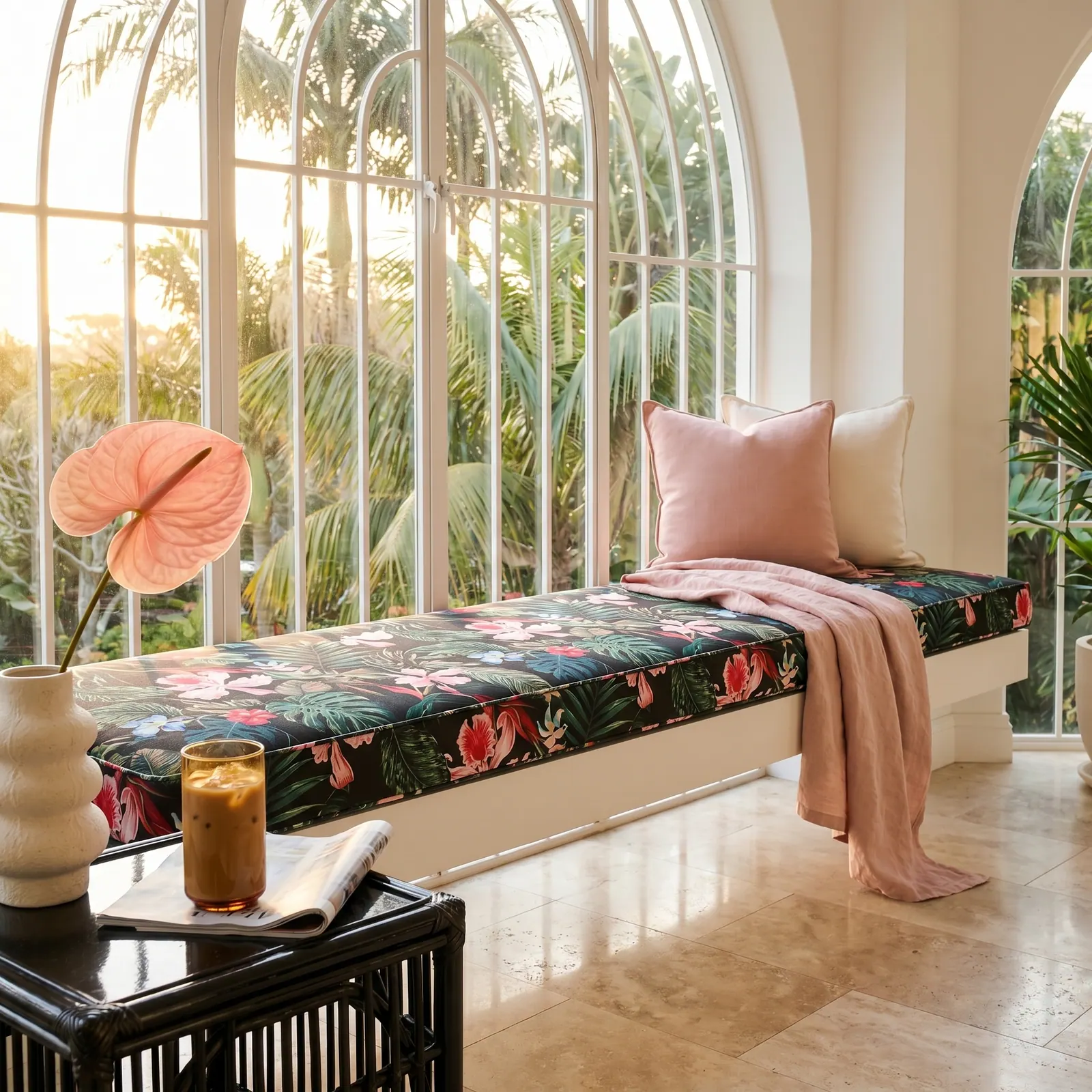
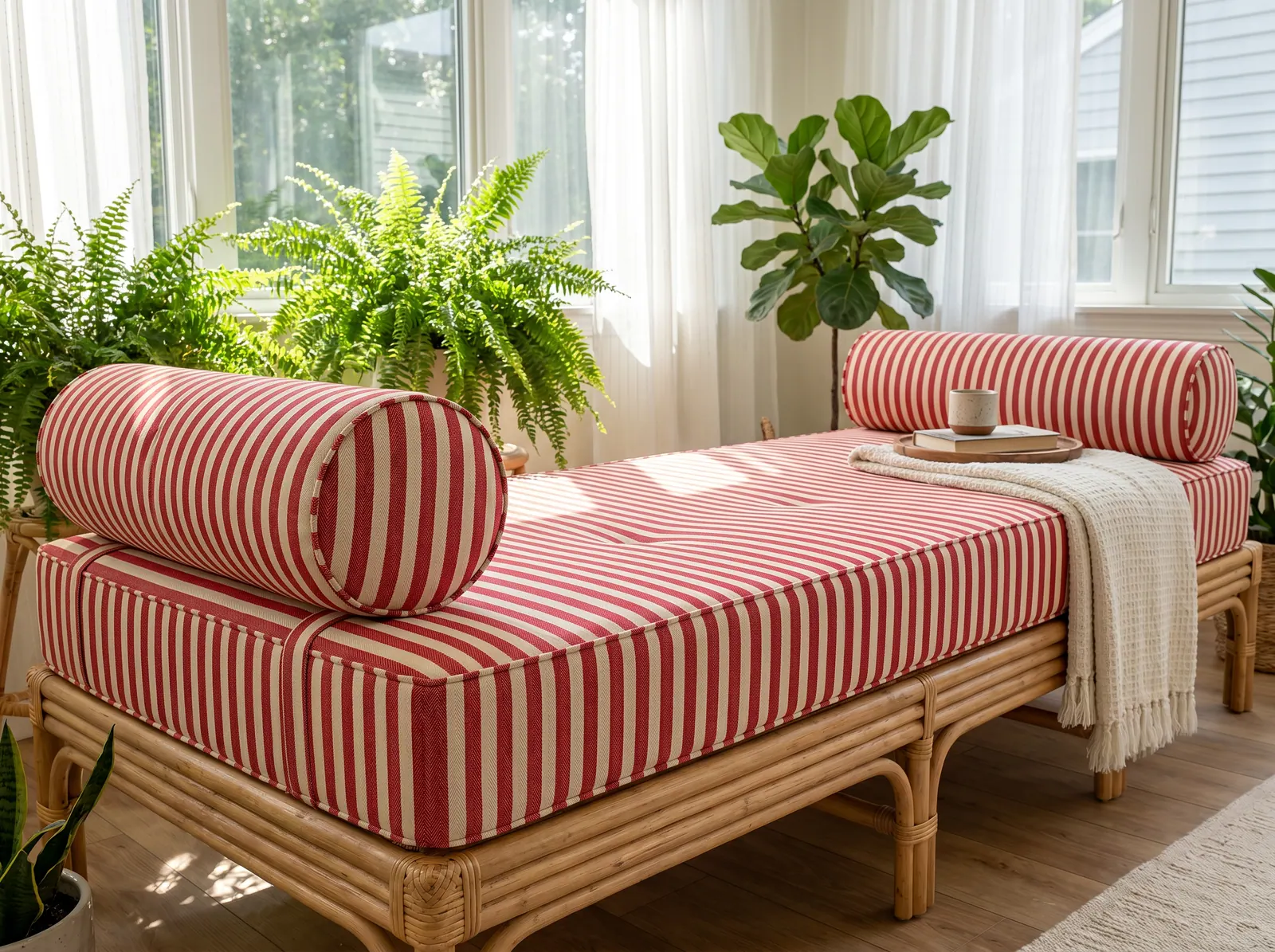
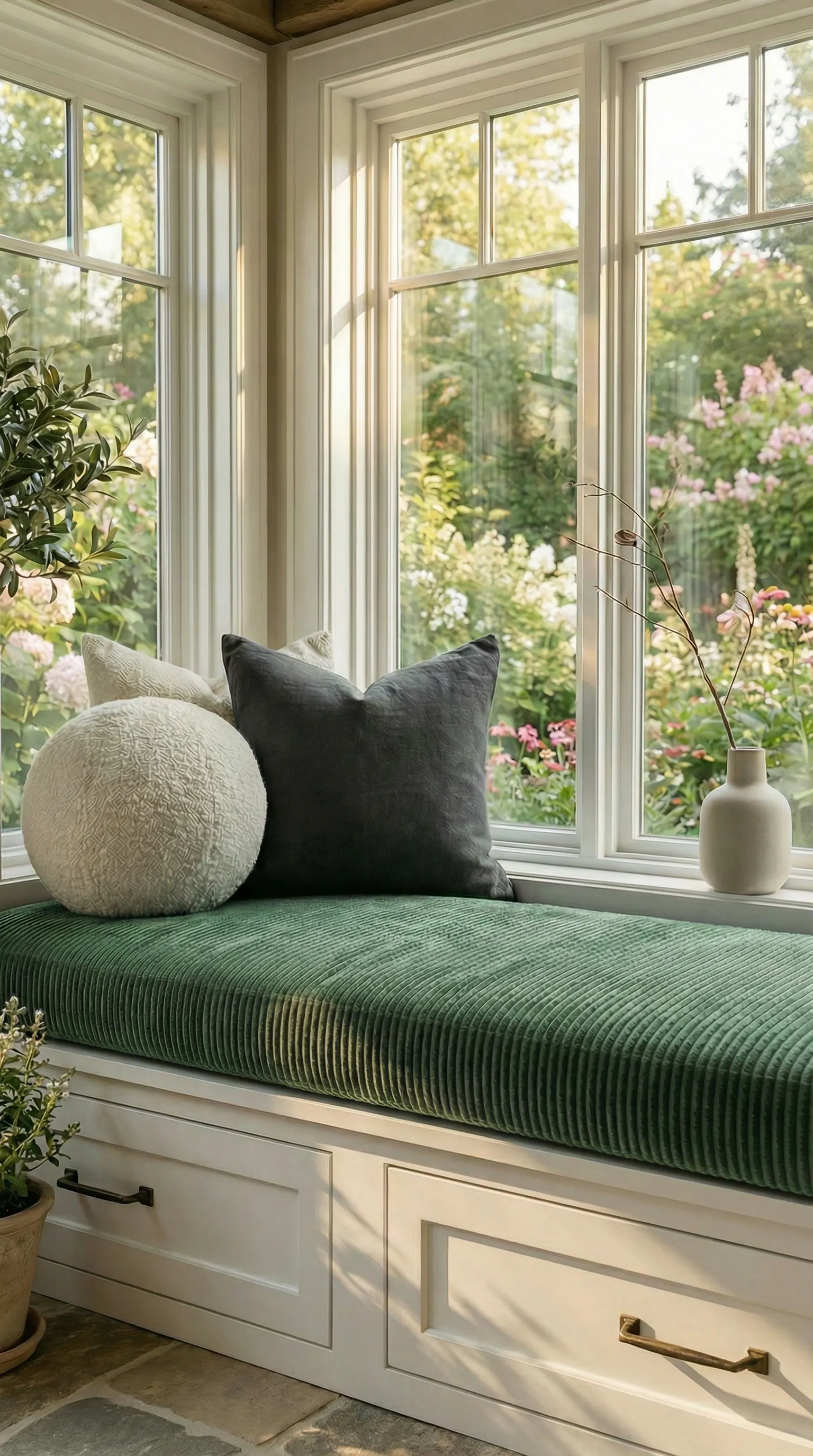
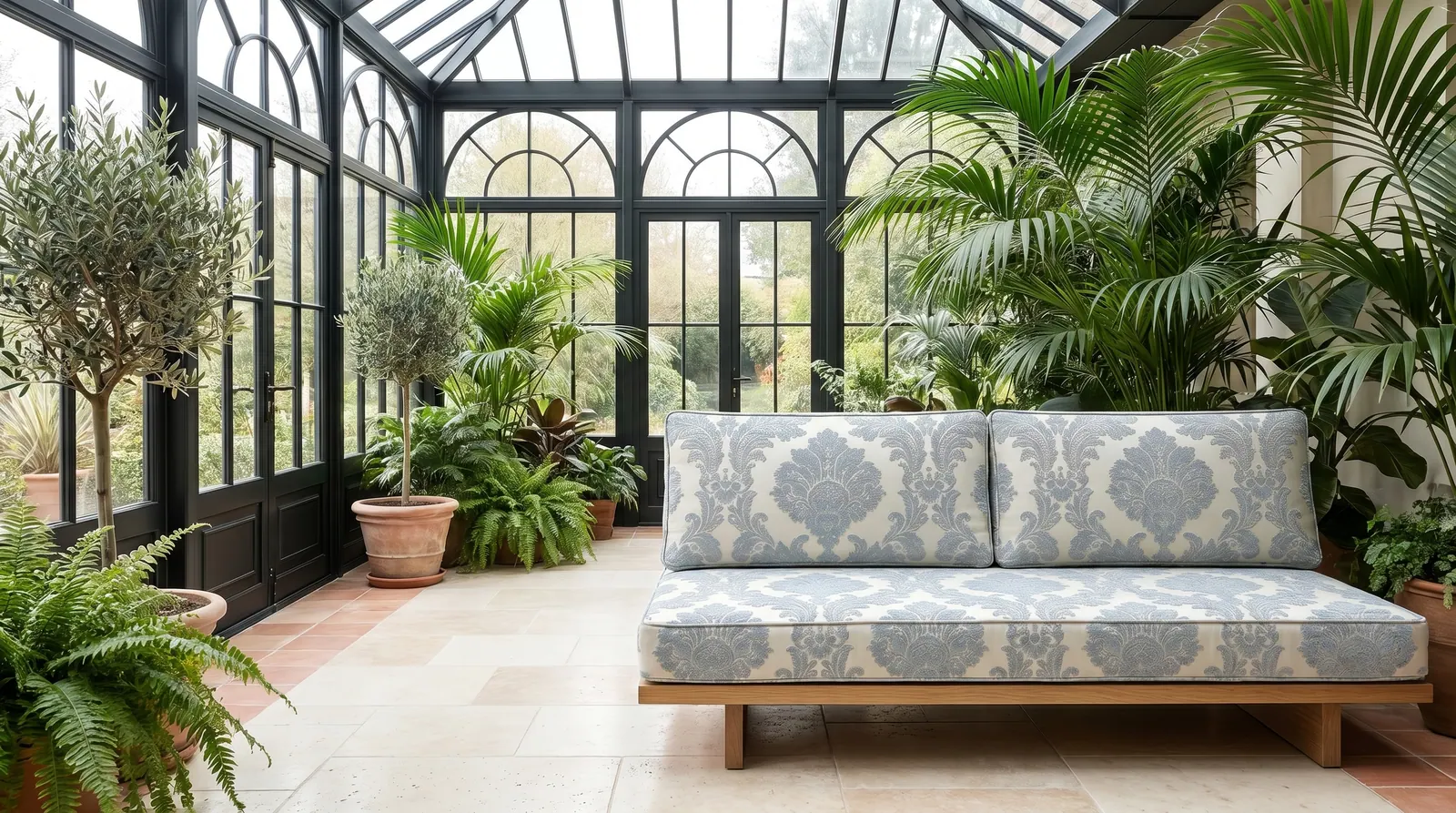
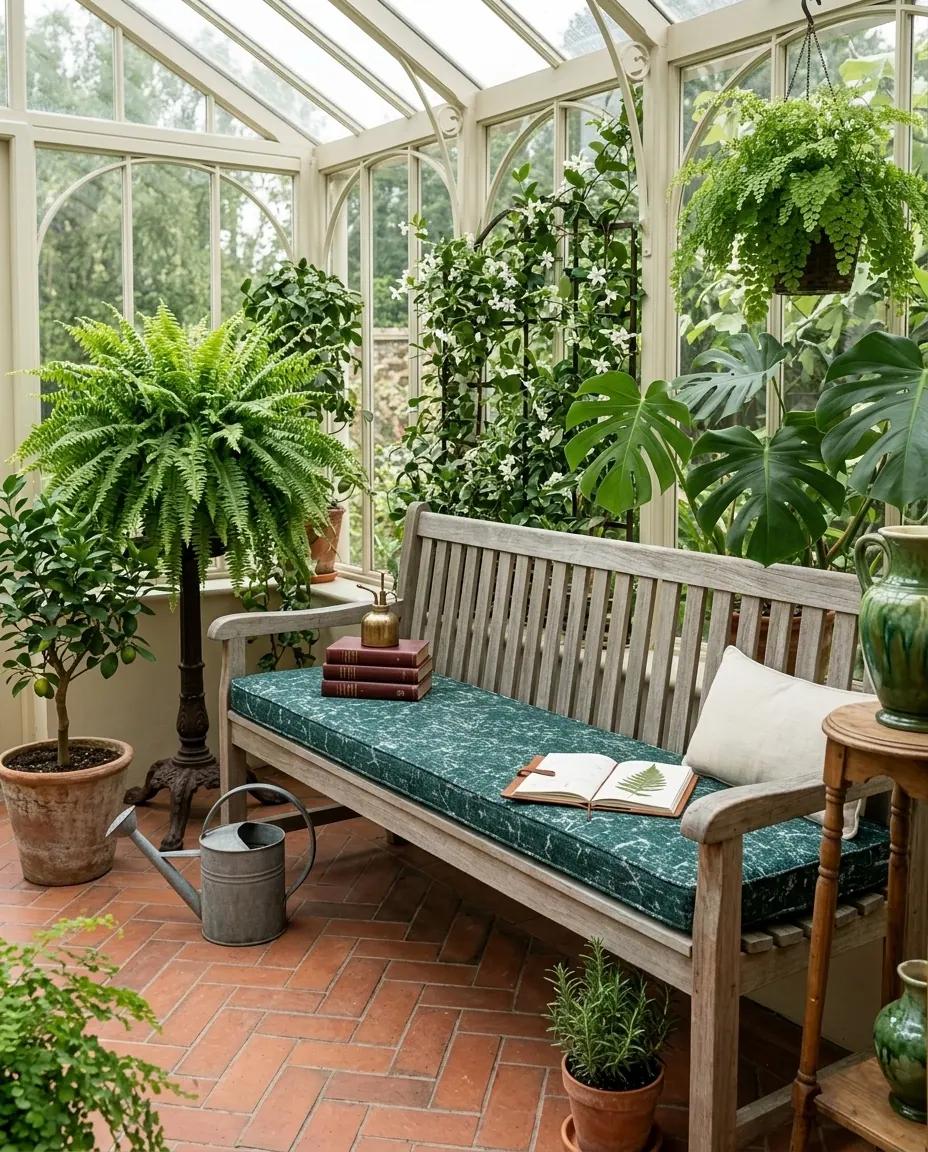
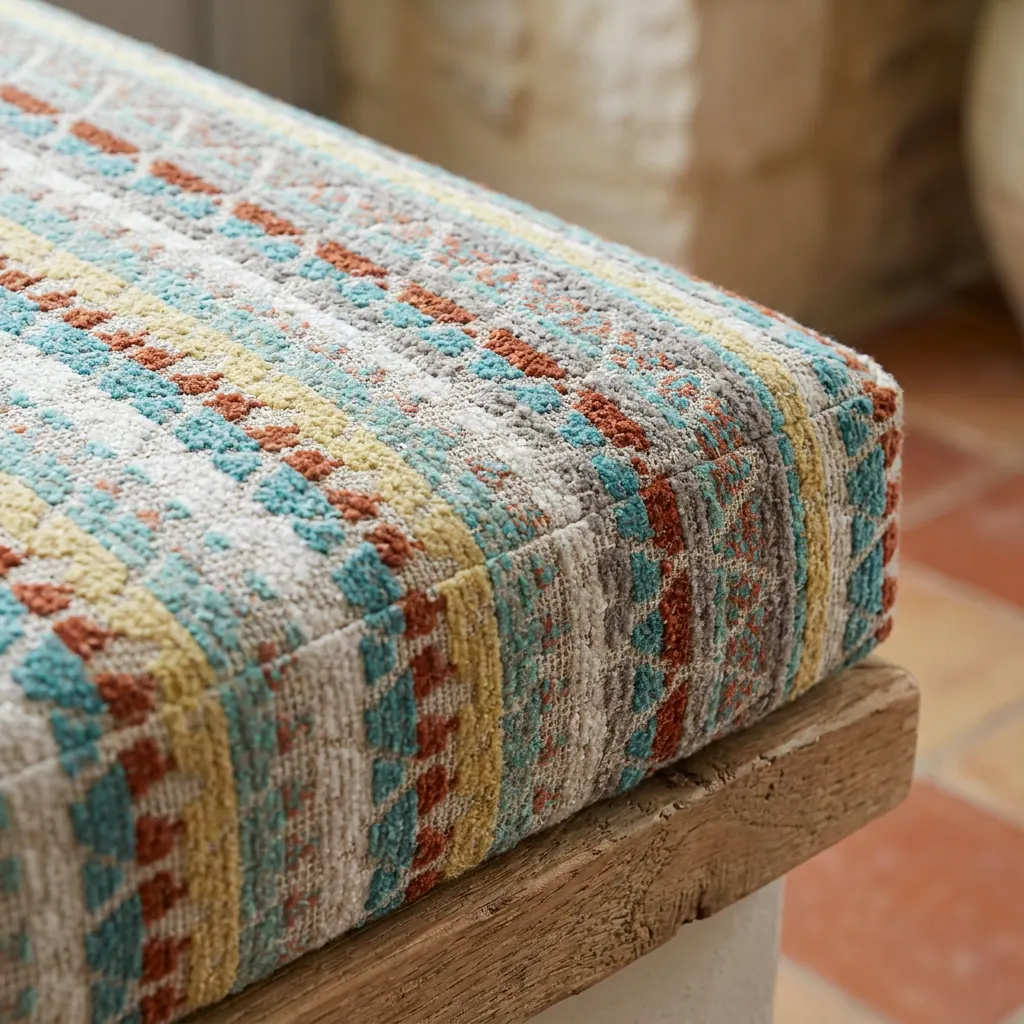
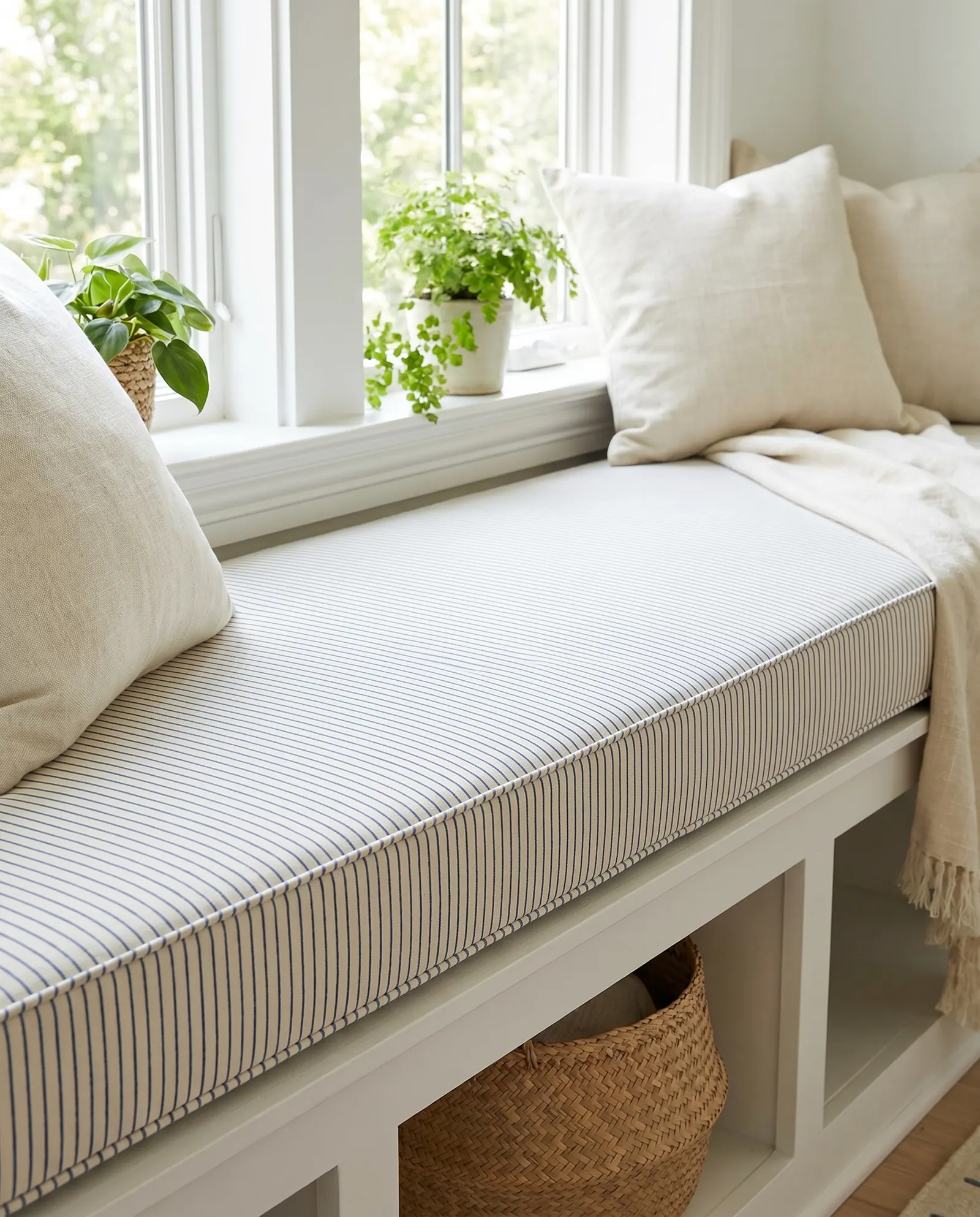
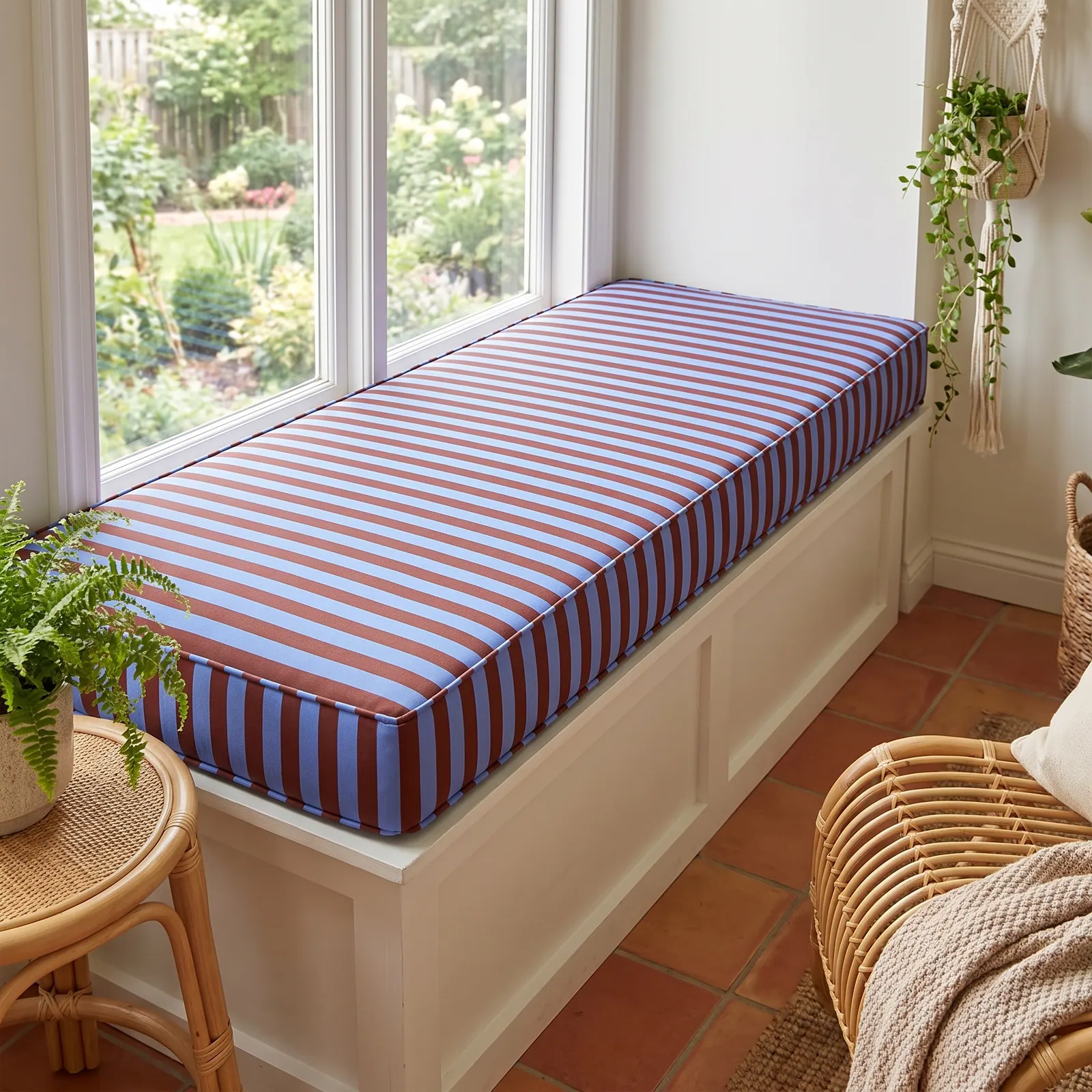
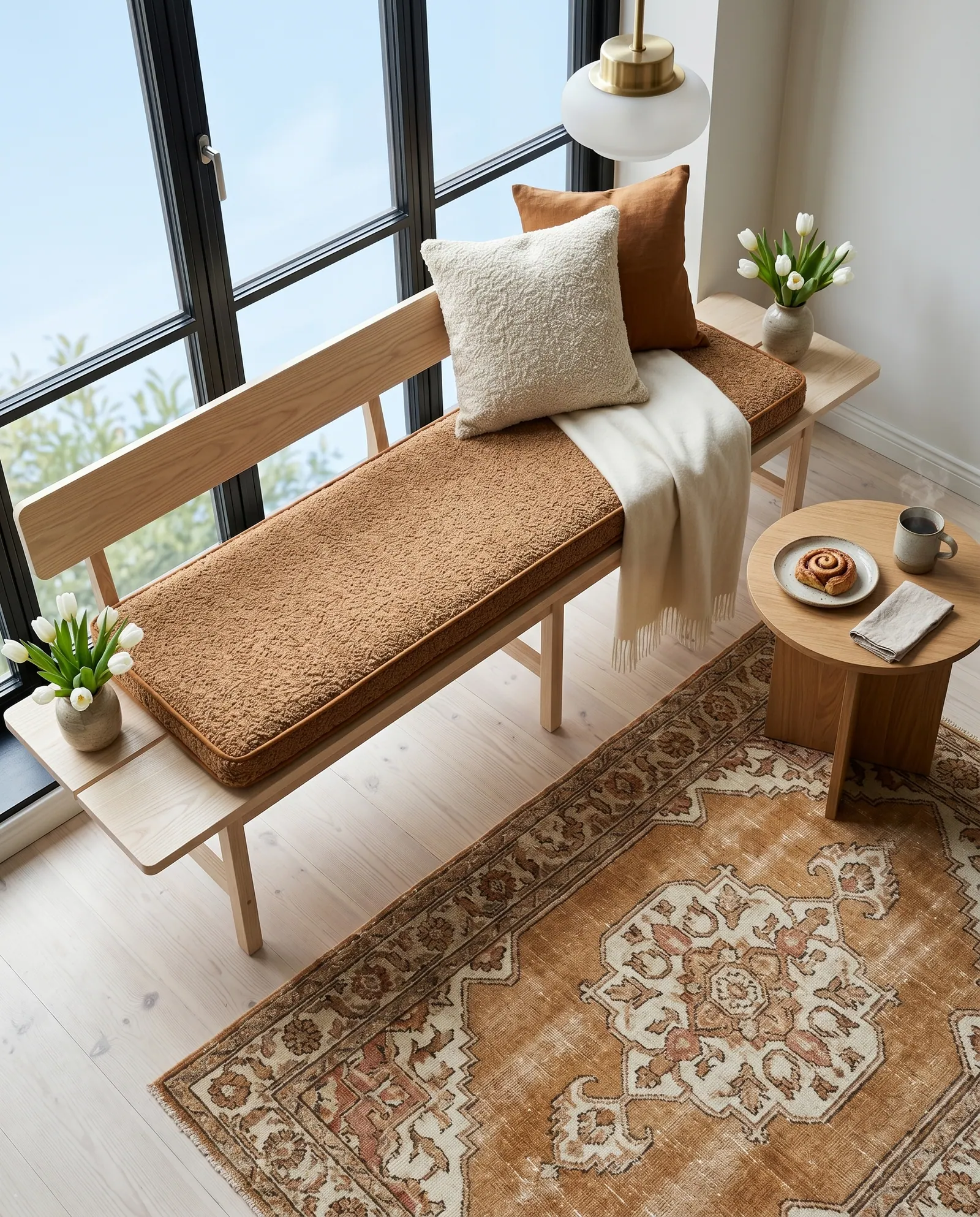
SaveA sunroom window seat split into rose and cream sections, finished with floral pillows against the garden view.SaveIn a garden room with terracotta floors, a pale cushion edged in brick red pulls the tile color up onto the bench.SaveA black-ground tropical print brings the palms indoors; blush pink pillows and linen repeat its softest flowers.SaveA full-length striped mattress and two matching bolsters turn a rattan frame into a sunroom sofa. The stripes run front to back, which makes the seat look deeper.SaveDeep green cord pulls the garden indoors, while a round boucle pillow and a charcoal linen square keep the look grown-up.SaveA classic damask in powder blue and cream turns a plain oak platform into a garden-room sofa. Two back cushions keep it easy to plump.SaveA malachite-green cushion on a teak bench surrounded by ferns and potted citrus under a Victorian glass roof.SaveA lively woven stripe on weathered wood and terracotta, matched carefully over the corner.SaveA whisper-fine blue pinstripe reads almost solid from a distance, so the sunroom's plants and baskets carry the color.SaveThe maroon in the stripe picks up the terracotta floor, while periwinkle cools the whole garden room down.SaveFrom above, the caramel cushion matches the faded rug and even the cinnamon bun, a breakfast palette in three textures.
A sunroom window seat cushion cut exactly to a shallow seat has nothing to grip. Add a non-slip base or ties, or order it slightly larger.
The hero photograph is a burnt orange velvet window seat under tall multi-pane windows, looking out on a striped lawn. The orange holds its own against all that green, and white paneling keeps the corner bright. One strong color, plenty of glass, nothing else competing.
Across the gallery: a dusty rose seat with a cream center cushion under corner casements; powder blue damask seat and back cushions among palms on a limestone floor; a red and cream striped daybed mattress on a rattan frame between Boston ferns.
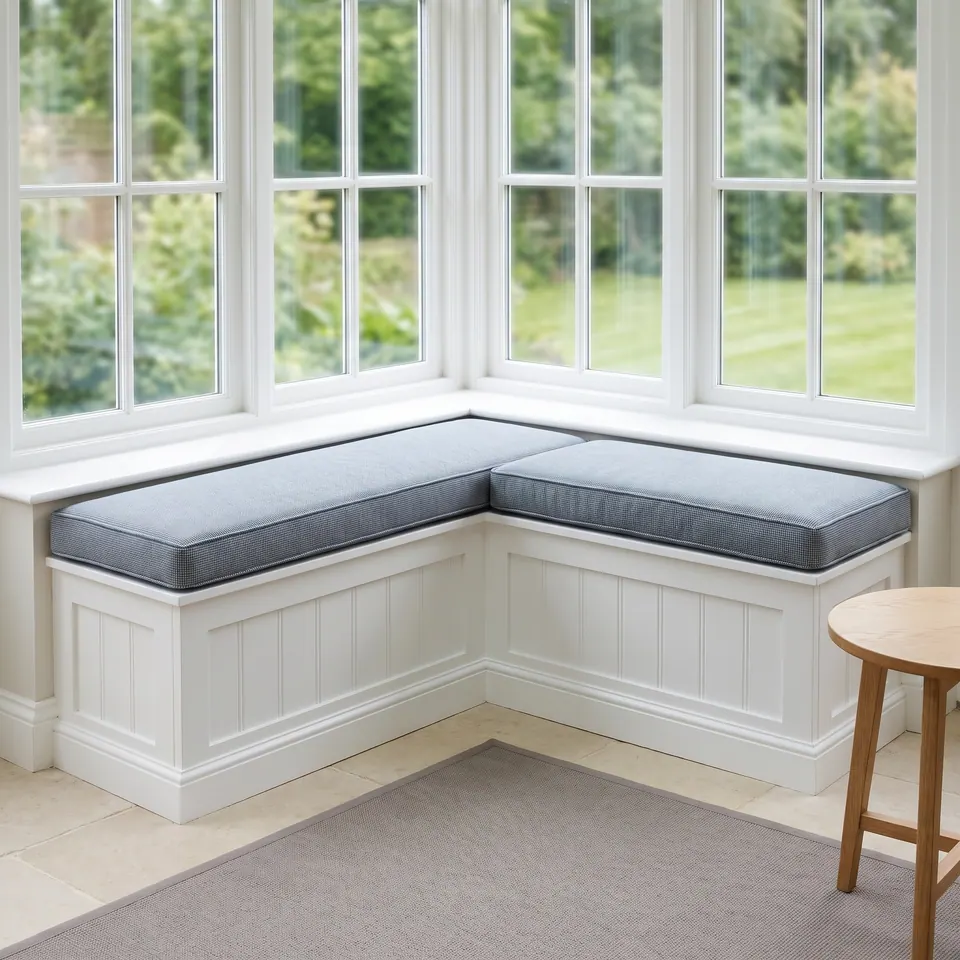
What do you need to quote an L-shaped corner bench with back cushions?
The workshop's answer
The end-to-end length of each leg, the seat depth and thickness, a sketch or photo, whether any part is angled, and whether you want backrests. Outside and inside measurements work too, and the split into two pieces is planned and confirmed with you. A photo of the nook and a picture of the backrest style help. Backs can run along one side only, and the standard thickness is 4 in, which can be changed.
A common question
I changed my mind on the color right after I ordered. Can you switch it?
The workshop's answer
Most likely, if the order hasn't shipped yet. The switch is checked with production before it's confirmed, so send the exact color name or number from the chart; a general 'green' gets a request for the code. If the parcel is already packed and leaving that day, it goes as ordered, and a spare cover set in the new color is the way out.
A common question
One cushion in my set is the wrong length. What do you need from me?
The workshop's answer
A photo with a tape measure laid along the full length. If the workshop made the error, keep the wrong piece until it has answered. In past cases only the non-fitting parts were remade, errors ran from 3 in to 8 in off, and buyers could pick a different piping color for the replacement or keep the piece for a partial refund.
A common question
Our new house isn't taking deliveries yet. Can you hold the cushions until we move in?
The workshop's answer
Often, yes. Add 'please deliver on or after' and the date to the order note or personalization box, or message the shop, so the order is held or timed to that date. For a new-build address that isn't receiving deliveries, ask whether it can be held until you've moved in. Transit can run longer than expected, so an exact day can't be promised.
A common question
Can an order placed by accident be canceled?
The workshop's answer
Yes, before production starts, with a refund that can take a few days to show; once cutting has begun, ask the workshop what can still change. You'll likely be asked what went wrong first: a different size or color can be made instead, a later ship date offered, or your space measurements checked. If you'd still rather cancel, the order is canceled on request.
Have it made
Have your sunroom cushions made — ask Callum’s workshop
Tell them where it lives. Porch, deck or boat: the weather picks the fabric and the foam before anyone else does. — Callum
Leave your details and the workshop will call you to confirm measurements, fabric, foam and piping. No prices, dates or payment on this page: it is a request, not an order.
Fabric · Foam · Pipingwhat the workshop will confirm with you
Can a sunroom bench cushion be tied to its backrest?
Yes. Fabric ties can be sewn into the seams at the corners or the back, in any position, to tie a backrest to a seat or fix a cushion to the bench. Double piping can give back cushions enough structure to stay in place without straps.
Do sunroom cushions need to come inside for winter?
In a heated sunroom they can stay put. In a true three-season room that turns cold and damp, treat them like outdoor cushions, which the workshop advises storing indoors in the off-season, and use a fabric protectant spray on the covers.
What thickness suits a sunroom window seat?
The standard 4 in (10 cm), the same used for bench, window seat and outdoor cushions, and the one most buyers keep. The thinnest standard foam cushion is 2 in (5 cm). A seat can overhang its front edge by up to about 2 in with a support wrap.
Will sunroom glare change how my cushion color looks?
It can. Color reads differently in daylight, under home lighting and on screens, and a glass room is daylight at full strength. Chart swatches can also look darker or coarser than the real fabric, so compare against photos of finished cushions before you decide.
Can sunroom cushions ordered a season apart match exactly?
Closely, but not guaranteed. Dye batches can differ slightly between production runs, so an exact match across separate orders isn't promised. If the room needs seat cushions, backs and pillows, order them together in one batch.
Fair winds — Callum
Share this atlas entry
Readings
Photographs read by the masters: sunroom & three-season room cushions
Real cushions made for real rooms, each read for proportion, fabric and fit.
 Save
 Save
 Save
 Save
 Save
 Save
 Save
 Save
 Save
 Save
 Save
 Save