A Reading by CallumBench Cushions
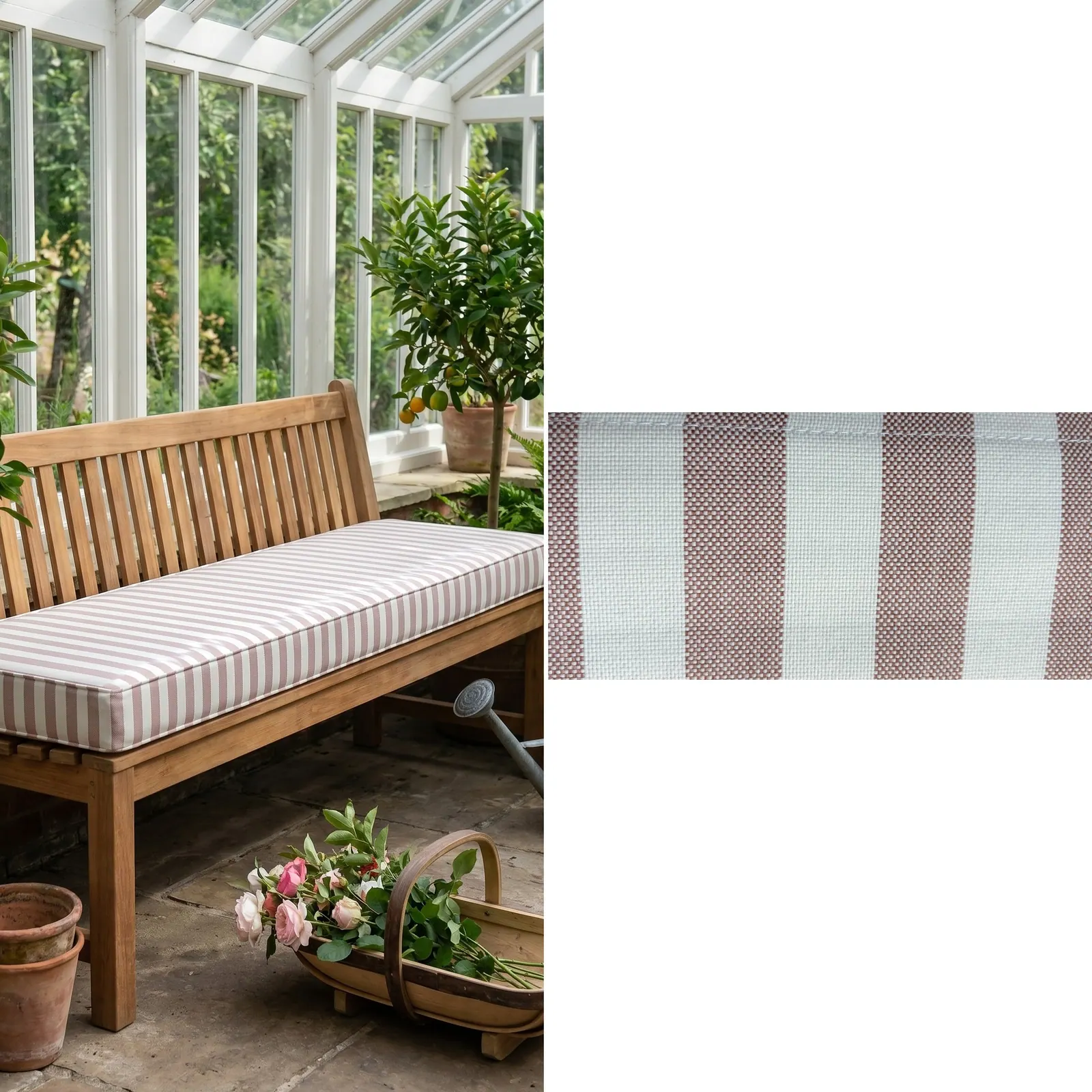
A rose-striped garden bench cushion in a glasshouse, and a letter on measuring between the arms
A teak bench under glass, a citrus tree, a trug of roses, and a cushion that stops exactly at the arms. Here is how I would measure it, and the places people go wrong.

 Save
The quick answer
To measure a garden bench for a custom cushion, measure the seat between the arms at both the front and the back, then the depth from the front edge to the back slats. If the two widths differ, send both, because the seat is a trapezoid. Measure the bench, never an old cushion, and under glass choose a water-repellent weave.
Portland ·
Friend,
A letter from the glasshouse bench
I have measured a lot of seats in bad weather. This one sits under glass, which sounds easier. It isn't. A glasshouse is damp at dawn and hot by noon, and a cushion in it lives through both, every day.
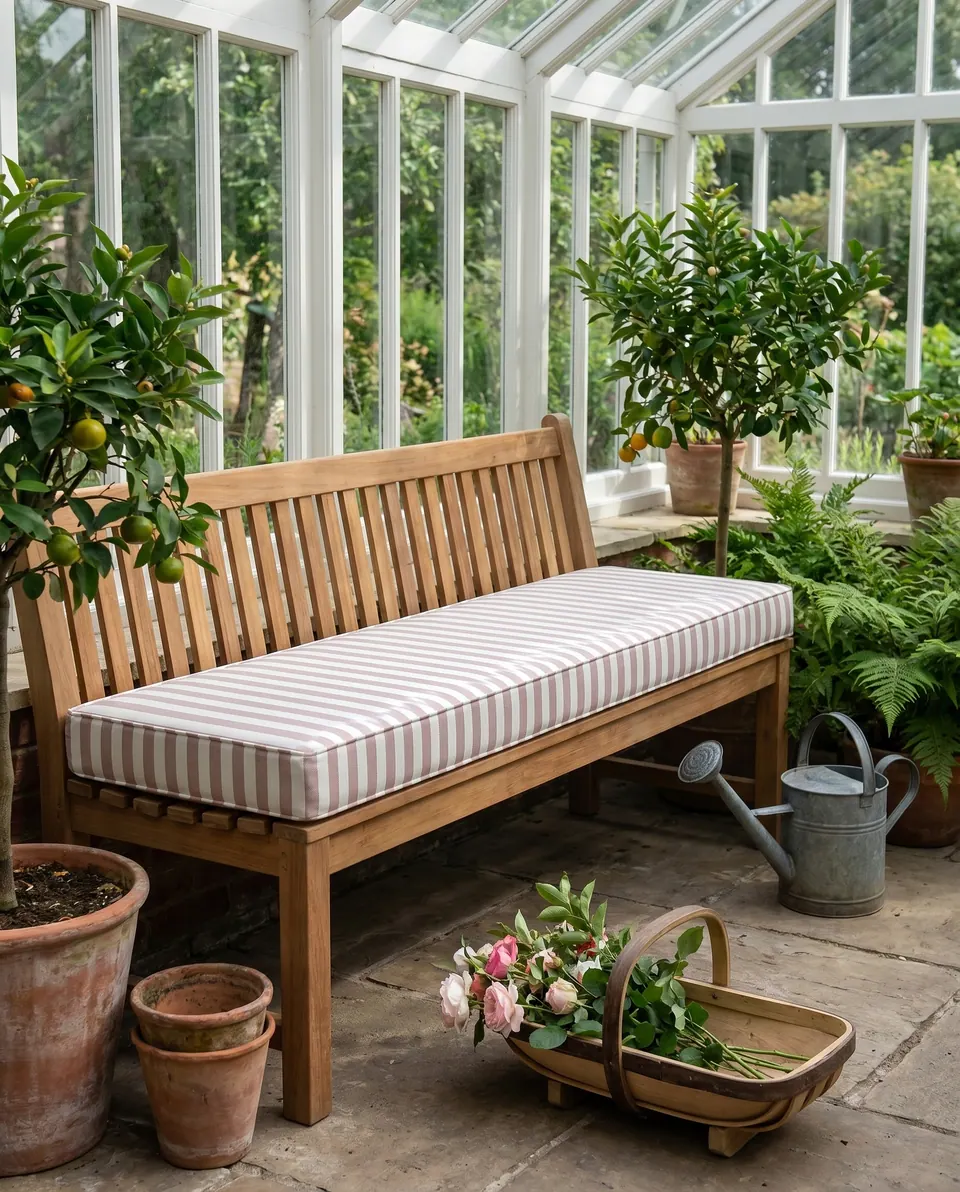
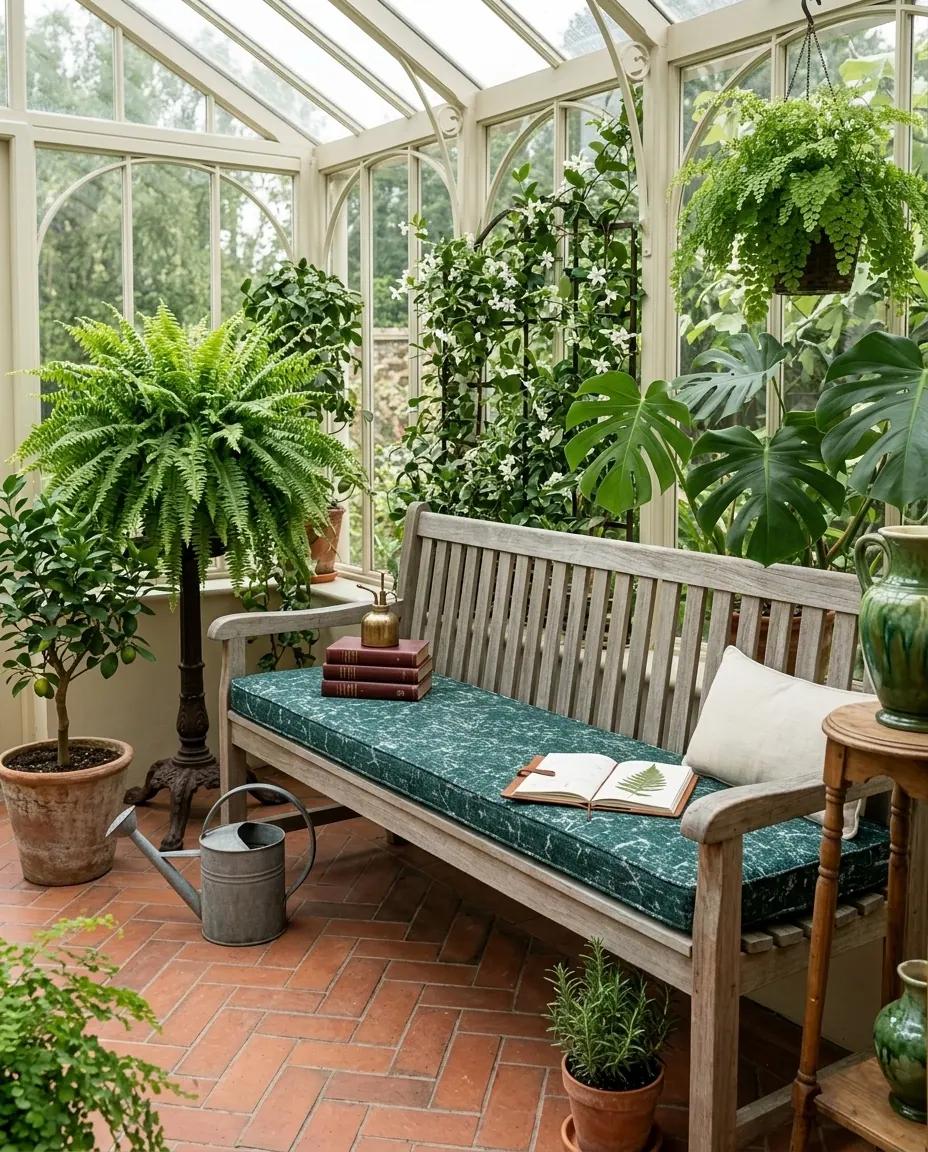
Look at how this rose-striped garden bench cushion sits. It fills the teak seat exactly and stops short of the arms, so the slatted back and the arms still show. That fit is the whole trick, and it starts with a tape measure, not a catalog.
The stripe is dusty rose and ivory with self piping, a water-repellent weave. Its rose came from the cut garden roses in the wooden trug on the floor. A bright pink would have argued with the terracotta pots; this dusty one keeps them company. The potted citrus tree brings glossy leaves and small fruit up to eye level. The galvanized watering can says this is a working glasshouse, not a showroom. The stacked clay pots warm the stone flags and the pale stripe.
Water-repellent is a promise; waterproof is a contract. Under glass the promise is usually enough, as long as the covers come off and the foam gets a chance to dry. The Pattern on sunroom fabric in sun and damp air goes further, and sunroom cushions shows more seats under glass.
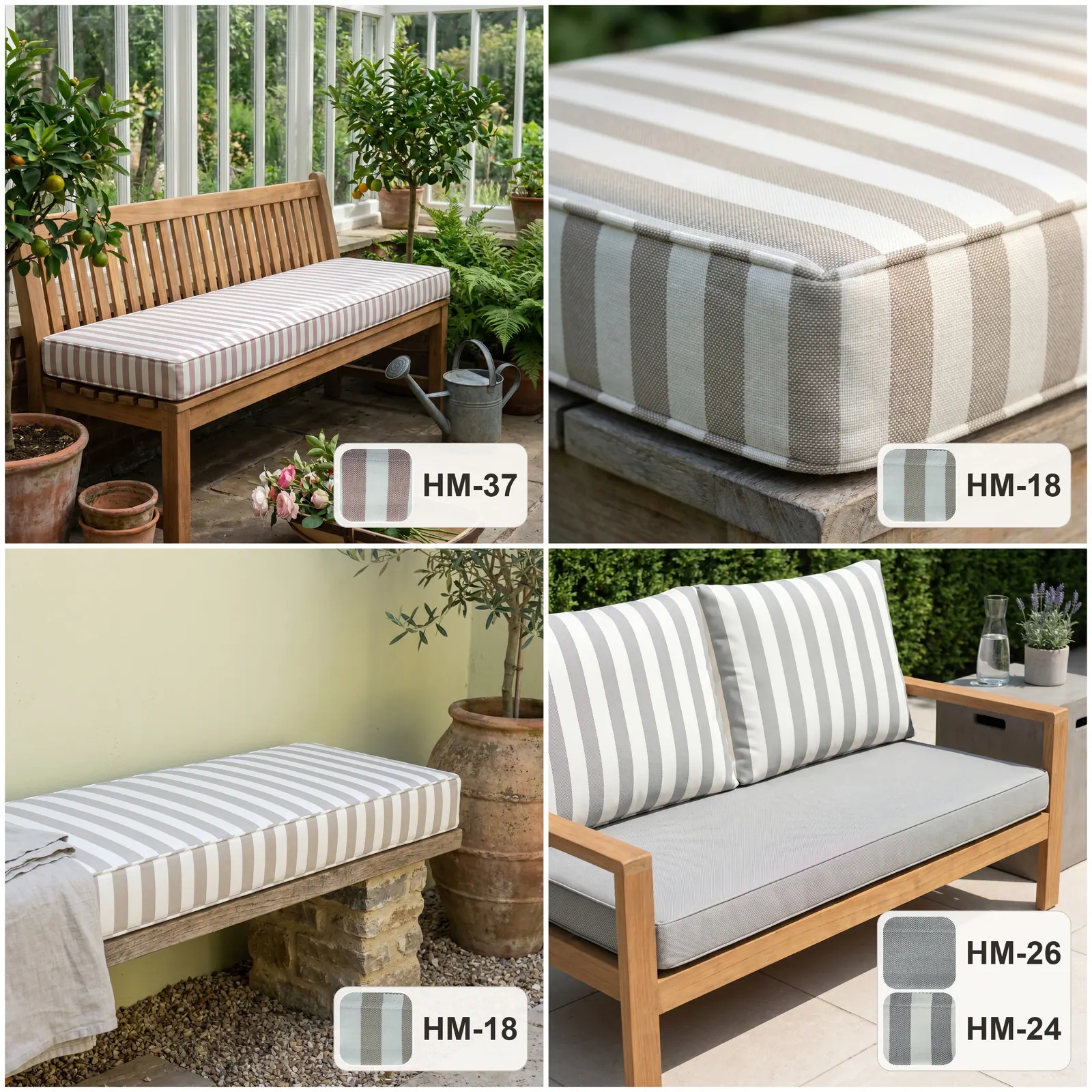
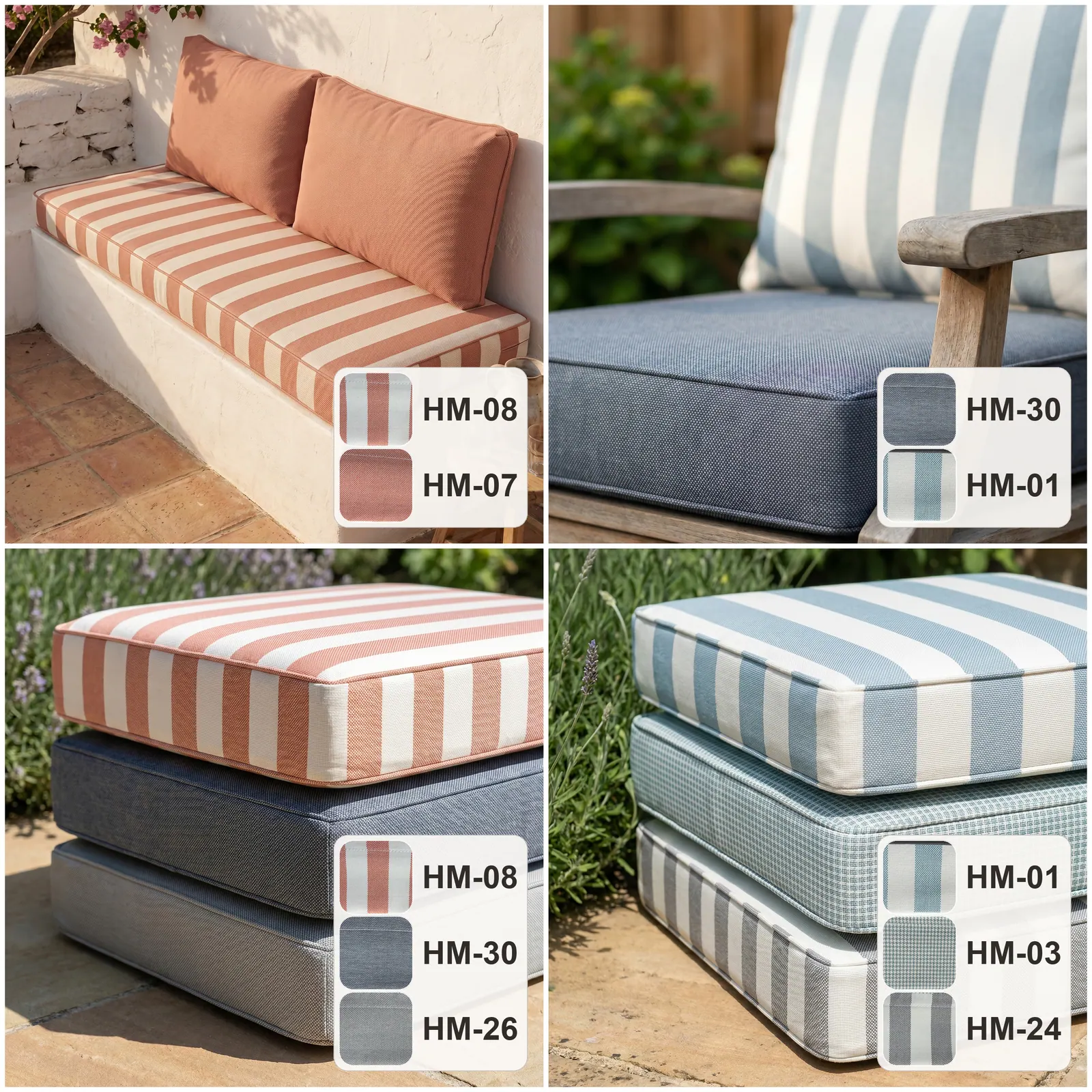
Two more plates sit below this letter: blush, taupe and gray stripes on teak and stone, and four ways to pair a stripe with a solid outdoors.
What does your bench measure between the arms, at the front and at the back?
Pinned by Callum: cushion, citrus, trug, can and pots
Five pins run from the rose stripe on the teak seat down to the clay pots on the stone floor.
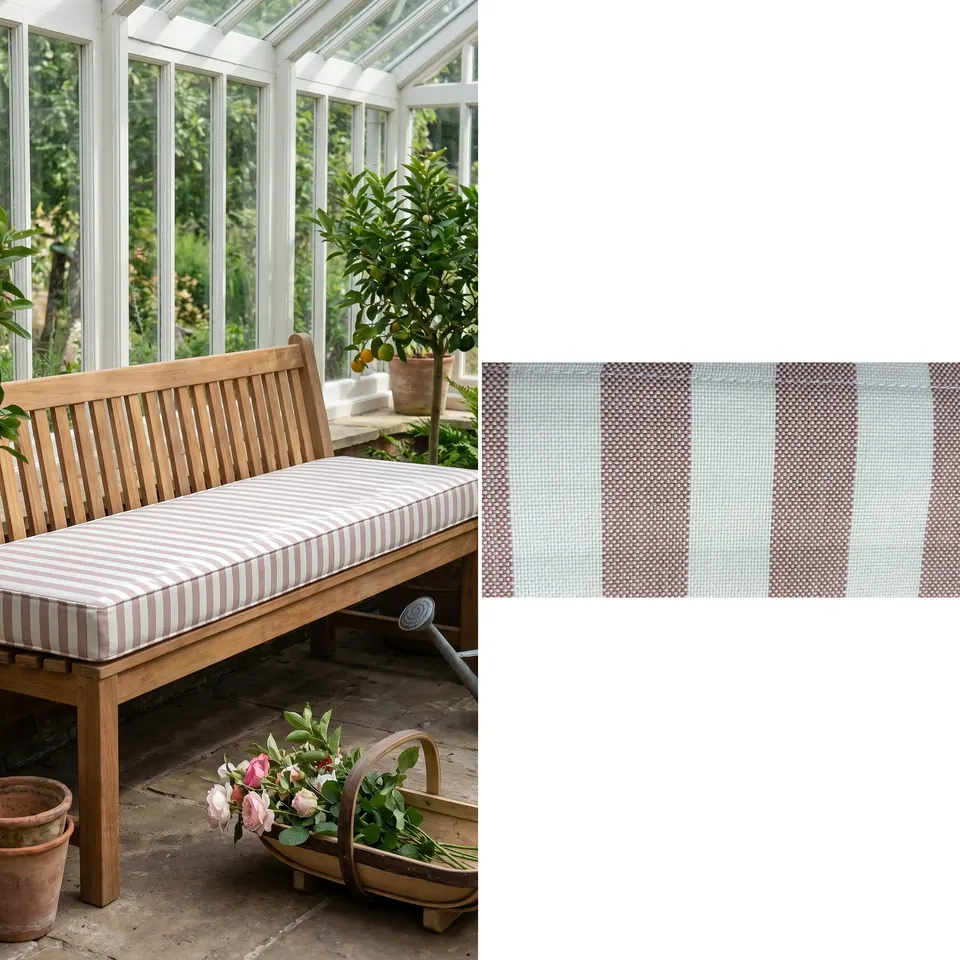
- Rose stripe cushion
Fitted between the arms so the teak frame still shows.
- Potted citrus tree
Glossy leaves and small fruit bring color at eye level.
- Trug of cut roses
The pink in the flowers is where the stripe color comes from.
- Galvanised watering can
A working tool keeps the glasshouse feeling lived in.
- Terracotta pots
Clay tones warm the stone floor and pale stripe.
- Rose stripe cushionFitted between the arms so the teak frame still shows.
- Potted citrus treeGlossy leaves and small fruit bring color at eye level.
- Trug of cut rosesThe pink in the flowers is where the stripe color comes from.
- Galvanised watering canA working tool keeps the glasshouse feeling lived in.
- Terracotta potsClay tones warm the stone floor and pale stripe.
Measuring this exact bench, and where people slip
Width between the arms, at the front
Tape from arm to arm along the front edge of the seat, to the nearest 1/4 in (6 mm). The usual slip: measuring outside the arms when the cushion has to fit between them.
Width between the arms, at the back
Measure again where the seat meets the back slats. Arms can lean or taper, so the two numbers may differ. If they do, send both; the seat is a trapezoid.
Depth, front edge to back slats
Measure straight back from the front edge to the slats. The usual slip: running the tape up to the top of the backrest, which adds inches the seat doesn't have.
Posts and brackets
Check the corners for arm posts or brackets that cut into the seat. Note where they are and how big; they call for rounded corners or a changed edge.
Photo and sketch, never the old cushion
Photograph the seat straight on and from above, then sketch it with every number. Measure the bench itself; old foam flattens and old covers stretch.
Four back pillows that had to act like backrests
A buyer in California wrote to the workshop about a long run of seating. They wanted two 77 x 30 x 4 in (196 x 76 x 10 cm) cushions in high-density foam with a Dacron wrap, and four 38 x 13 in (97 x 33 cm) back pillows.
They weighed P-66 with self piping against L-43 without piping. The workshop told them piping costs nothing extra and quoted both. Production was 7 to 9 days, delivery 3 to 5. They chose P-66, and then they wrote the line that saved the order: the pillows should be firm like backrests, but still pillow-shaped.
Everything came with zippers and machine-washable covers. Leave out that one line about firmness, and back pillows may be read as throw pillows. Say it plainly. Then run your numbers through the bench cushion builder before you send them.
On the cutting table: the glasshouse bench
| Product | Custom garden bench cushion fitted between the arms |
|---|---|
| Fabric | Dusty rose and ivory stripe, water-repellent weave, code HM-37 |
| Piping | Self piping in the stripe |
| Edge | Box edge |
| Measure | Width between the arms at front and back; depth to the back slats |
| Frame | Teak slatted bench on a stone flag floor |
| Setting | White-framed Victorian glasshouse: damp mornings, bright noons |
| Ask for | Zippered covers so the foam can dry after a damp spell |
| Best for | Conservatories, sunrooms and covered garden benches |

Have it made
Have this made — ask Callum’s workshop
Short list: size, sun hours, how fast it has to dry. The workshop goes through it with you. — Callum
Leave your details and the workshop will call you to confirm measurements, fabric, foam and piping. No prices, dates or payment on this page: it is a request, not an order.
Buyer questions: thickness, templates and a calculator that fought back
- A common question
Is a 3 in cushion thick enough on a plywood kitchen nook bench?
The workshop's answerYes. The workshop said 3 in (8 cm) is fine over a plywood base. For that order, production was quoted at 5 to 7 days and delivery at 3 to 5 days after dispatch.
- A common question
I have a CAD drawing, or a full-size paper template. Can you work from either?
The workshop's answerYes. A full-size template is the best starting point for a curved shape: send photos of it with the measurements marked, especially where the curves begin. From a CAD drawing, the workshop redraws its own diagram and asks you to confirm it before quoting.
- A common question
The listing calculator gives a strange price for my long bench cushion. Which ranges should I pick?
The workshop's answerSelect the ranges the other way around, for example 31 in as the width and 96 in as the length, so the price calculates correctly, then write the exact size in the personalization box. That is how a 96 x 31 x 5 in (244 x 79 x 13 cm) linen cushion with contrast piping and a non-slip base was priced.
Back pillows that must hold you up need the words 'firm, backrest-style' in the order; otherwise they may be read as throw pillows.
Callum
Questions buyers ask next
Can a cushion live in a glasshouse or conservatory all year?
Treat a glasshouse as half outdoors: damp in the morning, hot at midday. A water-repellent weave with zippered, washable covers handles it better than an indoor-only fabric, and standing the cushion on its edge after a humid spell helps the foam dry.
Should a garden bench cushion cover the arms or sit between them?
Between them, on a bench like this. Fitting the cushion to the seat alone leaves the teak arms and slatted back on show, and it keeps the cushion from riding up the arm posts. Measure the seat width between the arms at the front and the back.
Why pick a dusty rose stripe instead of a bright pink one for a garden bench?
A dusty rose sits comfortably beside terracotta, stone and weathered teak, while a bright pink competes with them. Here the stripe color was taken from the cut roses in the trug, so the cushion reads as part of the garden rather than an addition to it.
Fair winds — Callum