 Save
A Reading by NateL-Shaped Corner Bench Cushions
An L-shaped bench cushion that makes a small corner window seat feel twice as long
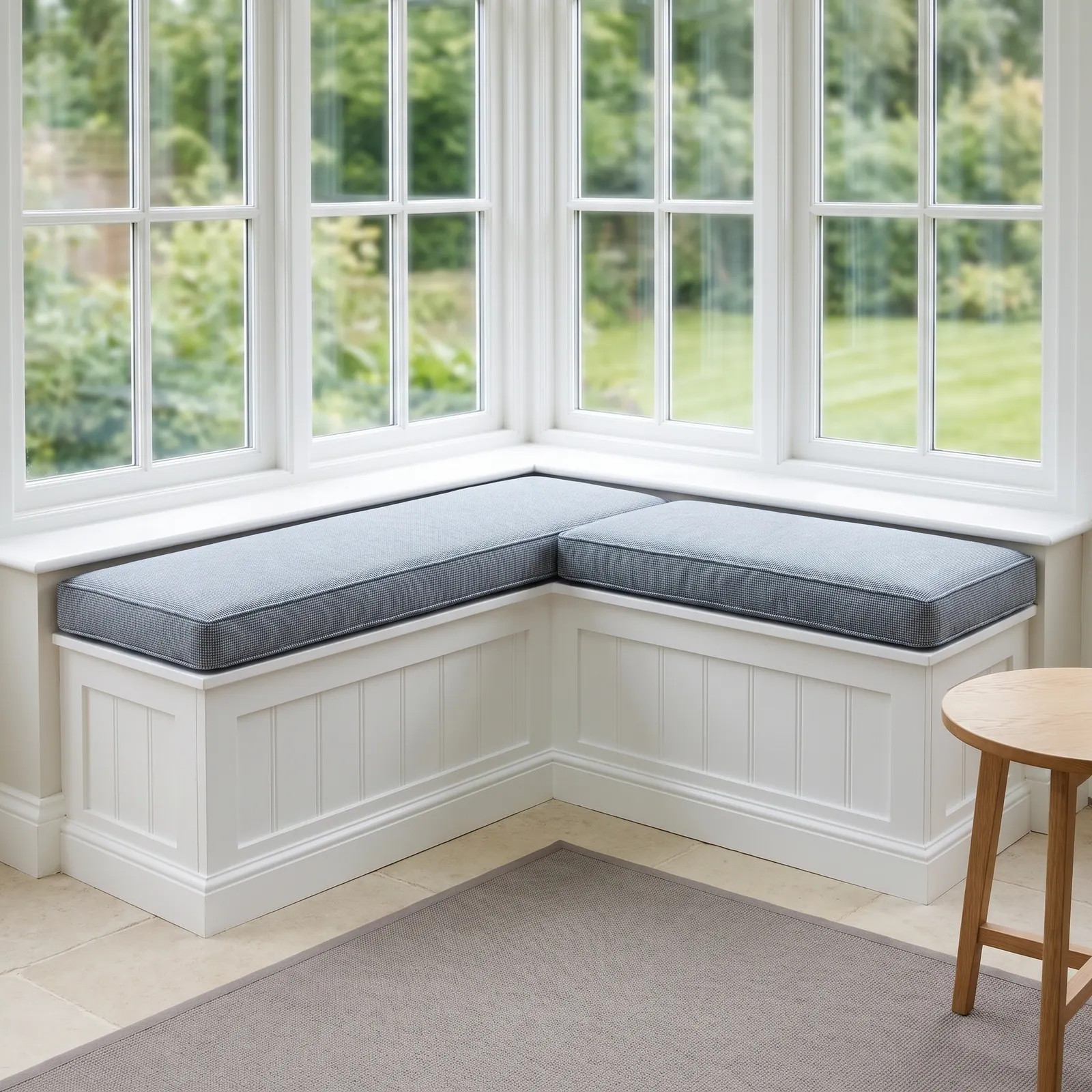
Two runs, one corner, a denim-blue microcheck and a single oak stool. Small spaces reward honest geometry, and this corner has plenty of it.
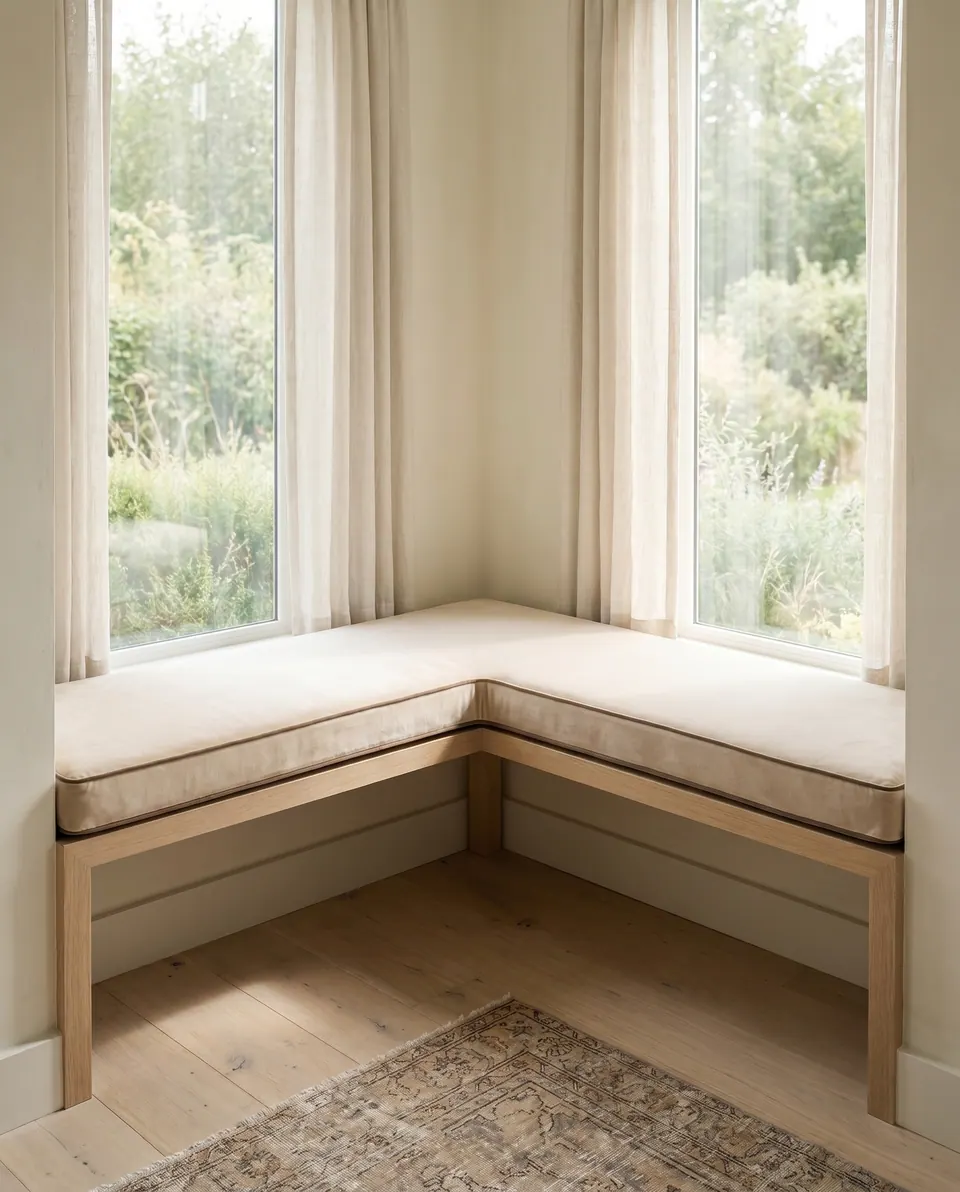
Two box cushions meet in the corner of a double-aspect window seat, finished in a denim-blue microcheck.

The quick answer
An L-shaped bench cushion is made as separate pieces that meet at the corner, never one bent cushion. Use two runs with one angled end, as in this window seat, or three pieces: two arms and a square corner. Trim about 1/4 in (6 mm) off the lengths so nothing overhangs, and sketch which piece carries the corner.
How a narrow corner turns into one long seat
Two short walls of windows, one corner, and suddenly a sunroom has a seat nearly twice as long as either wall. That is the trick of an L-shaped bench cushion, partner: it borrows length from the corner.
Look at how this one is built. Two separate box cushions, both in a denim blue and gray microcheck with self piping. The right run goes straight to the far wall and stops in a square end. The left run finishes in an angled cut where the two meet. No single bent piece; those are awkward to fit and a nuisance to lift.
Small spaces live or die on what recedes. The white tongue-and-groove base and white casement frames fall back, so the eye reads the cushion as one continuous line wrapping two walls. The microcheck helps as well. From across the room it reads as a soft mid-blue that picks up the gray flatweave rug; up close it has a texture that forgives crumbs.
Then there is what is missing. No side table, no heap of pillows, just one oak stool on an open limestone floor. One stool is enough to say morning coffee happens here. Tolerance is kindness to your future self, and in a tight corner, so is empty floor.
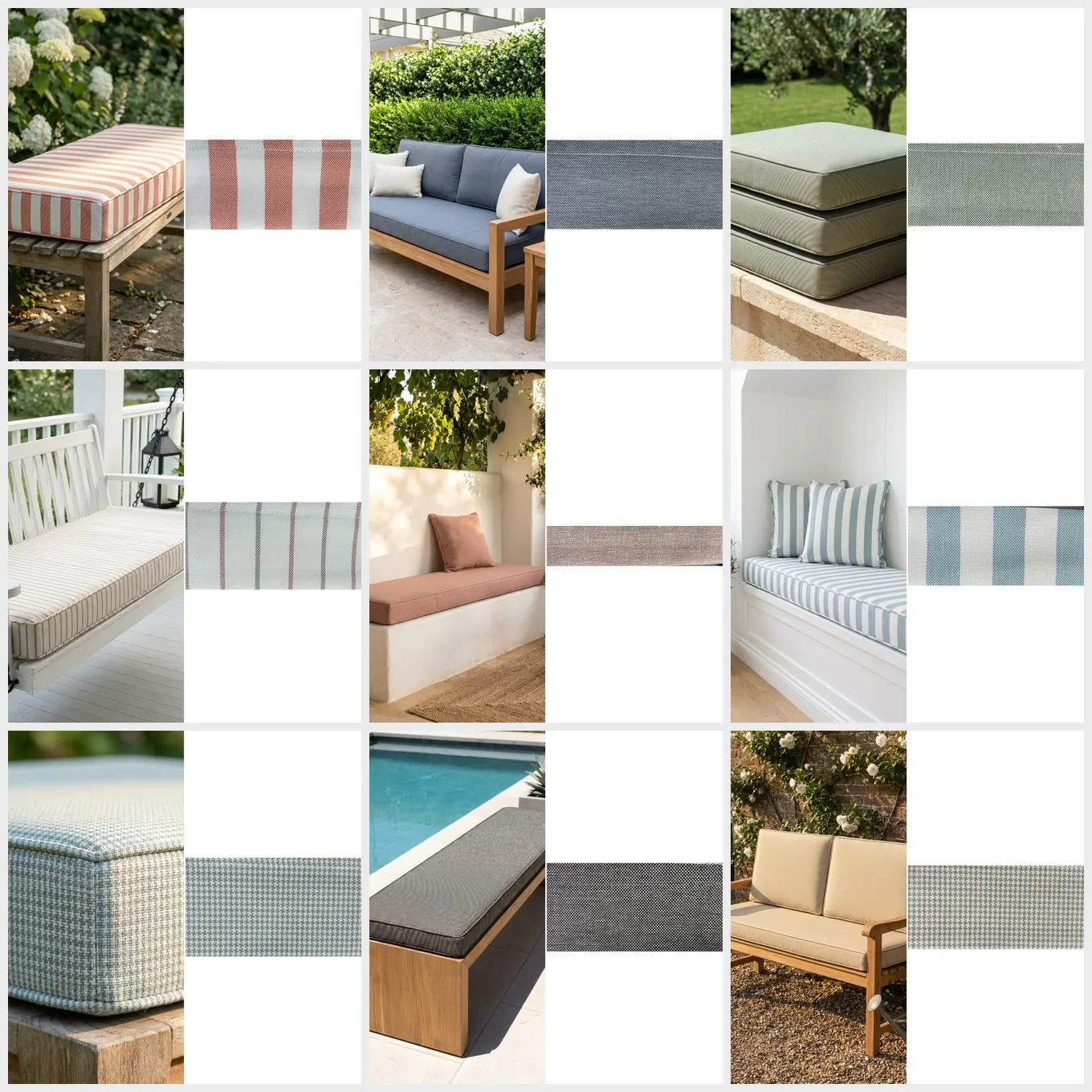
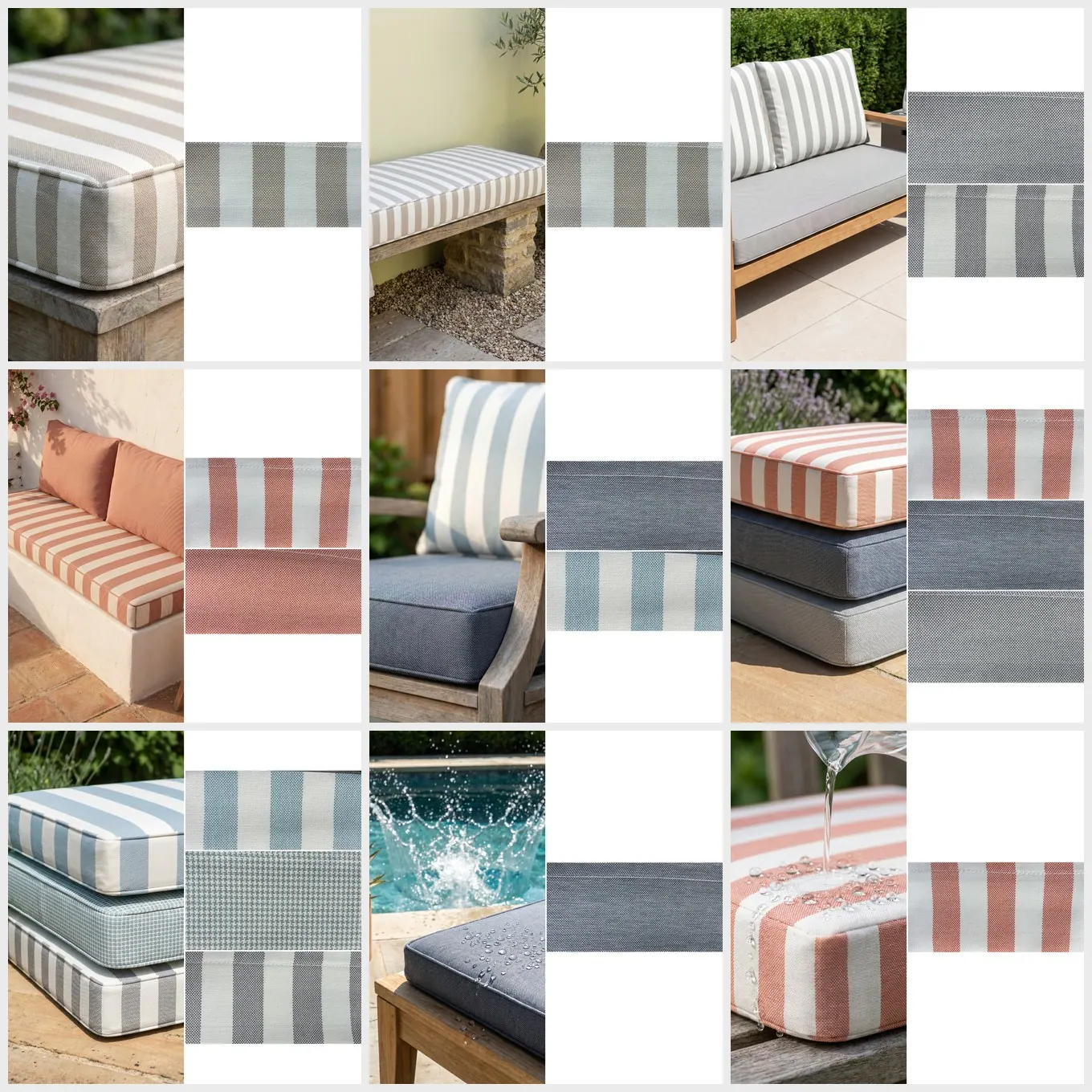
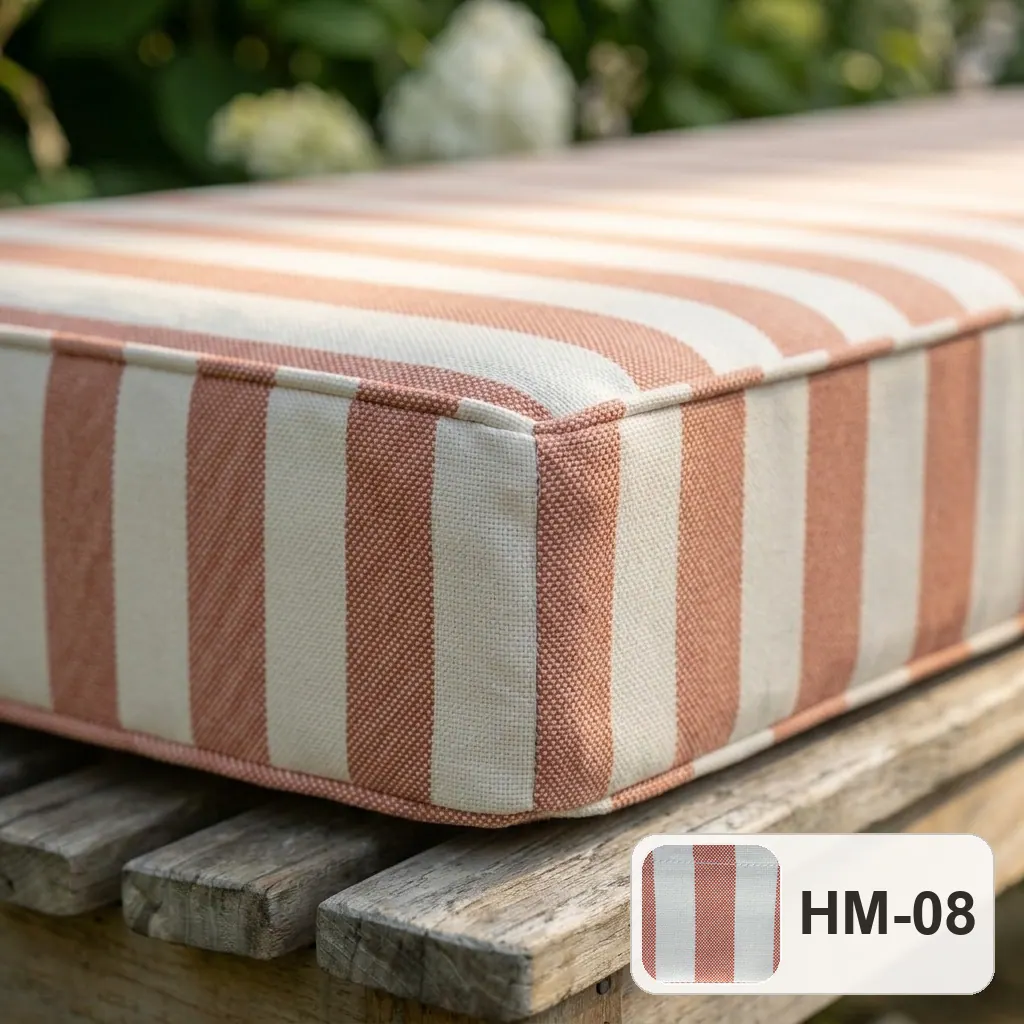
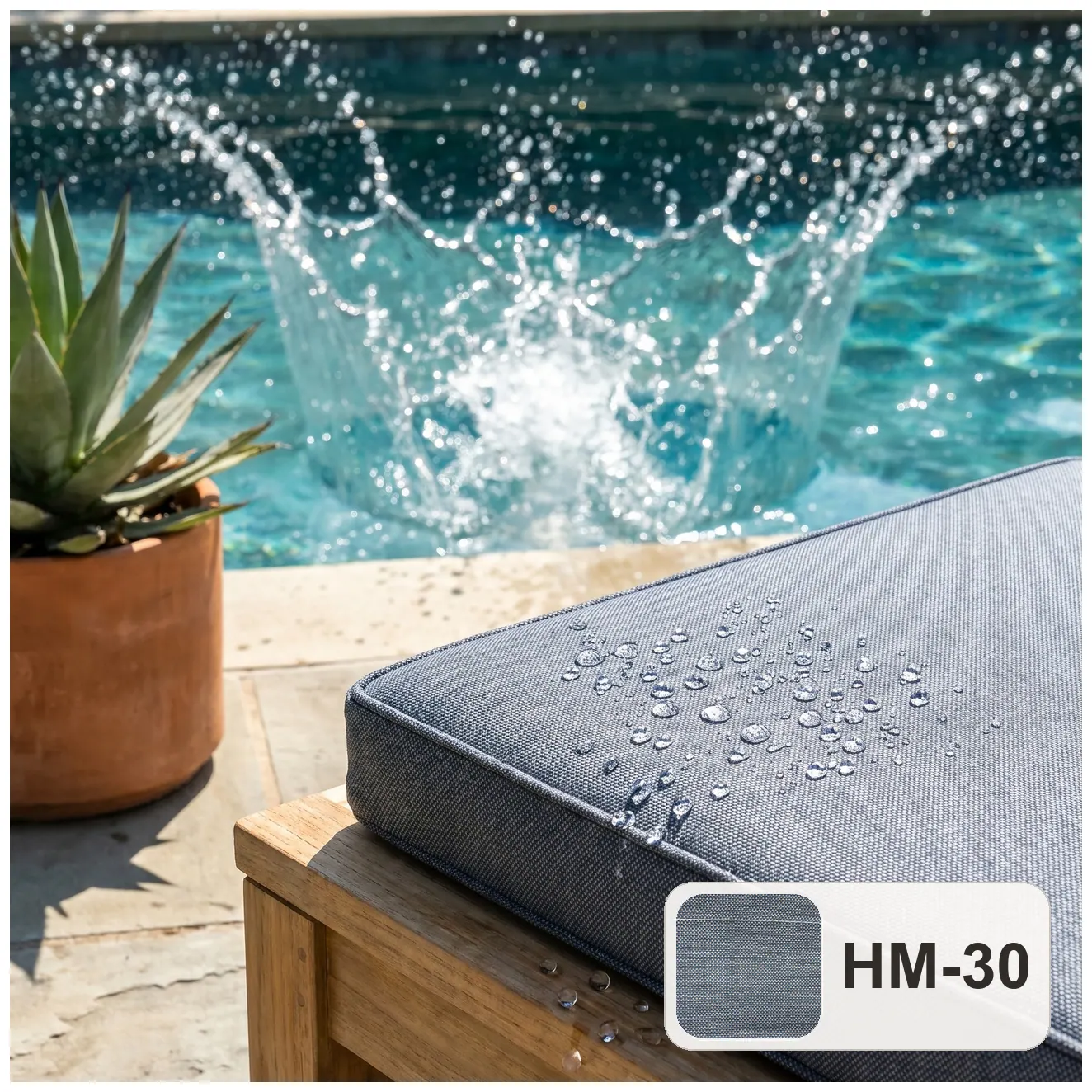
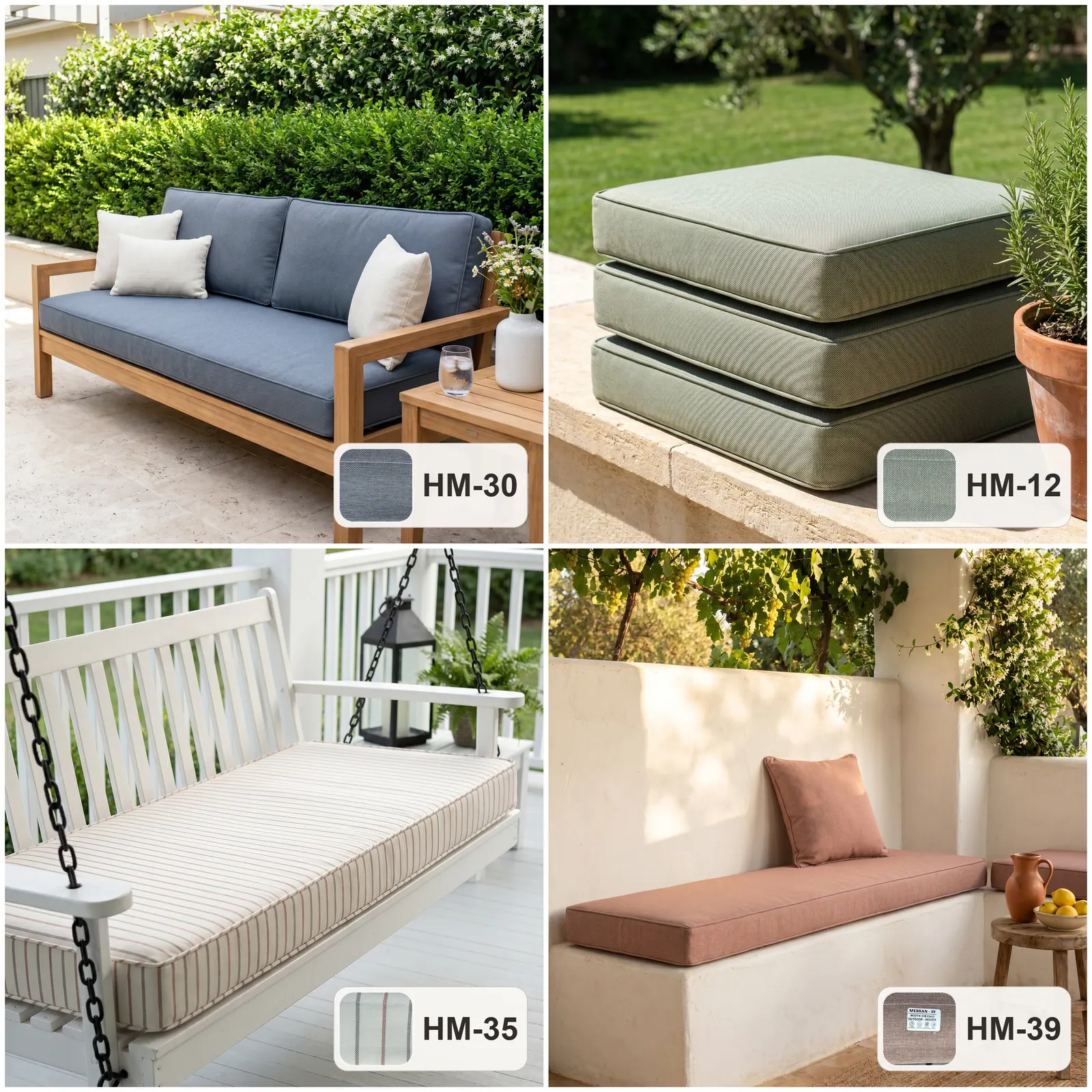
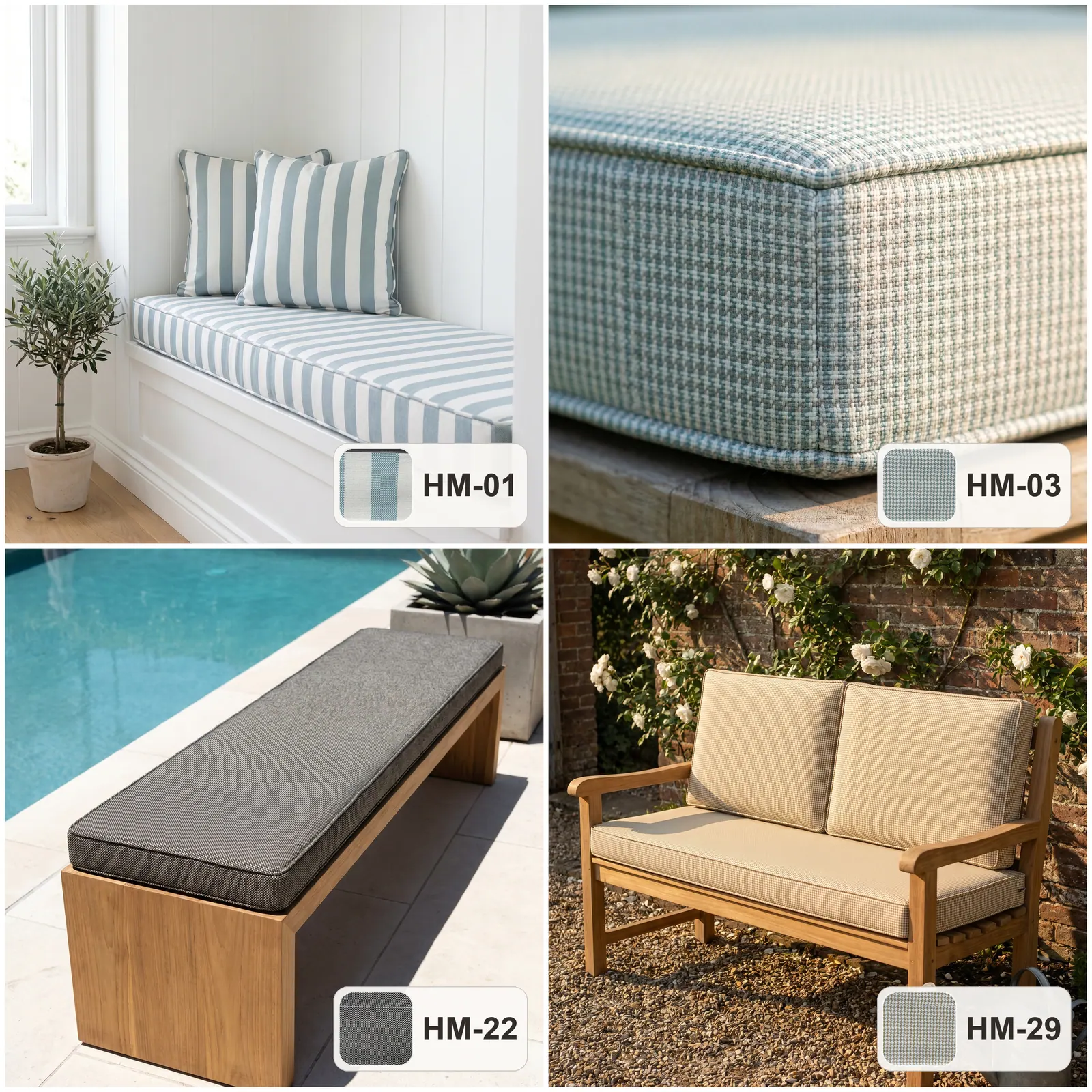
The cloth is a water-repellent microcheck, sensible where windows open onto a garden. More corner layouts live among our L-shaped cushions and sunroom cushions, and the gallery below shows outdoor-grade fabrics in real settings.
Pinned by Nate: five points around the corner
Five pins mark the two runs, the joint between them, the paneled base and the one stool that holds the room together.
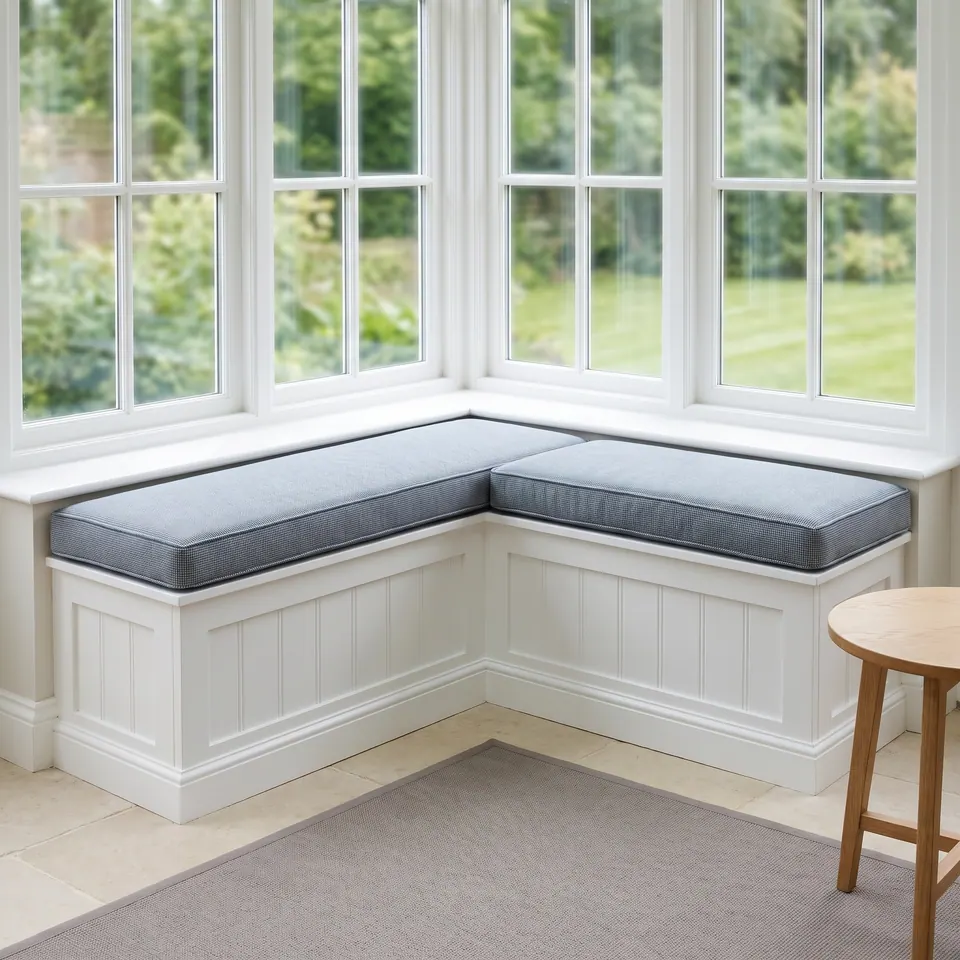
- Left window-seat run
The left cushion ends in an angled cut where it meets the corner.
- Right window-seat run
The right cushion runs straight to the far wall with a square end.
- Corner join
Two separate cushions meet here instead of one awkward L-shaped piece.
- Paneled base
White tongue-and-groove keeps the denim blue fresh and bright.
- Oak stool
A single stool is enough to suggest a morning coffee spot.
- Left window-seat runThe left cushion ends in an angled cut where it meets the corner.
- Right window-seat runThe right cushion runs straight to the far wall with a square end.
- Corner joinTwo separate cushions meet here instead of one awkward L-shaped piece.
- Paneled baseWhite tongue-and-groove keeps the denim blue fresh and bright.
- Oak stoolA single stool is enough to suggest a morning coffee spot.
Corner options, measured
| Layout | Pieces | Good for |
|---|---|---|
| Two runs, one angled end | One run straight to the far wall; one ending in an angled cut at the corner | Window seats where each run lifts out on its own |
| Two arms and a square corner | Three rectangles: arm, corner square, arm | Kitchen L-benches with the same depth on both sides |
| One bent L-shaped piece | Not made; L-shapes are split into separate cushions | Nothing: it is hard to fit and hard to lift |
The kitchen L that became three rectangles
A family in the US sent a hand sketch of an L-shaped kitchen bench: arms of 65 in (165 cm), a depth of 20.75 in (53 cm), and a request for piping. The workshop explained that L-shapes are made as separate cushions meeting at the corner, and together they settled on three pieces: one arm, a square corner, the other arm.
Then they re-measured. Good. The final sizes were 20.75 x 65 1/8 in, 20.75 x 20.75 in and 20.75 x 65 in, keeping about 1/4 in (6 mm) back so nothing hangs over the edge. Each piece went through the standard listing with its own thickness, fabric and piping.
Three rectangles are easier to cut, easier to check with a tape and easier to replace one at a time. Our L-shaped corner joint notes and the bench cushion builder walk you through both layouts. Which piece in your corner should carry the joint?
Buyer questions: thickness, washable velvet and color codes
- A common question
Can the cushion be thinner or thicker than the standard 4 in?
The workshop's answerYes. The workshop has made 2 in (5 cm) and even 3/4 in (2 cm) cushions, 2.5 in (6.5 cm) dining bench pads, 6 in (15 cm) daybed cushions and an 8 in (20 cm) deep banquette seat. Thicker foam raises the price: one 91.5 x 31 in daybed cushion cost about a fifth more at 6 in.
- A common question
Is your velvet a performance velvet? We have kids and need something easy to clean.
The workshop's answerYes. It is a 100% polyester high-performance velvet with good stain resistance and durability. Wipe or spot-clean quick messes, and machine wash the covers at 86°F (30°C) for a deeper clean.
- A common question
How do I get the exact color I see in one of your listing photos?
The workshop's answerAsk, and the workshop gives you the code. The cushion in one listing image was fabric 916 with piping 918, the burnt orange on the French bench cushion was number 17, and one daybed photo showed soft fabric 913.
On the cutting table: the corner seat, piece by piece
| Product | L-shaped window seat cushions, two box pieces meeting at the corner |
|---|---|
| Fabric | Denim blue and gray microcheck, water-repellent |
| Corner | Left run ends in an angled cut; right run has a square end at the far wall |
| Edge | Box edge with self piping |
| Base | White tongue-and-groove window seat |
| Fit | Trim about 1/4 in (6 mm) off lengths so nothing overhangs |
| Thickness | Standard 4 in (10 cm); thinner or thicker to order |
| Best for | Sunroom corners and breakfast nooks under two windows |

Have it made
Have this made — ask Nate’s workshop
Send the numbers in inches: length × depth × thickness, plus any angle. The workshop checks them with you, because foam has no undo button. — Nate
Leave your details and the workshop will call you to confirm measurements, fabric, foam and piping. No prices, dates or payment on this page: it is a request, not an order.
L-shaped bench cushions fit best as separate pieces: two arms and a square corner, each trimmed about 1/4 in so no edge hangs over the bench.
Nate
Questions buyers ask next
Why are L-shaped window seat cushions made in separate pieces?
Separate pieces fit into the corner more easily, lift out one at a time, and each stays a simple rectangle or has just one angled end. A single bent L-shaped cushion is awkward to fit and to lift.
Does a small check pattern look busy on a small window seat?
Not from a distance. A microcheck reads as a soft solid mid-blue across the room and only shows its pattern up close, so it adds texture without crowding a narrow corner.
Should I take anything off my L-bench measurements?
The workshop cuts to the numbers you send, so any trim is your call. One family kept about 1/4 in (6 mm) back on the lengths of a 65 in kitchen L so no edge hung over the bench.
± 1/4 in — Nate
More photographs to read
 Save
 Save
 Save
 Save
 Save
 Save