A Reading by NateL-Shaped Corner Bench Cushions
Anatomy of an L-shaped bench cushion built for long reading
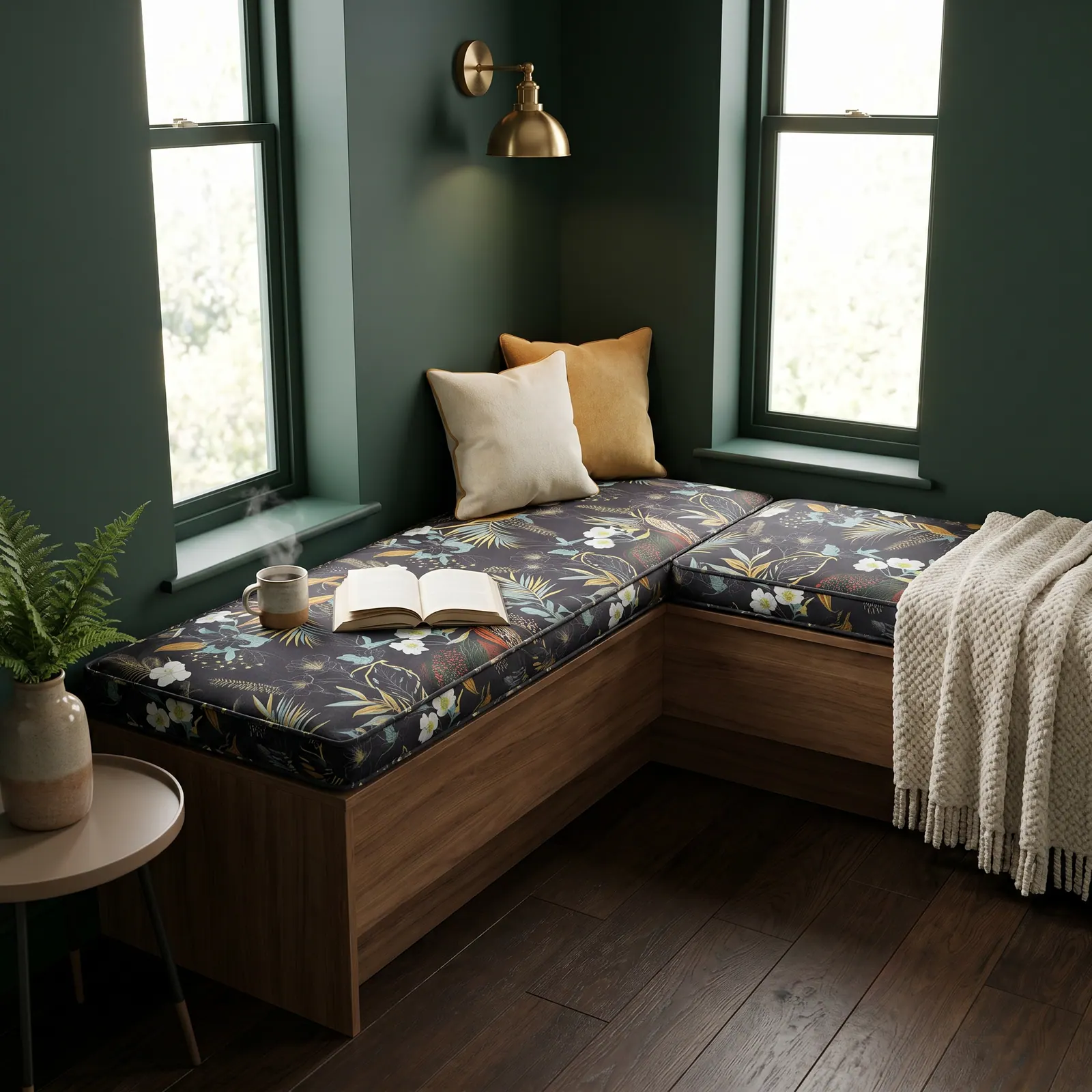
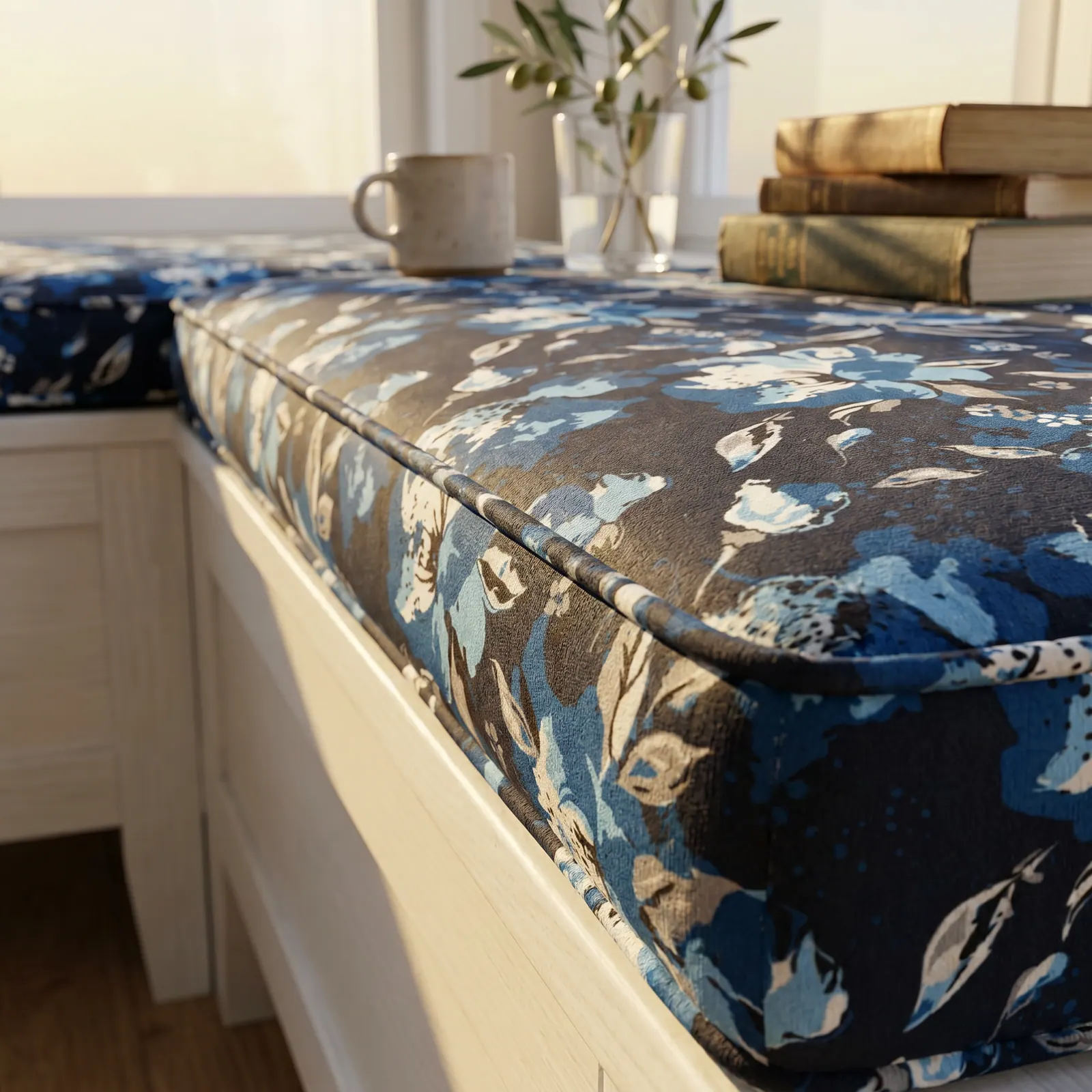
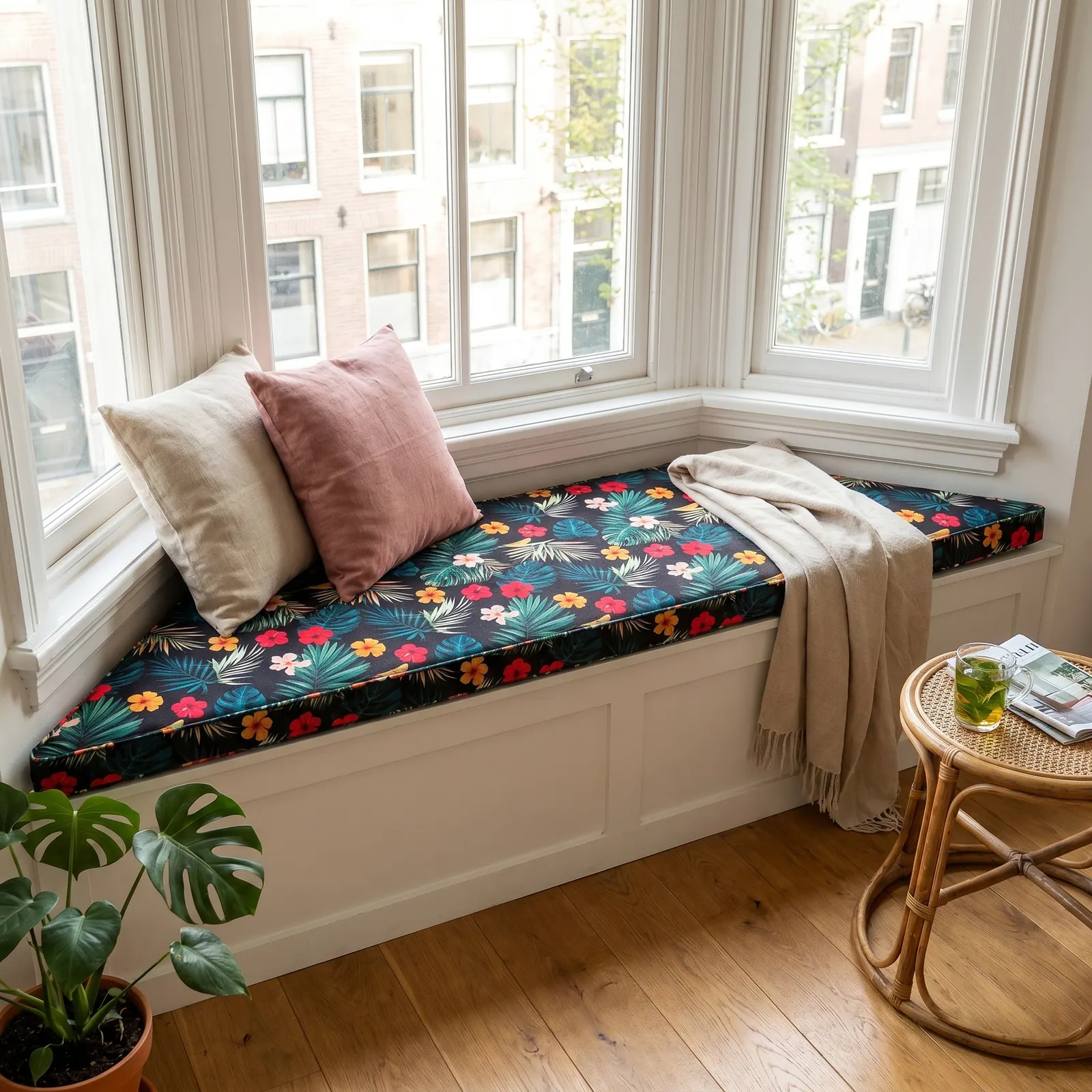
Two cushions, one corner, and a mug standing level on top. That last detail tells me more about comfort than any spec sheet does.

 Save
The quick answer
An L-shaped bench cushion for a reading nook works best as two separate box cushions butted at the corner: one runs into the corner at full length, the other is shortened by the seat depth. A firm, flat, well-filled top keeps you comfortable through long sitting and holds a mug steady. Add pillows against the wall for your back.
The cushion, cut open
Cover fabric. A removable, zippered cover. Machine wash at 86°F (30°C) on a gentle cycle and air dry.
Piping. A fabric-covered cord sewn into the seams. It sits on the seam line, so it does not change the size.
Fiber wrap. Polyester fiber (Dacron) batting around the foam: it fills the cover out and softens the edges.
Foam core. About 2.0 lb/ft³ (32 kg/m³) high-resilience foam, firm to medium-firm, cut to the ordered size.
Zipper. Along the back band, as hidden as possible. The zipper side faces down or toward the wall.
Base panel. The underside of the cover. A non-slip fabric backing can cover the whole of it instead.
The mug test
Look at the stoneware mug on this L-shaped bench cushion. It stands on the seat, not on a table, and it is level. A soft, underfilled cushion would tip it. A firm, flat top holds it. That is the sign of a well-filled box, and it is also the sign of a seat you can read on for two hours.
Comfort for long sitting comes down to three things holding still: the seat surface, the back support and the light. This nook gets all three. The box cushions are flat and firm. The cream linen and mustard velvet pillows lean against the wall where a spine wants them. The brass sconce is mounted over the corner, which is exactly where a reader ends up.
The corner is the best seat in any L. A wall behind you, a wall beside you, and a run of cushion to stretch your legs along. Plan the pillows for that corner first. The foam firmness finder helps if you're torn between firm and plush.
Now the color. Dark green walls, walnut and a dark botanical print make a cocoon, which is what a reader wants at 9 p.m. The risk is murk. The white blooms in the print are what prevent it. The cream pillow and the cream knit throw repeat those blooms. The mustard pillow repeats the gold leaves and the brass. The fern in its ceramic vase adds one living green, lighter than the walls. Each color shows up at least twice.
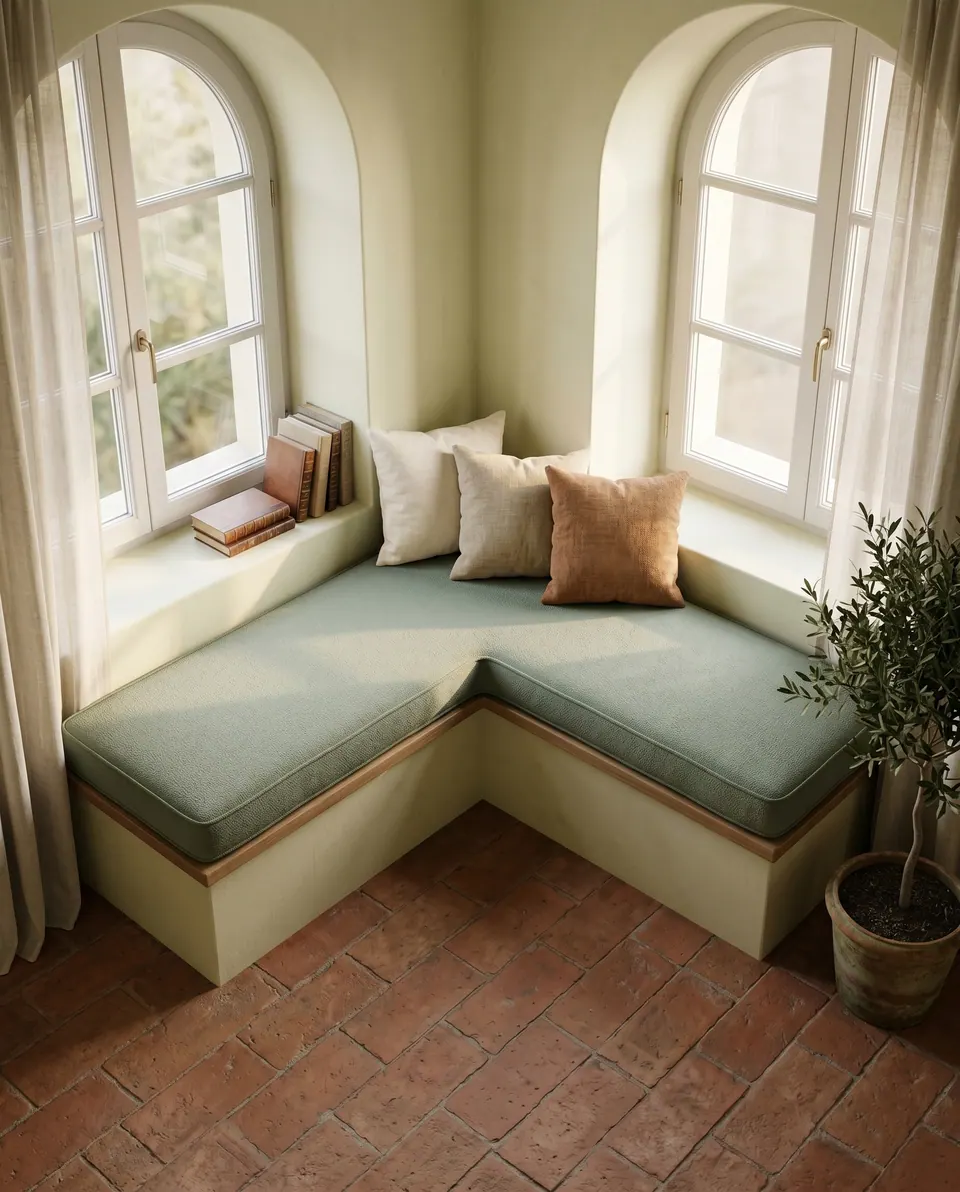
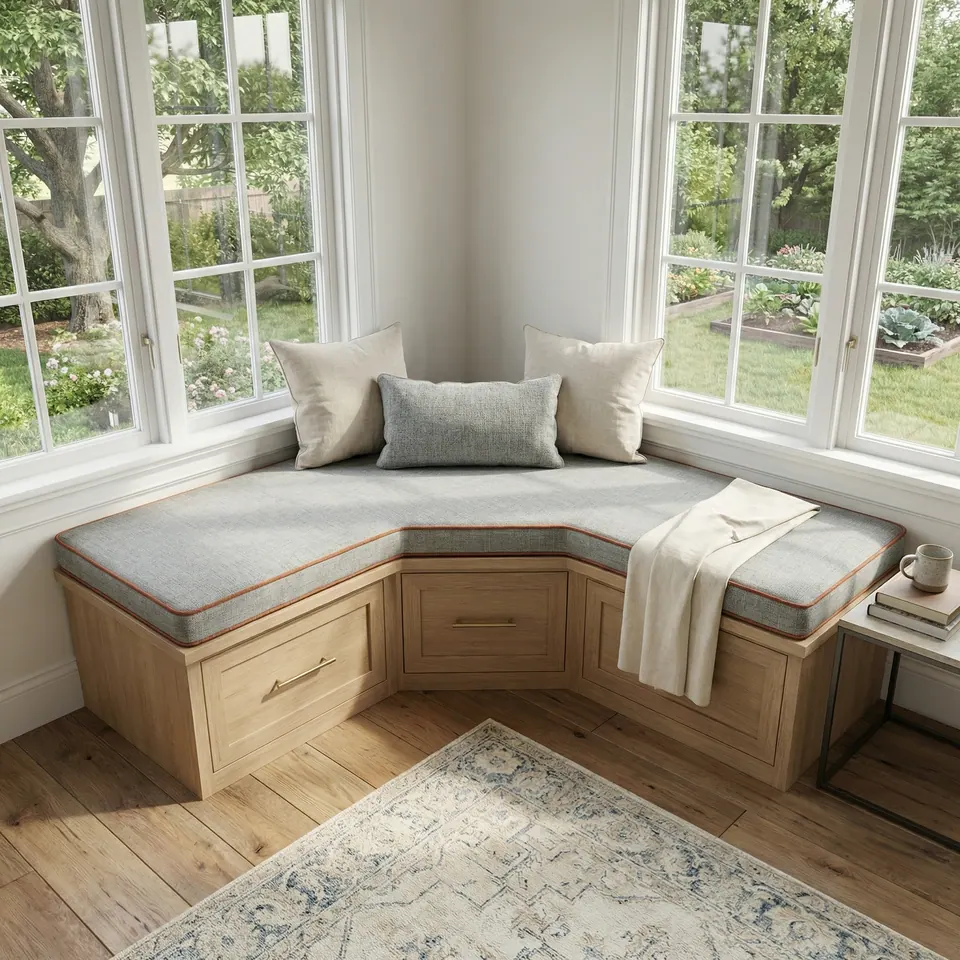
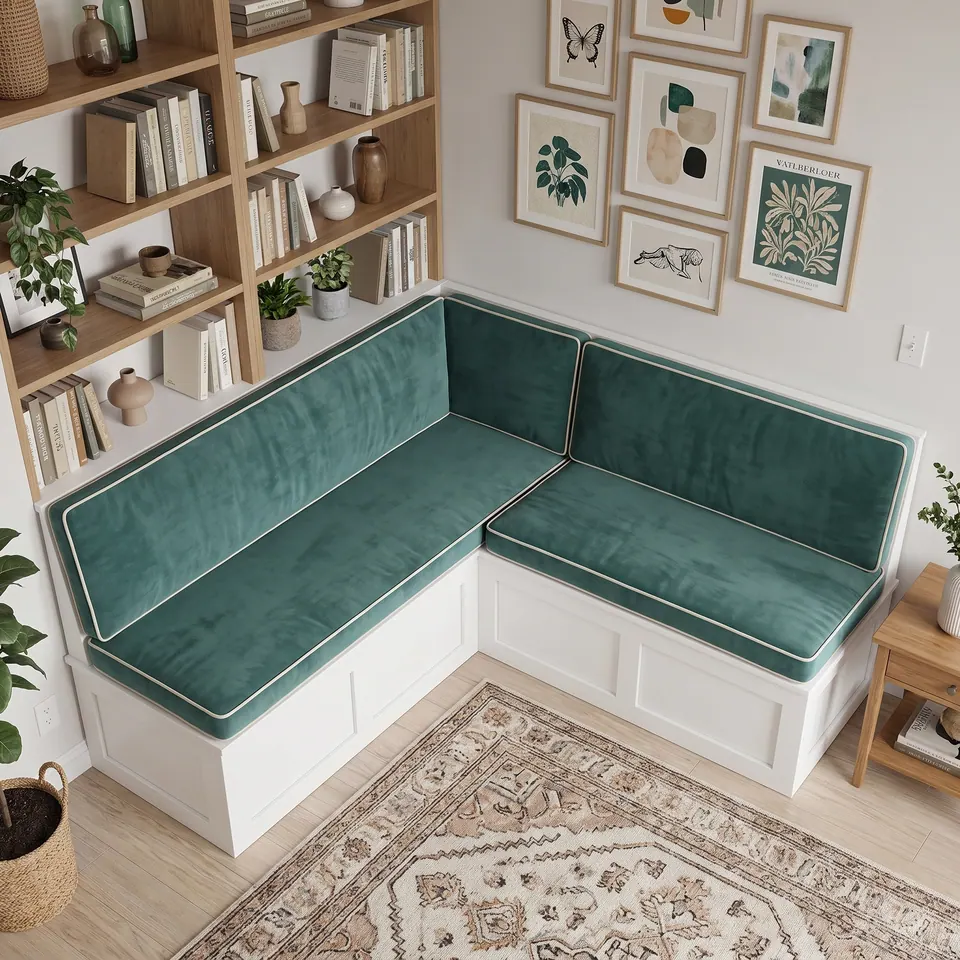
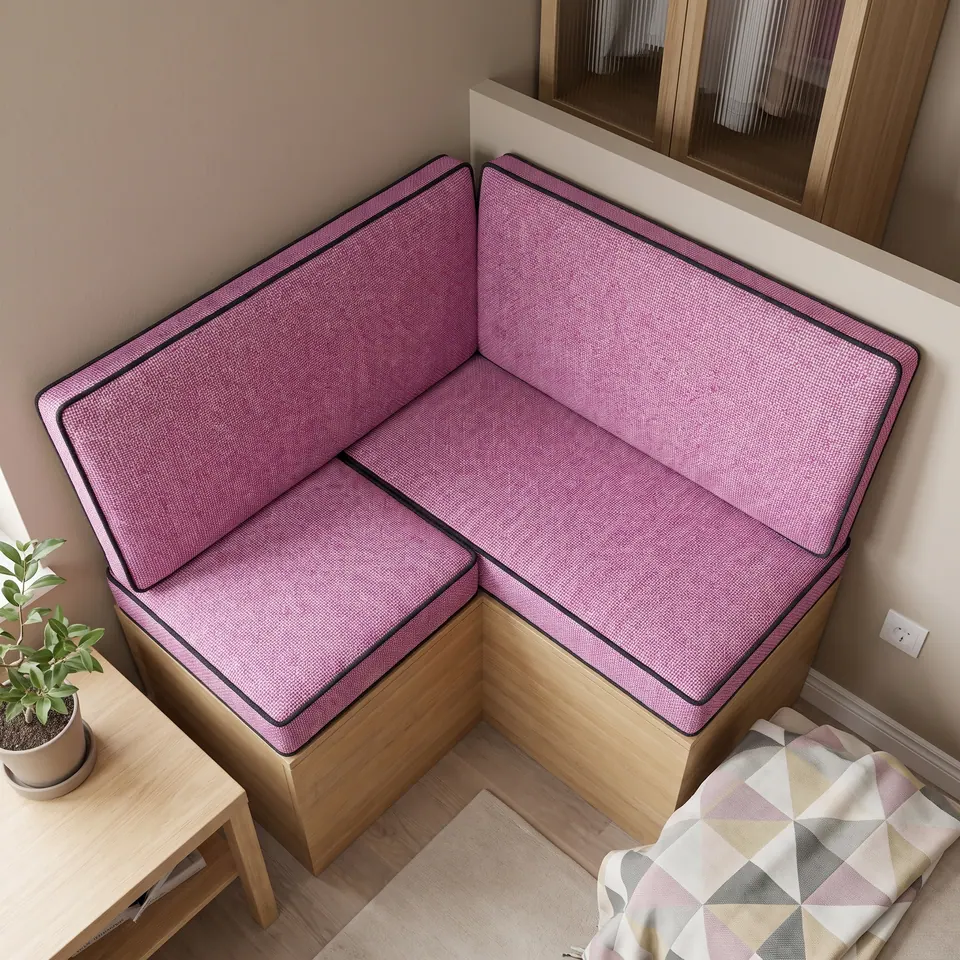
The shape sits with our other L-shaped cushions and the reading nook cushions; for bolsters and backs, see reading nook cushions and bolsters.
Pinned by Nate: five points on the L
Five pins, from the brass sconce over the corner to the knit throw softening the short return.
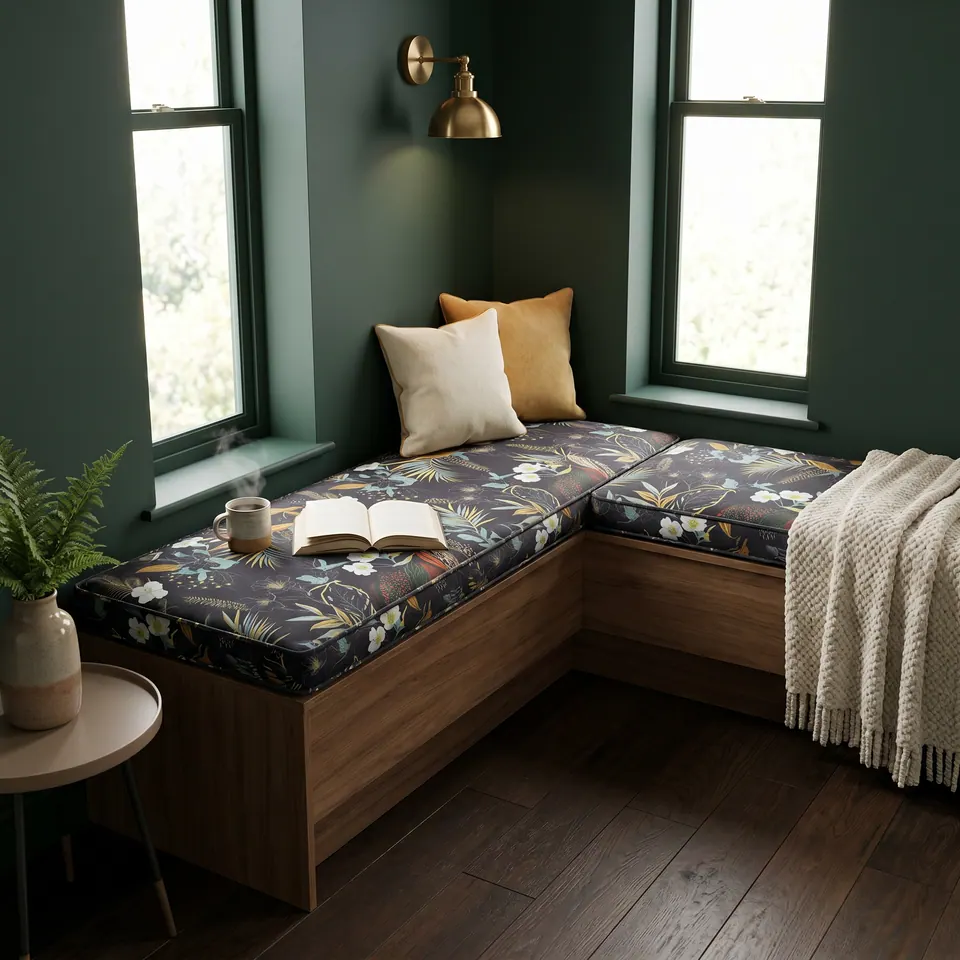
- Brass wall sconce
Brass picks up the gold leaves in the print and lights the corner.
- Long run cushion
Dark botanical print whose white blooms keep the green room from going murky.
- Corner join
Two separate cushions butt at the corner so each lifts out on its own.
- Book and mug
A firm, flat top holds a mug steady, a sign of a well-filled box.
- Knit throw
Cream knit repeats the white flowers and softens the short return.
- Brass wall sconceBrass picks up the gold leaves in the print and lights the corner.
- Long run cushionDark botanical print whose white blooms keep the green room from going murky.
- Corner joinTwo separate cushions butt at the corner so each lifts out on its own.
- Book and mugA firm, flat top holds a mug steady, a sign of a well-filled box.
- Knit throwCream knit repeats the white flowers and softens the short return.
Cutting an L in four moves
Measure both outside lengths
Run the tape along the back wall of each arm of the bench, end to corner. Write both numbers down before anything else.
Measure the seat depth
From the wall to the front edge of the seat. On most L benches the depth matches on both arms; check it anyway.
Give the corner to one cushion
One cushion runs its full length into the corner and owns the corner square.
Subtract the depth from the other
The second cushion is its arm's full length minus the seat depth. No overlap, no gap.
68 1/2 in by 53 1/8 in, and no overlap
A buyer wrote to the workshop with an L-shaped bench, 68 1/2 x 53 1/8 in (174 x 135 cm) overall and 17 3/4 in (45 cm) deep, and got stuck entering the measurements. Fair enough. An L is two shapes pretending to be one.
The shop asked one question first: should the pieces overlap in the corner? They should not. So the short side took the corner at 53 1/8 x 17 3/4 in (135 x 45 cm), and the long side gave up the seat depth: 68 1/2 − 17 3/4 = 50 3/4 in (174 − 45 = 129 cm). Two cushions, 53 1/8 x 17 3/4 in and 50 3/4 x 17 3/4 in, cover the whole bench without a gap.
Write the subtraction on your drawing, partner, so nobody has to redo it. Tolerance is kindness to your future self. The joint options are in the L-shaped cushion corner joint, and the full routine is in L-shaped bench cushion measurements.
Buyer questions: odd shapes, small kids and afternoon sun
- A common question
Can I order a shape with angled sides or rounded corners through the regular rectangle option?
The workshop's answerNo. Slanted sides and rounded corners go through the separate custom-shape option, which is priced differently. If one comes in as a rectangle, the shop asks for the price difference plus a photo of the shape drawn on paper and a photo of where it will sit. If the buyer prefers not to, the order is cancelled and fully refunded.
- A common question
We have two little kids who eat at the bench every day. Which fabric is the most hard-wearing and easiest to clean?
The workshop's answerVelvet or the soft polyester fabric. Velvet is the easiest to spot-clean between washes, because marks wipe off the pile more readily than off textured weaves. The striped cottons are the harder ones to keep clean with children.
- A common question
My window seat faces west. Will the indoor fabric colors hold up in the afternoon sun?
The workshop's answerThe indoor fabrics have some UV resistance, but they are not outdoor fabrics, so very intense, long-lasting direct sun can fade the color a little over time. A west-facing window is generally fine.
On the cutting table: the green nook L
| Pieces | Two box cushions, a long run and a short return |
|---|---|
| Corner | Butted, not overlapped; each lifts out alone |
| Fabric | Dark botanical print with white blooms and gold leaves |
| Piping | Self piping |
| Top | Firm and flat, well filled |
| Pillows | Cream linen and mustard velvet against the wall |
| Throw | Cream knit over the short return |
| Math | Second cushion = arm length − seat depth |
| Best for | Reading nooks and long evenings in low light |

Have it made
Have this made — ask Nate’s workshop
Send the numbers in inches: length × depth × thickness, plus any angle. The workshop checks them with you, because foam has no undo button. — Nate
Leave your details and the workshop will call you to confirm measurements, fabric, foam and piping. No prices, dates or payment on this page: it is a request, not an order.
A mug that stands level on a reading nook cushion is the best firmness test there is: a flat, well-filled box top holds it, a soft one tips it.
Nate
Questions buyers ask next
Should an L-shaped bench cushion be one piece or two?
Two pieces butted at the corner is the usual answer. Each cushion lifts out on its own for cleaning or to reach storage underneath, and the joint lands in the corner instead of across the middle of a seat.
How firm should a reading nook cushion be?
Firm enough that the top stays flat under a book and a mug. A soft top sinks into a dip after an hour of sitting, and you end up sliding toward the front edge.
How do I keep a dark botanical cushion from looking murky?
Choose a print with a light accent, such as white flowers, and repeat that accent in a pillow and a throw. Add one warm metal, like a brass sconce, to light the corner in the evening.
Which side of an L bench gets the corner piece?
Either can, but only one. On a bench measuring 68 1/2 x 53 1/8 in (174 x 135 cm), the shorter side took the corner and the longer side was cut 17 3/4 in (45 cm) shorter to match the seat depth.
± 1/4 in — Nate
More photographs to read
 Save
 Save
 Save
 Save
 Save
 Save