A Reading by NateL-Shaped Corner Bench Cushions
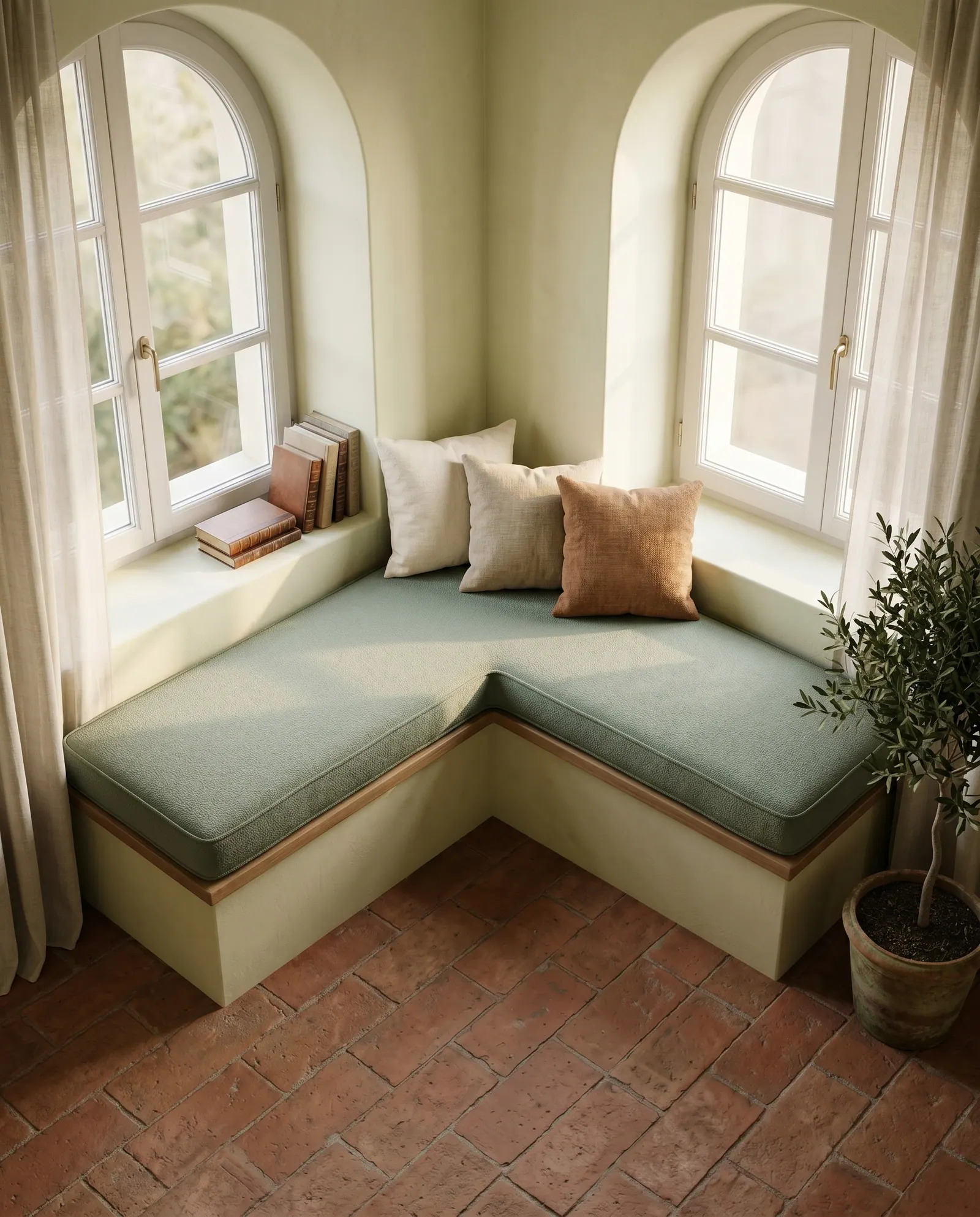
Anatomy of a sage L-shaped corner seat between two arched windows
Two box cushions, one butt joint, three pillows in the corner. I read this plaster nook the way I'd read a shop drawing: edges first, then everything else.

 Save
The quick answer
An L-shaped bench cushion works best as two box-edge rectangles that butt together in the corner: one leg runs through, the other stops against it. Measure each leg from the corner outward and each depth separately, to ± 1/4 in (6 mm). A 45-degree miter turns both pieces into trapezoids, and a one-piece L is harder to cover.
The cushion, cut open
Cover fabric. A removable, zippered cover. Machine wash at 86°F (30°C) on a gentle cycle and air dry.
Piping. A fabric-covered cord sewn into the seams. It sits on the seam line, so it does not change the size.
Fiber wrap. Polyester fiber (Dacron) batting around the foam: it fills the cover out and softens the edges.
Foam core. About 2.0 lb/ft³ (32 kg/m³) high-resilience foam, firm to medium-firm, cut to the ordered size.
Zipper. Along the back band, as hidden as possible. The zipper side faces down or toward the wall.
Base panel. The underside of the cover. A non-slip fabric backing can cover the whole of it instead.
Pinned by Nate: five points on the plaster corner
Five pins: the corner joint, the piped front edge, the terracotta pillow, the books on the sill and the olive tree.
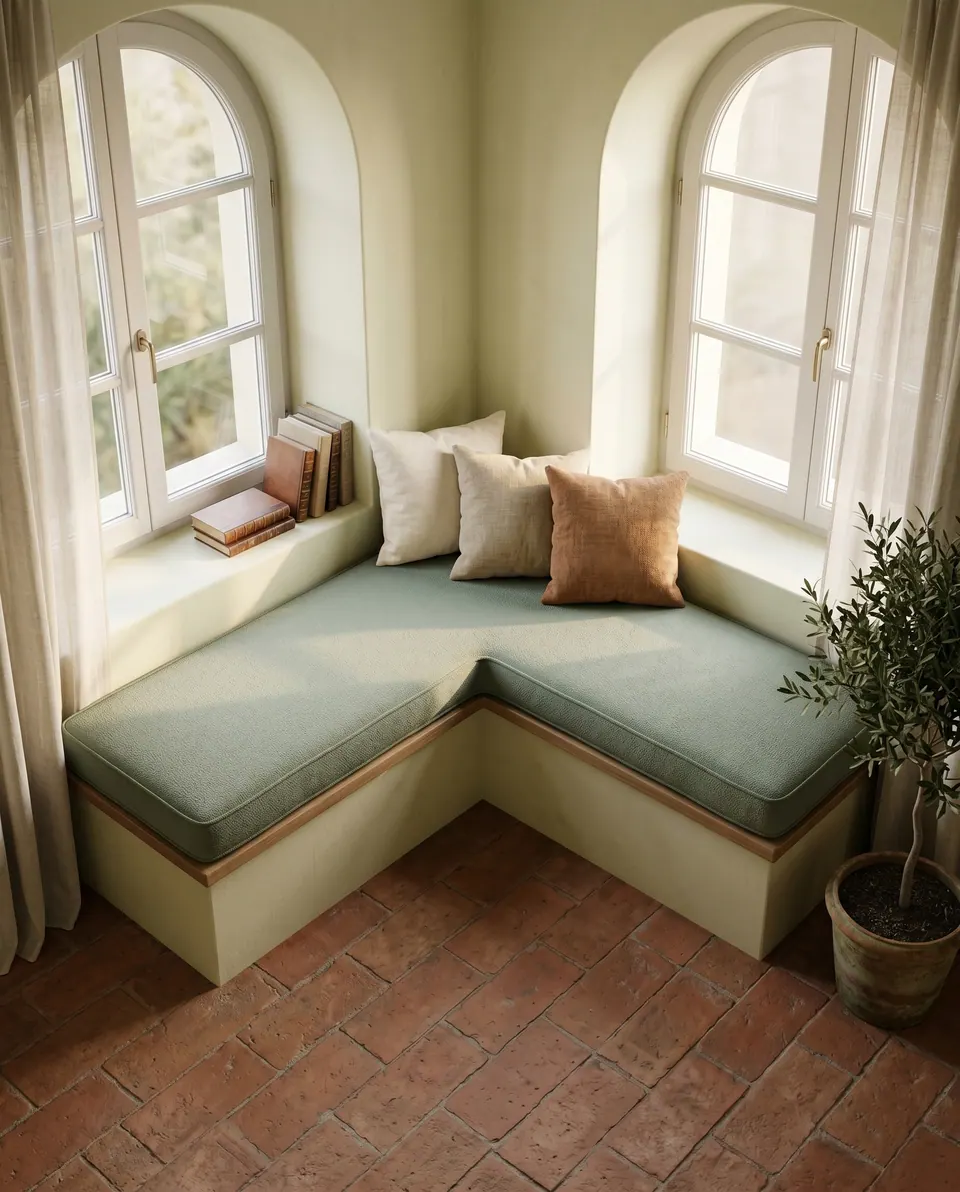
- L-shaped corner
The two legs meet in the corner, so the seat wraps around without a gap.
- Piped front edge
Self piping traces the long outside edge and keeps it straight.
- Terracotta pillow
One clay-colored pillow links the seat to the tiled floor.
- Books on sill
The deep sill holds books so the cushion stays clear.
- Olive tree
An olive tree echoes the sage and completes the villa palette.
- L-shaped cornerThe two legs meet in the corner, so the seat wraps around without a gap.
- Piped front edgeSelf piping traces the long outside edge and keeps it straight.
- Terracotta pillowOne clay-colored pillow links the seat to the tiled floor.
- Books on sillThe deep sill holds books so the cushion stays clear.
- Olive treeAn olive tree echoes the sage and completes the villa palette.
Cross-section of an L: two boxes and one butt joint
Here is the build, partner, read from the outside in.
Two box cushions, not one. The long leg runs along the wall under one arched window; the short leg butts against its side under the other. Where they meet in the corner there is no gap, because both pieces were cut to the plaster, not to a catalog size. Angles are just lengths in disguise, and a square corner is the friendliest angle there is.
- Cover: a sage performance weave, a cool green set between warm cream plaster and red-brown tile.
- Piping: self piping along the long outside edge, keeping the front line straight across both pieces.
- Side band: the box edge that sets the thickness and keeps the front square where people actually sit.
- Joint: a butt joint, one leg running through to the wall, the other stopping against it.
The styling follows the geometry. Three pillows in cream, oatmeal and terracotta gather in the corner, where back support is deepest because two walls meet. The terracotta one ties the seat to the tiled floor. Books live on the deep sill, not on the cushion, and the olive tree in its clay pot repeats the sage one step grayer.
To measure your own L, go from the corner outward along each wall, take the depth of each leg on its own, and write down which leg is longer. Tolerance is kindness to your future self: record everything to ± 1/4 in (6 mm). Sizes live in L-shaped cushions, the joint has its own page in the L-shaped cushion corner joint, and the fabric family is performance and pet-friendly.
Turning the corner: butt joint, miter or one piece
| Corner option | How it is cut | Trade-off |
|---|---|---|
| Butt joint | Two rectangles; one leg runs into the corner, the other butts against its side | Easiest to cut true, lift off, wash and flip; a seam line shows at the corner |
| Mitered 45° | Both pieces cut on the diagonal, so the joint runs corner to corner | Symmetrical look; ordered as trapezoids with a drawing of every edge |
| One-piece L | A single cover over an L-shaped core | No joint, but the cover is hard to remove, refit and keep snug |
| Rounded or clipped ends | Outer ends shaped like any custom cushion | Softer walkway corners; needs a measured drawing |
On the cutting table: the sage corner seat
| Cushion | L-shaped corner seat made as two box cushions |
|---|---|
| Joint | Butt joint: one leg runs through, the other stops against it |
| Fabric | Sage performance weave |
| Piping | Self piping on the outside front edge |
| Edge | Box edge with a side band |
| Pillows | Cream, oatmeal and terracotta, gathered in the corner |
| Measure | Each leg from the corner outward, each depth separately, ± 1/4 in (6 mm) |
| Backrests | Not freestanding; they lean on the wall |
| Best for | Reading nooks and window corners between two walls |

Have it made
Have this made — ask Nate’s workshop
Every edge and both diagonals, to the nearest 1/4 in. If the numbers do not close, the workshop will say so on the call. — Nate
Leave your details and the workshop will call you to confirm measurements, fabric, foam and piping. No prices, dates or payment on this page: it is a request, not an order.
Two corners, four rectangles
One buyer wrote in with a photo of two L-shaped corner seating areas, measurements written right on it, then confirmed that two full sets were needed. The workshop did what I would do with any L: split each one into two rectangular pieces that butt together in the corner. Four rectangles in all, handmade in linen with good padding.
Why rectangles? A rectangle is easier to cut true, easier to pack and ship, and easier to flip when one side has done its share of sitting. A one-piece L has one cover over a bent core, and getting that cover off and back on square is a wrestling match. Two boxes, one joint, done. If your corner is not square, run the numbers first in the trapezoid cushion calculator.
Buyer questions: matching bolsters, a 132 in seat and backs that lean
- A common question
Can you make the seat cushion with matching armrest bolsters, back pillows and a lumbar pillow?
The workshop's answerYes. Send the seat size as length x depth x thickness, plus how many bolsters and back pillows you want, and the workshop sizes them to match. Everything ships filled and ready to use unless you ask for covers only. One such set was built around a 44.5 x 62.5 in (113 x 159 cm) cushion.
- A common question
I want one very long tufted velvet seat, about 33 x 132 in, with a 30 in (76 cm) high back cushion. Can it be done?
The workshop's answerThe workshop suggested two pieces of 33 x 66 in (84 x 168 cm) instead of one 132 in (335 cm) cushion. Each piece can take an armrest at both ends, four armrests in total, and the order was placed by choosing the 33 x 66 in option twice.
- A common question
Will the back cushion stand up by itself, or does it need a wall behind it?
The workshop's answerIt needs support. Backrests are not freestanding; they lean against a wall or the back of a cabinet, so the workshop sizes them to your wall or floor plan.
An L-shaped cushion is easiest to live with as two rectangles that butt in the corner: each one cuts true, lifts off for washing and flips on its own.
Nate
Questions buyers ask next
Which leg of an L-shaped seat should run through to the corner?
Usually the longer leg runs through to the back corner and the shorter leg butts against its side, so the longest piece stays one continuous cushion. Mark the choice on your sketch so both pieces are cut to match.
Can the outer ends of an L-shaped corner cushion be rounded or angled?
Yes. Corners can be customized like any shaped cushion; send a drawing with every edge measured. An angled cut where the two legs meet is different: it makes both pieces trapezoids.
Where should pillows go on an L-shaped window seat?
Gather them in the corner, where two walls meet and back support is deepest. Along the straight legs, one or two pillows are plenty, because the wall already does the work.
± 1/4 in — Nate
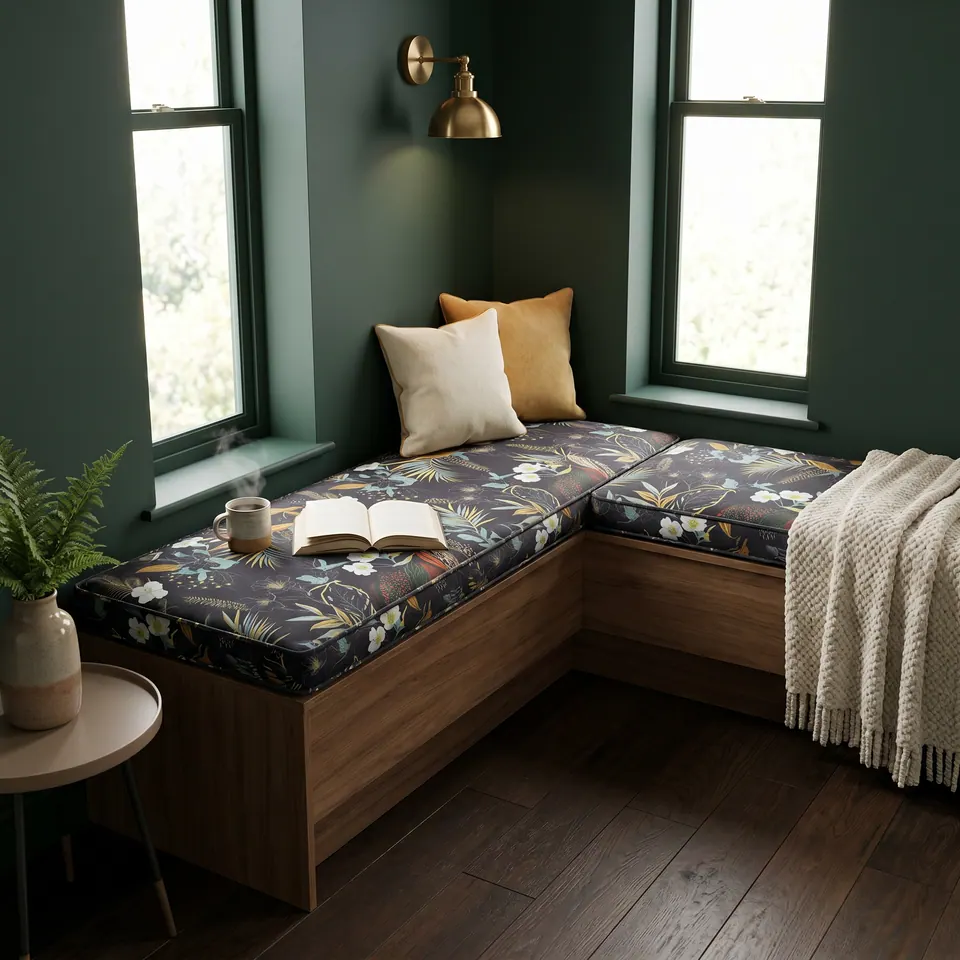
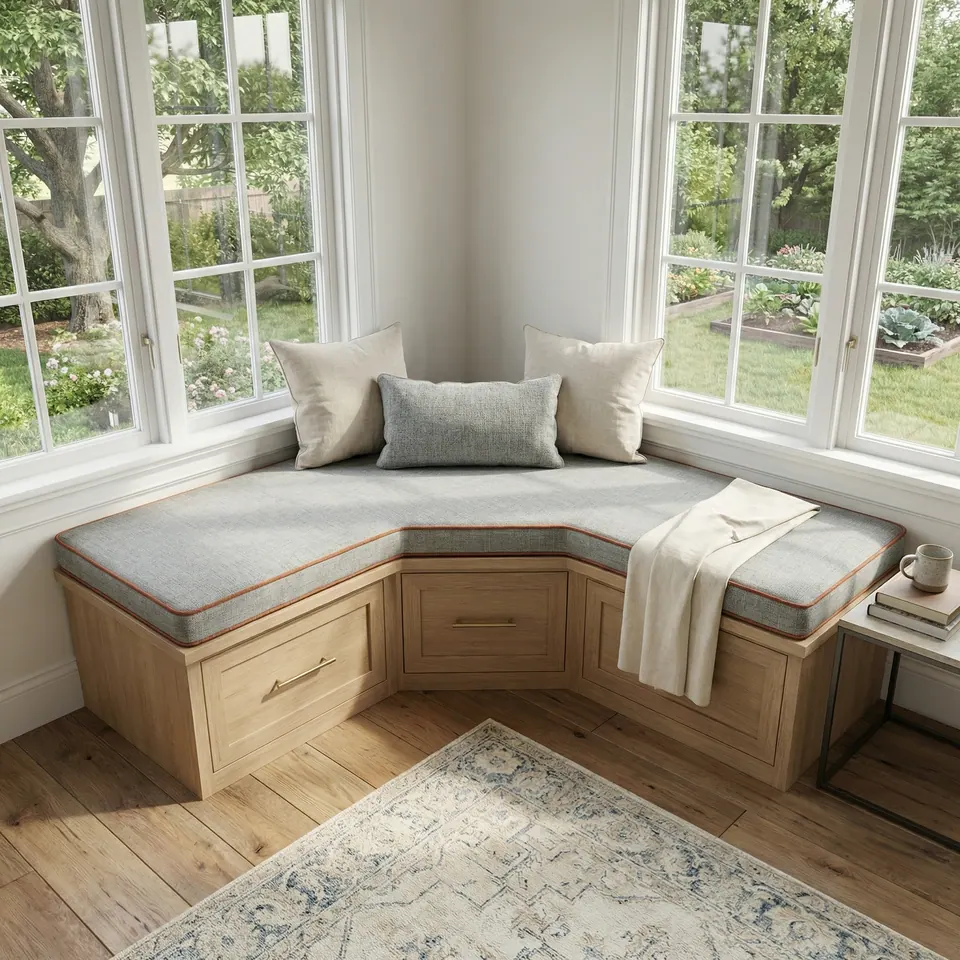
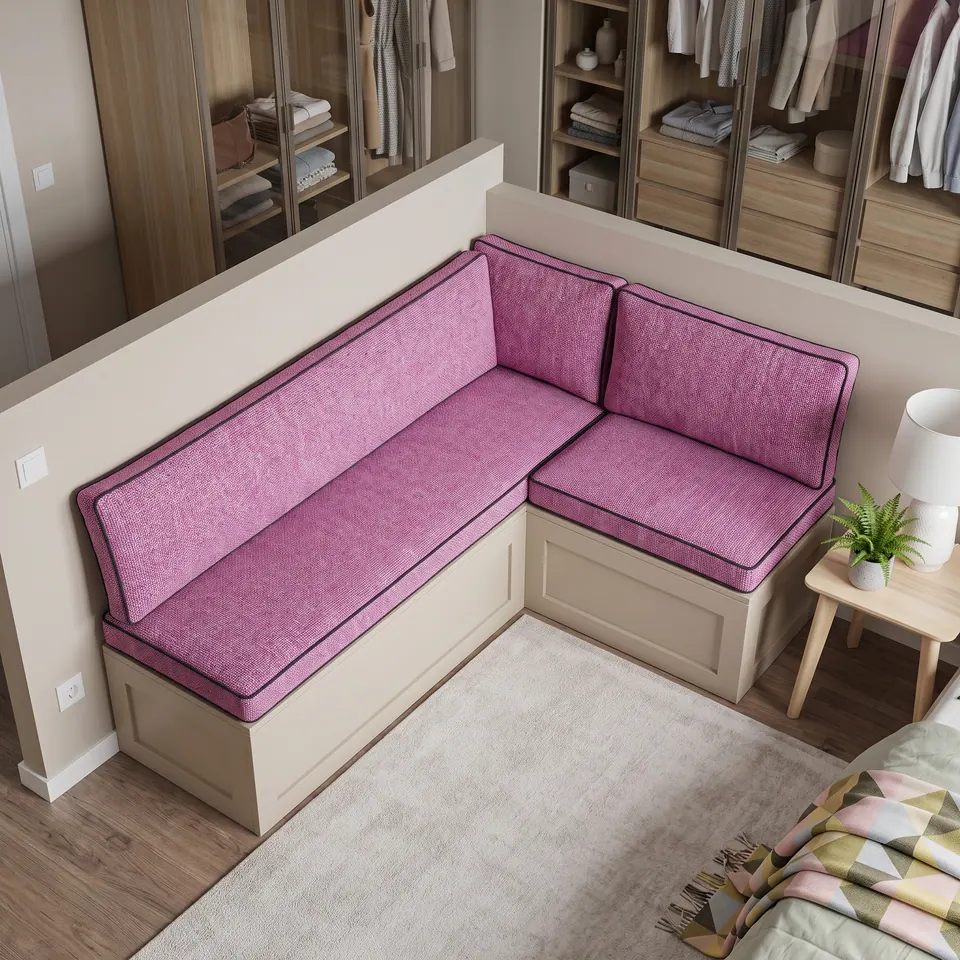
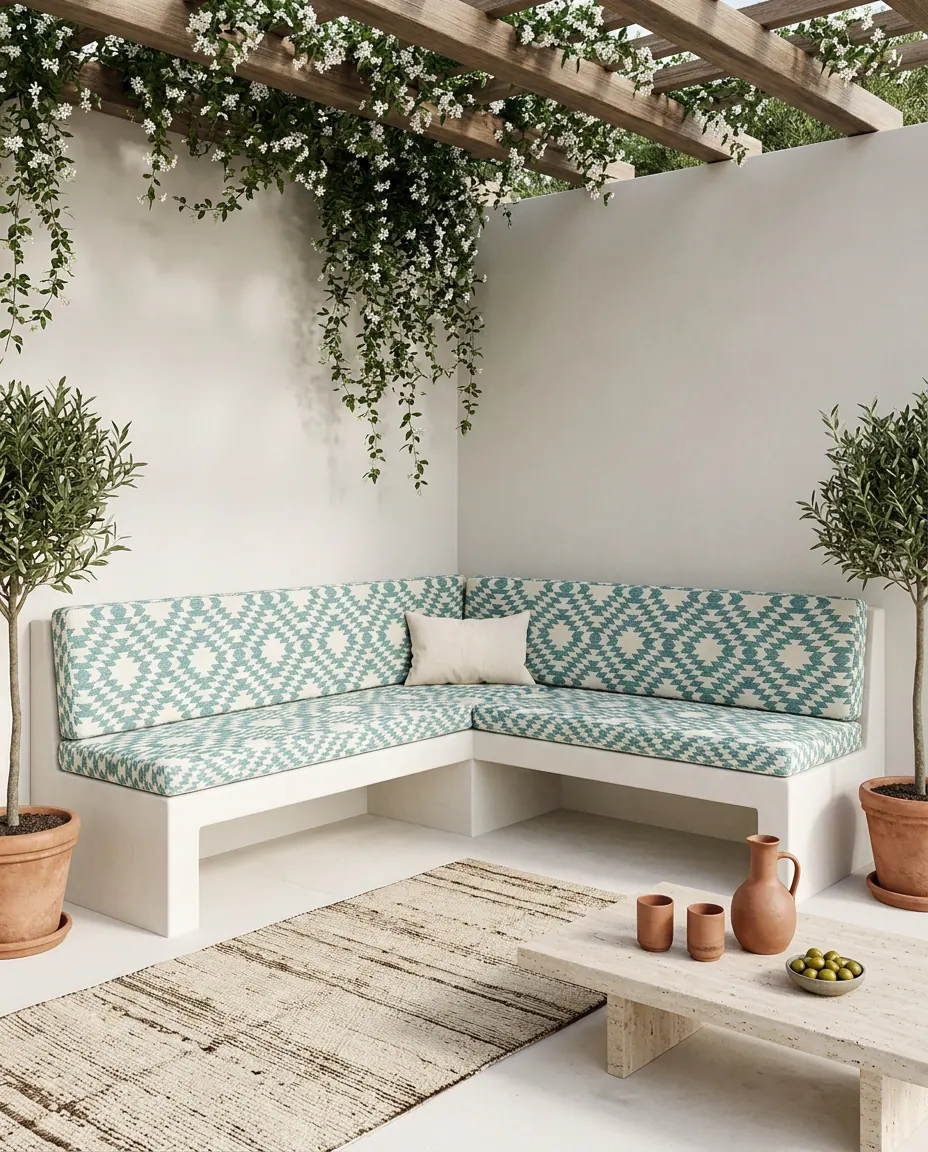
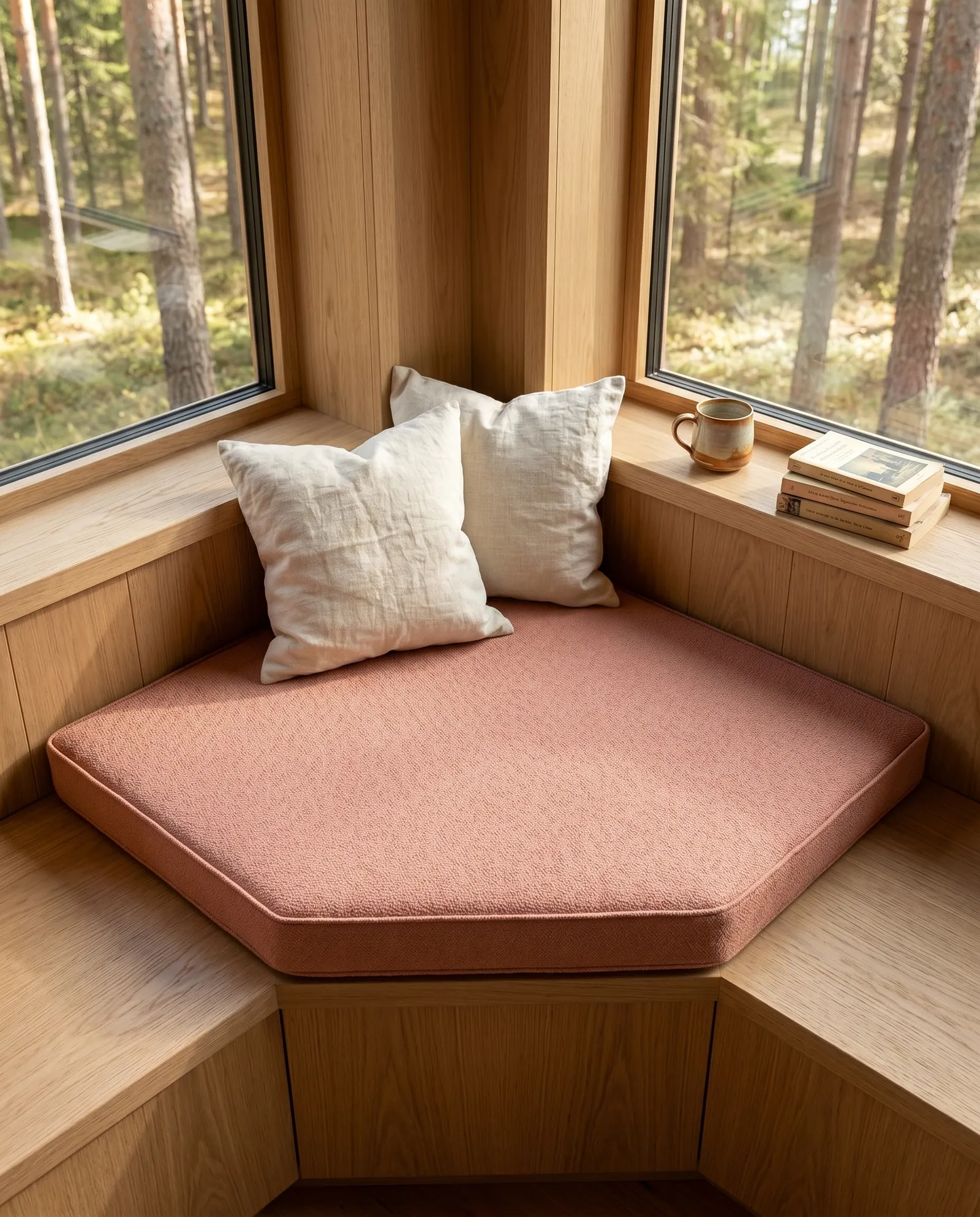
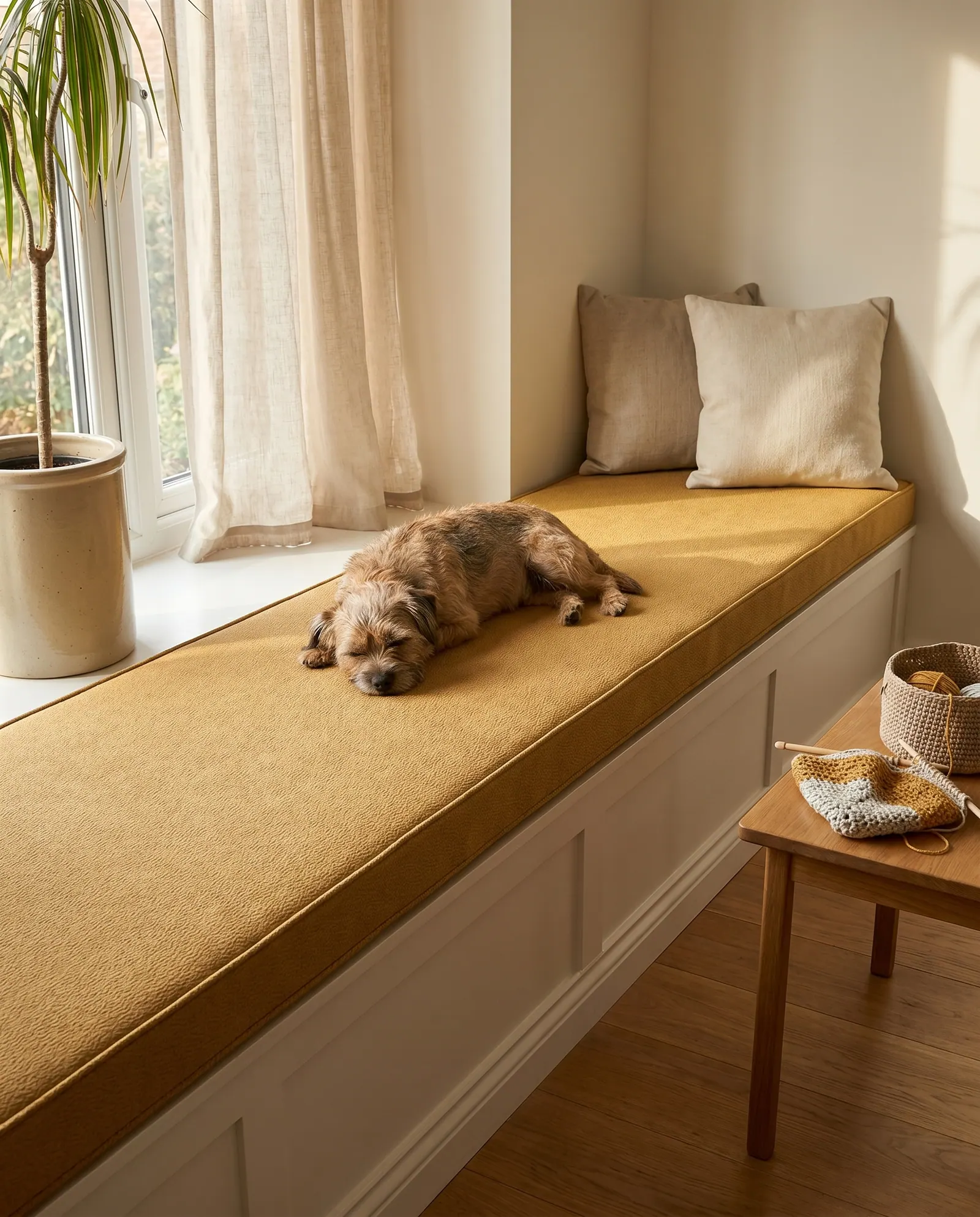
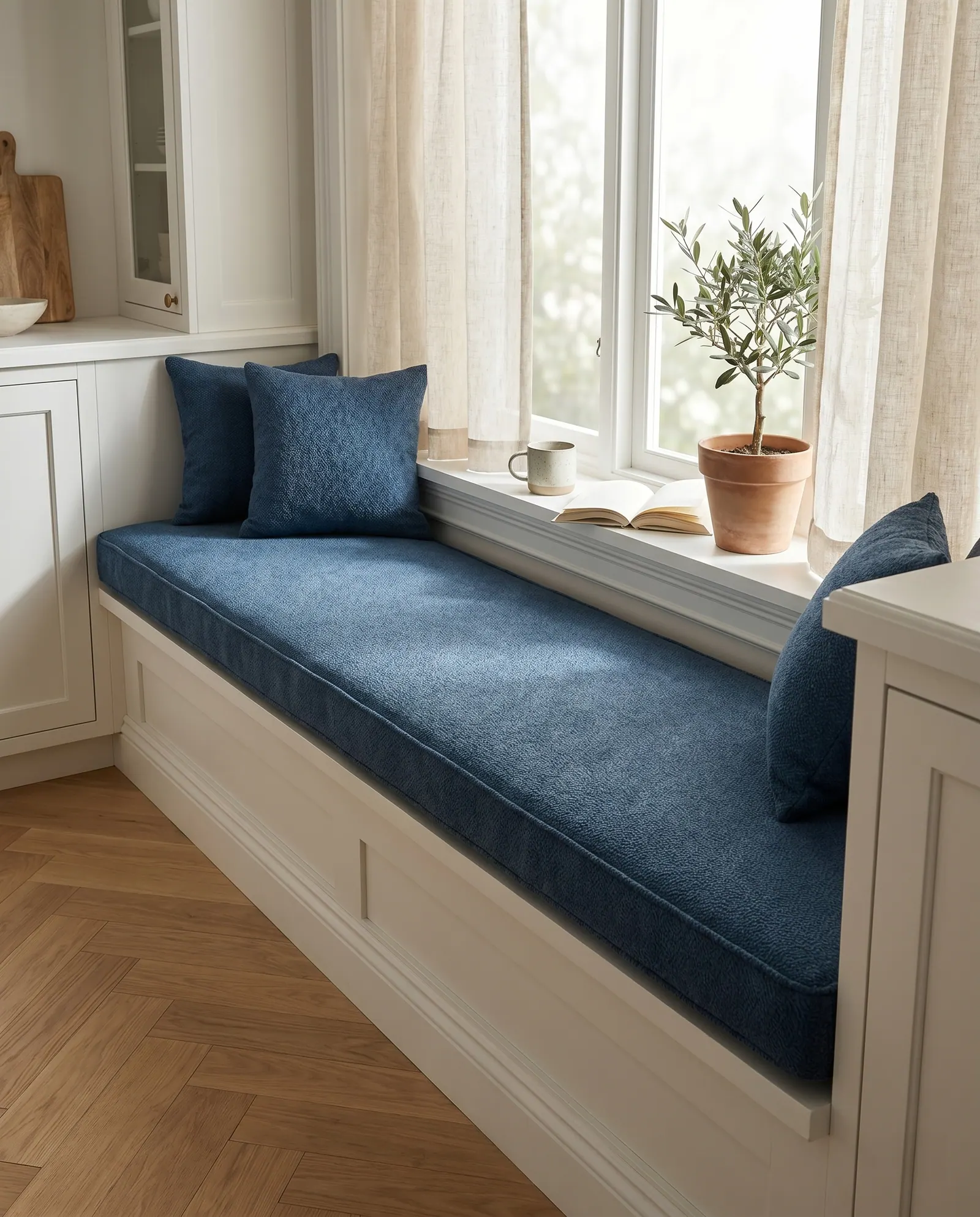
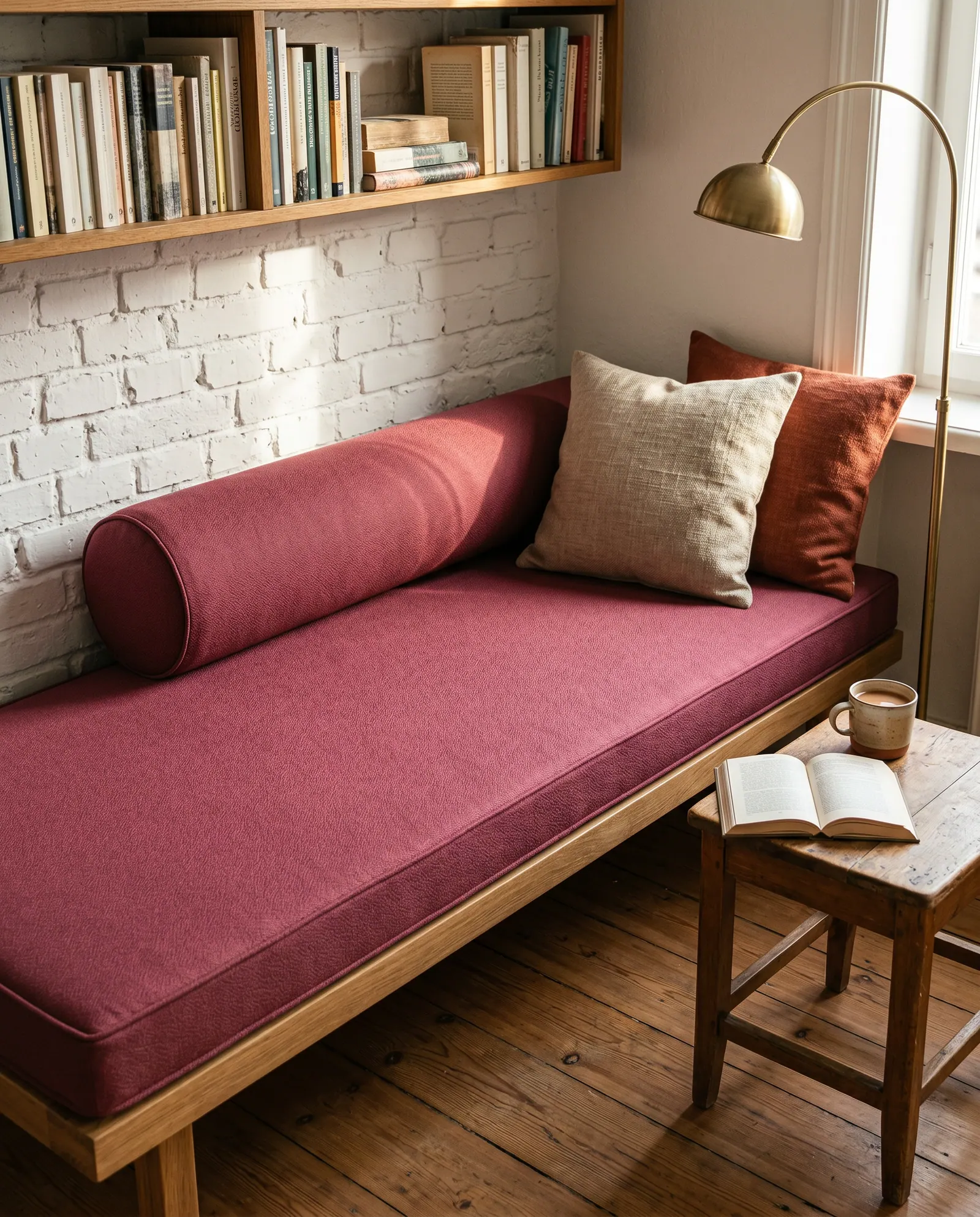
Corner nooks, bays and window seats in daylight
 Save
 Save
 Save
 Save
 Save
 Save