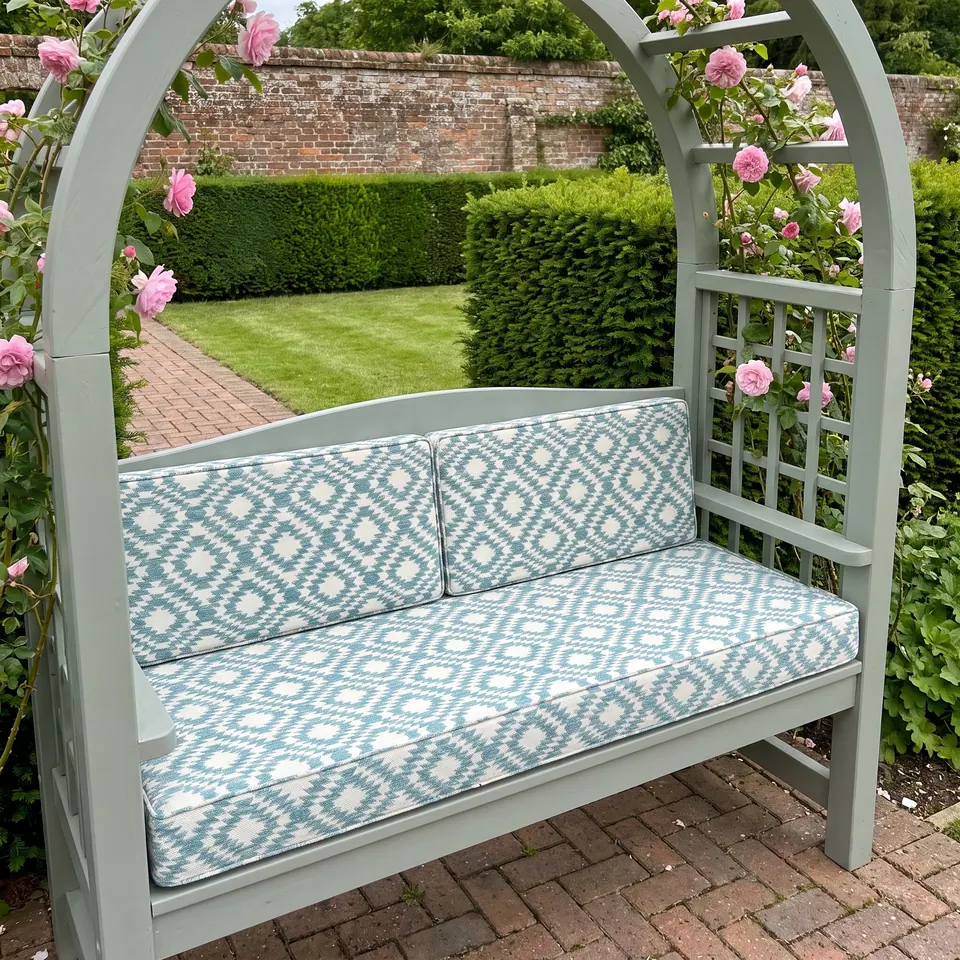
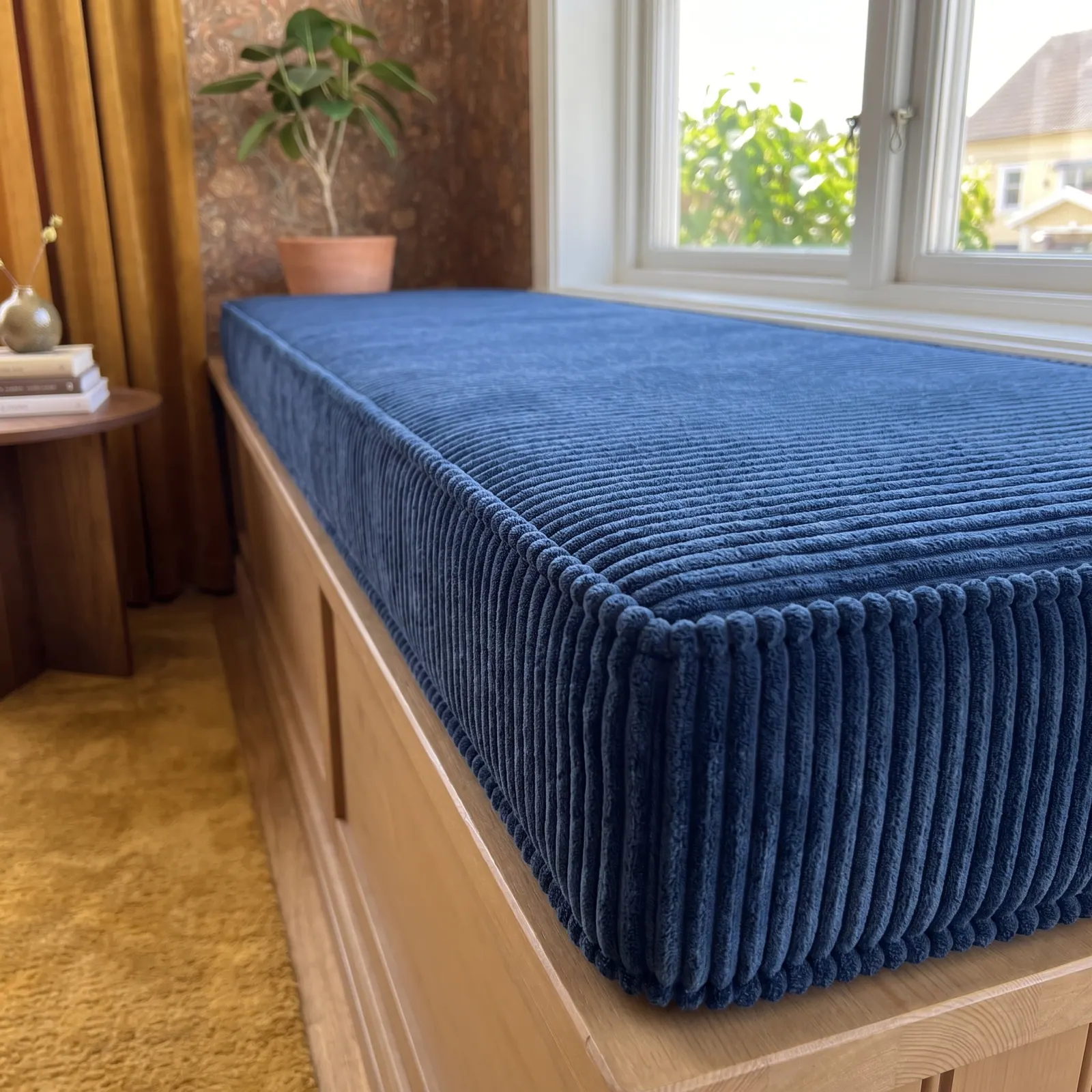
SaveSeen from knee height, the self piping shows as a beaded line where the boxing strip meets the top. The corner is sewn square with no puckering.
The quick answer
Pacific Northwest outdoor cushions should be made in outdoor fabric even on a covered porch, because damp air lingers for months and indoor fabrics aren't waterproof. Indoors, velvet or a wipeable performance weave suits window seats near fogging glass. Lift and air any cushion that sits against a cold, wet sill, and store outdoor cushions dry over winter.
Field notes
Weather and light in the Pacific Northwest
Sun & UVGentle (level 1 of 4)A long gray season, then bright, dry summers
HumidityDamp (level 3 of 4)Damp from fall to late spring
Rain & stormsFrequent (level 4 of 4)A long wet season; drizzle more than downpours
Snow & freezeRare (level 1 of 4)Rare in the lowlands, heavy in the mountains
Watch for
Condensation on window sills
Mildew on covered porches
Low winter light
Plain-language levels from general climate patterns, not measurements. Your own porch, shade and window exposure matter more.
Twenty percent sun in December, and damp the rest of the time
In December, Seattle gets about 20 percent of the sunshine it could. Portland, the same. January in Seattle, 23 percent.
The rain itself is not heavy. The season is long. About three quarters of Seattle's 39.34 in (100 cm) a year falls in the October–March half of the year. November through January brings 18 or 19 wet days a month. July brings five.
Morning humidity averages 82 percent in Seattle and Portland. On a January afternoon in Seattle it is still near 76. Damp air slips under a porch roof. It settles on a cold window and runs down to the sill.
So Pacific Northwest outdoor cushions, and the indoor ones by the glass, are built for damp first. Sun comes second. Seattle's noon UV Index averages 7.3 in July and 0.6 in December, well under the 10 to 12 of the Sun Belt. Fading happens here. Slowly.
Low light changes color choices too. A buyer in the US wanted a forest green window seat cushion, 78.75 x 15.5 in (200 x 39 cm) and 3 in (7.5 cm) thick, with thin cream and camel stripes woven in. The workshop doesn't weave fabric, so the buyer chose from the charts: forest green 923 with mustard 920. Warm colors carry a gray afternoon.
Craftsman bays, covered porches, and the bench by the back door
The Craftsman house shaped this region. Its designers loved built-ins, inglenooks and big windows with benches beneath them. Gustav Stickley published more than 200 house plans in The Craftsman between 1903 and 1916, and many bungalows in Seattle and Portland still keep the bench under the window. See Craftsman bungalow window seats.
Around them: Foursquares, mid-century ranches and split-levels, new townhouses, backyard ADUs, a few floating homes.
Older houses often put a radiator under the window. A buyer in the US had a 106 x 15 in (269 x 38 cm) ledge above one. The workshop suggested two 53 x 15 in (135 x 38 cm) cushions instead of one, so heat can escape and each piece lifts out alone.
A reading nook measured after the shelves, not before
A buyer in the US asked for a seat, a back and two side pillows for a reading nook. The bookshelf wall around it wasn't built yet.
The workshop asked for one thing first. Measurements of the finished nook, not the plan.
They came back: 51 in (130 cm) wide, 37 in (94 cm) deep, a back wall 21 in (53 cm) high. The workshop quoted two thicknesses, 4 in (10 cm) and 8 in (20 cm), in velvet, linen or the soft performance fabric.
Height is a feeling. Against a 21 in back wall, a 4 in seat leaves 17 in (43 cm) of wall to lean on. An 8 in seat leaves 13 in (33 cm). The foam firmness finder helps with the rest, and built-in reading nook cushions has more layouts.
Measure the room you will have. Not the room you have today. The cushion lives in the finished one.
A covered porch cushion in the Pacific Northwest still sits in damp air for six months a year. If rain or humid air reaches the seat, choose outdoor fabric.
Open any photograph large; each one has its own link and a Save button.
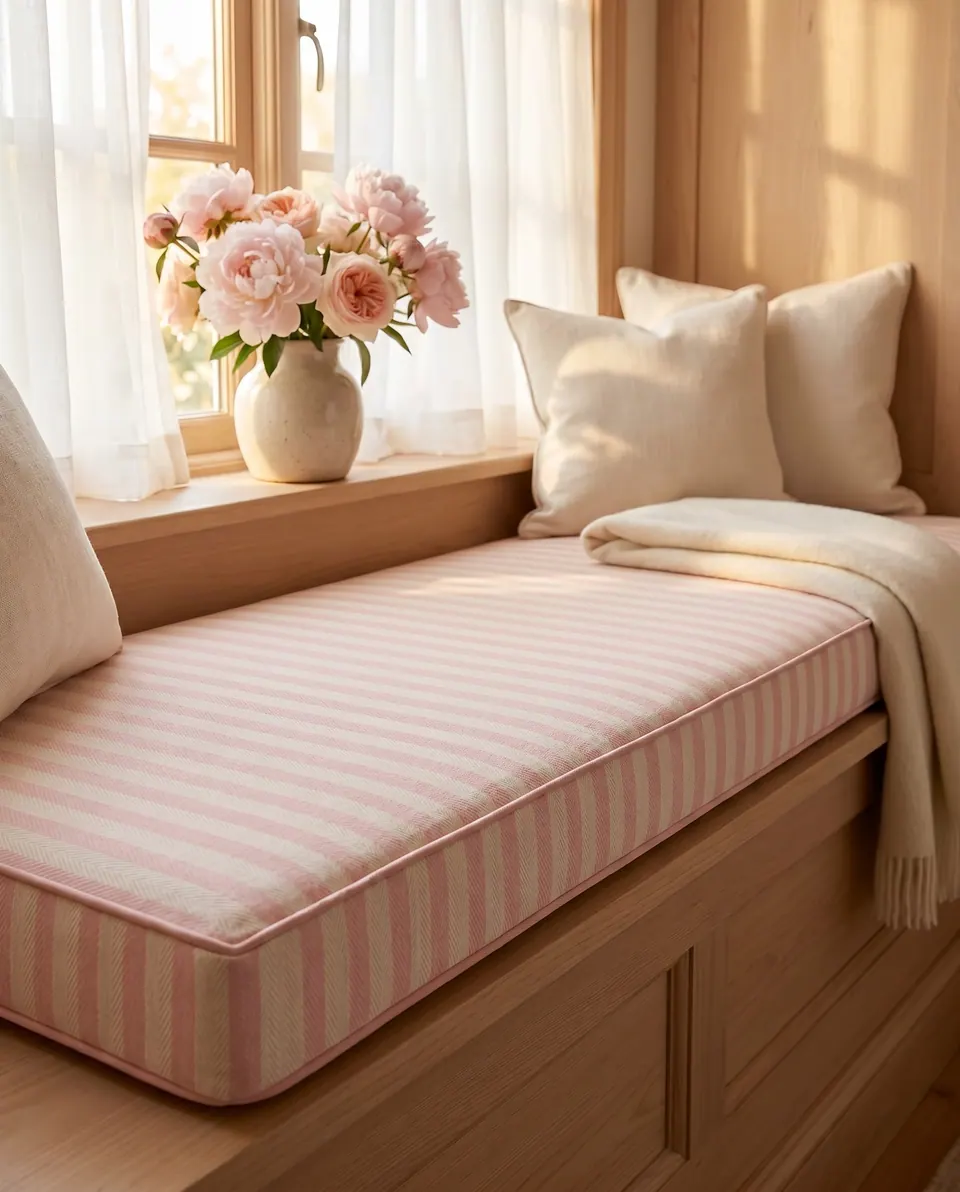
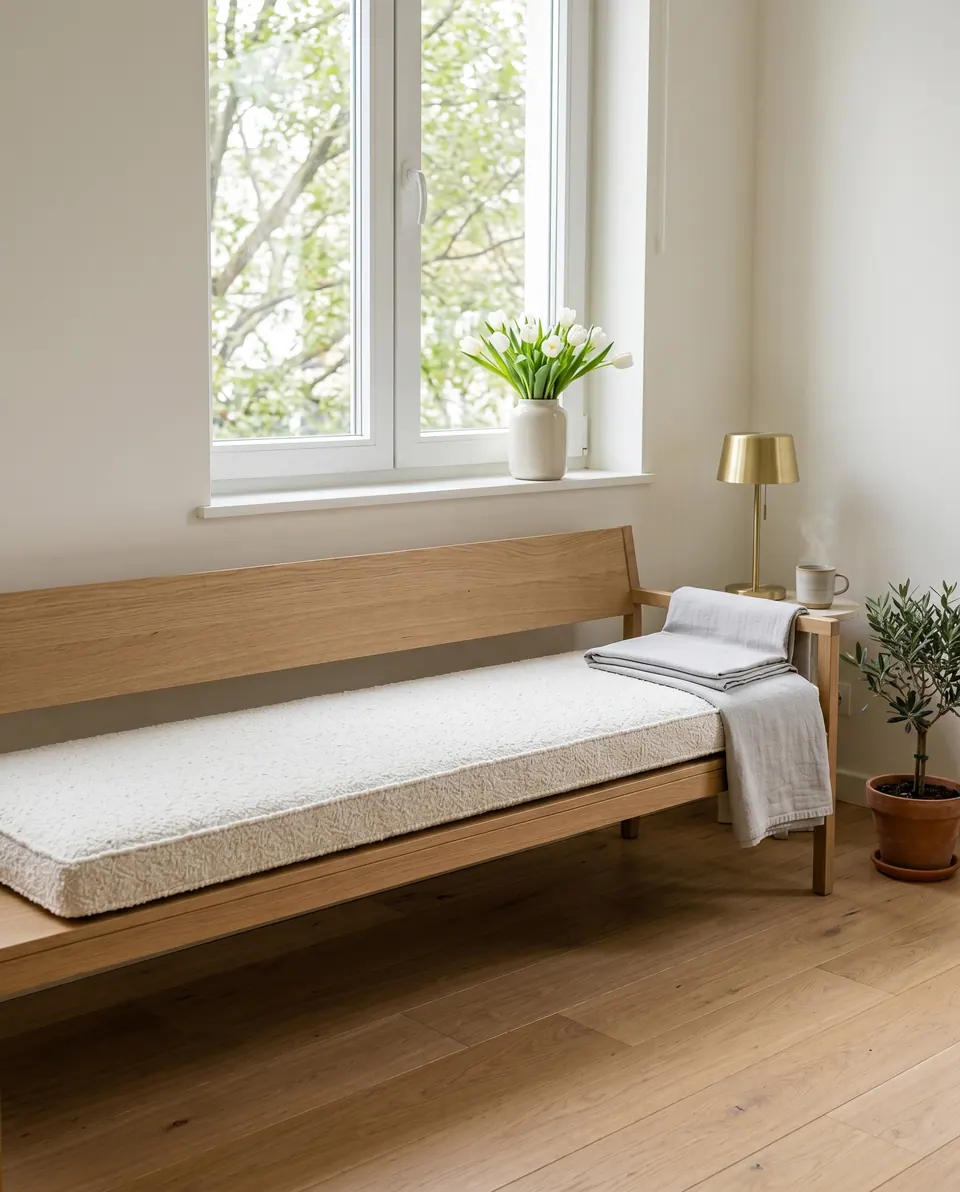
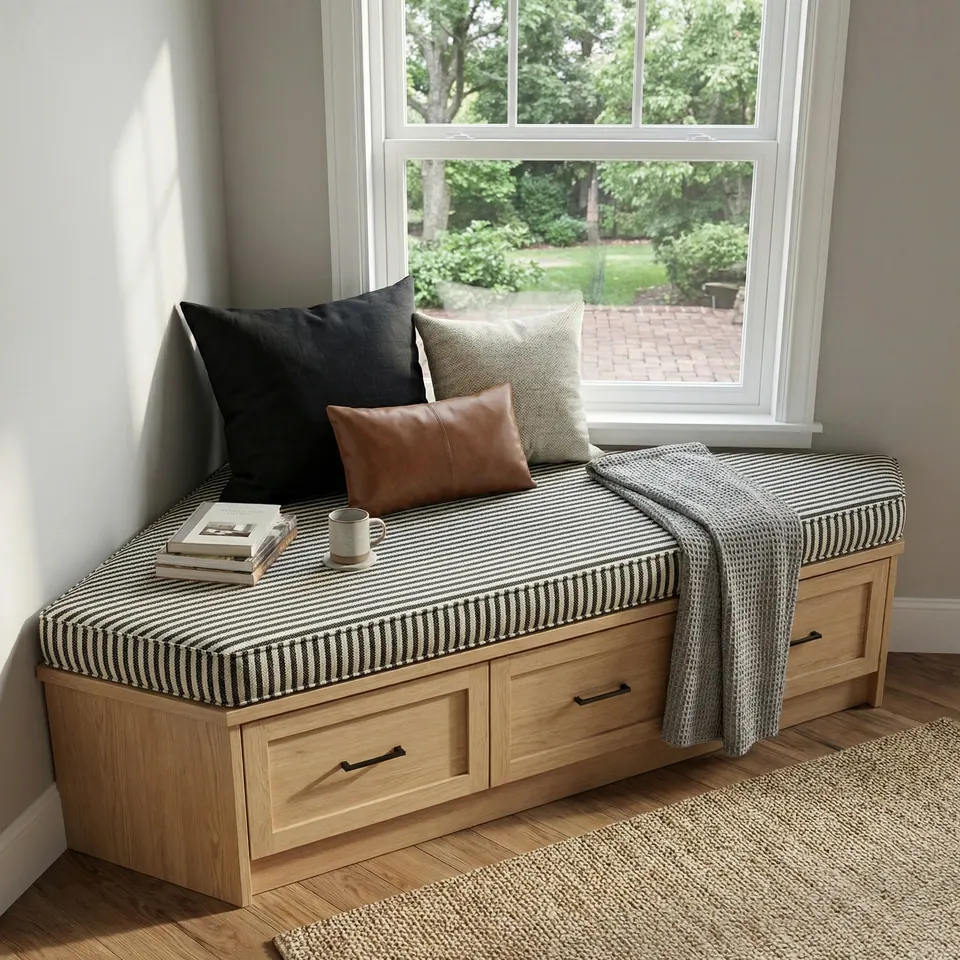
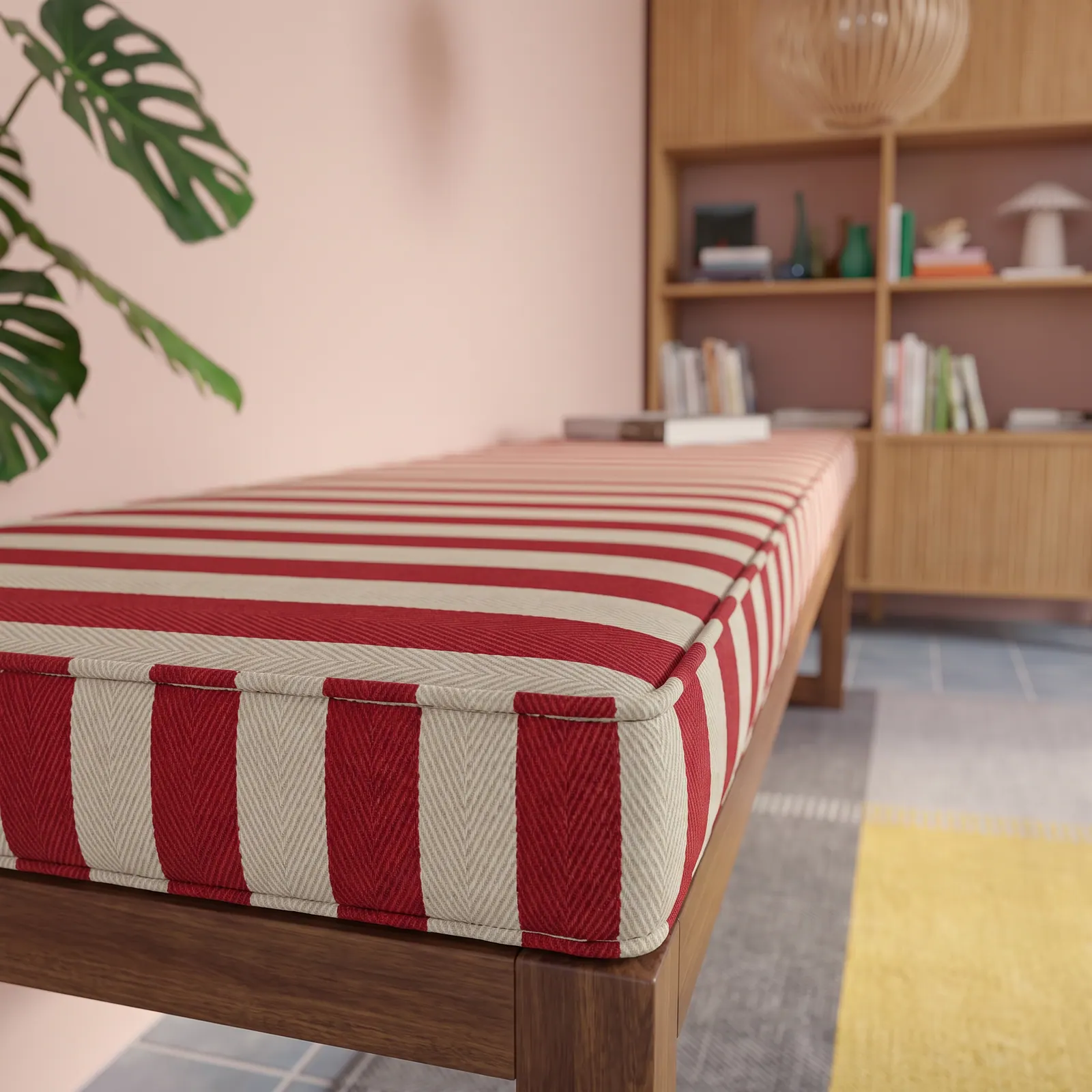
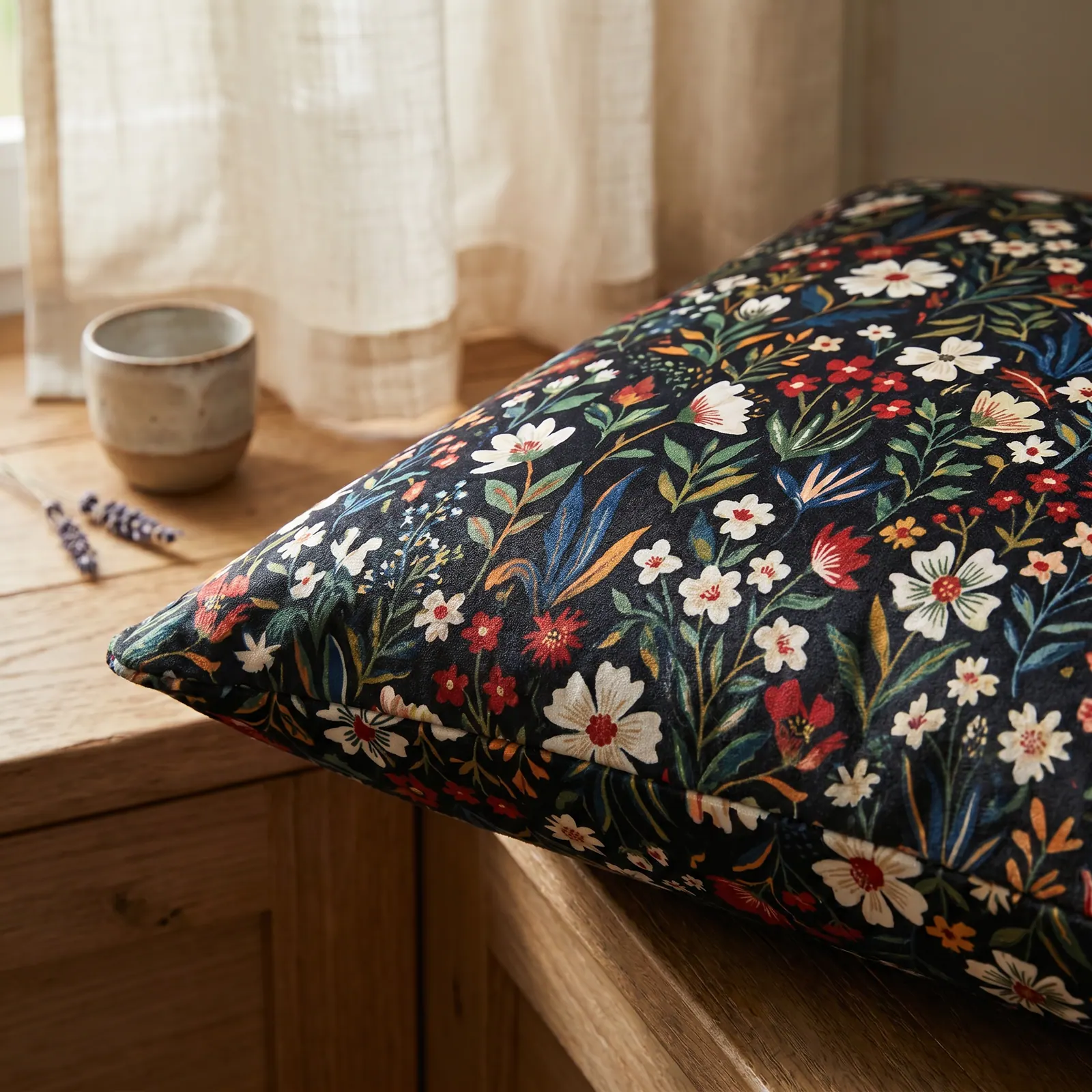
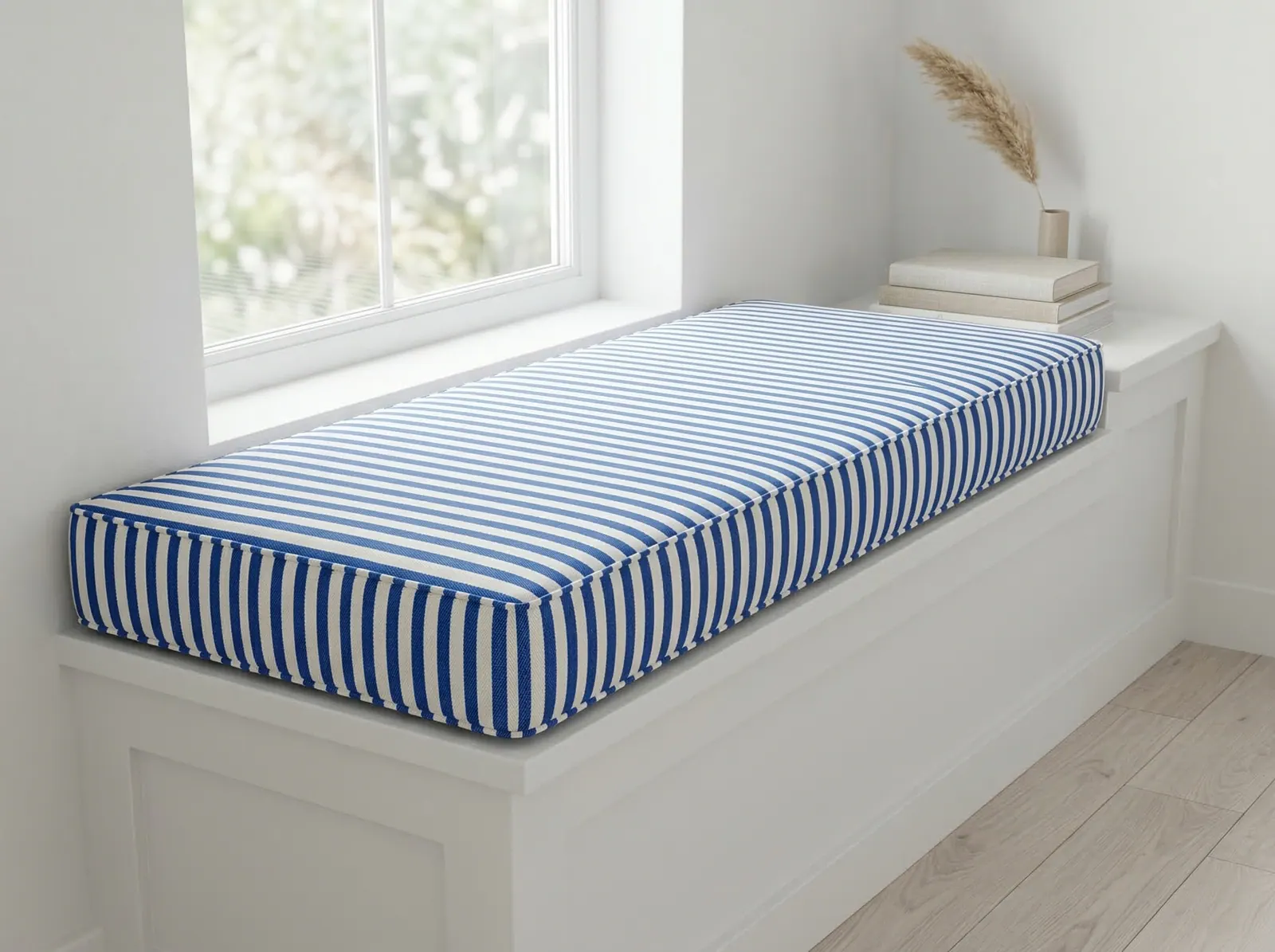
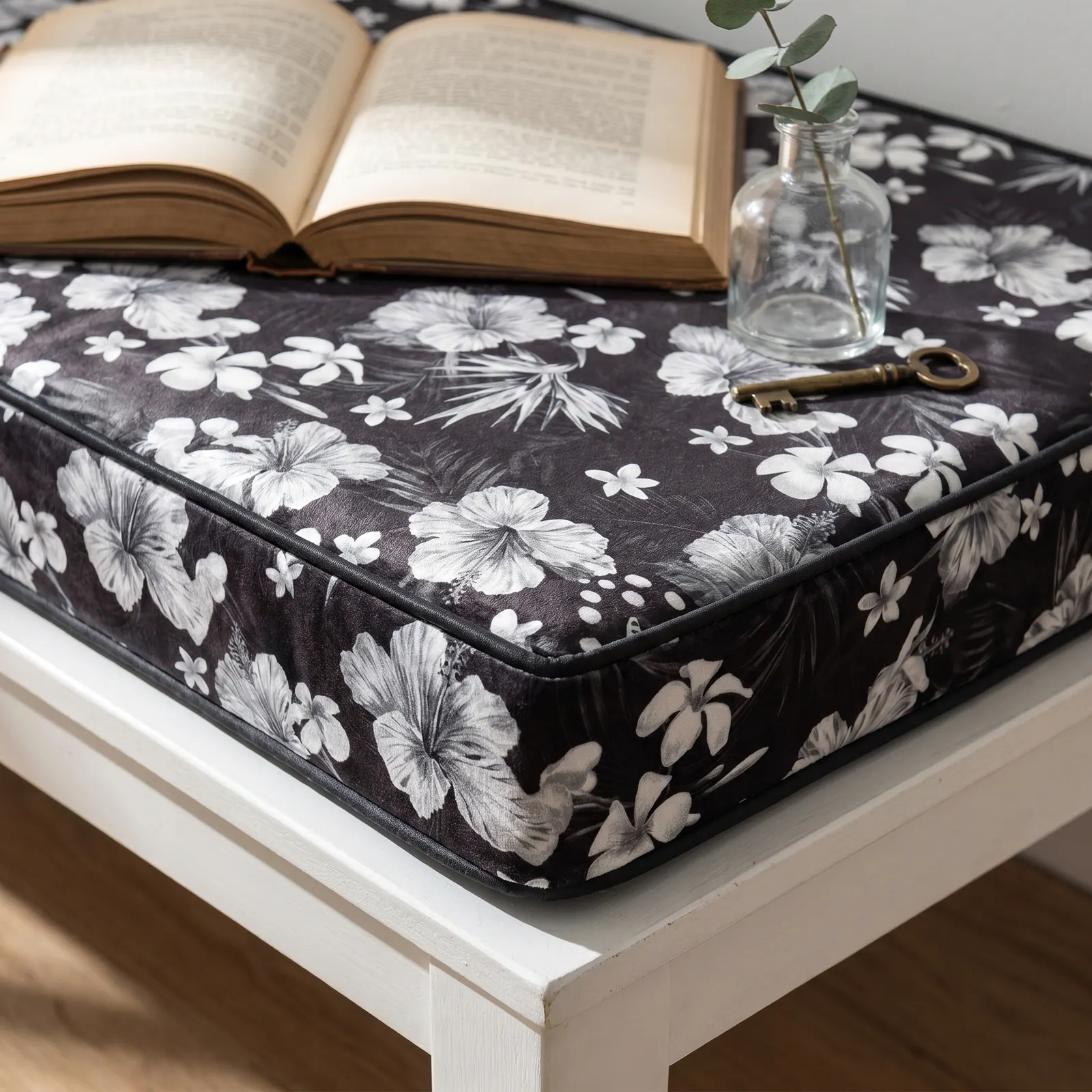
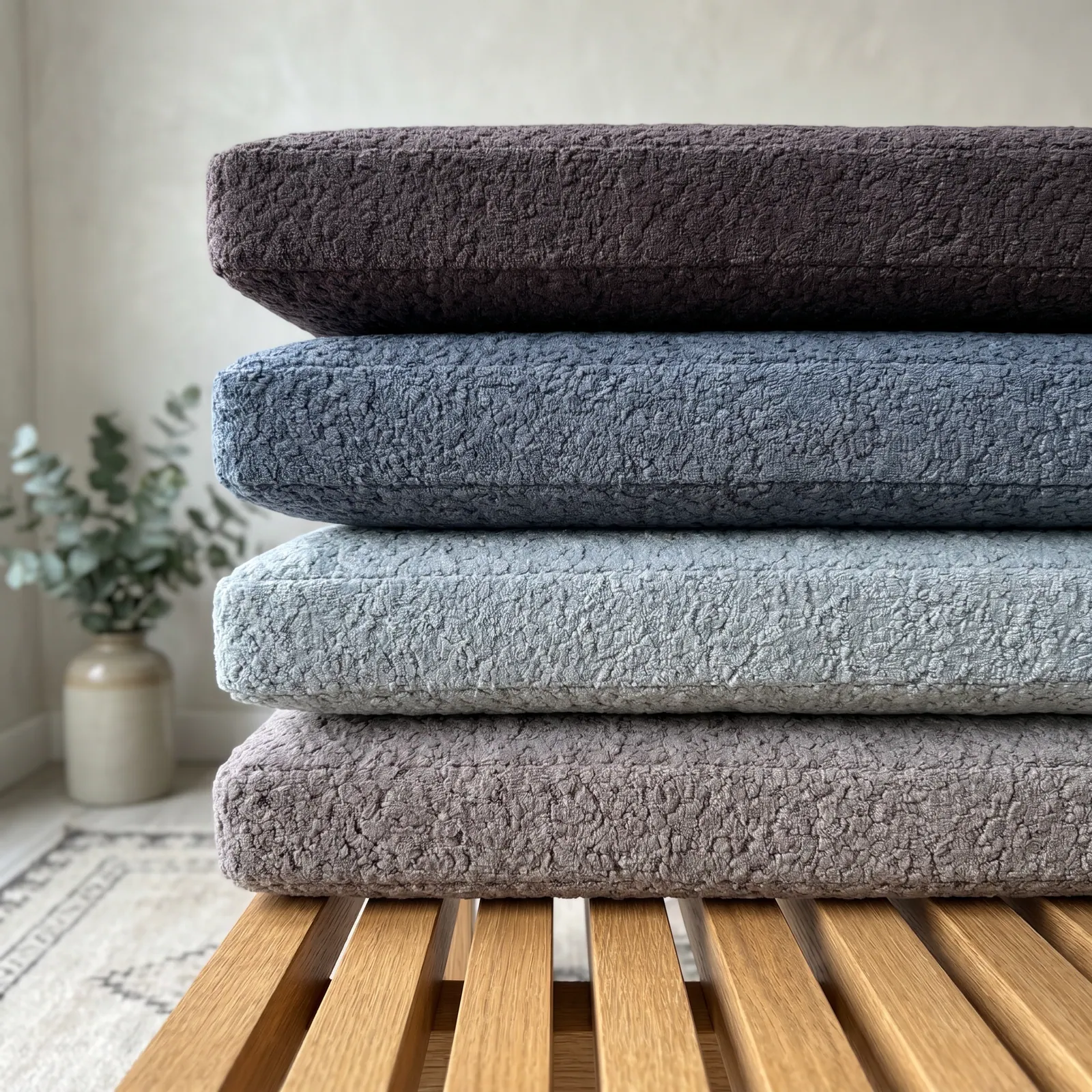
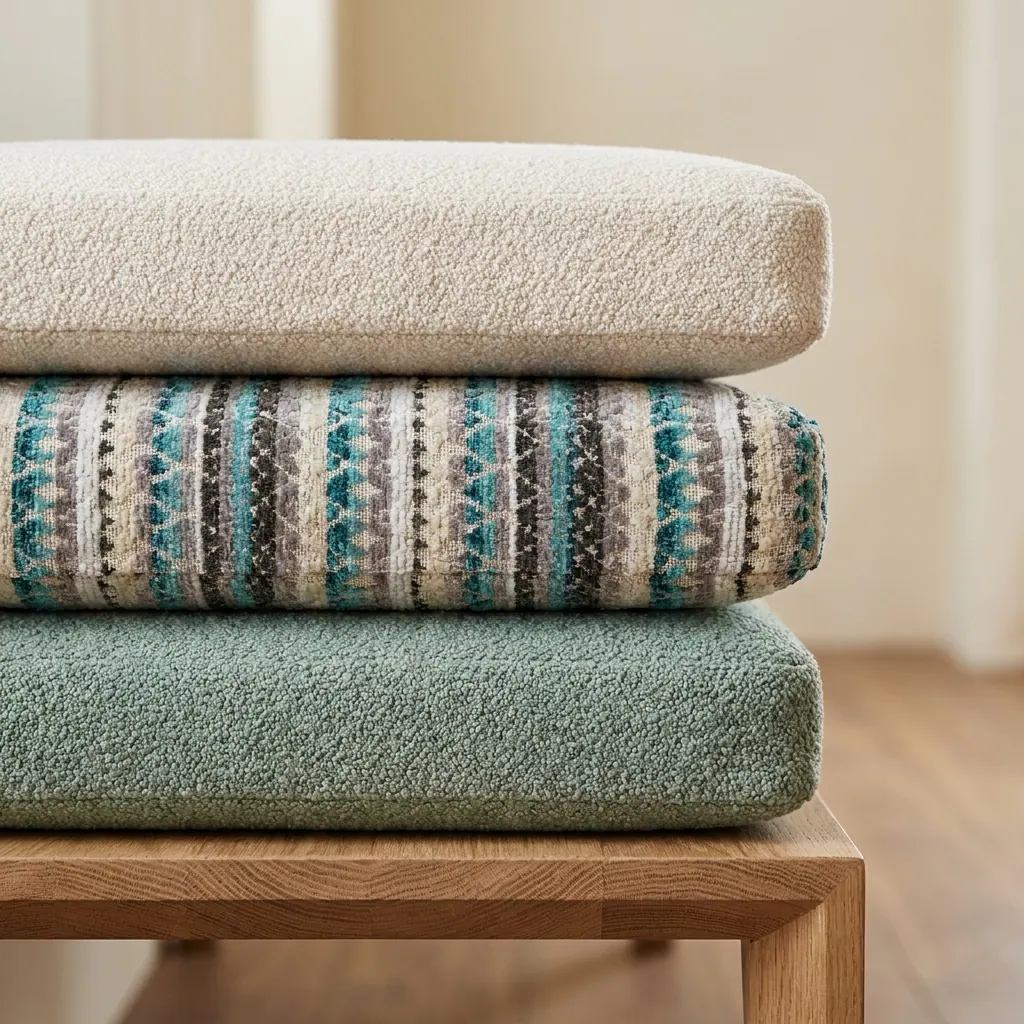
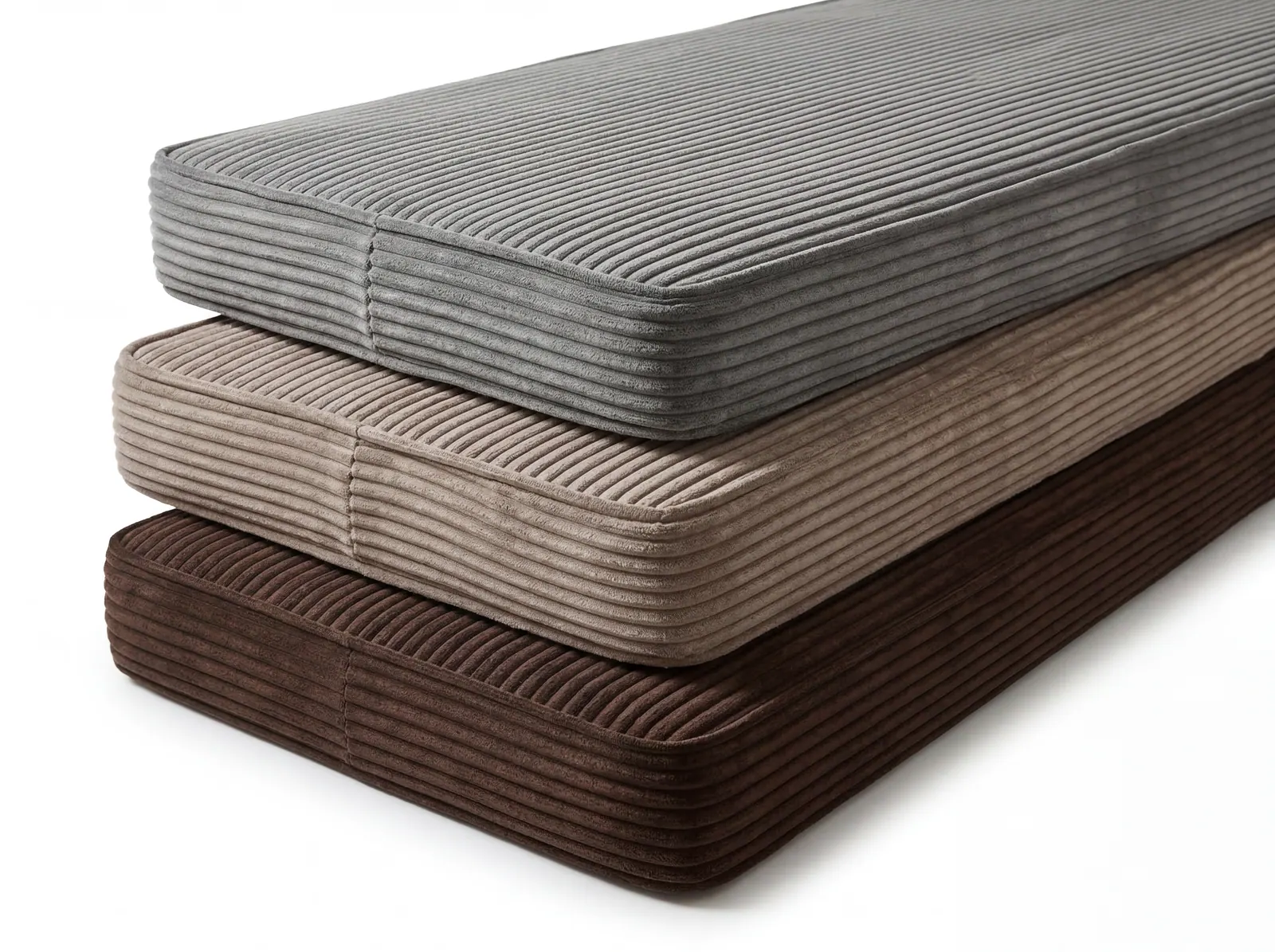
SaveTaken at seat height, the frame shows a level top, an upright gusset and a crisp self-piped corner.SaveA knife-edge cushion has no side panel, so it keeps this soft, pillowy wedge: a relaxed cottage alternative to a box edge.SaveA saturated cobalt stripe gives an all-white window seat a strong seaside note with no other styling.SaveA tropical hibiscus print in grays and white, finished with solid black piping for a calm, classic look.SaveFour cool, muted shades in a crinkled bouclé-look weave, shown close so the texture is clear.SaveA closer look at how a woven stripe sits between two plain bouclés with no piping at all.SaveA cool-to-warm neutral stack showing the thick box border and piped edges of each bench cushion.
Through the wet months and the dry ones
October: move outdoor cushions under cover before the wet season settles in.
Any wet day: dry a damp cushion within 24 to 48 hours. That is the window the EPA gives for stopping mold.
November–March: when the window fogs, wipe the sill and stand the cushion on its edge to air.
All winter: keep indoor humidity below 60 percent, ideally 30 to 50, as the EPA advises.
Winter storage: outdoor cushions go dry, off concrete, into something that breathes.
Monthly: wipe mudroom bench covers with a damp cloth and mild soap. Zip them off and wash at 86°F (30°C) when needed.
July and August: the dry weeks. Wash porch covers, let them dry fully in the air, and put them back on.
Buyer questions: porches, sills and wipe-clean fabric
A common question
Our porch has a roof but it's open to pollen, dust and humid air. Will an indoor linen cushion be okay out there?
The workshop's answer
On a covered balcony or porch that rain barely reaches, the linen cushion will work. For a screened porch that gets pollen, dust and humidity, the workshop recommends its outdoor fabric instead, and it can send samples first.
A common question
My window seat sits against single-pane glass that collects a lot of condensation, and the last cushion got mildew. Which fabric wipes best?
The workshop's answer
Velvet or the soft performance fabric, both easier to clean than textured or absorbent weaves; the soft fabric is the most practical if easy cleaning comes first. Both are upholstery fabrics, not waterproof, so wipe moisture away regularly and don't leave the cushion against a wet surface. Constant damp can mildew any fabric.
A common question
Do you make floor cushions I could use on a covered second-story balcony?
The workshop's answer
Under a closed roof, the regular fabrics are fine. For open-air spots, including screened porches, the cushions are made in outdoor fabric, and any piece can be made in it: seat, backrest or bolsters.
A common question
What is your 'soft fabric' actually made of?
The workshop's answer
It's the workshop's best-selling upholstery weave, a thick, durable performance fabric with a soft hand, described as a polyester-cotton blend. It isn't chenille and isn't 100% cotton. It wipes clean easily and machine washes at 86°F (30°C). For a natural fiber, choose cotton-linen instead.
A common question
The tufted floor cushion has no zipper. How am I supposed to clean it?
The workshop's answer
Clean it in place by hand: wipe the surface gently with a damp cloth, with a little mild soap and water for marks. The soft fabric wipes clean most easily. If you'd rather machine wash, choose the untufted foam version, which has a zippered, removable cover.
Have it made
Have it made for your home — ask Hana’s workshop
A good size is a quiet thing. You notice it only when it is wrong. Let the workshop check yours first. — Hana
Leave your details and the workshop will call you to confirm measurements, fabric, foam and piping. No prices, dates or payment on this page: it is a request, not an order.
Pacific Northwest questions
Why use outdoor fabric under a porch roof in Seattle or Portland?
Because the roof keeps off rain, not damp. Morning humidity averages 82 percent in both cities, and about three quarters of Seattle's yearly rain falls in the October–March wet season. Indoor fabrics aren't waterproof; outdoor fabric is water-repellent and resists moisture and mildew far better.
Will a window seat cushion fade in the Pacific Northwest?
Slowly. Seattle's average noon UV Index is 7.3 in July and 0.6 in December, against 10 to 12 across the Sun Belt. A west-facing seat still sees summer sun, so turn the cushion now and then. Damp near cold glass is the bigger worry here.
What colors work in a gray-light reading nook?
Warm ones, with texture. Seattle and Portland get about 20 percent of their possible sunshine in December, and cool colors can go flat in that light. Mustard, rust, forest green or a wide-wale corduroy hold up better. Judge swatches at the window on an overcast afternoon.
Can outdoor cushions stay out through a Northwest winter?
Not these. The workshop's outdoor fabric is UV-resistant and water-repellent, but the foam isn't quick-dry and there's no mesh drain bottom. Keep them on a fully covered porch, or store them dry, off concrete, in something breathable from late fall.

 Save
 Save
 Save
 Save
 Save
 Save
 Save
 Save