A Reading by RosaWindow Seat Cushions
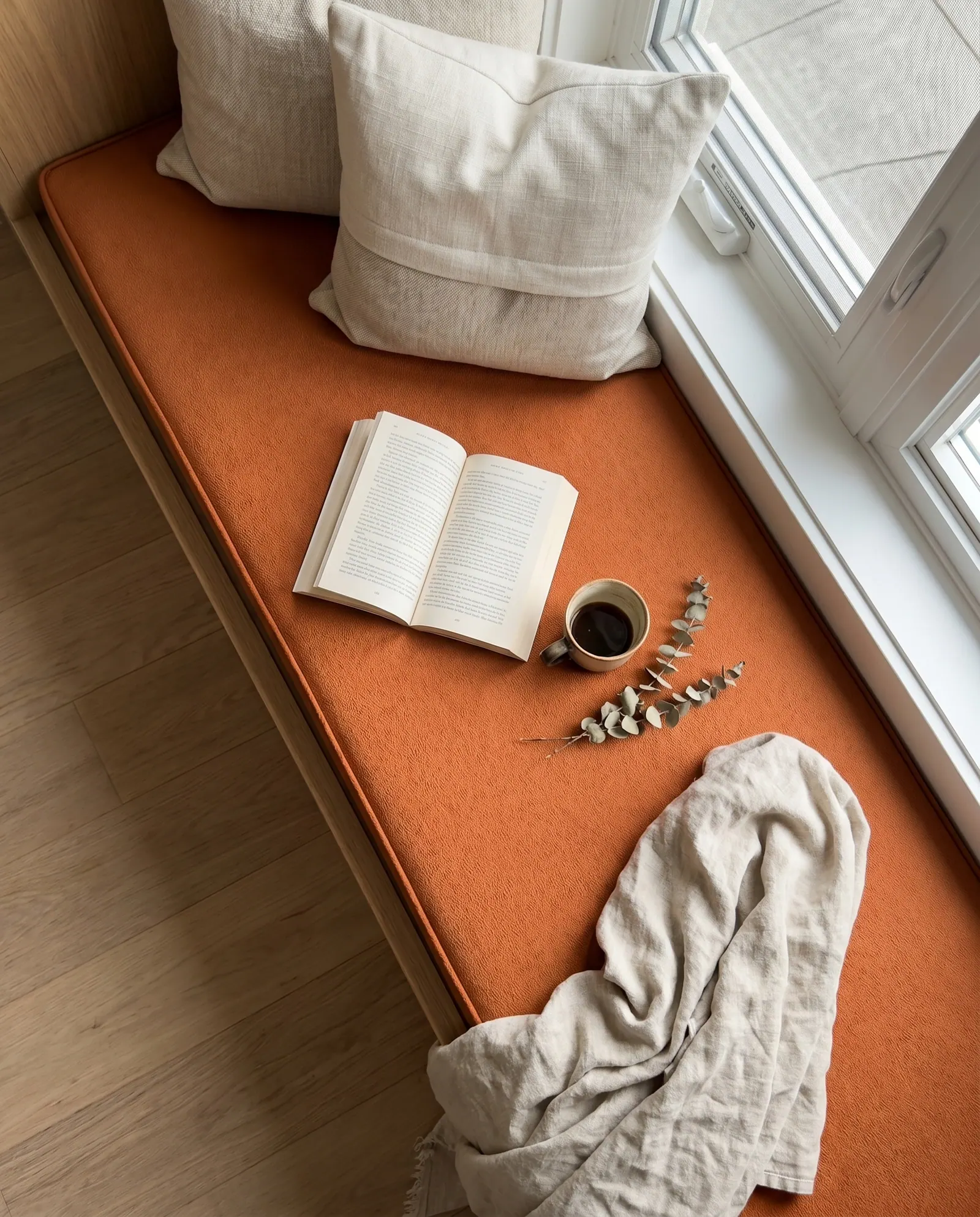
A burnt orange window seat cushion from above, and the self piping that keeps it honest
Rosa starts with three questions, then climbs a stepladder to read a slim orange seat, a cup of coffee and one careful seam.
 Save
The quick answer
Self piping, cut from the same fabric as the cushion, is the safest choice when the piping color you want isn't made in the same fabric type, because the match is guaranteed. On a slim window seat cushion like this burnt orange one, it keeps the edge crisp from above without adding a second color to the nook.
Neighbors asked first: fabric, angles and second thoughts
- A common question
Can I send you my own fabric to cover a window seat cushion?
The workshop's answerNo. Cushions are made only from the workshop's own fabrics. Send a photo of the fabric you love and the shop will point you to the closest matches in its charts, or order samples first.
- A common question
My window seat is a bay with odd angles. How do I give you the measurements?
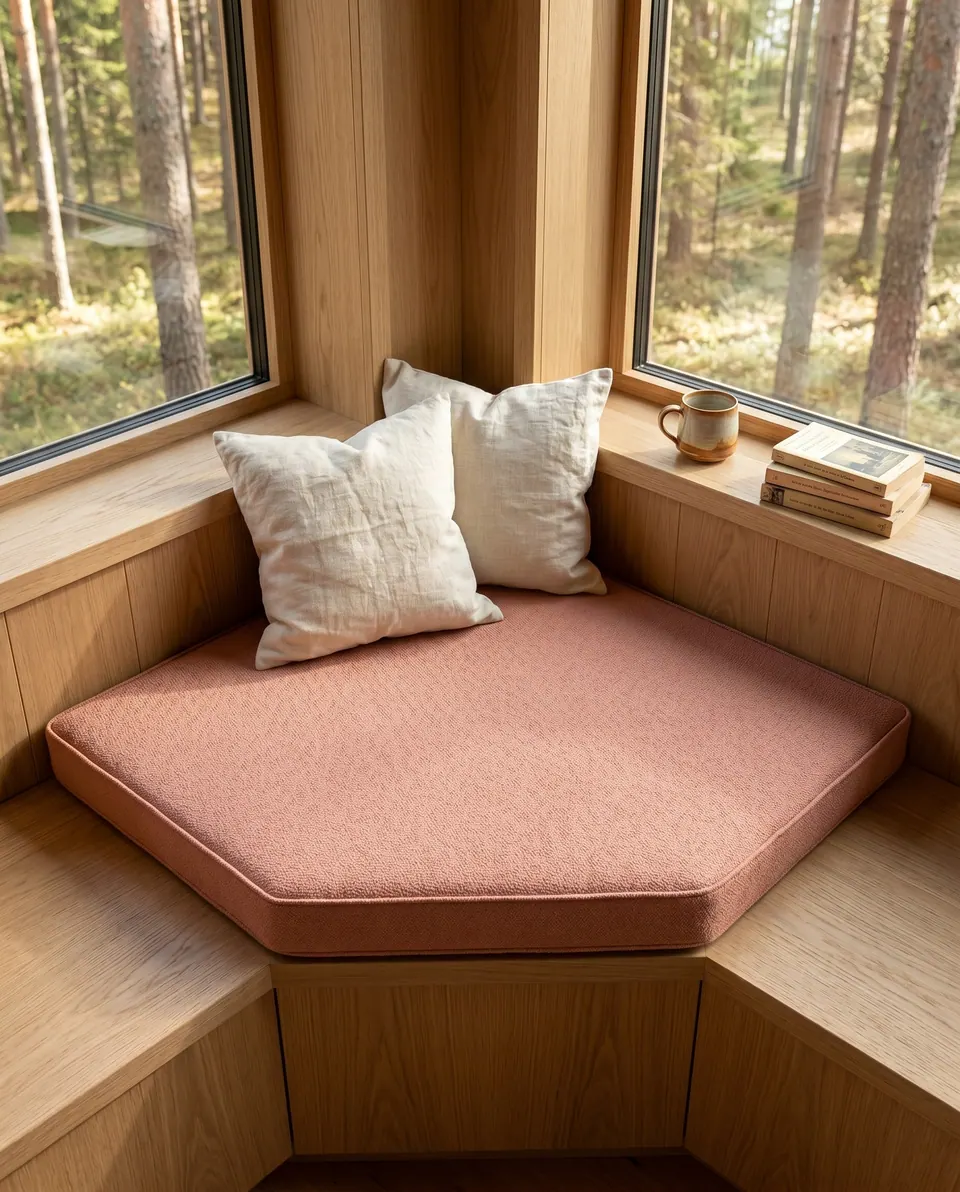
The workshop's answerDraw the seat as seen from above. Mark the back edge against the window, the front edge, the depth from back to front, each angled side, and every edge in order if there are several angles. Send a photo of the drawing and of the bay. The shop checks the geometry and confirms before production. Order using the overall length and depth, for example 105 in (267 cm) by about 18 in (45.5 cm), and upload the drawing.
- A common question
I've already ordered. Can I still change the size of one cushion?
The workshop's answerUsually, yes, if you message before production moves on. Small changes, such as 16 x 44 in to 16 x 46 in, were simply updated. If the new size is bigger, you pay the difference through a separate payment link.
Now, the reading
The window seat with two slanted sides
A buyer wrote in with a photo of a window seat that was anything but square. She had measured the front at 74 in (188 cm), one slanted side at 28 3/4 in (73 cm) and the depth at 24 1/4 in (61.5 cm). The shop wrote back for the two numbers still missing: the back edge, 41 3/4 in (106 cm), and the second slant, also 28 3/4 in (73 cm). Thickness, 4 in (10 cm).
Then came the piping snag. The color she wanted didn't exist in the same fabric type. The shop laid out three roads: self piping, which matches every time; a close color borrowed from another fabric type; or a different code in the same type.
She picked self piping, and I'd have picked it for her. Two different weaves can take the same light two different ways, and a welt that is almost right looks wrong from across the room.
Pinned by Rosa: the stepladder view
Five pins from straight above: the orange seat, its self-piped edge, the flax pillows, the book and coffee, and the linen throw.
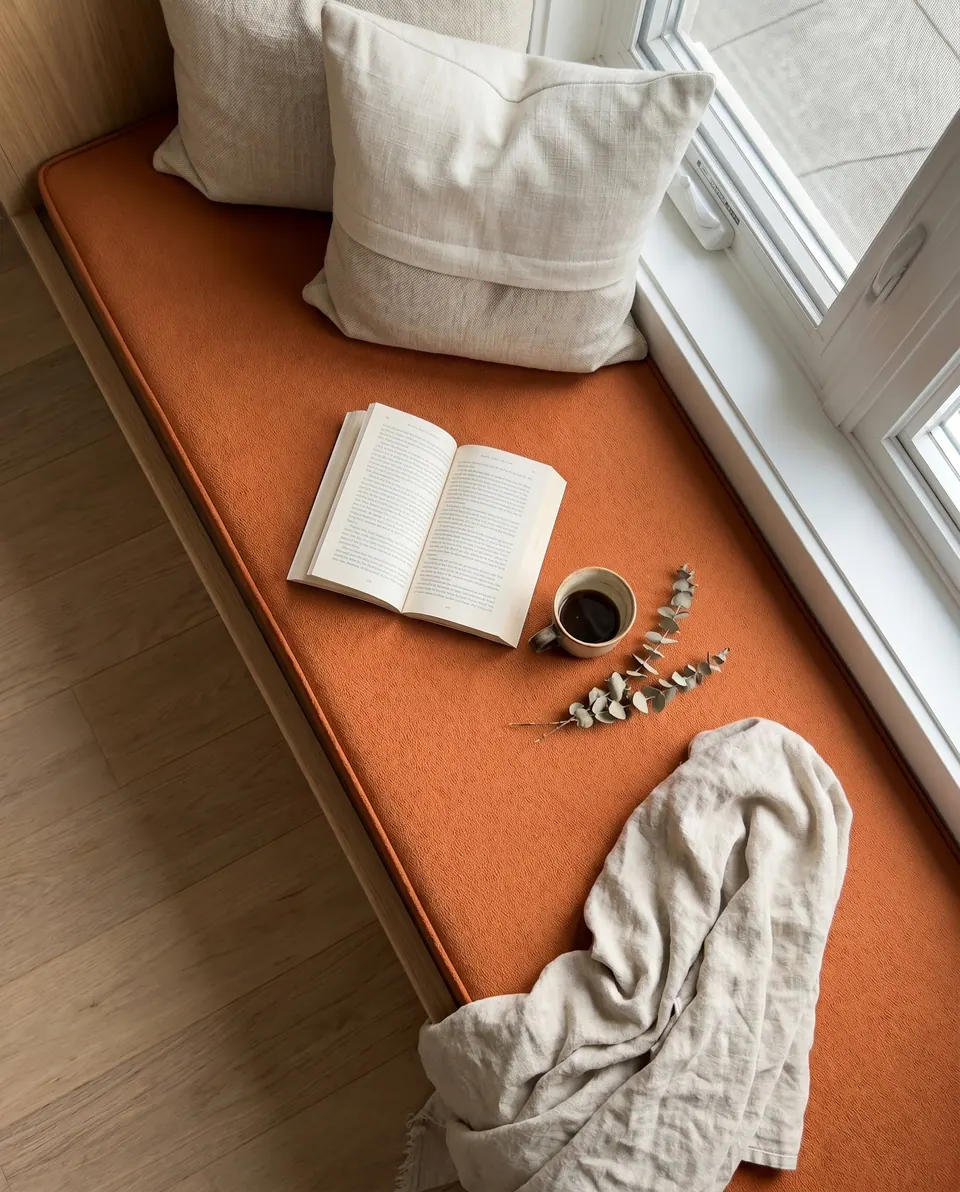
- Burnt orange seat
A slim cushion suits a low seat; it softens the board without lifting knees toward the glass.
- Self-piped long edge
Body-color piping keeps the rectangle graphic when seen from above.
- Oatmeal envelope pillows
Plain flax pillows give a backrest against the wall without adding a second color.
- Book and coffee
An open paperback and a small coffee set the scale and the slow-morning story.
- Natural linen throw
A crumpled linen throw softens the hard rectangle and repeats the pillow tone.
- Burnt orange seatA slim cushion suits a low seat; it softens the board without lifting knees toward the glass.
- Self-piped long edgeBody-color piping keeps the rectangle graphic when seen from above.
- Oatmeal envelope pillowsPlain flax pillows give a backrest against the wall without adding a second color.
- Book and coffeeAn open paperback and a small coffee set the scale and the slow-morning story.
- Natural linen throwA crumpled linen throw softens the hard rectangle and repeats the pillow tone.
What a seamstress sees from straight above
Pull up a chair, or better, a stepladder. This cushion was photographed from straight above, and that is the hardest view there is for anyone who sews. From up here every wobble in a welt shows like a crooked fence line. I spent twenty years re-covering swings and window seats, and I still hold my breath at an overhead shot.
The seat is slim, and that suits a low oak seat beside a white casement window. It softens the board without lifting your knees up toward the glass. The long edge is piped in the body color, so the rectangle stays one clean block of burnt orange against pale oak floorboards. A contrast cord would have drawn a frame around it; self piping lets the color do the talking.
Burnt orange is the only saturated thing in the frame. Two oatmeal linen envelope-back pillows lean on the wall as a backrest without adding a second color. A crumpled natural linen throw softens the hard rectangle and repeats the pillow tone. The open paperback and the small cup of black coffee give you scale and a slow Sunday story, and a sprig of dried eucalyptus stays in the same flax family. Flat north light keeps the orange true, not neon.
On any pale-wood seat, pick one strong earth tone for the cushion and keep the props within two neutrals. For cloth that shrugs off a cat or a coffee ring, look through performance and pet-friendly fabrics; for the edge itself, read matching, contrast or no piping. More seats live in window seat cushions and reading nook cushions.
Three answers when your piping color isn't made
| Piping choice | How close the match is | Worth it when |
|---|---|---|
| Self piping, same fabric | Guaranteed: it is the same cloth | The exact piping color isn't made in your fabric type |
| Close color, another fabric type | Near, but a different weave can take light differently | You have seen both samples side by side in daylight |
| Different code, same fabric type | Same weave, deliberately different shade | You want a true contrast line, not a near-match |
On the cutting table: the orange seat
| Product | Window seat cushion, box edge, slim profile |
|---|---|
| Fabric | Burnt orange performance weave |
| Piping | Self piping in the body color |
| Seat | Low oak window seat beside a white casement window |
| Props | Oatmeal envelope pillows, natural linen throw, paperback, coffee, dried eucalyptus |
| Light | Flat north light |
| Measure | Front, back, depth and every slanted side |
| Best for | Low reading nook seats where knees shouldn't rise to the glass |

Have it made
Have this made — ask Rosa’s workshop
Every good cushion I know started with a long porch chat. This is the short version: leave your number and the workshop will call. — Rosa
Leave your details and the workshop will call you to confirm measurements, fabric, foam and piping. No prices, dates or payment on this page: it is a request, not an order.
When the piping color you want isn't made in the same fabric type, self piping is the only welt guaranteed to match the window seat cushion.
Rosa
Questions buyers ask next
Why choose self piping on a burnt orange cushion?
Burnt orange is a strong color, and a welt in the same cloth keeps the cushion one clean block, especially seen from above. It also removes the risk of a near-match, since piping from another fabric type can read slightly different in the same light.
How thick should a cushion be on a low window seat?
Slim. On a low seat, a thin cushion softens the board without lifting your knees toward the glass. Deeper, higher seats can take more; the angled seat in the story above was made 4 in (10 cm) thick.
How do I style a window seat without clutter?
Keep one strong color on the cushion and hold everything else within two neutrals: oatmeal pillows, a natural linen throw, a book and a cup. The eye rests on the seat, and the props supply scale and a story.
Which measurements do people forget on an angled window seat?
The back edge and the second slant. In one order the buyer sent the front, one side and the depth, and the shop had to ask for the 41 3/4 in (106 cm) back edge and the other 28 3/4 in (73 cm) side before cutting.
Porch light's on — Rosa
More photographs to read
 Save
 Save
 Save
 Save
 Save
 Save