Across the Map · Pacific Northwest · United States
Custom cushions for Oregon homes, from the coast to the high desert
Oregon is three climates inside one state line. The coast is wet, the valley is gray, the high desert is bright. A cushion should know which one it lives in.
- Sun & UVModerate
- HumidityHumid
- WinterMild
- CoastSalt air nearby
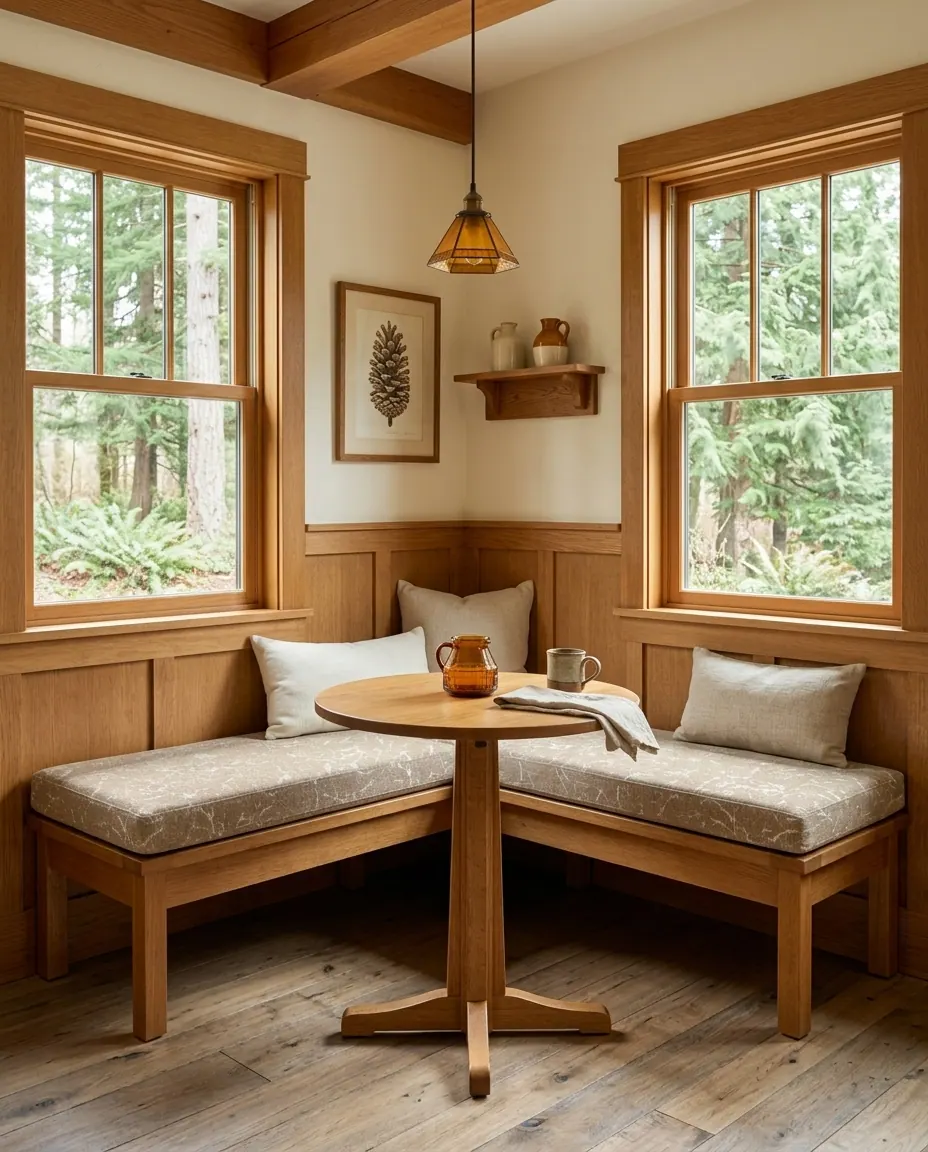
- Typical seatsCraftsman window seat, inglenook bench, covered front porch bench

 Save
The quick answer
Custom cushions in Oregon should be chosen by climate zone, west or east of the Cascades. On the coast and in the Willamette Valley, where Portland gets about 74% of its 36.91 in of yearly rain in October–March, use outdoor fabric on porches and washable fabric on window seats. Around Bend, at a sunny 3,642 ft, choose fade-aware colors and bring cushions in when smoke is forecast.
Seventy inches of rain in Astoria, ten in Bend
Astoria, where the Columbia meets the Pacific, averages 70.26 in (1,785 mm) of rain a year. Bend, on the dry side of the Cascades, averages about 10.6 in (270 mm). One state. Two opposite problems for a cushion.
The coast is wet and salted. Lower coastal towns get 60 to 80 in (1,500 to 2,000 mm) a year. Salt spray is heaviest near the breaking waves and drops off within the first 300 to 3,000 ft inland. It still finds the zippers on a porch above the beach.
The Willamette Valley is gray more than wet. Portland averages 36.91 in (938 mm), about 74 percent of it in October–March, over 153 wet days. Morning humidity averages 82 percent. In December the city gets about 20 percent of its possible sunshine. Noon UV averages 7.8 in July and 0.8 in December. Here damp is the problem, not fading.
The high desert reverses it. Bend sits at 3,642 ft (1,110 m) and gets about 70 percent of its possible sunshine. By the WHO's rule of thumb, UV rises about 10 percent with every 3,281 ft (1,000 m) of altitude. July days swing close to 35°F (19°C) between afternoon and night, and freezes can come from mid-September to mid-June. East of the mountains, color fades first. Mildew rarely gets the chance.
Inglenooks, window seats and the ADU out back
Western Oregon's older streets are full of Craftsman bungalows: a low gable roof, a full-width front porch, and built-ins inside. Craftsman design loved inglenooks and big windows with benches beneath them. Those benches are where a gray afternoon gets spent, so they deserve the most careful cushion. Start with window seat cushions and reading nook cushions.
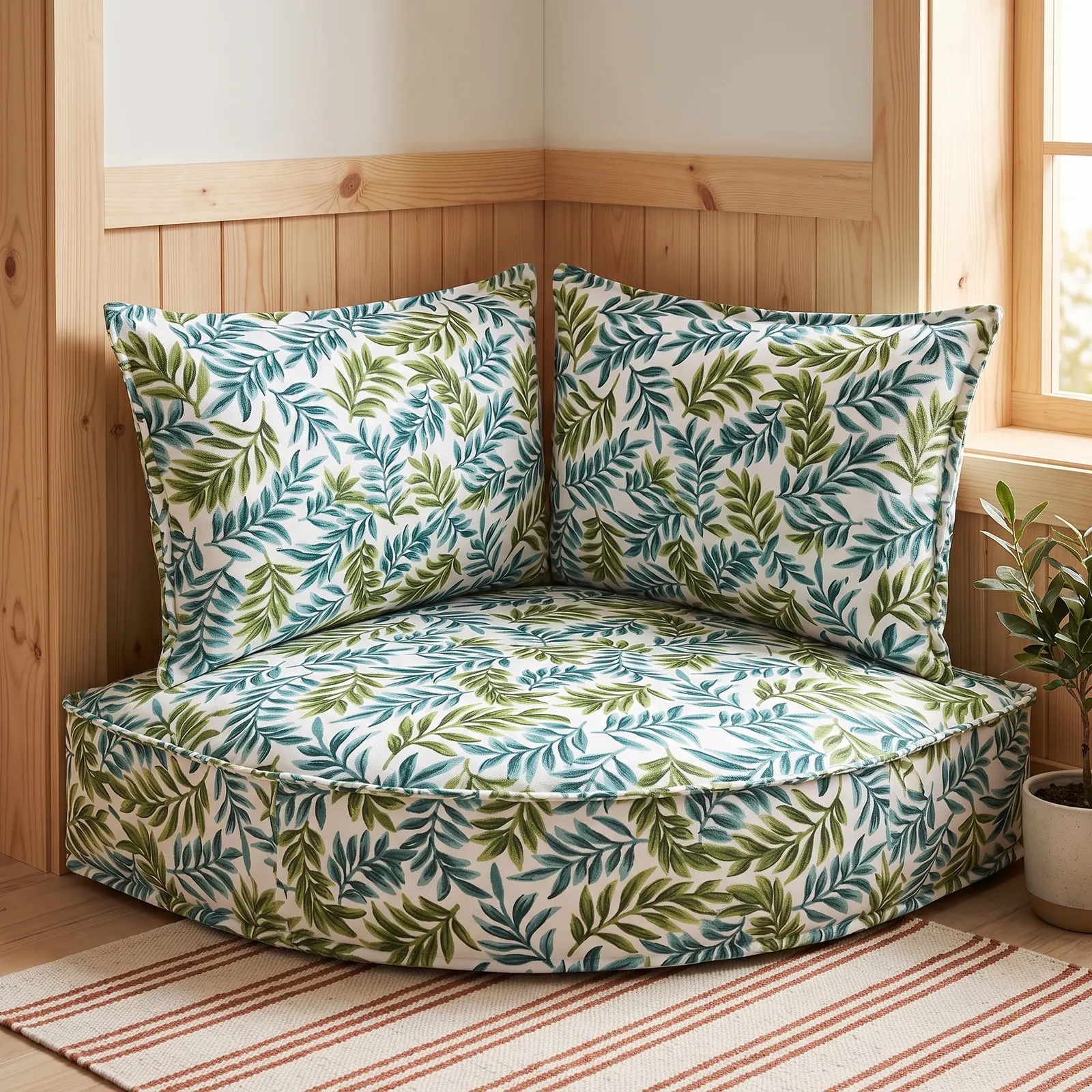
Then there is the small house behind the house. Portland allows up to two accessory dwelling units on a lot with a house, each no larger than 800 sq ft or 75 percent of the main home's living area, whichever is smaller. In a room that size a sofa takes a whole wall. Floor seating does not. Oregon and Washington both score 27 for 'floor cushion' searches, fourth and fifth in the country. See floor cushions and corner floor cushions.
Leave a hand's width of floor. A cushion that runs wall to wall makes a small room feel smaller, not softer.
Around Bend the seats move outside: covered patios and fire-pit benches. On the coast, cottage porches face the weather. The wider region is on the Pacific Northwest page.
Which Oregon do you sit in?
Fabric, foam and piping for each Oregon
| Zone and seat | Fabric | Foam | Piping and finish |
|---|---|---|---|
| Coast: porch bench above the beach | Outdoor fabric, water-repellent and UV-resistant | 3-4 in (7.5-10 cm), untufted | Self piping; rinse hardware with fresh water after storms |
| Valley: covered front porch | Outdoor fabric, even under the roof | 4 in (10 cm) | Self piping; bring cushions in for the wettest weeks |
| Valley: Craftsman window seat by cold glass | Velvet or soft performance fabric in a warm color | 3 in (7.5 cm) for a neat line, 4 in (10 cm) for more give | Self or contrast piping; lift and air when the glass fogs |
| ADU or small room: floor seating | Soft fabric or velvet, untufted so the covers zip off | 4 in (10 cm) standard; thicker to order | Piping comes standard on zippered covers |
| High desert: fire-pit bench or covered patio | Outdoor fabric in a mid-tone | Untufted foam; tufting lets water in | Self piping; bring in when smoke or ash is forecast |
| High desert: sunny window seat | Sun-resistant fabric in a mid-tone | 3-4 in (7.5-10 cm) | Turn it now and then so one end doesn't fade alone |
Warm colors for gray light, mid-tones for high sun
West of the Cascades, choose color for December, not July. Warm tones and texture hold up in low light: rust, mustard, forest green, a wide-wale corduroy. Cool grays can go flat against wet firs.
East of the Cascades, choose for July. Deep, saturated colors show fading first, and very pale ones show desert dust. Mid-tones forgive both: sand, sage, clay. Indoors, the soft performance fabric is the one that doesn't collect dust.
A tiny house in the woods, and three grays under green light
A buyer in the US was furnishing a tiny house in the woods. Cedar walls, a yellow carpet, a lot of green light through the windows. They wanted a Japanese, zen feel and an L-shaped floor sofa made of loose pieces.
The first plan was two 24 x 48 in (61 x 122 cm) floor cushions, two back cushions and two arm cushions. Then they measured again, and the seats came down to 20 x 44 in (51 x 112 cm). Four inches less each way. In a tiny house, those inches are the floor you walk on.
Color took longer. They asked to see three grays side by side: smoke, anthracite and a mid gray, because of black accent pillows and all that green light. A gray that reads cool on a screen can turn murky under firs. Close-ups of the exact codes, judged at the window, are the fair test. See screen color versus daylight.
The order never happened. The workshop first said to put the quantities in the personalization box, then asked for the cart to be changed instead, and the buyer read it as a price change. Agree every piece, and its price, in writing before checkout.
Small rooms ask for exact numbers. Green light asks for real swatches. Both ask for patience.
Photographs for homes like these
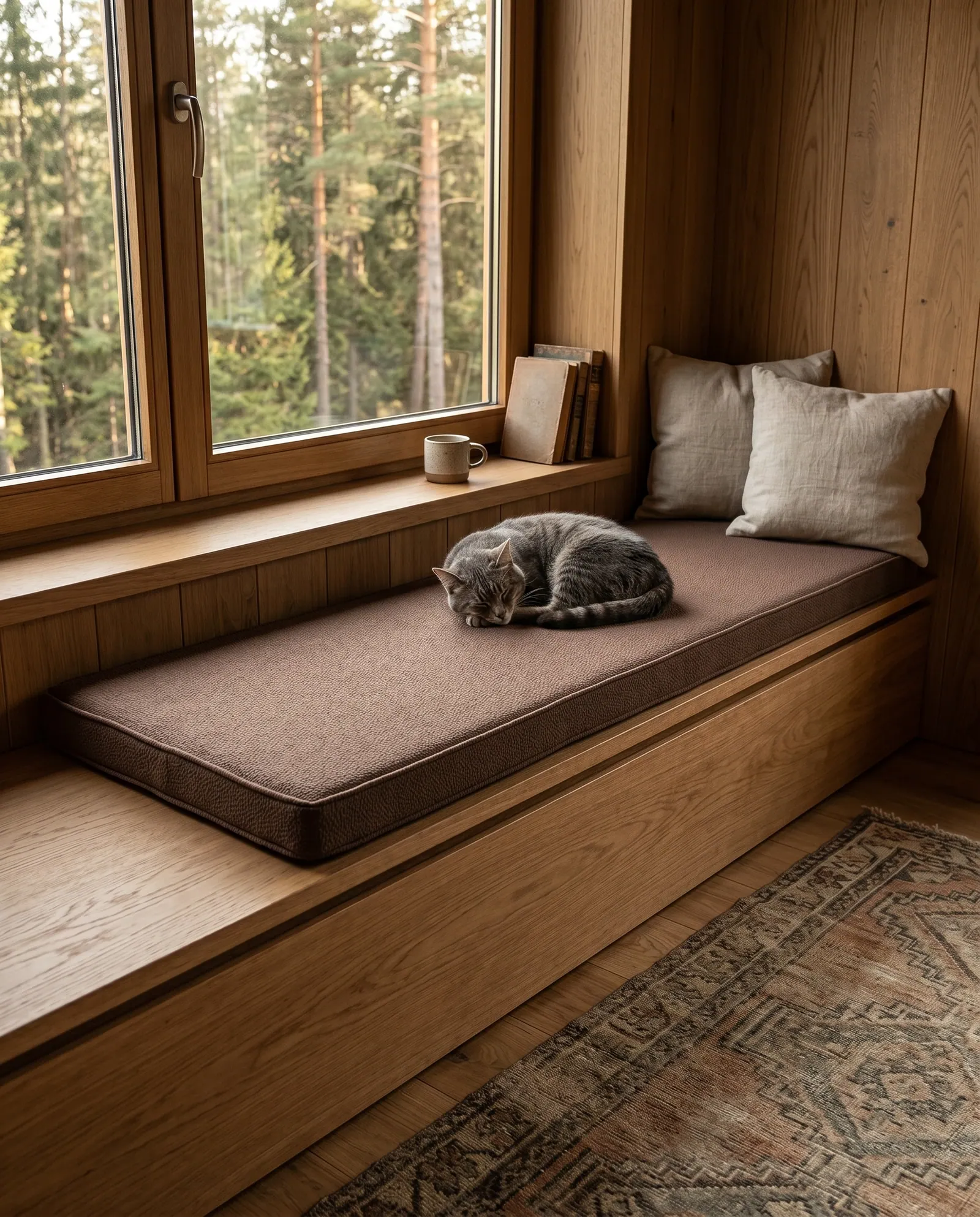
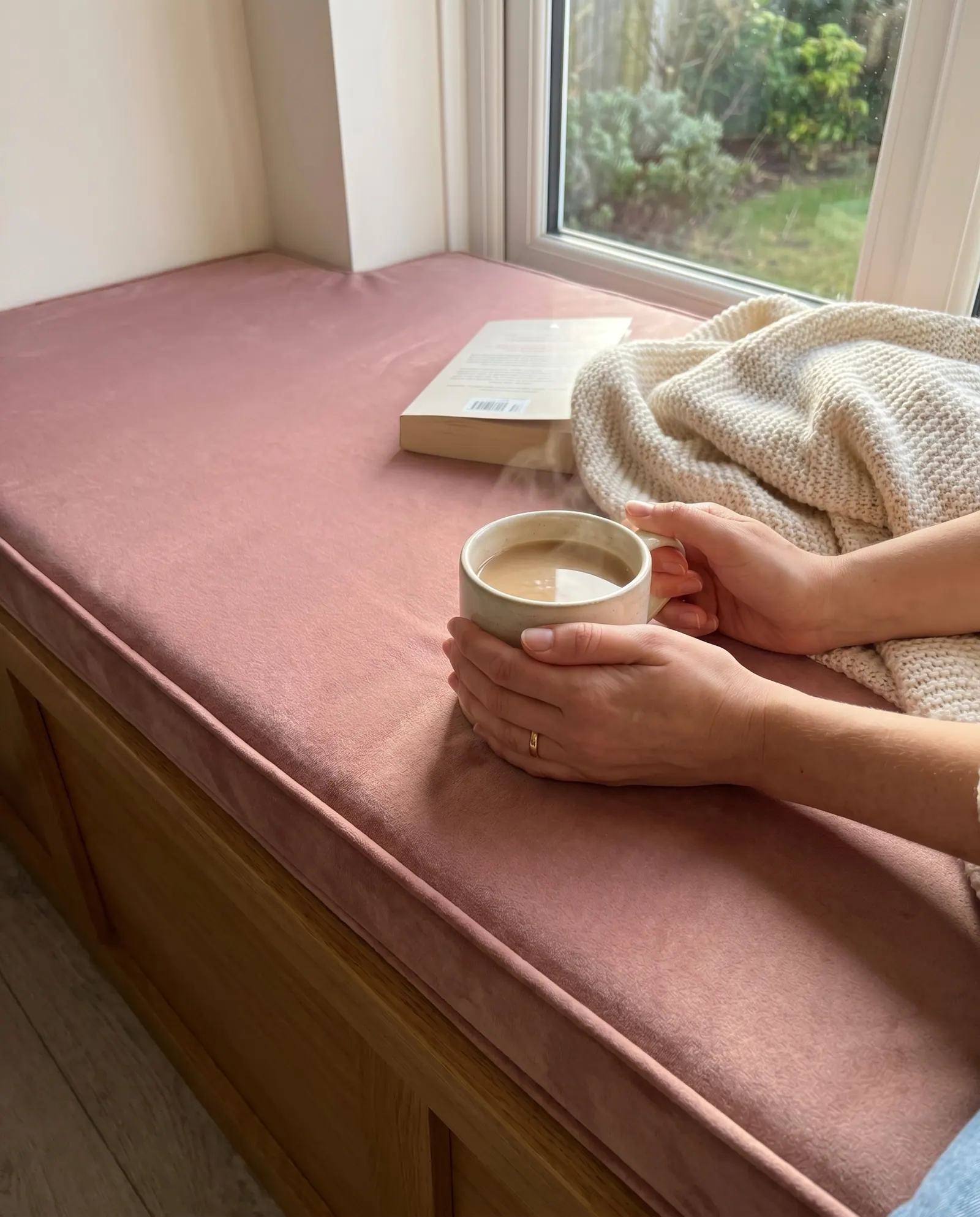
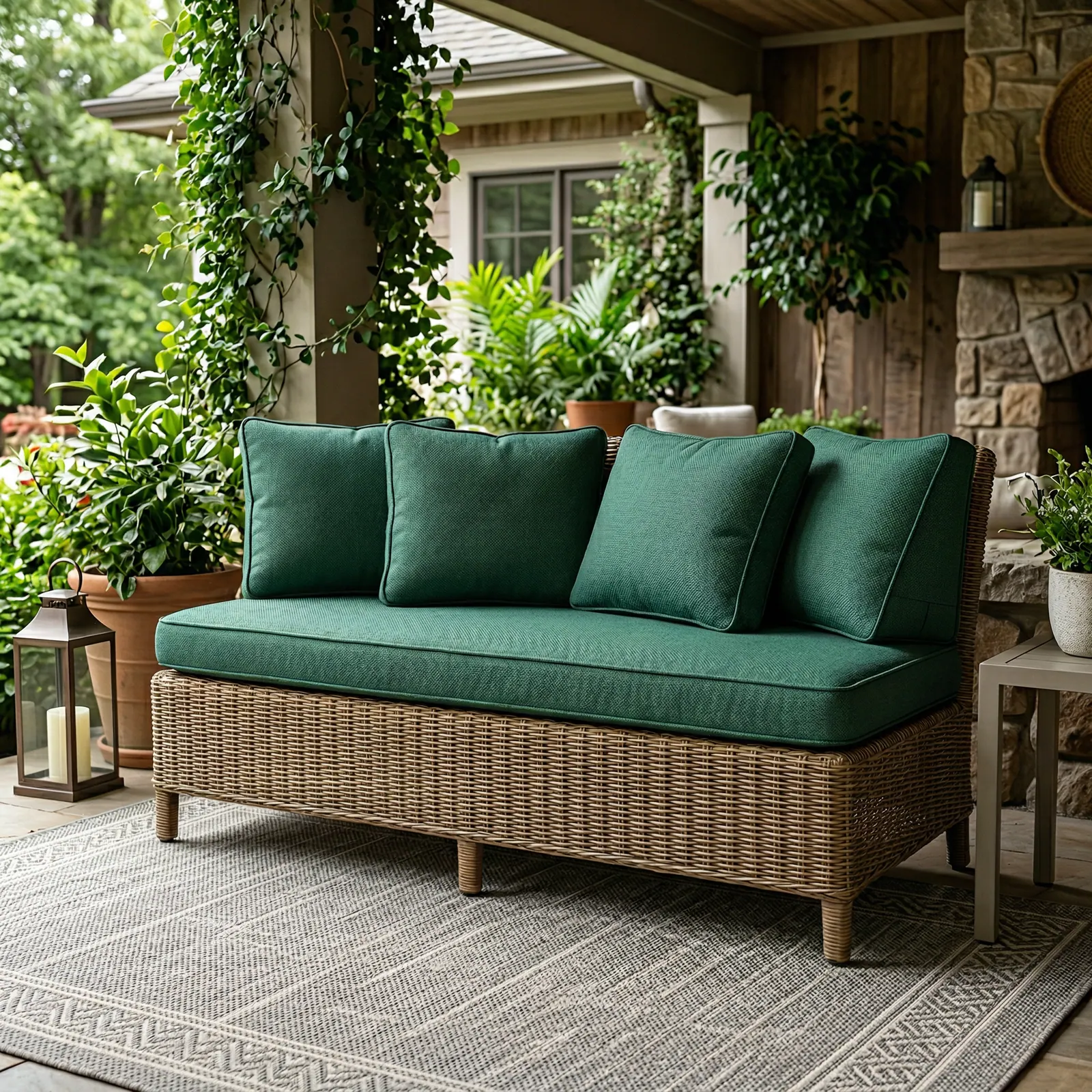
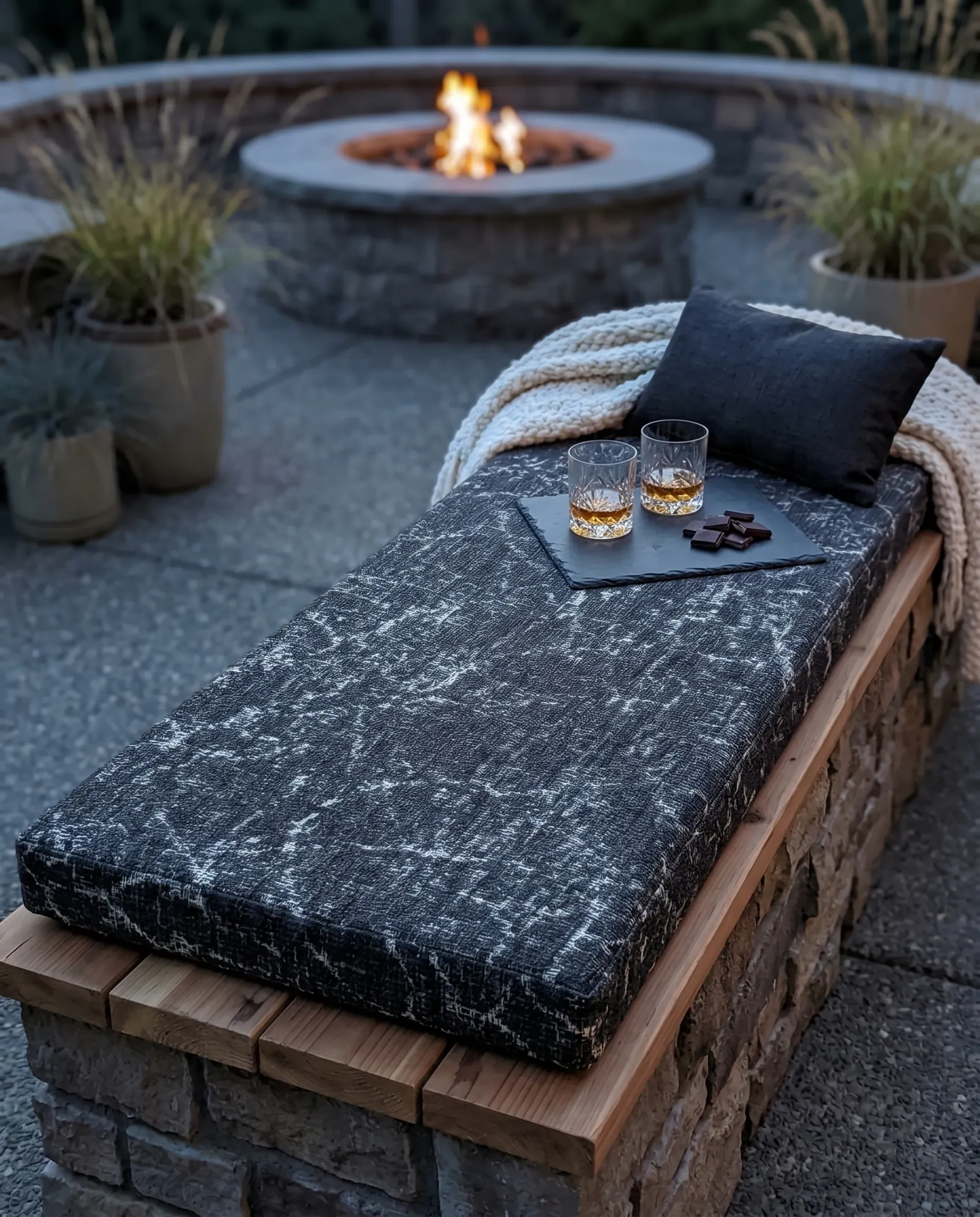
Open any photograph large; each one has its own link and a Save button.
 Save
 Save
 Save
 Save
 Save
An Oregon year for cushions
- March and April: order porch and patio cushions. Oregon's interest in outdoor cushions peaks in May, like the rest of the North.
- October–March, west of the Cascades: when a window fogs or a porch cushion gets damp, dry it within 24 to 48 hours, the window the EPA gives for stopping mold.
- Mid-July to early October: recent smoke seasons, by Oregon DEQ's record. Bring outdoor cushions in when smoke or ash is forecast.
- After ash falls: hose the patio gently so ash doesn't lift into the air, then zip off covers and wash them at 86°F (30°C) on a gentle cycle.
- Summer in Bend: nearly half of the day's UV arrives between 10 a.m. and 4 p.m. Turn sunny cushions, and stack them in the shade when you're away.
- Mid-September, east of the mountains: the freeze window opens. Store outdoor cushions clean, dry, off concrete, in something that breathes.
In Oregon, the Cascades choose your fabric. West of them, build for damp. East of them, build for sun.
Hana
Buyer questions: porches, sun, dust and floor-level seats
- A common question
Can I just use the linen or velvet cushions outside on the porch?
The workshop's answerNo. Those indoor fabrics aren't suitable outdoors. Outdoor cushions and their backrests are ordered through the outdoor listing, which has more than 100 color options.
- A common question
Our bay window gets strong afternoon sun. Can you make a very large cushion for it in a sun-resistant fabric?
The workshop's answerYes. Sun-resistant fabrics are available. For a trapezoid about 160 in long and 2 ft deep, the workshop suggested making it in two pieces.
- A common question
How thick is a standard floor cushion, and can it be made thicker?
The workshop's answerThe standard is 4 in (10 cm), and the thickness can be customized. One buyer ordered about 6 in (15 cm), and there is also a 12 in thick tufted version. Widths such as about 23.5 or 27.5 in (60 or 70 cm) can be made too.
- A common question
Which fabric collects the least dust and lint, and which feels lightest?
The workshop's answerThe soft fabric. It's easy to clean and wash, doesn't collect dust, and feels the lightest of the range. The same floor cushions and pillows can also be made in velvet or linen.
- A common question
Can you send close-ups of the exact fabric codes before I choose?
The workshop's answerYes. Name the codes and the workshop sends close-up photos, side by side if you're comparing, piping included. They're phone photos, so tones can differ slightly from real daylight, and names like cream or off-white mean different things to different people. Close-ups of exact codes are the safest guide.

Have it made
Have it made for your home — ask Hana’s workshop
Measure once, slowly. Write the numbers here. The workshop will go over them with you. — Hana
Leave your details and the workshop will call you to confirm measurements, fabric, foam and piping. No prices, dates or payment on this page: it is a request, not an order.
Oregon questions, answered
Do cushions in Bend need a different fabric than cushions in Portland?
Often, yes. Bend gets about 10.6 in of precipitation and 70 percent of its possible sunshine at 3,642 ft, so fading is the main risk. Portland's problem is damp, October–March. Outdoors, both need outdoor fabric; indoors, Bend suits mid-tones and Portland suits warm, washable weaves.
How thick should a floor cushion be in an ADU or a small Portland apartment?
The standard floor cushion is 4 in (10 cm), and thicker can be ordered. In a small room, measure from the floor to the window sill first and subtract the seat thickness; what remains is your tallest possible backrest. Leave some bare floor around the seating.
What should I do with outdoor cushions during Oregon's wildfire smoke season?
Bring them in when smoke or ash is forecast. Oregon DEQ reports that fire seasons that once ran from late July to early September have recently stretched from mid-July into early October. If ash settles, hose surfaces gently so it doesn't go airborne, then wash zip-off covers at 86°F (30°C).
Can outdoor cushions stay out all year on the Oregon coast?
Not these. The outdoor fabric is UV-resistant and water-repellent, but the foam isn't quick-dry and there's no mesh bottom. Astoria averages 70.26 in of rain a year. Keep coastal cushions under a roof, stand them on edge after storms, and store them dry through the wettest months.
— Hana
The atelier
Keep going
Across the Map
Nearby places
Close by on the map