Across the Map · Mountain West · United States
Custom cushions for Wyoming ranch houses, lodges and cabins
Wyoming wind reads a cushion before you ever sit on it. Here is how I'd build one that stays on the porch, dries out by the back door and keeps a respectful distance from the stove.
- Sun & UVStrong
- HumidityDry
- WinterLong and hard
- SettingInland
- Typical seatsRanch porch bench, mudroom boot bench, fireside floor cushion
 Save
The quick answer
Custom cushions in Wyoming have to hold on and hold up: ties or a non-slip base on porch cushions in the windiest state in the US, firm 3 to 4 in (7.5 to 10 cm) foam on ranch and mudroom benches, fade-aware colors for high-altitude sun, and fireside floor cushions kept 3 ft (91 cm) from the stove. Store outdoor pieces dry through Cheyenne's 174 freezing days.
Twelve point nine miles an hour, and no days off
Wyoming ranks first in the nation for wind, with an annual average of 12.9 mph. In winter it runs 30 to 40 mph with gusts of 50 or 60, and January is generally the windiest month. A porch cushion out here isn't furniture. It's a sail, unless you tie it down.
The state sits high, too: a mean elevation of 6,700 ft, with Cheyenne at 6,086 ft. The World Health Organization puts UV about 10% higher for every 3,281 ft (1,000 m) you climb, and says fresh snow almost doubles exposure. By that arithmetic Cheyenne gets roughly 18% more UV than sea level before the snow starts bouncing it through the window.
Cheyenne counts 174 freezing days a year, 62.9 in (160 cm) of snow and 64% of possible sunshine. Afternoon humidity averages 45%, so mildew is rare, but a wet boot bench still wants drying within 24 to 48 hours. Jackson, at 6,237 ft, runs snowier and more humid, with about 236 mornings below freezing. For the wider picture, read our Mountain West cabin reading.
Long porches, boot benches and Cattle Baron Row
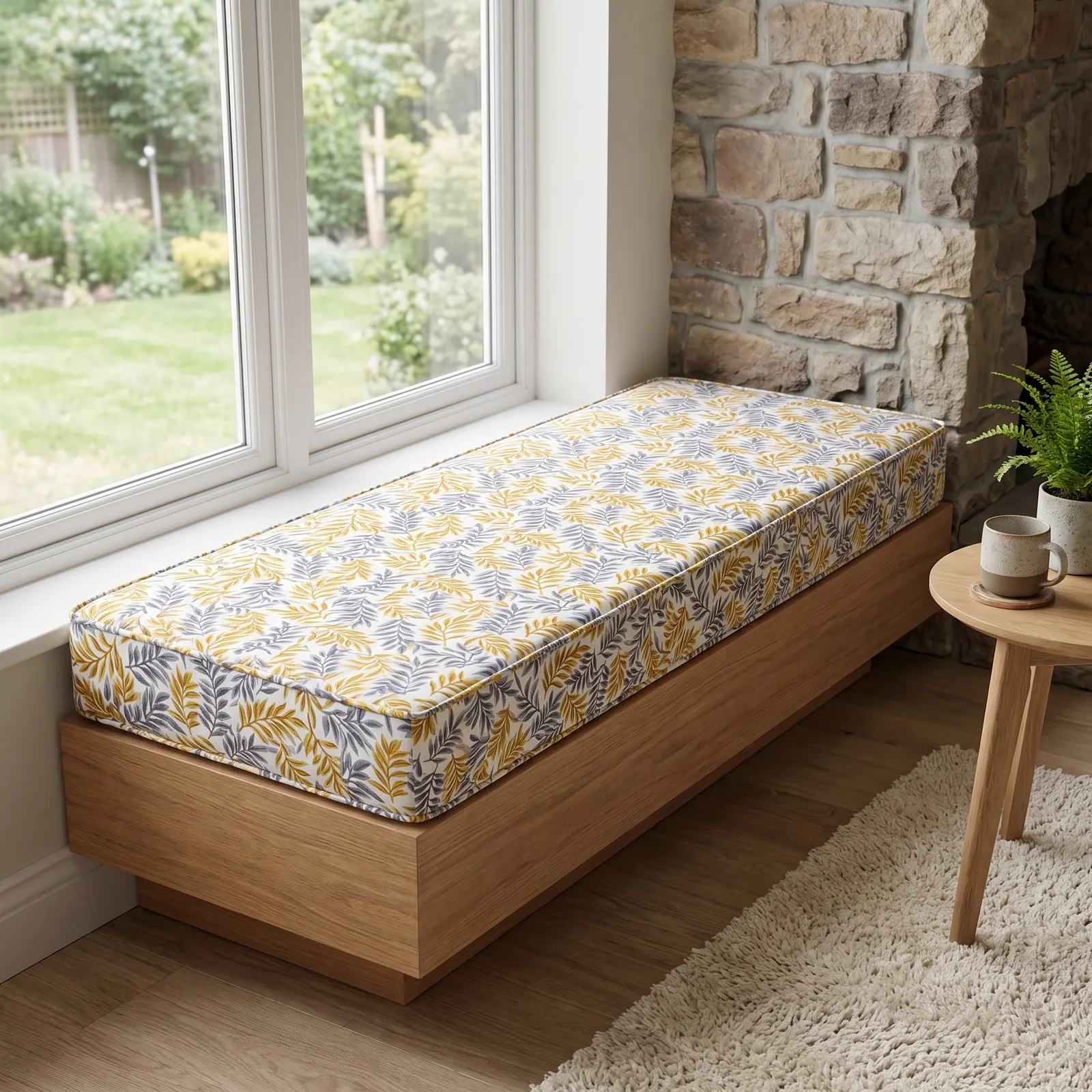
Ranching built this state, and ranch money built its town houses. Cheyenne's Rainsford Historic District, nicknamed Cattle Baron Row, still holds Victorian houses begun in 1885 in Stick, Eastlake, Shingle and Romanesque Revival dress. Old houses mean deep window seats and bays that are never quite square, so window seat cushions in Cheyenne start with a drawing of every edge. Our window seat cushions page shows what to send.
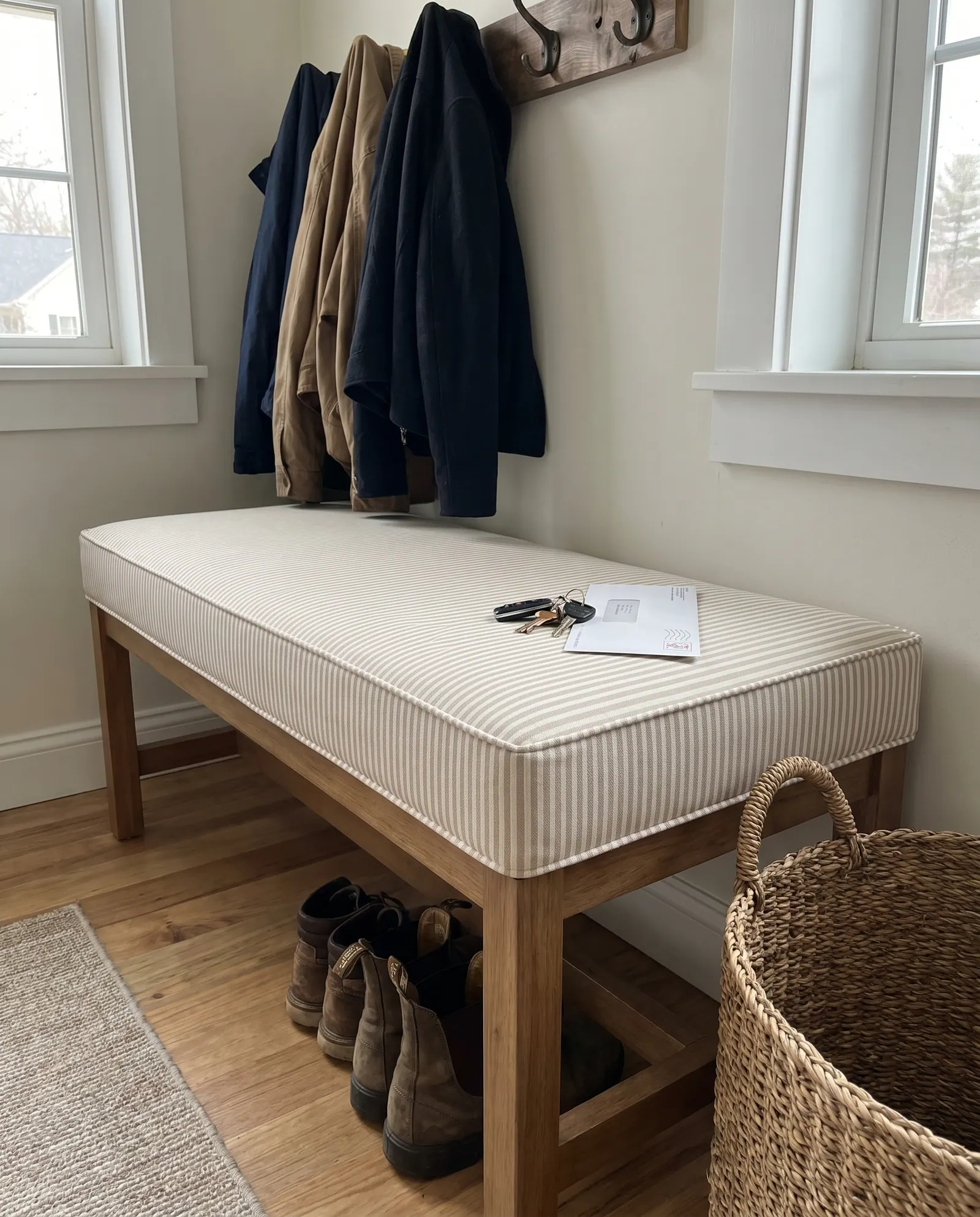
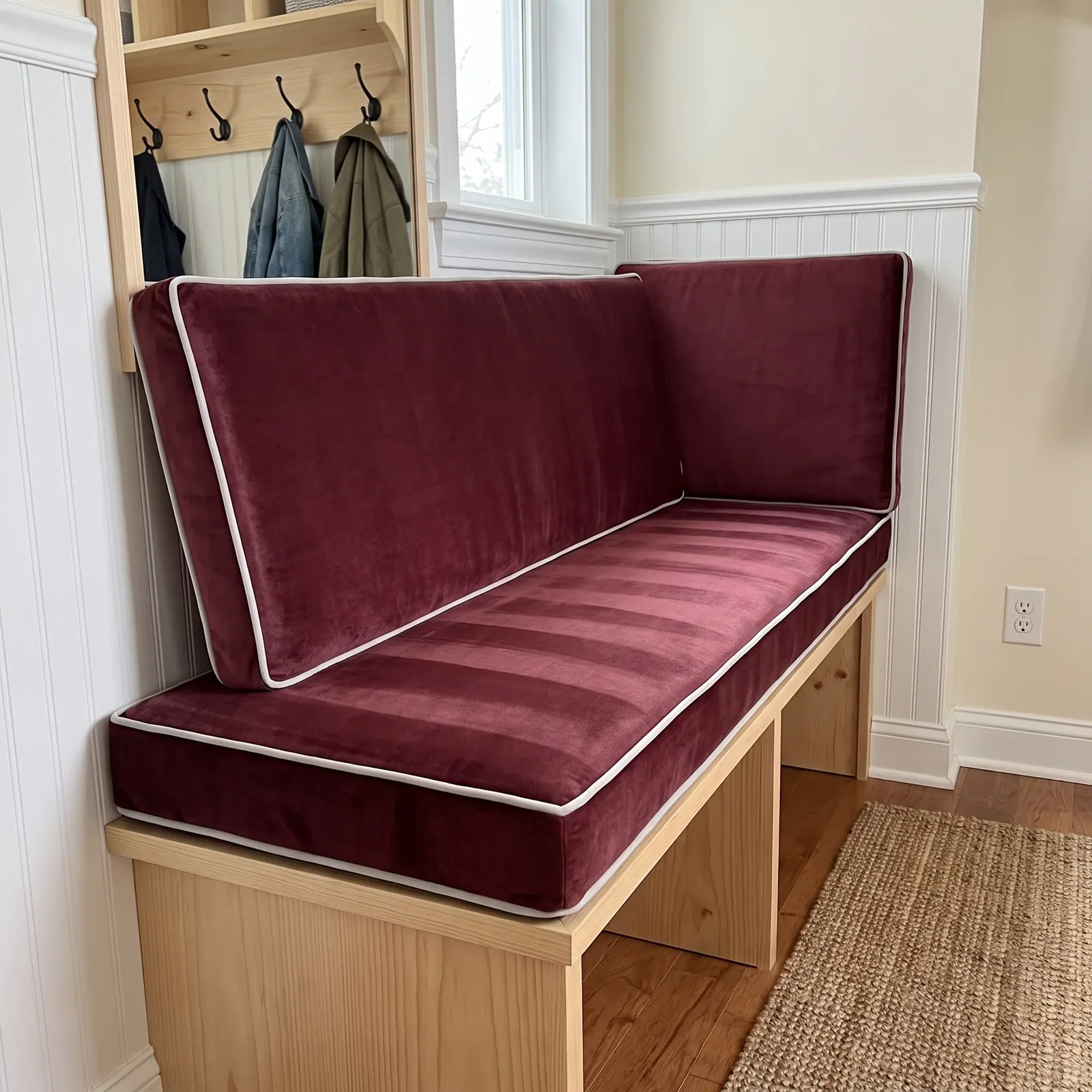
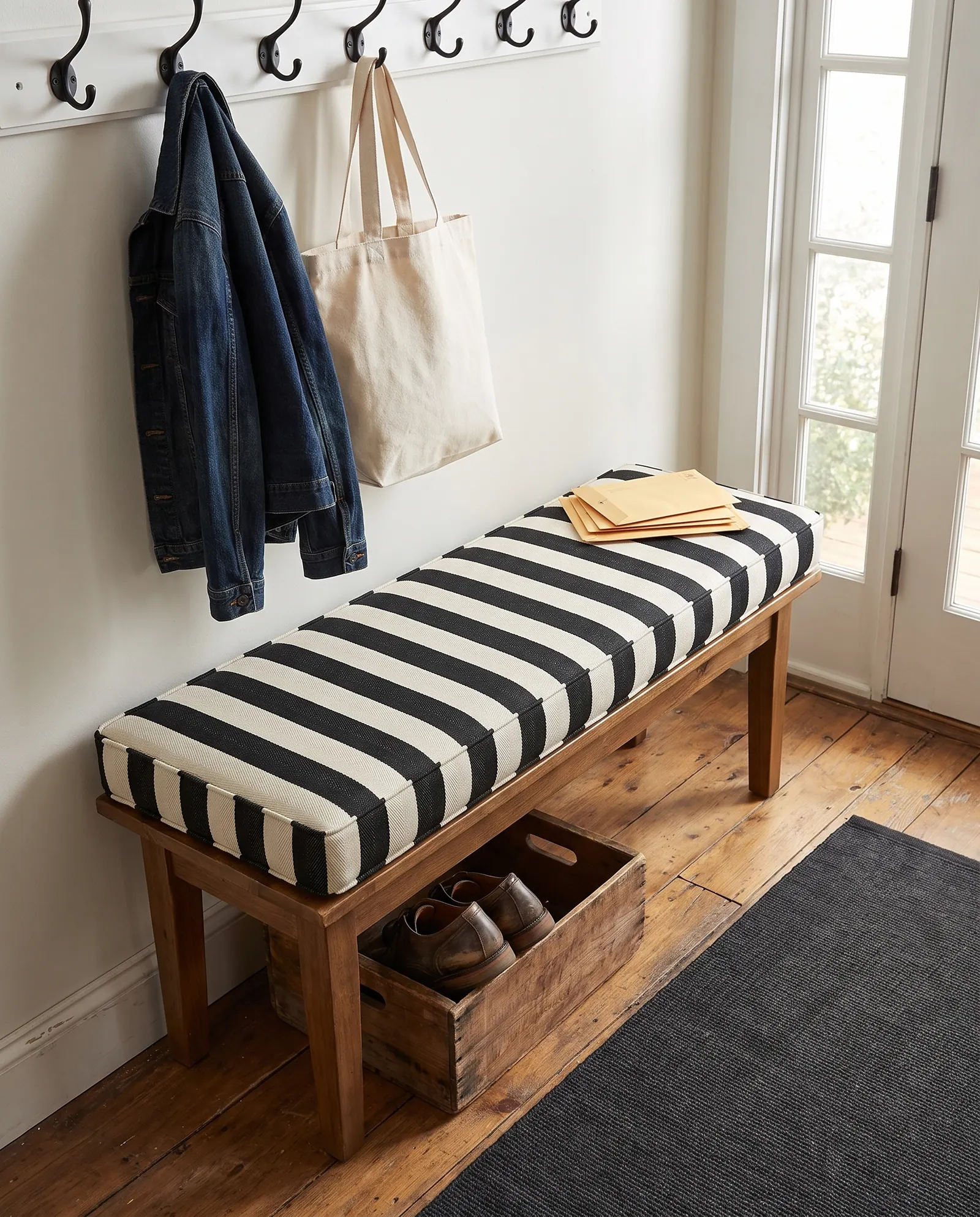
Out on the ranch, the seat that works hardest is the bench by the back door. Boots, a working dog, snowmelt, a coat thrown down in a hurry. Ranch bench cushions there want a forgiving fabric and a cover that zips off; see mudroom bench cushions.
Then the lodges. The Eatons moved their guest ranch to Wolf, near Sheridan, in 1904, and by 1930 Wyoming had more than 100 dude ranches, 21 of them around Jackson. Cabin cushions in Wyoming live near a fire. Jackson Hole lodge cushions also live near big windows over snow, which is the hardest light a fabric meets.
What each Wyoming seat should wear
| Seat | Fabric | Foam and thickness | Piping and hold-down |
|---|---|---|---|
| Ranch porch bench or glider | Outdoor fabric: water-repellent and UV-resistant | 4 in (10 cm) firm foam; wedge-shaped backs for a lean | Self piping; ties at the back corners, a non-slip base, or both |
| Mudroom boot bench | Outdoor fabric or a tough, easy-clean weave with a zip-off cover | 3 in (7.5 cm), chosen from the seat height you want | Zipper on the back edge; non-slip base on painted wood |
| Fireside floor cushion | Velvet or corduroy | 4 in (10 cm) standard; 6 in (15 cm) to sit higher | Set 3 ft (91 cm) from the stove; metal frame for a free-standing back |
| Cheyenne Victorian window seat | Velvet, corduroy or linen-look in a fade-aware mid-tone | 3 to 4 in (7.5 to 10 cm) | One contrast welt; a drawing of every edge for an old bay |
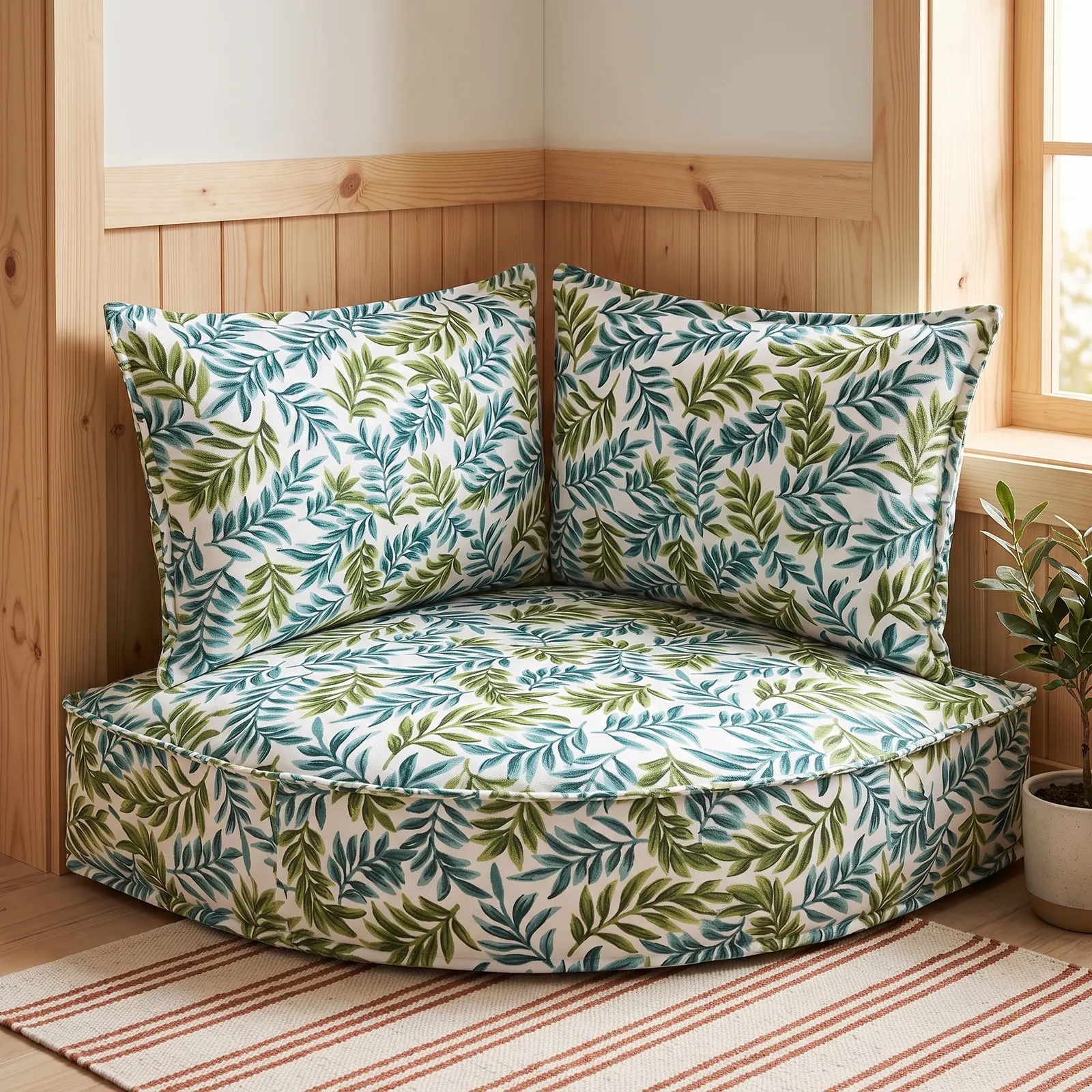
| Lodge great-room floor sofa | Velvet or corduroy | 4 in (10 cm) seat; long runs split into equal halves | Loose backrest and bolsters, no ties needed |
Ties and non-slip bases are made only when you ask for them in writing. Covers zip off and wash at 86°F (30°C) on a gentle cycle; air dry, no tumble dryer.
Nine feet of green velvet, cut in two
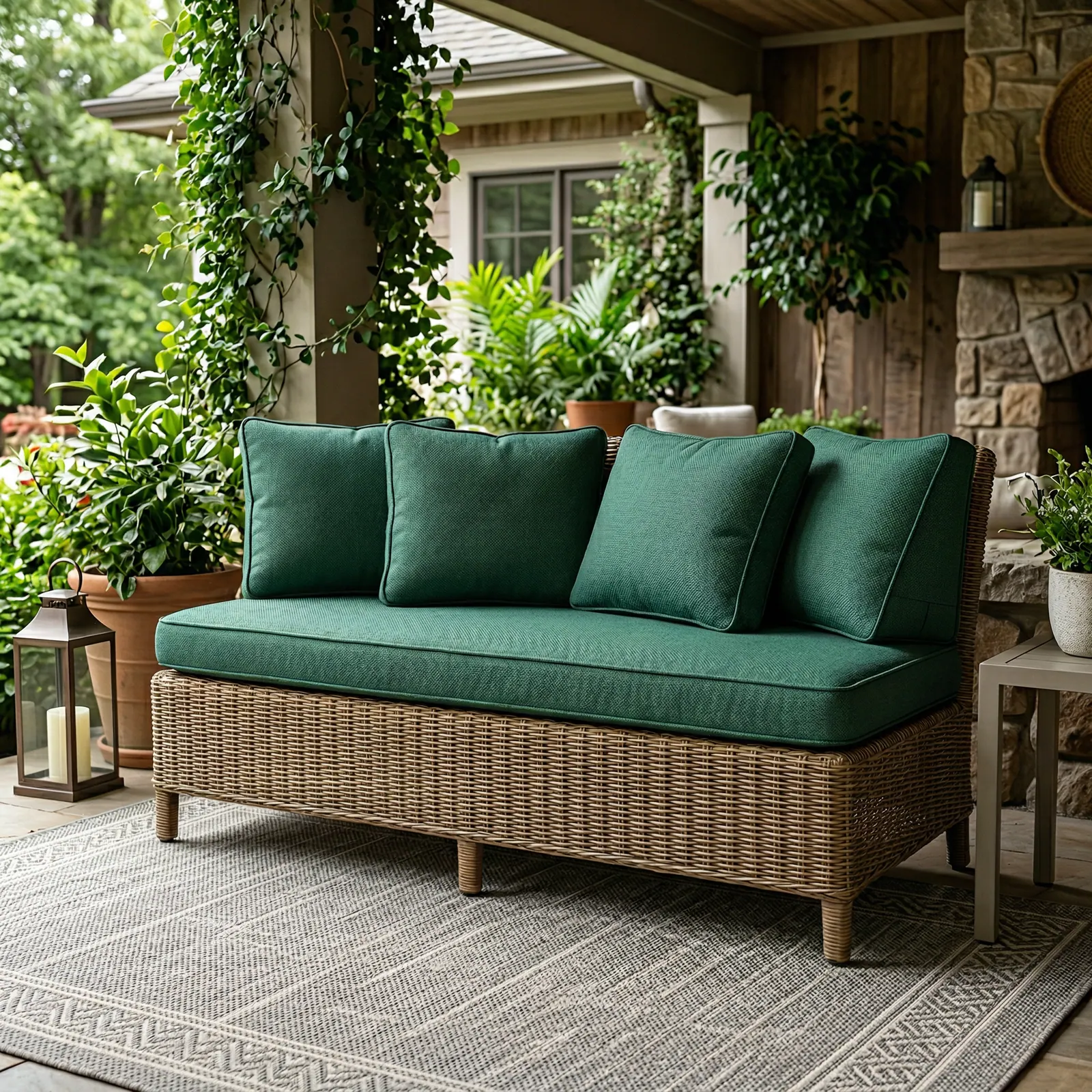
A buyer in the US wrote to the workshop about a long wall and the floor sofa to fill it: a tufted velvet floor cushion, 108 x 40 in (274 x 102 cm), in a dark green, made in separate pieces.
The workshop proposed the seat as two 54 x 40 in (137 x 102 cm) cushions, and the order went in as a quantity of two. The armrests followed in a second shipment.
I'd give a Wyoming lodge the same answer. Two halves go through a cabin door and around a stair. You can swap them so they wear evenly. And the half nearest the hearth can slide back to keep its 3 ft without the whole sofa moving. That's floor cushions the old way: heavy, honest, and in pieces one person can carry.
- Measured
- 108 x 40 in total (274 x 102 cm), made as two 54 x 40 in (137 x 102 cm) pieces
- What it taught
- Split a very long floor cushion into equal halves: easier to carry, easier to rotate, easier to keep clear of the stove.
Colors that can take snow glare
Winter light in Wyoming arrives twice, once from the sky and once off the snow. A deep window seat facing a white pasture takes more sun in January than you'd guess.
So I lean on colors that age gracefully: saddle brown, rust, sage, and a dark forest green like the one in the story above. A pale cream shows every trip in from the barn, and a saturated red will tell you which end faced the glass. Velvet remembers the hand that brushed it, and in this light it remembers the sun as well. Turn window cushions end for end once a month.
For a lodge floor I'd pick corduroy. It resists scratching, cleans easily and takes daily wear. What faces your window seat in February, my friend: pasture, pines or the neighbor's barn? For the sun side of things, read window seat cushions and fading.
Photographs for homes like these
Open any photograph large; each one has its own link and a Save button.
 Save
 Save
 Save
 Save
 Save
A Wyoming year for cushions
- January, generally the windiest month: porch cushions stay inside, clean, dry and off the concrete.
- Chinook days, about 20 of them in a Cheyenne winter above 50°F (10°C): enjoy them from the window seat. The porch cushions can wait.
- Spring snowmelt: stand a wet boot-bench cushion on edge and get it dry within 24 to 48 hours.
- Late spring: tie porch cushions at the back corners before they spend a single night outside.
- Late July, Frontier Days week in Cheyenne: turn porch and window cushions so the high sun works both halves.
- First hard freeze: wash covers at 86°F (30°C), dry the foam to the core, and store it where air moves, never sealed in plastic.
- Before the stove is lit in fall: mark 3 ft (91 cm) of bare floor and set fireside cushions behind that line.
Out here a porch cushion without ties is a kite waiting for a gust. Tie it down before the wind does the deciding.
Harlan
Buyer questions: wind, wedges and floor seats
- A common question
Can the back cushions on a patio bench be thicker at the bottom, like a wedge?
The workshop's answerYes. Wedge-style backs that are thicker at the bottom were made for a patio set of two 33 x 30 x 4 in (84 x 76 x 10 cm) seats and two 32 x 13 in (81 x 33 cm) backs. For an angled bench, the bottom edge of a back cushion can also be shaped so it sits better on the seat.
- A common question
Can you add ties so my cushions stay where I put them?
The workshop's answerYes, wherever you specify: at the bottom back corners of bench cushions, or on two corners of a chair pad. Mark the ties on your drawing and check the photo sent before shipping, because on one order the ties were forgotten.
- A common question
Could you sew snaps under the cushions so they fasten to the bench frame?
The workshop's answerSnap fasteners on the underside aren't made. Ties on the back can be added, and a non-slip base is the other way to stop a cushion moving.
- A common question
Is 4 inches the only thickness for bench and floor cushions?
The workshop's answerNo. 4 in (10 cm) is the standard for bench and floor cushions, and custom orders are also made 3, 6 and 6.5 in (7.5, 15 and 16.5 cm) thick. Put the thickness in your request.
- A common question
How does the back of a tufted floor cushion stay up with no wall behind it?
The workshop's answerMetal frames can be sent with the order so the backrest stands on its own, which suits a floor seat set out in the middle of a room.
Have it made
Have it made for your home — ask Harlan’s workshop
Old upholsterers will tell you the real cutting happens in the conversation, long before the shears come out. Tell the workshop what you sit on, and they will talk it through with you. — Harlan
Leave your details and the workshop will call you to confirm measurements, fabric, foam and piping. No prices, dates or payment on this page: it is a request, not an order.
Wyoming cushion questions from ranch, lodge and town
How far from a woodstove should a fireside floor cushion sit in a Wyoming cabin?
At least 3 ft (91 cm). The NFPA advises keeping anything that can burn three feet from heating equipment. Measure from the stove itself, and leave extra room, because a floor cushion drifts as people lean back on it.
Why do cushions fade faster in Wyoming than at lower elevations?
Altitude and snow. UV rises about 10% per 3,281 ft (1,000 m), so Cheyenne at 6,086 ft gets roughly 18% more than sea level, and fresh snow almost doubles exposure. Window seats that face snowy ground fade even indoors.
Can ranch porch cushions stay out through a Wyoming winter?
No. Cheyenne averages 174 days at or below 32°F (0°C) and 62.9 in of snow, and winter winds run 30 to 40 mph. Water in the foam freezes and thaws without drying, so store cushions clean, dry and breathing, off concrete.
Do cushions get mildew in dry Wyoming air?
Rarely in Cheyenne, where afternoon humidity averages 45%, but a cushion that stays wet still can. Dry soaked foam within 24 to 48 hours, the window the EPA gives for avoiding mold. Jackson is snowier and more humid, so watch boot benches there.
Sit well. — Harlan
The atelier
Keep going
Across the Map
Nearby places
Close by on the map