Across the Map · Midwest · United States
Custom cushions for Nebraska farmhouses, patios and mudrooms
Nebraska ranked third in the nation for hail loss claims from 2017 to 2019. I treat custom cushions in Nebraska like any load case: wind from the side, ice from above, boots from the front.
- Sun & UVStrong
- HumidityModerate
- WinterLong and hard
- SettingInland
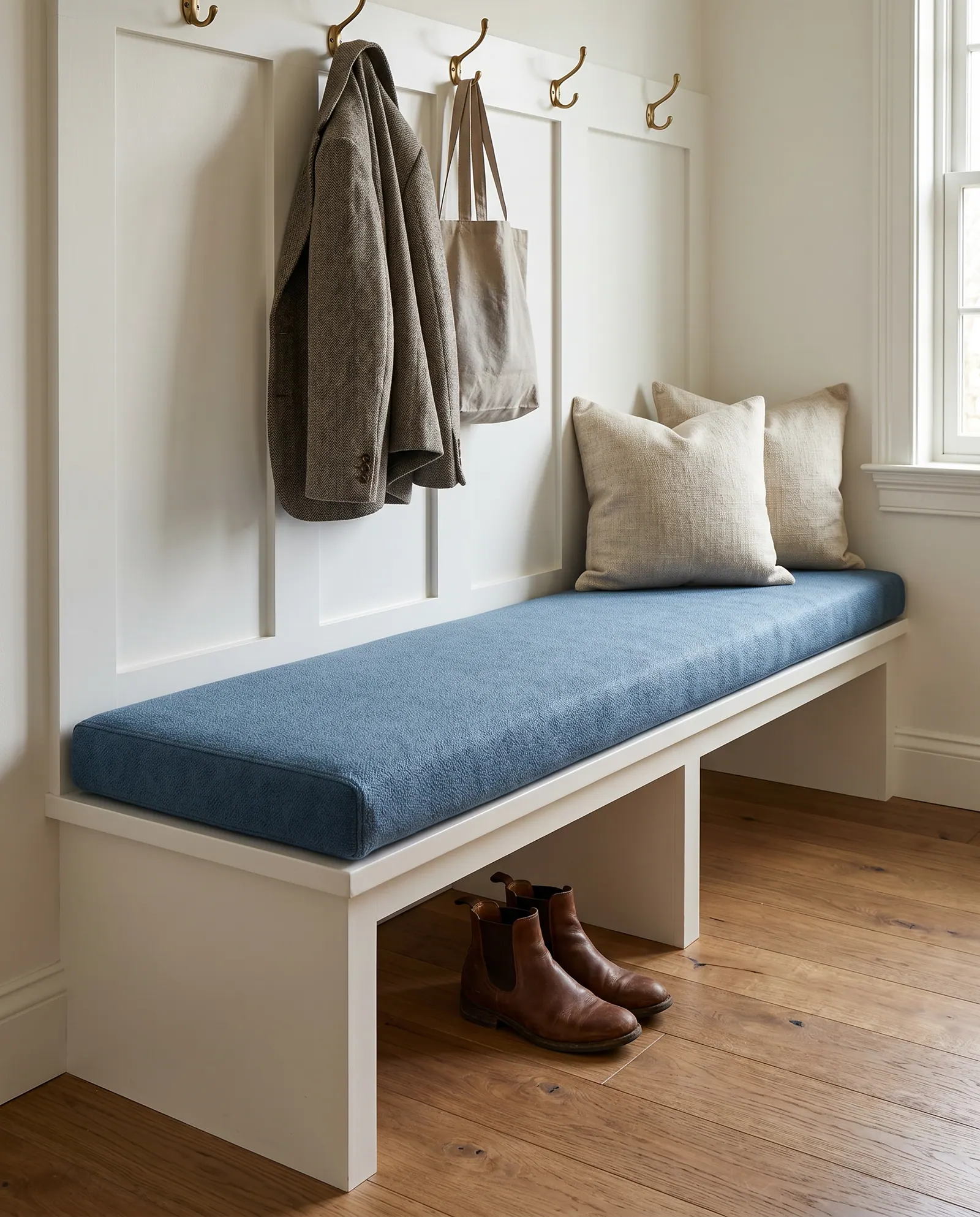
- Typical seatsMudroom boot bench, storage bench with lift-up lids, patio chair set

 Save
The quick answer
Custom cushions in Nebraska need three things: ties or a non-slip base so plains wind can't move them, a carry-in plan for hail season, and firm, about 2.0 lb/ft³ (32 kg/m³) foam that holds its shape through hot summers and long freezes. Indoors, cut storage bench cushions at every lid line and cover mudroom benches in a tough, washable weave.
161,374 hail claims and an April wind: the Nebraska load case
From 2017 to 2019, Nebraska logged 161,374 hail loss claims, third in the nation behind Texas and Colorado. A cushion left on an open patio in a May storm is a cushion you reorder in June.
Input two is the temperature swing. Omaha averages 35 days a year at 90°F (32°C) or hotter and 138 days at or below 32°F (0°C). Out west it's harder: North Platte and Scottsbluff each log 175 freezing days. Omaha mornings average 81% humidity; the Panhandle runs drier.
Input three is wind. On NOAA's long-term record, April is the windiest month at Omaha, Lincoln, Grand Island, North Platte and Scottsbluff, the same weeks patio cushions go back out. So I spec the attachment before I spec the color.
Foursquares, farmhouse back doors and Sandhills ranches
Omaha and Lincoln run to brick bungalows and American Foursquares. On the farm, the back door is the front door, and the mudroom takes the boots, coveralls and the dog. The Sandhills cover about 19,600 sq mi (51,000 km²), just over a quarter of the state, nearly all of it cattle range, with ranch houses a long drive apart.
The parts list: 1. Mudroom and boot benches, in a performance weave: mudroom and entryway bench cushions. 2. Storage benches and chests with lift-up lids: bench cushions, one piece per lid. 3. Patio sets and deck benches: outdoor cushions. 4. Farmhouse kitchen benches: banquette cushions.
The Midwest page covers the rest of the region.
The Nebraska spec sheet, seat by seat
| Seat | Fabric | Foam and thickness | Hold-down and storage |
|---|---|---|---|
| Mudroom boot bench | Performance weave or outdoor fabric | 3 in (7.5 cm) | Non-slip base across the whole underside |
| Storage bench with lift-up lids | Performance weave or corduroy | 2.5-3 in (6.4-7.5 cm) | One piece per lid; ties on the hinge side |
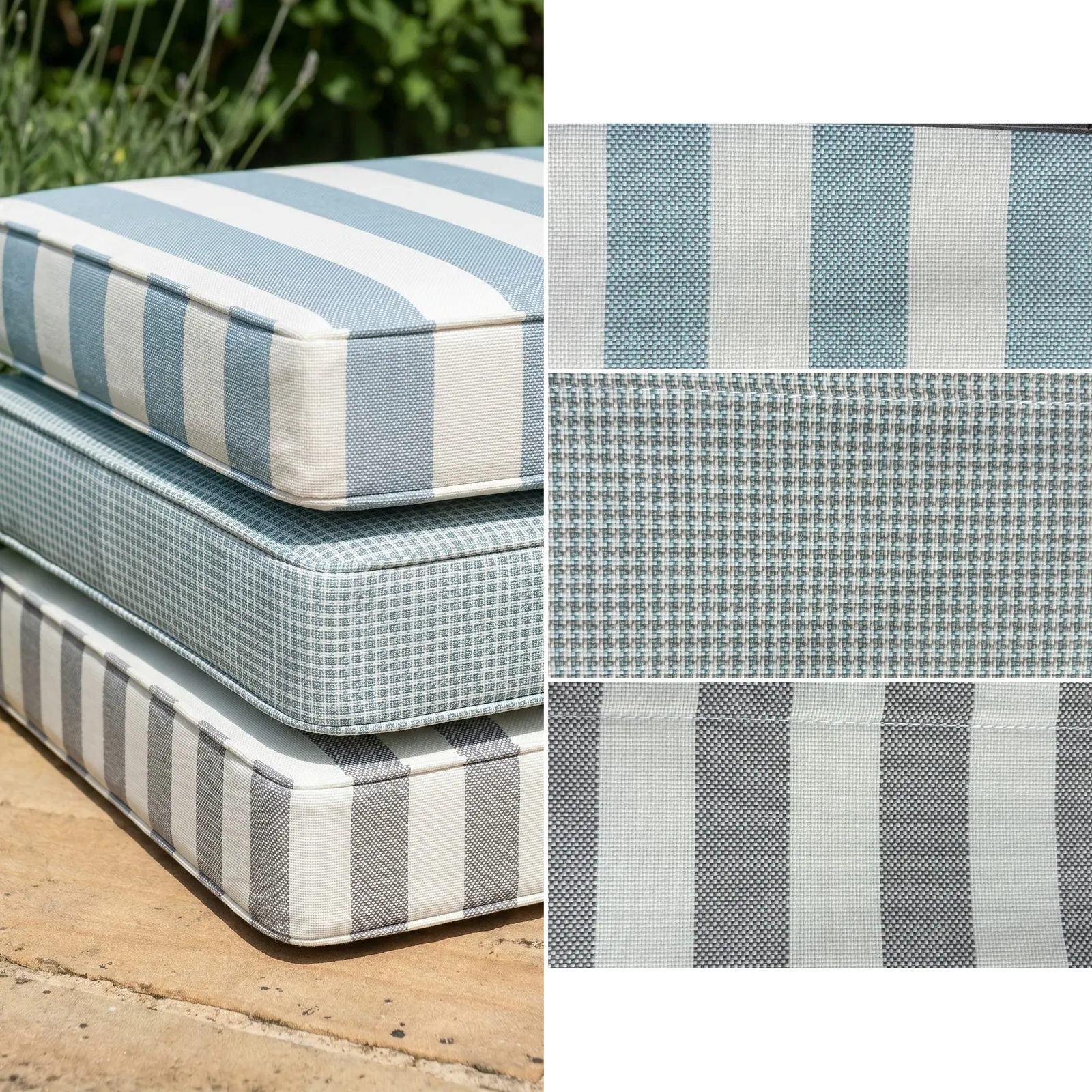
| Patio chair seat and back | Outdoor fabric, self-piped | Seat 4-5 in (10-12.5 cm); shredded-foam back | Ties at the back posts; double-piped backs often stand alone |
| Open deck or porch bench | Outdoor fabric | 3-4 in (7.5-10 cm) | Ties at the back corners; each piece light enough for one person |
| Farmhouse kitchen bench | Soft easy-clean fabric | 2-3 in (5-7.5 cm) at a table | Ties at the bottom back corners |
A hinged storage bench and a slant that measured long
A buyer in the US had an angled storage bench with a hinged lid and wanted a seat cushion plus back cushions. The drawing on paper read: bottom 77 in (196 cm), top 34 1/2 in (88 cm), depth 25 in (64 cm), and angled sides of 33 in and 33 1/2 in.
The workshop checked it. The straight numbers fix the slant: (77 − 34.5) ÷ 2 = 21.25 in across, 25 in deep, so each side is about 32.8 in (83 cm). The measured slants ran long because the tape had followed the curve of the old cushion still on the bench. Angles are just lengths in disguise.
So the cushion was cut from the master dimensions, front, back and depth, with the slants left to the geometry. The buyer added three matching foam backrests. Check your own bay or bench in the trapezoid calculator before you order.
Lids, hinges and wind: small parts that decide everything
Lift-up lids first. A cushion that spans a lid break stops the lid from opening, so cut one piece per lid. On a hinged chest the ties go on the hinge side, and the workshop asks for each hinge's position from a named end plus its width. One buyer in the US sized a cushion to the 42 x 18 in (107 x 46 cm) inside of an antique cedar chest's bevel and heard the truth: a non-slip base helps, but when the lid lifts, the cushion can still slide. The hinged lid guide has the details.
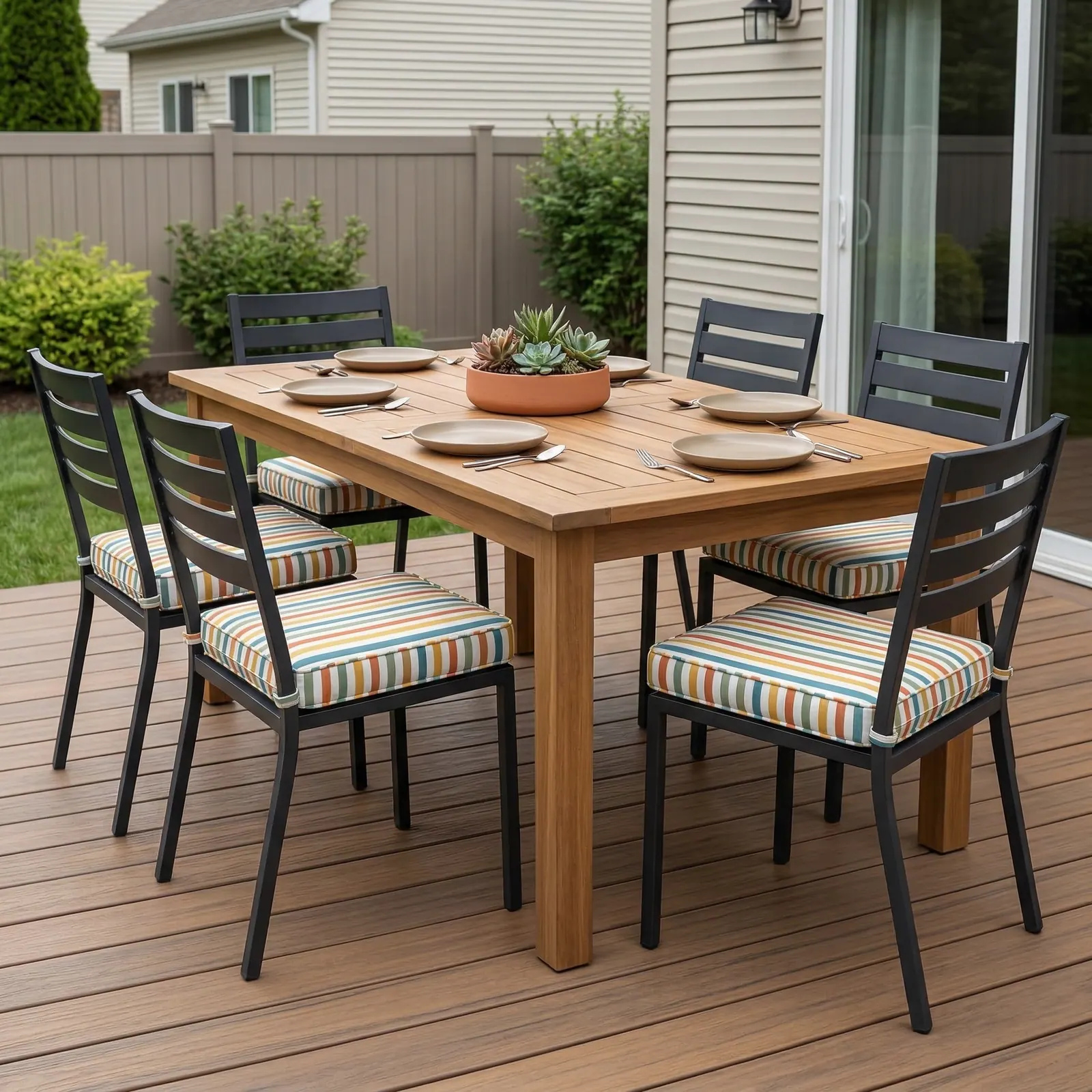
Outdoors, structure often beats straps. For a patio set of six 25 x 25 x 5 in (64 x 64 x 12.5 cm) seats and seven 15 x 25 in (38 x 64 cm) backs, the workshop looked at photos and said the double-piped backs would hold their place without straps. Ties are never added unless you ask, partner, so write them into the order.
Which way does the wind hit your patio: from the side, or straight at the chair backs?
Photographs for homes like these
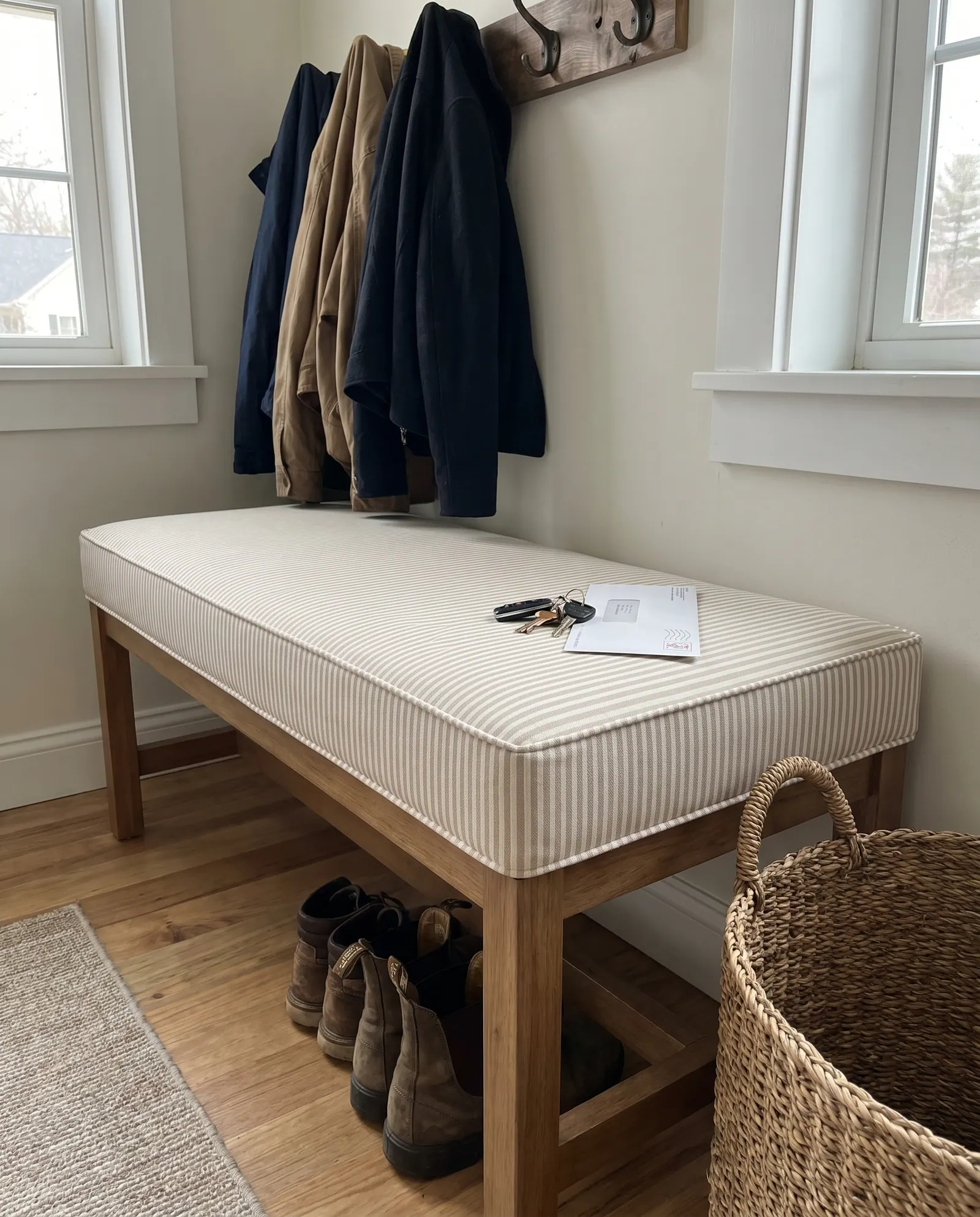
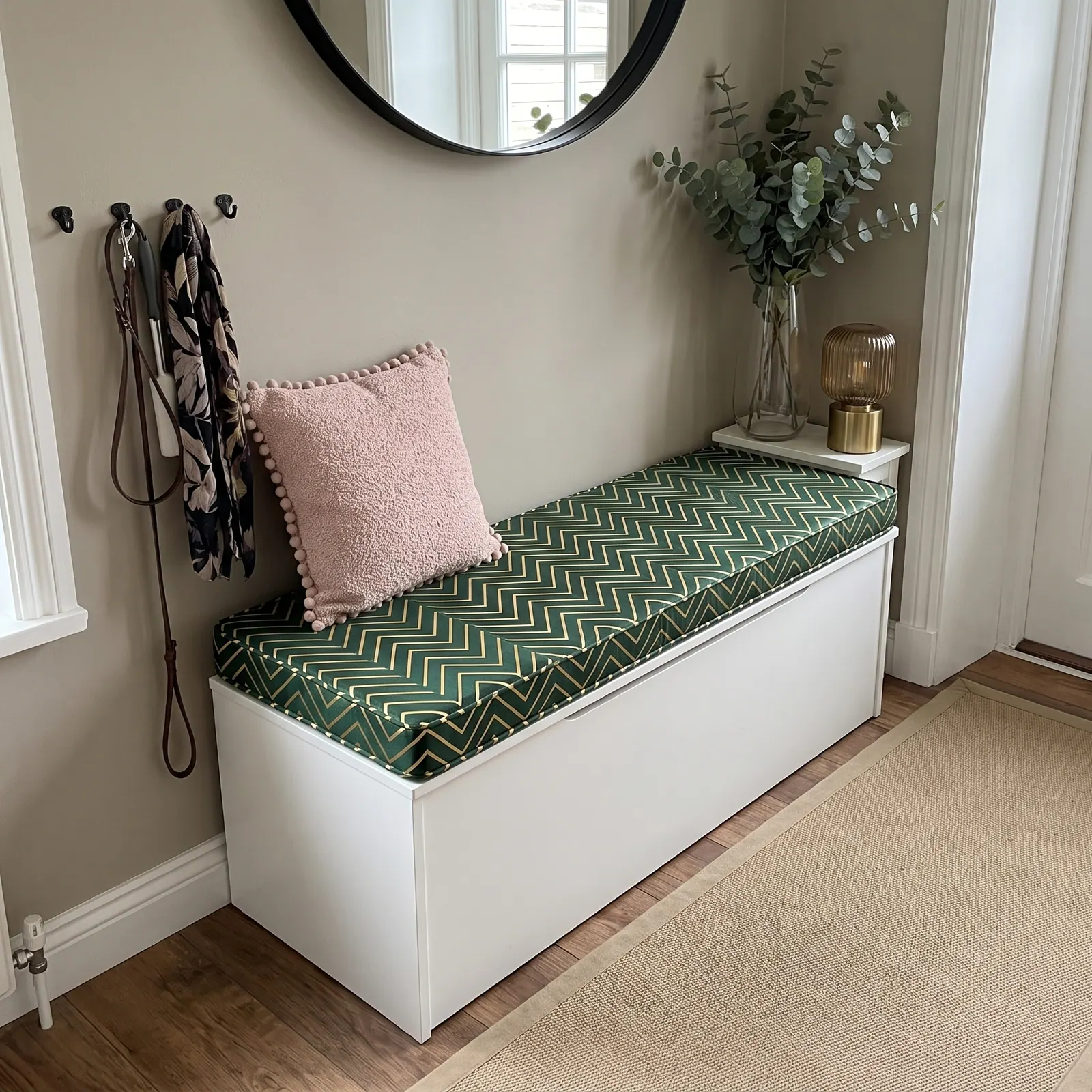
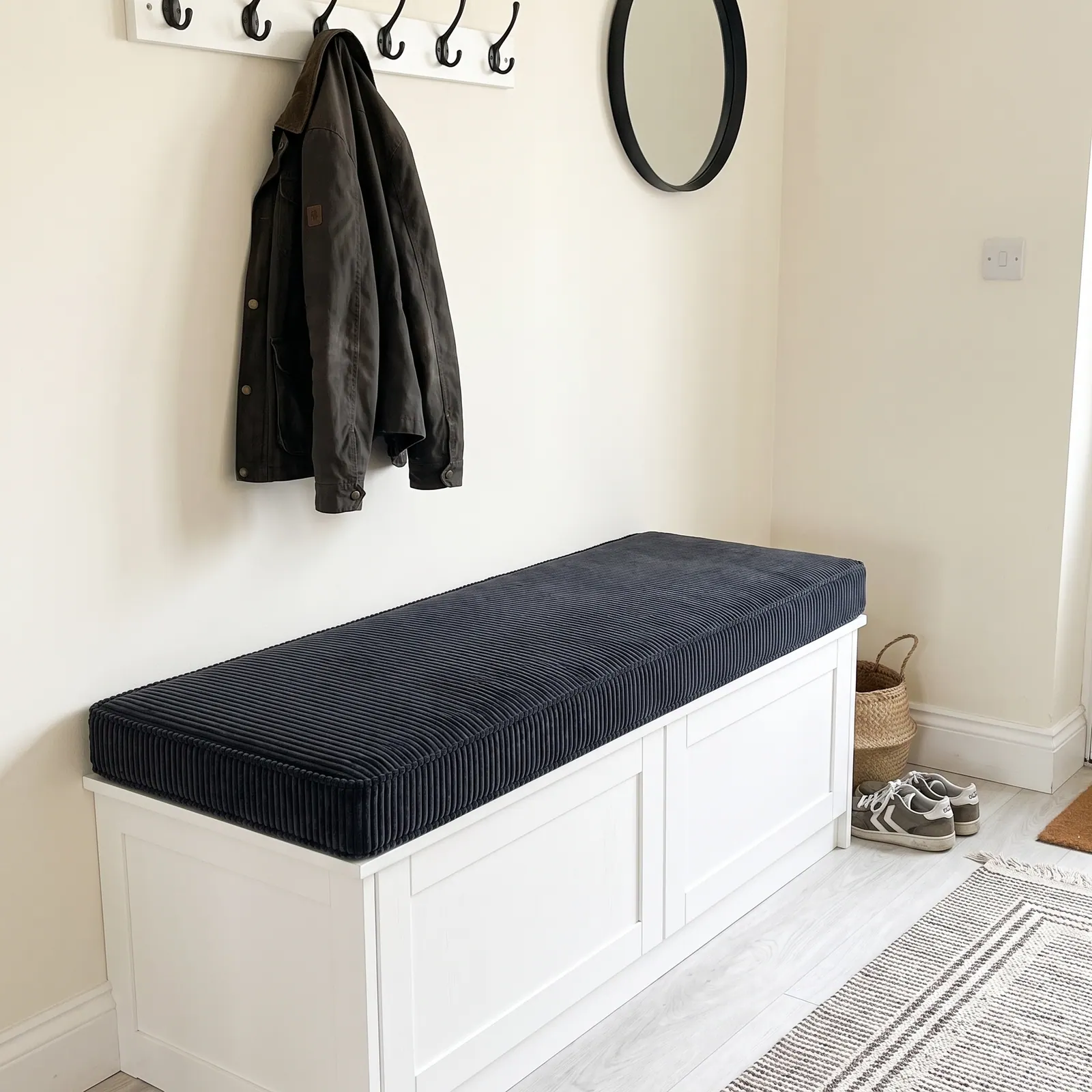
Open any photograph large; each one has its own link and a Save button.
 Save
 Save
 Save
 Save
 Save
Nebraska cushion calendar
- March: pull stored cushions, check for damp spots, and dry anything damp within 24 to 48 hours.
- April: the windiest month. Tie cushions down the day they go out.
- May to August: hail watch. Carry cushions in when storms are forecast; one piece per trip, one person per piece.
- Midsummer: wash covers at 86°F (30°C) on a gentle cycle and air-dry. A non-slip base stays out of the dryer.
- October: before the first freeze, store outdoor cushions dry, off concrete, in something breathable.
- Winter: shake grit off the mudroom cushion weekly; unzip and wash the cover when salt marks show.
Spec the tie before the color. A cushion that stays on the bench in April wind is worth more than one that matches the shutters.
Nate
Buyer questions: lids, ties and boots
- A common question
Can you put ties on one side so the cushion stays on a hinged chest?
The workshop's answerYes, on the hinge side, normally for a small extra charge. Give the exact size, a note like 'ties on the hinge side', each hinge's position measured from a stated end, and a photo showing each hinge's width so the ties line up.
- A common question
How do I keep back cushions in place?
The workshop's answerIt depends on what they lean against. If the backs rest against a frame, railing or slats, matching fabric ties are added so you can tie them on. If they lean on a flat wall or a solid backrest, a non-slip backing works better.
- A common question
Can you add ties to my bench cushion, and where do they go?
The workshop's answerYes. One order had four ties per cushion, two on each side, set 2 in (5 cm) from the ends. The workshop asks for a sketch or photo of the bench to confirm placement; write the tie details in the personalization box.
- A common question
Is the non-slip bottom a separate mat?
The workshop's answerNo. The underside of the cover itself is made from non-slip fabric. Any bench cushion can have it: write 'non-slip base' with your size and fabric code, and it can be taken off the order before production if you change your mind.
- A common question
What thickness do you recommend for everyday seating and outdoor benches?
The workshop's answerFor everyday seating, 4 in (10 cm) of the high-density 32 kg/m³ foam: comfortable, and firm enough to keep its shape. For outdoor benches, 3 to 4 in. Because the foam is firm, 2 to 2.5 in still stays supportive in a dining nook.

Have it made
Have it made for your home — ask Nate’s workshop
Every edge and both diagonals, to the nearest 1/4 in. If the numbers do not close, the workshop will say so on the call. — Nate
Leave your details and the workshop will call you to confirm measurements, fabric, foam and piping. No prices, dates or payment on this page: it is a request, not an order.
Nebraska questions, measured
How do I keep patio cushions from blowing off in Nebraska wind?
Ask for ties at the back corners or back posts, written into the order, or a non-slip base on the seats. Double-piped back cushions often stay put on their own. Velcro isn't offered.
Should outdoor cushions stay out during Nebraska hail season?
No. Nebraska ranked third in the US for hail loss claims from 2017 to 2019, with 161,374. Bring cushions under cover when storms are forecast, and size every piece so one person can carry it in a single trip.
How thick should a mudroom bench cushion be?
Work back from the seat height you want: target height minus bench height. A bench top 15 in (38 cm) off the floor plus a 3 in (7.5 cm) cushion gives 18 in (46 cm), a comfortable height for pulling boots on.
Can outdoor cushions stay out through a Nebraska winter?
Not with standard foam, which is firm but not quick-dry. Omaha averages 138 days a year at or below 32°F (0°C), and water in foam freezes and thaws. Store cushions dry, off concrete, from the first freeze to spring.
± 1/4 in — Nate
The atelier
Keep going
Across the Map
Nearby places
Close by on the map