A Reading by NateBench Cushions
A navy corduroy custom bench cushion by the door, and why each prop is there
Pad, pillow, boots, mirror, lamp. Nate takes an oak entry bench apart layer by layer and prop by prop, with the measurements that make it copyable.

 Save
The quick answer
A custom bench cushion for an entryway should be cut to the exact length and depth of the bench top and kept slim, in a fabric with some grip, like navy corduroy, which also hides scuffs. Style it with working props: one pillow to lean on, a mirror for the last look, and a warm lamp.
The cushion, cut open
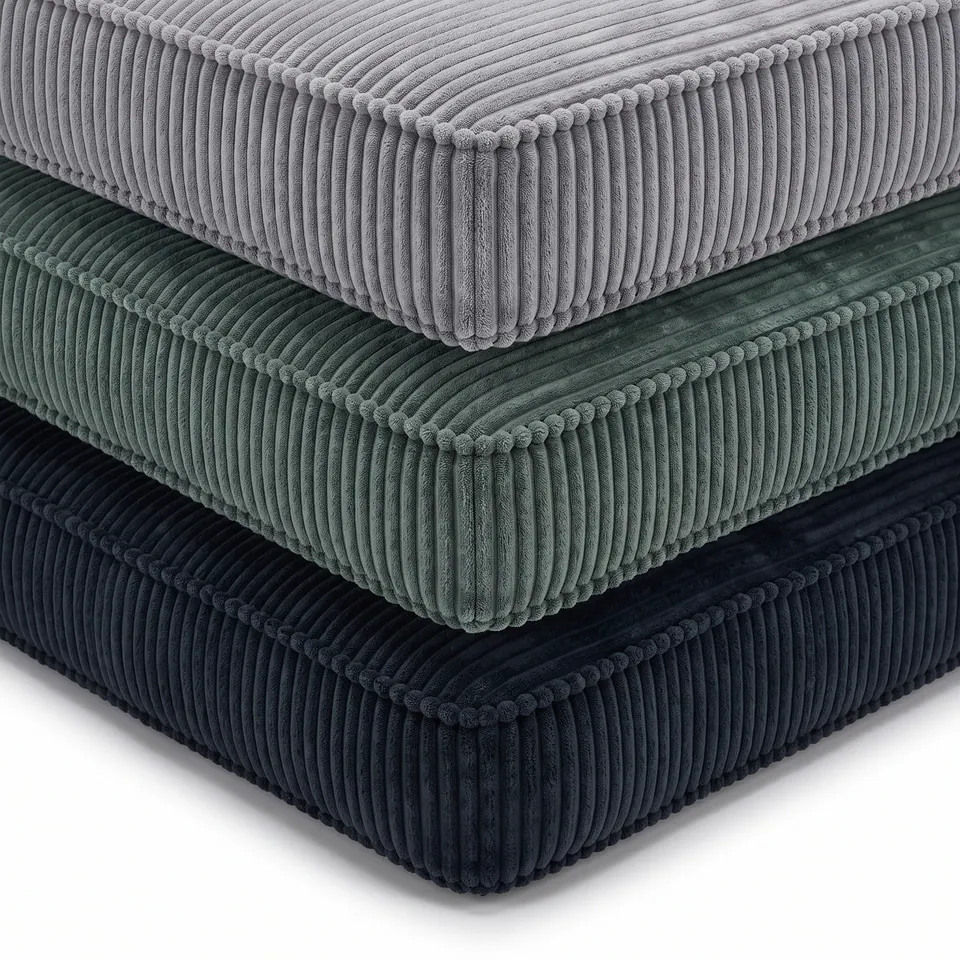
Cover fabric. A removable, zippered cover. Machine wash at 86°F (30°C) on a gentle cycle and air dry.
Piping. A fabric-covered cord sewn into the seams. It sits on the seam line, so it does not change the size.
Fiber wrap. Polyester fiber (Dacron) batting around the foam: it fills the cover out and softens the edges.
Foam core. About 2.0 lb/ft³ (32 kg/m³) high-resilience foam, firm to medium-firm, cut to the ordered size.
Zipper. Along the back band, as hidden as possible. The zipper side faces down or toward the wall.
Base panel. The underside of the cover. A non-slip fabric backing can cover the whole of it instead.
An entryway in 5 layers, from concrete floor to navy corduroy
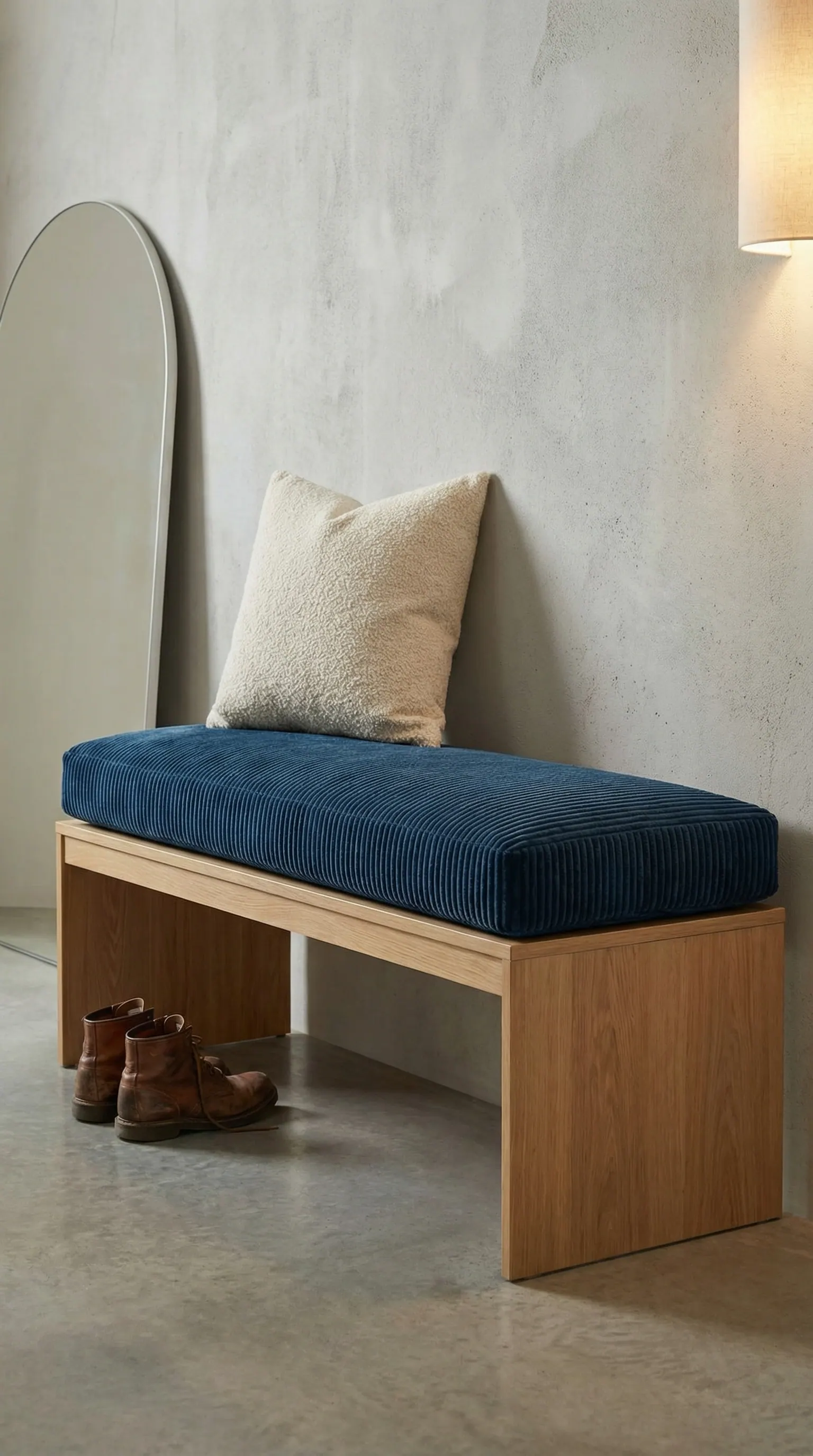
Slice this entryway at bench height and you get a clean stack: polished concrete floor, oak slab bench, navy corduroy pad, cream boucle pillow, limewash plaster wall. Five layers. Not one of them is there just to look nice.
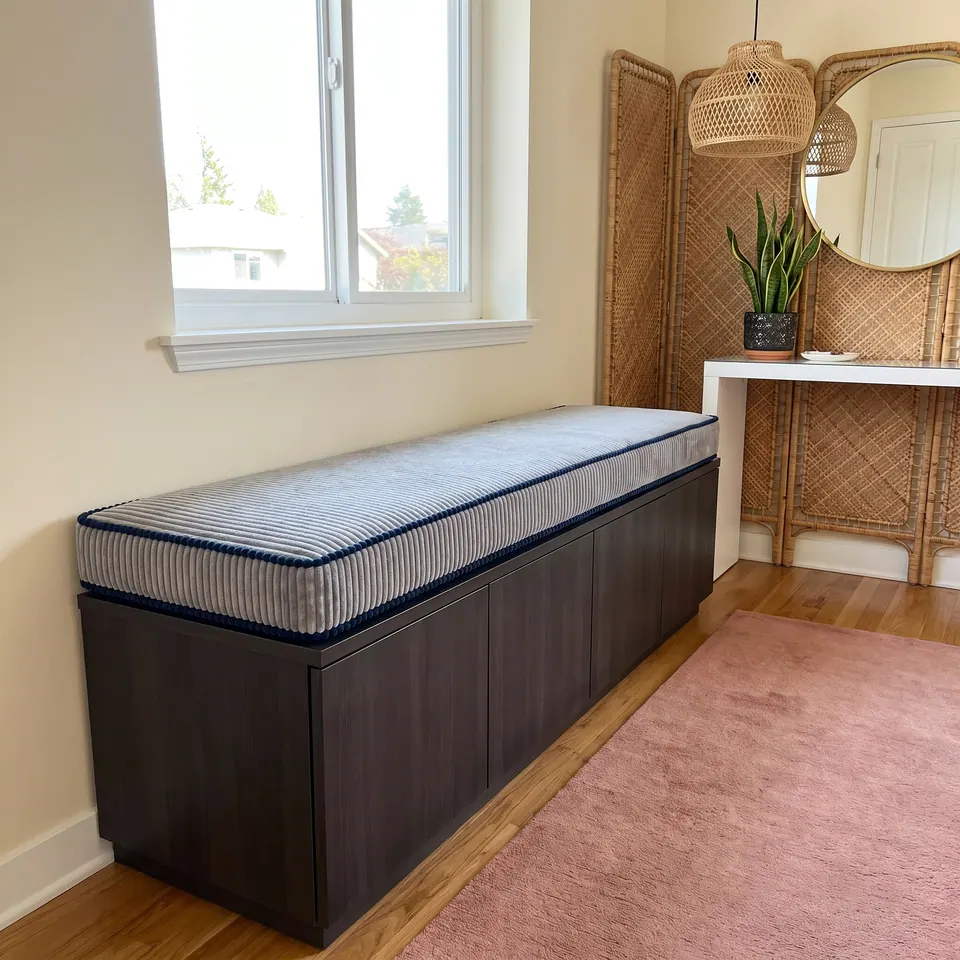
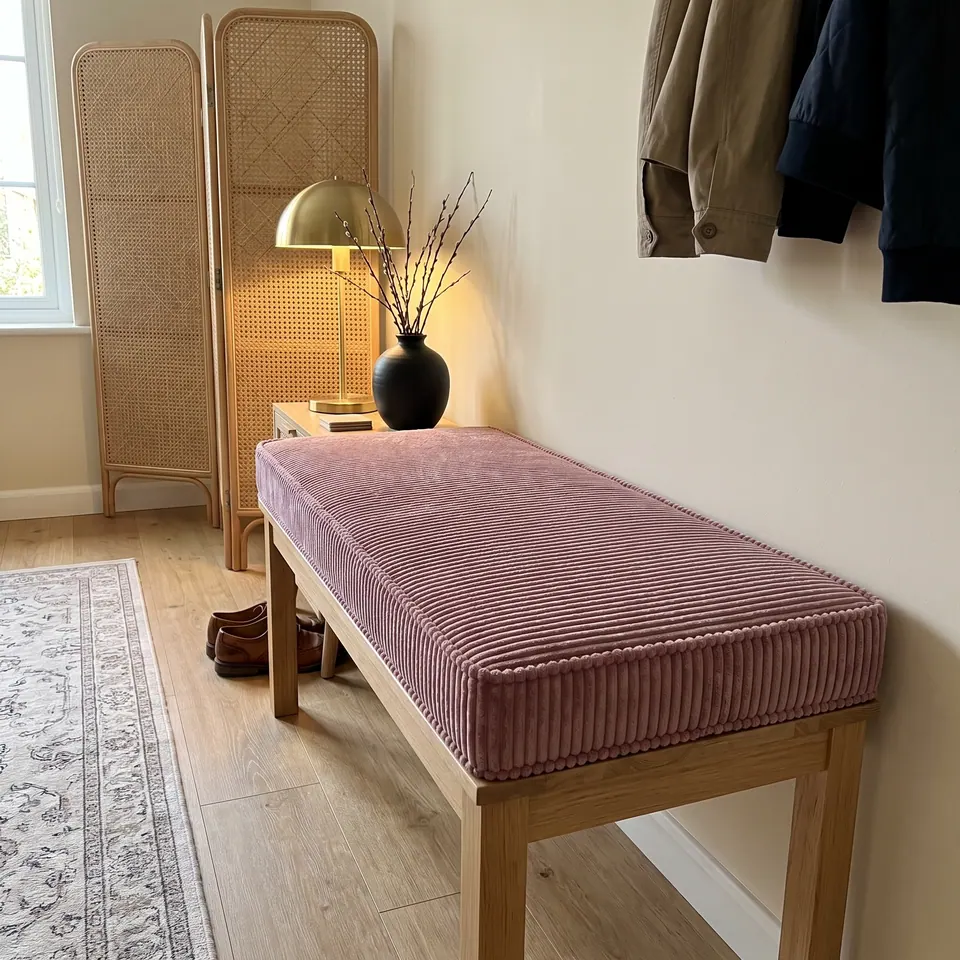
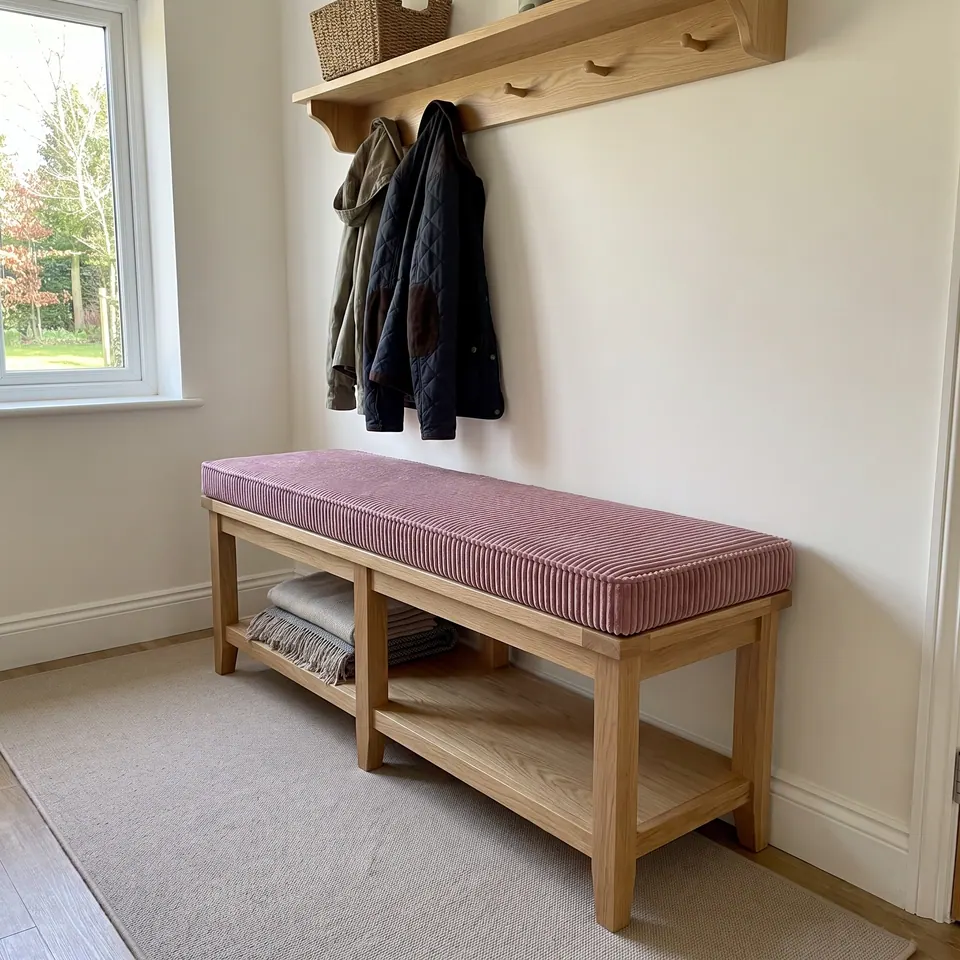
Start with the pad. It is a box cushion cut to the exact length and depth of the bench top. No overhang, no shortfall. The oak ends and front edge stay visible, so the bench keeps its slab shape instead of looking upholstered. There is no piping; on a pad this slim, the seam line is quiet enough on its own. Measure twice; the fabric remembers, and corduroy remembers in ridges.
Navy is the working color by a door. It hides scuffs from boot soles and bag straps. The ribs of the corduroy, the wale, give the pad a little grip, so it is less likely to slide when you drop onto it to lace a boot.
Then the light. A linen-shade wall lamp throws warm light across cool plaster, and the cord's pile catches it. The navy glows instead of going flat. Under a cold overhead fixture, the same navy tends to read darker and duller.
The props are the part people copy badly, so the logic behind each one is laid out below. More fabrics with grip live in corduroy; more hallway builds live in mudroom and entryway bench cushions and bench cushions.
Pinned by Nate: pad, pillow, boots, mirror, lamp
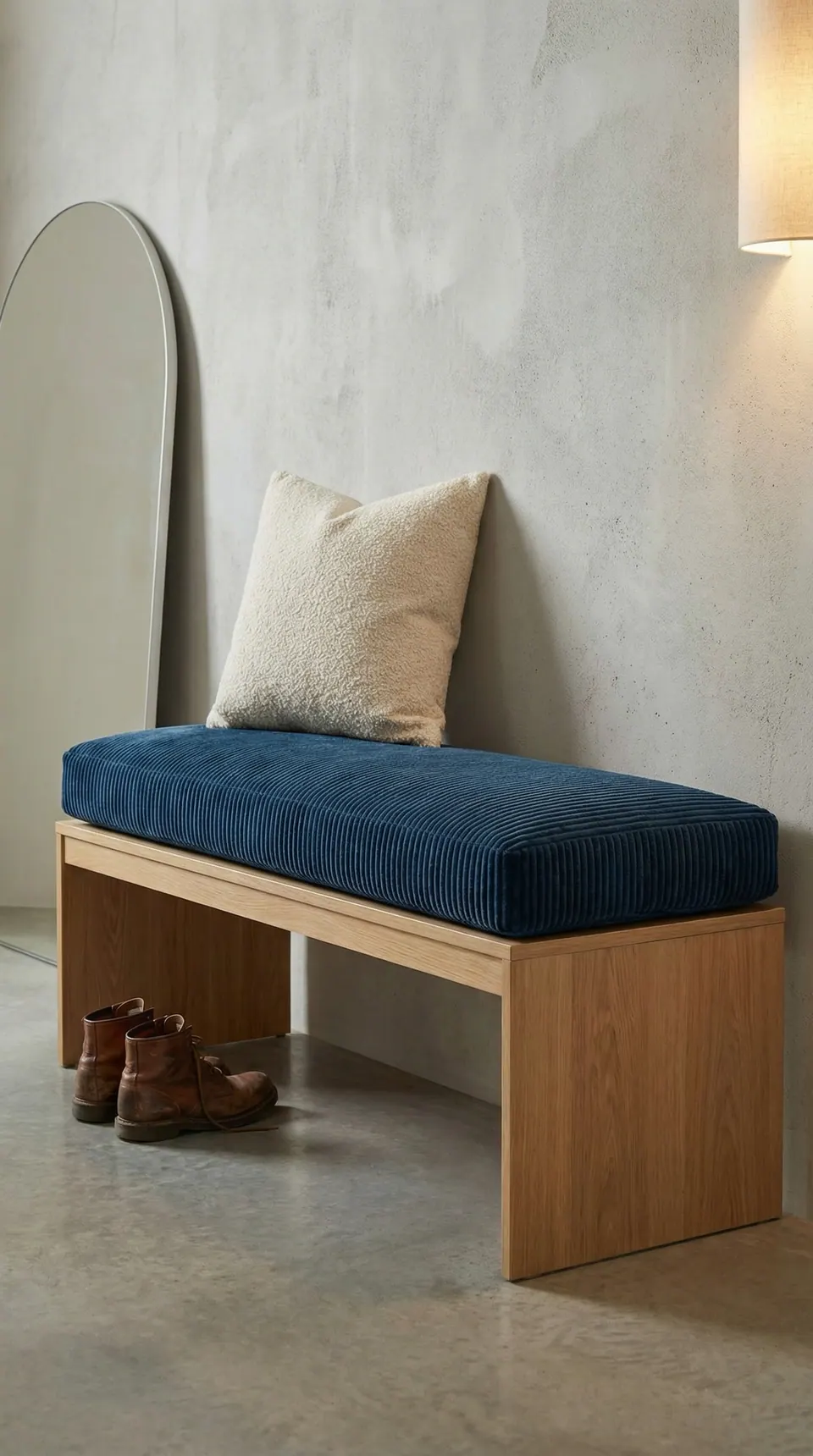
Five pins map the entry from the navy corduroy pad and the boucle pillow to the leather boots, the arched mirror and the wall lamp.
- Navy corduroy pad
A box cushion sized exactly to the bench top keeps the oak edges visible.
- Boucle pillow
Cream boucle beside navy cord gives two textures in one small spot.
- Leather boots
Boots under the bench show the seat's real job: putting shoes on.
- Arched mirror
A leaning mirror adds a last-look spot without drilling the wall.
- Wall lamp
A warm lamp lights the entry so the cord's pile glows.
- Navy corduroy padA box cushion sized exactly to the bench top keeps the oak edges visible.
- Boucle pillowCream boucle beside navy cord gives two textures in one small spot.
- Leather bootsBoots under the bench show the seat's real job: putting shoes on.
- Arched mirrorA leaning mirror adds a last-look spot without drilling the wall.
- Wall lampA warm lamp lights the entry so the cord's pile glows.
5 props to copy around an entryway bench cushion
One pillow, not three
The cream boucle pillow puts two textures in one small spot, soft loops beside ribbed cord. On a bench this size, one is enough. A second pillow would take the seat.
Boots under the bench
Leather lace-ups tucked below show the seat's real job: putting shoes on. Keep that floor clear. It is your boot rack.
A leaning mirror
The arched floor mirror leans on the wall for a last look before you leave. No drilling, which matters if you rent.
A warm lamp at head height
A linen-shade wall lamp lights the entry and makes the corduroy pile glow. Warm light suits navy; cool light grays it.
A slim pad
A thin cushion stays tidy under hanging coats and barely changes the seat height. Measure floor to bench top before you pick a thickness.
Three inches, because the bench was already tall
A couple wrote to the workshop about a breakfast nook bench and sent a hand-drawn diagram. They wanted an 85 x 20.1 in (216 x 51 cm) seat cushion, an 85 in (216 cm) backrest and a narrower side arm cushion of 20.1 in (51 cm), all in teddy corduroy.
The workshop suggested a 6 to 7 in (15 to 18 cm) seat. They said no, and they were right: the bench was already high, so they needed only 3 in (7.6 cm). Seat height is bench height plus cushion, and their bench had already used most of it.
They switched the color from brown to beige before cutting. The foam cushions got removable covers. The special size took longer to make, and when the courier lost the first parcel, the workshop made the set again.
File this one under tolerances, partner. Measure floor to seat top before you pick foam depth, and let the seat height calculator do the adding.
On the cutting table: the navy entry pad
| Piece | Entryway bench pad, box edge |
|---|---|
| Fabric | Navy corduroy |
| Piping | None |
| Fit | Exact length and depth of the bench top; oak edges stay visible |
| Thickness | Slim; set by floor-to-bench height |
| Bench | Oak slab on polished concrete |
| Pillow | One, cream boucle |
| Light | Linen-shade wall lamp, warm |
| Best for | Mudrooms, entries and hallways where boots go on |

Have it made
Have this made — ask Nate’s workshop
Precision starts on the phone. Give the workshop your measurements and they will read them back to you, edge by edge. — Nate
Leave your details and the workshop will call you to confirm measurements, fabric, foam and piping. No prices, dates or payment on this page: it is a request, not an order.
Buyer questions: odd sizes, L-shaped benches and a color surprise
- A common question
None of the listed sizes come close to my bench. How do I order?
The workshop's answerMessage the workshop with your exact size, and it is added as a new size option on the listing so you can check out normally. Sizes added this way have included 18.5 x 11.5 in (47 x 29 cm), 40 x 138 in (102 x 351 cm), 29.5 x 29.5 in (75 x 75 cm) and 20 x 50 in (51 x 127 cm).
- A common question
My bench is L-shaped. How do I measure it for cushions?
The workshop's answerMeasure each arm from the back corner to its end, then measure the seat depth. The workshop makes two pieces: one runs the full length of one arm, and the other is shortened by the seat depth so the two butt together. Runs of 63.8 in and 63 in (1620 and 1600 mm) with a 15.7 in (400 mm) depth became one 15.7 x 63.8 in (40 x 162 cm) cushion and one 15.7 x 47.2 in (40 x 120 cm) cushion.
- A common question
The cushion color isn't what I pictured. Can I return or exchange it?
The workshop's answerIf the cushion was made in exactly the fabric and size ordered, it is not treated as a fault, and return shipping is at the buyer's cost, which can be expensive. Instead, the workshop offered a new cover in the same measurements, so the buyer kept the foam and swapped covers through the zipper.
Seat height is bench height plus cushion: a bench that is already tall may need only a 3 in pad, not the usual 6 to 7 in.
Nate
Questions buyers ask next
What thickness suits a pad on a bench by the front door?
Slim enough to stay tidy, thick enough to soften the seat. Measure from the floor to the bench top first. If the bench is already high, a pad of about 3 in (7.6 cm) may be all you need, as one breakfast nook bench showed.
Is navy corduroy a good choice for a mudroom bench?
It is a practical one. The ribs give a little grip, so the pad is less likely to slide when you sit to lace boots, and a dark shade like navy hides scuffs. A zippered cover can come off when it needs attention.
Should an entry bench pad overhang the edge of the bench?
Not on a wood bench you want to show. Cutting the pad to the exact length and depth keeps the edges visible and the shape crisp. Send the bench top's exact measurements, not rounded ones, and the workshop cuts to them.
± 1/4 in — Nate