Across the Map · Midwest · United States
Custom cushions for Iowa farmhouses, porches and mudrooms
An Iowa cushion sees more weather in a year than most see in five: a sticky August, a January that means it, and a back door that hardly ever stays shut. I've built for that kind of year all my life, and it starts with firm foam and an honest seam.
- Sun & UVModerate
- HumidityHumid
- WinterLong and hard
- SettingInland
- Typical seatsMudroom bench, porch swing, farmhouse dining bench

 Save
The quick answer
Custom cushions for Iowa homes should be built for the swing between humid summers and hard winters: firm, about 2.0 lb/ft³ (32 kg/m³) foam, tight weaves and zippered covers. Put outdoor or wipe-clean fabric on the mudroom bench, keep corduroy and velvet for the parlor, and bring porch swing cushions in before Des Moines' roughly 134 freezing nights a year begin.
Wettest in June, frozen by December: one Iowa year on one cushion
A cushion in Iowa doesn't get one gentle year. It gets two hard ones stitched together.
Des Moines, by NOAA's count: 36.55 in (93 cm) of precipitation a year, about three-fifths of it from April through August, with May and June the wettest at about 5.2 and 5.3 in. August mornings average 86% relative humidity. Then winter: 36.5 in (93 cm) of snow and about 134 nights at or below 32°F (0°C). Waterloo counts about 154 of those nights, Sioux City 153.
Foam and fabric that move with every season wear out first. So I build Iowa cushions on firm 32 kg/m³ foam wrapped in polyester fiber, inside tight weaves that don't go slack when the air turns dry in January. Buy the cushion once, cry once.
Then there's wind. On August 10, 2020, a derecho crossed Iowa with a measured gust of 126 mph at Atkins and an estimated 140 mph in Cedar Rapids. No porch cushion is built for that. The habit worth keeping is simpler: when the forecast turns, the porch cushions come inside.
I-houses, Foursquares and the back door everybody uses
Iowa's houses tell you how folks lived. The tall, one-room-deep I-house got its name in the 1930s because it was so common on farms in Indiana, Illinois and Iowa, and many carry a porch across the front and a kitchen wing out back. In Eldon stands the little Carpenter Gothic house, built in 1881 and 1882, that Grant Wood painted behind American Gothic in 1930. In Des Moines, the Kingman Place district holds American Foursquares built from 1902 to 1915, and brick bungalows line the older streets in town.
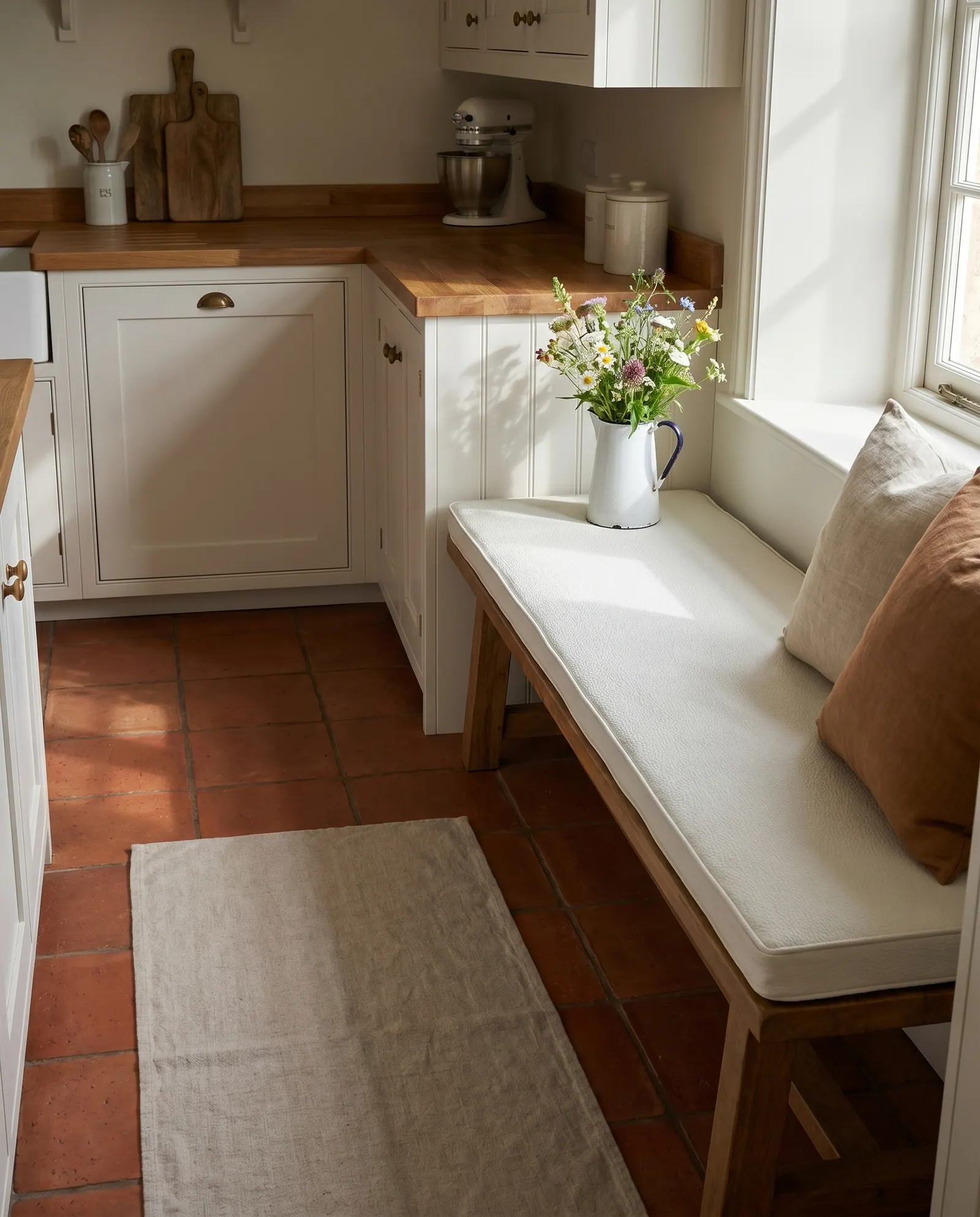
In most of them the front door is for company. Family comes through the mudroom, and that bench takes wet boots, dog paws and grocery sacks all winter. It wants a different cushion than the parlor does; see mudroom and entryway bench cushions.
A buyer in the US had a mudroom niche 17 x 35.75 in (43 x 91 cm) and 15 in (38 cm) high, and wanted the seat top at 18 in (46 cm). The arithmetic chose the cushion: 3 in (7.5 cm). Work backward from the height you want to sit at, and let the seat height calculator check you.
Mudroom, parlor, porch, kitchen: how I'd build each Iowa seat
| Seat | Fabric | Foam and thickness | Piping and finish |
|---|---|---|---|
| Mudroom bench by the back door | Outdoor fabric or a wipe-clean performance weave, in a mid-tone | 3 in (7.5 cm), firm | Self-piping; non-slip base on a smooth or painted top |
| Parlor or reading window seat | Corduroy or velvet for the winter months | 4 in (10 cm) | Corduroy often goes unpiped, since the ribs draw the lines; velvet takes a self or contrast welt |
| Porch swing | Outdoor fabric, water-repellent and UV-resistant | 3 to 4 in (7.5 to 10 cm) seat; back as its own piece | Ties at the back corners; inside before the first freeze |
| Farmhouse dining bench | Velvet or a soft performance weave; corduroy ribs can split under hard daily use | 2 to 3 in (5 to 7.5 cm) beside a table | Corner ties if the bench has rails to wrap |
| Heirloom chest or blanket box | Linen-look, self-piped | 2 to 3 in (5 to 7.5 cm), sized to the lid's inner bevel | Ties only where the hinges allow |
A family cedar chest that wouldn't take ties
A buyer in the US wanted a tie-on cushion for a family cedar chest. The trouble was the hinges. There was nowhere for a tie to go that wouldn't fight the hardware.
So the cushion was sized to the inside of the lid's bevel, 42 x 18 in (107 x 46 cm), on a chest that measures 44 1/4 x 19 in (112 x 48 cm) outside. It sits down in the dish of the lid instead of hanging over the edge.
The workshop was honest about one thing: a non-slip base helps a cushion stay put while you sit, but when a lid lifts, the cushion can still slide. That's the nature of a lid. She left the base off to keep the old finish just as it was; it's a fabric backing, not a glue, but it was her chest and her call. She asked for close-ups of three fabrics, a plain linen-look, a herringbone and a warm cream, and chose the cream with self-piping.
A chest like that was built to outlast the folks who made it. A cushion on it ought to aim for the same.
The Iowa cushion calendar
- March and April: bring stored porch cushions into a warm room for a day and check for damp spots before they go out.
- May and June, the wettest months: after a storm, stand porch cushions on edge under cover and get them dry within 24 to 48 hours.
- Any month the forecast turns severe: porch and deck cushions come inside.
- August: unzip covers and wash at 86°F (30°C) on a gentle cycle; air dry.
- October: before the first freeze, clean, dry and store outdoor cushions off the concrete in something that breathes.
- December to February: wipe snowmelt and road salt off the mudroom cushion with a damp cloth and a little mild soap before it sets.
Photographs for homes like these
Open any photograph large; each one has its own link and a Save button.
 Save
 Save
 Save
 Save
 Save
Camel corduroy, olive stripe and barn red for the long winter
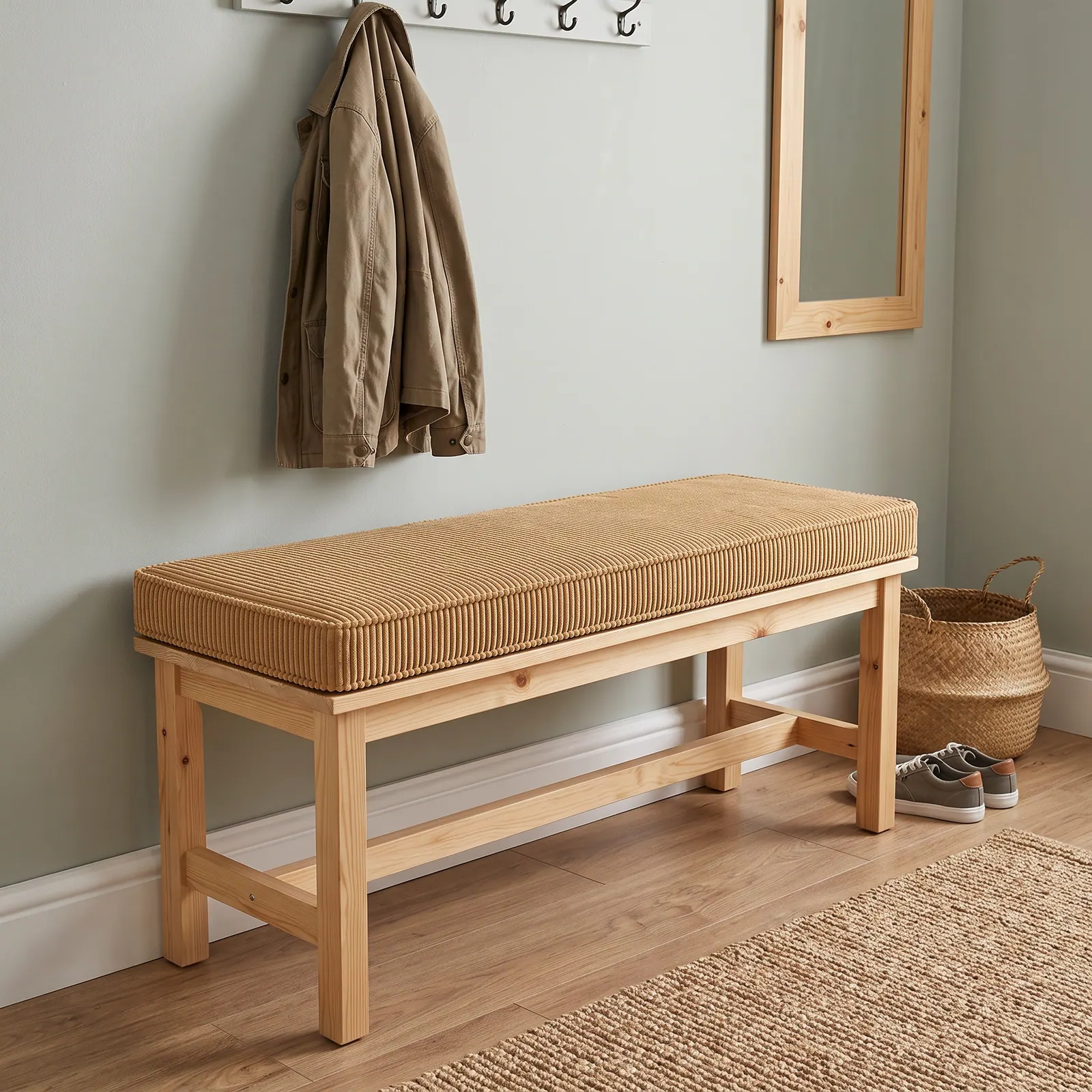
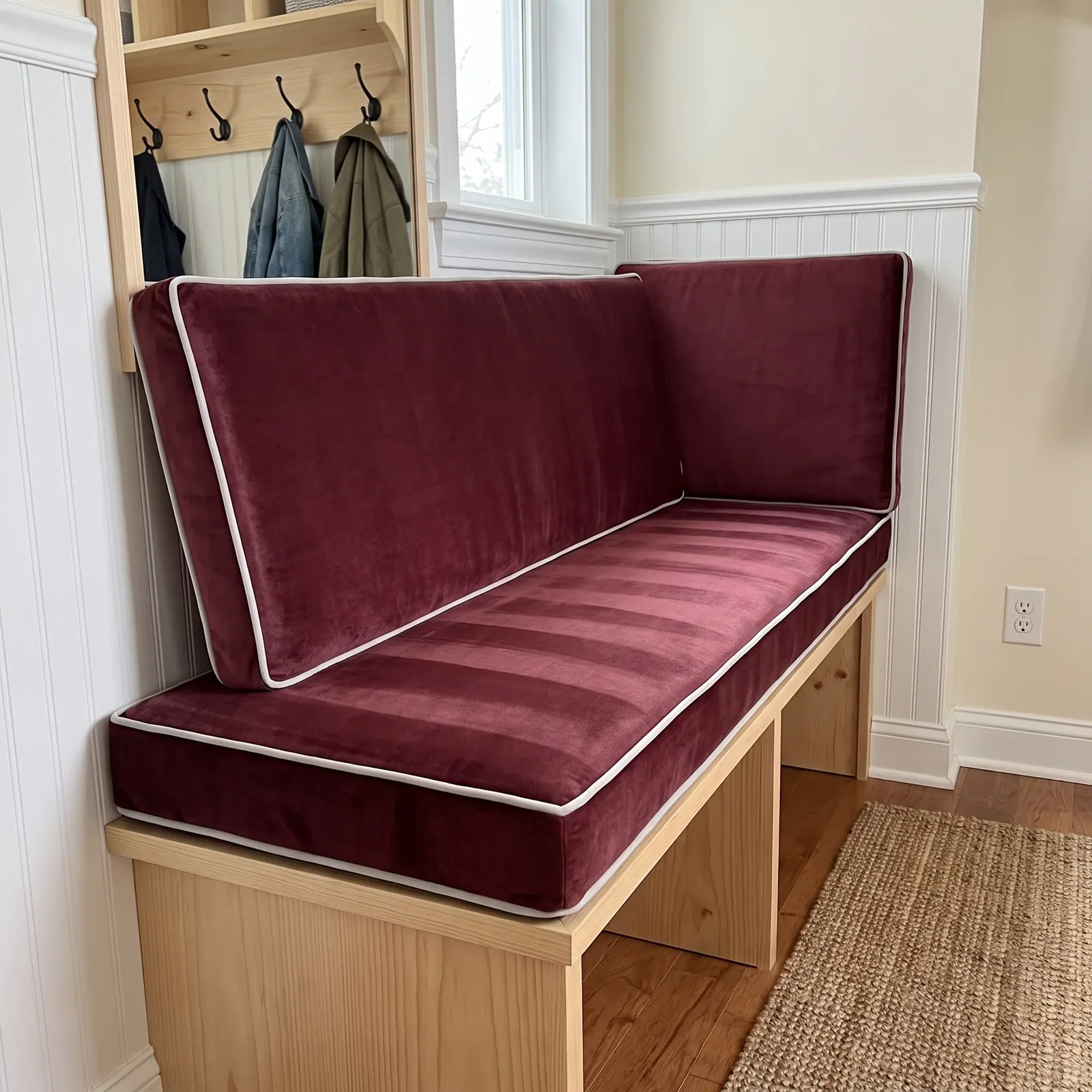
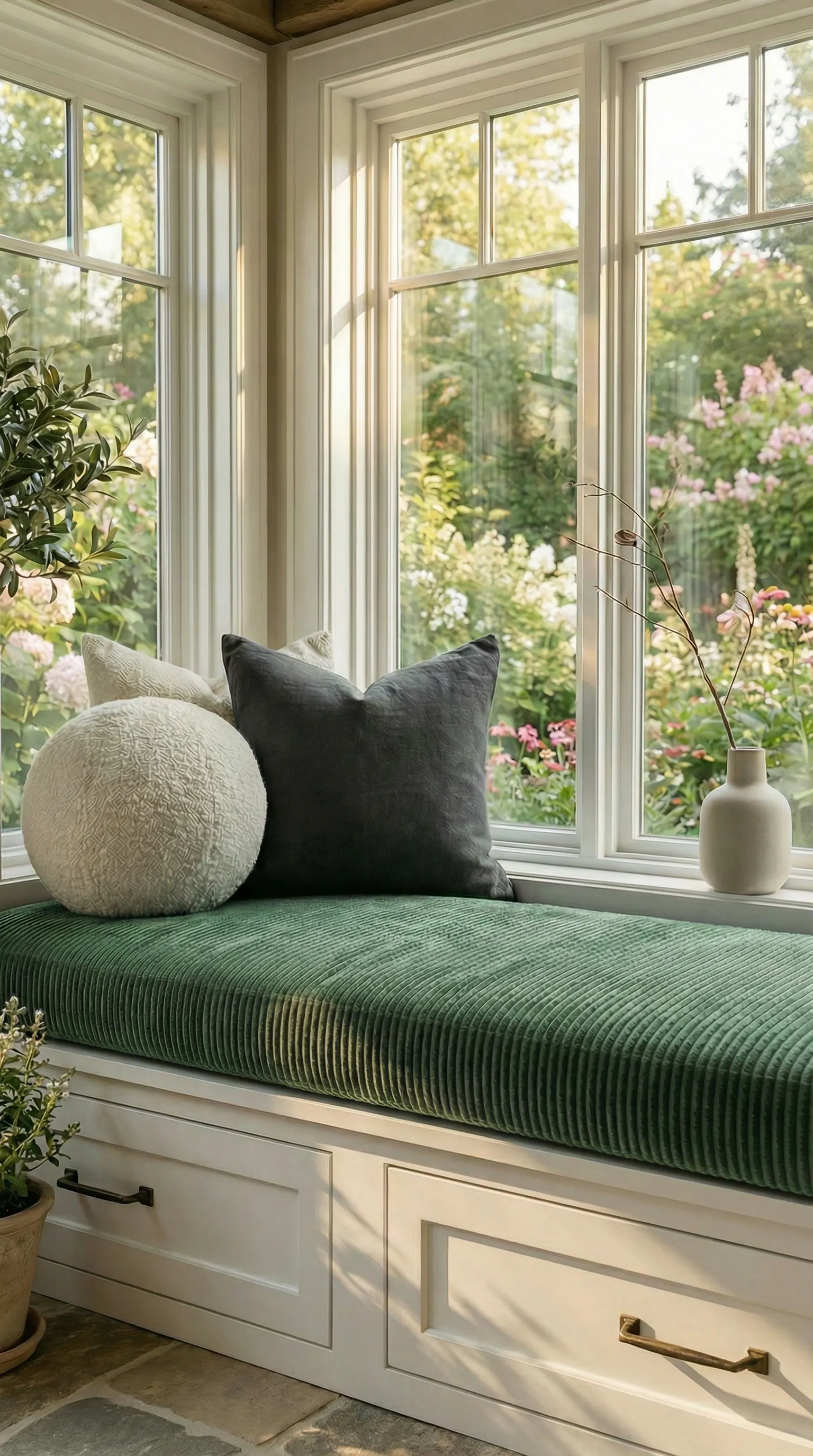
Iowa rooms turn inward from November to March, and that's when texture earns its keep. Corduroy in camel, rust or moss green has a warmth you can see across the room. Velvet in a deep color catches the low winter light. Both sit well against pine, oak and white beadboard; look at corduroy and velvet side by side.
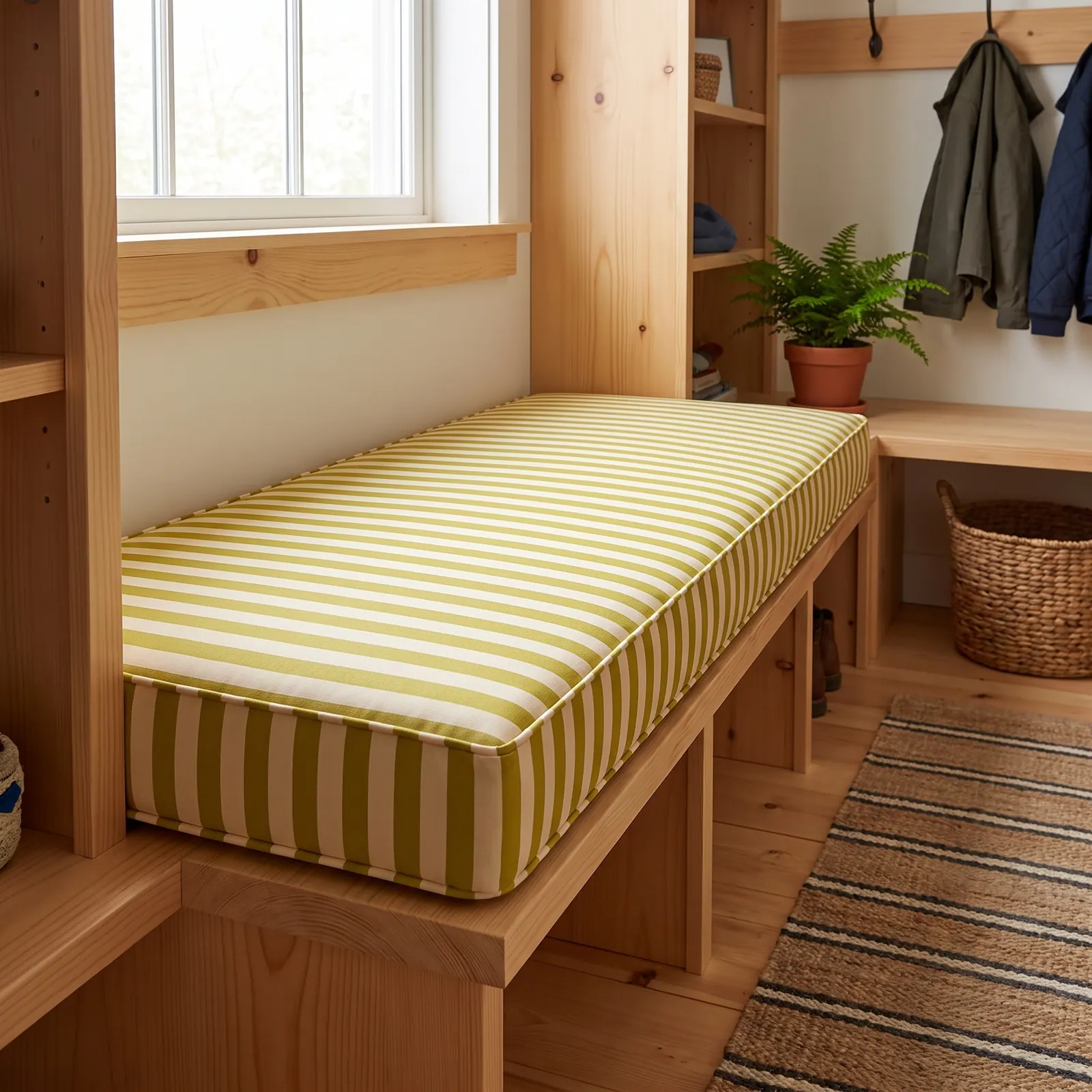
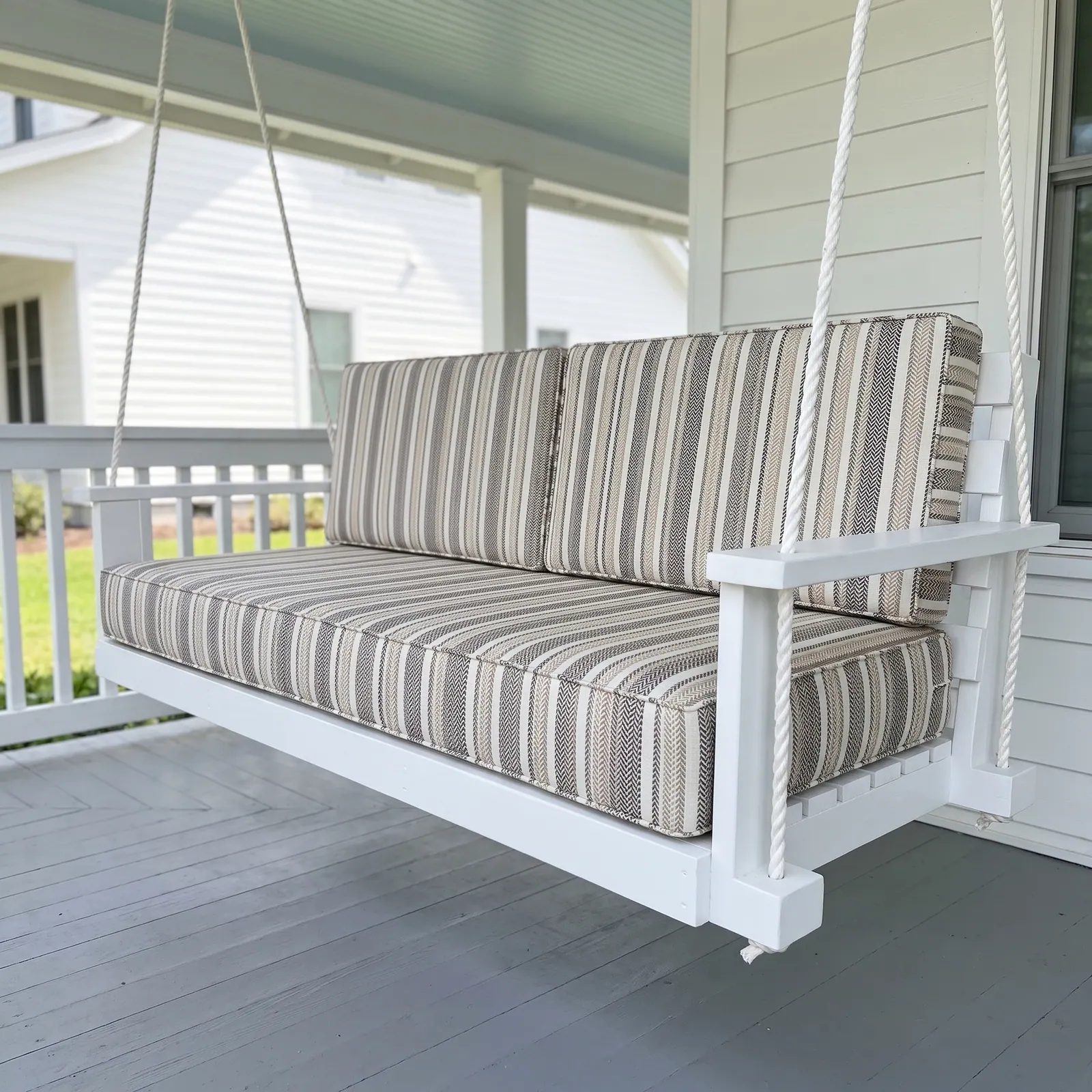
In the kitchen and mudroom, go the other way: mid-tones that hide the season. Oatmeal, taupe, olive stripe and denim blue forgive a muddy paw better than cream ever will. The photo up top, an olive-and-cream stripe on a knotty pine mudroom bench, is a fine model. On the porch, stay with outdoor fabric; a gray, taupe and ivory stripe on a white swing never looks out of place in an Iowa yard.
What wood is your bench made of, my friend? Start the color there.
Build an Iowa cushion for the whole year: firm foam, a tight weave and a zipper, because August and January will each take their turn.
Harlan
Buyer questions: dogs, corduroy and cushions that last
- A common question
Our entry bench is right by the door where our two big dogs go in and out. What fabric should we use?
The workshop's answerFor a busy entry with dogs, the workshop recommended outdoor fabric as the rugged choice, even indoors, and pointed to the outdoor listing for the full color range.
- A common question
Is your velvet a performance velvet that's easy to clean with kids around?
The workshop's answerYes. It's a 100% polyester performance velvet with good stain resistance and durability. Spot-clean or wipe quick messes, and machine wash the covers at 86°F (30°C) for a deeper clean.
- A common question
Is your foam high density? I don't want a saggy cushion.
The workshop's answerYes. The standard foam is 32 kg/m³ high-density, long-life foam that's genuinely firm and holds its shape under daily use, so there's no upgrade to pay for. It's wrapped in a polyester fiber layer before it goes into the cover, for a fuller, softer finish.
- A common question
Our corduroy cushions arrived with crushed lines from shipping. Will they go away?
The workshop's answerYes. The packing lines fade once the cushions have fully expanded, which can take a couple of days.
- A common question
Can I add a matching back cushion to my window seat later?
The workshop's answerYes. A returning buyer added a back cushion 90 in long, 11 in high and 3 in deep (229 x 28 x 7.5 cm) in the same corduroy through a custom payment link. Just give the original fabric code.

Have it made
Have it made for your home — ask Harlan’s workshop
Old upholsterers will tell you the real cutting happens in the conversation, long before the shears come out. Tell the workshop what you sit on, and they will talk it through with you. — Harlan
Leave your details and the workshop will call you to confirm measurements, fabric, foam and piping. No prices, dates or payment on this page: it is a request, not an order.
Iowa questions, answered at the bench
Can Iowa porch swing cushions stay out all winter?
No. Des Moines averages about 134 nights a year at or below 32°F (0°C) and Waterloo about 154. Water in foam freezes and thaws without drying, and the foam isn't quick-dry, so store porch cushions clean, dry and off concrete from the first freeze to spring.
What's the best fabric for an Iowa mudroom bench?
Something that shrugs off wet boots: outdoor fabric or a wipe-clean performance weave in a mid-tone, with a non-slip base on a smooth top. Save velvet and corduroy for the parlor and the reading nook, where nothing drips on them.
Is corduroy a good choice for a farmhouse window seat?
Yes, for a reading seat or a parlor window. It's warm to sit on in winter and its ribs hide wear. On a kitchen bench used at every meal, choose velvet or a soft performance weave instead, because corduroy ribs can split under hard daily use.
How do I pick the thickness for a farmhouse bench cushion?
Start from the seat height you want and subtract the bench height. One buyer's mudroom niche was 15 in (38 cm) high and they wanted to sit at 18 in (46 cm), so the cushion was 3 in (7.5 cm). Beside a dining table, 2 to 3 in usually leaves room for knees.
Sit well. — Harlan
The atelier
Keep going
Across the Map
Nearby places
Close by on the map