California asks two different things of a cushion. On the coast it is fog and marine damp; inland it is a sun that works on anything left out from April to October. This is how I read the light, the patio and the glass wall before I choose a single color.
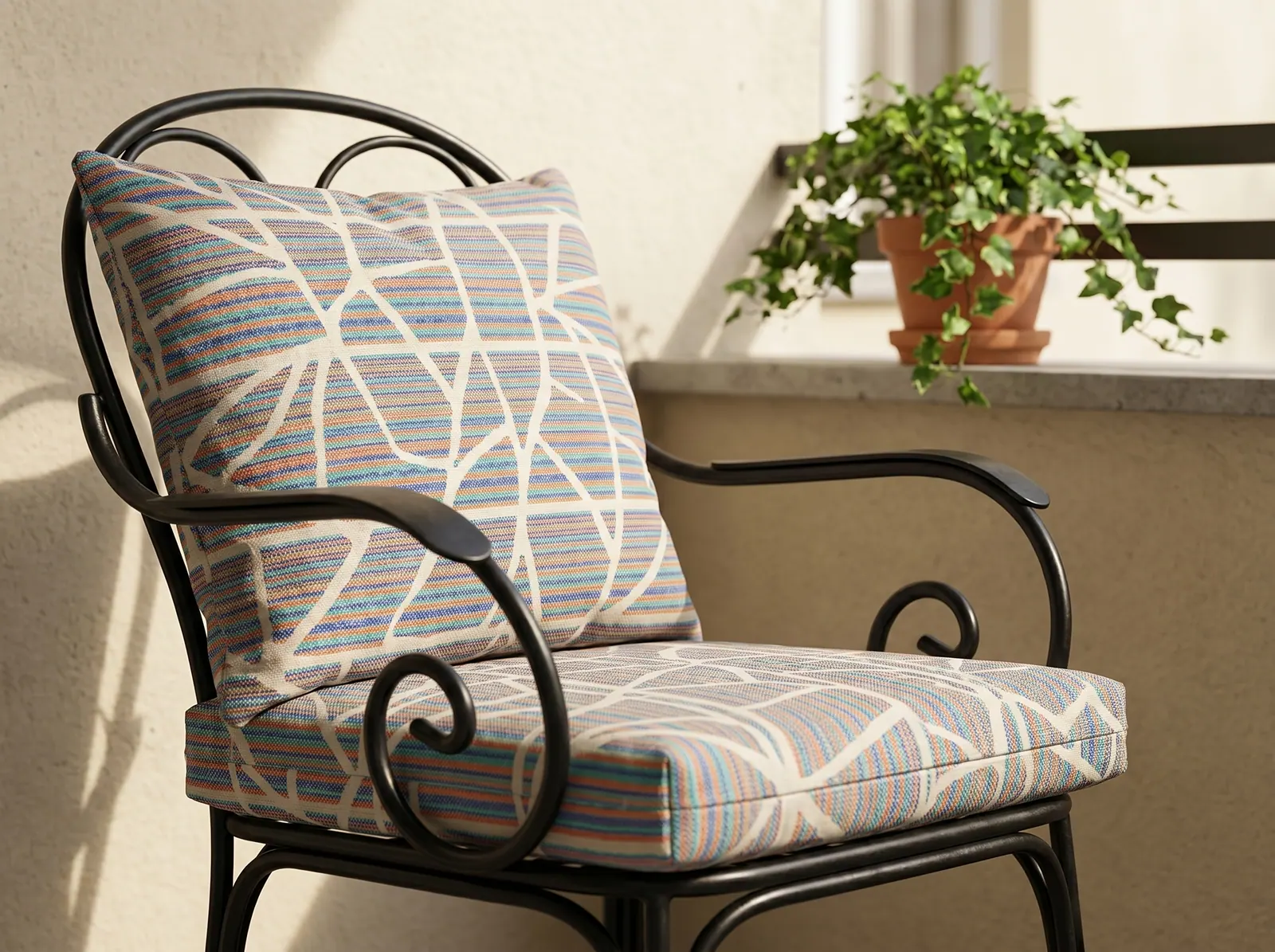
SavePastel stripes crossed with white branch lines cushion a scrolled black iron armchair on a sunny balcony.
The quick answer
California outdoor cushions should be cut in UV-resistant, water-repellent outdoor fabric with zippered covers that come off for washing. On the foggy coast, plan for damp; in hot inland valleys, plan for fading. By glass walls, choose color with sunlight in mind even indoors, and bring cushions inside whenever wildfire smoke or ash is forecast.
Field notes
Weather and light in California
Sun & UVIntense (level 4 of 4)Strong sun, longest dry season inland
HumidityDry inland, damp coast (level 1 of 4)Marine layer and fog along the coast
Rain & stormsLight (level 1 of 4)Rain mostly in winter
Snow & freezeRare (level 1 of 4)Snow only in the mountains
Watch for
Dry-season fading
Coastal fog
Fire-pit smoke and sparks
Plain-language levels from general climate patterns, not measurements. Your own porch, shade and window exposure matter more.
Two climates in one state: marine fog and valley sun
San Francisco sees about 2 days a year at 90°F (32°C) or above. Sacramento sees about 75. That gap is the whole story of California cushions.
On the coast, marine air keeps things damp: San Francisco mornings average about 87% humidity. Inland the air is dry and the light is hard; Sacramento afternoons in July fall to about 29% humidity, and the sun shines about 77% of the possible hours.
Summer rain barely registers. Los Angeles gets about 14 in (36 cm) a year and only about a quarter of an inch from June through September, so outdoor cushions live outside most of the year. The UV clock runs April to October, with a July noon UV Index near 10.7 in Los Angeles.
Then there is smoke. Fire season runs from late spring to late fall and peaks July to October.
Stucco reveals, Eichler glass and backyard ADUs
Spanish Revival houses set windows deep into thick stucco walls, so the reveal becomes a seat. Mid-century Eichlers, most of them in the Bay Area, open whole walls of glass onto atriums, which puts an indoor bench in direct sun. Craftsman bungalows keep their built-ins, and ranch houses open onto long patios.
Out back come patio sectionals, fire-pit benches, pool loungers that want chaise and sunbed cushions, and mid-century lounge chairs. Inside, ADUs and studios lean on floor sofas and daybeds that sleep a guest one night and seat four the next.
Coast, valley and pool deck: fabric and foam by setting
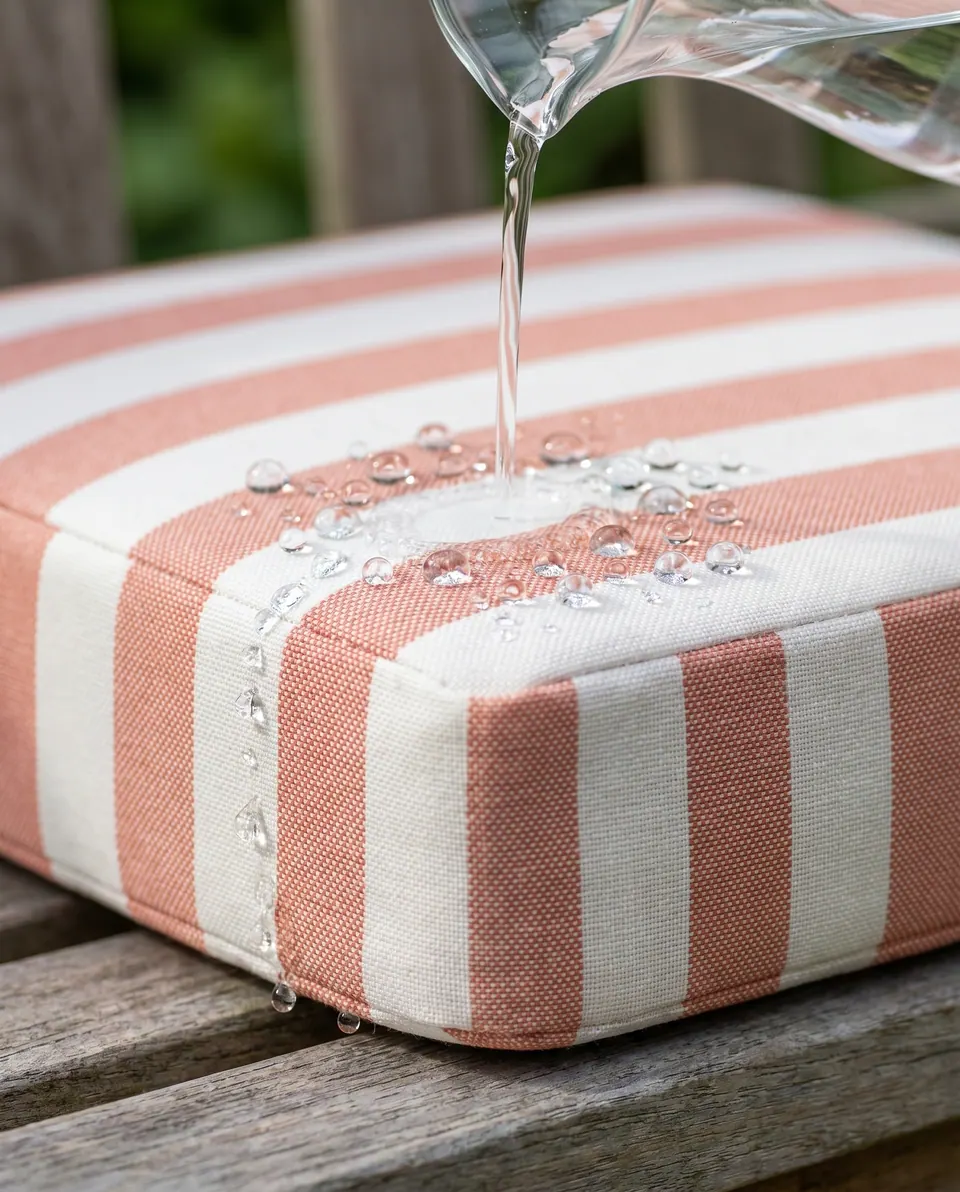
Outdoor fabric here means a UV-resistant, water-repellent woven polyester that feels like cloth, not vinyl. The foam inside is not quick-dry, so a covered spot and a dry closet in the rainy months still matter.
New covers for good foam on an oatmeal outdoor sofa
A buyer in the US had an outdoor sofa whose foam was still sound and asked for new covers only: a boxed, zippered seat cover of 64.75 x 31 x 4 in (164 x 79 x 10 cm) and three back covers, in off-white, ivory or oatmeal. She had a branded acrylic in mind.
The workshop does not carry that brand and said so plainly. Its outdoor fabrics are polyester with water-repellent, UV-resistant finishes, built with double-stitched seams, hidden zippers and self-piping to reinforce the edges. It offered ties rather than hook-and-loop, and asked for photos of the sofa and each back cushion's size before a final quote.
When you order covers for existing foam, give the foam's exact size and ask what the fabric is made of, not only whose name is on it.
Choosing color for a room with a wall of glass
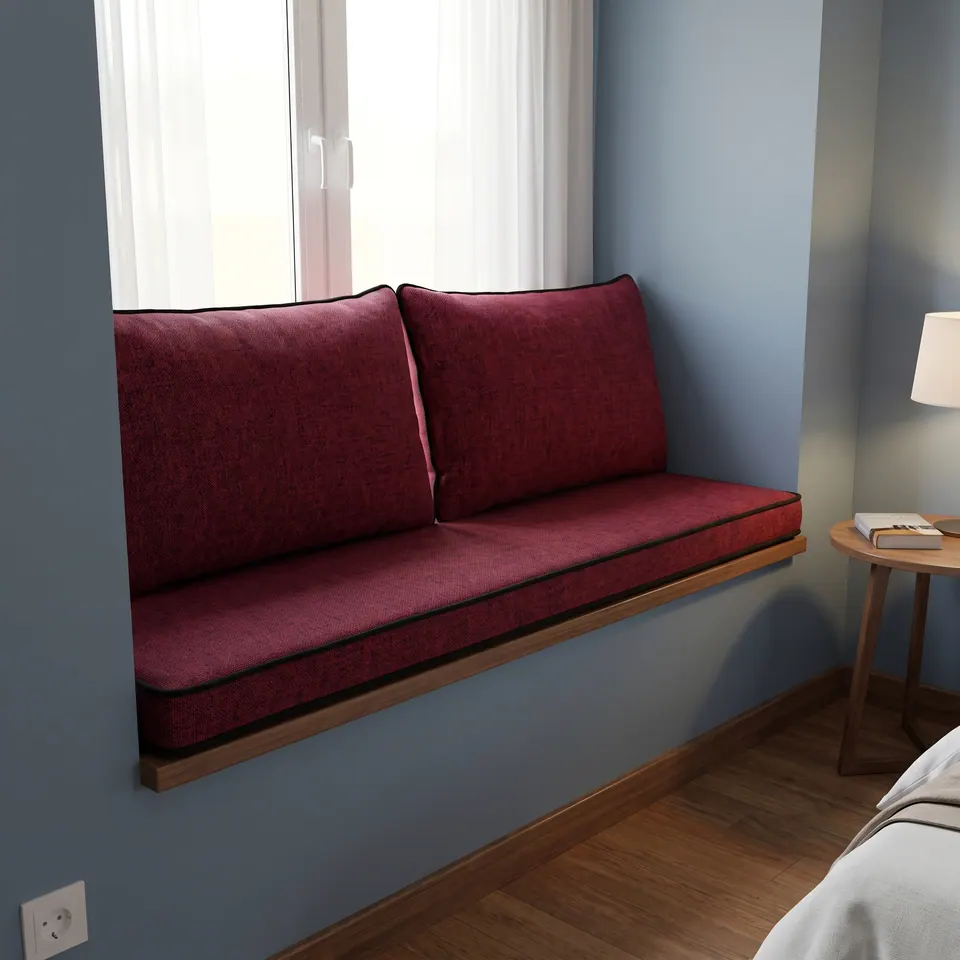
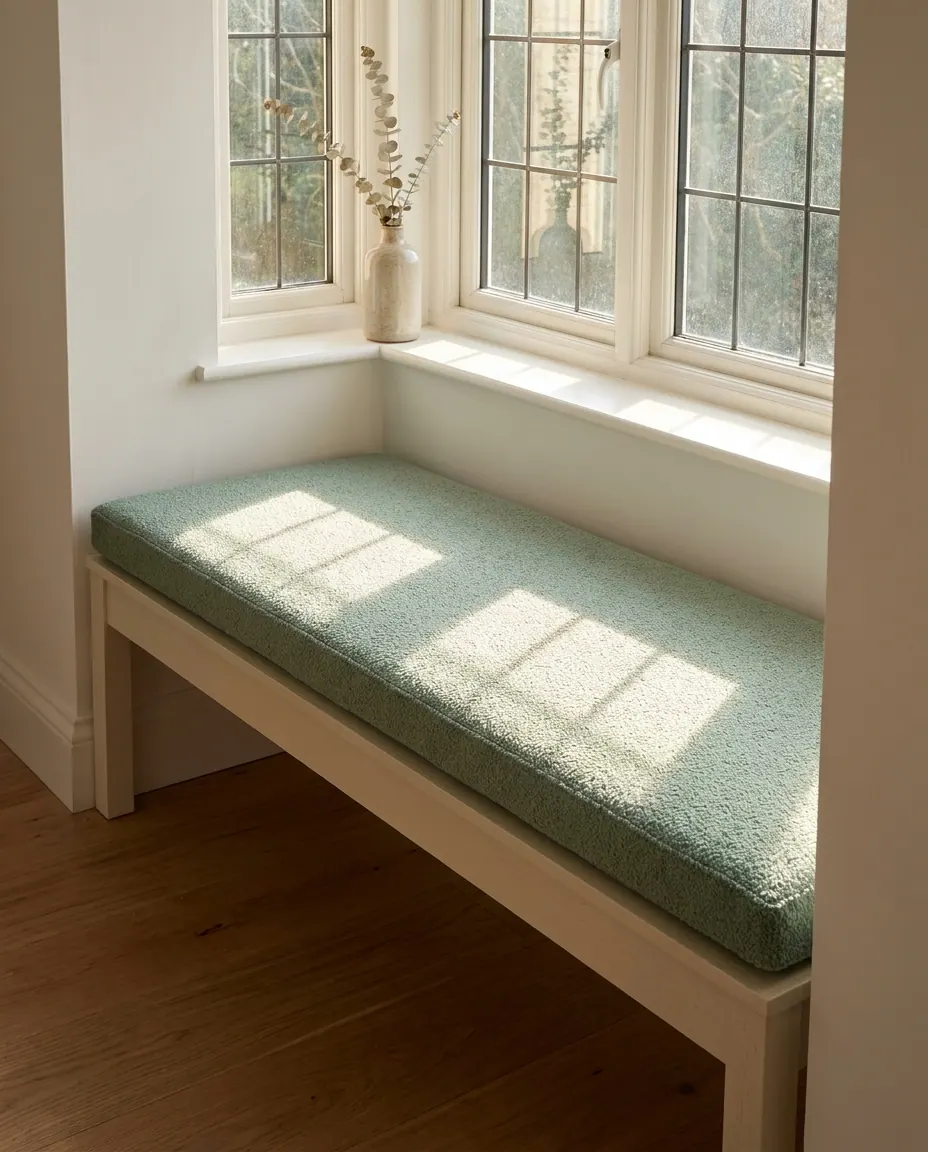
A room with a glass wall is half outdoors, and the cushion knows it. Indoor fabrics have limited UV resistance and can fade in strong, prolonged sun, so by Eichler glass or a west-facing slider I choose colors that age with grace: oatmeal, sand, warm cream, a soft sage. Save jewel tones for walls that see only reflected light. More in window seat fading and sunroom colors that last.
Know your creams, my friends. On the linen chart, L-01 is the whiter option and L-02 a warm natural cream.
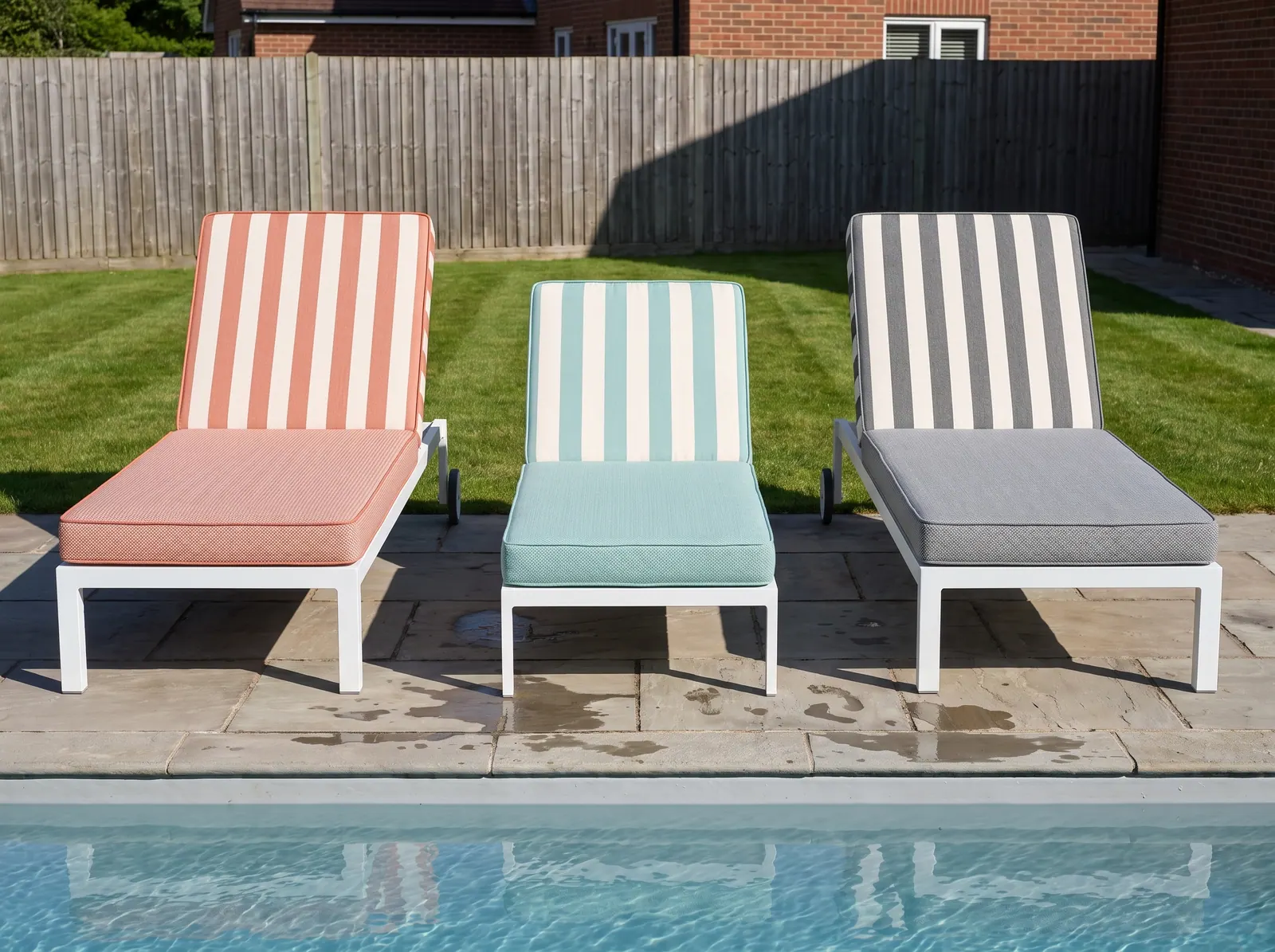
Let one color speak and the others listen. On a pool deck that might be a single coral stripe across three loungers, with sand and gray around it. For natural fibers indoors, start in linen and cotton-linen; for the patio, outdoor fabrics.
Photographs for homes like these
Open any photograph large; each one has its own link and a Save button.
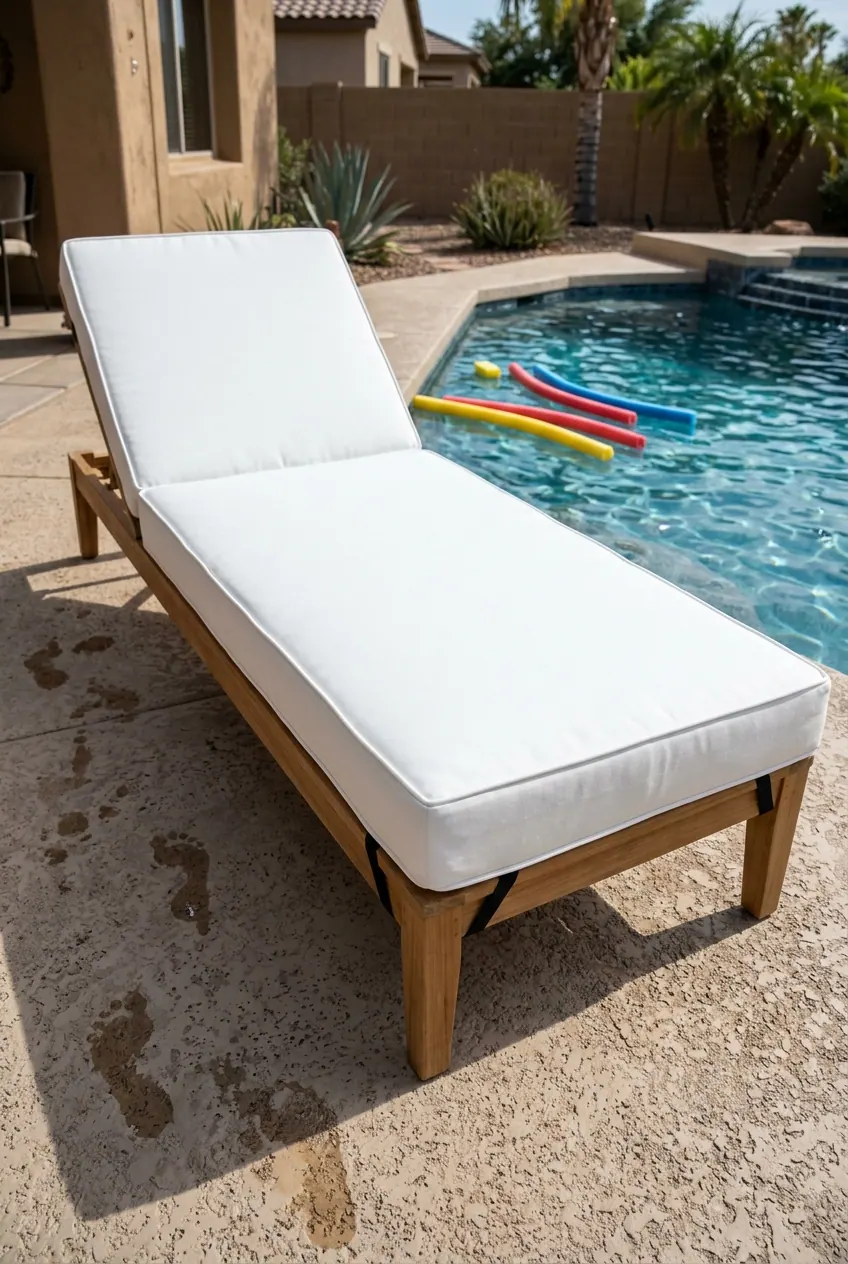
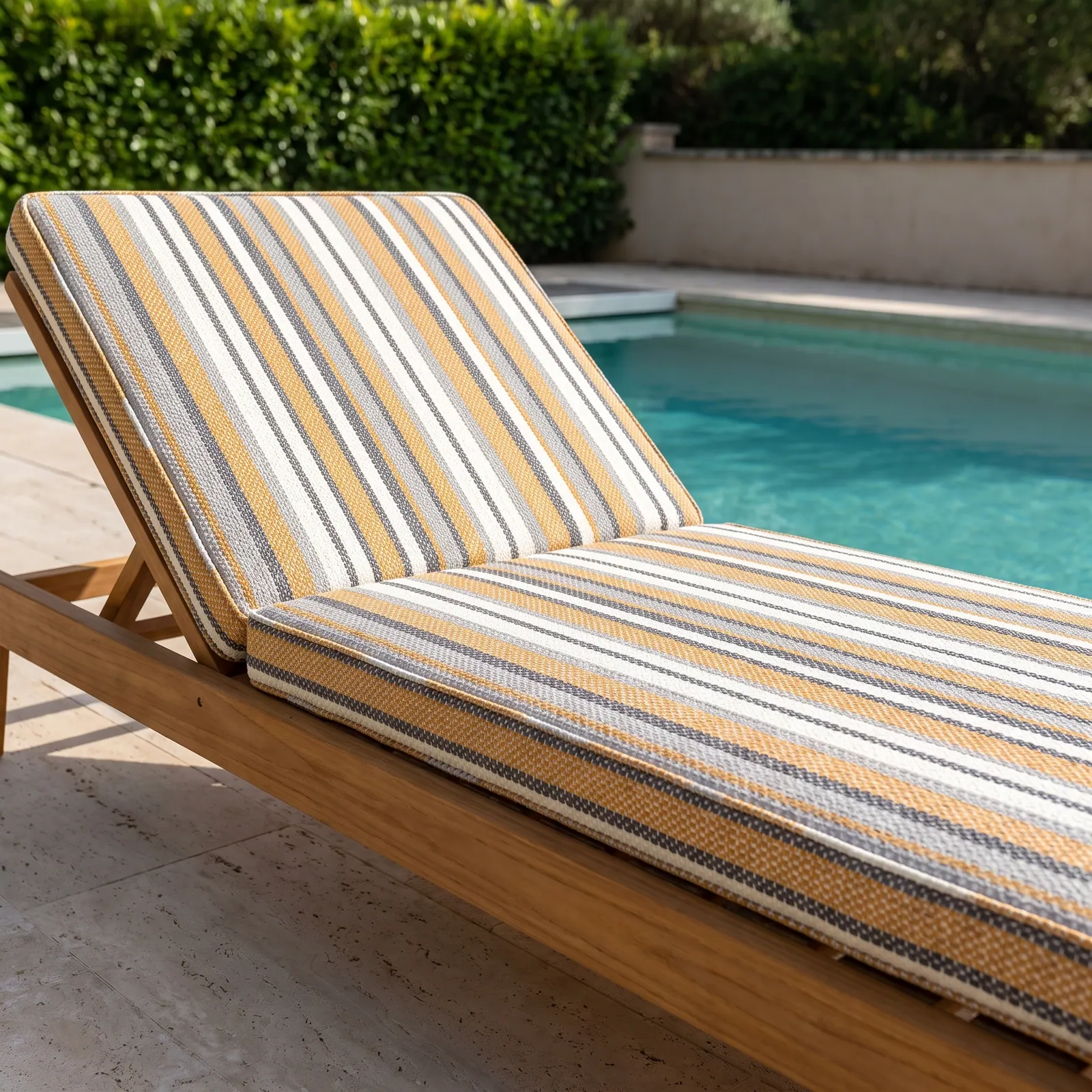
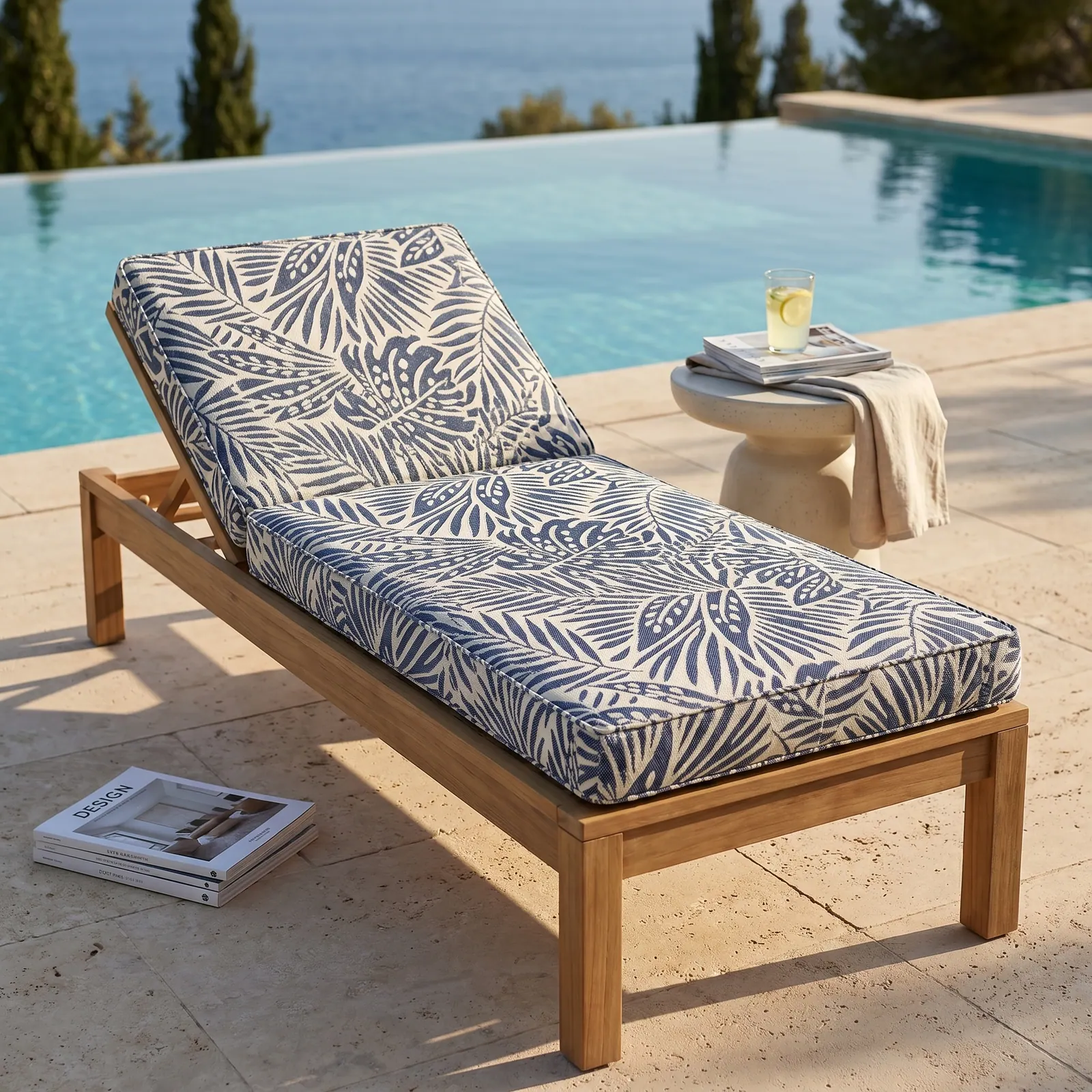
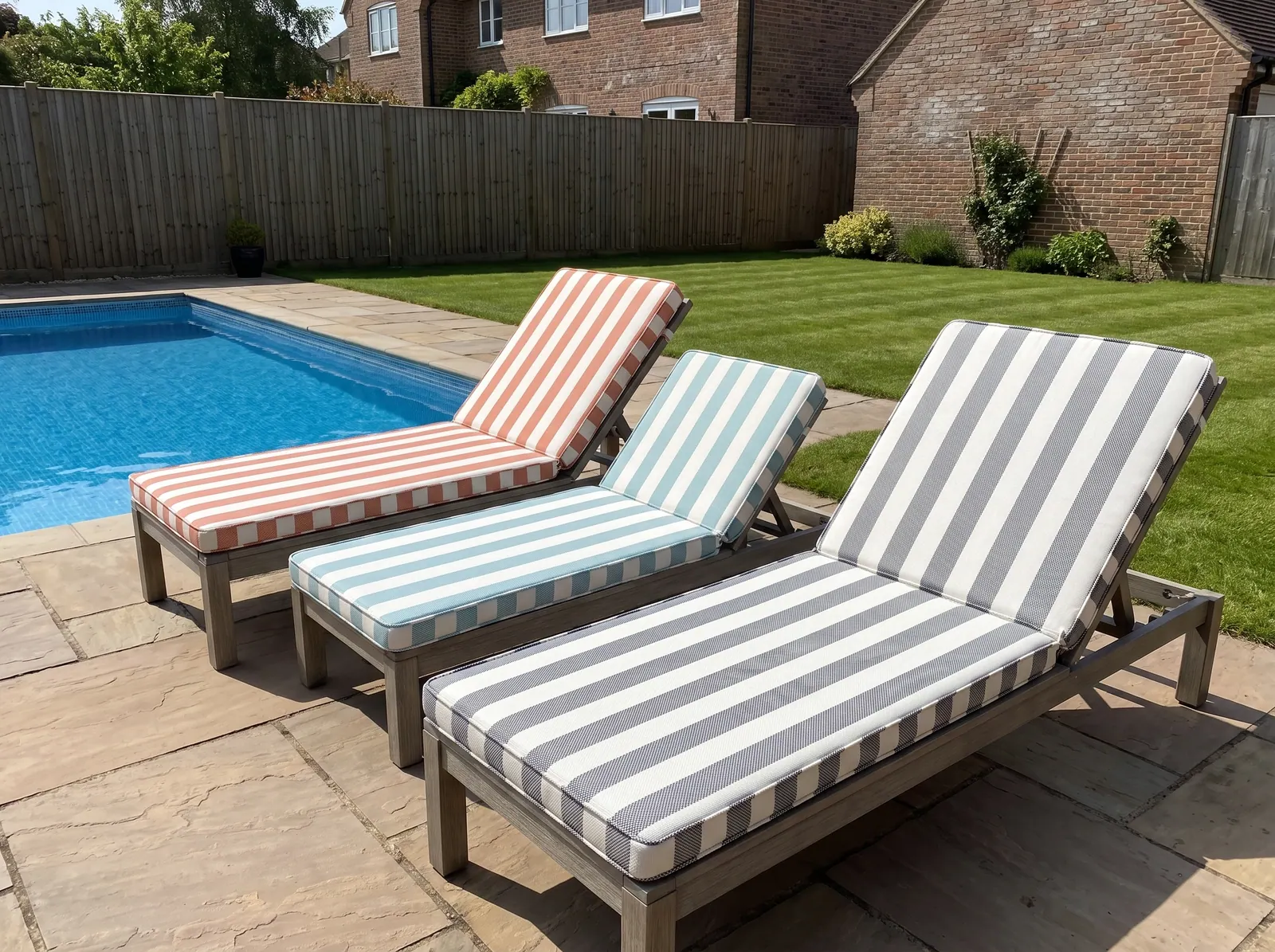
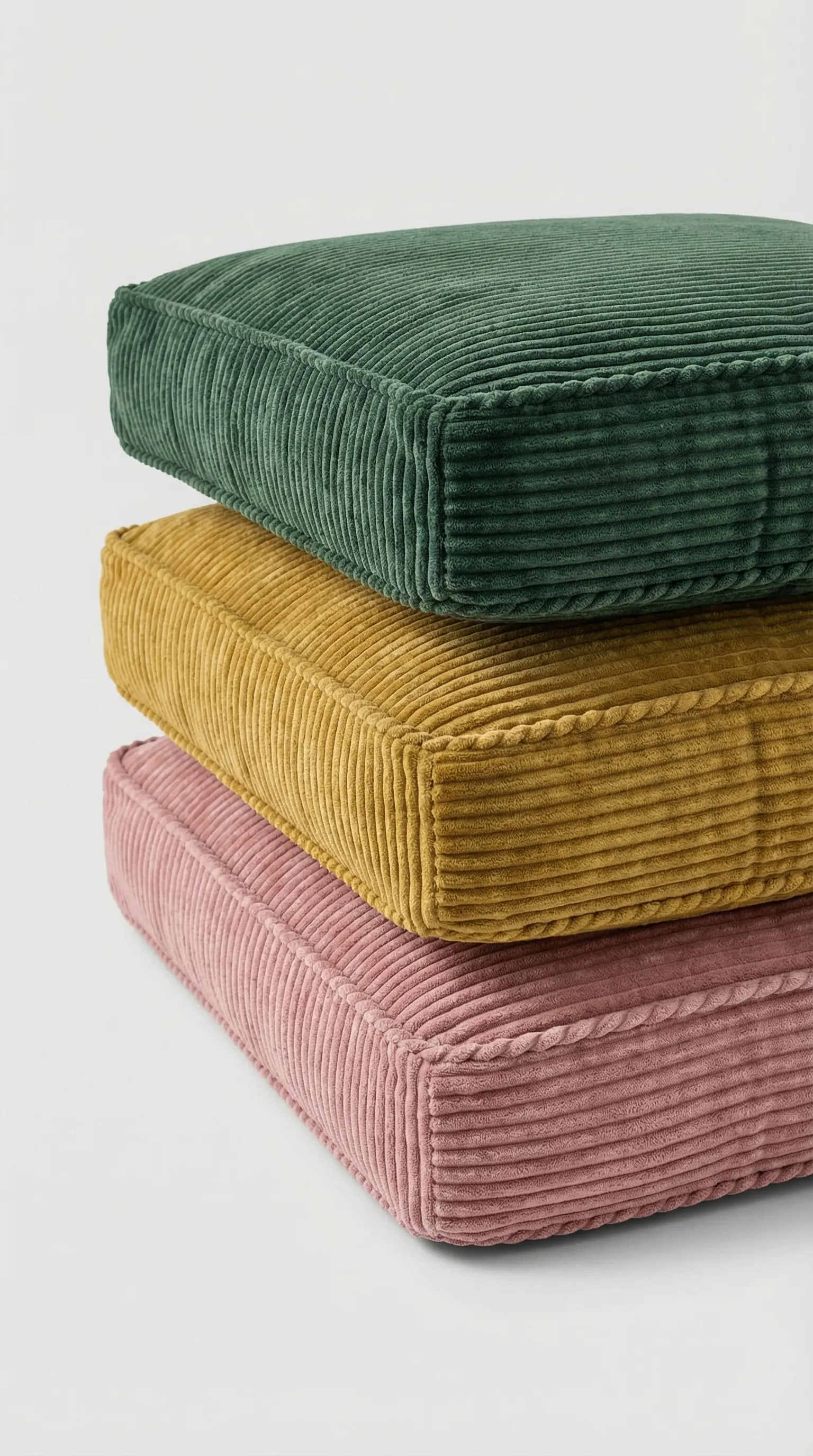
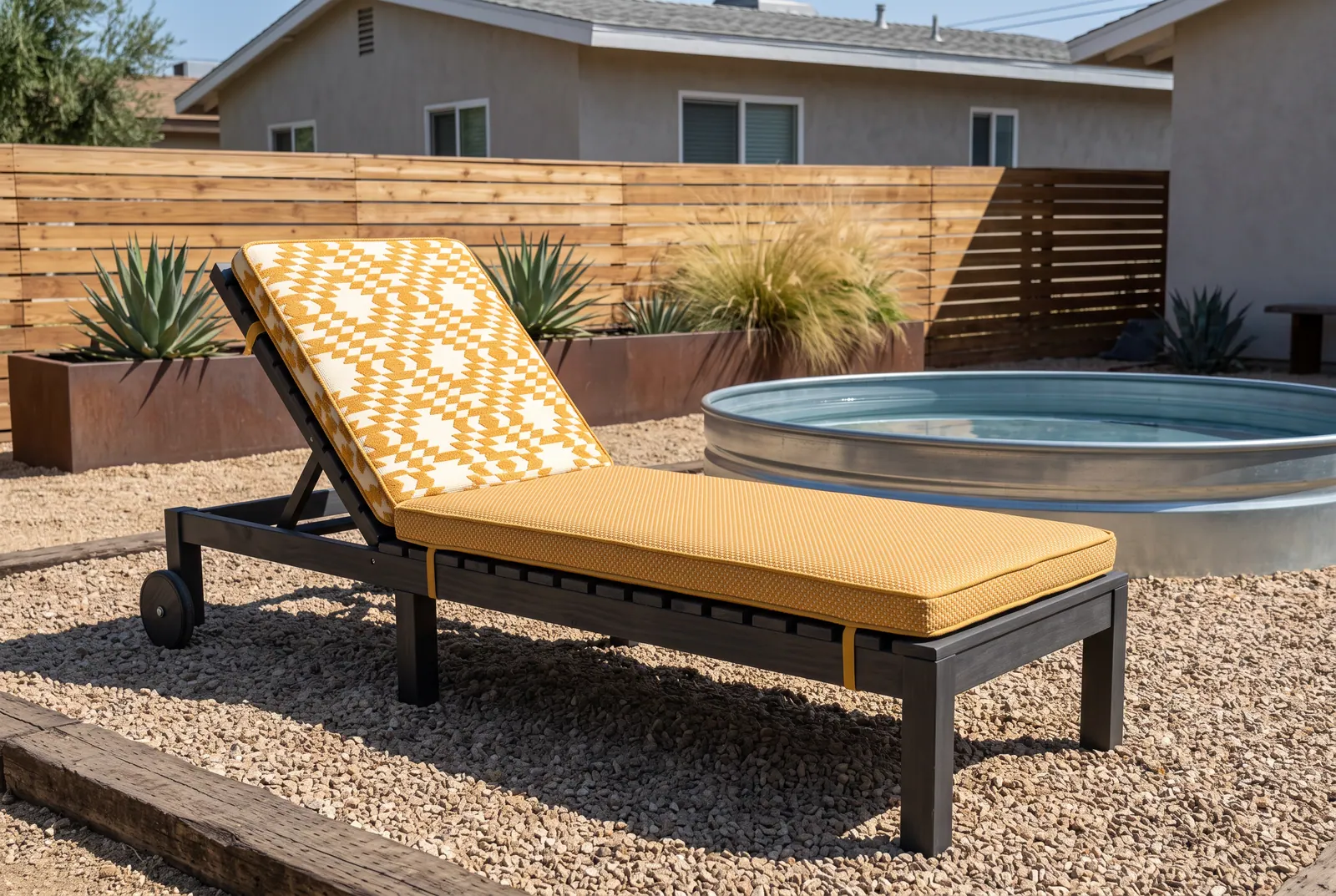
SaveA white two-part chaise cushion, strapped to a teak frame, waits by a family pool in bright desert sun.SaveA two-part lounger cushion in a woven mustard pinstripe, split at the hinge so the back can recline. Teak, travertine and turquoise water do the rest.SaveA two-part lounger cushion in a navy palm-leaf outdoor jacquard, split at the hinge so the backrest can tilt. Navy piping keeps the busy print from blurring at the edges.SaveThree loungers, three colors in the same wide stripe, set on a diagonal beside the pool. Keeping the stripe width the same holds the mix together.SaveOne lounger per family member, the smallest sized for a child: striped backrests carry the color, plain seats keep the trio calm.SaveThree corduroy colors stacked to compare wale, piping and boxed corners side by side.SaveMustard picks up the dry grasses around a stock-tank pool, with a patterned backrest and a plain textured seat.
A California cushion calendar, coast to valley
March: before patio season, unzip the covers, wash them and let them dry fully before the foam goes back in.
April to October: the UV clock is running. Rotate cushions so one face does not take all the sun.
Coastal summer: when fog rolls in overnight, stand cushions on edge under cover.
July to October: bring cushions in whenever smoke or ash is forecast.
After ash falls: hose furniture down gently and wash removable covers instead of brushing ash into the air.
Rainy months, roughly December to March: store cushions dry and off concrete, never in a damp sealed bag.
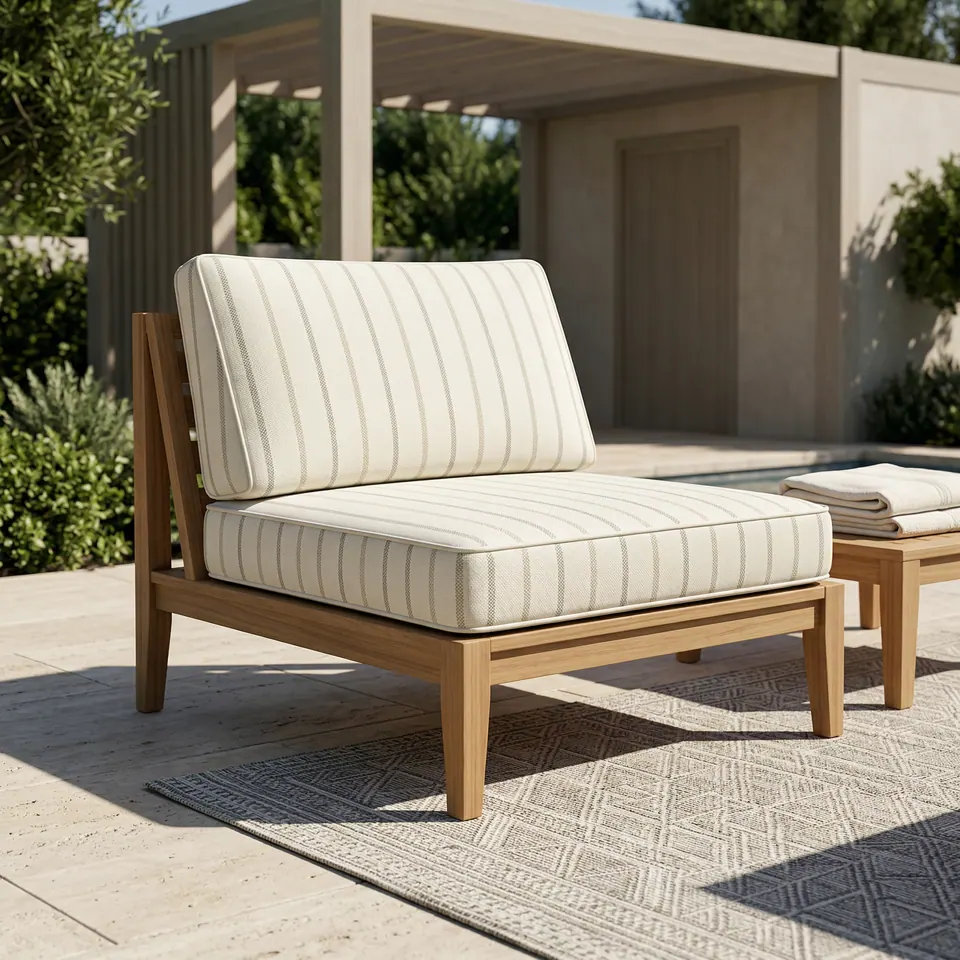
On a California patio the UV clock runs April to October. Outdoor-rated fabric with a zippered cover takes that sun; indoor linen behind a sunny glass wall can still fade.
Is the floor sofa treated with flame retardants, and does it carry a California Prop 65 warning?
The workshop's answer
The workshop's answer: its fabrics come from a mill certified to OEKO-TEX Standard 100 (03.T.3239), and it shares the certificate on request. It has also told US buyers its fabrics are not treated with flame retardants. For what a Prop 65 warning actually says, see our Prop 65 notes, and read the label on whatever you buy.
A common question
Can you make a 4 in seat for my mid-century lounge chair? It's a little wider at the front than the back.
The workshop's answer
Yes. A 4 in (10 cm) non-tufted trapezoid seat, 23 in (58 cm) at the front, 22 in (56 cm) at the back and 24 in (61 cm) deep, with the zipper at the back, goes through the trapezoid listing; a 22 x 19 x 3 in back cushion goes through the rectangle listing. Write 'reversible' so no non-slip base is added.
A common question
Would your 39 x 78 in sofa fit on a king-size tatami platform in my studio?
The workshop's answer
The sofa measures 39 x 78 in (99 x 198 cm), and its seat cushions laid side by side make roughly a king-size bed. Measure the room with your furniture in place before you commit; this buyer waited until moving in to check.
A common question
Are your outdoor cushions waterproof, or only water resistant?
The workshop's answer
They come from a separate water-repellent outdoor range. In practice it is water-resistant rather than a sealed, coated material: it handles showers and spills well. Store the cushions indoors during long off-season stretches.
Have it made
Have it made for your home — ask Élodie’s workshop
A fabric reads one way at noon and another at dusk. Mention your light, and the workshop will weigh it with you. — Élodie
Leave your details and the workshop will call you to confirm measurements, fabric, foam and piping. No prices, dates or payment on this page: it is a request, not an order.
Questions buyers ask next
Do California patio cushions need to come in for winter?
Not for frost on the coast: Los Angeles, San Diego and San Francisco average 0 freezing days a year. The reason to store them is rain, most of which falls December to March in Los Angeles. Keep them dry and off concrete.
Will a cushion fade behind Eichler-style glass walls?
It can. Indoor fabrics have limited UV resistance and can fade in strong, prolonged sun. Choose softer colors there, or use the outdoor range, which is UV- and fade-resistant and works indoors too.
What should I do with patio cushions during a wildfire smoke event?
Bring them inside when smoke or ash is forecast. Afterward, public-health guidance is to hose patio furniture down gently so ash does not go airborne, wearing gloves and an N95. Then wash the zippered covers.
How do I measure a curved fire-pit bench for cushions?
Give both curves, the depth at several points and the straight distance end to end at the front and back. One US bench with a 245 in (622 cm) outer curve was cut into 4 symmetrical segments, 3 in (7.5 cm) thick.

 Save
 Save
 Save
 Save
 Save
 Save
 Save
 Save