 Save
A Reading by ÉlodieBench Cushions
Blush pink and wine red: reading the box edge on a custom bench cushion
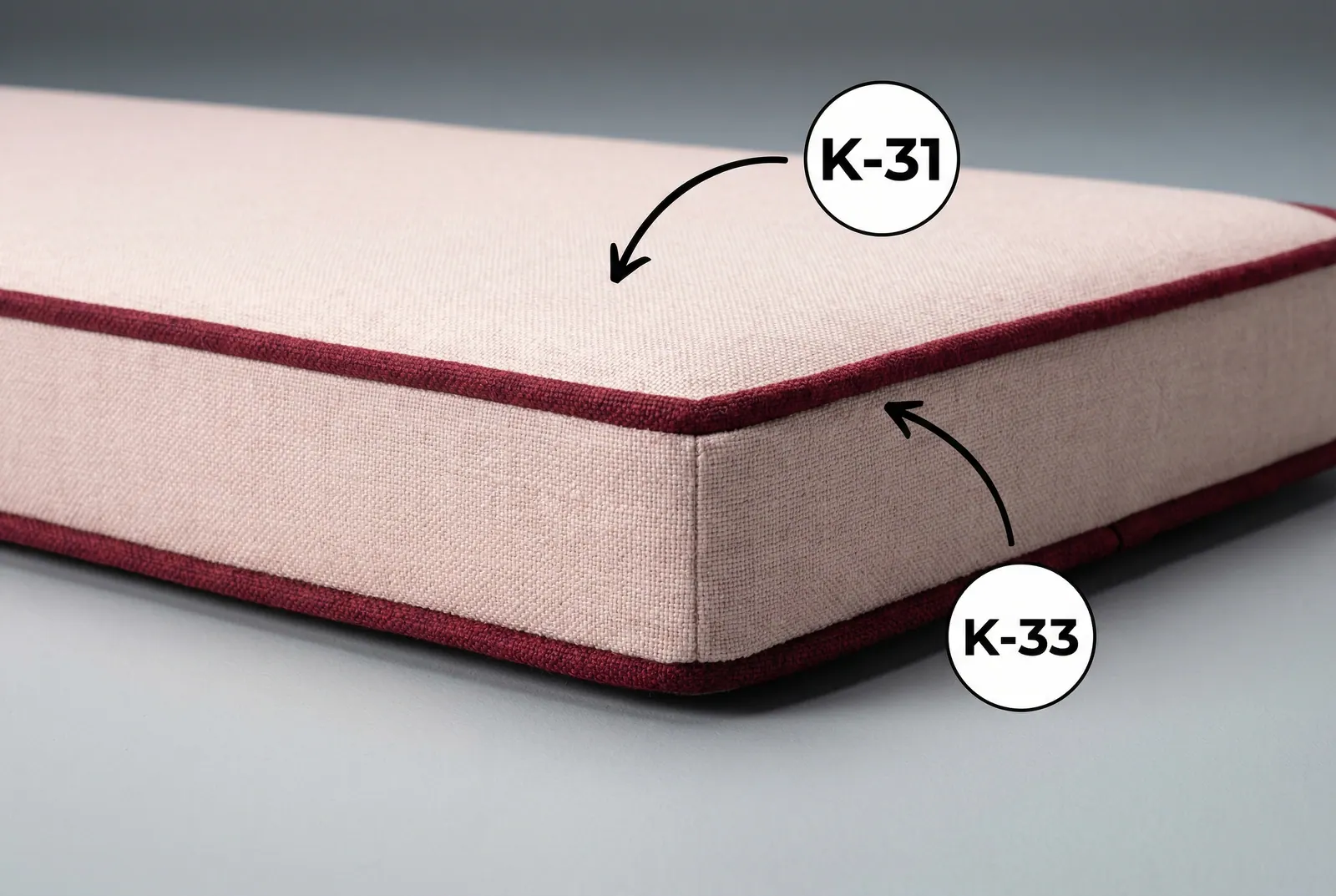
A pale tint and a deep shade of the same rose, and a side wall tall enough to say what kind of seat this is.
Swatch strip measured from the photograph
- mist#c8c0c031%
- slate#55444822%
- stone#948c8d20%
- cream#f1e4df16%
- mist#d7cfcf11%
The quick answer
Blush pink with wine red piping works because both sit in the same rose family: the piping outlines the box edge without clashing. The tall side wall marks this as a deep bench or daybed cushion rather than a thin chair pad. Pale pink shows marks on the top first, so place it on a low-traffic reading seat.
Swatch strip: one rose, two voices
- Blush pink#E8C4C0The body. A pale tint that stays calm against a cool wall.
- Wine red#6E1F2BThe same rose taken deep. It draws the box edge, top and bottom.
- Studio gray#B9BBBDThe cool backdrop that makes blush read a little warmer.
- Sky blue#A7C7E7Try it as a body with navy piping: the same trick, a cooler room.
- Navy#1F2A44The deep partner for sky blue, as wine is for blush.
Pinned by Élodie: four marks on the blush corner
Four pins trace the box edge, from the pale top to the cord lying flat along the base.
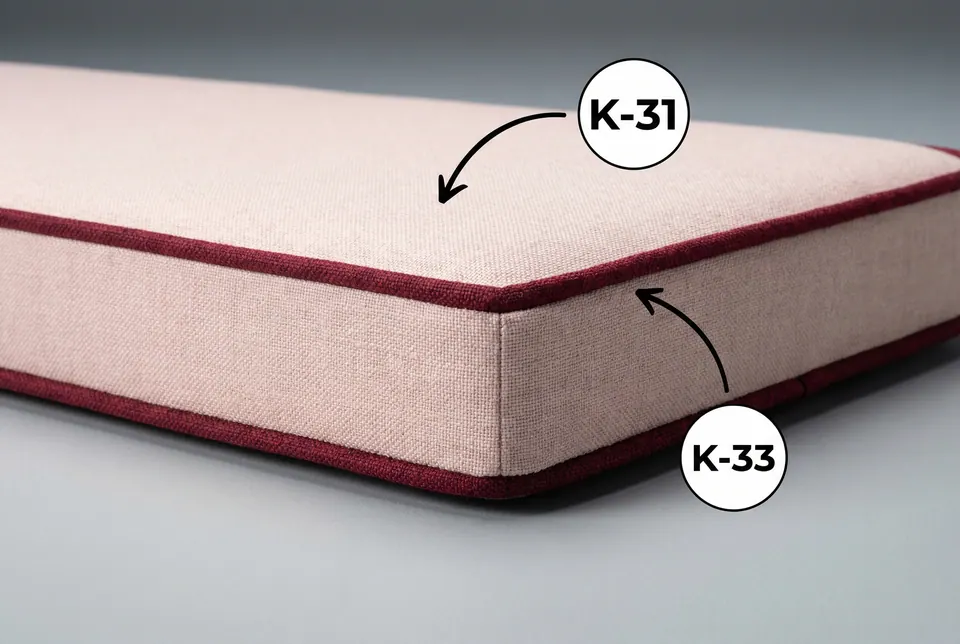
- Blush pink seat
Pale pink shows wear on the top first, so it suits low-traffic seats.
- Wine piping corner
A deep shade of the body's own hue outlines the box without a clash.
- Deep side wall
This wall height points to a deep bench or daybed seat, not a thin chair pad.
- Bottom cord line
The lower cord lies flat along the base, so the cushion sits square on the bench.
- Blush pink seatPale pink shows wear on the top first, so it suits low-traffic seats.
- Wine piping cornerA deep shade of the body's own hue outlines the box without a clash.
- Deep side wallThis wall height points to a deep bench or daybed seat, not a thin chair pad.
- Bottom cord lineThe lower cord lies flat along the base, so the cushion sits square on the bench.
What a box edge says that a knife edge can't
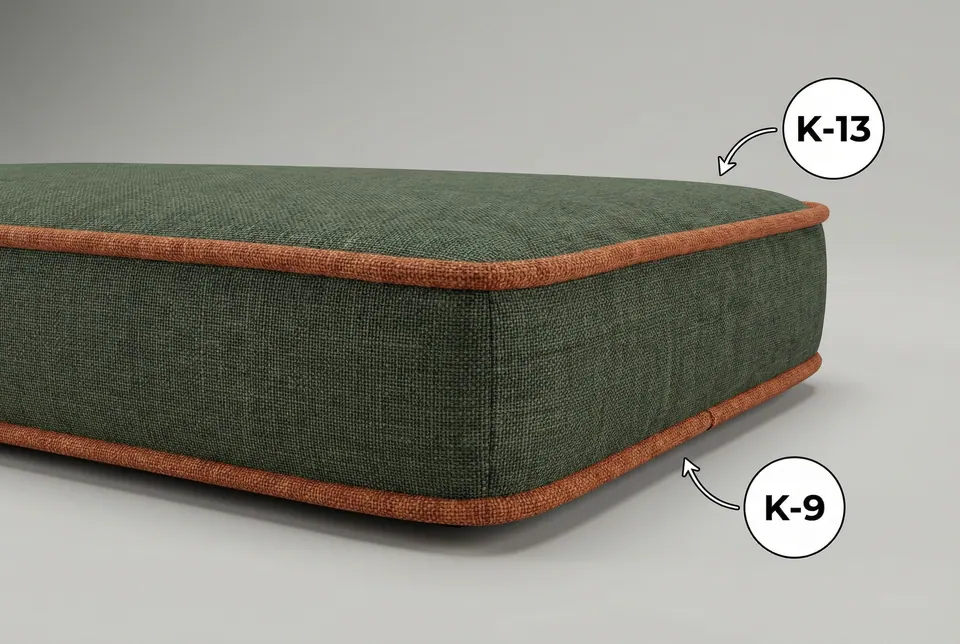
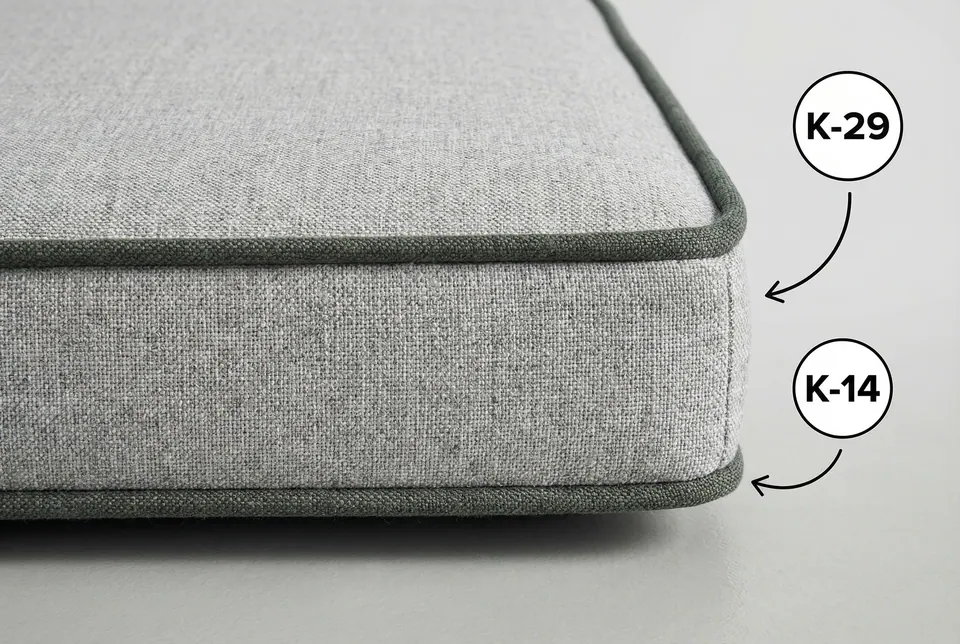
Look at the corner before the color, my friends. This is a box cushion: a flat top, a flat bottom and a side wall sewn between them, with piping at both seams. A knife edge would pinch top and bottom into one seam and taper toward it, softer and thinner at the rim. A box edge keeps its full height right to the corner, which is why the wine cord can draw two parallel lines here, one above and one below. The lower cord lies flat along the base, so the cushion sits square.
That side wall is tall, tall enough that this belongs on a deep bench or a daybed, not a dining chair. On a custom bench cushion, wall height is the first thing the eye measures from across a room. The corners are square, which suits built-in benches that meet walls; a rounded corner softens an open end, and an angled one belongs to a bay. The box edge versus knife edge Pattern lays the choices side by side.
Now the color. Pale tint, deep shade, same hue: it is the safest road to contrast piping. White piping on blush would look like candy wrapping; black would cut the cushion in half. The weave is a linen-look fabric with a soft slub, and in diffused light the blush turns warmer than it may look on a phone. Daylight never lies; your screen sometimes does.
One caution. Light pinks show marks on the top first. Give this pairing a bedroom window seat or a reading corner, and give the kitchen banquette something deeper. Where would a blush seat live in your house?
A seat and a back that were never the same size
A buyer wrote to the workshop about a built-in seat with a separate back cushion, both 4.5 in (11.4 cm) thick and both piped in linen. The seat measured 15.5 x 33 in (39 x 84 cm). The back measured 21 x 33.5 in (53 x 85 cm).
Look at those numbers again. The back is wider than the seat by 5.5 in (14 cm). People assume a back cushion is a copy of the seat, and it rarely is. The shop measured and priced them as two separate pieces, which is exactly right.
When you plan a box cushion with a backrest, draw both. Give each its own width, length and thickness, and name the piping for each.
Buyer questions: codes, off-menu sizes and cost
- A common question
What exactly do I write in the personalization box when I order?
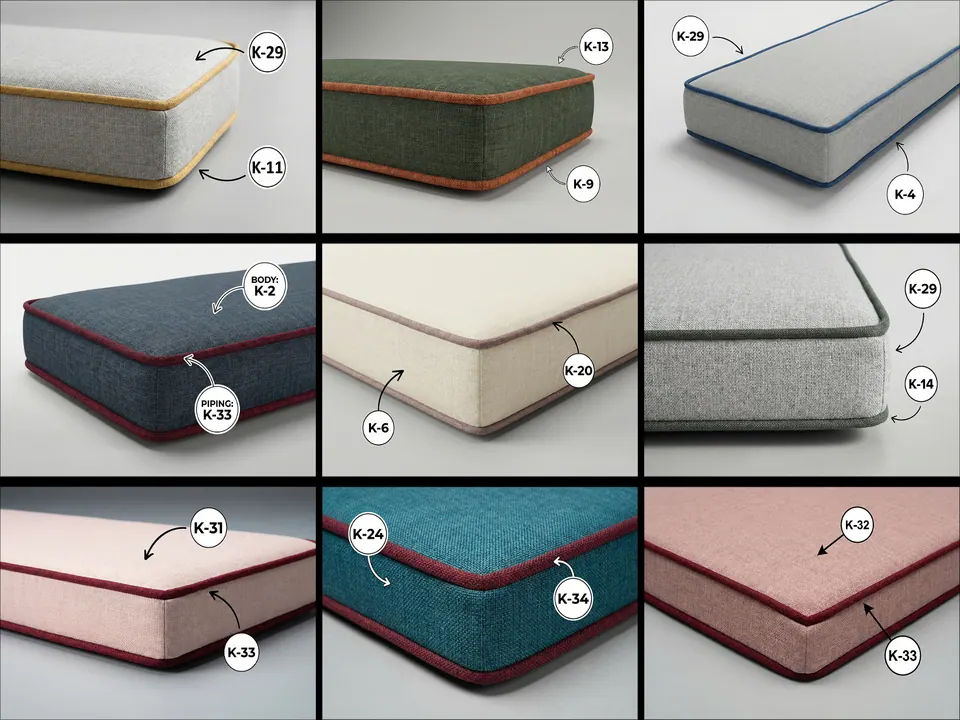
The workshop's answerYour exact size (width x length), the thickness, the main fabric code and the piping code, or 'same piping' or 'no piping', plus notes such as ties or 'backrest'. A color name like 'deep red' isn't enough; the shop needs the chart code. If your exact size doesn't match the size range you bought, the shop pauses and asks you to confirm before production.
- A common question
Can you make a bench cushion in a size that isn't in the dropdown?
The workshop's answerYes. Pick the closest size option, usually the next one up, and write your exact dimensions in the personalization or notes box. The cushion is made to your numbers, not the option's. A 22.5 x 36 in (57 x 91 cm) cushion is ordered through the 24 x 36 in option, and a 38 x 17.5 in one through 18 x 40 in.
- A common question
Roughly what does a custom bench cushion cost?
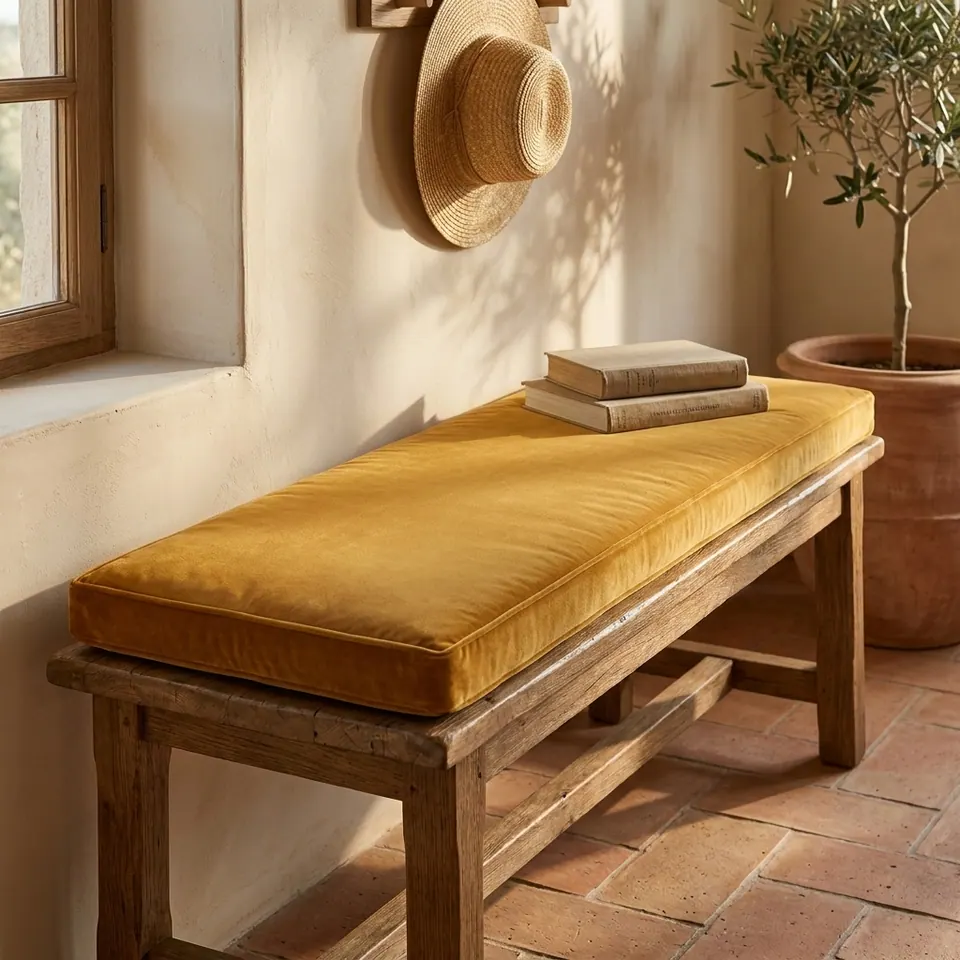
The workshop's answerIt scales with size, thickness and fabric. A 41.5 x 13 x 2 in (105 x 33 x 5 cm) cushion sits near the low end, while a 98 x 22 x 4 in (249 x 56 x 10 cm) velvet seat or a long corduroy pair costs considerably more. The shop quotes each size individually.
On the cutting table: blush with a wine edge
| Product | Box bench cushion, made to measure |
|---|---|
| Body fabric | Linen-look weave, blush pink |
| Piping | Contrast piping in wine red, top and bottom seams |
| Edge | Box edge with a tall side wall |
| Corners | Square |
| Best for | Deep benches, daybeds, bedroom window seats |
| Think twice | Pale pink on a busy kitchen banquette |
Have it made
Have this made — ask Élodie’s workshop
Color is easier to settle in a conversation than on a screen. Tell the workshop about the room and the light it gets, and the fabric choice follows. — Élodie
Leave your details and the workshop will call you to confirm measurements, fabric, foam and piping. No prices, dates or payment on this page: it is a request, not an order.
For contrast piping that never clashes, pair a pale tint with a deep shade of the same hue: blush with wine red, sky blue with navy.
Élodie
Questions buyers ask next
What is the difference between a box edge and a knife edge cushion?
A box edge has a separate side wall between top and bottom, so the cushion keeps its full height to the corner and can carry piping on both seams. A knife edge joins top and bottom in one seam and tapers thinner at the rim.
Does pale pink fabric suit a kitchen bench?
Pale pinks show marks on the top first, so they are happier on low-traffic seats like a bedroom window seat or a reading corner. For a busy kitchen banquette, a deeper shade hides everyday wear for longer.
How do I choose a piping color that won't clash?
The calmest contrast is a deep shade of the body's own hue, like wine red on blush or navy on sky blue. It defines the box edge without a fight. White or black piping on a pale color draws a much harder line.
Should a back cushion be the same size as the seat cushion?
Rarely. On one built-in seat the back was 21 x 33.5 in against a 15.5 x 33 in seat, both 4.5 in thick. Measure and order each piece on its own numbers, with its own piping noted.
With color and care — Élodie