CushionGuide

A Reading by ÉlodieBench Cushions

One ivory bench cushion, one brick-red line, and a sunroom made over

Élodie reads a white bench by French doors before and after its cushion, and shows how one piping color borrowed from the floor can finish a whole room.

The quick answer

To make one custom bench cushion finish a room, take the piping color from the floor or rug and keep the body pale. In this sunroom, an ivory linen-look cushion with brick-red piping repeats the terracotta tiles and rust runner, so the white storage bench looks planned rather than bought. The same move suits any bench near a strong floor color.

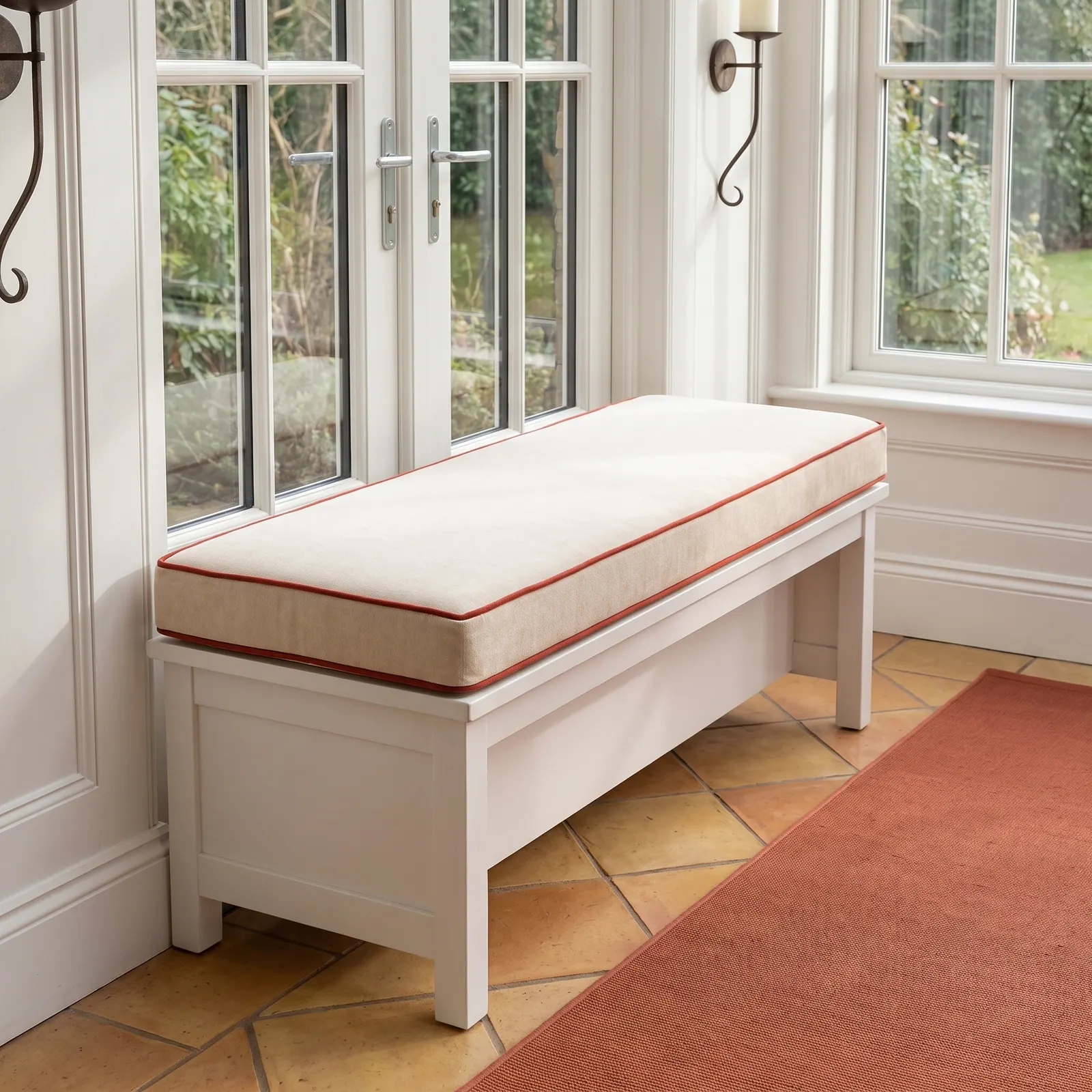
Ivory cushion with brick-red piping on a white storage bench by French doors, terracotta tiles and rust rugSave
In a garden room with terracotta floors, a pale cushion edged in brick red pulls the tile color up onto the bench.
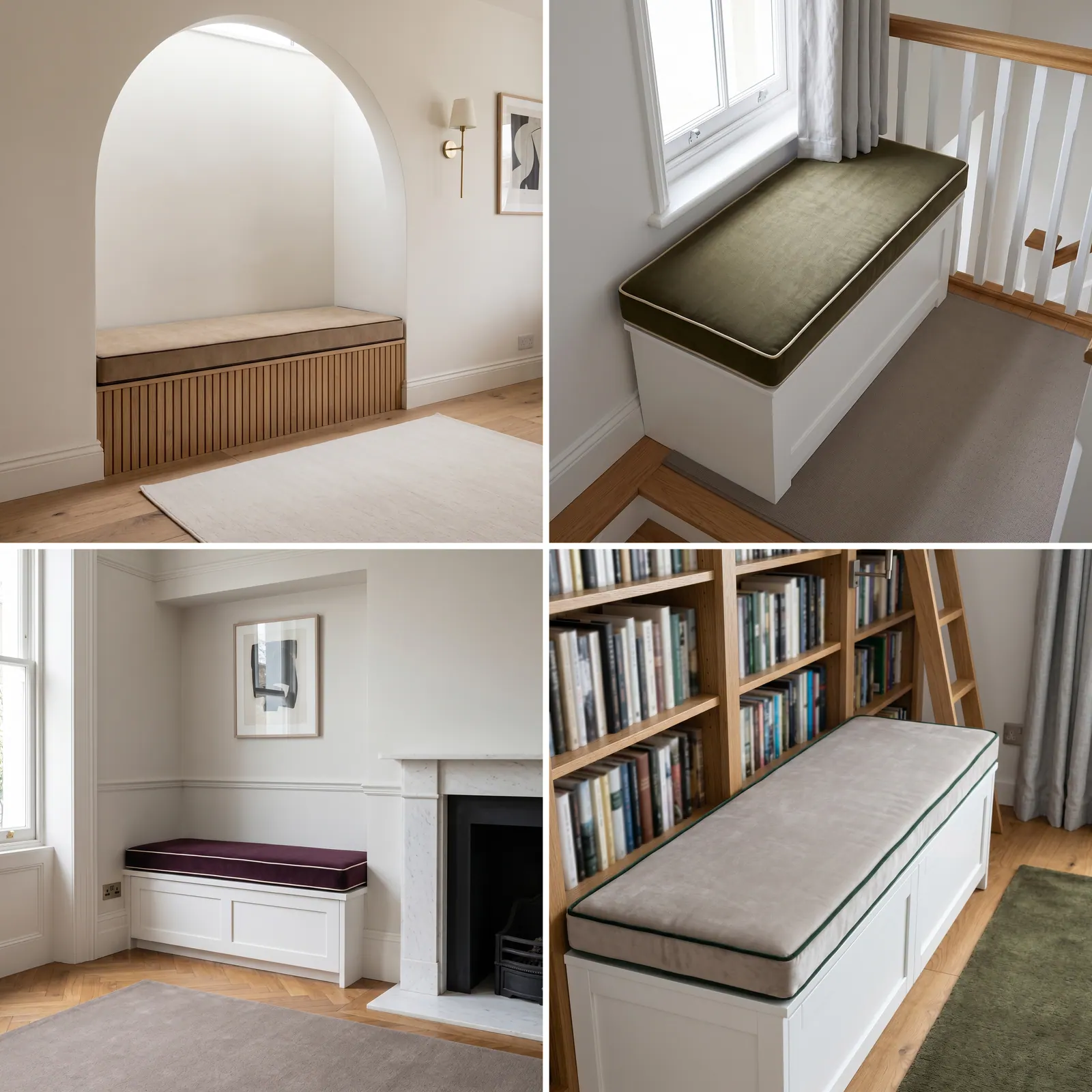
Grid of four bench cushions: sand in an arched alcove, olive on a landing, plum by a fireplace, greige in a librarySave
One cushion style, four settings: an arched alcove, a stair landing, a fireplace wall and a home library.
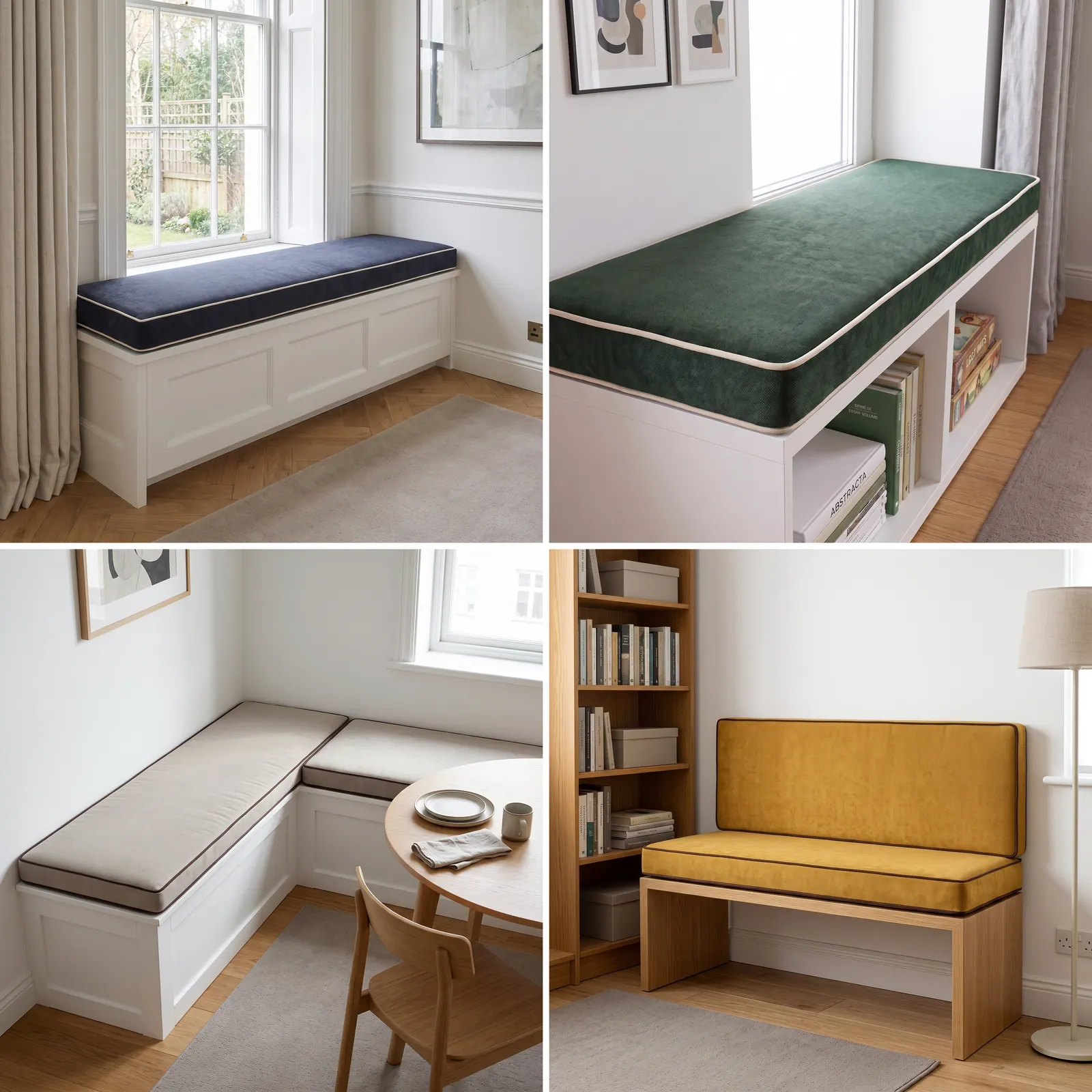
Grid: navy window seat cushion, green cube bench, greige L-shaped corner banquette and mustard seat with backrestSave
From a sash-window seat to a bench with a backrest, the same piped box construction adapts to four layouts.
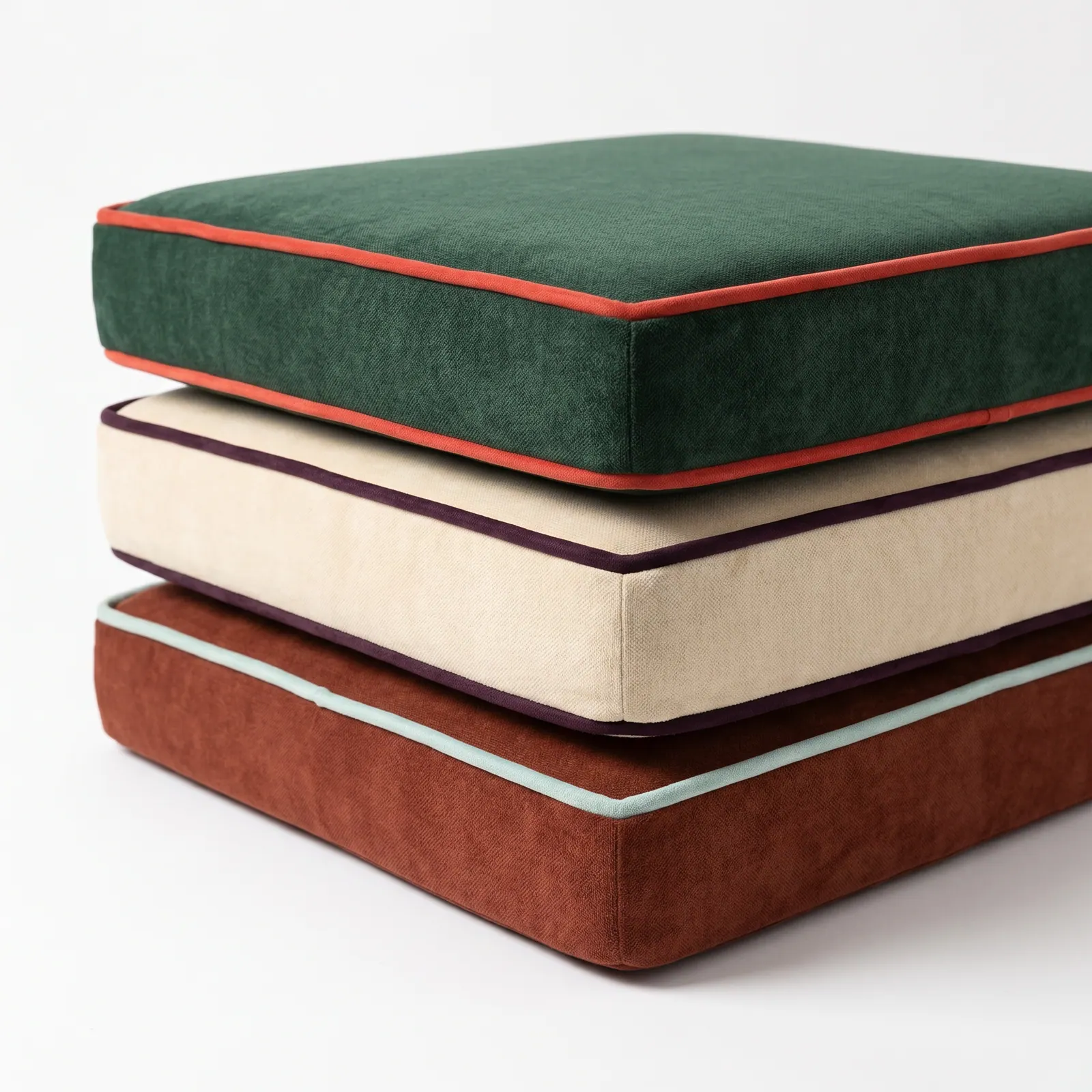
Stack of three box cushions: forest green with red piping, ivory with aubergine piping, rust with mint pipingSave
Three colorways stacked on white show how a contrasting piping changes the character of each solid fabric.
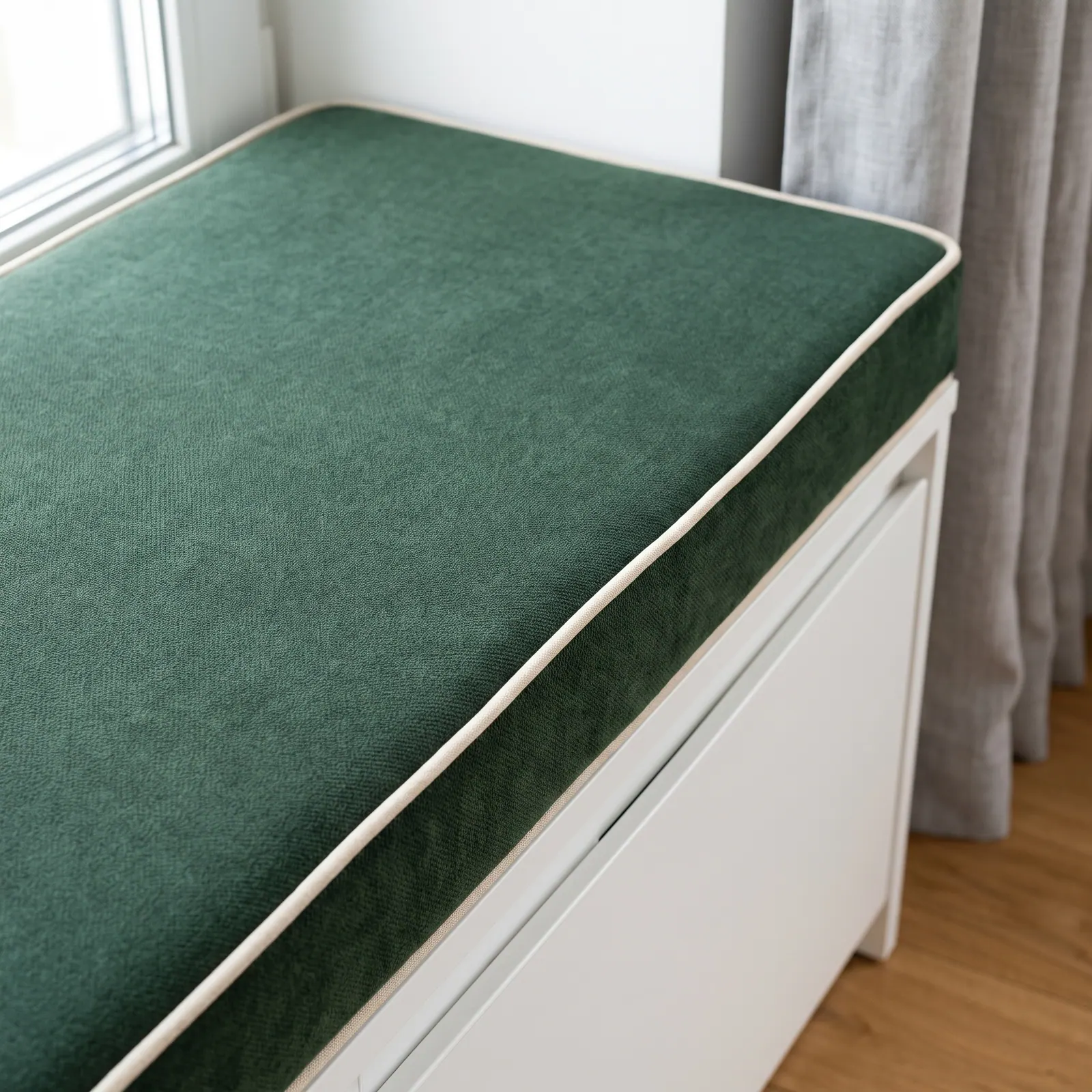
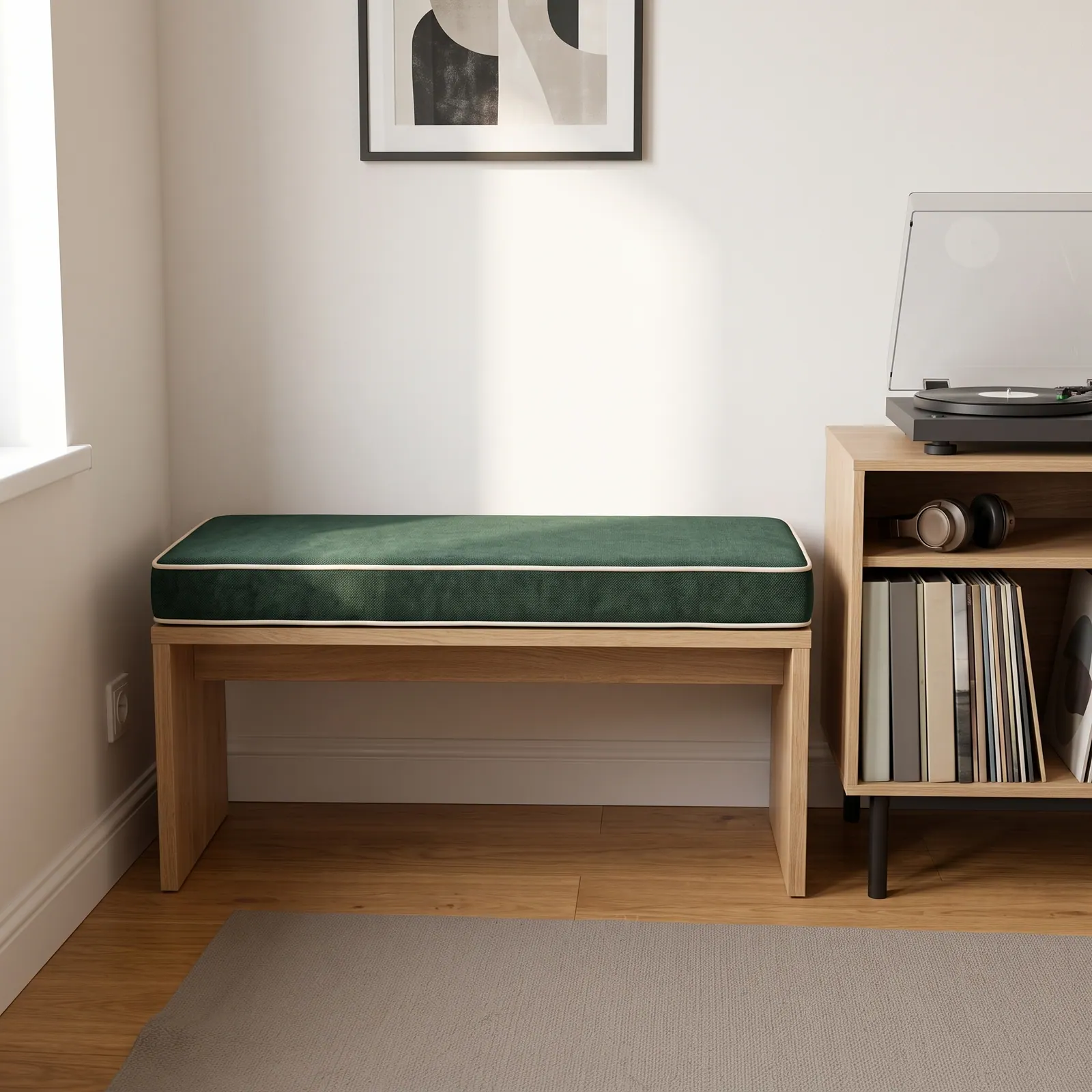
Close-up of a forest green brushed woven cushion corner with ivory piping on a white window seatSave
Up close the green shows a soft brushed surface with a faint diagonal weave, finished by a neat ivory cord at the corner.
Forest green cushion with ivory piping on a light oak bench next to a turntable and vinyl record cabinetSave
An oak bench in a listening corner gets a slim green pad, a patch of sunlight on the wall and records within reach.
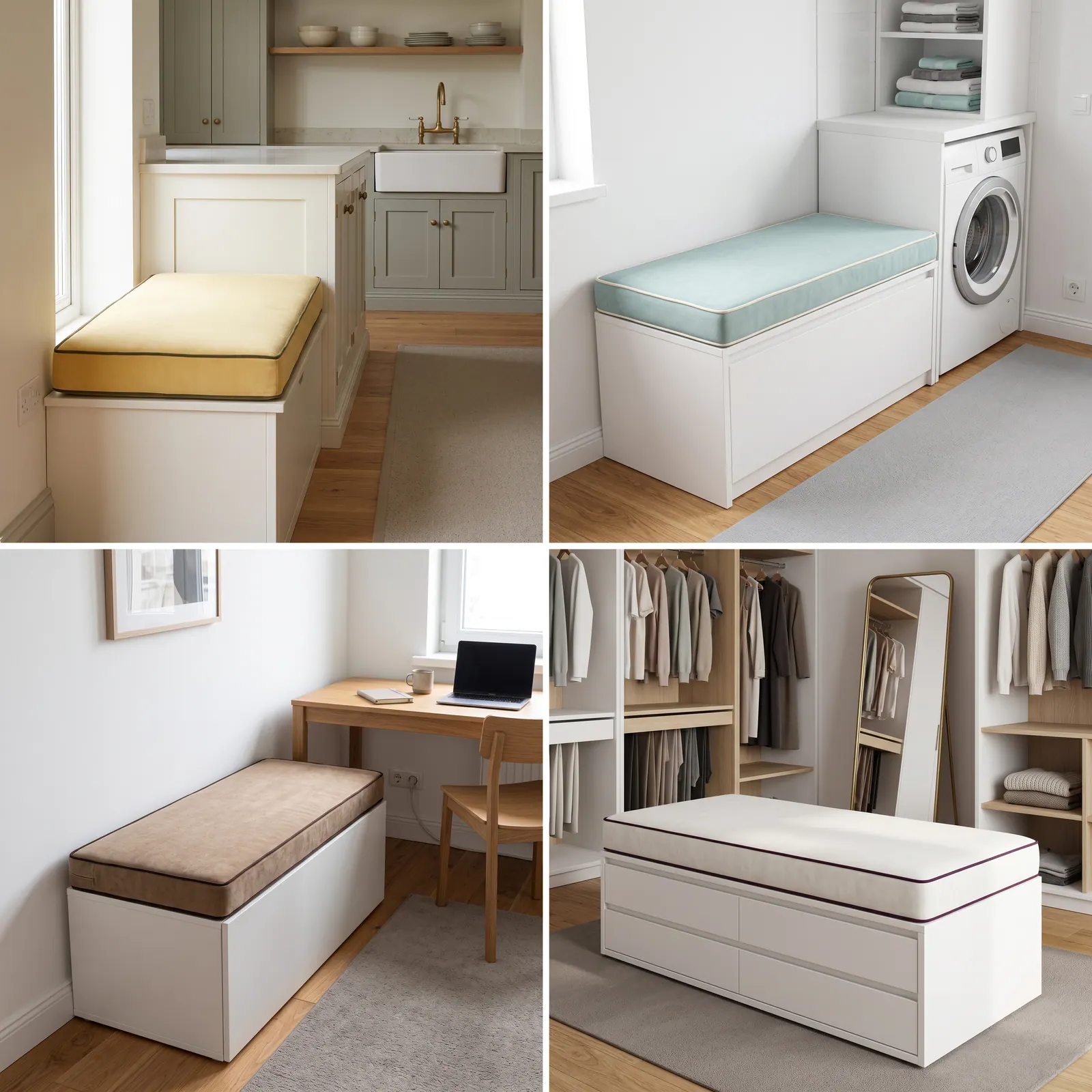
Grid of four box cushions: mustard in a kitchen nook, mint in a laundry, mocha in a study, ivory in a dressing roomSave
Storage benches in working rooms get cushions matched to each space, from a butter-yellow kitchen seat to an ivory wardrobe ottoman.

Pinned by Élodie

Five pins trace the brick-red piping, the pale ivory top, the iron candle sconce, the terracotta tiles and the rust flatweave runner.
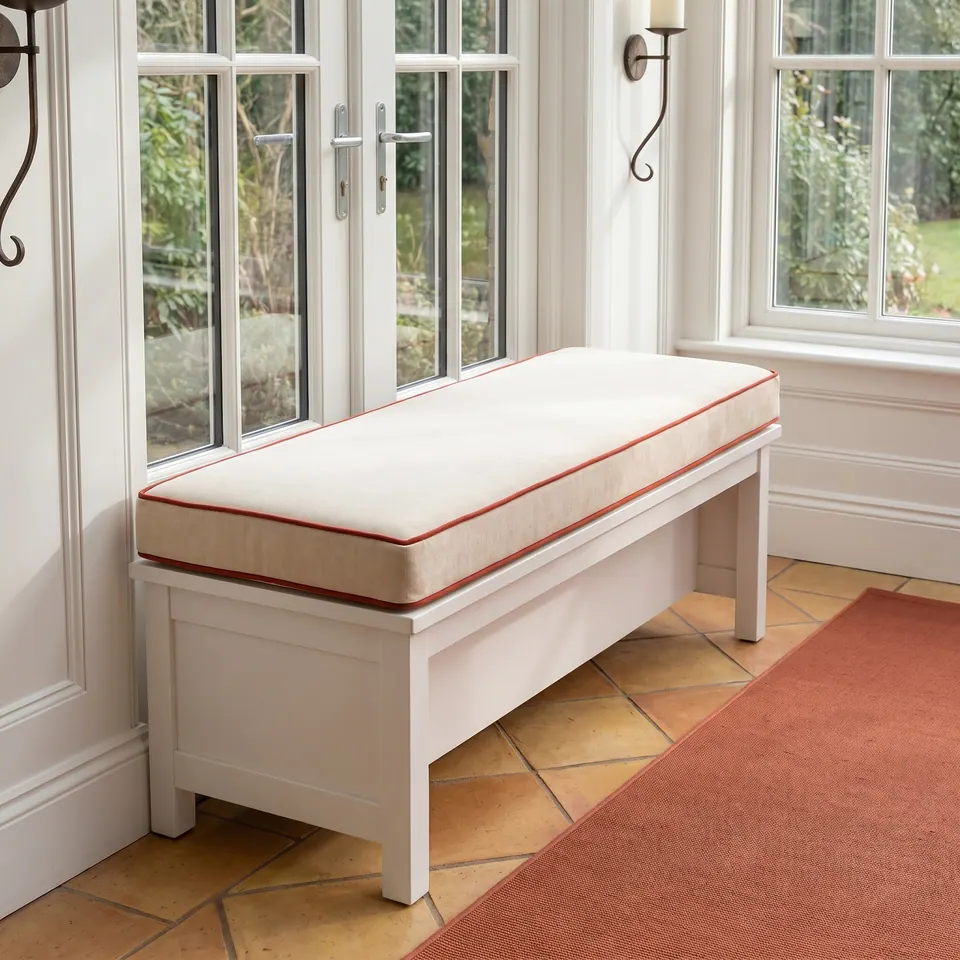
Pinned: Ivory cushion with brick-red piping on a white storage bench by French doors, terracotta tiles and rust rug
  1. Brick-red piping

    The piping color is taken straight from the terracotta tiles and the rust runner.

  2. Pale ivory top

    An ivory body keeps the bench light against bright glazing and white paneling.

  3. Iron candle sconce

    A thin black iron sconce adds a dark accent at eye level to balance the warm floor.

  4. Terracotta tiles

    Warm clay tiles are the source color for the whole scheme.

  5. Rust flatweave runner

    The runner repeats the piping color at floor level and leads the eye to the bench.

  1. Brick-red pipingThe piping color is taken straight from the terracotta tiles and the rust runner.
  2. Pale ivory topAn ivory body keeps the bench light against bright glazing and white paneling.
  3. Iron candle sconceA thin black iron sconce adds a dark accent at eye level to balance the warm floor.
  4. Terracotta tilesWarm clay tiles are the source color for the whole scheme.
  5. Rust flatweave runnerThe runner repeats the piping color at floor level and leads the eye to the bench.

Before and after: a white bench on a warm floor

Picture this room the day before the cushion arrived. White paneled walls, white French doors, a white storage bench, and under it all a floor of terracotta tiles. Handsome, but the bench floats. The eye jumps from the warm floor to the cool walls and never settles.

Now the after. One ivory cushion with a box edge, and a single line of brick-red piping around its top. That line is the floor, lifted to seat height. The rust-red flatweave runner repeats it on the ground and walks the eye straight to the bench. Let one color speak and the others listen.

Why ivory for the body and not red? Bright glazing fills this room with garden light, and a pale top keeps the bench as light as the paneling around it. A red body would have been a second floor, heavy under the French doors. The ivory here leans warm, closer to fresh cream than to paper, so it agrees with the clay below.

The black iron candle sconces are the last move. Thin and dark at eye level, they keep the warm floor from pulling all the weight downward.

My friends, the makeover method has three steps: find the strongest warm color already in the room, put it in the piping, and keep the body the color of the walls. Read the piping pattern and see more bench cushions done this way. What is the strongest color on your floor?

The swatch strip: from floor to piping

  • Ivory cream#EFE7D8The cushion body, warm enough to agree with the tiles
  • Brick red#9C3B2AThe piping, lifted straight from the floor
  • Terracotta tile#C1683FThe source color for the whole scheme
  • Rust runner#A4482ERepeats the piping at floor level
  • Iron black#1F1C1AThe sconces, a thin dark accent at eye level
  • Paneling white#F5F3EEWalls and French doors, the frame for everything

A real project

Before: pillows lost in a gap. After: a 4-inch cushion

A parent wrote to the workshop with a small, stubborn problem. Between a child's bed mattress and the wall there was a gap, and every pillow on the bed ended up in it.

The shop worked from the obstacles. The cushion was set at 4 in (10 cm) thick to fill the gap, and 17 in (43 cm) high so it would stay below a light switch on that wall. A non-slip base keeps it in place.

Then the pleasure of color. The body was L-03 linen, finished in velvet piping, and the parent ordered two pieces with different piping colors: 124 on one and 129, a teal green, on the other. Both arrived and fitted perfectly.

The after is what I love, a neat upholstered edge where a dark gap used to be. A shallow bench cushion makes a fine bed-gap filler: set the thickness to the gap and the height to whatever sits above it. Pale linen-look fabrics take a colored piping beautifully, and the sunroom cushions room shows how they behave in strong light.

Buyer questions: patterns, a back cushion added later and two sizes at once

  1. A common question

    Do you have any patterned fabrics, or only solids?

    The workshop's answer

    Yes, there are patterns: striped fabrics and oriental-design fabrics. The shop can send photos of cushions already made in them so you can judge the look.

  2. A common question

    Can I add a matching back cushion to my window seat later on?

    The workshop's answer

    Yes. A returning buyer added a back cushion 3 in (7.5 cm) deep, 90 in (229 cm) long and 11 in (28 cm) high in the same corduroy through a custom payment link. Just give the original fabric code.

  3. A common question

    How do I order two window seat cushions in two different sizes?

    The workshop's answer

    Send the size of each, for example 19 3/8 x 75 5/8 in and 19 7/8 x 72 1/2 in, plus a link or photo of the style you want. The workshop then makes a custom order link.

On the cutting table: the sunroom bench

ProductBench cushion, rectangle
FabricIvory cream linen-look weave
PipingBrick-red contrast piping
EdgeBox edge
BaseWhite painted storage bench
RoomSunroom with French doors and terracotta tiles
AccentsRust-red flatweave runner and black iron candle sconces
LightBright daylight through the glazing
Best forA sunroom bench that should look built for the room

Order this cushion

Have it made

Have this made — ask Élodie’s workshop

Color is easier to settle in a conversation than on a screen. Tell the workshop about the room and the light it gets, and the fabric choice follows. — Élodie

Leave your details and the workshop will call you to confirm measurements, fabric, foam and piping. No prices, dates or payment on this page: it is a request, not an order.

Fabric · Foam · Pipingwhat the workshop will confirm with you

Fabric
Ivory cream linen-look weave
Foam
The core: its density and thickness set the feel.
Piping
Brick-red contrast piping
Only for this request: no marketing calls or texts. Outside the US, add the country code.
In inches: length × depth × thickness, plus any angles or cut corners.

* Required. A member of the workshop team will call you to talk it through; nothing is charged and nothing is made until you have agreed on every detail with them.

We use these details only to answer this request and make your cushion: your name and contact details, the cushion details and photos you send, the page you came from and the ad or link that brought you, if any. The workshop that makes the cushions receives them. We don't sell them or share them for advertising, and we delete requests after 24 months. Privacy notice for requests.

Nothing is made or charged until you approve the details.

Want to pick the shape and add photos? Use the full quote form

Take a bench cushion's piping color from the floor or the rug and keep the body the color of the walls; the bench will look planned, not bought.

Élodie

Questions buyers ask next

Why choose a pale bench cushion with colored piping?

A pale body keeps a bench as light as the walls around it, while the piping carries the accent color in a single line. It is a smaller commitment than a colored body and easier to live with in bright rooms.

Where should the piping color on a bench cushion come from?

From something in the room you are keeping: floor tiles, a rug, the wood tone or a painted door. Here brick-red piping repeats terracotta tiles and a rust runner, so the cushion reads as part of the room.

Can a bench cushion fill the gap between a bed and a wall?

Yes. A shallow cushion sized to the gap works well. One was made 4 in (10 cm) thick to fill the gap and 17 in (43 cm) high to stay under a light switch, with a non-slip base.

With color and care — Élodie