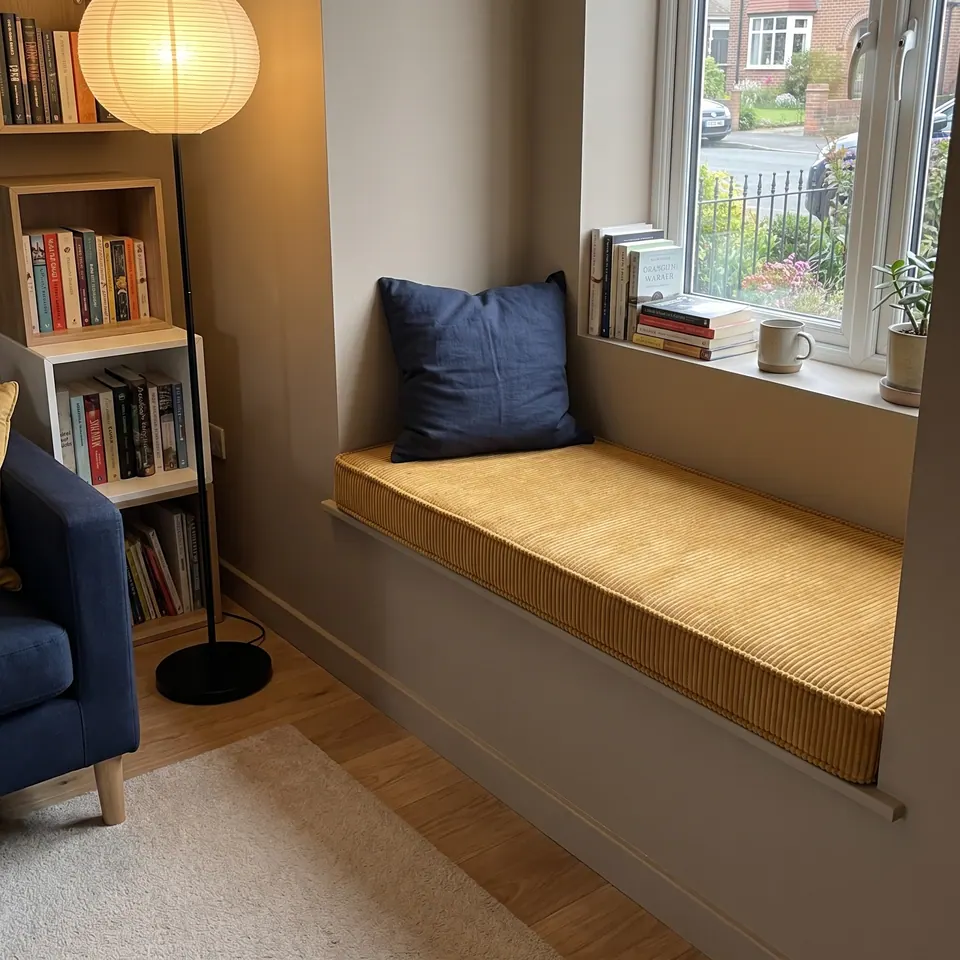
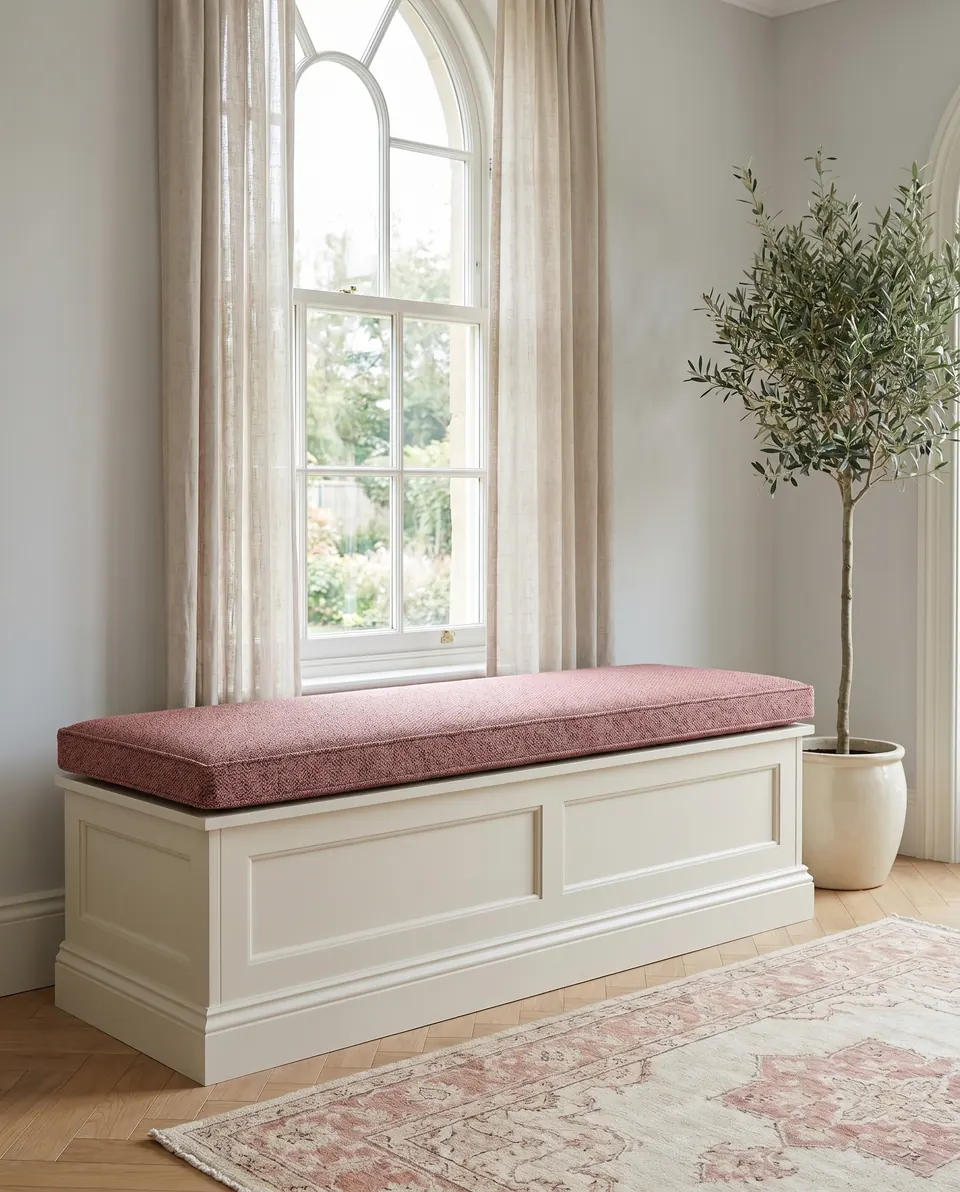
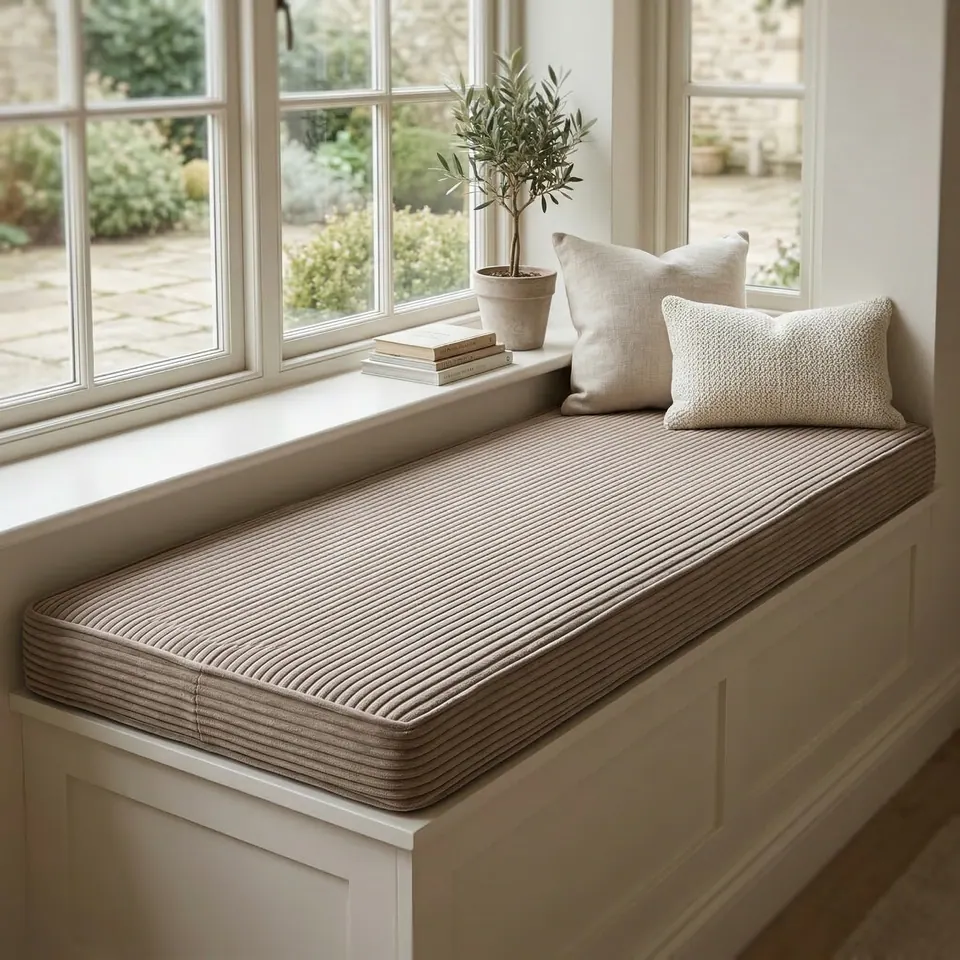
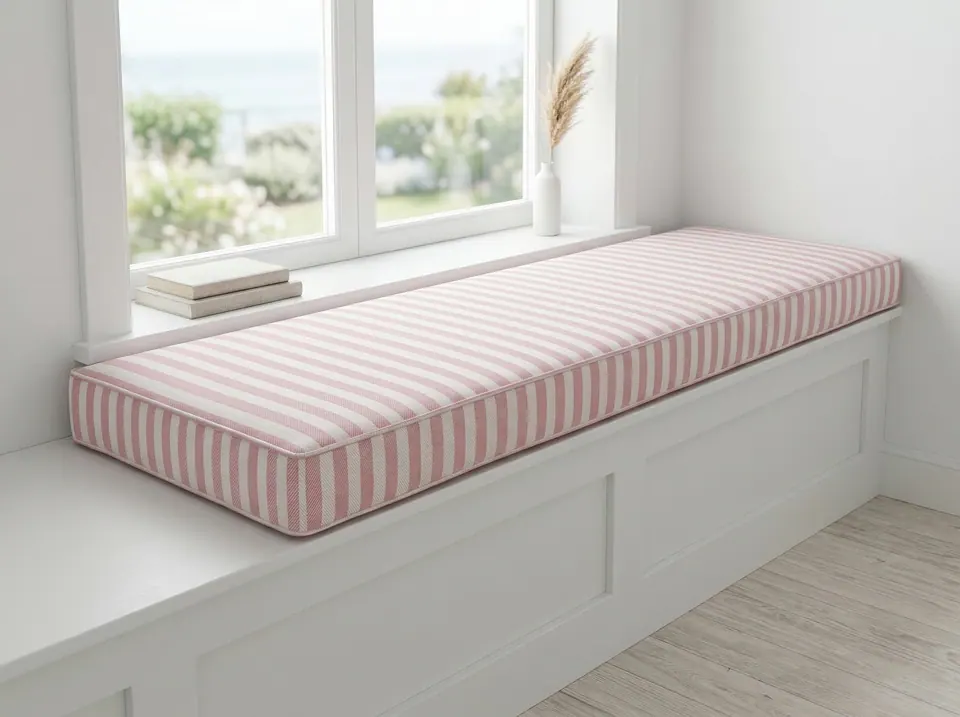
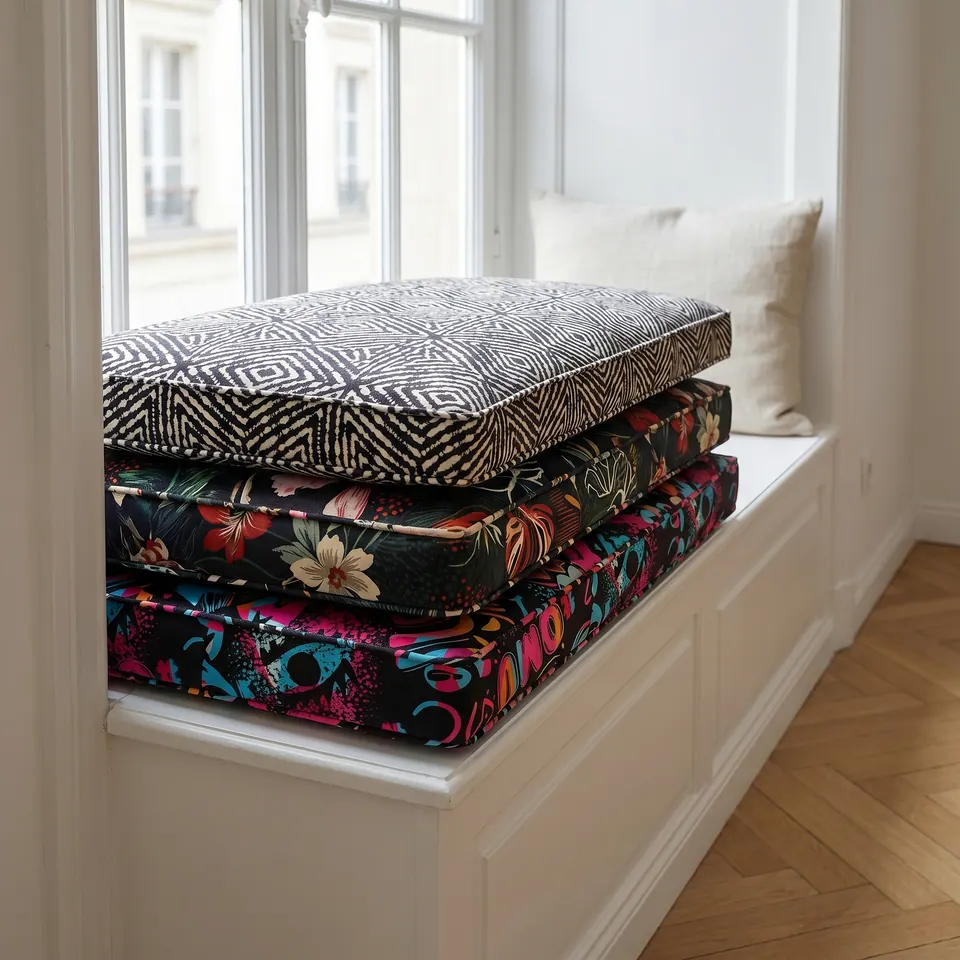
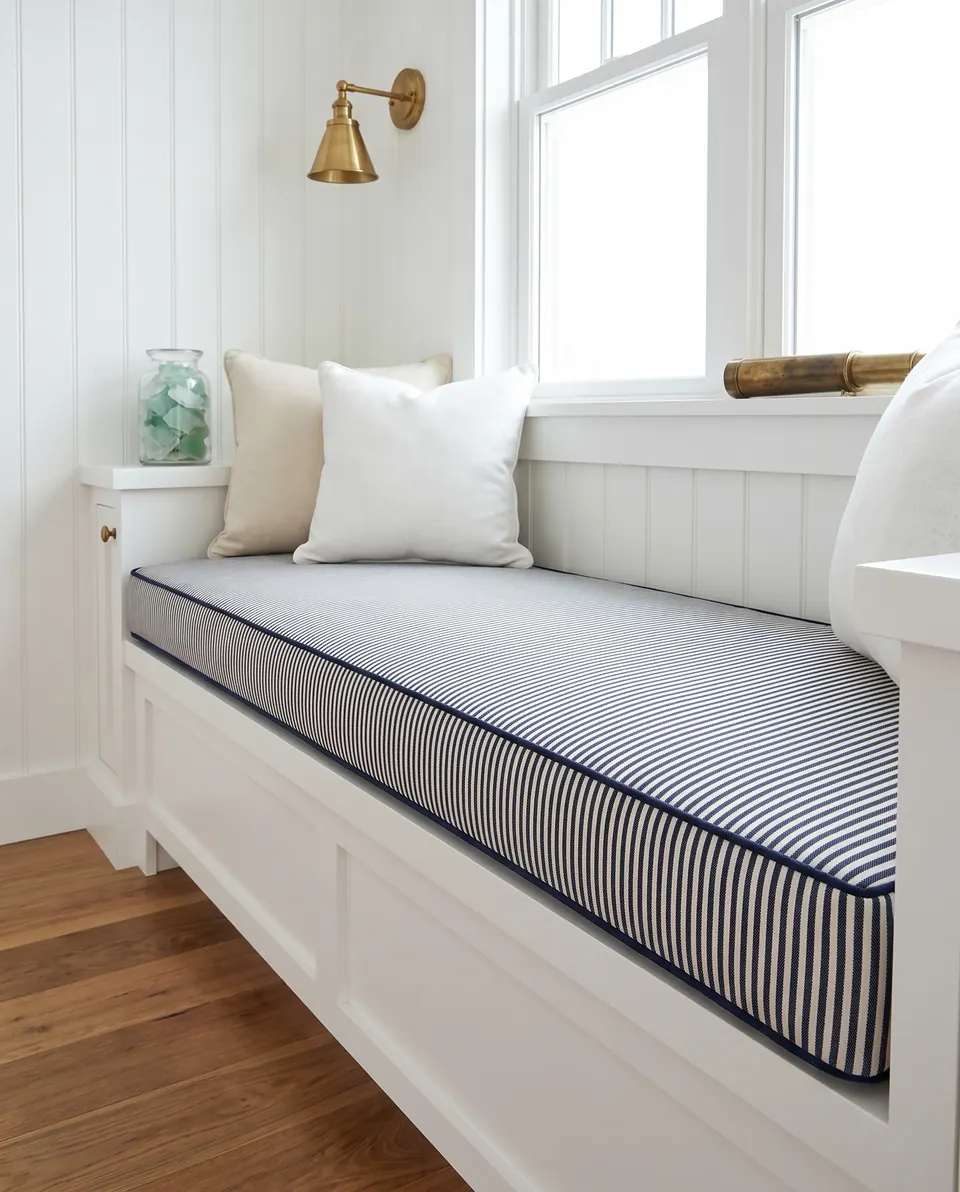
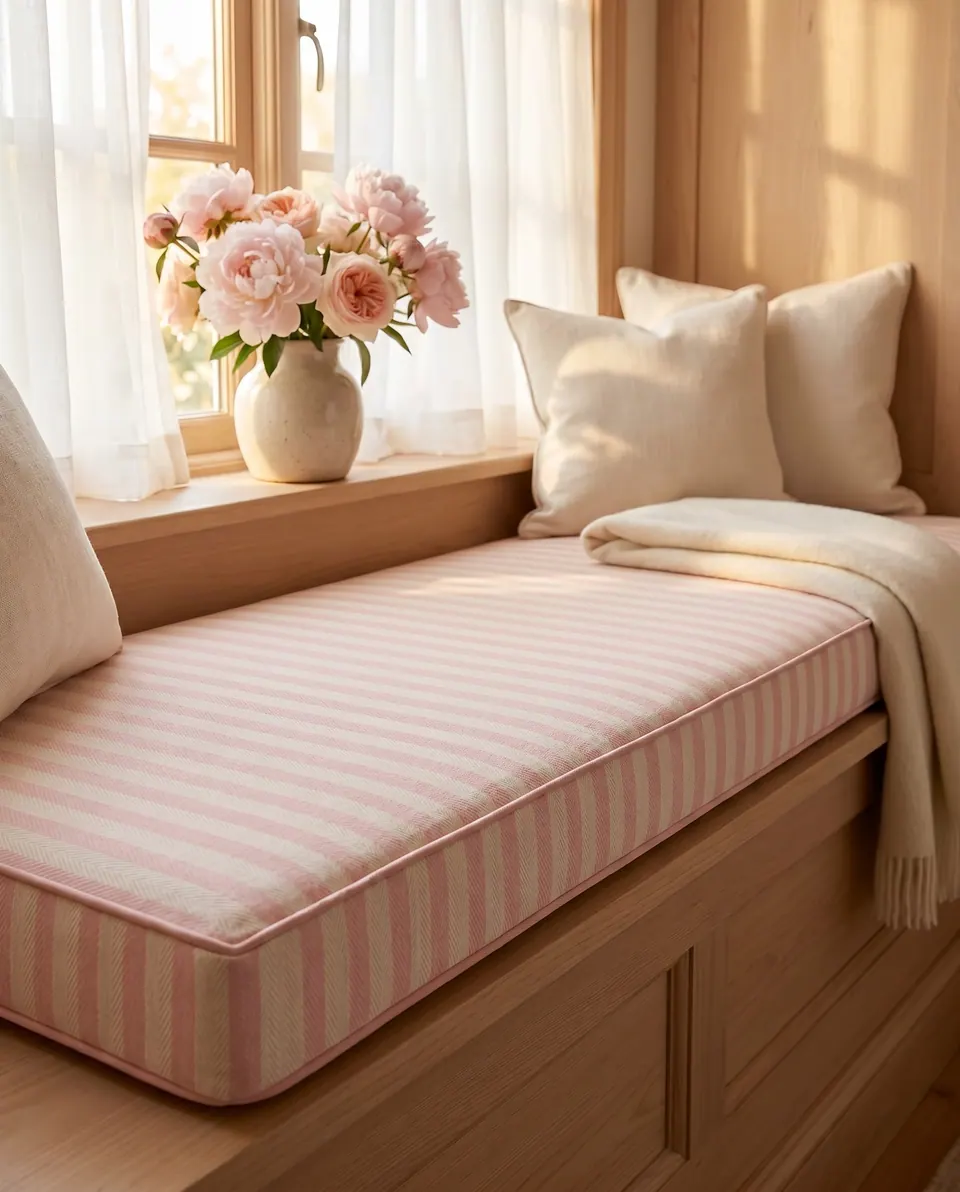
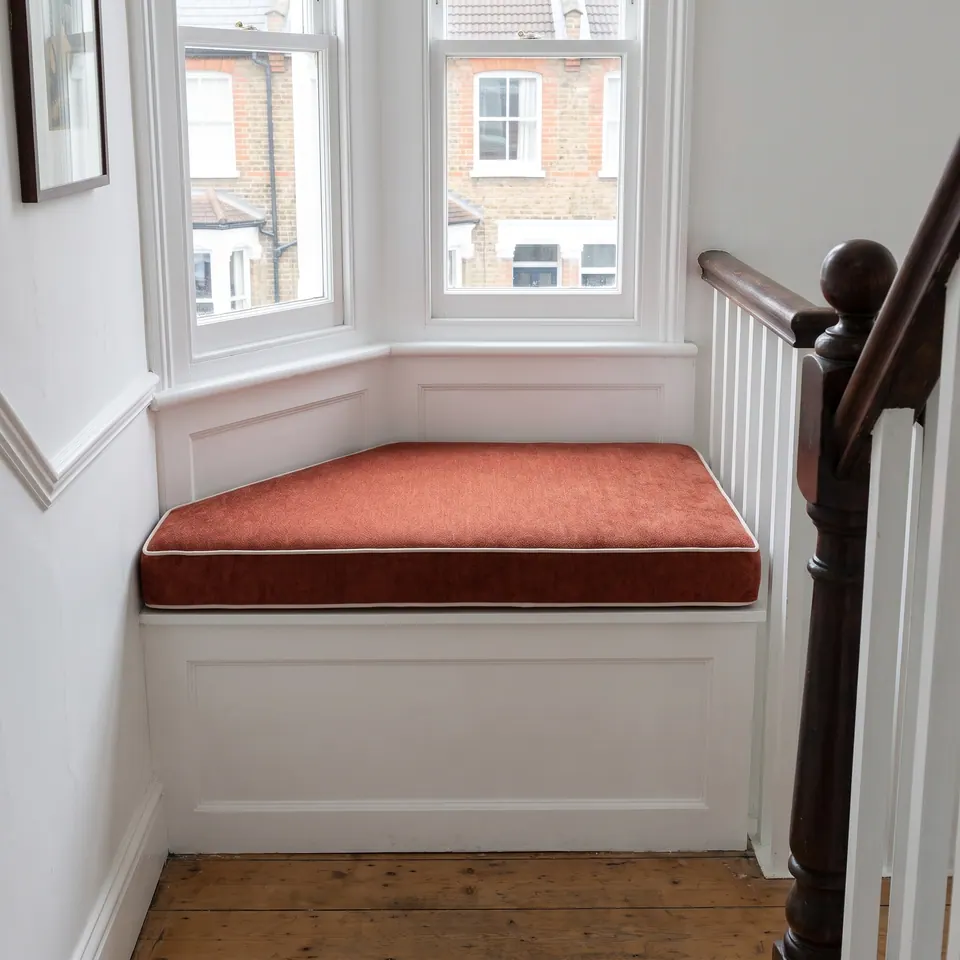
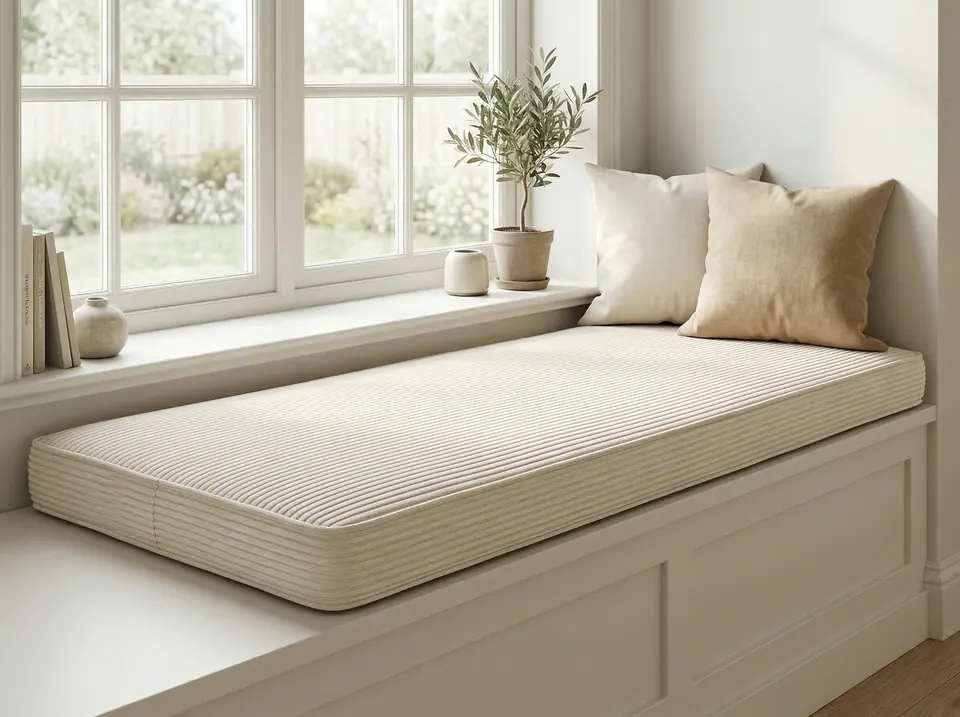
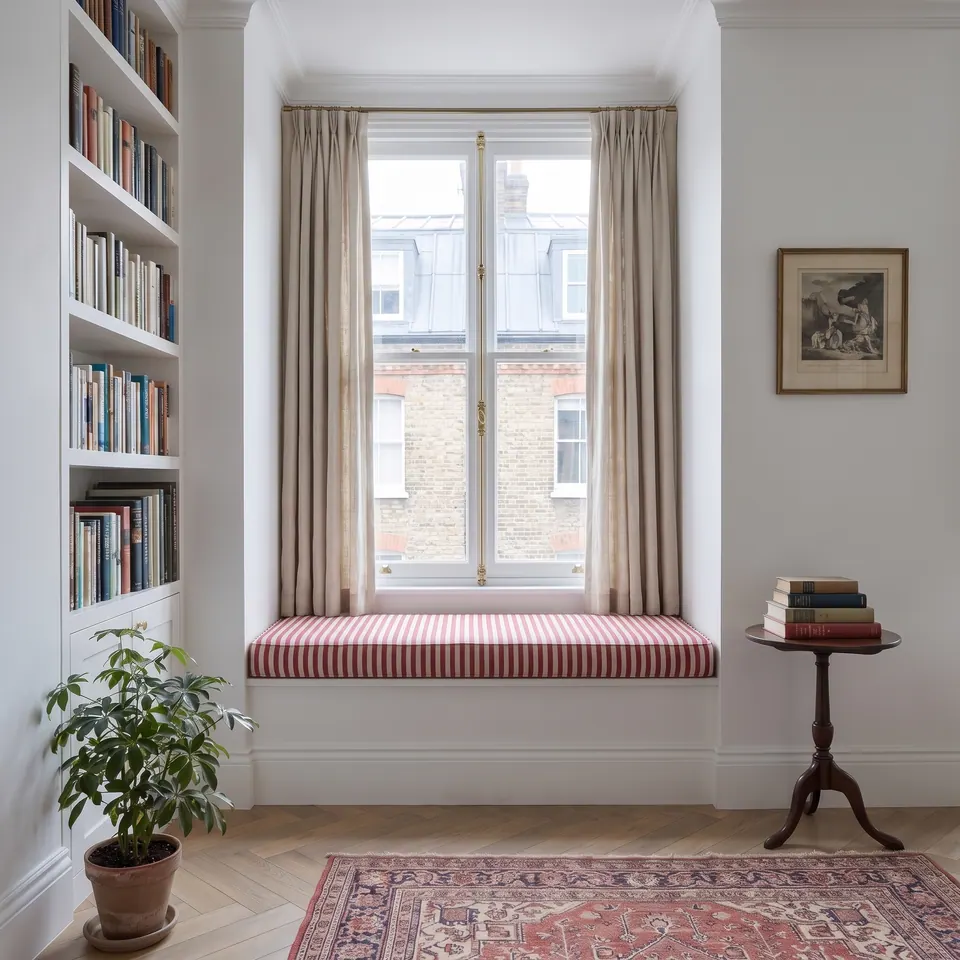
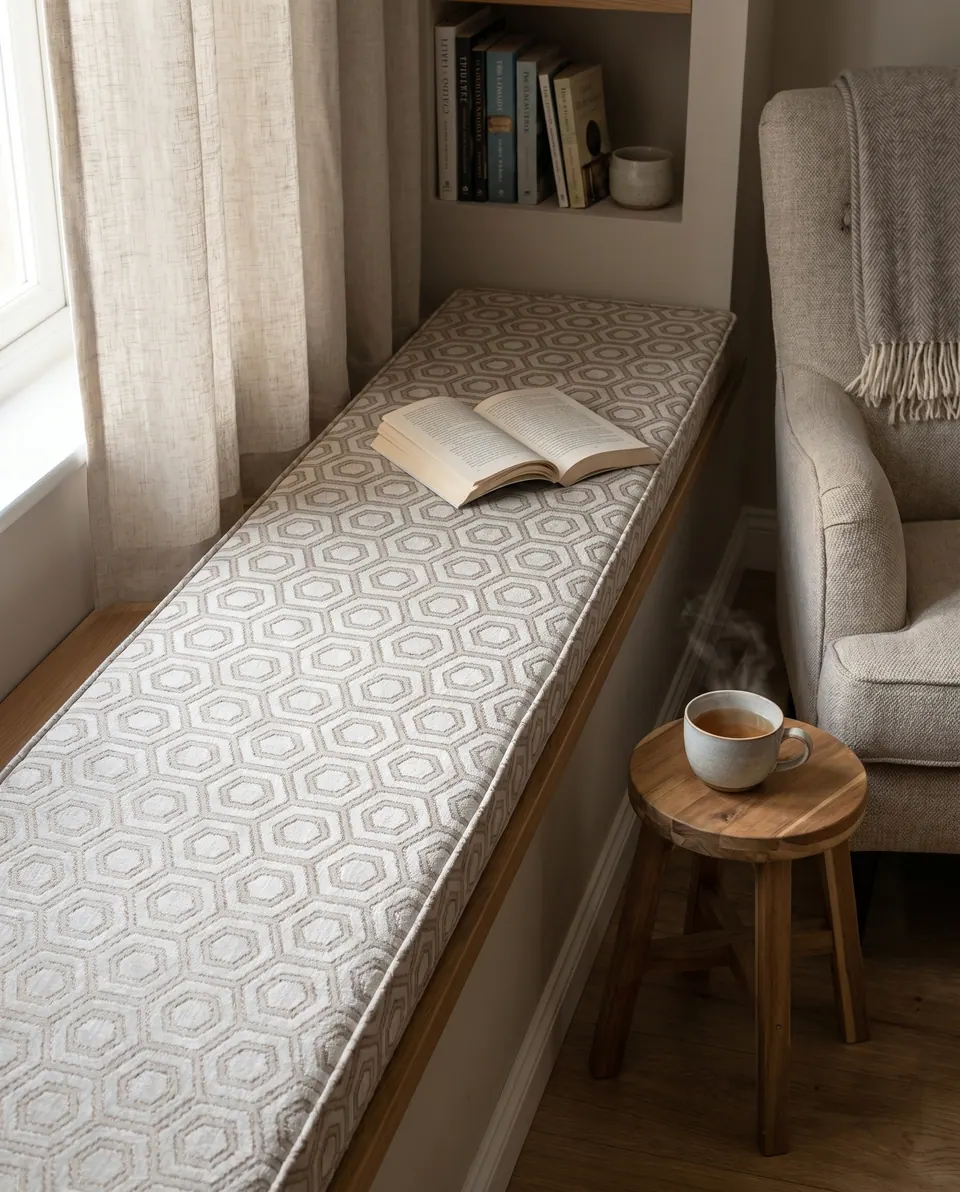
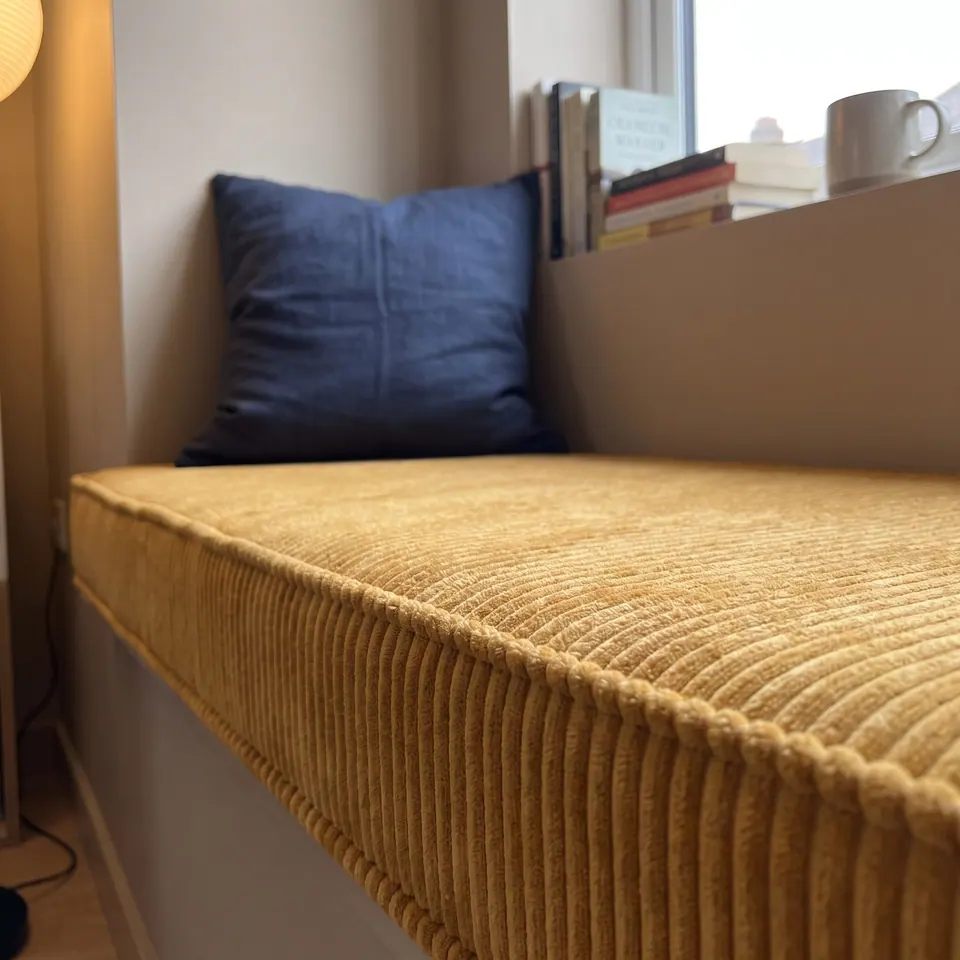
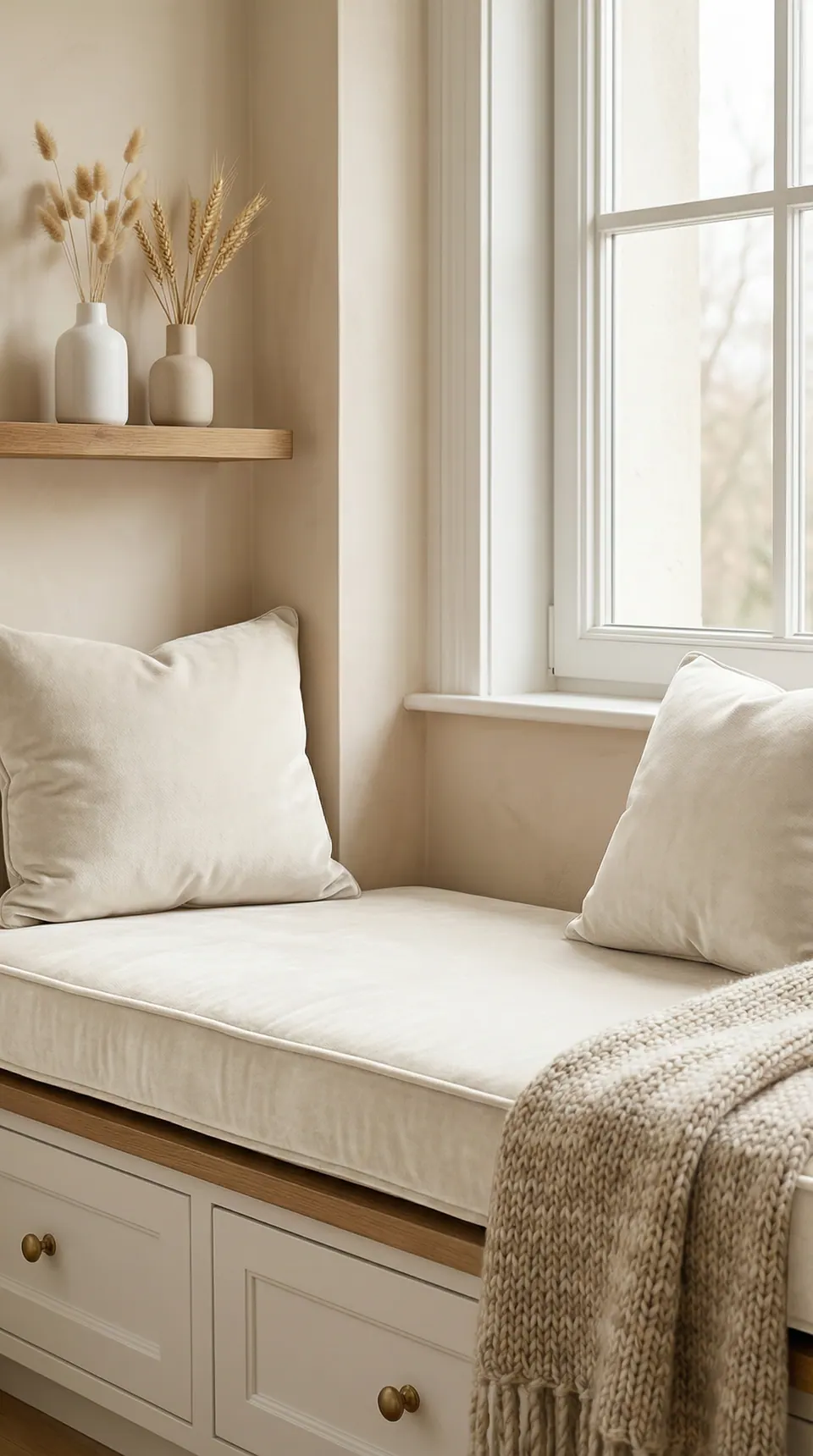
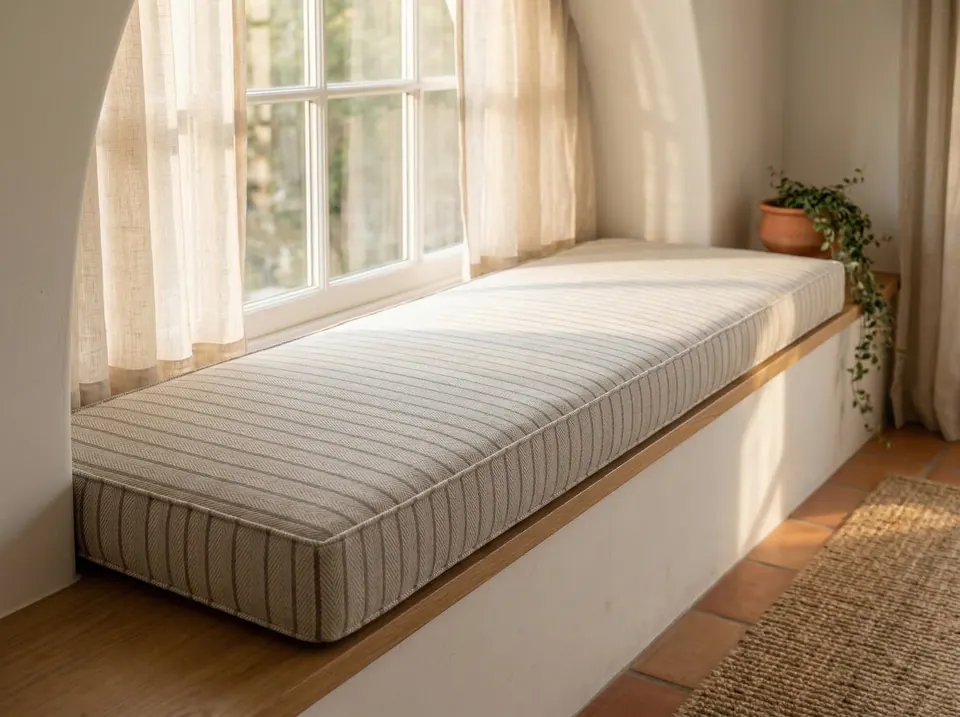
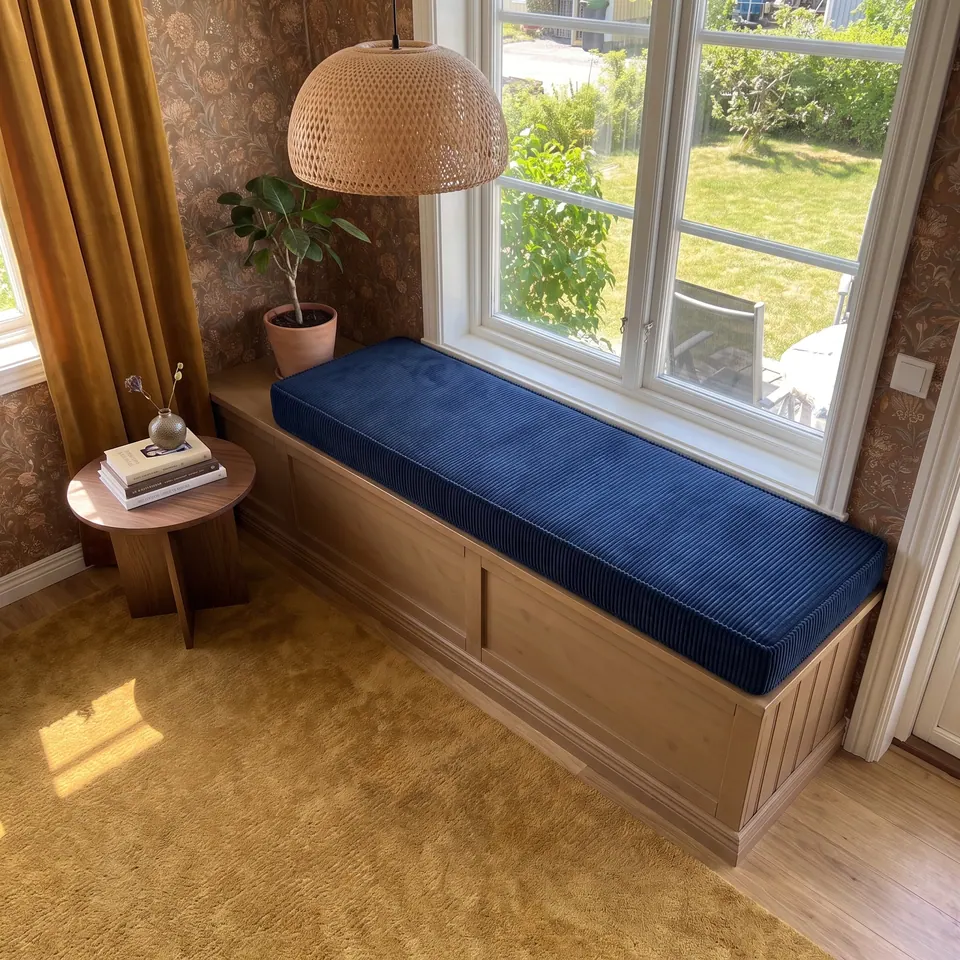
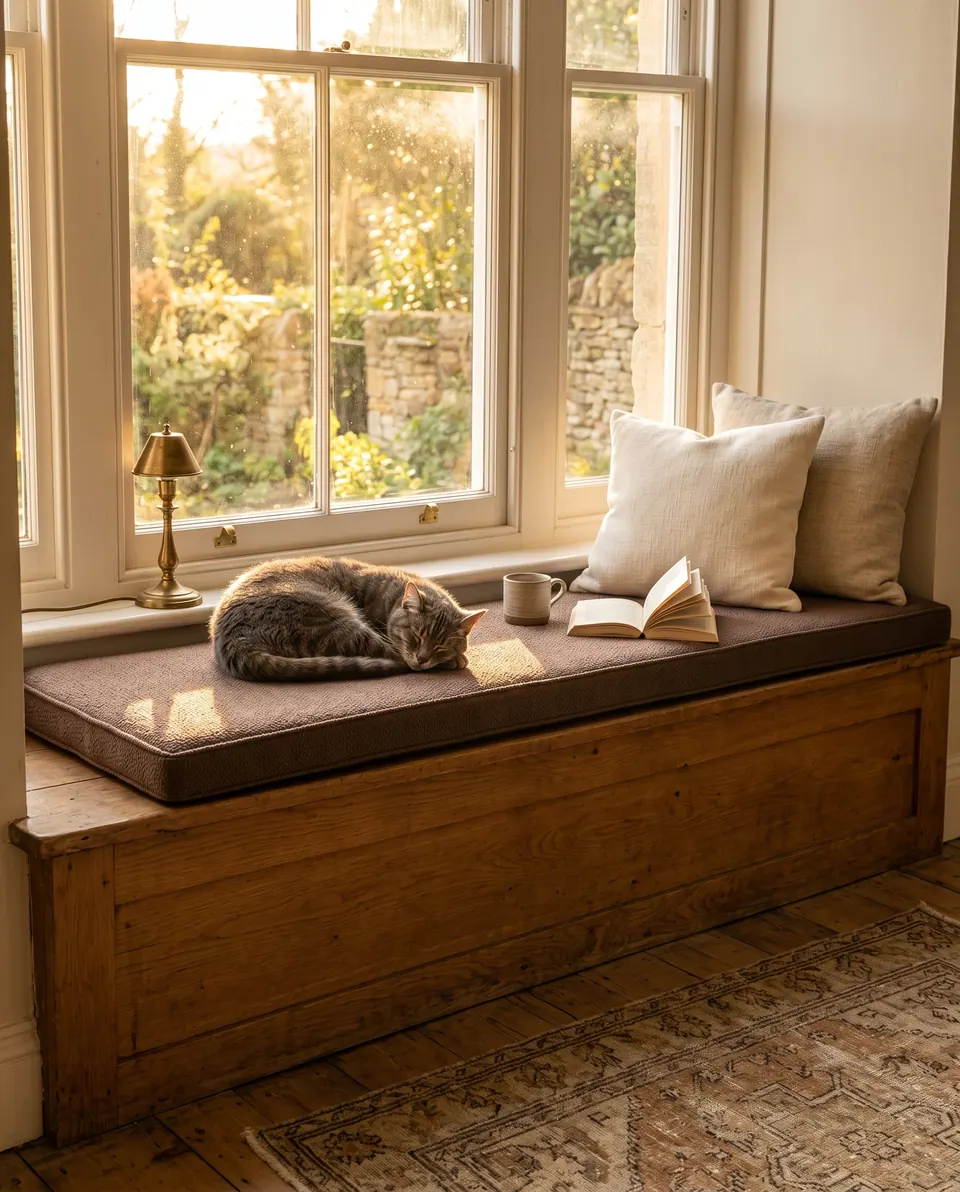
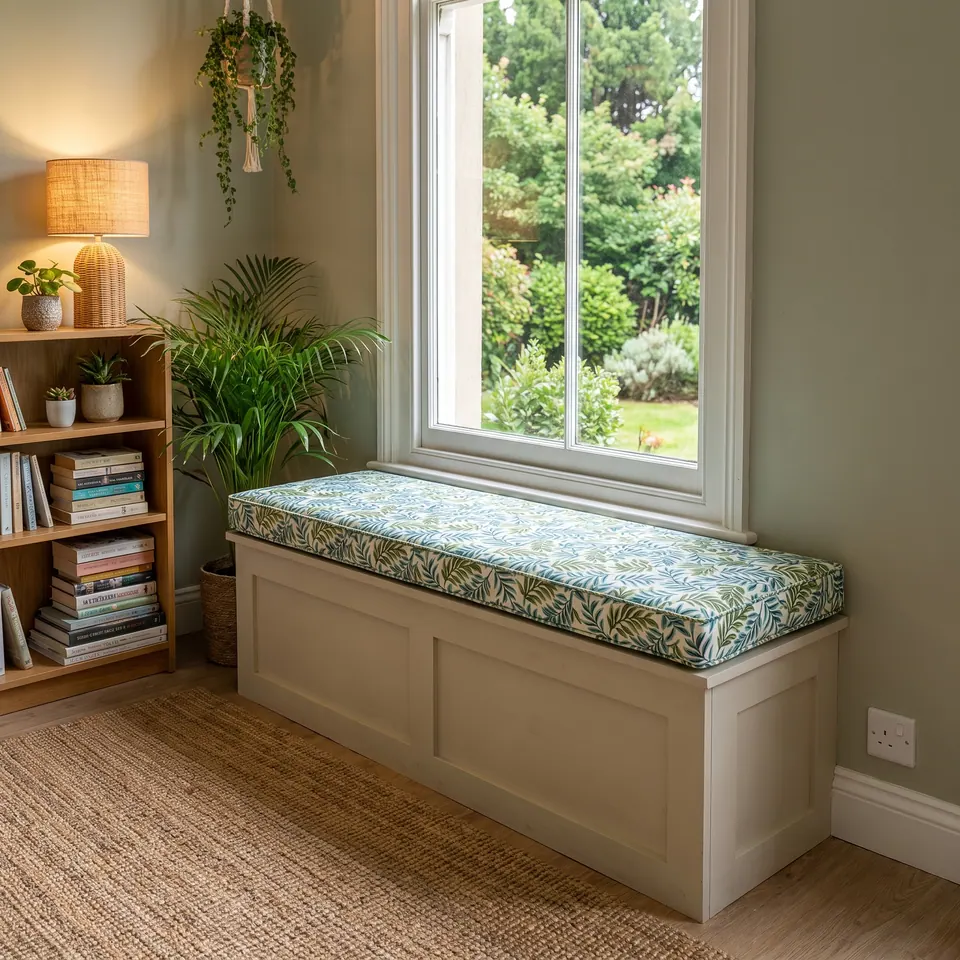
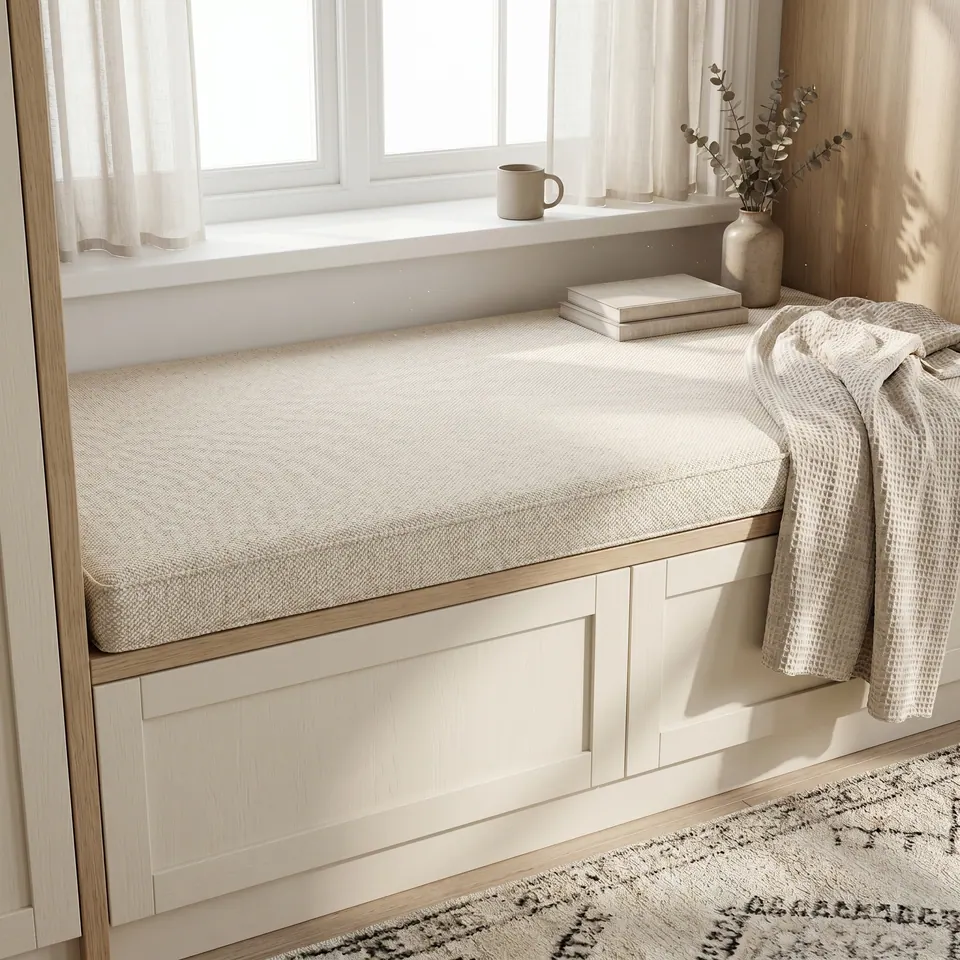
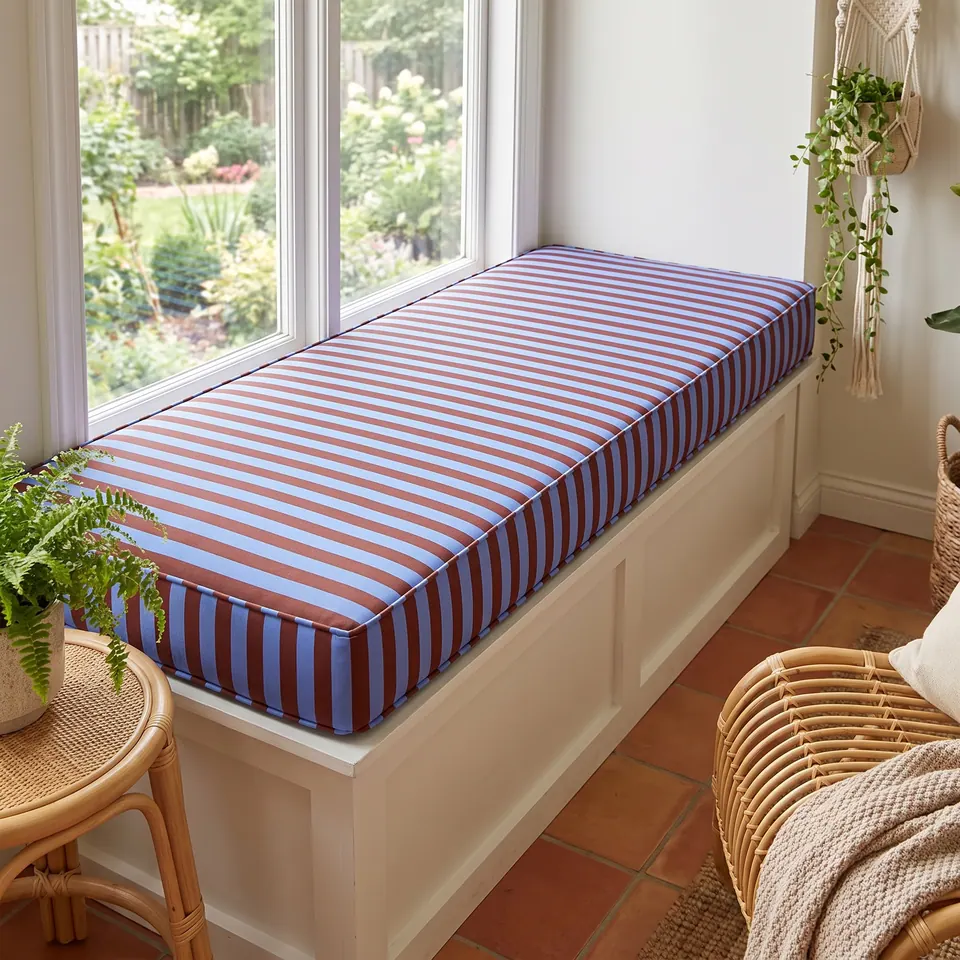
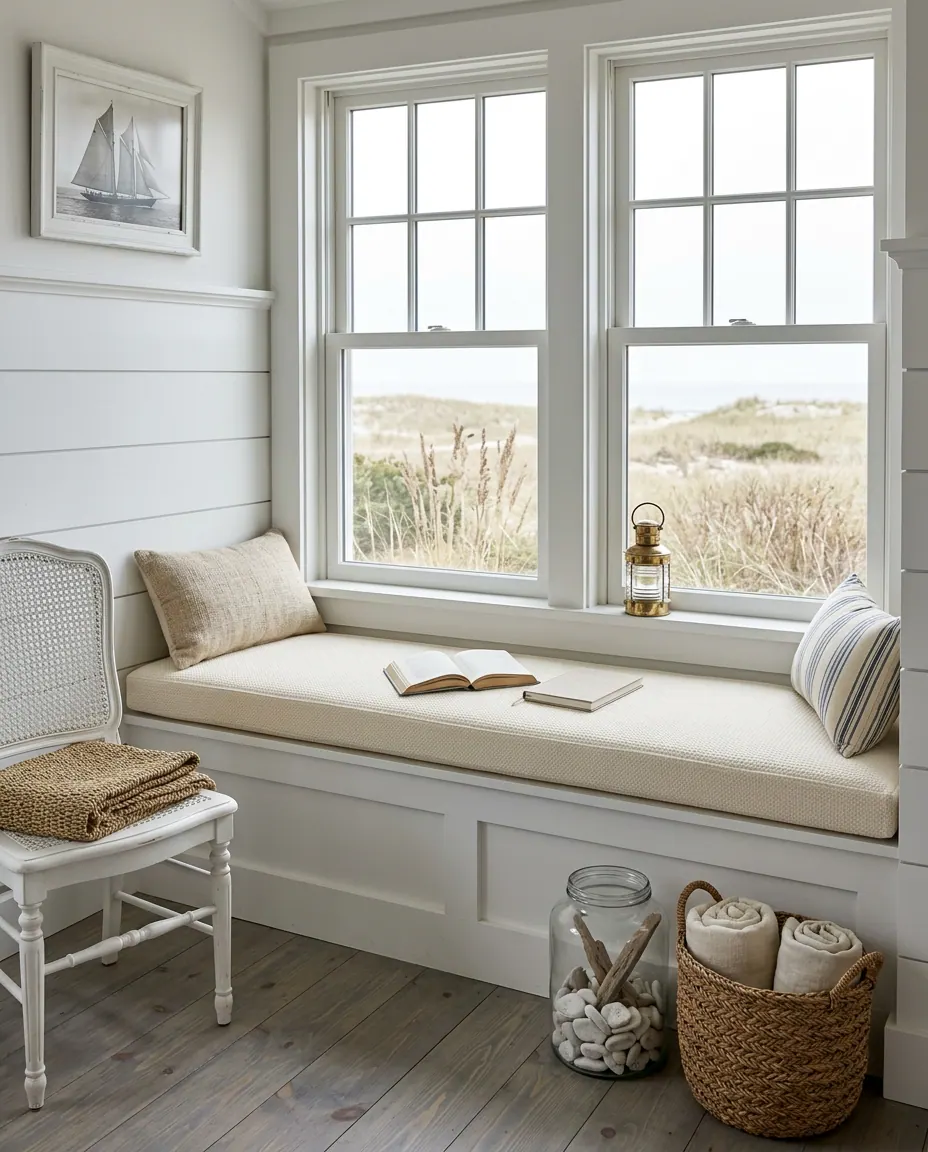
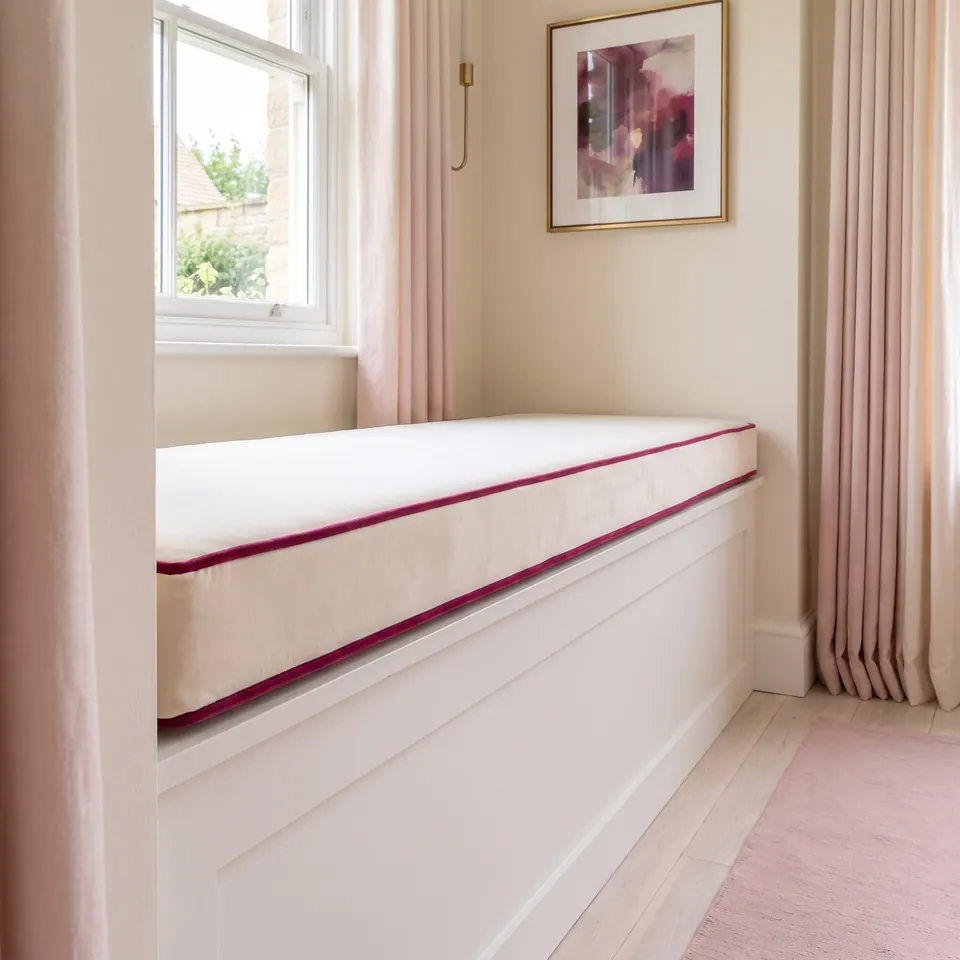
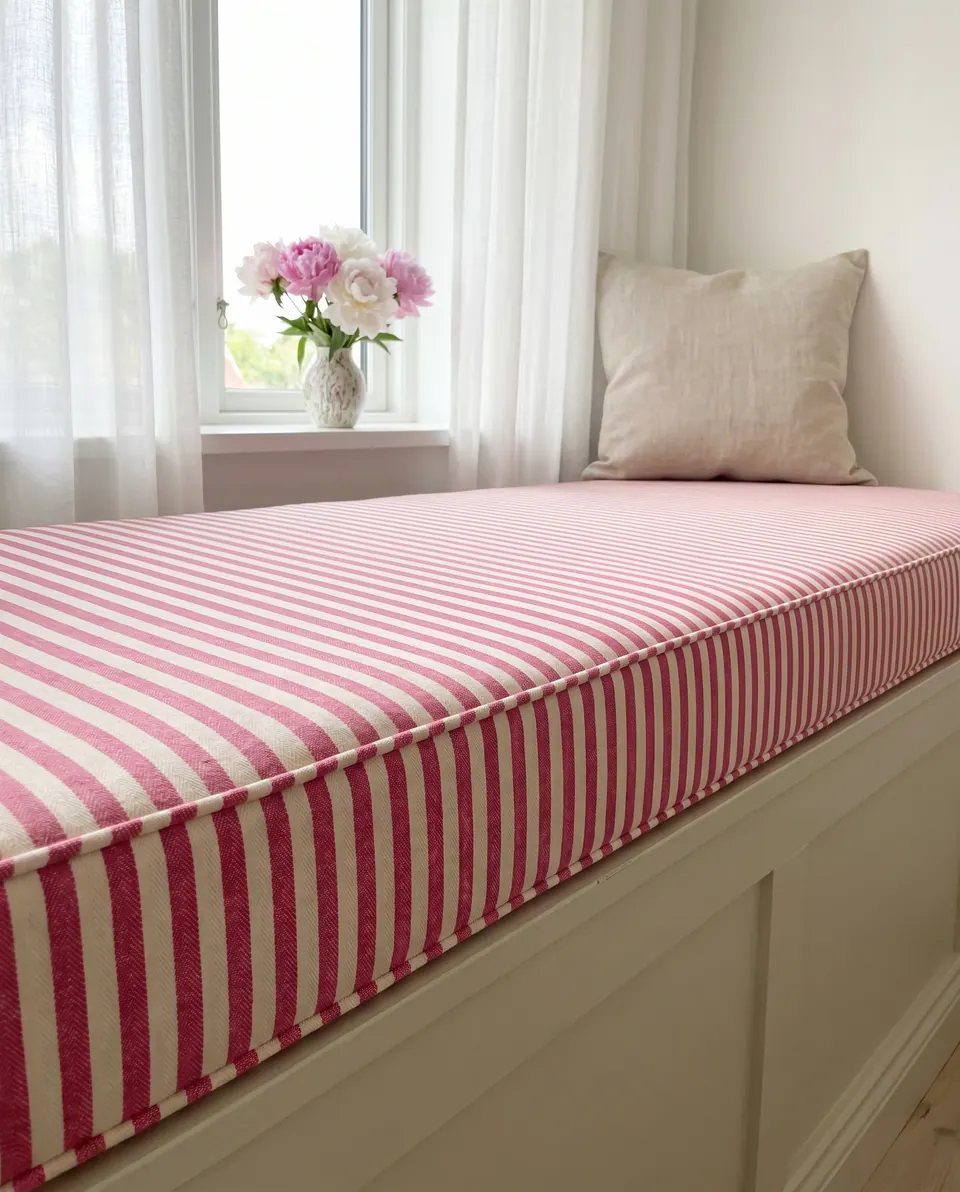
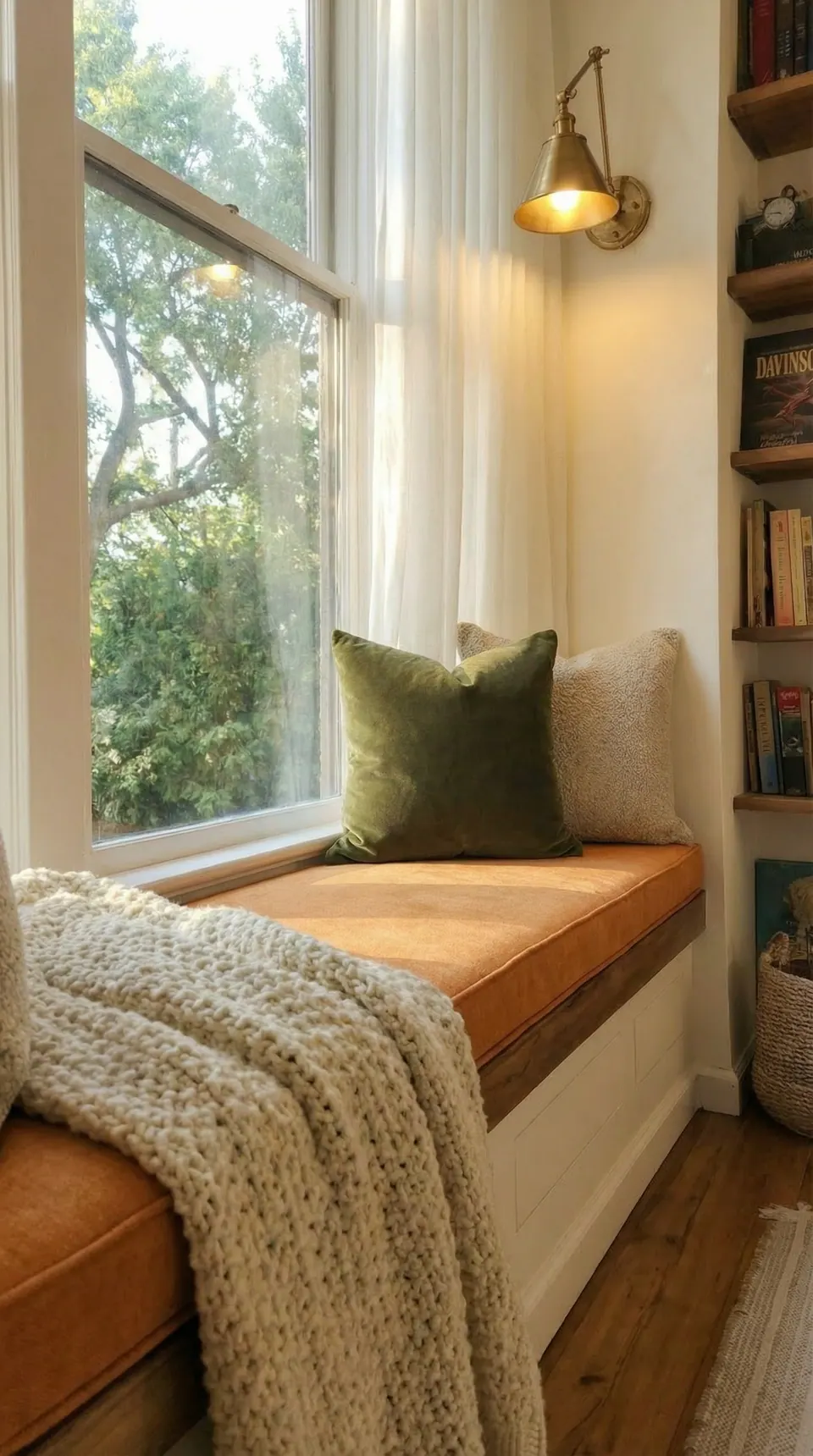
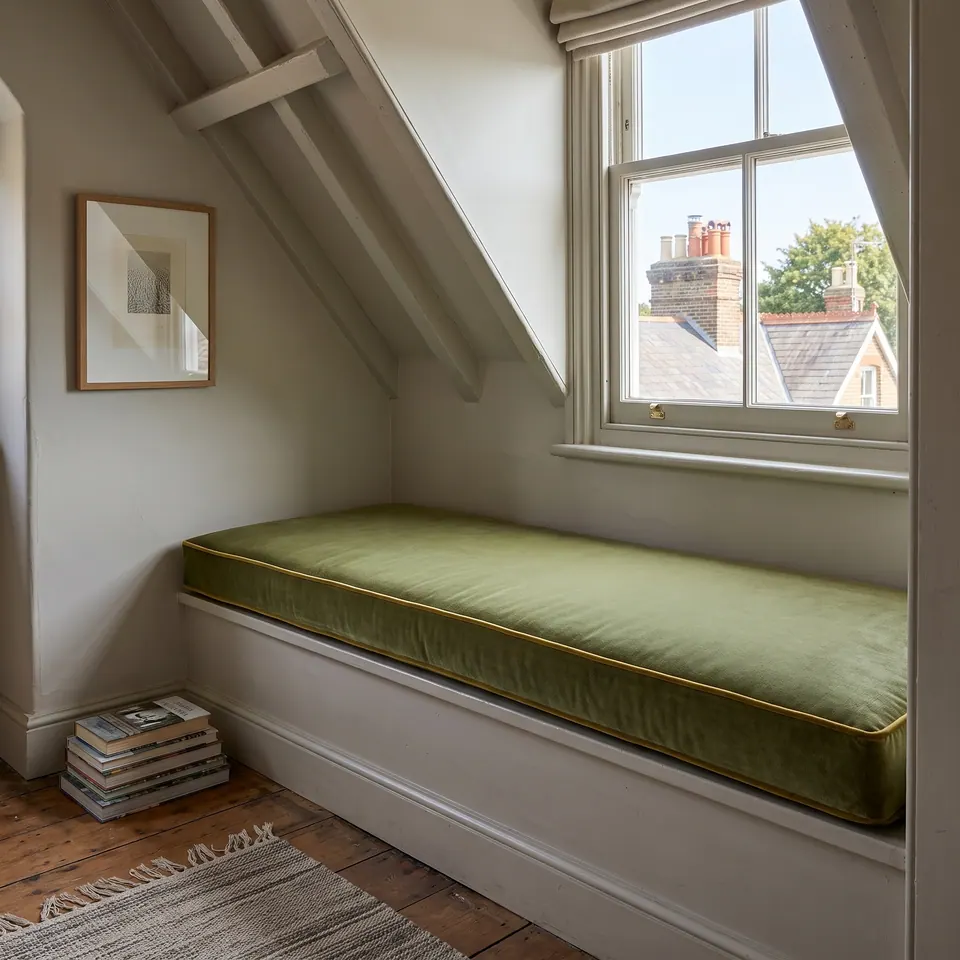
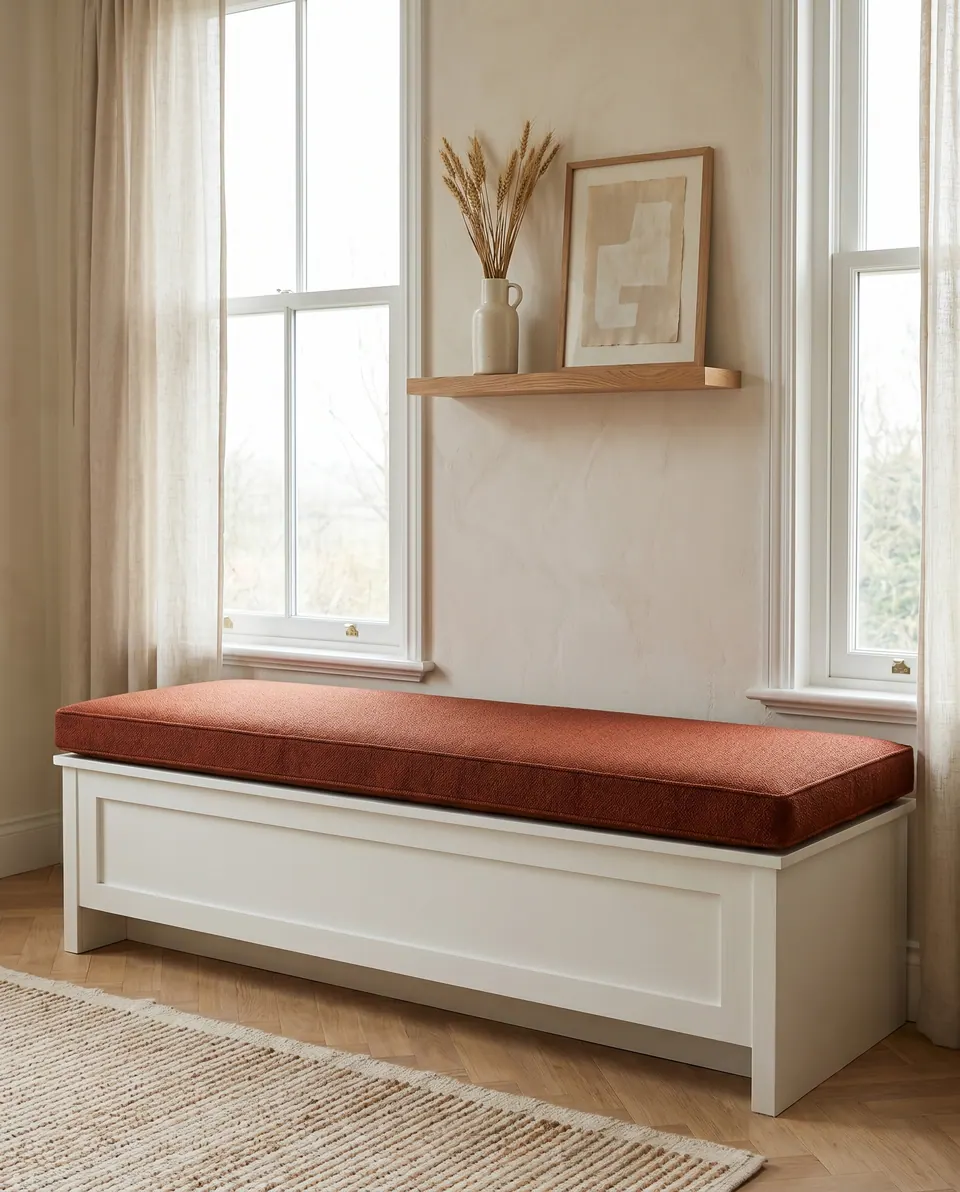
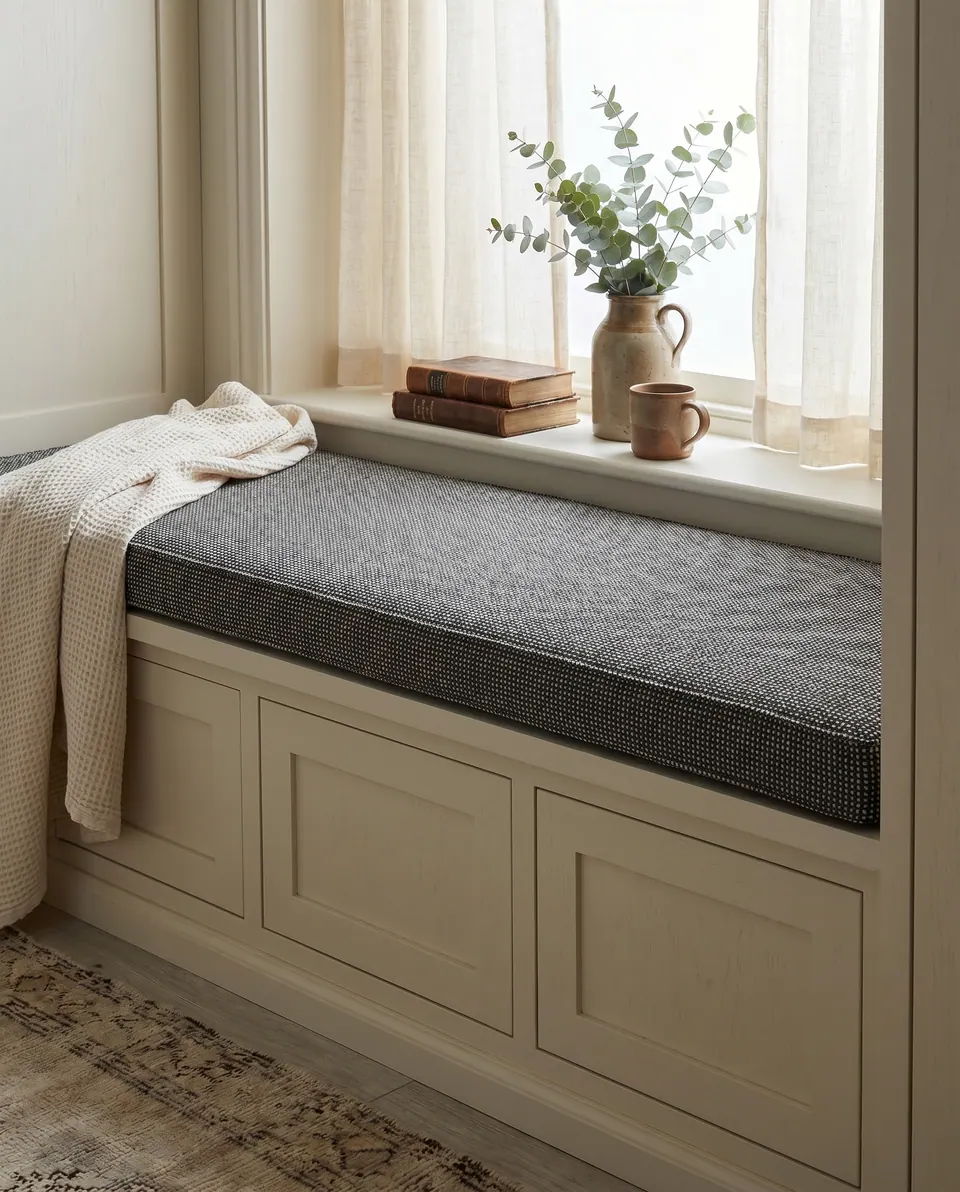
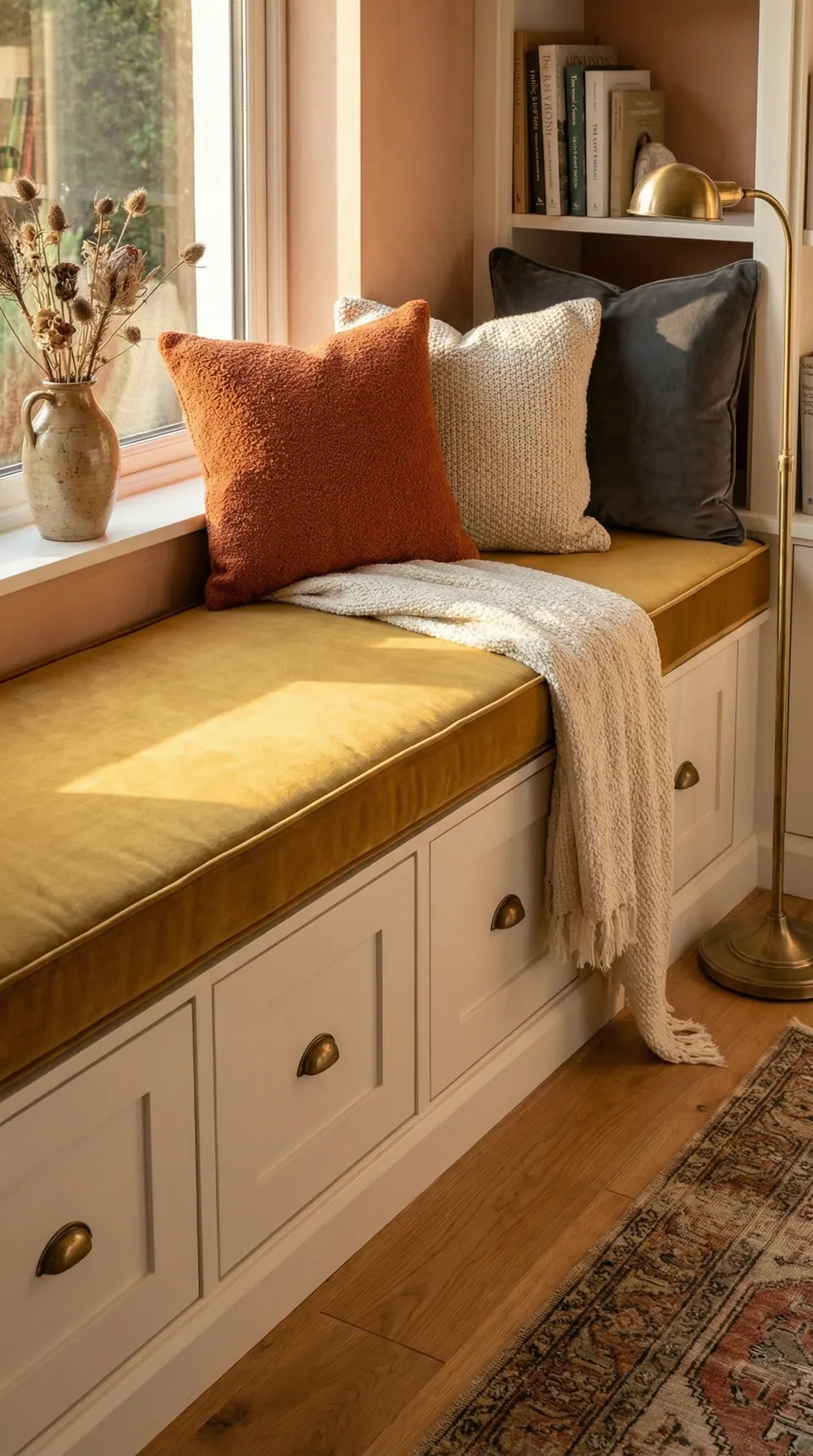
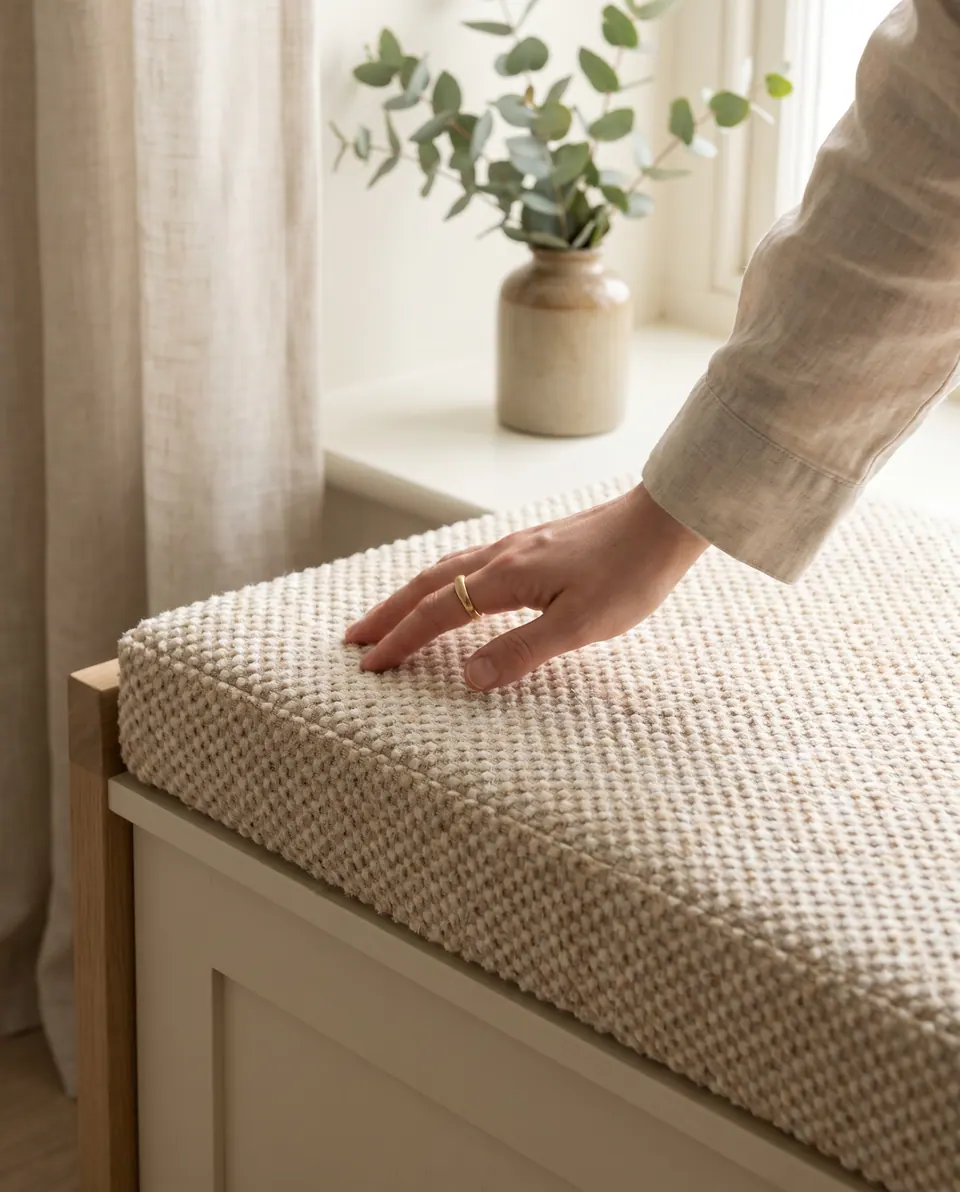
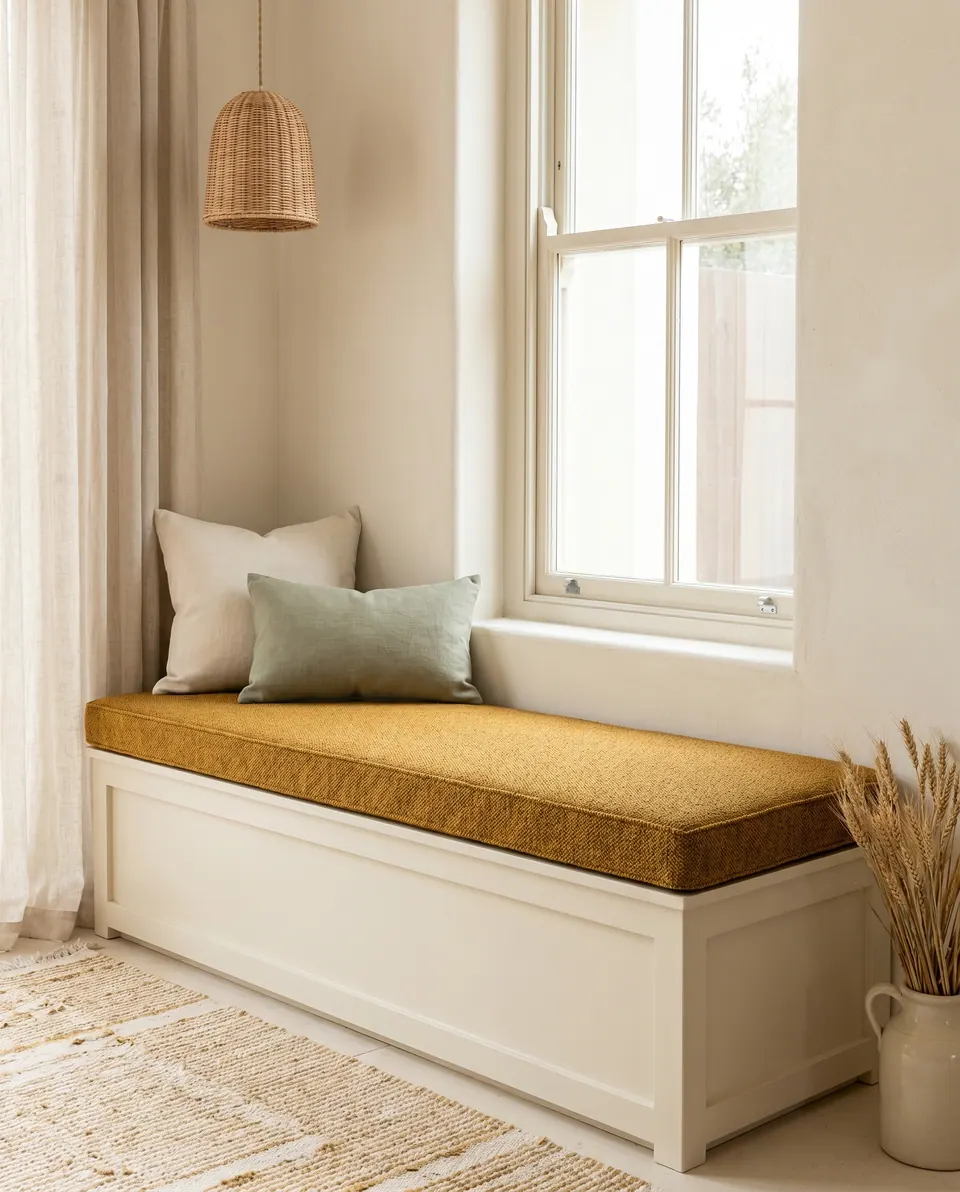
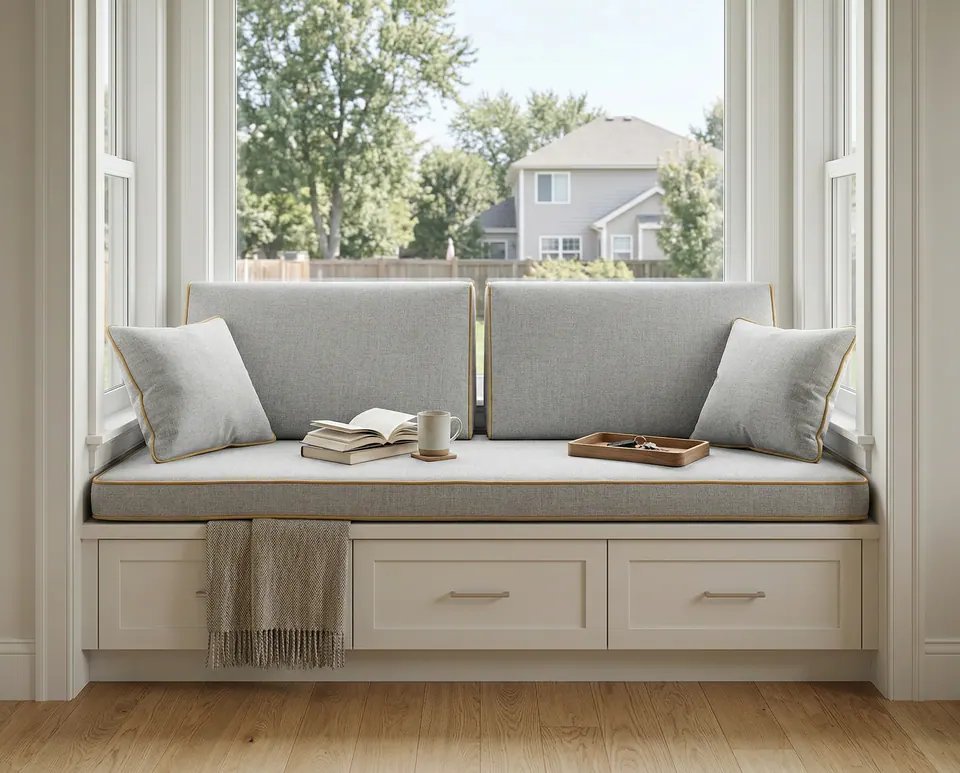
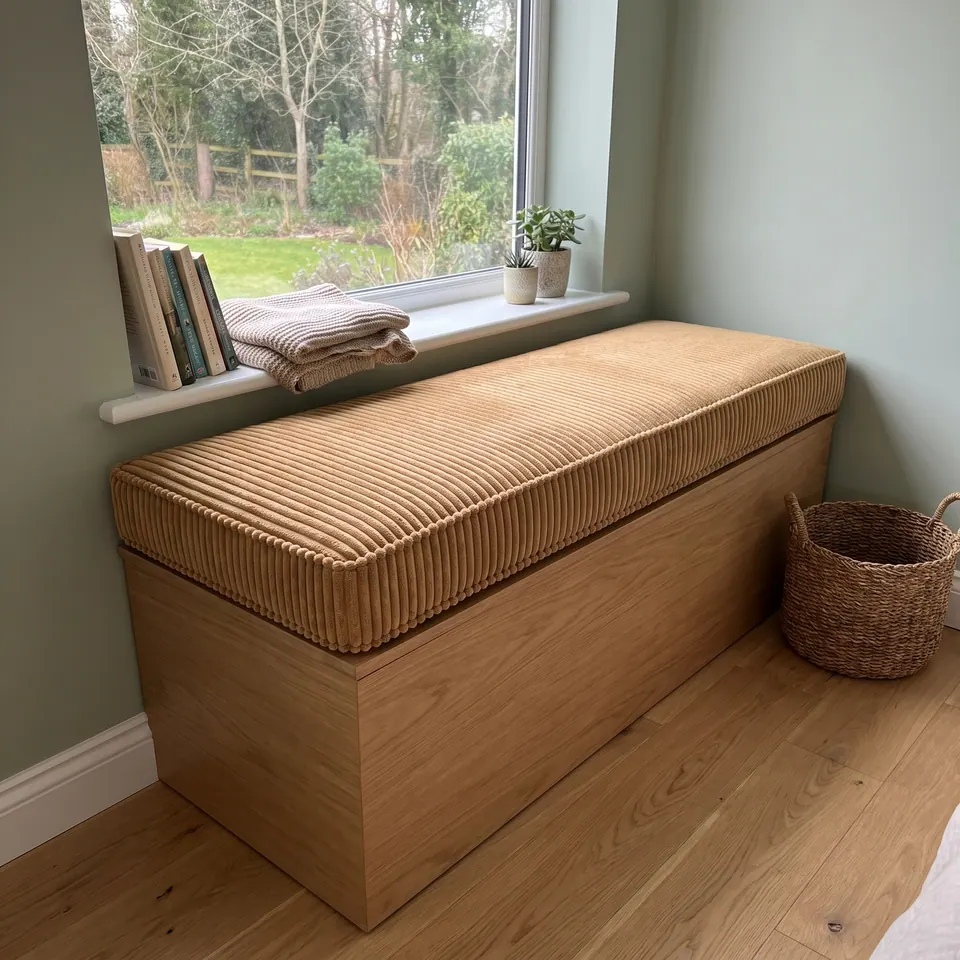
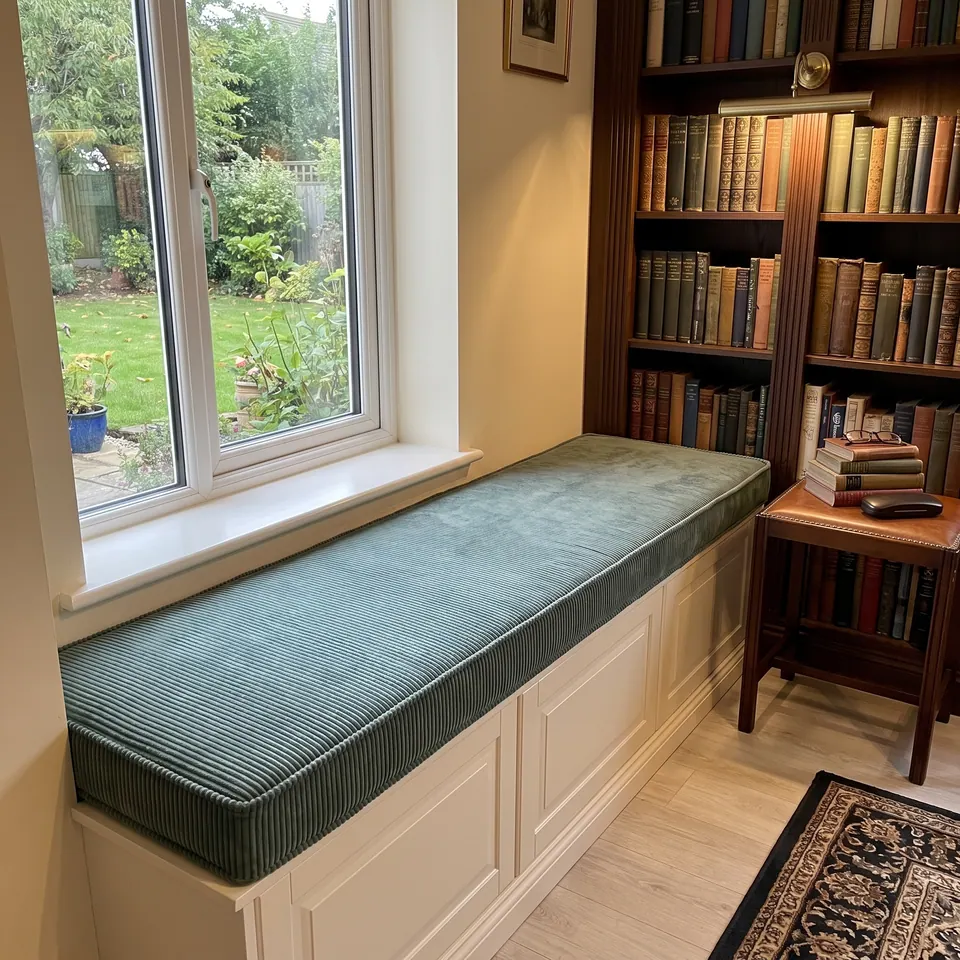
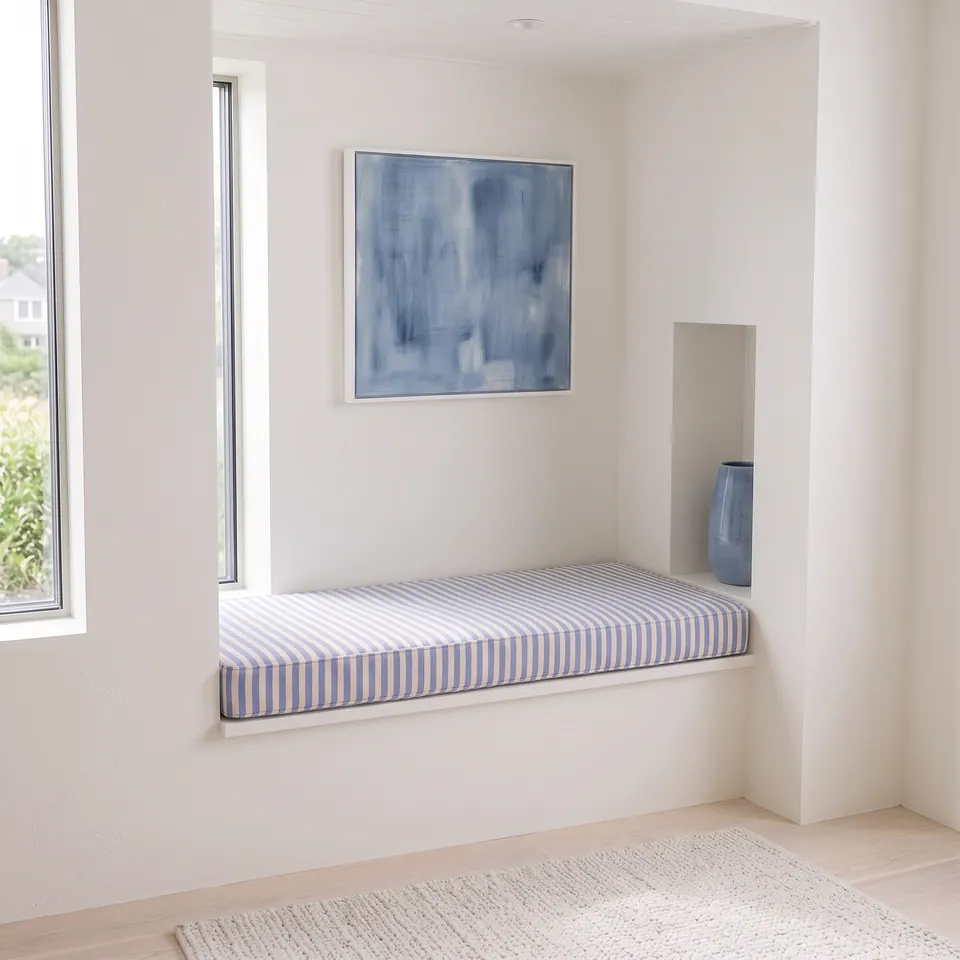
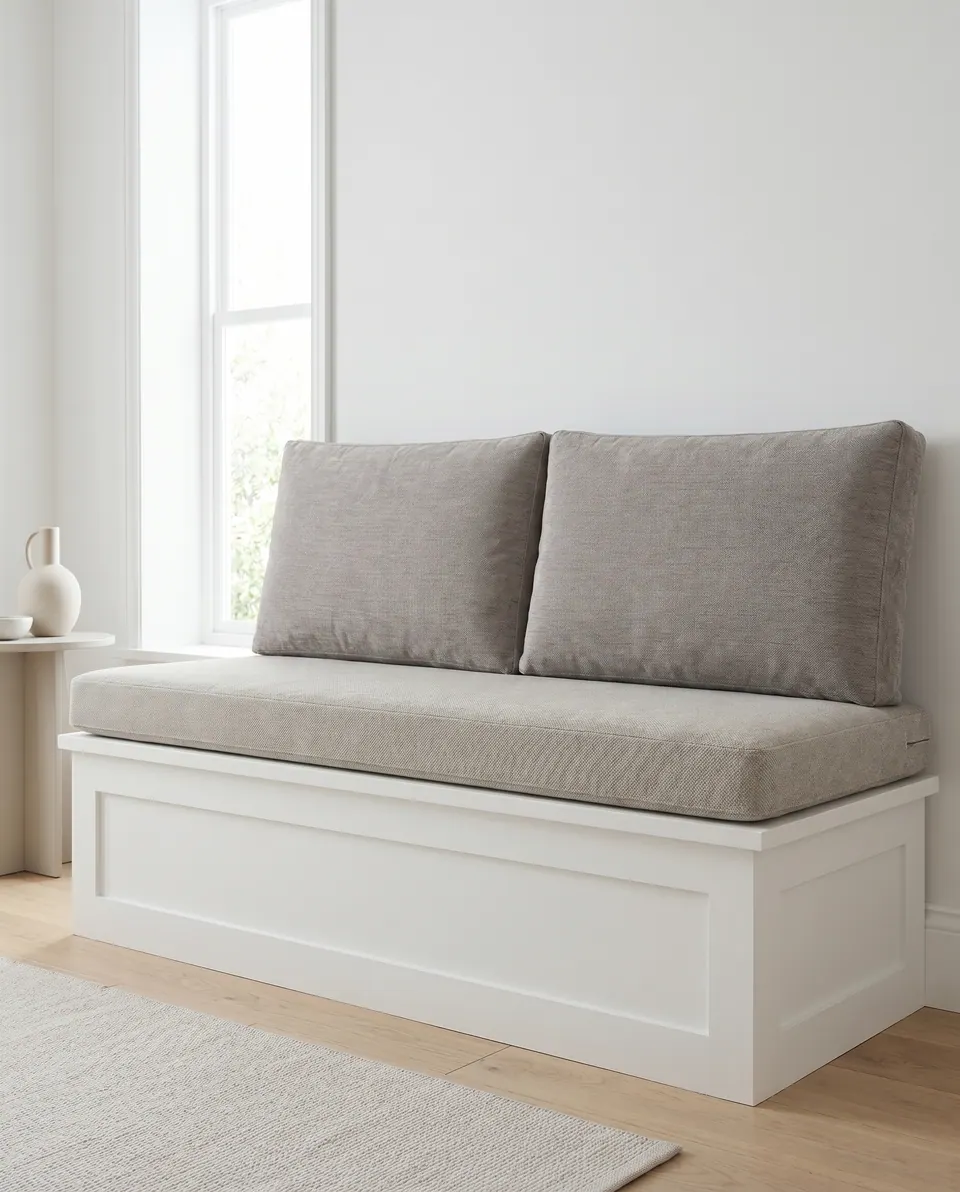
Every photograph here is a real window seat cushion made to measure, read line by line by one of the seven masters. For sizes, foam and fabric, start at the Cushion Atlas page.
Should my piping match the cushion, or go with a contrast color?
The workshop's answer
It's a matter of taste, and orders split about half and half. Matching piping in the same fabric is the workshop's usual advice: lower risk, a clean seamless look. Contrast makes the edges stand out. A code one shade darker, such as L-44 on L-43, gives a subtle outline, and a soft fabric body can even take velvet piping.
What thickness do you suggest for a breakfast-nook bench we'll sit on every day?
The workshop's answer
3 or 4 in (7.5 or 10 cm), and most buyers pick one of those two. The foam is firm 32-density, so even 3 in gives solid support without raising the seat much. 4 in looks and feels plusher.
What measurements do you need for a trapezoid or bay window seat cushion?
The workshop's answer
A simple hand-drawn sketch with every side labeled: the back or wall length, the front length, both angled sides, and the depth from front to back, marked E. On the trapezoid chart, A is often the thickness. For a bay with several windows, measure every line between the breaking points plus the depth at each one, and add a photo of the space. If the numbers cannot close into a shape, the workshop asks you to recheck.