CushionGuide

A Reading by RosaWindow Seat Cushions

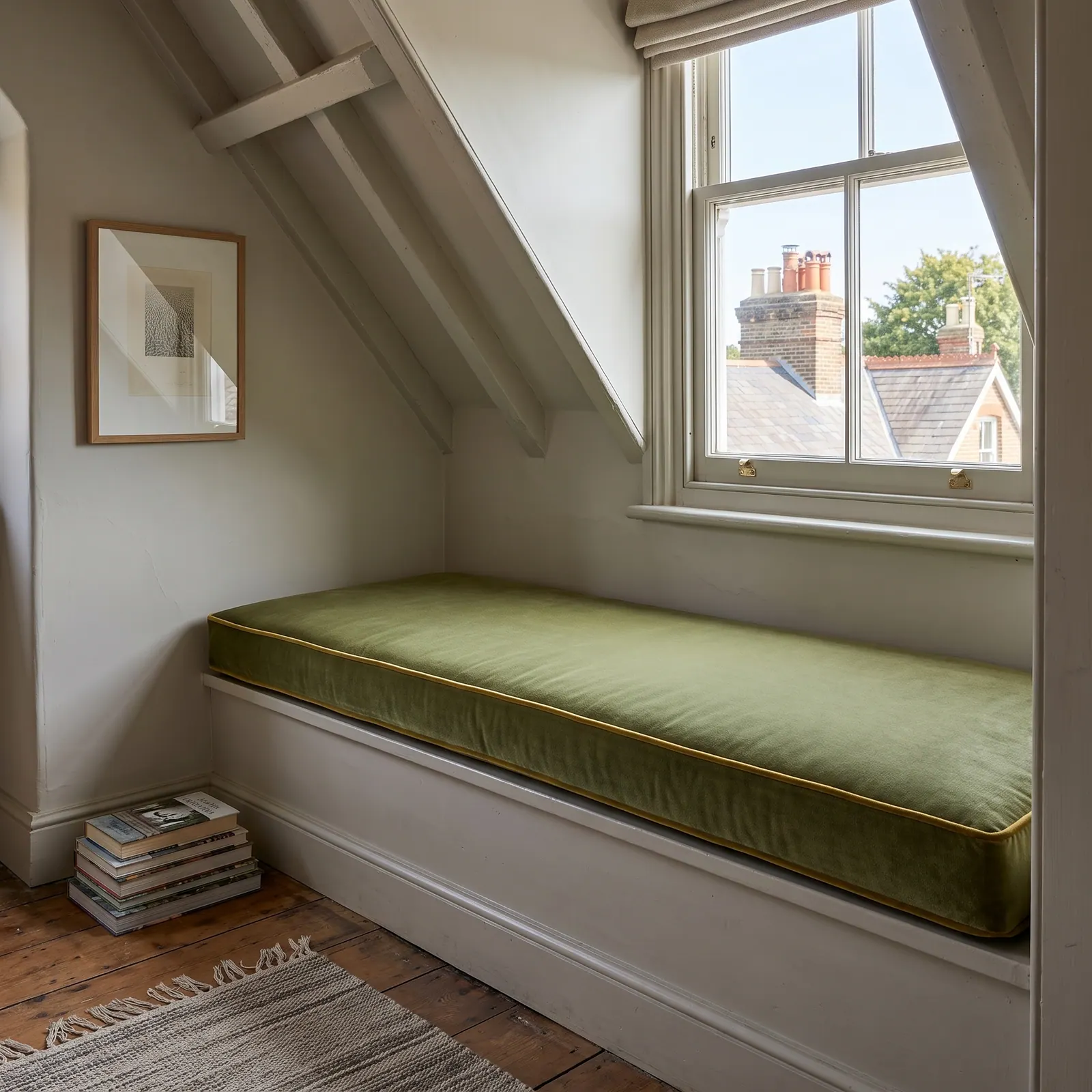
An olive velvet window seat cushion under the rafters, and the gold line around it

Rosa climbs to an attic reading nook and weighs the three welts a cushion can wear, starting with the gold one it has.

The quick answer

For an olive velvet window seat cushion, mustard gold piping adds warmth without harsh contrast, because gold sits right beside olive on the color wheel. Self piping would let the cushion melt into the dormer, and no piping would soften the edge. In a tucked-away attic nook, the gold line is what makes the seat read from the stairs.

Olive green velvet window seat cushion with mustard gold piping in an attic dormer under white-painted raftersSave
An olive green velvet cushion edged in mustard gold fills an attic dormer, turning the space under the rafters into a reading nook with a rooftop view.

Pinned by Rosa: five spots under the rafters

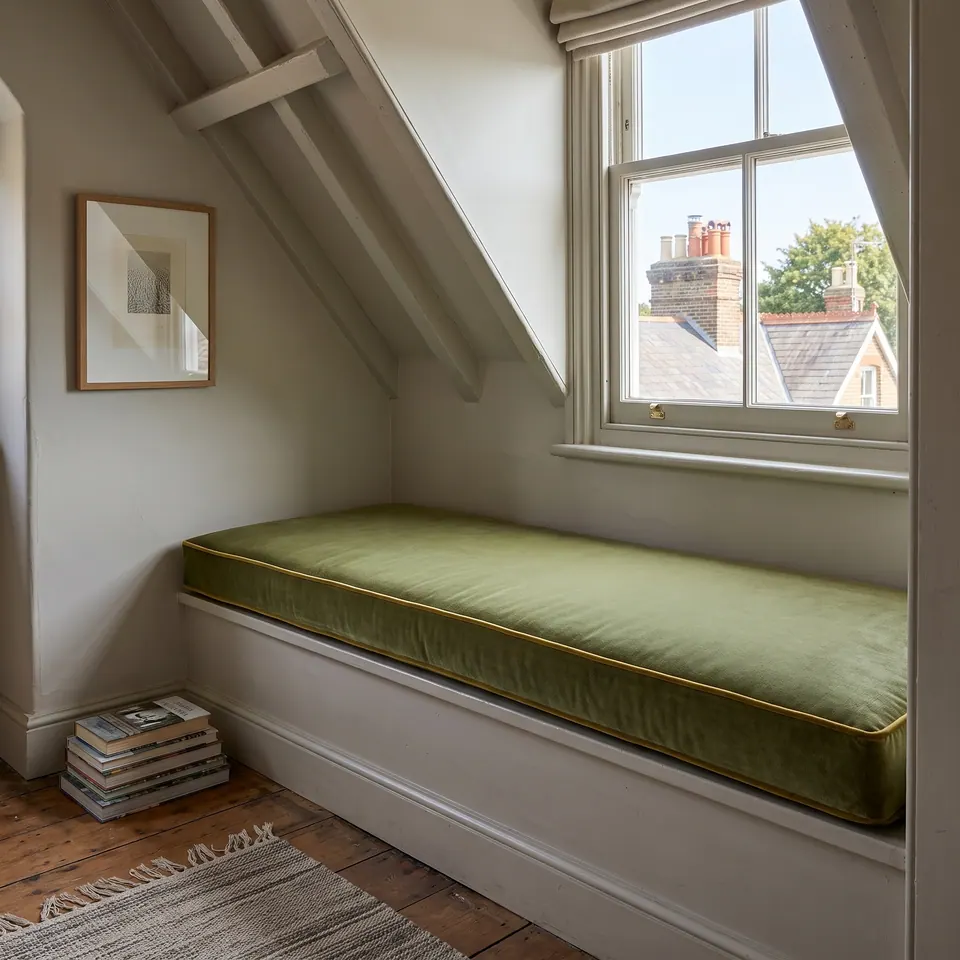
Five pins, from the gold welt on the olive velvet to the chimney pots outside the sash window.
Pinned: Olive green velvet window seat cushion with mustard gold piping in an attic dormer under white-painted rafters
  1. Mustard gold piping

    Gold is olive's neighbor on the color wheel, adding warmth without contrast.

  2. Olive velvet top

    A thicker cushion suits a low dormer plinth and makes it comfortable to sit on.

  3. Stack of books

    Books on the floor are all the styling a reading nook needs.

  4. Painted roof rafters

    Check headroom under the slope before choosing cushion thickness.

  5. Chimney-pot view

    The terracotta pots outside echo the gold piping.

  1. Mustard gold pipingGold is olive's neighbor on the color wheel, adding warmth without contrast.
  2. Olive velvet topA thicker cushion suits a low dormer plinth and makes it comfortable to sit on.
  3. Stack of booksBooks on the floor are all the styling a reading nook needs.
  4. Painted roof raftersCheck headroom under the slope before choosing cushion thickness.
  5. Chimney-pot viewThe terracotta pots outside echo the gold piping.

Up in the dormer: a gold line under white rafters

Pull up a chair. Or rather, climb up, because this one is at the very top of the house.

Somebody turned the dead space in an attic dormer into a reading nook. White-painted rafters slope down on both sides, a sash window looks over rooftops and chimney pots, and on the low plinth sits an olive green velvet window seat cushion edged in mustard gold.

Look at that edge first. Olive and mustard sit side by side on the color wheel, so the gold welt reads as warmth, not contrast. It picks up the terracotta chimney pots outside and the wide pine floorboards inside. From the top of the stairs, that thin gold rim is what tells you the seat is there.

The cushion is noticeably thicker than most I've re-covered, and it should be. A dormer plinth sits low, and the extra height makes it a seat you can get out of without a groan. But thickness costs headroom. Sit on the plinth with a book before you choose, and check that your head clears the slope. The window seat thickness pattern walks through it, and there are more attic nooks in dormer window seat cushions.

The styling is almost nothing: a stack of books, a fringed woven rug, a framed abstract print, a roman blind. Velvet brings enough richness that the nook doesn't need a pile of pillows, and under a slope every extra pillow steals a hip's width of seat.

My grandmother kept her porch cushions plain and let one good edge do the talking. Which edge would you give yours?

Self, contrast or none: three welts for one olive cushion

PipingWhat it does to the lineUnder a sloping ceiling
Mustard gold contrast (as shown)Draws a warm rim around the box edge that reads across the roomMarks a low seat so it shows from the stairs
Self piping in oliveOutlines the edge in shadow; the cushion reads as one solid blockThe calmest choice; the velvet carries the nook alone
No pipingLeaves a soft seam and the least tailored edgeRelaxed and pillowy; only the velvet's sheen marks the corners
A real project

A homemade banquette and a 2-inch question

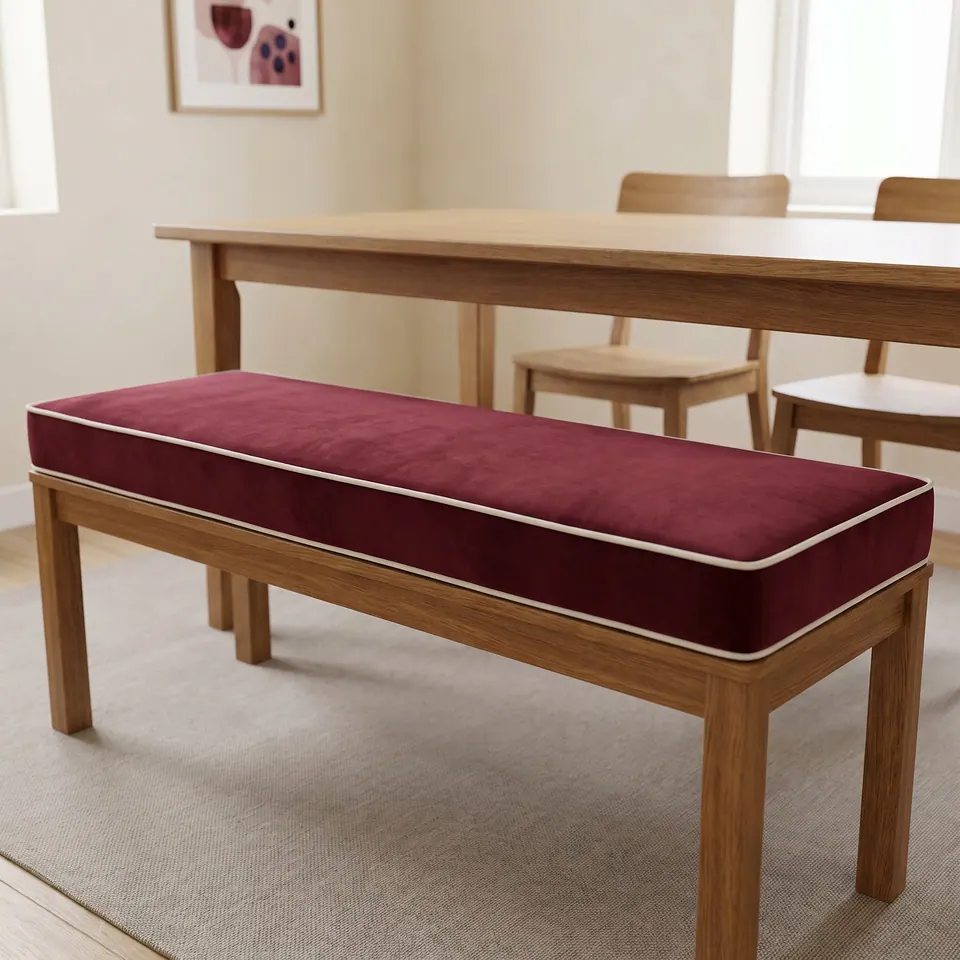
A couple wrote to the workshop after building their own dining banquette. Their question was a good one: was 2 in (5 cm) a normal seat thickness?

The workshop's answer: its standard is 4 in (10 cm), and 2 in is possible. Every cover is zipped and washable, and for daily sitting, velvet or another soft fabric suits well. They needed two cushions, 15 3/8 x 46 7/8 in (39 x 119 cm) and 15 3/8 x 63 3/4 in (39 x 162 cm), and they were weighing two fabric codes with olive-green piping.

Olive piping, neighbor. Same family as the dormer above, just turned inside out. What I took from them: 4 in is the comfortable default for a seat you use every day, and thin pads suit only very high benches. More in banquette cushions and reading nook cushions.

On the cutting table: the dormer seat

ProductWindow seat cushion for an attic dormer
FabricOlive green velvet
PipingContrast welt in mustard gold
EdgeBox edge, thicker than a standard window seat
SettingLow dormer plinth under white-painted rafters
ViewSash window onto rooftops and chimney pots
StylingBooks, a fringed woven rug, a framed abstract print
Check firstHeadroom between the cushion top and the rafters
Best forA tucked-away reading nook at the top of the house

Order this cushion

Have it made

Have this made — ask Rosa’s workshop

Tell the workshop who sits there: grandkids, the dog, a cup of coffee at six. The right fabric and foam follow from the people. — Rosa

Leave your details and the workshop will call you to confirm measurements, fabric, foam and piping. No prices, dates or payment on this page: it is a request, not an order.

Fabric · Foam · Pipingwhat the workshop will confirm with you

Fabric
Olive green velvet
Foam
The core: its density and thickness set the feel.
Piping
Contrast welt in mustard gold
Only for this request: no marketing calls or texts. Outside the US, add the country code.
In inches: length × depth × thickness, plus any angles or cut corners.

* Required. A member of the workshop team will call you to talk it through; nothing is charged and nothing is made until you have agreed on every detail with them.

We use these details only to answer this request and make your cushion: your name and contact details, the cushion details and photos you send, the page you came from and the ad or link that brought you, if any. The workshop that makes the cushions receives them. We don't sell them or share them for advertising, and we delete requests after 24 months. Privacy notice for requests.

Nothing is made or charged until you approve the details.

Want to pick the shape and add photos? Use the full quote form

Buyer questions: trade discounts, an L with a back, and where a backrest starts

  1. A common question

    I'm an interior designer. Is there a designer discount, or a price break for bulk orders?

    The workshop's answer

    There is no formal designer program, but bulk pricing has come into play from about 5 to 6 pieces on past quotes. The workshop has still talked price on a three-cushion project, has taken something extra off when two cushions were ordered together, and has offered returning buyers a discount.

  2. A common question

    Can you make an L-shaped bench cushion with a back cushion on just one side?

    The workshop's answer

    Yes. One L-shaped bench measured 84 x 22 in (213 x 56 cm) on one leg and 62.5 x 21.5 in (159 x 55 cm) on the other, in sage corduroy, with a foam wedge backrest along the 84 in side. Standard thickness is 4 in (10 cm), and it can be changed.

  3. A common question

    For a backrest, do I measure from the top of the seat cushion or from behind it?

    The workshop's answer

    It depends on the look you want, but the workshop usually recommends measuring from the top of the seat cushion. The backrest then sits on the bottom cushion, which looks and fits better.

Olive velvet with mustard gold piping reads as warmth, not contrast, because gold sits right beside olive on the color wheel.

Rosa

Questions buyers ask next

How thick should a dormer window seat cushion be?

Thicker than usual when the plinth is low, since the height makes it easier to sit and stand. The limit is headroom: sit in place with a book and check the slope. For everyday seats the workshop's standard is 4 in (10 cm), and 2 in is possible.

What piping colors go with olive green velvet?

Warm colors that sit next to olive on the color wheel, such as mustard gold, add warmth without a hard edge. A self welt in olive keeps the cushion calm. For more contrast, borrow a color already in the room, like terracotta roof pots through the window.

Can a velvet window seat cushion be made without piping?

Yes. Without piping the seam is softer and more relaxed, and the velvet's sheen marks the corners on its own. Piping makes the box edge crisper and more tailored, which suits a formal room or a seat you want to read from a distance.

Does a small attic reading nook need throw pillows?

Not always. In this dormer a stack of books and a fringed rug are all the styling, and the plinth keeps its full seat width. Add one back pillow only if the wall behind you is hard or cold.

Porch light's on — Rosa