The Cutting Table
The Cutting Table, page 6
Each answer starts from one question buyers ask again and again, then gives the short version, the workshop's reasoning, other ways the question is put and the follow-ups buyers ask next.
765 answers · 28 topics


Foam & fill (continued) 31
Is the floor sofa cold foam or regular high-density foam?
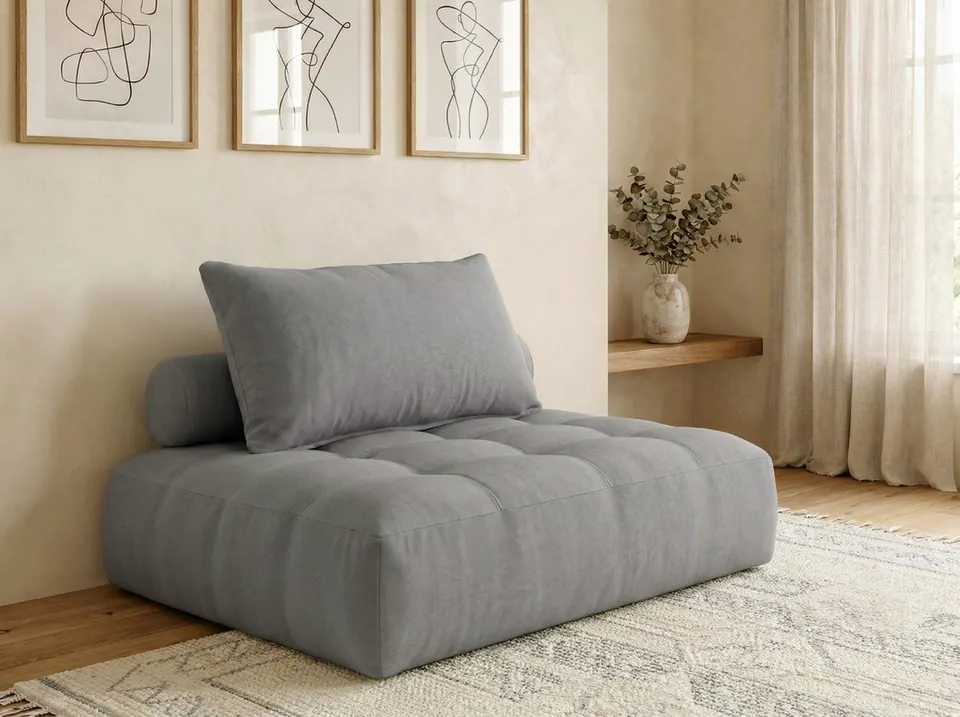
The floor sofa uses cold foam: its base mattresses are HR (high-resilience) cold foam at T28 density with an ILD of 42.
Can a floor cushion be filled with cotton instead of polyester?
Yes, floor cushions, backrests and pillows can be filled with cotton or organic cotton instead of the standard silicone fiber.
What is 32 kg/m³ foam in lb/ft³, and what's its ILD?
32 kg/m³ foam is about 2.0 lb/ft³, so it clears the common 1.8 lb/ft³ high-density requirement.
Will the silicone ball stuffing in a floor cushion flatten over time?
Silicone ball stuffing is packed too densely to flatten: the workshop puts about 18-22 lb (8-10 kg) of fill into a 60 in (152 cm) floor cushion, and calls collapse practically impossible.
What is silicone ball filling made of? Is it real silicone?
Silicone ball filling is siliconized polyester fiber rolled into small, loose clusters, not food-grade silicone and not cotton.
Can I get a softer, plusher bench cushion instead of firm foam?
Yes, a bench cushion can be made softer by asking for 28-density foam instead of the standard 32-density medium-firm foam.
Which is firmer for stacking cushions or a headboard: foam or fiber fill?
Foam is firmer than fiber fill: it makes a solid block that stacks and keeps its edges, which is why stacked Mah Jong-style floor cushions are foam-filled.
What density foam is inside a floor sofa?
Floor sofa seat mattresses use 28-density high-density foam, about 1.75 lb/ft³ (28 kg/m³): a medium-hard flexi foam that stays comfortable and lasts for years without collapsing.
Is the cushion foam wrapped in Dacron, or is it just a bare block?
No, the cushion foam is not a bare block: it is wrapped in polyester fiber (Dacron) wadding before it goes into the cover.
Firmness & thickness 31
The floor sofa seat is too low. How can I make it higher?
A floor sofa seat that feels too low can be raised by stacking an extra seat cushion or a pair of flat base mattresses, or by adding a custom 4-5 in (10-13 cm) layer.
How thin can a window seat cushion be so the window still opens?
A window seat cushion can be made as thin as 3/4 in (2 cm), but 2 in (5 cm) is the thinnest recommended for sitting.
What thickness should a dining bench or breakfast nook cushion be?
For a dining bench or breakfast nook used every day, choose a cushion 3 or 4 in (7.5-10 cm) thick; most buyers pick one of those.
Can you make my cushion thinner or thicker than the standard 4 inches?
Yes, cushion thickness is fully custom: the standard is 4 in (10 cm), but cushions have been made from about 3/4 in (2 cm) up to 9 in (23 cm), and floor cushions up to 10 in (25 cm).
The front edge of my floor sofa seat sinks when I sit. Is that normal?
Some softness at the front edge of a foam floor-sofa seat is normal, especially where legs hang over it.
Are your cushions only 4 inches thick, or can I get 2 or 3 inches?
No, 4 in is not the only thickness: the standard menu offers 2, 3, 4 and 5 in (5, 7.5, 10 and 12.5 cm).
My cushion is too thick. Can I put thinner foam in the cover or reorder it thinner?
Reorder the cushion thinner instead of swapping foam: covers are sewn to one foam thickness, so 2 in (5 cm) foam in a cover made for 4 in (10 cm) sits loose and baggy.
Is a bench pad the same as a bench cushion?
A bench pad is a slim bench cushion, usually 2 in (5 cm) thick; a bench cushion runs 3 to 5 in (7.5 to 12.5 cm), with 4 in (10 cm) the standard.
Should a chair seat cushion be 2 in (5 cm) or 3 in (7.5 cm) thick?
For most chair pads, 2 in (5 cm) is the right thickness, with 3 in (7.5 cm) or 4 in (10 cm) available for more cushion.
How thick are your floor cushions?
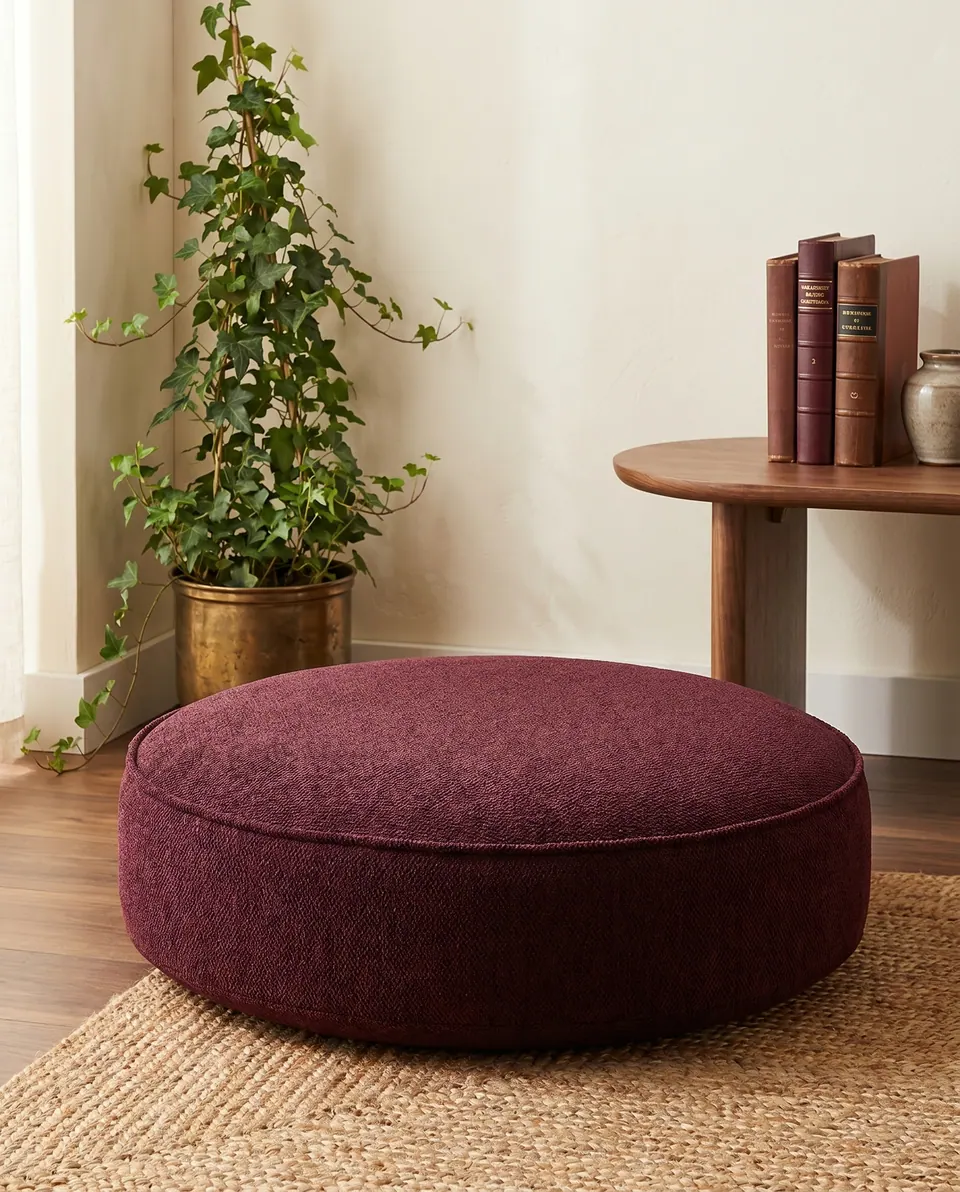
Standard tufted linen floor cushions are about 4 in (10 cm) thick, with some listings at 4-5 in (10-12 cm).
What's the thickest cushion you can make? Can I get 6¼ or 9¾ in (16 or 25 cm)?
The thickest custom seat cushion the workshop states is about 15.7 in (40 cm), even though the standard menu tops out at about 5-6 in (12.5-15 cm).
Do tufted floor cushions flatten, and can I choose soft or firm filling?
Tufted floor cushions are filled very generously, so they stay firm and barely compress when you sit, and you can ask for soft or firm filling.
What's the difference between a 2, 3, 4 and 5 inch cushion?
The difference between a 2, 3, 4 and 5 inch cushion is mostly the look: 2 in is a slim pad, 3 in a neat middle ground, 4 in noticeably plumper and 5 in the deepest standard option.
Can the back cushion be thinner than the seat cushion?
Yes, a back cushion can be thinner than its seat cushion when you order each cushion separately and write its thickness in personalization: a 4 in (10 cm) seat with a 2 or 3 in (5 or 7.5 cm) back is…
Can I get a thicker floor cushion, like 8, 10 or 12 inches?
Yes, floor cushions can be made thicker than the standard 4 in (10 cm): 5, 6, 8, 10 or 12 in, or up to 11¾ in (30 cm) in metric sizes.
Are tufted floor cushions firm or soft?
Tufted floor cushions are firm: the workshop rates them about 6-7 on a scale where 1 is very plush and 10 is a firm bed you barely sink into.
How thick are your bench cushions? Is 4 inches the standard?
Yes, 4 in (10 cm) is the standard thickness for bench, window seat and floor cushions, and it's what most listing photos show.
Can I get a 2.5 or 4.5 inch thick cushion?
Yes, a 2.5 in (6.4 cm) or 4.5 in (11.4 cm) thick cushion can be made: choose the nearest thickness option and write the exact figure in the personalization or exact-size note.
Is foam density the same as firmness, and can I choose how firm my cushion is?
No, foam density is not the same as firmness: density is the foam's quality and weight, which drives durability, while firmness is how the foam feels.
Will the cushion hold its shape on a bench that gets sat on every day?
Yes, a high-density foam bench cushion holds its shape under heavy daily use, and tufted cushions do too.
Can you make the floor sofa seat cushions thicker?
No, floor sofa mattress thickness can't be customized: each seat mattress is about 7.5 in (19 cm) thick, or about 15 in (38 cm) with both stacked as a sofa, in 28-density high-density foam.
Is a 3 or 4 inch cushion thick enough on a hard wooden bench?
Yes, a 3 inch (7.5 cm) cushion is thick enough over a plywood kitchen nook bench, and 4 in (10 cm) is the recommendation for sitting and napping on a hard wooden or wicker base.
Can you make a 6 inch thick bench cushion?
Yes, a 6 in (15 cm) thick bench cushion is made to order, and thicker cushions of 7, 7.5 and 8 in can be made too.
Some of my sofa cushions are still flat after unboxing. What should I do?
Give a flat foam cushion more time: compressed foam can keep expanding for another 1 to 2 days, and full recovery can take up to a week.
Does a thicker cushion cost more, and is a thinner one cheaper?
Within the standard range, a thicker cushion costs the same: 2, 3, 4 and 5 in (5 to 13 cm) are one price, so thinner is not cheaper.
Is a floor sofa firm or soft to sit on?
A floor sofa on 28-density foam is medium-firm: the seat and ottoman cushions are medium-hard, high-density foam of about 1.75 lb/ft³ (28 kg/m³).
What's the thinnest seat cushion you can make? Can I get 1 inch?
2 in (5 cm) is the thinnest standard seat cushion and the minimum recommended for sitting, but thinner pads are made to order.
How firm is the foam? I want a bench seat I don't sink into.
Very firm: the bench cushions use high-density foam of about 2.0 lb/ft³ (32 kg/m³), which supports you without sinking and holds its shape over time.
Can I stack two floor cushions for a higher seat instead of buying one thick one?
Yes, you can stack floor cushions for a higher seat, and it is often cheaper: swapping 12 in seats for two stacked 6 in (15 cm) cushions cut one buyer's quote by about a third.
Can I get a softer or firmer floor sofa?
Partly, on request: firmer sofa cushions have been made for users over 220 lb (100 kg), and a puffier, softer filling has been offered for the seat mattresses and backrests.
What cushion thickness do most people choose?
Most buyers choose a 3 or 4 in seat cushion, and 4 in (10 cm) is the standard for everyday seating.
Piping & welt 16
How do I choose my piping color when I order?
To choose your piping color, pick any code from the fabric charts and write it in the personalization box as 'Body: code, Piping: code'.
Does the piping go around both the top and bottom of the cushion?
Yes, the piping runs around both the top and bottom edges of the cushion, and both faces are cut from the same fabric, so it can be flipped.
What is that little strip around the edge of my cushion called?
Piping is the thin fabric-covered cord sewn into the seams along a cushion's edges.
Can I order my cushion without piping, and is it cheaper?
Any cushion can be made without piping, but it costs the same, because piping is already included in the price.
Can I get a French edge instead of piping?
You can get a French edge only on a tufted cushion; covers sold on their own, such as replacement covers, are made with piping only.
Should I get piping on my cushions or not?
Piping is a style choice, not an upgrade: cushions cost the same with or without it.
Should my piping match the cushion or be a contrast color?
Either works: about half of custom cushion orders use matching piping and half use contrast.
Can you add piping to tufted cushions?
Piping works on some tufted cushions but not on tufted daybed backrests and armrests, so those pieces switch to a plain, non-tufted style if you want piping everywhere, and the shop sends an example…
Can the piping be a different fabric from the cushion, like velvet piping on linen?
Yes, the piping can be a different fabric type from the cushion body, and velvet piping on a linen cushion is a common mix.
Can the piping be a different color from the cushion?
Yes: piping can be cut from any color in the fabric charts, matching or contrasting, at no extra cost.
Buyer questions
- A common question
What foam goes into the floor sofa base, and what density?
The workshop's answerThe base mattresses are HR (high-resilience) cold foam, density T28, with an elasticity of ILD 42. The backrests are filled with shredded foam.
The full answer: Is the floor sofa cold foam or regular high-density foam?
- A common question
What foam density do you use in the modular sofa?
The workshop's answerThe seats use 28-density high-density foam with a 42 ILD firmness, and the backrests are foam filled. Cheaper look-alikes often use low-density foam and solid-foam backrests.
- A common question
Are your cushions only 4 inches thick, or can I get them thinner, like 2 inches?
The workshop's answerFour thicknesses are standard: 2, 3, 4 and 5 in (5, 7.5, 10 and 12.5 cm on metric listings). Choose it in the thickness option, or in Add Personalization after selecting your size. The listing photos show 4 in (10 cm) cushions, and most buyers choose 3 or 4 in.
The full answer: Are your cushions only 4 inches thick, or can I get 2 or 3 inches?