The Cutting Table · a question, worked through
What cushion thickness do most people choose?
Two numbers win almost every time, partner. Choosing between them is about fit and look, not price.

Pinned by Nate
The quick answer
Most buyers choose a 3 or 4 in seat cushion, and 4 in (10 cm) is the standard for everyday seating. Pick 4 in for a plush, tailored window seat and 3 in (7.5 cm) for a bench or a tight spot under a sill. Firm 32 kg/m³ foam keeps even 2 in pads supportive, and 2, 3, 4 and 5 in cost the same.
Get a quote for a bench cushion
Key facts
- Most buyers choose a 3 or 4 in (7.5 or 10 cm) seat cushion.
- 4 in (10 cm) is the standard, recommended for everyday seating and a tailored built-in window seat.
- 3 in (7.5 cm) is the best seller for bench cushions and suits tight spots, such as a 15 in (38 cm) gap under a windowsill.
- The foam is firm high-density foam, about 2.0 lb/ft³ (32 kg/m³), so 2 to 2.5 in (5 to 6.5 cm) pads stay supportive in dining nooks.
- Workshop guidelines: 3 to 4 in (7.5 to 10 cm) for outdoor benches and outdoor chair seats, 2 to 3 in (5 to 8 cm) for curved benches.
- The standard 2, 3, 4 and 5 in options cost the same, so choose on fit and looks.

Have it made
Have Nate’s workshop cut this for you
Send the numbers in inches: length × depth × thickness, plus any angle. The workshop checks them with you, because foam has no undo button. — Nate
Leave your details and the workshop will call you to confirm measurements, fabric, foam and piping. No prices, dates or payment on this page: it is a request, not an order.
So which is it, 3 in or 4 in?
Both. Ask which thickness sells most and the replies split: some name 4 in, others call 3 in the best seller for bench cushions. Two kinds of seat, not a contradiction.
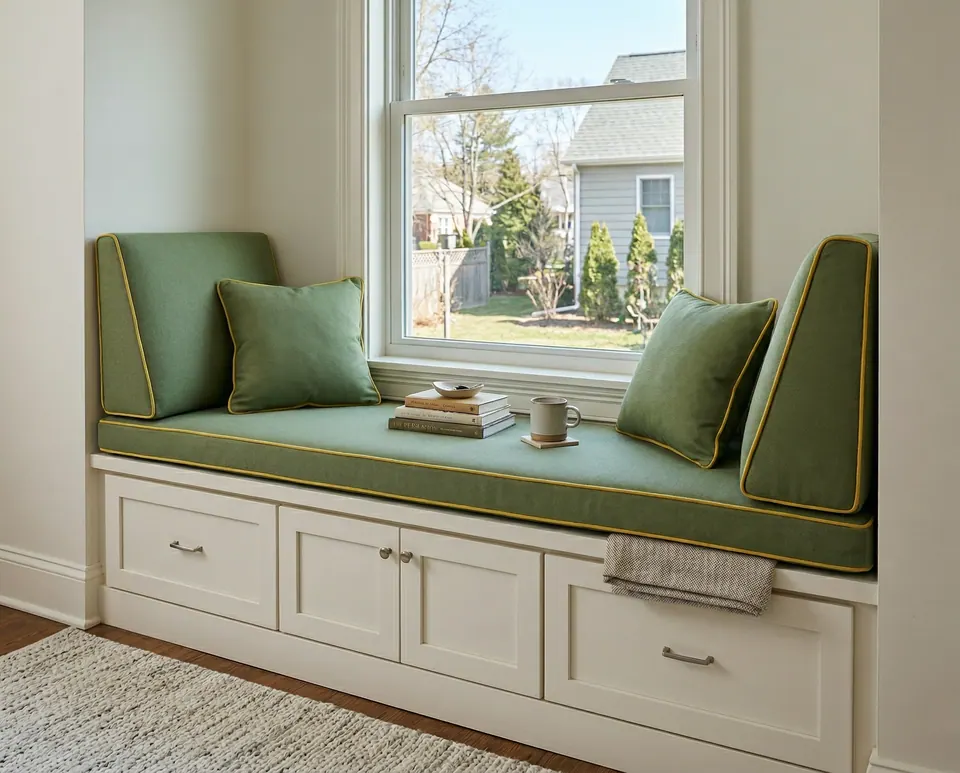
4 in (10 cm) is the default. It sits plusher, and on a built-in window seat it reads like upholstery rather than a pad.
3 in (7.5 cm) gives a trimmer profile where height is tight. The foam is firm, so thinner is not flimsy; the foam firmness finder shows where it sits.
Thickness by seat, from the workshop's guidelines
| Seat | Workshop pick |
|---|---|
| Everyday seat, built-in window seat | 4 in (10 cm) |
| Bench, or a tight spot under a sill | 3 in (7.5 cm) |
| Dining nook | 2 to 2.5 in (5 to 6.5 cm) |
| Outdoor bench or chair seat | 3 to 4 in (7.5 to 10 cm) |
| Curved bench | 2 to 3 in (5 to 8 cm) |
Other thicknesses, such as 6 in, are made on request.
And if the sill leaves only 15 in above the bench?
That came up in a past order: a 15 in (38 cm) gap between bench and windowsill. The answer was 3 in.
What does your gap measure, seat to sill? Measure it first. If the number falls between options, say 4.5 in, pick the nearest one and write the exact thickness in the personalization box. The window seat cushion thickness pattern works through the heights.
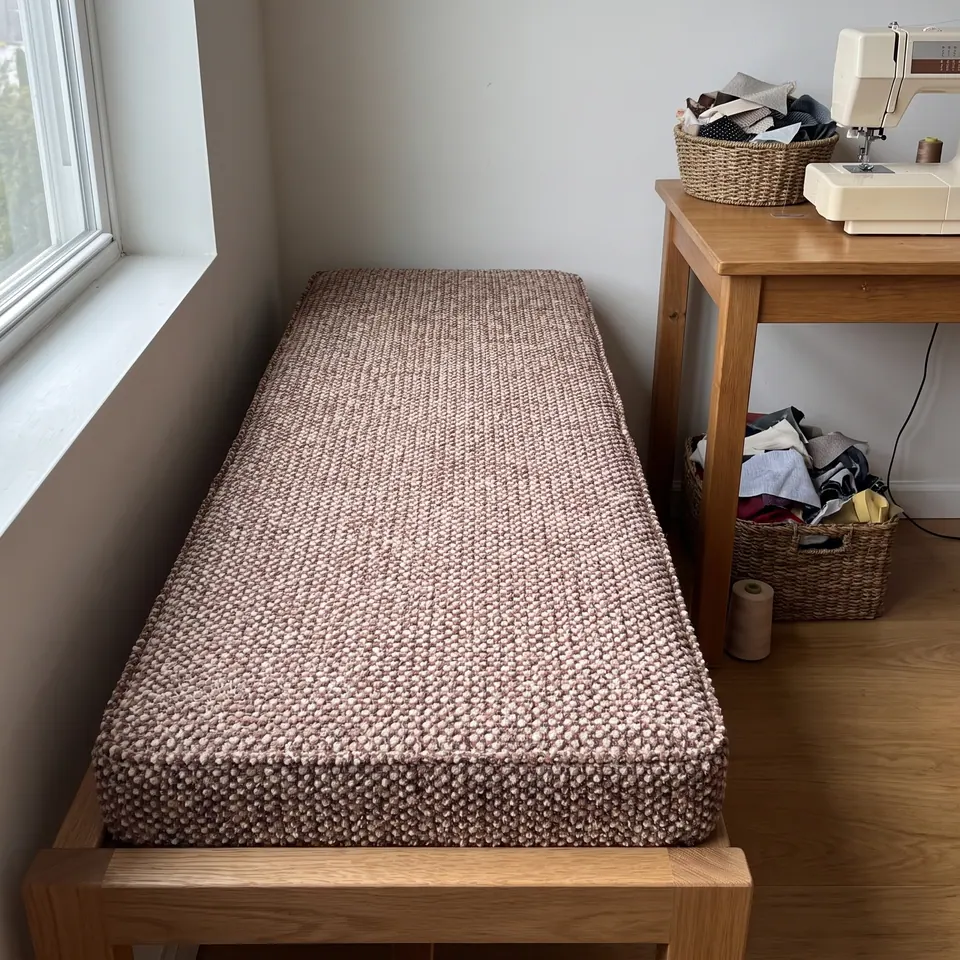
Most seat cushions end up 3 or 4 in thick: 4 in for everyday comfort and a tailored window seat, 3 in for a trimmer bench under a low sill.
Nate
Buyer questions
- A common question
What thickness options are there, and which do you recommend?
The workshop's answerStandard options are 2, 3, 4 and 5 in, all at the same price. Most buyers choose 3 or 4 in: 3 in gives a neater, lower profile on a window seat, 4 in gives more cushioning.
- A common question
What thickness and foam density work for everyday seating?
The workshop's answer4 in (10 cm) with high-density 32 kg/m³ foam: soft enough to be comfortable, firm enough to keep its shape. Because the foam is firm, 2 to 2.5 in pads still stay supportive in dining nooks.
- A common question
Which thickness gives a structured look on a long velvet bench?
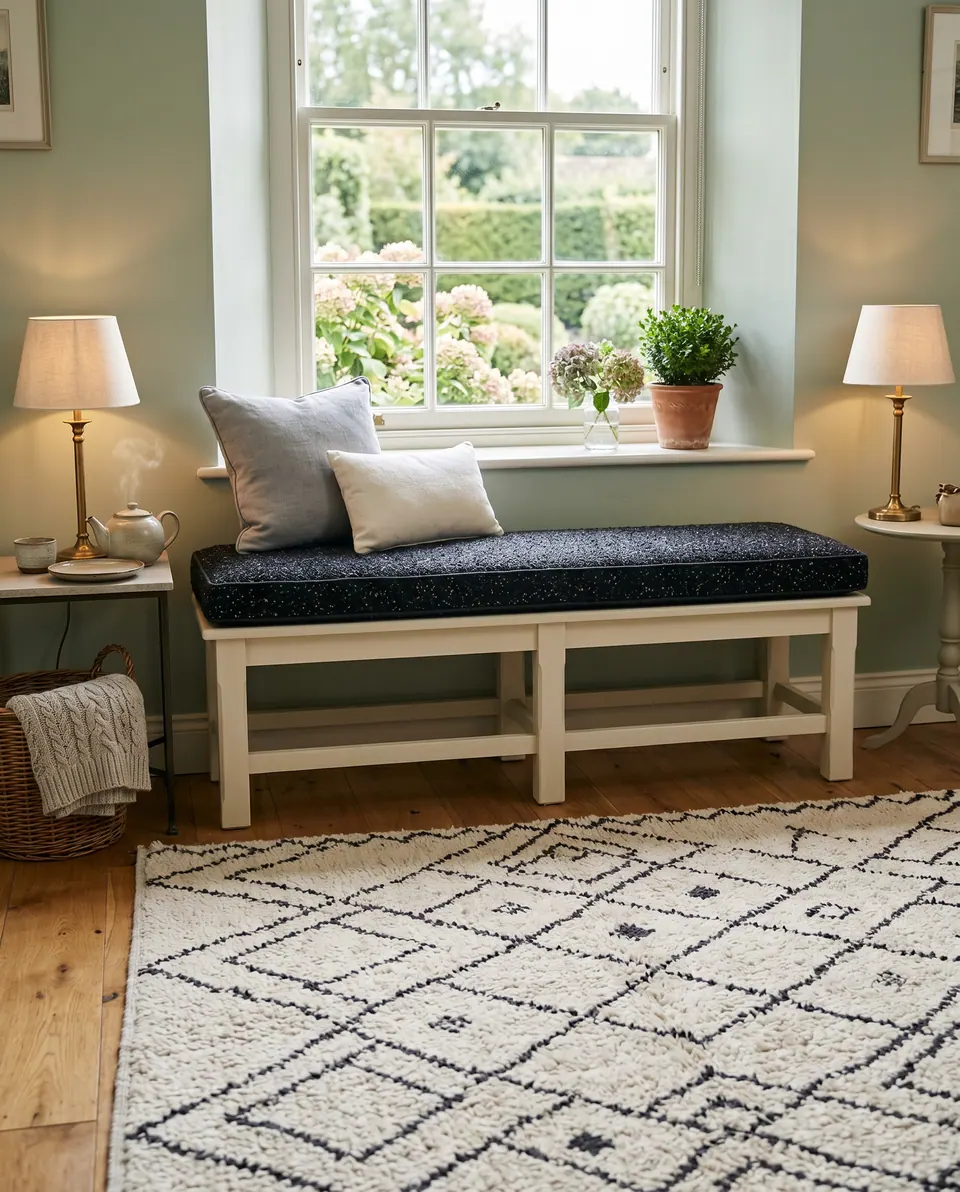
The workshop's answerMost customers choose 3 in (7.5 cm), which the workshop considers the most suitable thickness for bench cushions, boxed with same-fabric piping.
Questions buyers ask next
How thin can a seat cushion be and still feel supportive?
With firm high-density foam of about 2.0 lb/ft³ (32 kg/m³), a 2 to 2.5 in (5 to 6.5 cm) pad still supports you. That is why thin pads suit dining nooks.
Does a thicker cushion cost more?
Not among the standard options: 2, 3, 4 and 5 in are priced the same. Thicker made-to-order pieces, such as 8, 10 or 12 in floor cushions, do cost more, so ask for a quote.
What thickness suits an outdoor bench or patio chair?
The workshop's guideline is 3 to 4 in (7.5 to 10 cm) for outdoor benches and outdoor chair seats. Curved benches sit best a little thinner, at about 2 to 3 in (5 to 8 cm).