 Save
A Reading by NateBench Cushions
A mocha tweed bench cushion and the rule of three scales
Nate reads a window-lit sewing corner as a problem in scale: one weave, two baskets, a floor full of lines and a wall left plain.
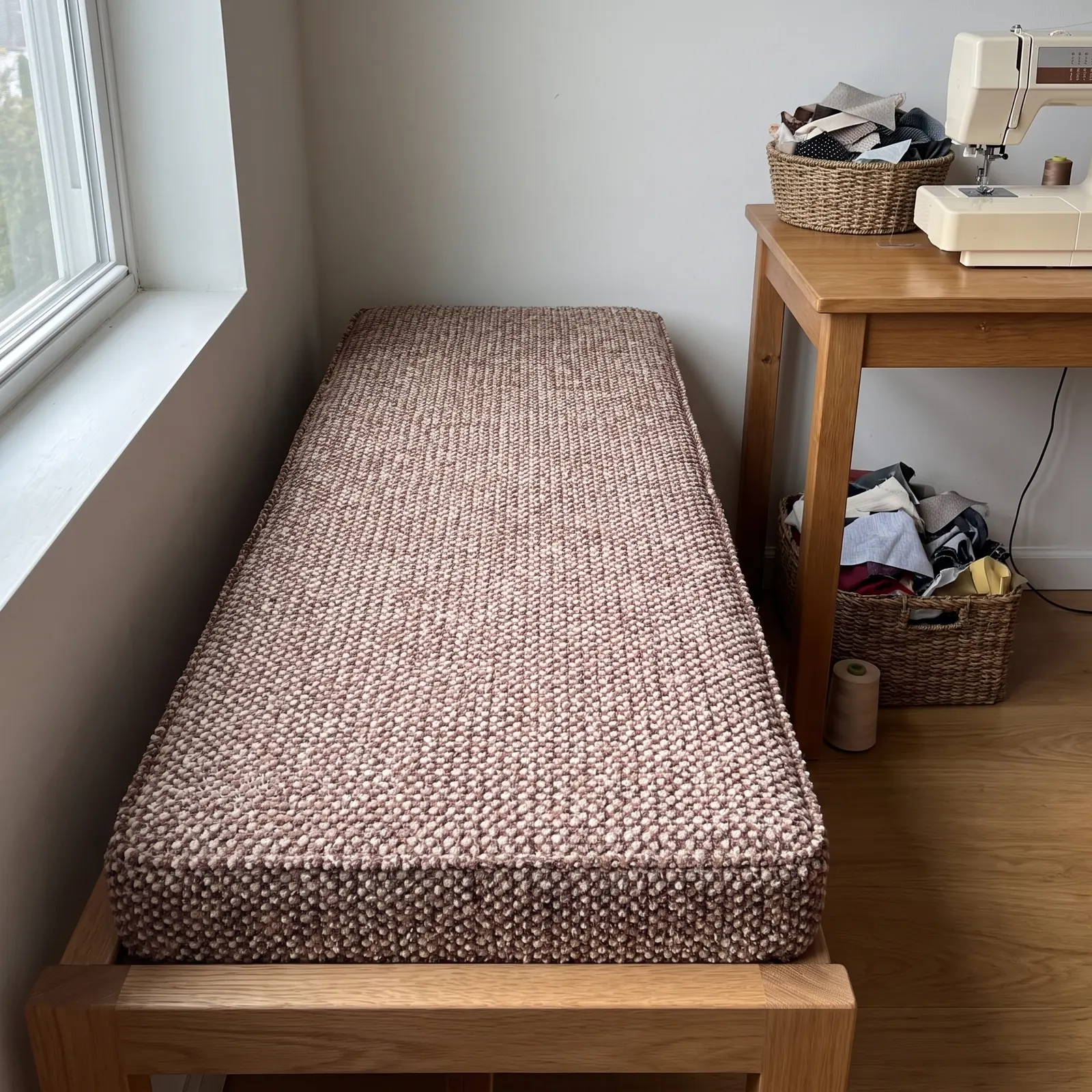
A mocha cushion on a low oak bench makes a window seat in a sewing room. Baskets of offcuts and a spool of thread set the scene.

The quick answer
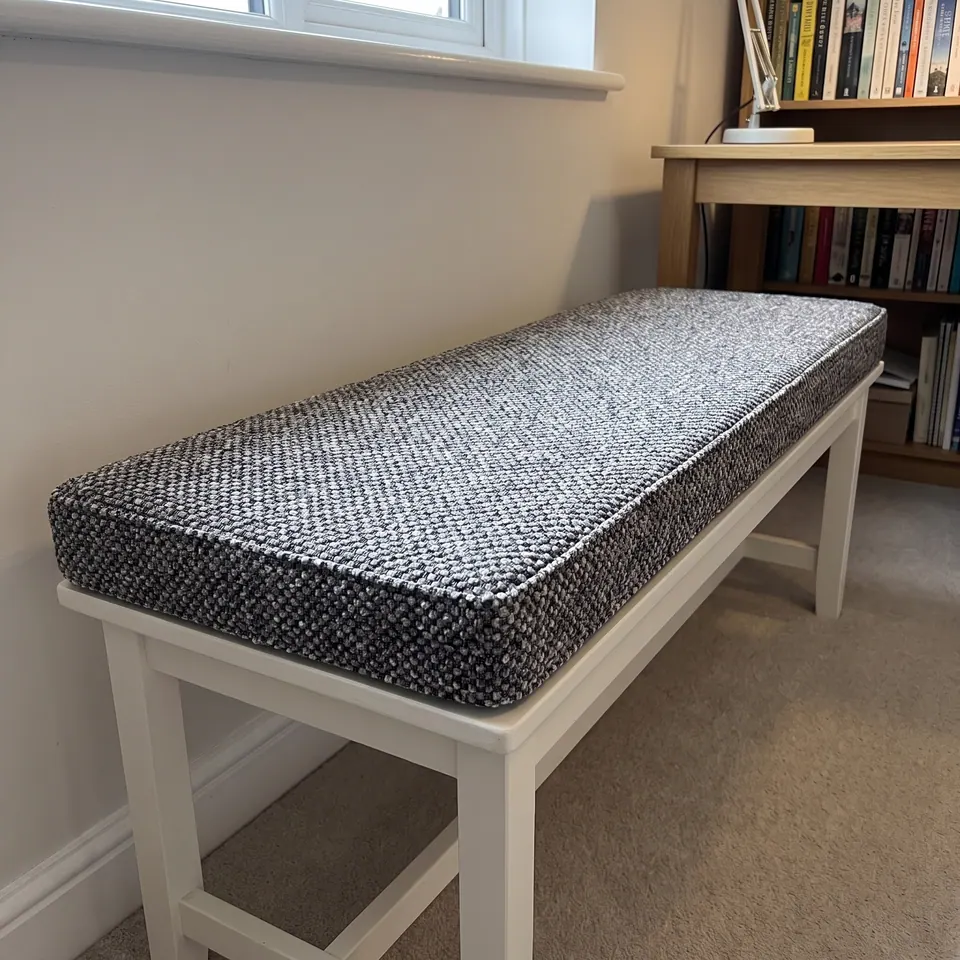
Treat a nubby tweed bench cushion as a pattern, then mix around it by scale: small texture on the seat, medium texture in baskets, long lines in the floor and one plain surface to rest the eye. Here a mocha weave with cream and blush flecks runs the full bench length with a plain box seam and no piping.
A nubby weave is a pattern, even in one color
A nubby weave is a pattern, even in one color. Treat it like one and the rest of the room gets easier to plan.
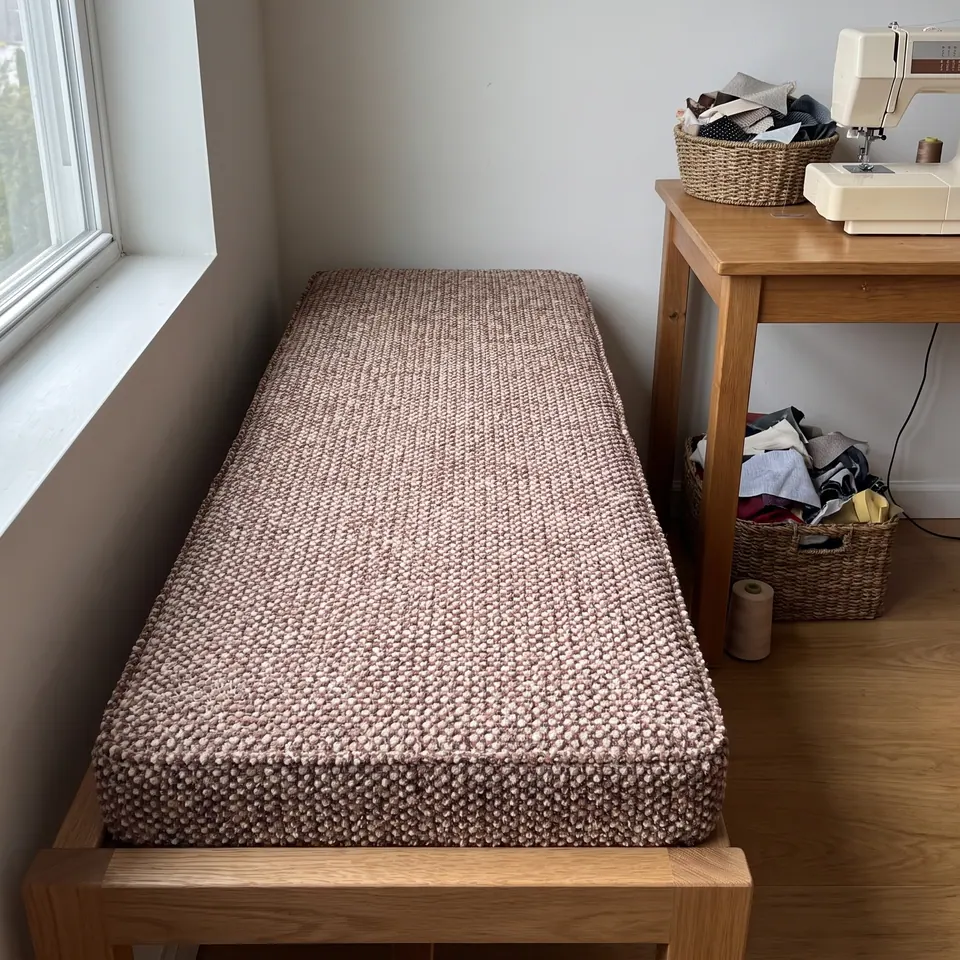
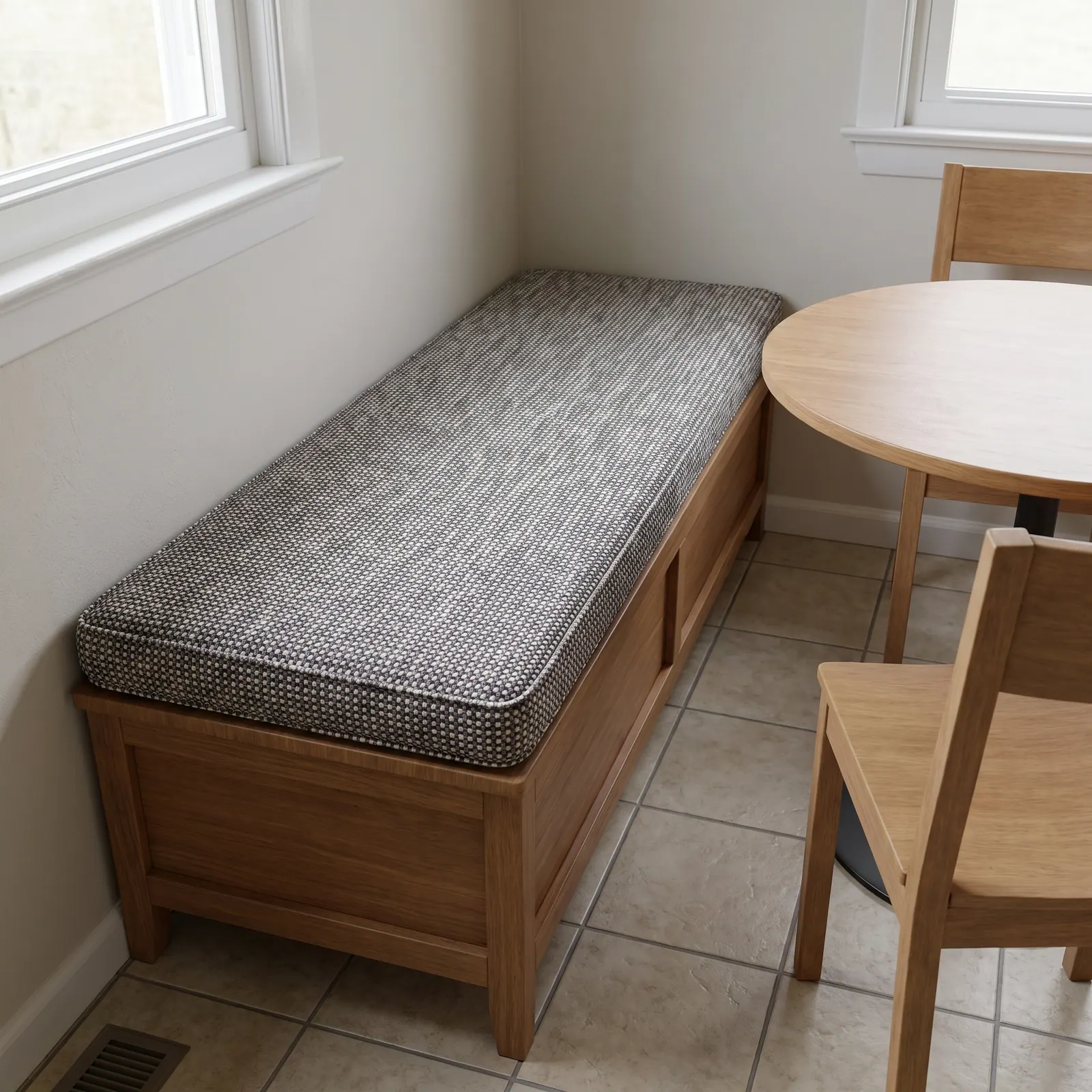
The setup: an oak bench runs the width of a white-framed window in a sewing corner. The cushion is cut to the bench's full length and sits tight to the wall below the sill. The camera looks down from above, so the cushion fills most of the frame and its color runs the show: mocha, flecked with cream and a little blush, between an oak floor and pale walls.
It's a box with a plain seam and no piping, which is the right call on a chunky weave. Piping laid over loops this size tends to wander, and a wandering line on a textured cushion reads as a mistake. Side light from the window rakes across the top, so every loop throws a small shadow. Under a ceiling light, half that texture would disappear.
The props repeat texture instead of adding color. Two wicker baskets, one on the table full of offcuts and one underneath with scraps, echo the nubby surface in another material. A cream spool on the floor picks up the pale yarn in the weave. The cream sewing machine on the small oak table tells you what the corner is for: the bench is where fabric gets sorted, pinned and hand-stitched.
Adding a stripe. Work in three scales. The weave is the small scale. A stripe pillow should be clearly bigger, a band several times wider than the flecks, so the two don't buzz against each other. Pull the stripe's colors from the weave: mocha, cream, blush. Then keep one surface plain, here the walls, so the eye has somewhere to rest. Candidates live in the striped cotton and ticking family, and weaves like this one in the woven texture swatches.
So how many scales are on your bench right now?
Pinned by Nate
Five pins, from window light raking the loops to the plain box end.
- Sewing machine
The machine tells you what this corner is for; the bench is where fabric gets sorted and pinned.
- Basket of offcuts
Woven baskets repeat the nubby texture of the cushion in another material.
- Thread spool
A cream spool picks up the paler yarn in the mocha weave.
- Plain box end
A plain seam without piping suits a chunky weave and keeps the end neat.
- Window light
Side light from the window rakes across the cushion and shows off the loop texture.
- Sewing machineThe machine tells you what this corner is for; the bench is where fabric gets sorted and pinned.
- Basket of offcutsWoven baskets repeat the nubby texture of the cushion in another material.
- Thread spoolA cream spool picks up the paler yarn in the mocha weave.
- Plain box endA plain seam without piping suits a chunky weave and keeps the end neat.
- Window lightSide light from the window rakes across the cushion and shows off the loop texture.
Three scales in one sewing corner
| Piece | Scale | What it does here |
|---|---|---|
| Mocha nubby weave cushion | Small, all-over texture | Sets the color and mood of the frame |
| Wicker baskets | Medium, irregular weave | Repeat the cushion's texture in another material |
| Oak floorboards | Long parallel lines | The room's only stripe, running under the bench |
| Pale walls and white window frame | Plain | Give the eye a place to rest |
| Cream thread spool | A single dot | Picks up the pale yarn in the weave |
Four cushions, 229 inches, one self welt
A buyer got in touch with a four-piece banquette run: cushions 35, 98½, 35 and 60½ in wide (89, 250, 89 and 154 cm), each 22½ in (57 cm) deep and 4 in (10 cm) thick. Add them up and that's 229 in (582 cm), a little over 19 ft of seat.
They asked for self welt in the cushion fabric. The workshop quoted all four together and sent a purchase link. Self welt was the right spec for a long run: the piping reads as part of the upholstery, so four separate cushions look like one tailored banquette. Contrast welt on four pieces draws four outlines. Self welt draws one.
Two engineering notes, partner. Give every piece its own measured width, because walls are rarely square over 19 ft. And write every size in the same unit. Measure twice; the fabric remembers. The one piece or two Pattern covers where the breaks go, and the bench cushion atlas has more runs like it.
On the cutting table
| Piece | Box bench cushion used as a window seat |
|---|---|
| Fabric | Mocha chenille nubby weave with cream and blush flecks |
| Edge | Box with a plain seam |
| Piping | None; a welt would wander on loops this size |
| Fit | Full bench length, tight to the wall under the sill |
| Light | Side light from the window to show the texture |
| Pattern mix | Small weave, medium baskets, long floorboard lines, plain walls |
| Best for | Sewing corners, craft rooms and living-room windows |

Have it made
Have this made — ask Nate’s workshop
Send the numbers in inches: length × depth × thickness, plus any angle. The workshop checks them with you, because foam has no undo button. — Nate
Leave your details and the workshop will call you to confirm measurements, fabric, foam and piping. No prices, dates or payment on this page: it is a request, not an order.
Buyer questions: templates, grip, and what the stripes are made of
- A common question
My window seat is three irregular trapezoids with no parallel sides. Should I mail you a paper template?
The workshop's answerNo need to mail it. Send a digital file or clear photos of the template in the chat, or attach the files when you place the order.
- A common question
Can my cushion have a non-slip bottom?
The workshop's answerYes. A trapezoid cushion has been made at a maximum of 2½ in (6.5 cm) thick with piping and a non-slip bottom. Floor sofa base covers also come with a white non-slip backing; if that backing ever crumbles or flakes, photograph it and send the photos to the workshop; damaged anti-slip covers have been replaced in past cases.
- A common question
What are the striped fabrics made of, and are there stripes beyond the ones in the listing?
The workshop's answerThe stripes are 100% cotton, a fully natural fabric. The ones in the listing are the only striped options, but an extra linen chart with creams and beige-whites is available on request.
Skip piping on a chunky nubby-weave bench cushion; piping over loops that size wanders, and a plain box seam stays straight.
Nate
Questions buyers ask next
Should a chunky tweed bench cushion have piping?
Usually not. On large loops a welt tends to wander, and a wavy line on a textured cushion looks like a mistake. A plain box seam keeps the edge neat; self welt suits smoother fabrics and long banquette runs.
How do I mix a striped pillow with a textured bench cushion?
Work in three scales. Let the weave be the small one, choose a stripe clearly wider than its flecks, and pull the stripe's colors from the weave. Keep one surface, such as the wall, plain.
What is self welt on a cushion?
Self welt is piping cut from the cushion's own fabric. It gives a tailored, upholstered edge without adding a new color, which is why it suits long runs of several cushions that should read as one piece.
Why put a bench under a sewing-room window?
Side light from the window shows texture and color clearly, which helps when sorting fabric, and a low bench with a deep cushion gives you somewhere to sit, pin and hand-stitch.
± 1/4 in — Nate
More photographs to read
 Save
 Save
 Save
 Save
 Save
 Save