A Reading by NateBench Cushions
A pale cream custom bench cushion, and the finishing you only see up close
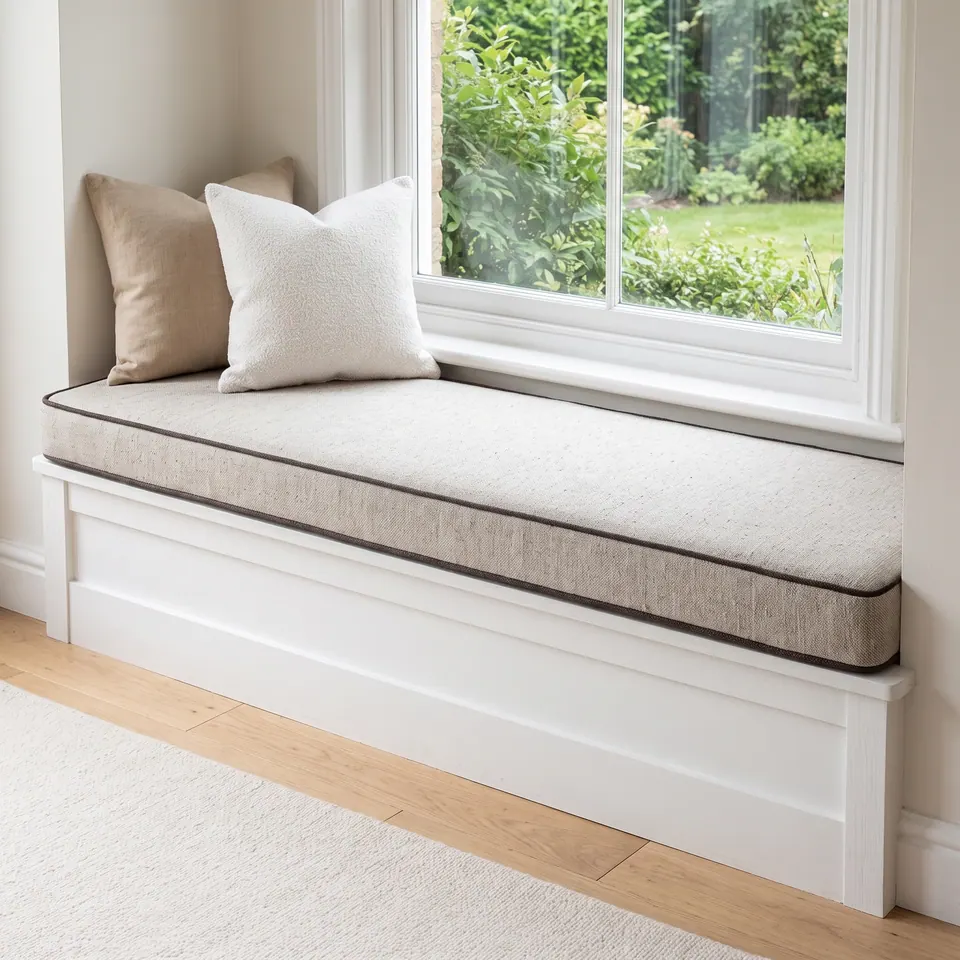
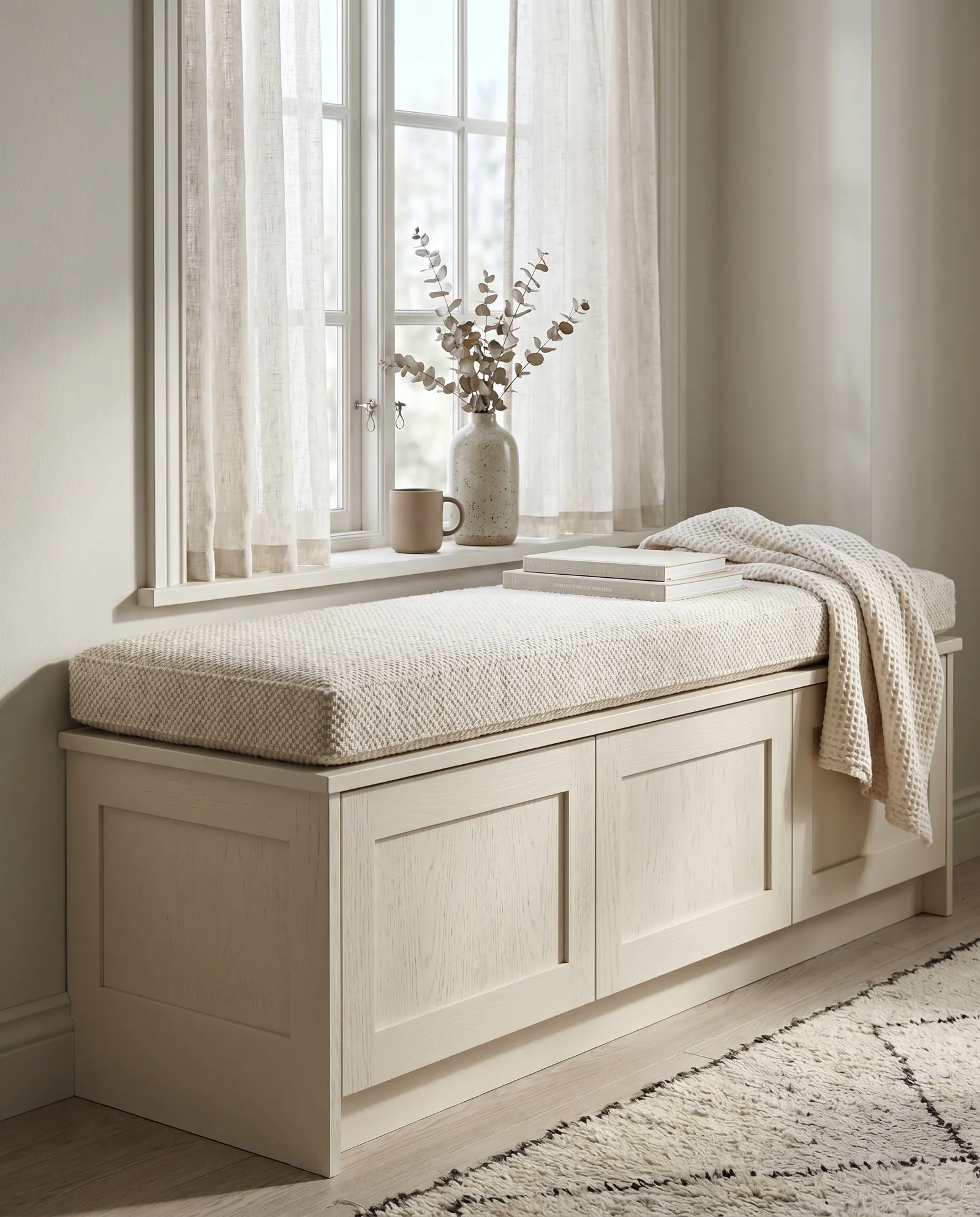
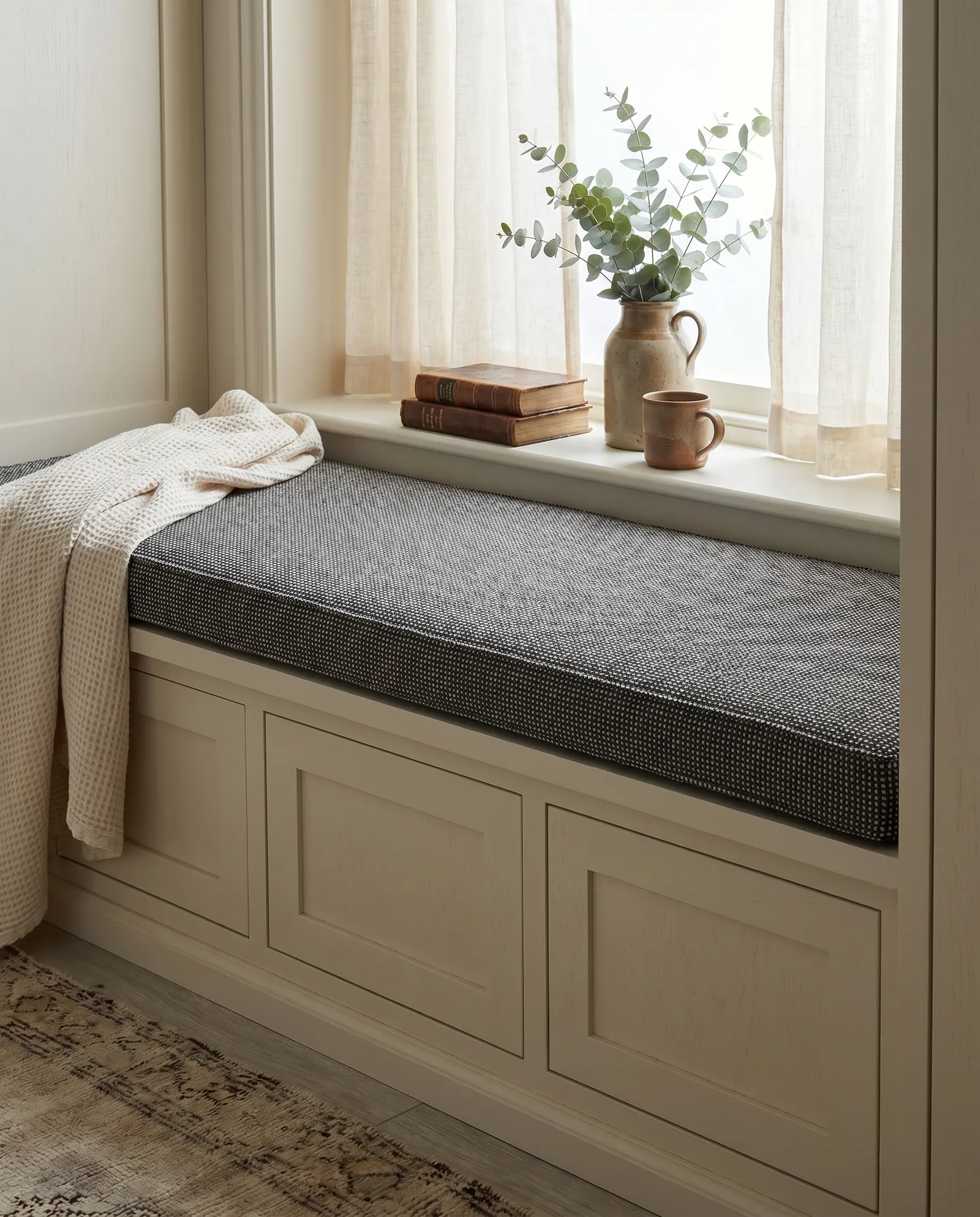
Cream on cream under a sheer curtain. With no color to hide behind, every seam, corner and zipper has to be right.

 Save
The quick answer
A pale bench cushion shows its workmanship more than any other, so the finishing matters: cut to the bench top with no overhang, a plain unpiped seam, a zipper hidden underneath and foam wrapped in Dacron. One US bench cushion used about 2.0 lb/ft³ (32 kg/m³) foam under a cover washable at 86°F (30°C).
Three questions, before the bench
- A common question
Which cream linen comes closest to my dining chairs for a breakfast nook bench?
The workshop's answerFrom a photo of the chairs, the workshop suggested L-02, noting that an exact tone match from a photo is nearly impossible. L-02 is a forgiving cream that takes almost any piping; same-fabric piping is safest. Mind the dark codes: L-37 is very dark gray, L-38 is true black.
- A common question
Is the foam insert included, or is it just the cover?
The workshop's answerThe cushion comes with the foam insert and a removable zippered cover. If you already own inserts, covers only cost less.
- A common question
Can you make back cushions to match my bench cushion, and how tall should they be under a window?
The workshop's answerYes, in the same fabric. With a window lever about 11 in (28 cm) above the seat cushion, the workshop advised 14 to 16 in (36 to 41 cm) tall and 3 to 4 in (8 to 10 cm) thick, so the lever sits behind them. They stay loose, so the window still opens.
Now, the reading
Pinned by Nate: five tolerances
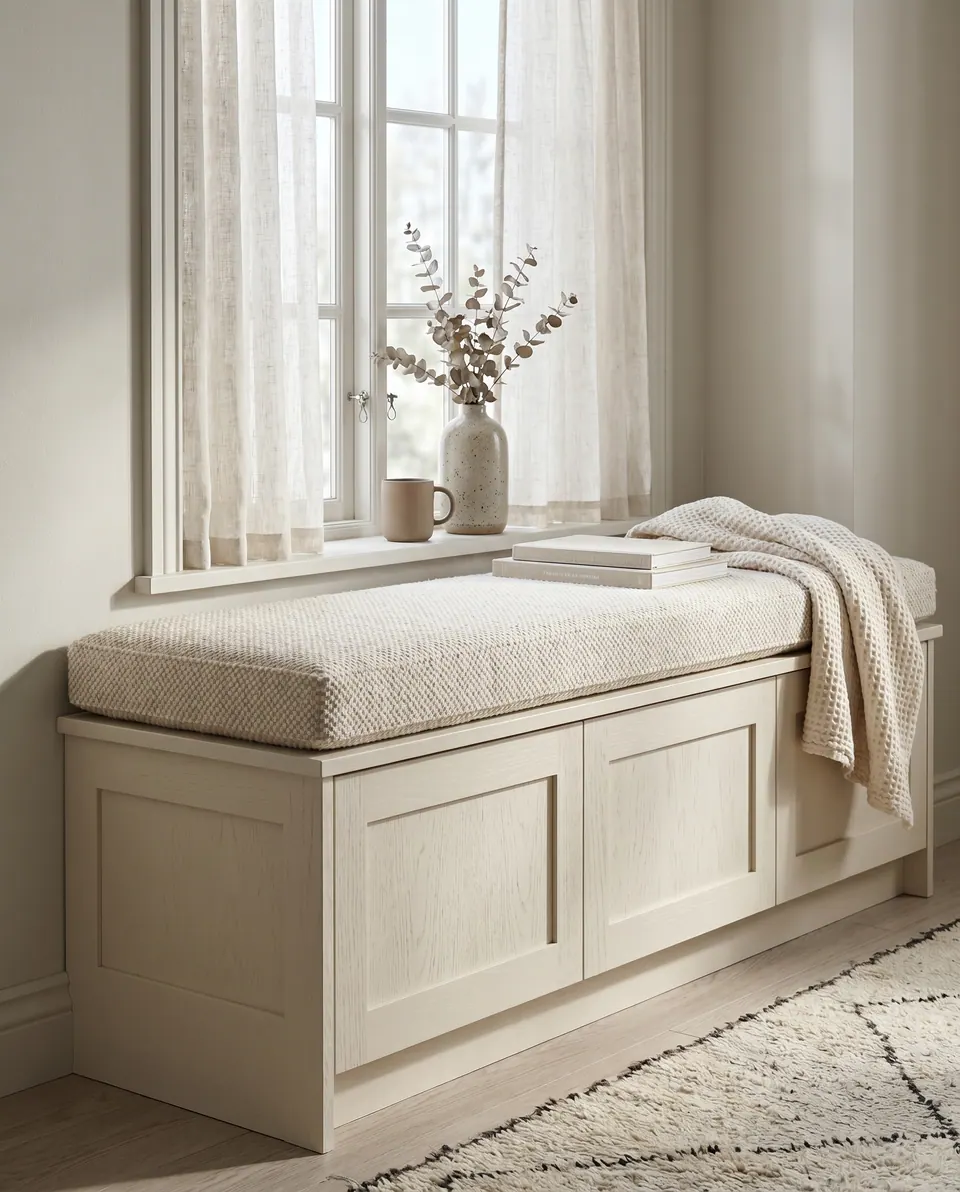
Five pins on a cream-on-cream corner where the finishing has nowhere to hide.
- Pale cream seat
Cut exactly to the bench top with no overhang.
- Soft unpiped edge
A plain seam keeps the edge from outlining the cushion in a pale scheme.
- Chunky knit throw
The coarsest texture in the room sits at one end to break the rectangle.
- Eucalyptus vase
A single stem supplies the only color.
- Shaker storage doors
Storage below makes the bench practical in a hallway or bedroom.
- Pale cream seatCut exactly to the bench top with no overhang.
- Soft unpiped edgeA plain seam keeps the edge from outlining the cushion in a pale scheme.
- Chunky knit throwThe coarsest texture in the room sits at one end to break the rectangle.
- Eucalyptus vaseA single stem supplies the only color.
- Shaker storage doorsStorage below makes the bench practical in a hallway or bedroom.
Cream on cream: why the finishing shows
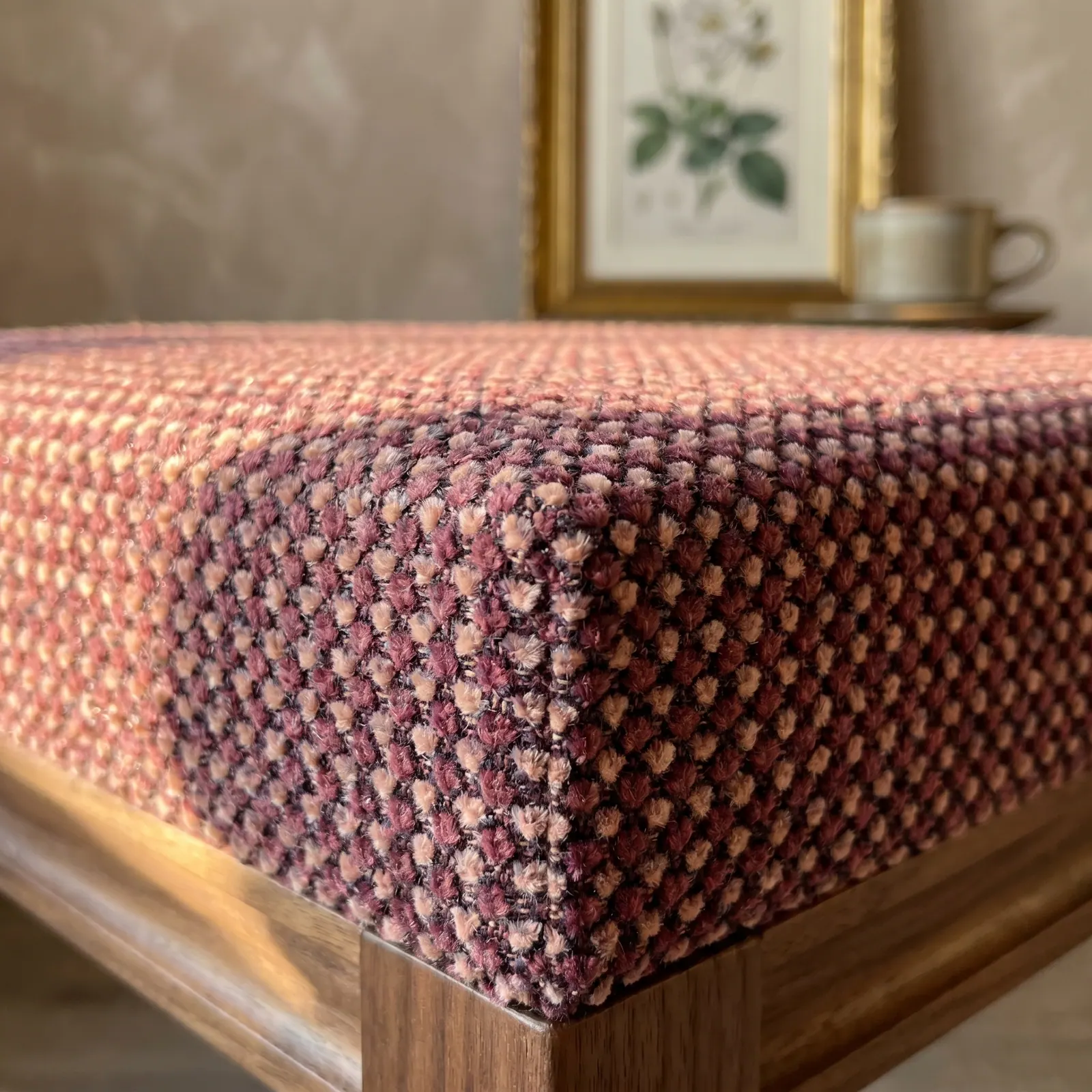
Here's the engineering problem with a pale scheme, partner: no contrast to hide a mistake. Bench, wall and cushion are all cream, so a wandering seam or a soft corner shows from across the room. In my uncle's shop the rule was to finish the underside as carefully as the top, because that is where a cushion tells you who made it.
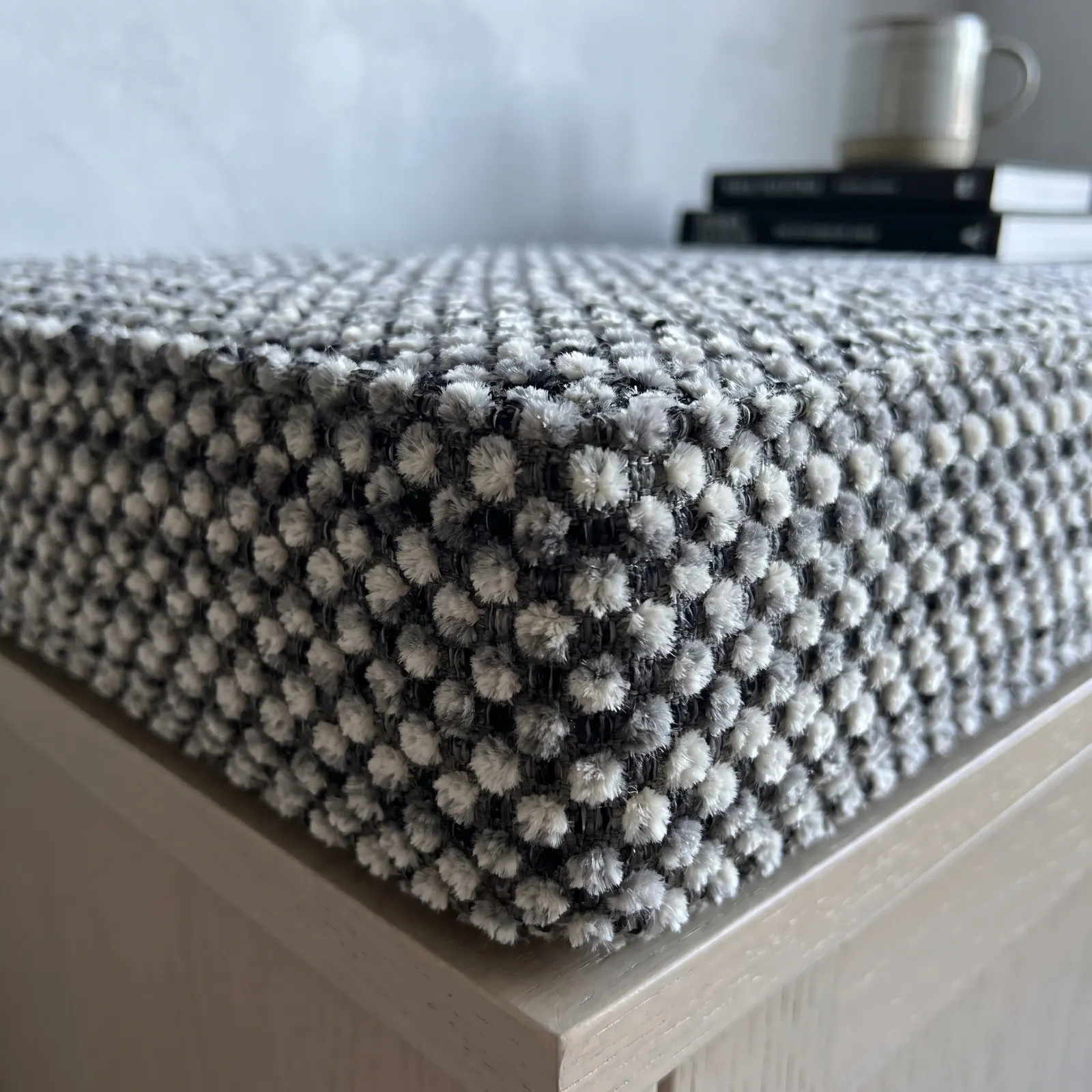
This cushion gets three things right. It's cut to the bench top with no overhang. I'd hold that to ± 1/4 in (6 mm), because past it a pale edge either shows a gap or droops over the Shaker doors. Measure the bench top itself, never an old cushion. The edge is a plain seam, no piping, since a piped line around a cream rectangle becomes the loudest thing in the room. And the dotted weave is fine enough that the seam sinks into it.
Depth comes from texture stepping up in scale: fine weave on the seat, a chunky oatmeal knit throw at one end, a diamond-pattern wool rug below. The throw breaks the rectangle where the eye would run off the end. One eucalyptus stem in a cream bottle vase is the only color. The speckled mug and two white books say the bench gets used; the storage doors make it earn its floor space.
Sheer linen curtains filter pale winter daylight, the hushed kind that flatters a chenille weave. What does your bench top measure, to the quarter inch?
The TV bench that had to match the sofa
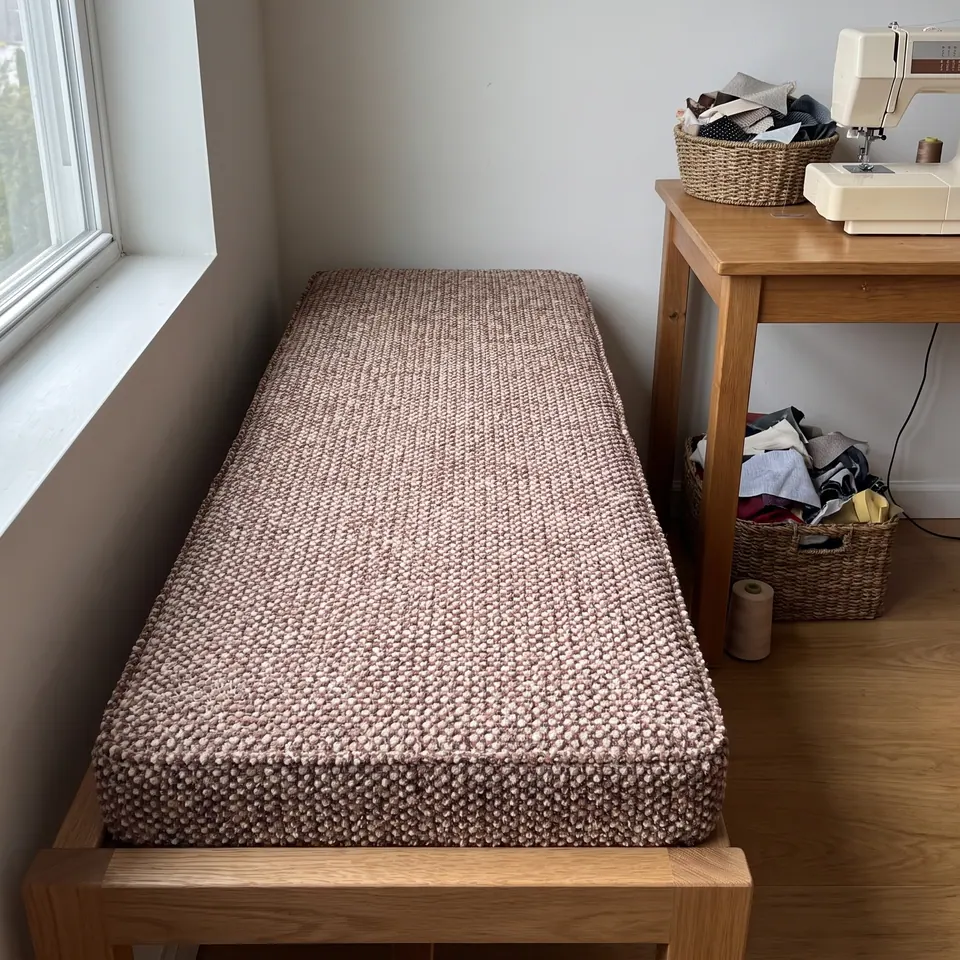
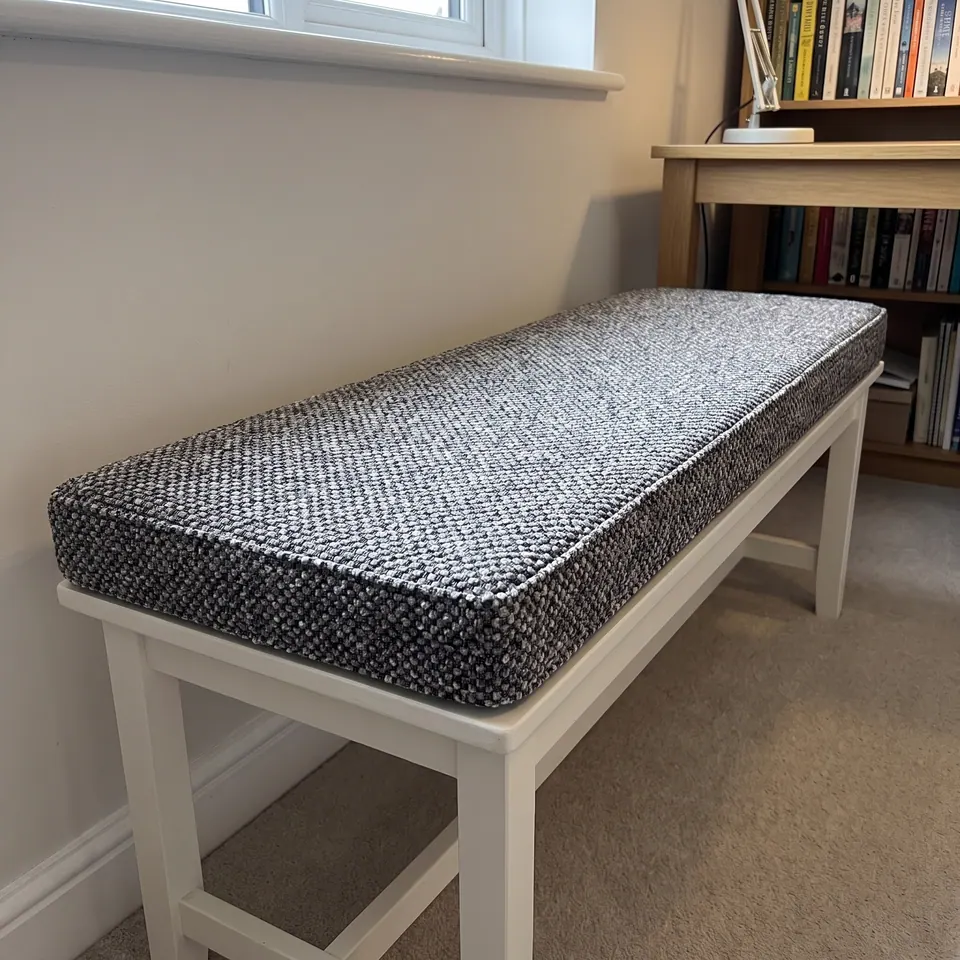
A buyer in the US wanted a bench cushion in front of the TV entertainment center, one that would blend with the sofa and not sag. The workshop specified about 2.0 lb/ft³ (32 kg/m³) foam with a Dacron wrap, and a removable cover with a hidden underside zipper, washable at 86°F (30°C).
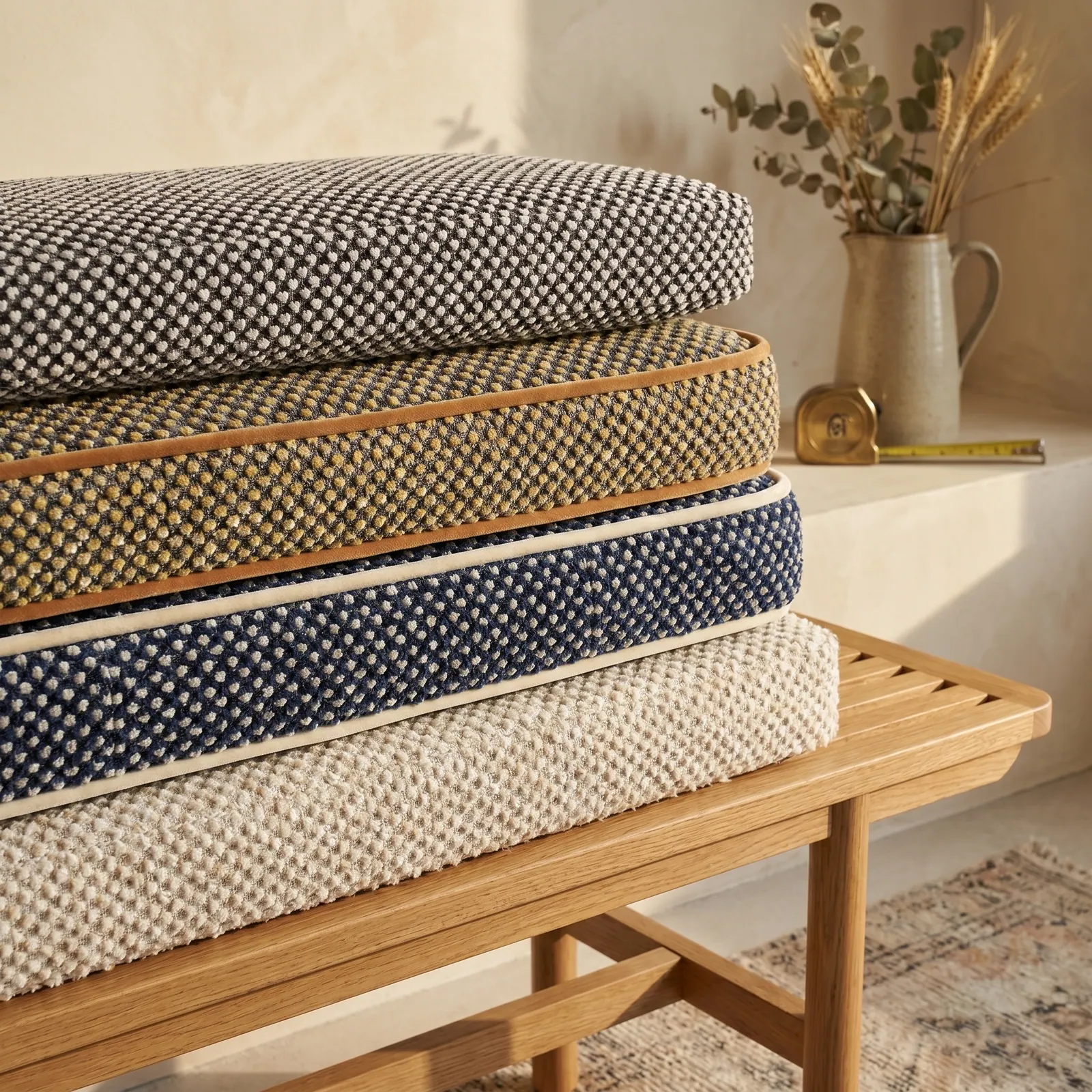
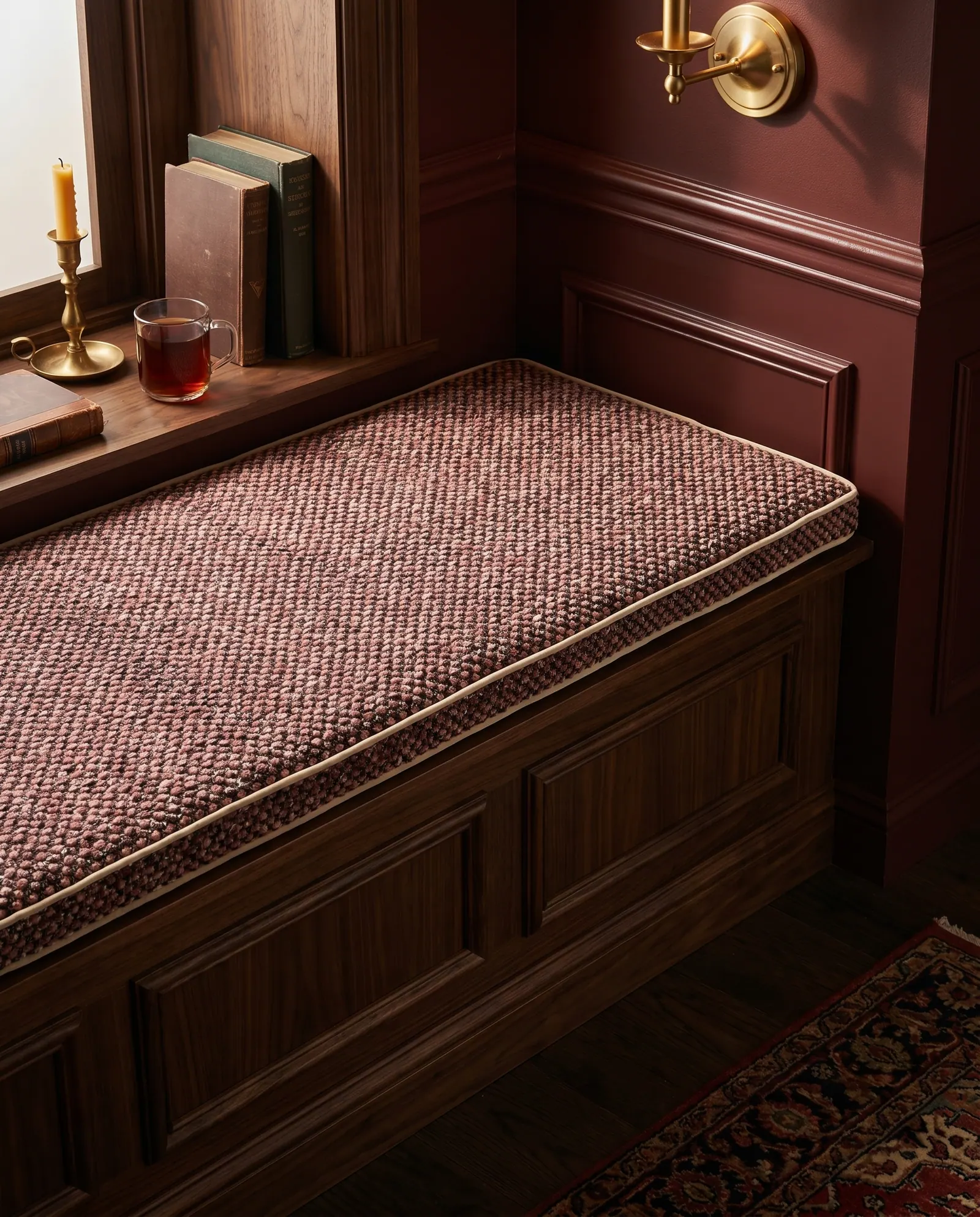
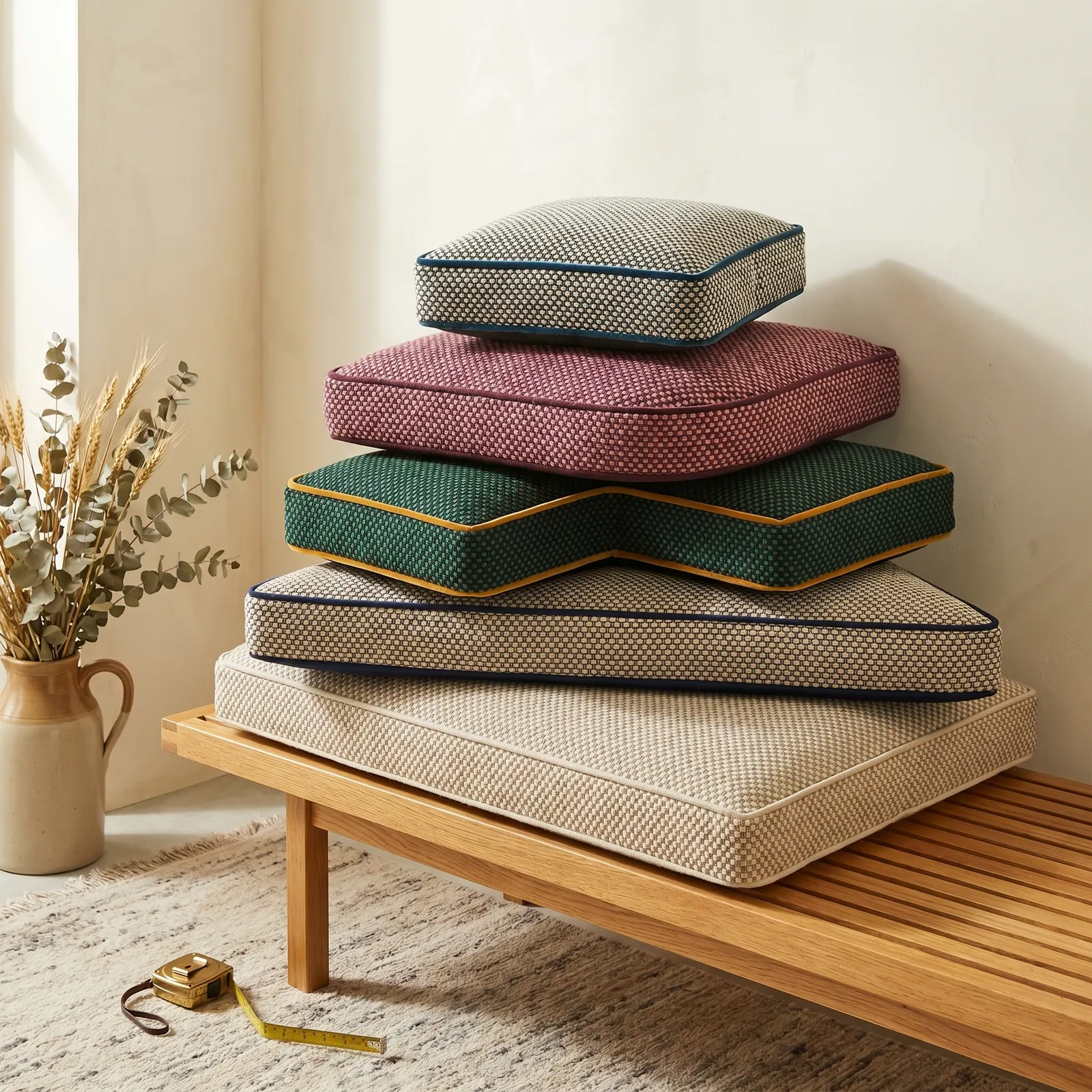
Then it did the useful thing and mocked up two versions: L20 with L53 piping, and the reverse. Side by side, the choice took seconds. The buyer picked the rust-toned combination, L53 with L20 piping, and added a non-slip base.
Two mockups beat twenty messages. Measure twice; the fabric remembers.
- Sizes
- Not stated
- Fabric
- L53 body with L20 piping
The lesson: Seeing both piping combinations side by side makes the color decision easy.
On the cutting table: the Shaker bench cushion
| Cushion | Rectangular box bench cushion |
|---|---|
| Fabric | Pale cream dotted chenille weave |
| Edge | Plain seam, no piping |
| Fit | Cut to the bench top, no overhang, ± 1/4 in |
| Zipper | Hidden on the underside of a removable cover |
| Foam | about 2.0 lb/ft³ (32 kg/m³) with a Dacron wrap, on one no-sag spec |
| Back cushions | 14 to 16 in (36 to 41 cm) tall under an 11 in window lever |
| Best for | Hallways and bedrooms needing storage without visual weight |

Have it made
Have this made — ask Nate’s workshop
Precision starts on the phone. Give the workshop your measurements and they will read them back to you, edge by edge. — Nate
Leave your details and the workshop will call you to confirm measurements, fabric, foam and piping. No prices, dates or payment on this page: it is a request, not an order.
On a pale bench cushion, skip the piping: a plain seam keeps a cream rectangle quiet, while a piped line becomes the loudest thing in the room.
Nate
Questions buyers ask next
Should a cream bench cushion have piping?
Usually not in an all-cream scheme. A plain seam lets the cushion blend with bench and walls. If you want a defined edge, self piping in the same cream is the safest choice.
Why mock up two piping combinations before ordering?
Because the choice is easier to see than to describe. For one TV-room bench the workshop showed L20 with L53 piping and the reverse side by side, and the buyer chose at once.
How much overhang should a cushion have on a storage bench?
On this Shaker bench, none. The cushion is cut exactly to the top, so the doors below stay clear and the pale edge doesn't droop. Measure the bench top, not an old cushion.
± 1/4 in — Nate
More photographs to read
 Save
 Save
 Save
 Save
 Save
 Save