The Cutting Table · compared on the table
What's the difference between a 2, 3, 4 and 5 inch cushion?
Also asked as:Which is better, 2 or 3 inches?4 or 5 inch thickness foam?
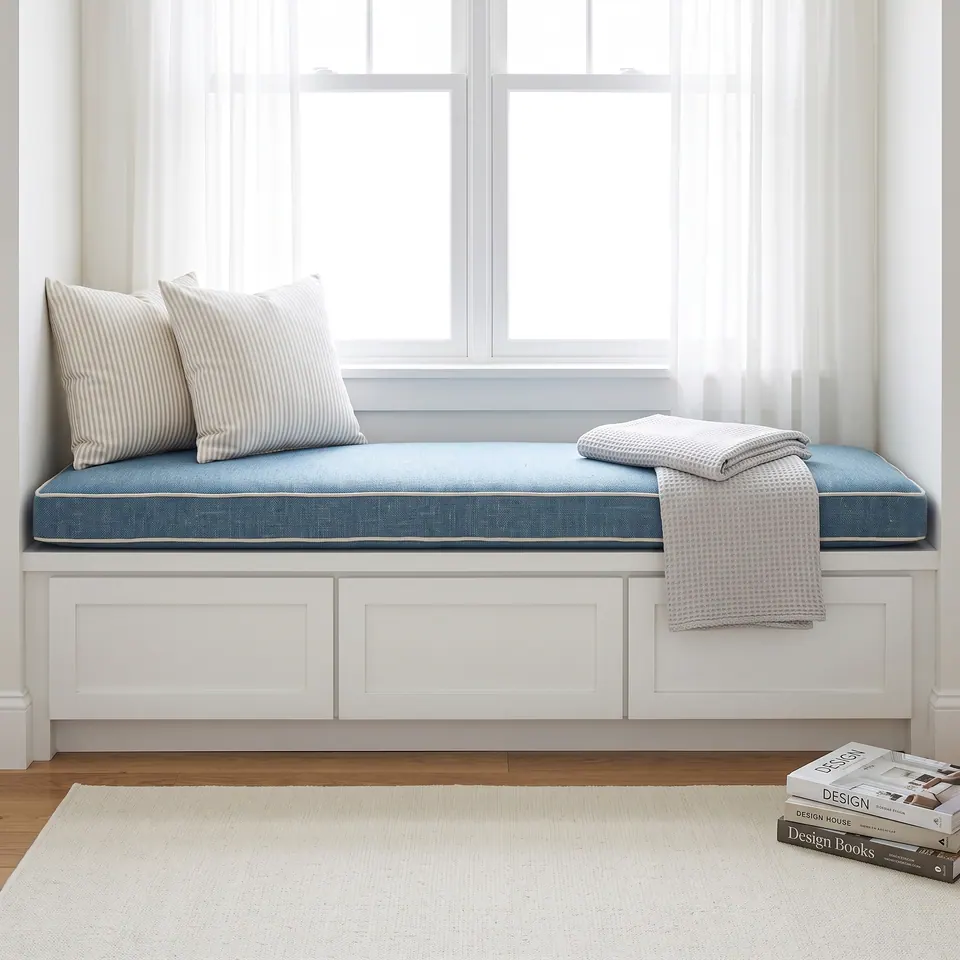
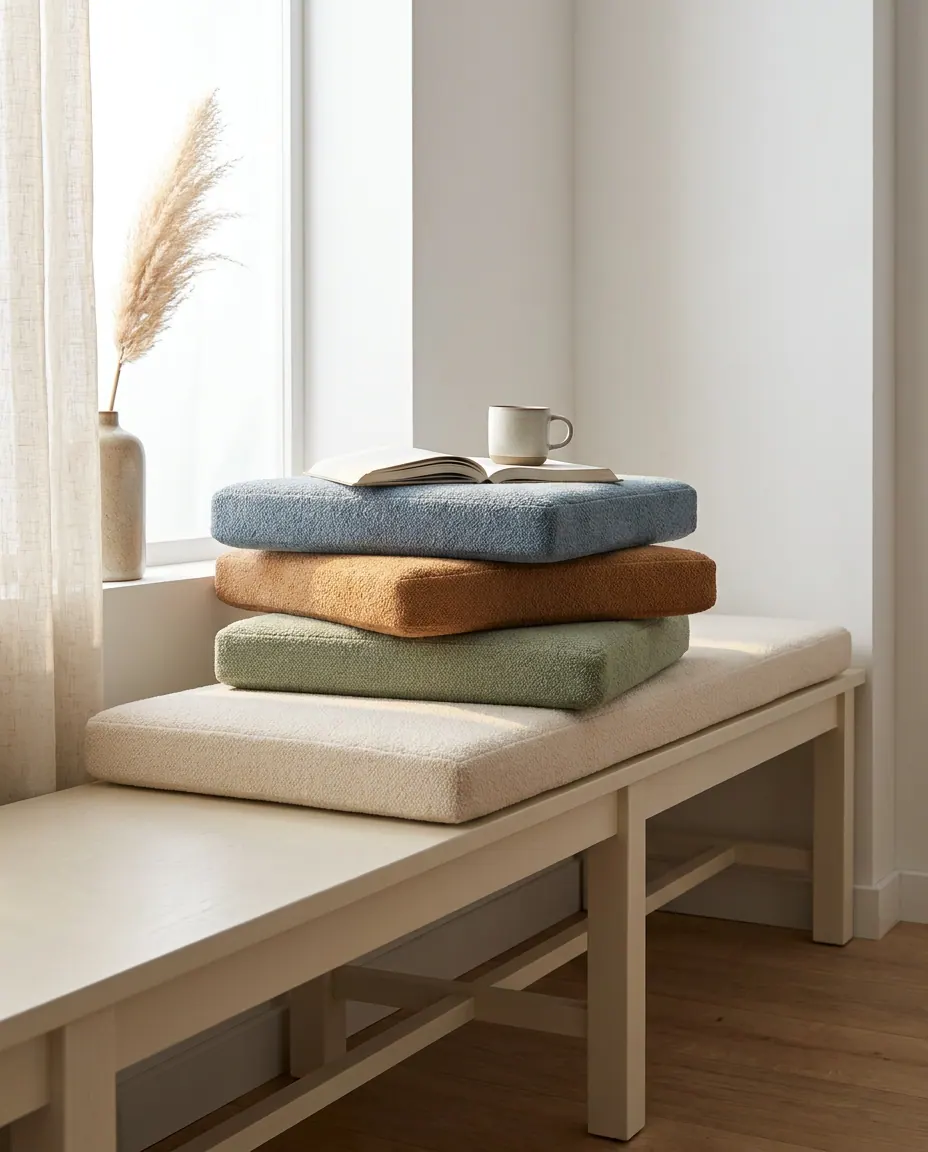
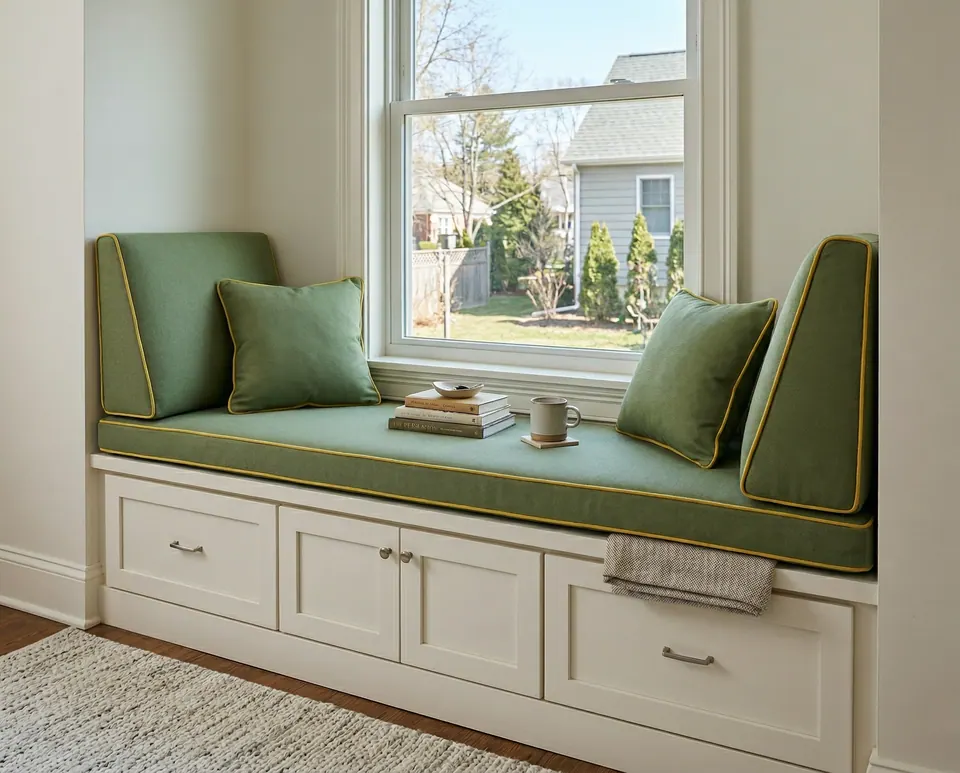
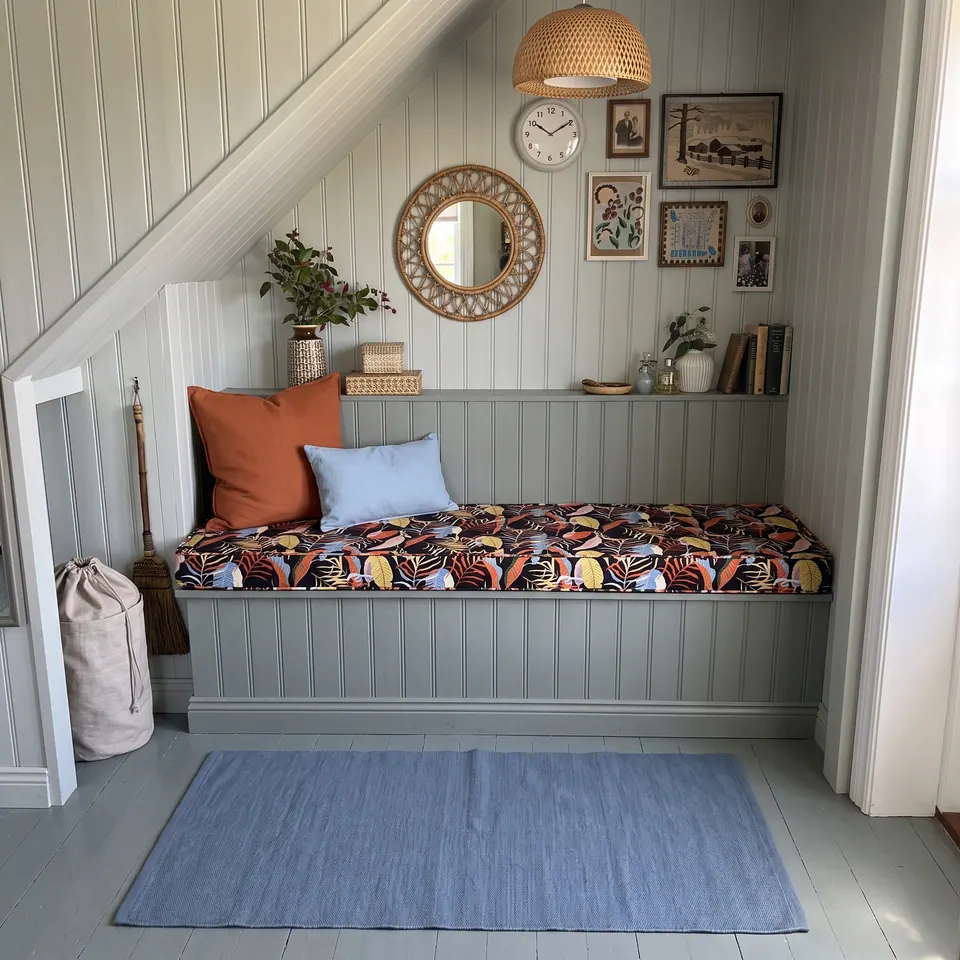
Four thicknesses, one foam. The number you pick changes the silhouette far more than the sit.

 Save
The quick answer
The difference between a 2, 3, 4 and 5 inch cushion is mostly the look: 2 in is a slim pad, 3 in a neat middle ground, 4 in noticeably plumper and 5 in the deepest standard option. All four use the same firm 32-density foam wrapped in polyester fiber, so 4 in and 5 in feel the same to sit on.
Get a quote for a bench cushion
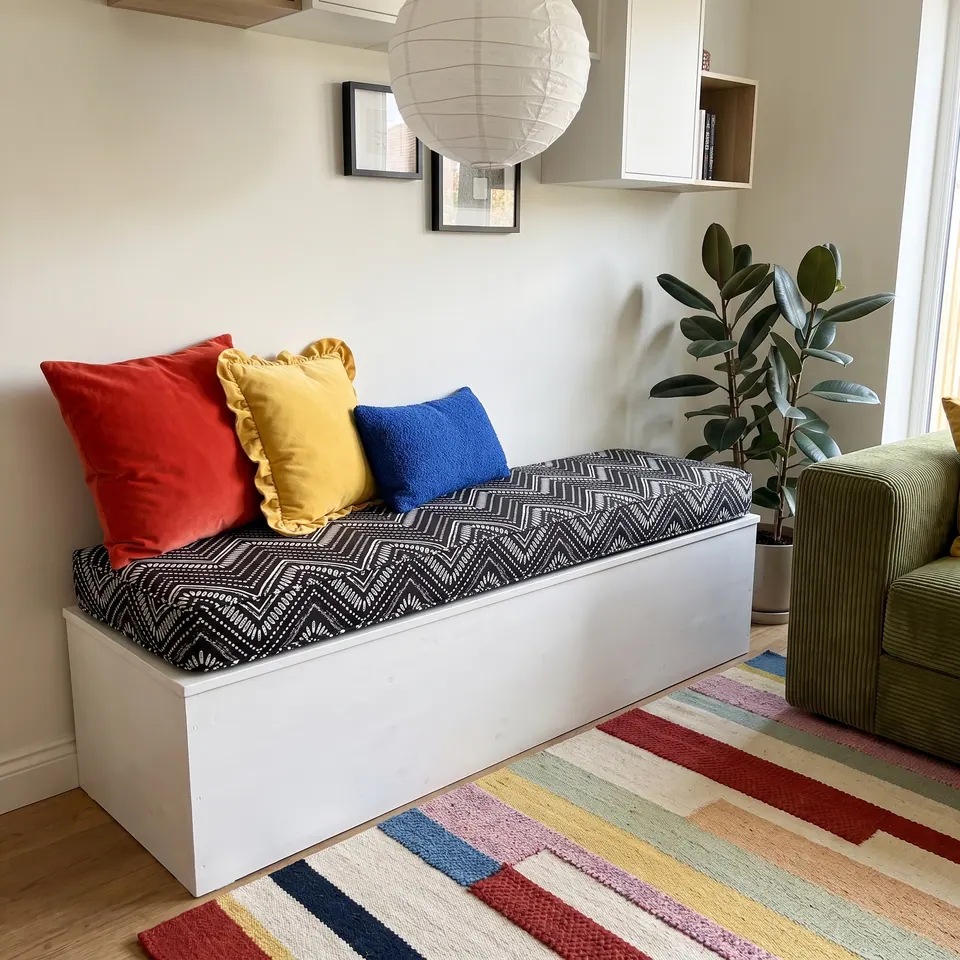
Four thicknesses on one bench
| Thickness | Look | Feel | Best for |
|---|---|---|---|
| 2 in (5 cm) | Slim, low-profile pad | Firm 32-density foam | A light pad; the thinnest standard option |
| 3 in (7.5 cm) | Fuller, still sits neatly | Same foam | Benches and window seats |
| 4 in (10 cm) | Noticeably plumper, sofa-like | Same foam | A plush look on a long bench |
| 5 in (13 cm) | Deepest standard option | Same as 4 in | Big benches; can look heavy on small ones |
Key facts
- Thickness options: 2, 3, 4 and 5 in (5, 7.5, 10 and 13 cm).
- All thicknesses use 32-density foam (32 kg/m³, about 2.0 lb/ft³).
- Bench foam is wrapped in polyester fiber.
- 4 in and 5 in feel the same; only the look differs.
- 5 in can look heavy on smaller benches.
- 3 in is a solid middle ground for benches and window seats.
- Tufted cushions use a softer filling; firm foam is more practical on a timber bench.

Have it made
Have Nate’s workshop cut this for you
Send the numbers in inches: length × depth × thickness, plus any angle. The workshop checks them with you, because foam has no undo button. — Nate
Leave your details and the workshop will call you to confirm measurements, fabric, foam and piping. No prices, dates or payment on this page: it is a request, not an order.
Why 4 and 5 inches sit the same
The foam doesn't change with the number, partner. Every thickness uses the same firm, long-lasting 32-density foam, about 2.0 lb/ft³ (32 kg/m³), wrapped in polyester fiber for a softer surface. The feel comes from the foam, and the foam is the same, so stepping from 4 in to 5 in adds 1 in (2.5 cm) of silhouette and nothing you would notice with your eyes closed.
The foam density conversion Pattern explains the numbers, the foam firmness finder sorts feel from look, and the seat height calculator shows what each extra inch does at a table.
A 71-inch timber bench that wanted to be a sofa
A buyer asked about a timber bench of about 26 x 71 in (65 x 180 cm): 4 in or 5 in, for something that felt more like a sofa? In feel, the two are identical, both 32-density foam in a polyester wrap. In look, 4 in already reads plush and sofa-like on a bench that size, while 5 in can tip into heavy.
The real wish, genuinely softer seating, lives in the tufted cushions, which use a softer filling. On a timber bench, though, firm foam is the practical call.
Pick your number in five lines
- Want a low-profile pad? 2 in (5 cm).
- Bench or window seat, neat and comfortable? 3 in (7.5 cm).
- Sofa-like look on a long bench? 4 in (10 cm).
- Big bench that can carry the height? 5 in (13 cm).
- Softer, not just taller? Look at tufted cushions instead.
A 3 in (7.5 cm) cushion is the solid middle ground for benches and window seats: fuller than a pad, still neat.
Nate
Buyer questions
- A common question
What's the practical difference between 2, 3 and 4 inch cushions?
The workshop's answer2 in is a slim, low-profile pad; 3 in adds cushioning and a fuller look while still sitting neatly; 4 in is noticeably plumper, and 5 in is also offered. All use firm, long-lasting 32-density foam, and 3 in is a solid middle ground for benches and window seats.
- A common question
What's the thinnest cushion you can make? Can I get 1 inch?
The workshop's answer2 in (5 cm) is the thinnest standard option and the recommended minimum for seating. Thinner pads can be custom made; piping works down to about 1.2 in (3 cm), but 0.8 in (2 cm) and 1 in pads are made without piping.
- A common question
Can you make a 6 inch bench cushion?
The workshop's answerYes. 6 in (15 cm), 7 in and 8 in cushions are made. Expect a surcharge from 6 in up, usually paid through a small extra payment link; send length and width for a quote.
- A common question
Can I stack two floor cushions instead of buying one thick one?
The workshop's answerYes. Two stacked 6 in cushions cost noticeably less than one 12 in cushion, and two 10 in (25 cm) cushions give about a 20 in (50 cm) seat. A foam base can also go under a tufted top for extra height.
Questions buyers ask next
Are tufted cushions softer than foam bench cushions?
Softer to the touch, yes. Tufted floor cushions use a tightly packed silicone-ball filling with no sponge and rate about 6-7 out of 10 for firmness: supportive and heavy, not bean-bag squishy.
Does a thicker cushion change my seat height?
Yes, inch for inch. Going from 3 in to 5 in raises the seat by 2 in (5 cm), which matters at a dining table or under a window sill. Run your numbers before you order.
Is 3 in thick enough for a window seat?
For most window seats, yes. 3 in is the middle ground: fuller than a 2 in pad, still neat under a sill, in the same firm 32-density foam as every other thickness.