The Cutting Table · a common question
What is that little strip around the edge of my cushion called?
Also asked as:What does piping mean?What's the small strip around the edge called?
Buyers call it beading, border, trim or the bit around the edge. Right, then: it is piping, and it is the line your eye follows first.

The quick answer
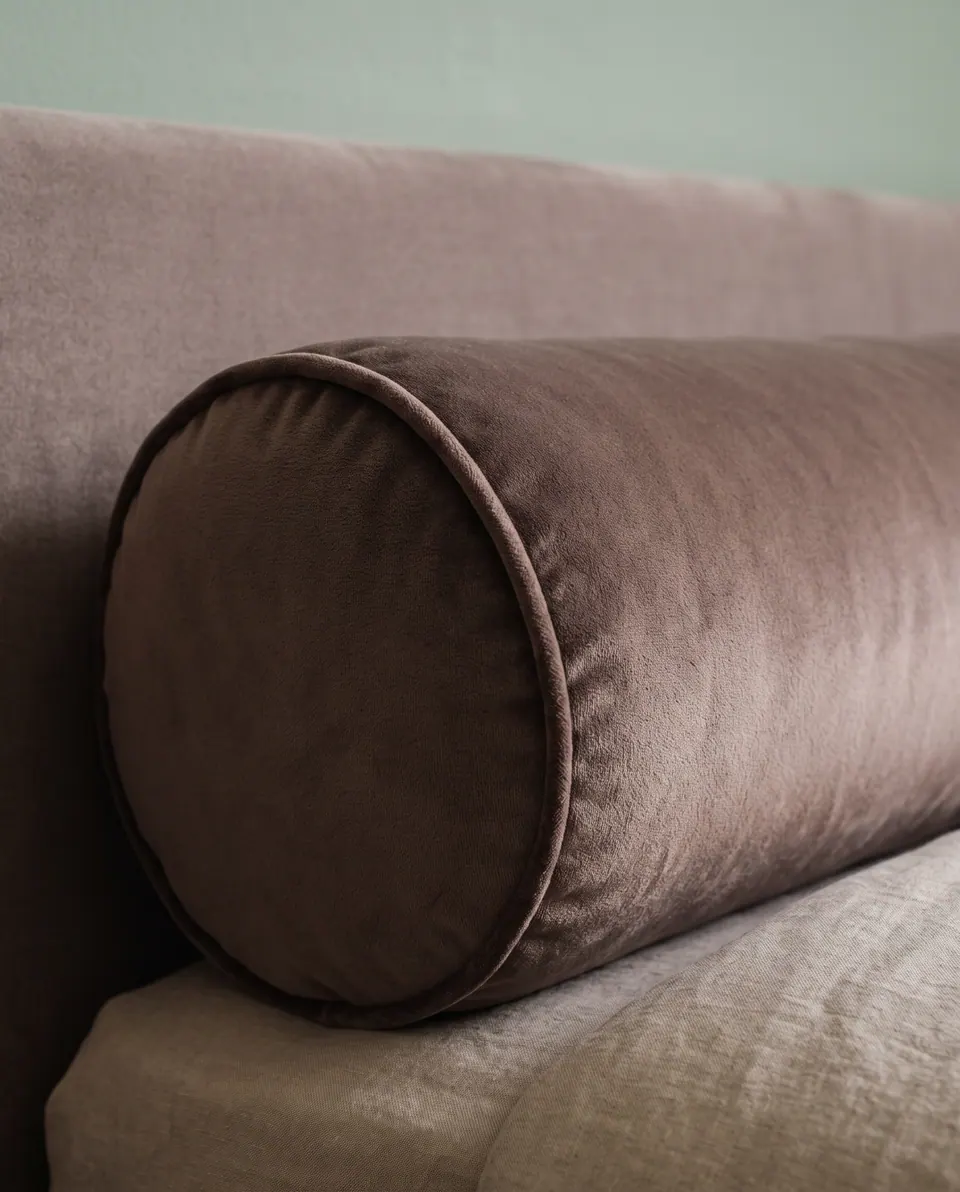
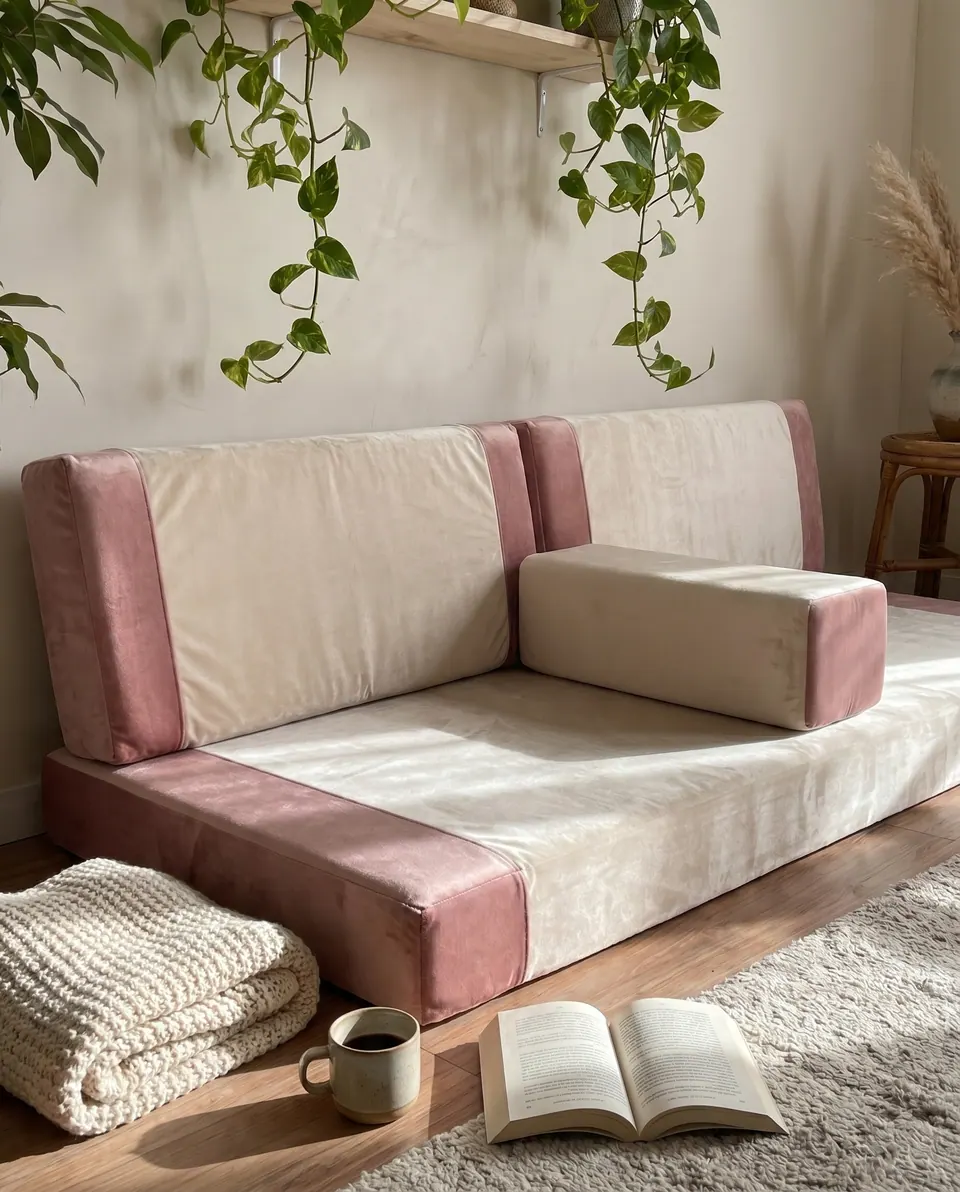
Piping is the thin fabric-covered cord sewn into the seams along a cushion's edges. You may also hear welt, welting or trim; all name the same thing. It gives the edges a crisp, defined outline and can match the cover or contrast with it, like black piping on light linen. Some pieces, such as certain floor sofas and corduroy items, are made without it.
 Save
Key facts
- Piping is a thin fabric-covered cord sewn into a cushion's edge seams.
- Piping, welt, welting and trim are names for the same thing.
- Piping gives a cushion's edges a neat, defined outline.
- Piping can match the cushion fabric (self-piping) or contrast with it.
- On a box cushion, piping runs around both the top and the bottom edges.
- Piping can be cut from any fabric on the charts, 150+ options.
- Some products, such as certain floor sofas and corduroy pieces, are made without piping.
- Roughly 50% of orders choose matching piping and 50% choose contrast.
- Cushions 1 in (2.5 cm) thick or thinner are made without piping, while a cushion of about 1¼ in (3 cm) can take it.
- The standard cushion thickness is 4 in (10 cm), with single piping along the top and bottom edges.

Have it made
Have Maggie’s workshop cut this for you
I once cut a lovely cushion two inches short, and I have not forgotten it. That is why the workshop goes over your measurements with you on the phone. — Maggie
Leave your details and the workshop will call you to confirm measurements, fabric, foam and piping. No prices, dates or payment on this page: it is a request, not an order.
Five names for one cord
Buyers call it beading, border, trim, welt and, my favorite, "that bit around the edge." All the same thing: piping, a thin cord wrapped in fabric and sewn into the seam where the top panel meets the side.
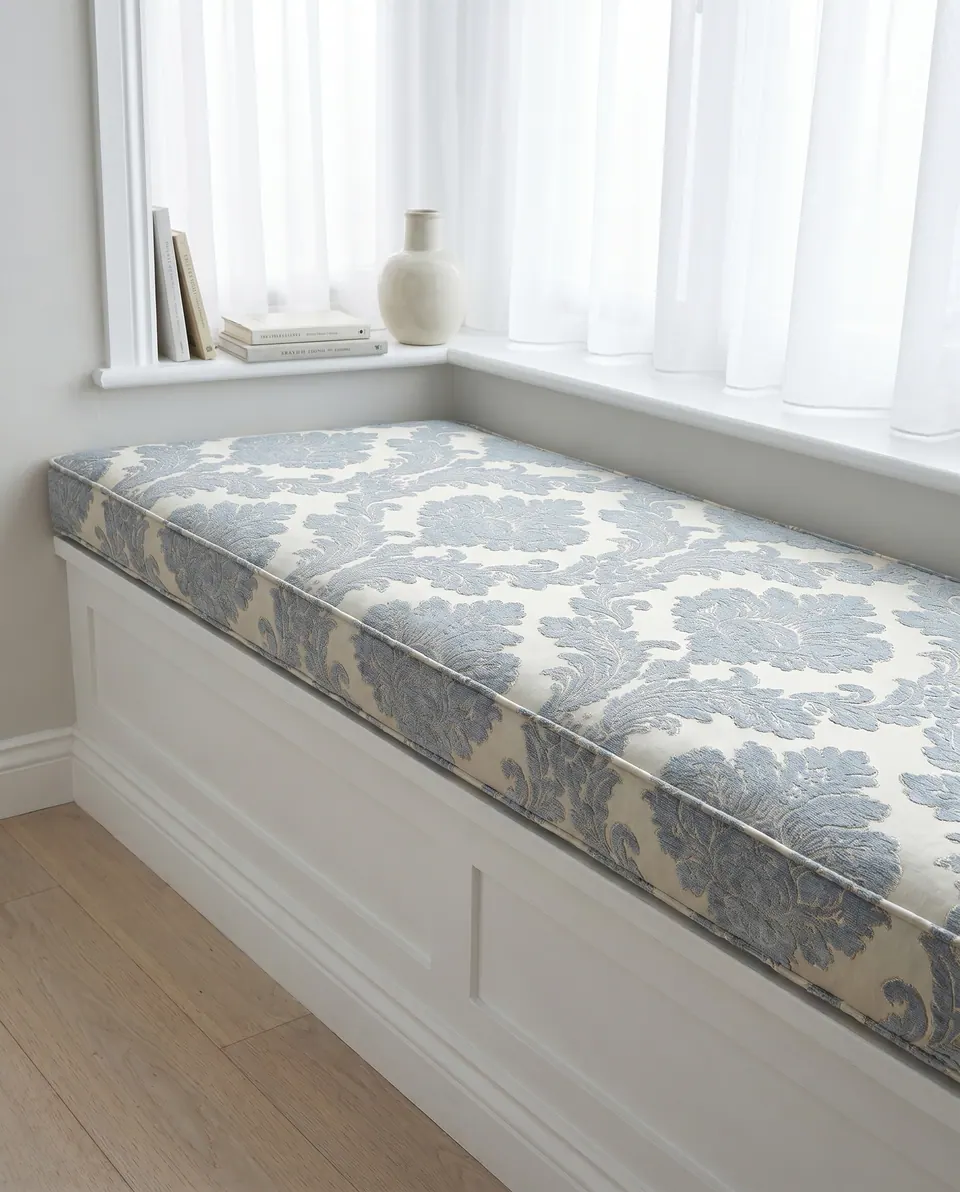
Its job is the outline. Piping gives the edge a firm, defined line, so a box cushion reads as square and tailored. I have re-covered enough drafty window seats to know a wandering welt from across the room, and so will your guests.
Match it, contrast it, or leave it off
| Piping choice | What you see | Where it earns its keep |
|---|---|---|
| Self-piping (same fabric) | A quiet outline that blends in | Stripes and patterns, where it is the guaranteed color match |
| Contrast piping | A drawn line that traces the shape | Black on light linen, olive green on a neutral linen such as L07 or L52 |
| No piping | A softer edge with no drawn line | Certain floor sofas and corduroy pieces |
Top edge, bottom edge, and how to order it
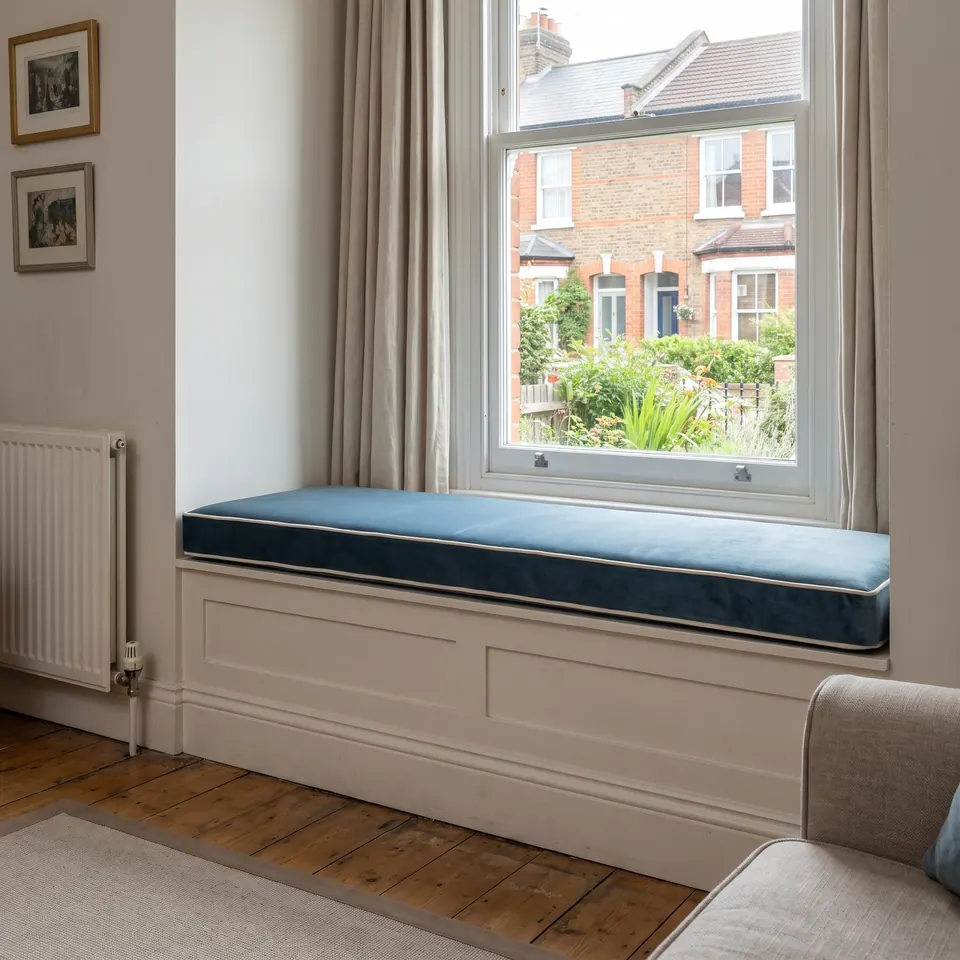
On a box cushion the piping runs around both the top and the bottom edges, and both faces use the same fabric, so the cushion flips. You can even ask for a different piping color on each side.
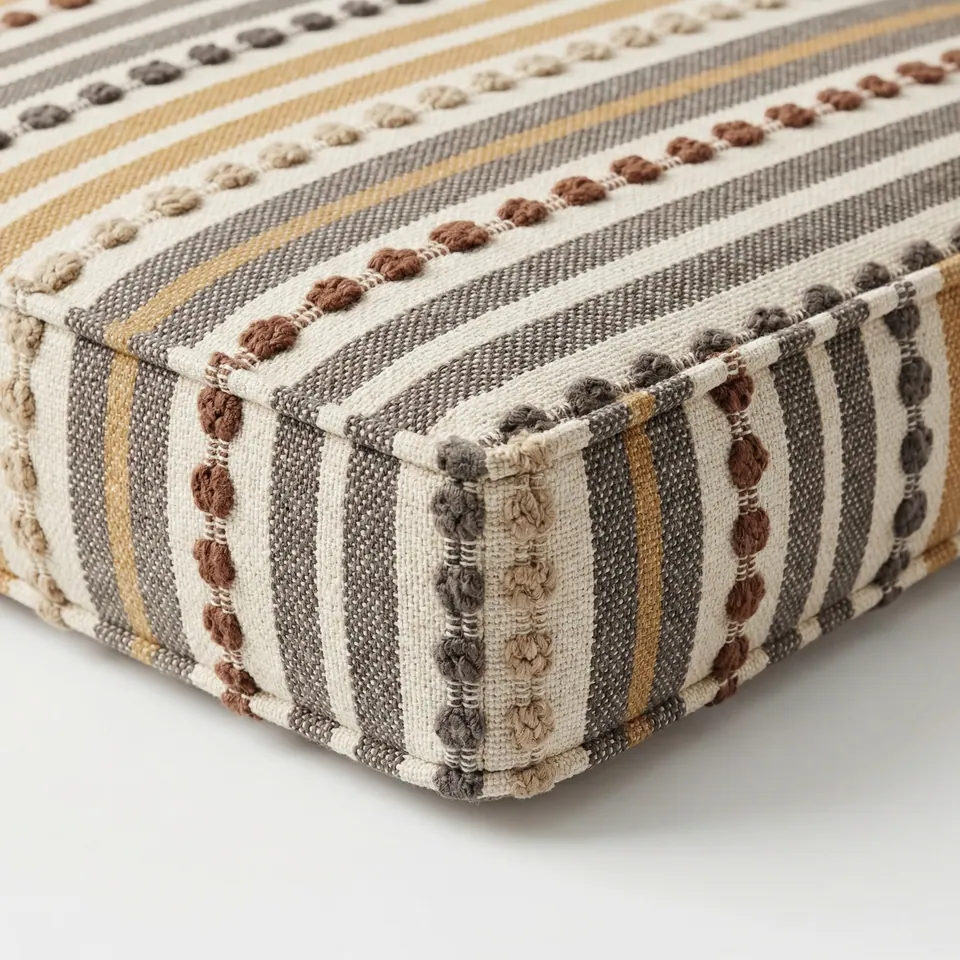
There is no separate piping chart. Piping can be cut from any fabric on the charts, more than 150 options, so write the body code and the piping code in the personalization box. On a stripe, solid piping comes from another chart and may sit a shade off; self-piping is the sure match. The piping Pattern lays out all three looks.
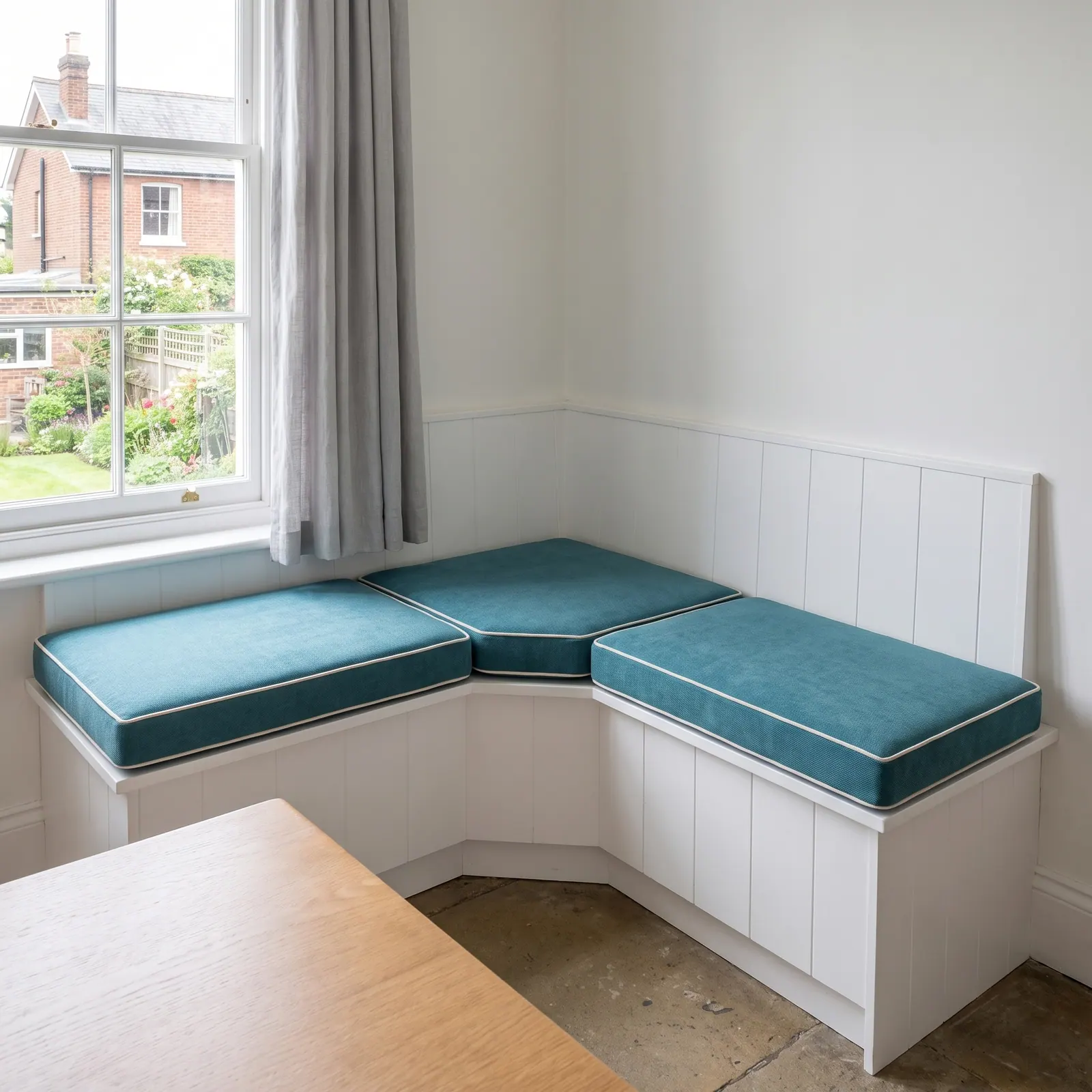
Look at the teal banquette cushions in the photo: you can trace the clipped corner piece by its ivory line alone. Which line would you draw around yours, dear?
Piping is the fabric-covered cord in a cushion's edge seam; on a box cushion it runs around both the top and the bottom edges.
Maggie
Buyer questions
- A common question
What exactly does piping mean on a cushion?
The workshop's answerIt's the thin fabric cord sewn along the edges of the cover. It gives the seams a neat, defined outline and is often done in a contrasting color as a decorative touch. Some products, such as certain floor sofas, are made without it.
- A common question
What's the little strip that runs around the edge of the cushion?
The workshop's answerThat's piping: a cord covered in fabric, running along the seams. It can match the cushion or contrast with it, for example black piping on a light linen trapezoid cushion.
- A common question
What do you call the trim around the edge, and can it be any color?
The workshop's answerPiping, though trim is fine too. Any color can be chosen, such as a neutral linen like L07 or L52 with olive-green piping.
- A common question
Can the solid piping match one of the colors in my striped fabric?
The workshop's answerStripe and pattern collections have no matching solids, so solid piping comes from another chart and may differ slightly in tone. The workshop picks the closest shade. Self-piping cut from the same fabric is the guaranteed match.
Questions buyers ask next
Is welt the same thing as piping?
Yes. Welt, welting, piping and trim all describe the same fabric-covered cord sewn into a cushion's edge seam. Upholsterers often say welt and most buyers say piping; either way it outlines the edge and gives the cushion a defined shape.
Does every cushion come with piping?
No. Some products, such as certain floor sofas and corduroy pieces, are made without piping. Where piping is offered, you choose whether it matches the cover or contrasts with it, and you name the piping fabric code when you order.
Is there a separate chart for piping colors?
No. Piping can be cut from any fabric on any of the charts, more than 150 options across fabric types. Use the cover's own code for a matching edge or another code for contrast, and write both codes in the personalization note.
Is flat piping different from corded piping?
Yes. Flat piping is a folded strip of fabric sewn into the seam with no cord inside; it stands out about 3/8 in (1 cm) past the edge and gives a soft line. Corded piping wraps a cord in the strip, so the edge is firmer, rounder and more defined, and it holds its shape on a box cushion. The workshop's piping is the corded kind, in the body fabric or a contrast code.