The Cutting Table · compared on the table
Should I get piping on my cushions or not?
Also asked as:With piping or without?Do you offer piping, and do you recommend it?
Right, then. This question splits buyers almost exactly down the middle, and the good news is that neither side pays a cent more.

 Save
The quick answer
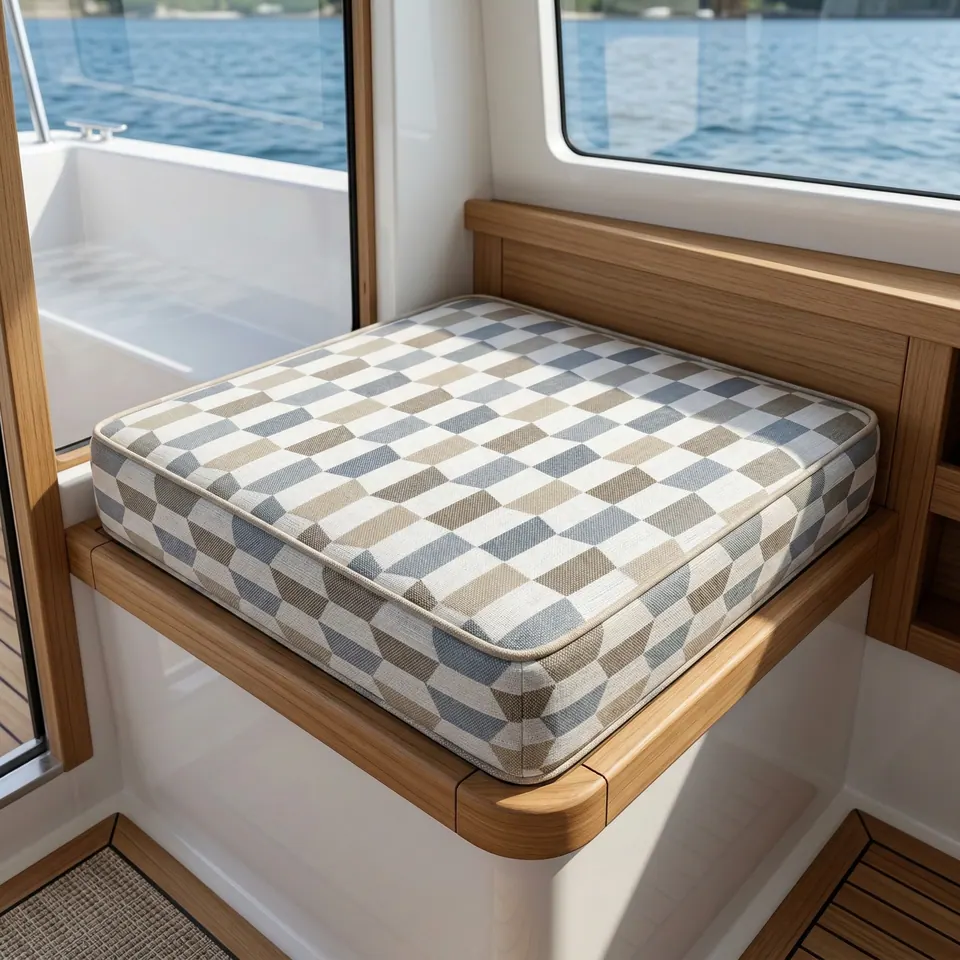
Piping is a style choice, not an upgrade: cushions cost the same with or without it. Piping gives the edges a crisp, tailored line; no piping keeps them soft and clean. About half of orders go each way. Choose self-piping, contrast piping or none, and for outdoor cushions pick self-piping, which also reinforces the edges.
Get a quote for a throw pillows
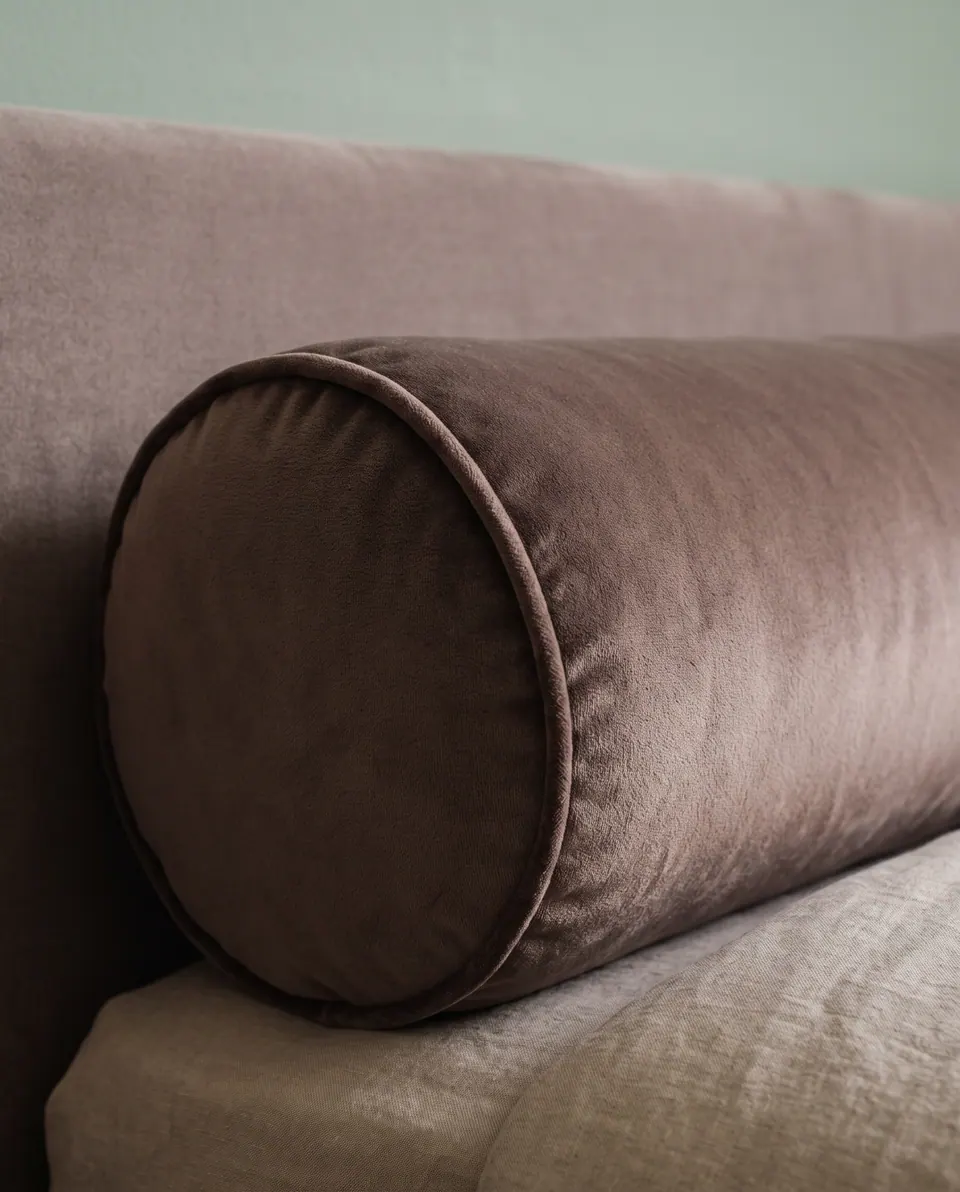
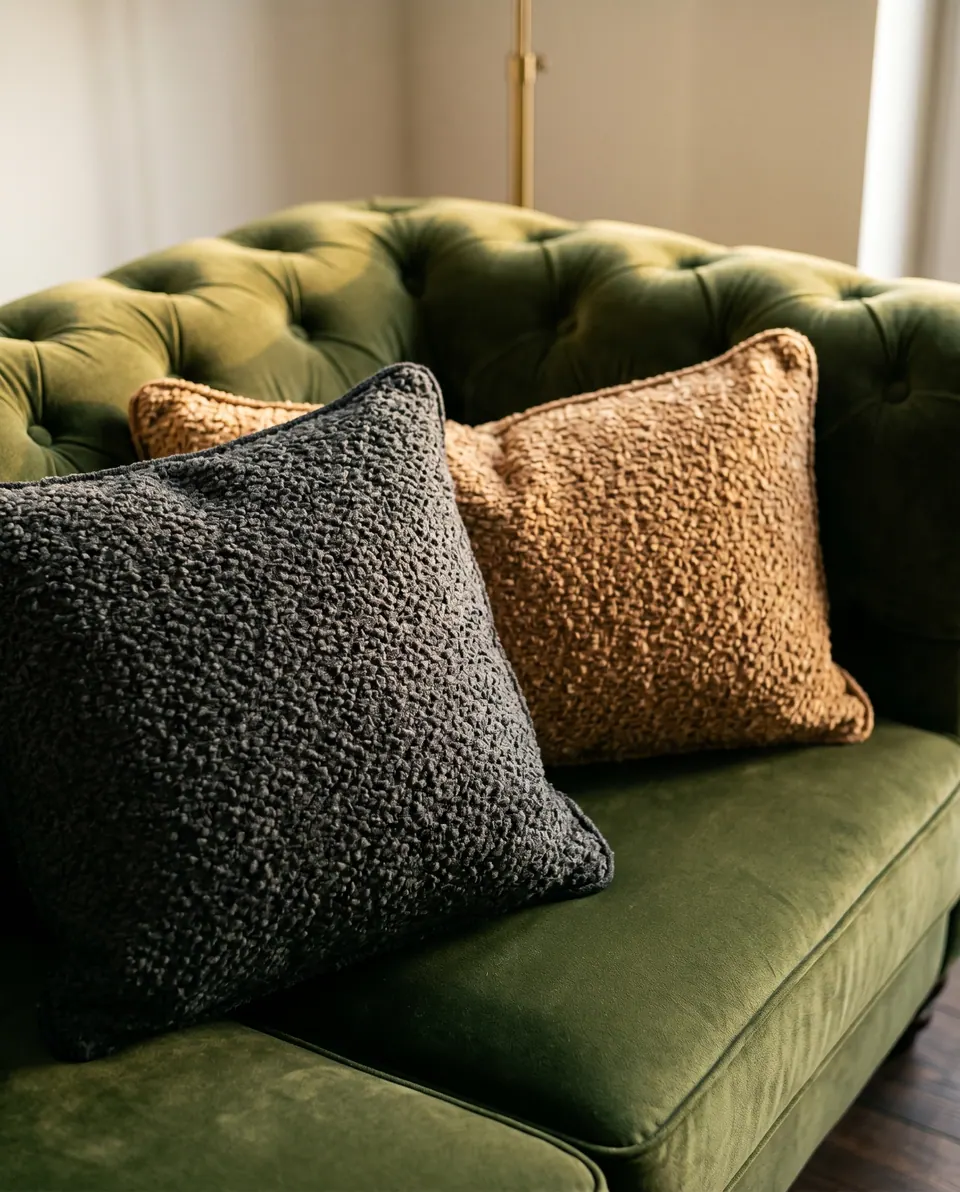
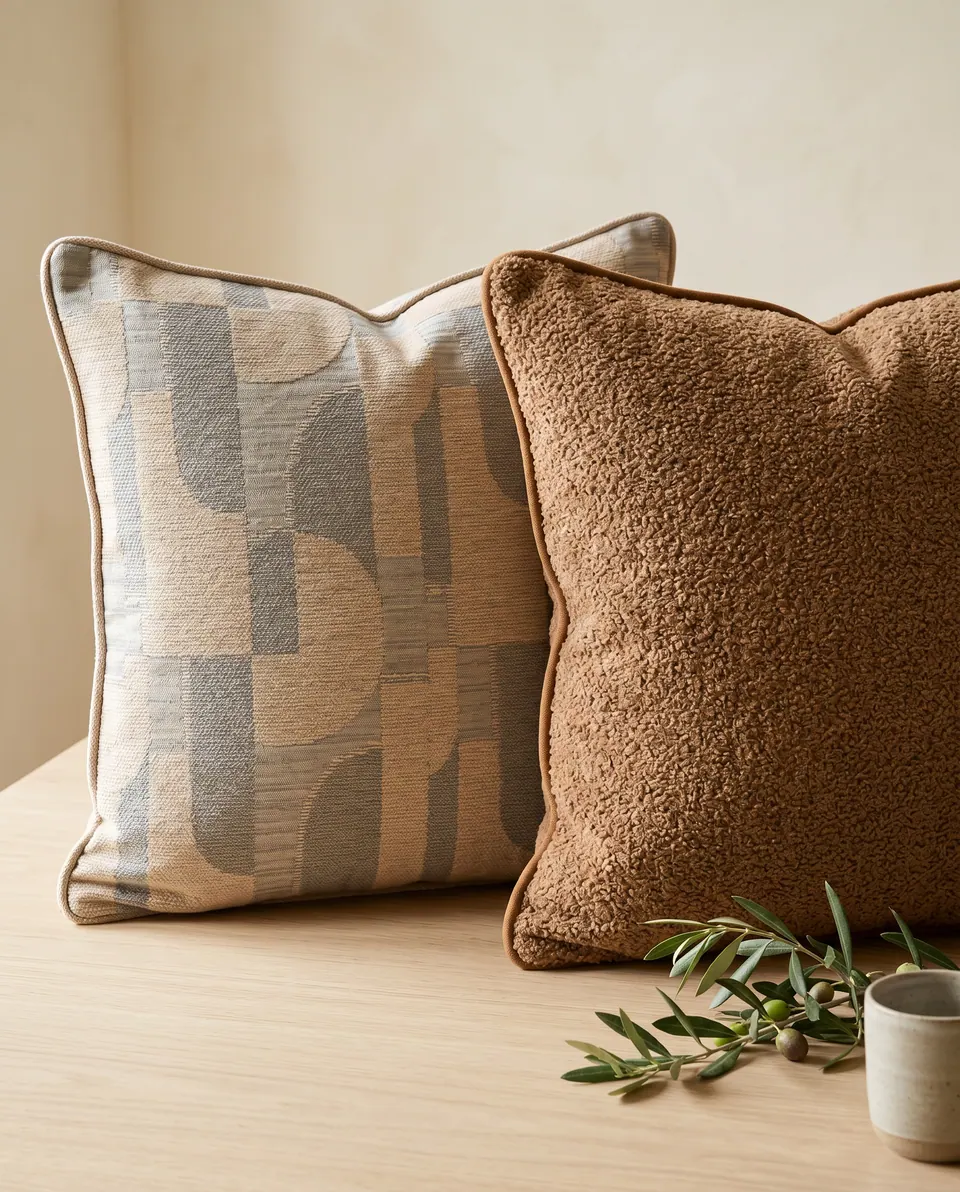
Self-piping, contrast piping or none: the three edges
| Self-piping | Contrast piping | No piping | |
|---|---|---|---|
| The edge | A tailored outline in the cushion's own fabric | A drawn frame in a second color | Soft, clean and pillowy |
| Price | Same | Same | Same |
| Workshop note | Simplest to make; recommended for outdoor cushions | Name the piping color code with the order | Seams can be made with no visible piping outside |
| Reads best on | Window seats, benches, patio sets | Cushions that should read as a shape | Relaxed throw pillows, hidden-seam pieces |
Key facts
- Cushions cost the same with or without piping.
- Roughly half of orders choose piping.
- The three options are self-piping, contrast piping or no piping.
- Self-piping, cut from the cushion's own fabric, is the simplest to make.
- Self-piping is recommended outdoors because it reinforces the edges.
- Piping is chosen per order, so state it when you order.
- Standard seat cushions are 4 in thick, and 2 in is the thinnest standard cushion that still takes piping.
- Cushions 1 in thick are made without piping, while about 1.25 in (3 cm) can still be piped.
- Covers, piped or plain, machine-wash at up to 86°F (30°C) on a gentle cycle.

Have it made
Have Maggie’s workshop cut this for you
I once cut a lovely cushion two inches short, and I have not forgotten it. That is why the workshop goes over your measurements with you on the phone. — Maggie
Leave your details and the workshop will call you to confirm measurements, fabric, foam and piping. No prices, dates or payment on this page: it is a request, not an order.
Why the listing photos disagree with each other
The photos on a listing mix piped and unpiped cushions, and that confuses people. Piping is chosen per order, never guessed from a picture, so say which edge you want.
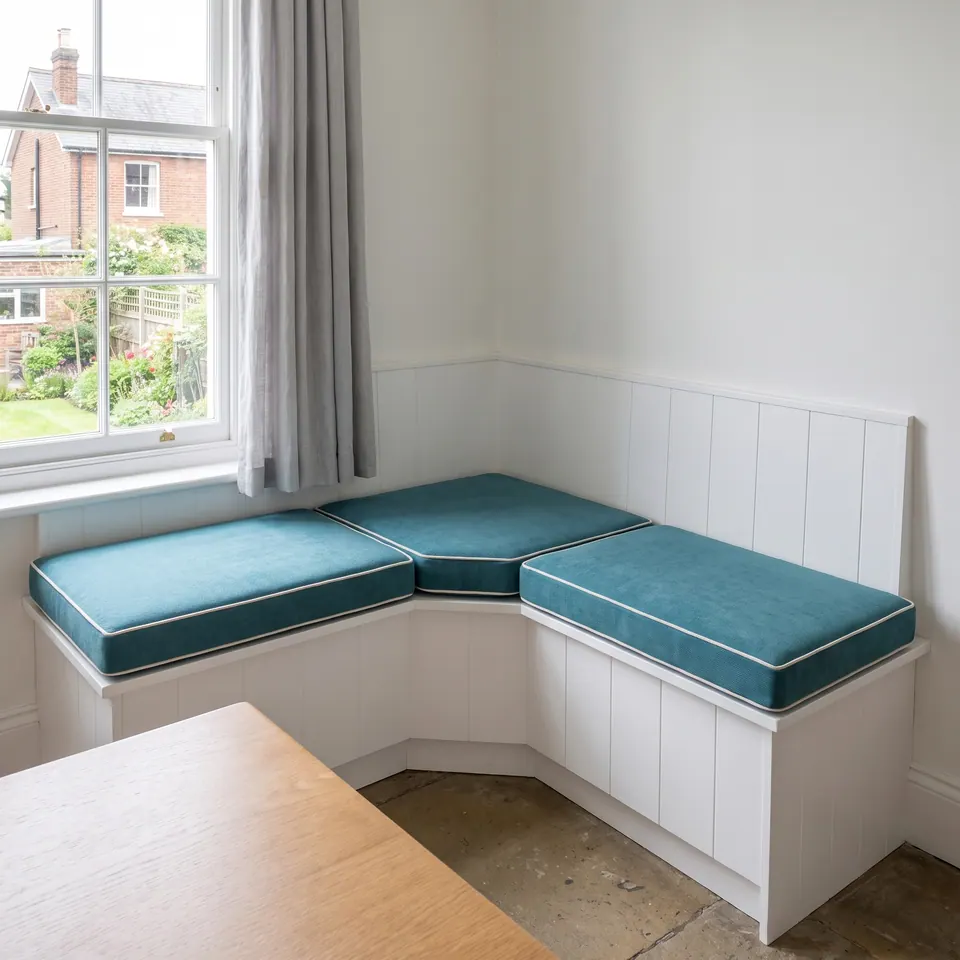
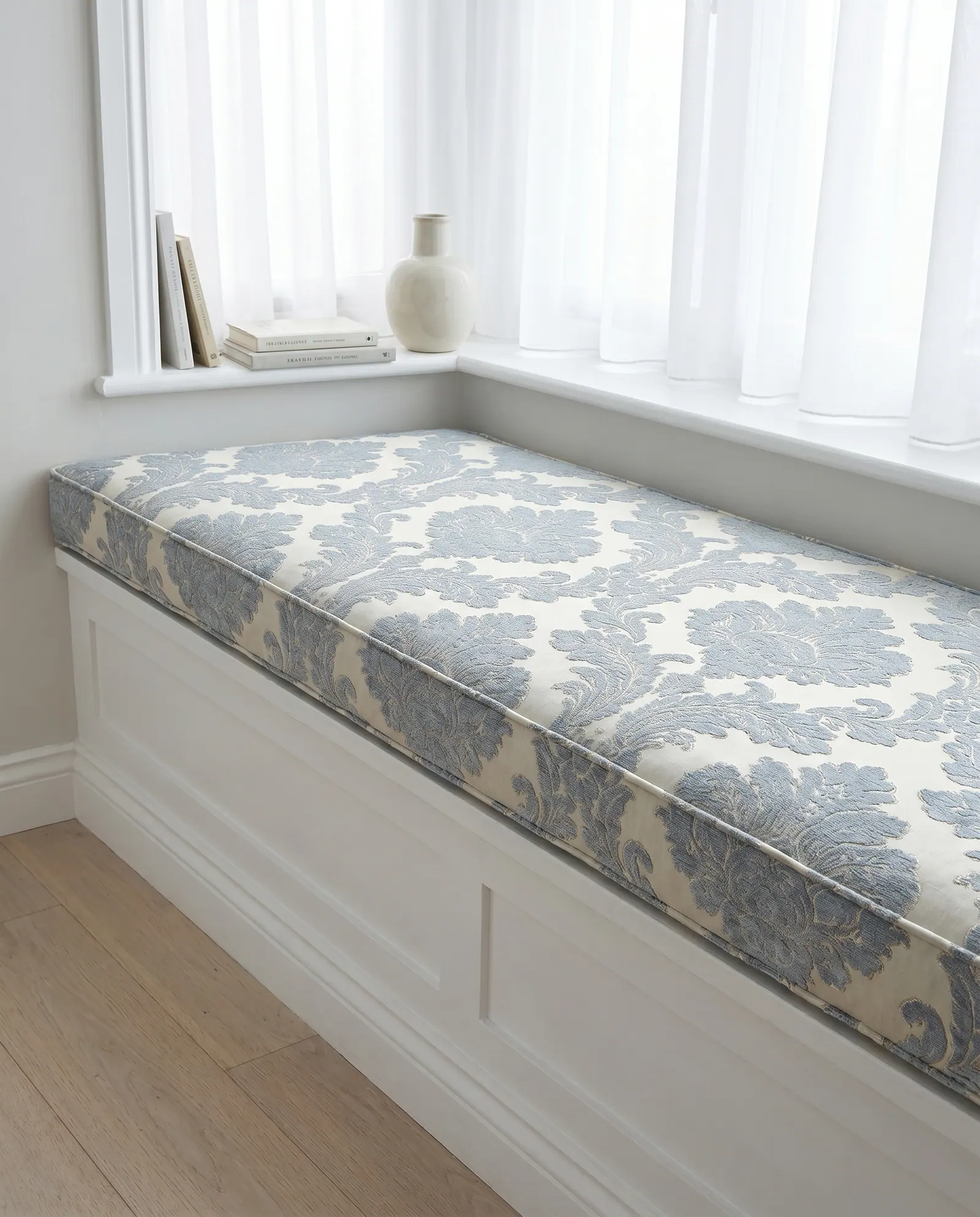
Both ways leave the atelier. A corduroy window seat was confirmed with piping all round. A buyer who wanted hidden seams on a modular ottoman was told plainly there would be no visible piping on the outside. Each was right for its room. If the vocabulary is new, piping and self-piping are in the glossary.
Choosing by the room, not by the photo
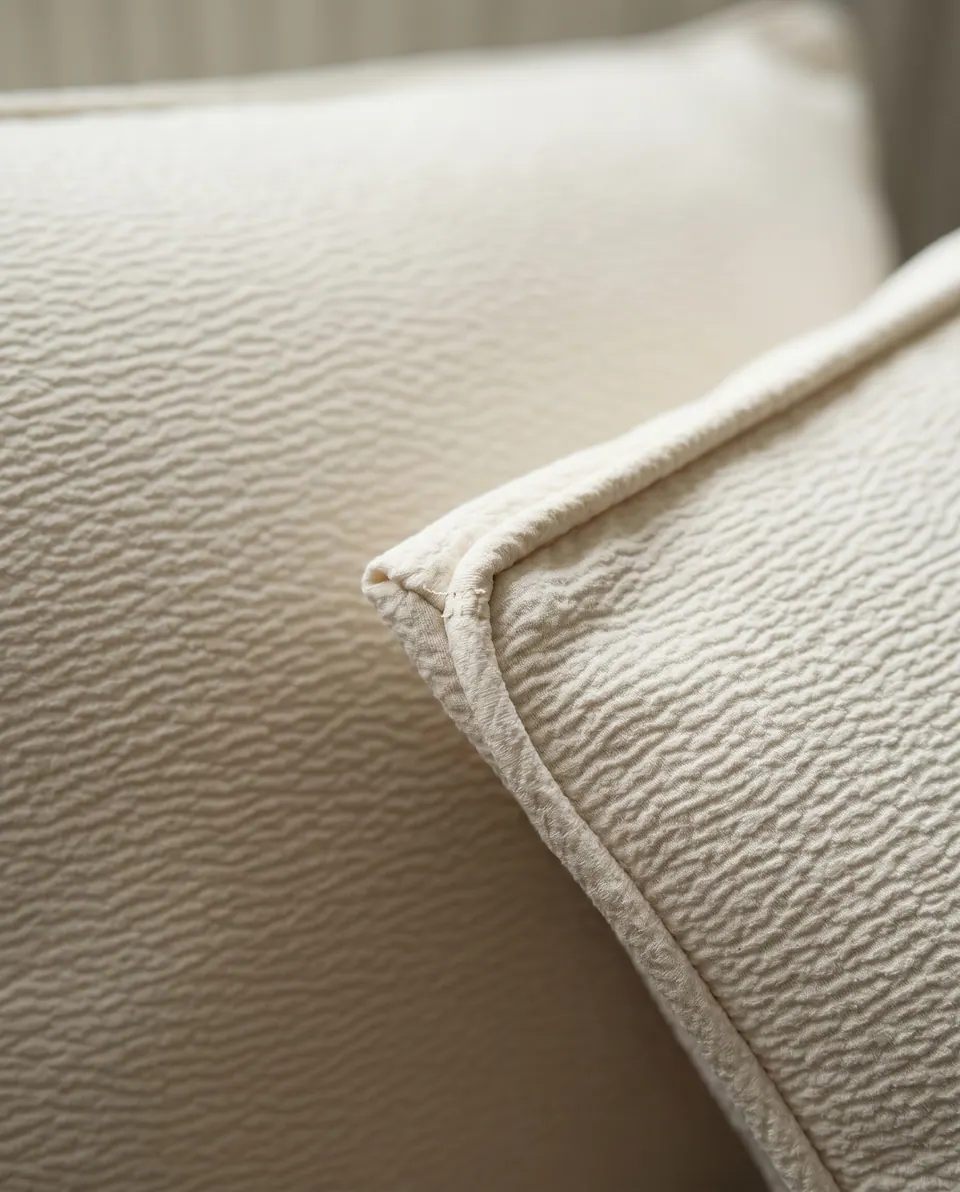
A welt is a line, and a line tells the eye where the cushion ends. On a window seat under paneling, that line looks tailored, the way a good hem does. On a heap of throw pillows you may want the opposite: soft edges that slump together without a frame around each one.
Outdoors I stop being neutral. For outdoor cushions, self-piping is the workshop's recommendation, because the welt reinforces the edge seam as well as sharpening it. Indoors it's taste, dear, and the price doesn't move. So which should the eye find first on your cushion: its shape or its fabric? The piping pattern lays out all three routes.
Before you place the order
- Decide the edge: self-piping, contrast piping or no piping.
- For contrast piping, pick a code for the welt as well as the body fabric.
- Write your choice in the order, because the listing photos show both looks.
- For outdoor cushions, choose self-piping for the reinforced edge.
- For hidden seams, ask for no visible piping on the outside.
Piping or no piping on a cushion costs the same: piping draws a crisp, tailored edge, no piping keeps it soft, and about half of buyers choose each.
Maggie
Buyer questions
- A common question
Should my pillows have piping or not?
The workshop's answerIt's taste, and the price is identical. Piping gives the edges a defined, tailored look; without it they stay soft and clean. Orders split roughly half and half.
- A common question
Can the piping be the same fabric as the cushion, or can I skip it entirely?
The workshop's answerAny of the three works: self-piping in the cushion fabric, which is the easiest to make, a contrast color, or none. For outdoor cushions the workshop recommends self-piping because it looks tailored and reinforces the edges.
- A common question
Will my cushion come with piping? Some photos show it and some don't.
The workshop's answerPiping is optional, so say whether you want it. A corduroy window seat was confirmed with piping all round, while a buyer who wanted hidden seams on a modular ottoman was told there would be no visible piping outside.
- A common question
Does the modular floor sofa come piped or with a flat seam?
The workshop's answerA flat seam by default, with every piece sewn to match. A photo with a framed edge may show a different product. Write your preference in the personalization note.
Questions buyers ask next
Does piping help a cushion edge wear better?
Piping adds a reinforced line along the edge seam, which is why the workshop recommends same-fabric piping for outdoor cushions that face sun, rain and daily handling. Indoors the choice is mostly about the look you want.
Why is same-fabric piping the easiest option to make?
Self-piping is cut from the same fabric as the cushion body, so no second fabric has to be matched, stocked or approved. It gives a quiet outline that never clashes. Contrast piping needs a second color code chosen for the welt.
Where do I say whether I want my cushion piped?
In the order itself. Piping is chosen per order and never assumed from the listing photos, so name self-piping, contrast piping with its color code, or no piping in your options or personalization note before the cushion is cut.