The Cutting Table · a question, worked through
How thin can a window seat cushion be so the window still opens?
Rain doesn't negotiate, and neither does a window sash. Start with the gap under the frame and work down from there.

Pinned by Callum
The quick answer
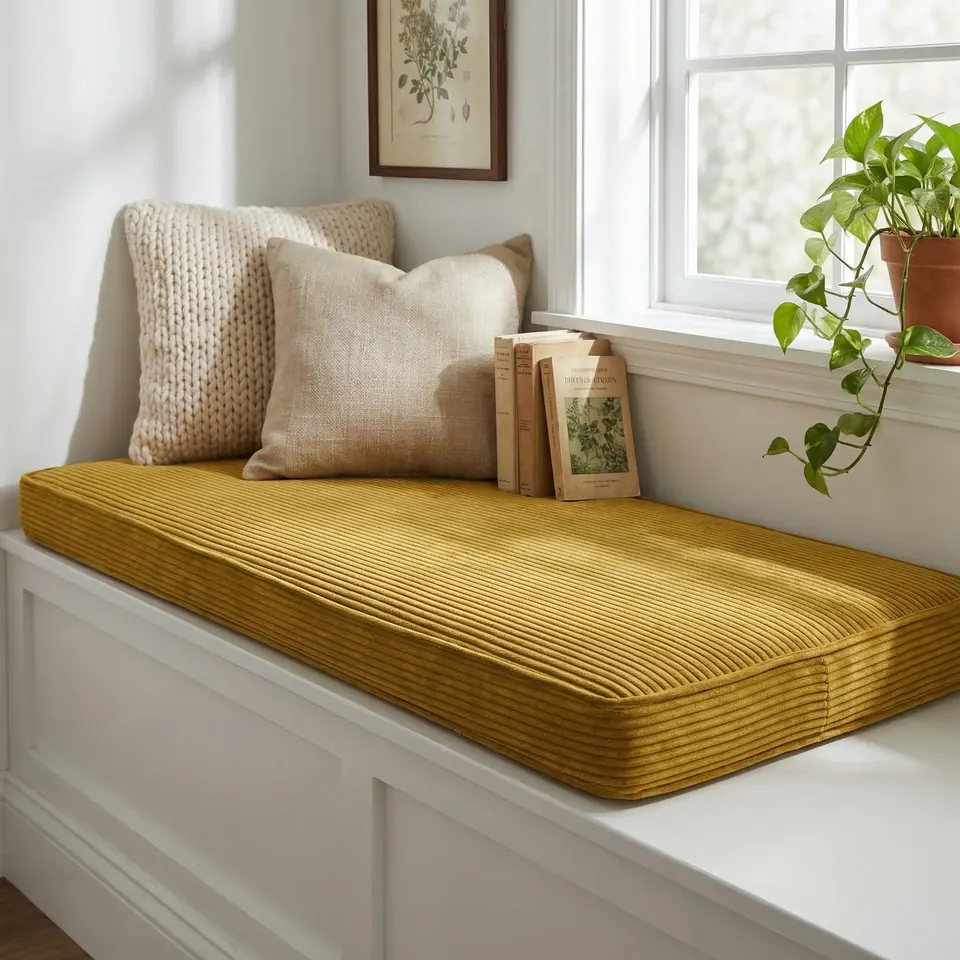
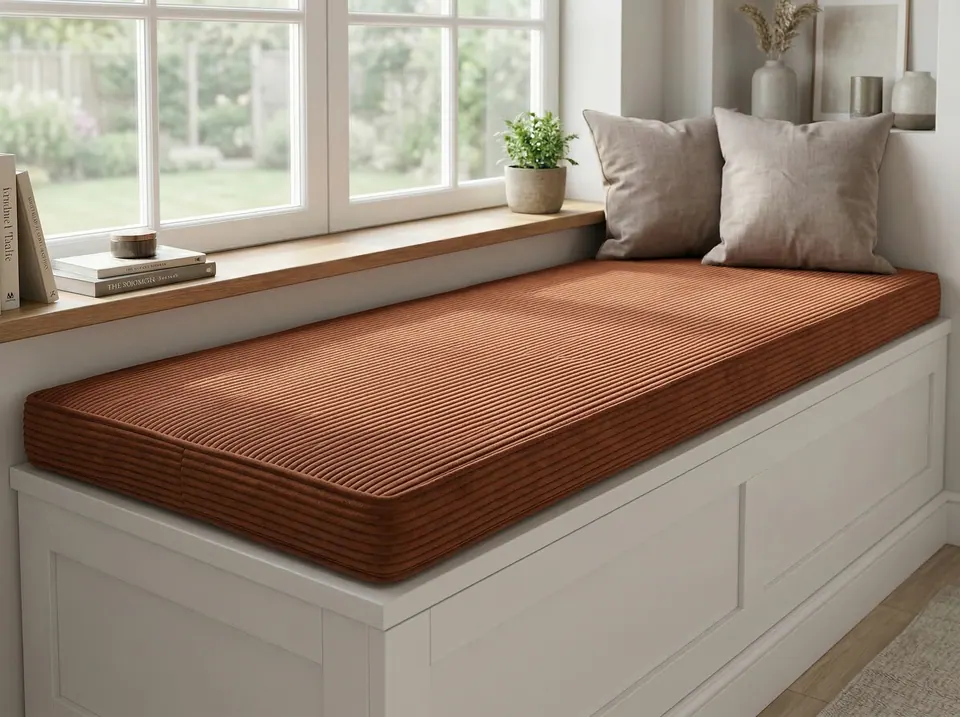
A window seat cushion can be made as thin as 3/4 in (2 cm), but 2 in (5 cm) is the thinnest recommended for sitting. For most low-profile window seats, 2 to 3 in (5 to 7.5 cm) works. Measure the clearance under the window frame, give your absolute maximum height with the cover on, and the thickness is confirmed with you before production.
Get a quote for a window seat cushion
Key facts
- 2 to 3 in (5 to 7.5 cm) is the suggested thickness for a low-profile window seat.
- Cushions of exactly 2 in (5 cm) have been made so the window above can still close.
- 3/4 in (2 cm) and 1 in (2.5 cm) cushions can be made to order.
- 1 in (2.5 cm) is considered too thin for seating; the recommended minimum is 2 in (5 cm).
- At slim thicknesses the foam must be cut evenly and sized to the cover, or the cushion bulges above the limit.
- Give your maximum height including the cover; the thickness is confirmed before production.

Have it made
Have Callum’s workshop cut this for you
Short list: size, sun hours, how fast it has to dry. The workshop goes through it with you. — Callum
Leave your details and the workshop will call you to confirm measurements, fabric, foam and piping. No prices, dates or payment on this page: it is a request, not an order.
Measure the sash, then the seat
Most window seats have room to spare. The ones that don't are the ones that write in: a sash swings down or a casement swings in, and a cushion a hair too tall stops it cold.
So the workshop suggests 2 or 3 in (5 or 7.5 cm) for a low-profile window seat cushion. Thinner is possible: 3/4 in (2 cm) and 1 in (2.5 cm) are made to order. But at 1 in you're sitting on a pad, and it may not give adequate support. That's why 2 in (5 cm) is the recommended minimum.
The window seat thickness Pattern walks through the trade-offs. What's the gap between your seat board and the bottom of the frame, friend?
Finding the number the cushion can't pass
Close the window fully
Measure straight down from the lowest point of the frame or sash to the seat board. That is your clearance.
Check it in two or three spots
Old seats and sills are rarely level. Use the smallest reading.
State it as a maximum, cover included
Write the absolute top height with the cover on, not the foam alone. The thickness glossary entry explains why the two differ.
Confirm before cutting
The workshop confirms the final thickness with you before production. The window seat measuring Pattern covers length and depth.
A trapezoid seat that needed to drop an inch
A buyer wrote in about a trapezoid window seat. The listing's thicknesses started at 3 in (7.5 cm), and that was already too tall for the window. The shop switched on a 2 in (5 cm) option for the order. The buyer asked about 1 in (2.5 cm) too; the honest answer was that it can be made, but it's extremely thin to sit on. They took the 2 in, and the window still closes.
A window seat cushion can go as thin as 3/4 in (2 cm), but 2 in (5 cm) is the thinnest that still sits like a seat.
Callum
Buyer questions
- A common question
How slim can you make a window seat cushion? Would 2 in or even 1 in fit under my sill?
The workshop's answer2 in (5 cm) is available; on one trapezoid listing that normally starts at 3 in (7.5 cm), a 2 in option was switched on for the order. 1 in (2.5 cm) can be made, but it is extremely thin for sitting and may not give adequate support, so at least 2 in is recommended.
- A common question
Can you make a 3/4 in window seat cushion so the window can still open?
The workshop's answerYes, 3/4 in (2 cm) cushions are made to order; one pair measured about 68 x 21 in (172.5 x 54 cm) and 51 x 21 in (130 x 53 cm). At that thickness the foam must be cut evenly and sized to the cover, or it bulges past your limit, so state your absolute maximum including the cover.
- A common question
Could you make a windowsill cushion exactly 2 in high?
The workshop's answerYes. A windowsill cushion was made at exactly 2 in (5 cm) so the window above could still close.
- A common question
How thick should a window seat cushion be if I don't want it covering the window?
The workshop's answerFor a narrow window seat, 2 or 3 in (5 or 7.5 cm). The final thickness is confirmed with you before production, so measure the height under the window frame first.
Questions buyers ask next
Can a 1 in window seat pad still have piping?
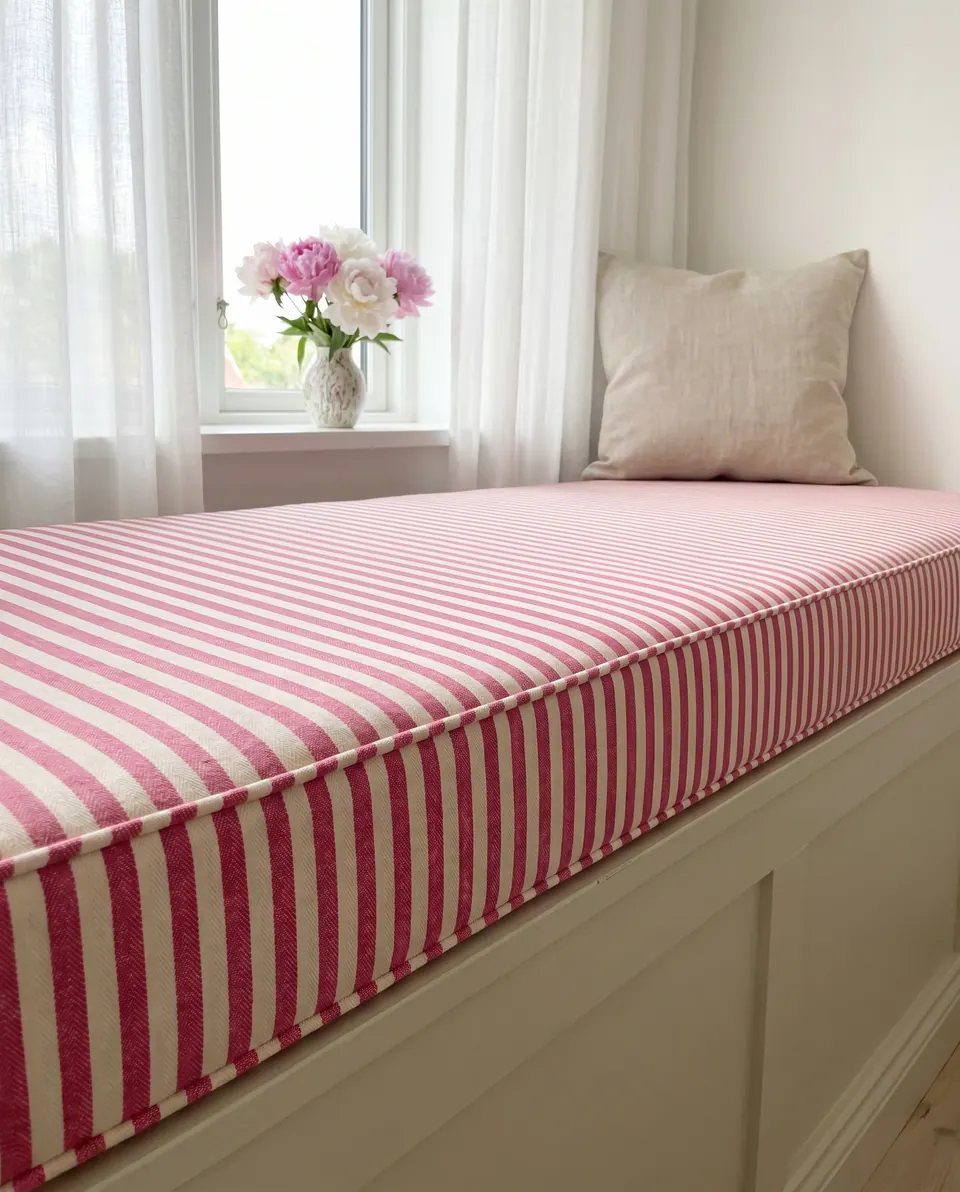
Piping works on cushions down to about 1 1/4 in (3 cm). Pads of 1 in (2.5 cm) and 3/4 in (2 cm) are made without piping, so plan on a plain edge if you need the slimmest possible profile under the sill.
Why does a slim cushion look flat when it first comes out of the box?
Compressed foam can take up to a week to fully expand. Take the cover off, shake and stretch the foam, and give it several days. If a piece is still flat after that, send photos.
Is 2 in thick enough for everyday sitting on a window seat?
It is the recommended minimum for seating, and exact 2 in (5 cm) cushions are made for windows that need the clearance. If your sash allows 3 in (7.5 cm), you get a little more cushion.