The Cutting Table · compared on the table
What's the thinnest seat cushion you can make? Can I get 1 inch?
Also asked as:Only about 1 inch thick seat pads.1 inch thickness for a window seat.
Thin is possible, partner. It stops being standard at 2 in, and it stops taking piping a little below 1 1/4 in. Here is the table.

 Save
The quick answer
2 in (5 cm) is the thinnest standard seat cushion and the minimum recommended for sitting, but thinner pads are made to order. A 1.5 in pad has been made with contrast piping, and about 1 1/4 in (3 cm) can still take piping; 1 in (2.5 cm) and 3/4 in (2 cm) pads are made only without piping.
Get a quote for a bench cushion
Thickness by thickness
| Thickness | Standard or custom | Piping |
|---|---|---|
| 5 in (12.5 cm) | Standard menu | Yes |
| 4 in (10 cm) | Standard, the usual choice | Yes |
| 3 in (7.5 cm) | Standard menu | Yes |
| 2 in (5 cm) | Thinnest standard; seating minimum | Yes |
| 1.5 in (3.8 cm) | Custom | Yes, contrast piping has been made |
| 1 1/4 in (3 cm) | Custom | Yes |
| 1 in (2.5 cm) | Custom | No |
| 3/4 in (2 cm) | Custom | No |
Earlier replies said 1 in wasn't made; later ones made 1 in, 1.5 in and ¾ in (2 cm) pads on request. Treat anything under 2 in as custom.
Key facts
- The thinnest standard thickness is 2 in (5 cm).
- 2 in is the recommended minimum for seating.
- A 1.5 in (3.8 cm) cushion has been made with contrast piping.
- About 1 1/4 in (3 cm) cushions can still have piping.
- ¾ in (2 cm) and 1 in (2.5 cm) cushions can only be made without piping.
- Photos of ¾ in (2 cm) and 2 in (5 cm) cushions can be sent for comparison.

Have it made
Have Nate’s workshop cut this for you
Precision starts on the phone. Give the workshop your measurements and they will read them back to you, edge by edge. — Nate
Leave your details and the workshop will call you to confirm measurements, fabric, foam and piping. No prices, dates or payment on this page: it is a request, not an order.
Why 2 in is the line for sitting
2 in (5 cm) is the recommended minimum for a seat. Even firm 32-density foam compresses slightly at that thickness. Thinner pads are possible; they're just custom, and below about 1 1/4 in the piping has to go.
Several thin-pad requests were really about height: a bench cushion or window seat where 2 in would sit too high. Check that with the seat height calculator and the window seat thickness pattern before you decide. Which number are you actually trying to hit, the seat height or the look?
Tolerance is kindness to your future self: before ordering a 1 in seat pad, ask for photos of a ¾ in (2 cm) and a 2 in (5 cm) cushion side by side.
Nate Kowalski
Buyer questions
- A common question
Can you make a very thin bench cushion, only 1.5 inches thick?
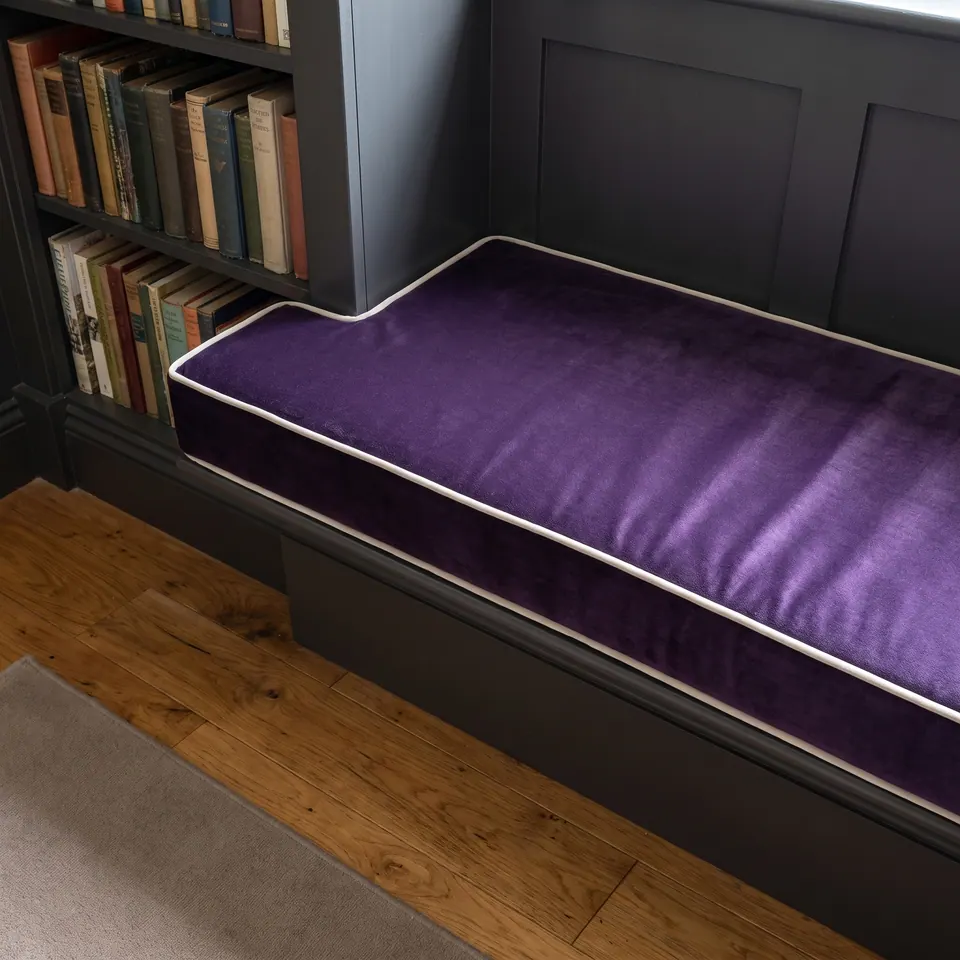
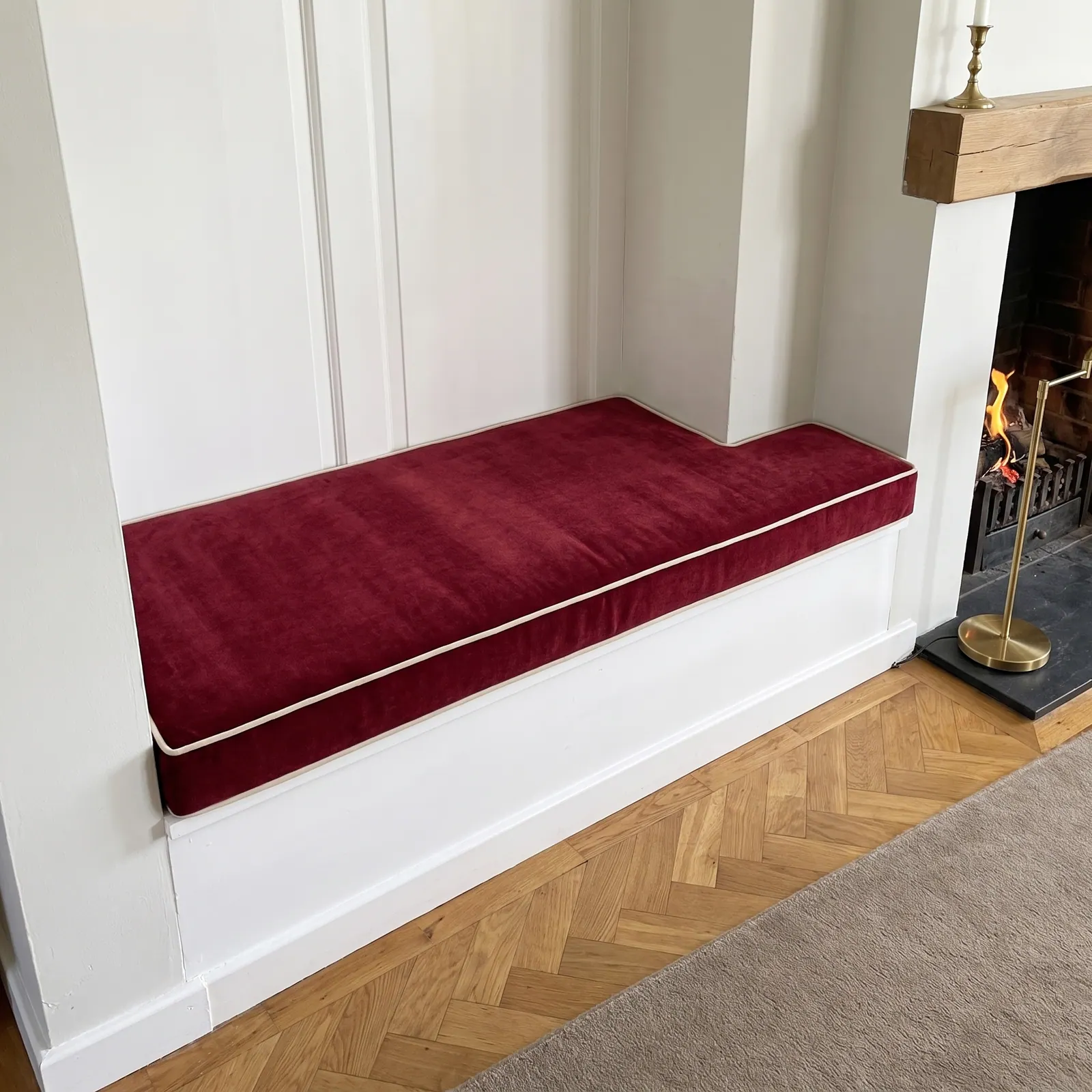
The workshop's answerYes. A 38 x 15 x 1.5 in (97 x 38 x 3.8 cm) velvet cushion with contrast piping was quoted as a custom order.
- A common question
Is 2 inches the minimum thickness?
The workshop's answerIt's the thinnest standard option, but thinner is possible. ¾ in (2 cm) and 1 in (2.5 cm) can only be made without piping; 1¼ in (3 cm) can still have piping. The workshop can send photos of ¾ in (2 cm) and 2 in (5 cm) cushions to compare.
- A common question
Can the back cushion be thinner than the seat?
The workshop's answerYes. Give each cushion's thickness in the personalization note, for example a 4 in seat with a 2 or 3 in back. Keep foam backrests at 2 in (5 cm) or more; thinner foam flattens against the back.
- A common question
Is a 3 or 4 inch cushion enough on a hard wooden bench?
The workshop's answerYes. 3 in is fine over a plywood nook bench, and 4 in is recommended for sitting and napping on a hard wooden or wicker base.
Questions buyers ask next
Can a 1 inch pad have piping?
No. 1 in (2.5 cm) and ¾ in (2 cm) pads are made without piping. From about 1 1/4 in (3 cm) up, piping can go on, and a 1.5 in velvet pad has been made with contrast piping.
Will a 2 inch cushion raise my seat too much?
It adds 2 in (5 cm), minus a little compression under you. If that is too high for your table or window, a thinner custom pad is possible; measure the seat height first.
What's the thickest cushion at the other end of the scale?
Standard thickness options top out around 5 to 6 in (12.5 to 15 cm). Custom cushions go much further, up to about 15.5 in (40 cm).